
 简体中文
 English
 Español

News
Why a Four-Sided Glass Refrigerated Standing Display Cooler Is a Smart Commercial Investment
In modern food retail, refrigeration is not only about preserving products. It is also about presenting them attractively, making them easy to reach, organizing limited floor space, and encouraging customers to make quick purchasing decisions. A well-designed display refrigerator must therefore combine stable cooling performance, clear visibility, energy-conscious operation, reliable construction, and practical merchandising features. The XC-98L four-sided glass refrigerated standing display cooler is designed around these requirements.
With a 98-liter capacity, a compact vertical footprint, a temperature range of 2°C to 10°C, internal LED lighting, adjustable shelves, ventilated cooling, automatic defrost, and four-sided double-glass construction, this unit is suitable for a wide range of commercial environments. It can be used to display chilled beverages, packaged foods, desserts, dairy products, fresh snacks, cakes, ready-to-eat items, and other temperature-sensitive merchandise.
Unlike an ordinary refrigerator, a commercial display cooler has a dual purpose. It must maintain the correct storage environment while also turning products into an attractive visual presentation. The XC-98L addresses both functions through a tall showcase format, broad viewing angles, organized shelving, and a controlled refrigerated interior. Its design is especially suitable for convenience stores, cafés, bakeries, restaurants, hotels, supermarkets, reception areas, service counters, and other locations where product visibility is essential.
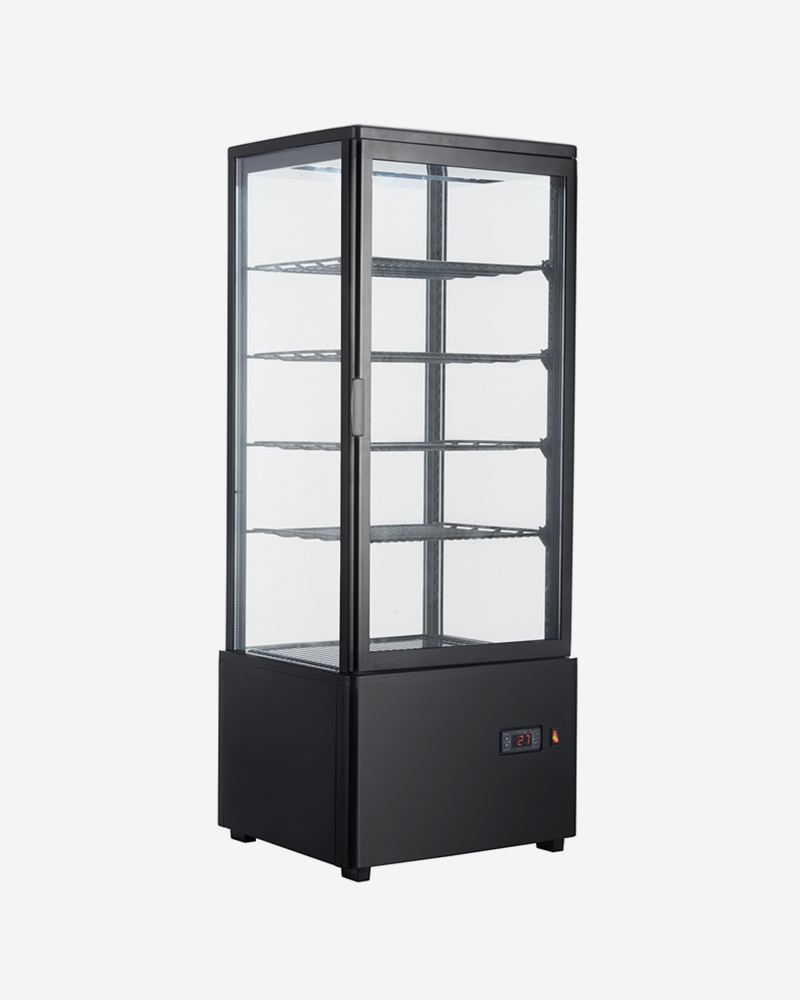
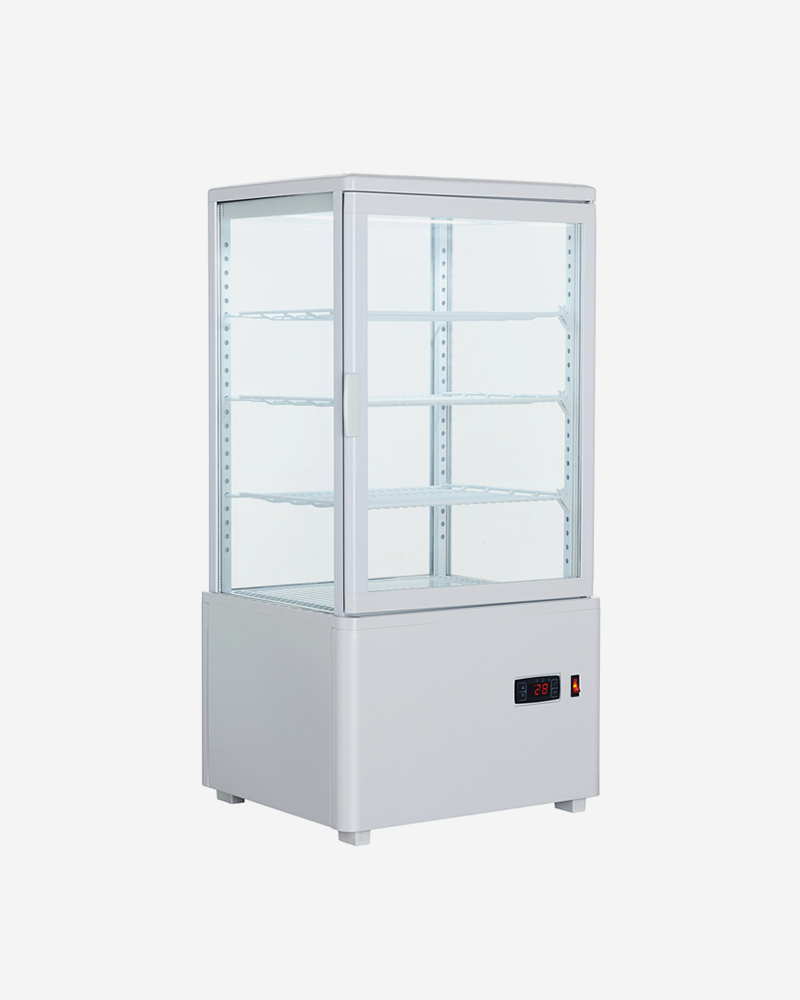
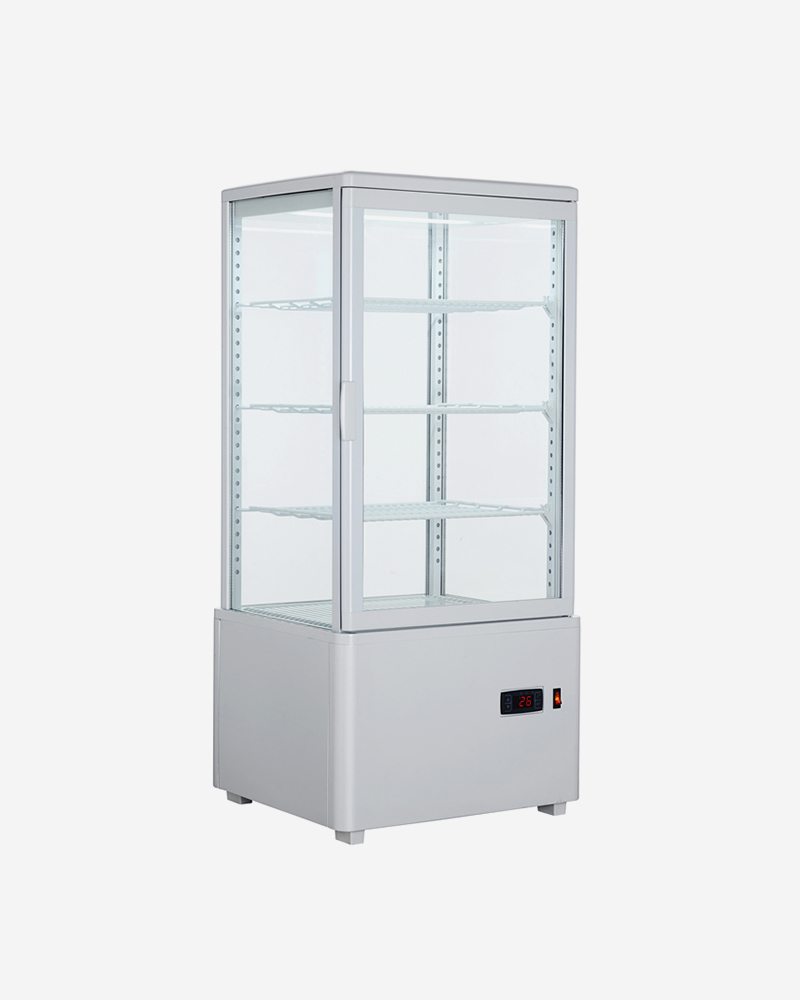
4 Sided Glass Refrigerated Standing Display Cooler
Product Overview
The XC-98L is a four-sided glass refrigerated standing display cooler with a nominal capacity of 98 liters. Its product dimensions are approximately 447 millimeters wide, 400 millimeters deep, and 1,119 millimeters high. This vertical structure allows retailers to obtain useful display volume without occupying the floor space required by a large horizontal cabinet.
The narrow footprint is valuable in commercial interiors where every square meter has a purpose. A business can place the unit near a checkout counter, beside a café service station, along a wall, at the entrance of a convenience store, or in a hotel lobby without creating a large obstruction. Because the glass panels provide visibility from multiple directions, the cooler can also be positioned as a freestanding merchandising fixture rather than being limited to wall-side installation.
The temperature range of 2°C to 10°C supports the display of many commonly chilled products. This range can accommodate bottled and canned beverages, dairy products, sandwiches, desserts, packaged snacks, prepared foods, and similar merchandise, provided that the products are suitable for the selected storage temperature. A digital thermostat and display make it easier for operators to monitor and adjust the internal temperature according to the product category and operating conditions.
The rated input power is 200 watts. Actual energy consumption depends on ambient temperature, product loading, door opening frequency, thermostat settings, installation conditions, and operating hours. Nevertheless, the unit’s compact capacity and controlled refrigeration format make it a practical option for businesses that need a dedicated display cabinet without installing a large refrigeration system.
| Specification | XC-98L Information |
|---|---|
| Product type | Four-sided glass refrigerated standing display cooler |
| Capacity | 98 liters |
| Temperature range | 2°C to 10°C |
| Input power | 200 watts |
| Refrigerant options | R134a or R600a, according to configuration |
| Climate class | Class 4 |
| Net weight | 39 kilograms |
| Gross weight | 42 kilograms |
| Product dimensions | 447 × 400 × 1,119 millimeters |
| Package dimensions | 502 × 456 × 1,160 millimeters |
| 20-foot general-purpose container quantity | 110 units |
| 40-foot high-cube container quantity | 230 units |
Four-Sided Glass Design for Maximum Visibility
The most recognizable advantage of the XC-98L is its four-sided glass construction. Customers can view products from the front, sides, and upper viewing angles, which increases the cabinet’s merchandising flexibility. In a conventional single-view refrigerator, products may be visible only to customers standing directly in front of the unit. A four-sided display cooler can attract attention from several directions, making it more effective in open retail spaces and high-traffic areas.
Four-sided visibility is particularly useful when the cabinet is positioned away from a wall. In a café or bakery, the unit can stand between the sales floor and service area. In a hotel, it can be placed in a lobby or breakfast area. In a convenience store, it can be positioned beside a checkout lane or at the end of an aisle. Products remain visible even when customers approach from different angles.
The double-glass construction helps create a more stable internal environment than a basic single-panel display. The air space between glass layers can contribute to improved insulation and help reduce the influence of surrounding temperatures. The design is also intended to support a clearer presentation by reducing the visual impact of condensation under suitable operating conditions.
A glass display cabinet can be more commercially effective than an opaque refrigerator because customers do not need to open the door to identify the available products. This reduces unnecessary door opening and gives shoppers a faster understanding of the product selection. Clear visibility may also encourage impulse purchases, particularly when the cabinet is filled with attractive beverages, desserts, or ready-to-eat foods.
The cabinet includes a glass fog-preventing system. This feature is important because condensation or fogging can reduce product visibility and make the cabinet appear poorly maintained. In real operating environments, fog prevention performance can be influenced by humidity, ambient temperature, installation, loading, and door usage. Proper placement and regular cleaning remain important, but the built-in system provides an additional measure of visibility support.
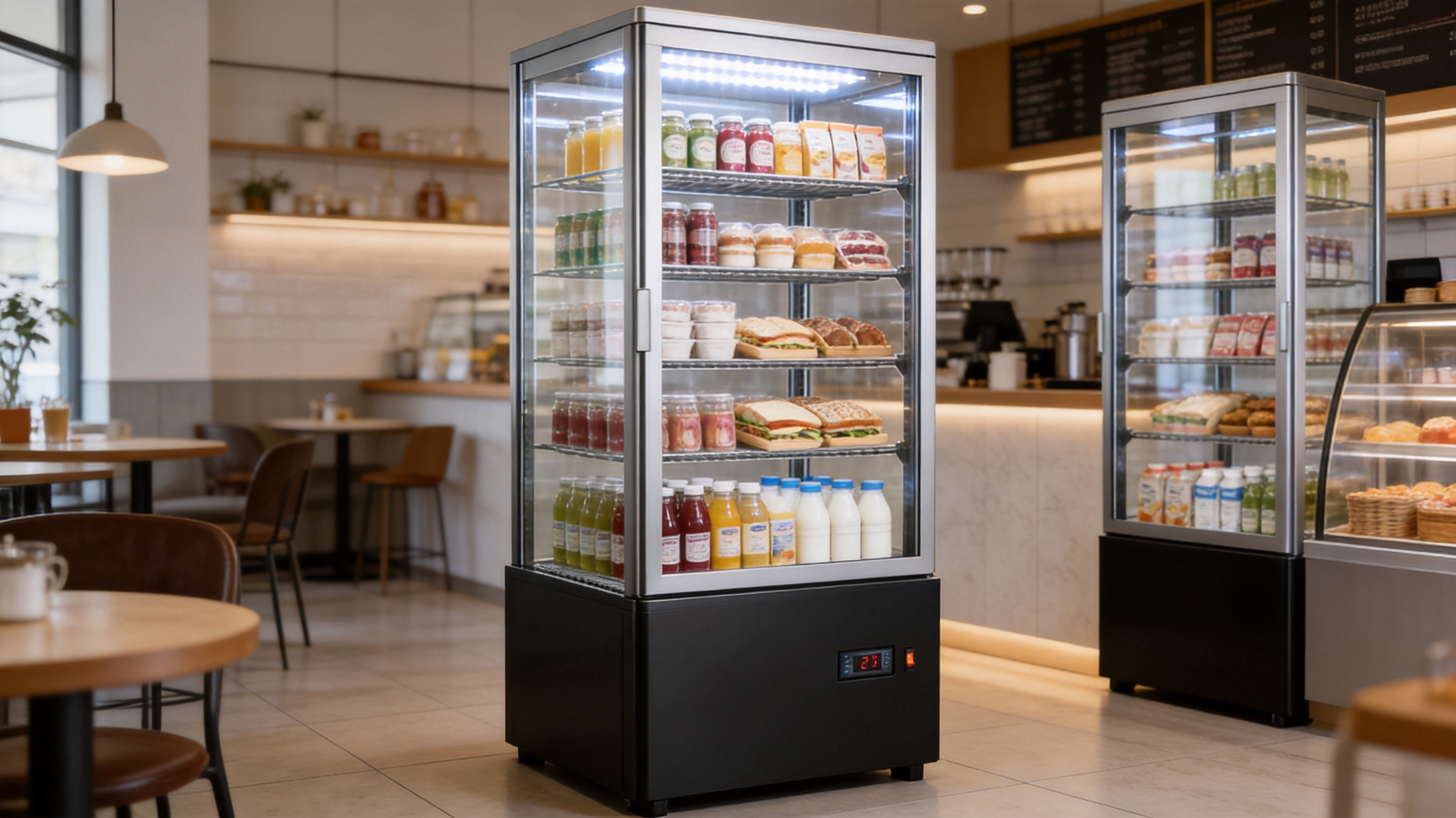
Stable Refrigeration for Chilled Product Presentation
A display cooler must maintain a dependable temperature while products are repeatedly accessed throughout the day. The XC-98L uses a ventilated cooling system to circulate cold air throughout the cabinet. Compared with a static cooling arrangement, forced air movement can help distribute chilled air more evenly across the storage area when the cabinet is correctly loaded and operated.
Ventilated cooling is valuable for merchandising because products are arranged on multiple shelves rather than stored in a single open compartment. Air circulation supports temperature consistency between shelf levels and helps the cabinet recover after normal door openings. Operators should still avoid blocking air outlets, overloading the shelves, or placing products directly against internal surfaces, since correct loading is essential to any refrigeration system.
The 2°C to 10°C temperature range gives retailers flexibility. A café may use the cooler for bottled drinks and dairy-based desserts. A bakery may use it to present chilled cakes or prepared sweets. A convenience store may display sandwiches, packaged foods, and cold beverages. A restaurant may use it for front-of-house promotion of chilled items. The exact setting should always be selected according to the storage requirements of the products being displayed.
The digital thermostat and temperature display support straightforward daily management. Employees can review the cabinet temperature without opening the door, reducing disruption to the refrigerated environment. A visible digital reading also helps staff identify unusual temperature changes at an early stage so that corrective action can be taken.
Automatic defrost is another practical feature. Frost accumulation can reduce cooling efficiency, restrict airflow, and make cleaning more difficult. An automatic defrost cycle helps reduce the need for frequent manual defrosting and supports more consistent operation. Although automatic defrost does not eliminate the need for maintenance, it reduces one of the routine burdens associated with commercial refrigeration.
Merchandising Advantages of the Vertical Format
The vertical format makes the XC-98L more than a storage appliance. It functions as a compact product presentation platform. The tall cabinet helps products occupy a prominent visual zone, while the relatively small floor area makes the unit easier to integrate into existing layouts.
Vertical merchandising offers several operational advantages. Products can be arranged by category, price, size, flavor, or brand. Frequently purchased items can be positioned at eye level. Higher shelves can hold lighter products or reserve stock, while lower shelves can be used for larger packages. Adjustable shelving allows businesses to modify the display as product assortments change.
The standard PVC-coated shelves are designed for practical commercial use. PVC coating can provide a surface that is easier to clean than untreated materials, while the adjustable design gives operators greater control over the interior arrangement. Shelves can be configured to accommodate beverage bottles, cans, cartons, dessert containers, and other retail packages.
Optional chromed shelves are available for businesses that prefer a different visual appearance. Chromed shelving can provide a bright, polished presentation that suits premium cafés, bakeries, hotel lobbies, and modern retail interiors. The selection between PVC-coated and chromed shelves allows buyers to align the interior presentation with their operational and aesthetic requirements.
Internal top LED lighting highlights the products without requiring customers to open the cabinet. LED illumination generally offers a long service life and efficient light output compared with older lighting technologies. The top-mounted arrangement can distribute light down through the display area, helping customers identify products and improving the visual impact of the cabinet during evening operation or in areas with limited ambient lighting.
Businesses can also specify two-strip or four-strip LED light bar options. These options provide additional flexibility for applications where stronger or more evenly distributed illumination is required. A brightly illuminated display can be especially useful for cakes, desserts, premium beverages, colorful packaged foods, and products whose appearance influences the purchasing decision.
Designed for Different Commercial Environments
Convenience Stores
Convenience stores require fast product recognition and efficient use of limited space. The XC-98L can be placed near the checkout area, beside a doorway, or in a high-traffic aisle. Its four-sided visibility helps shoppers identify chilled products without searching through a large cabinet. The 98-liter capacity is appropriate for a focused assortment of beverages, snacks, sandwiches, and prepared foods.
The optional door lock can provide additional control in locations where access needs to be restricted outside business hours or where the operator wants to reduce unauthorized opening. A separated power button also makes it easier to disconnect the refrigeration system when required for cleaning, maintenance, relocation, or operational shutdown.
Cafés and Coffee Shops
Cafés often need a compact cabinet for cakes, chilled desserts, bottled drinks, milk-based products, and ready-to-eat snacks. A freestanding glass cooler can be installed near the ordering point, where customers can view available items while waiting. The internal LED lighting can enhance the appearance of cakes and colorful desserts, while adjustable shelves help accommodate different container heights.
The temperature range is suitable for many chilled café products, but operators should organize products according to their individual storage requirements. Items with strict temperature controls should be monitored carefully, and the digital display should be checked as part of the daily opening and closing routine.
Bakeries and Dessert Shops
In a bakery, presentation is a central part of sales. Cakes, pastries, puddings, chilled tarts, and other desserts are often purchased because they look appealing. Four-sided glass makes it possible to display these products clearly from multiple sides, while the vertical format gives the store an attractive product tower without requiring a large counter opening.
The optional chromed shelves and additional LED light bars may be valuable for premium dessert presentation. Operators should select shelf spacing based on the height and packaging of the products, leaving enough room for airflow and safe handling.
Hotels and Hospitality Locations
Hotels may use compact refrigerated display cabinets in lobbies, breakfast areas, executive lounges, meeting spaces, and guest service zones. The freestanding structure can be positioned where visitors naturally pass, and the transparent design makes available refreshments immediately visible. Its appearance is suitable for environments where a large industrial cabinet would be visually intrusive.
In hospitality applications, quiet operation, cleanliness, and presentation are particularly important. Regular glass cleaning, shelf sanitation, temperature checks, and appropriate product rotation can help preserve the professional appearance expected in guest-facing areas.
Restaurants and Catering Operations
Restaurants can use the cooler to display bottled beverages, cold desserts, prepared foods, or takeaway items. It may also support promotional merchandising by placing featured products in a visible location near the entrance or payment counter. The adjustable shelving makes it easier to change the display when menus or seasonal offerings change.
Features That Support Daily Operation
Commercial equipment must be easy to operate because employees may interact with it many times each day. The XC-98L includes several details intended to simplify routine use.
The digital thermostat and display give operators direct access to temperature information. This reduces dependence on guesswork and provides a simple reference for staff training. Clear temperature monitoring is also useful for internal food safety procedures, particularly when businesses maintain written temperature logs.
The separated power button allows the electrical supply to the cabinet to be controlled independently. This can be useful during cleaning or maintenance, when the interior needs to be emptied and the system safely disconnected. It can also help operators manage the cabinet during periods when the business is closed, subject to the operating instructions and product storage requirements.
Automatic defrost reduces the need for manual intervention. However, employees should still inspect the cabinet regularly for unusual ice, water accumulation, blocked vents, damaged seals, or abnormal noise. Preventive inspection can help identify issues before they affect product quality or business operations.
The glass fog-preventing system supports clear display conditions, but glass surfaces should still be cleaned with suitable materials. Dust, fingerprints, food residue, and water marks can reduce visibility even when the anti-fogging system is operating correctly. A simple cleaning schedule can protect both hygiene and merchandising effectiveness.
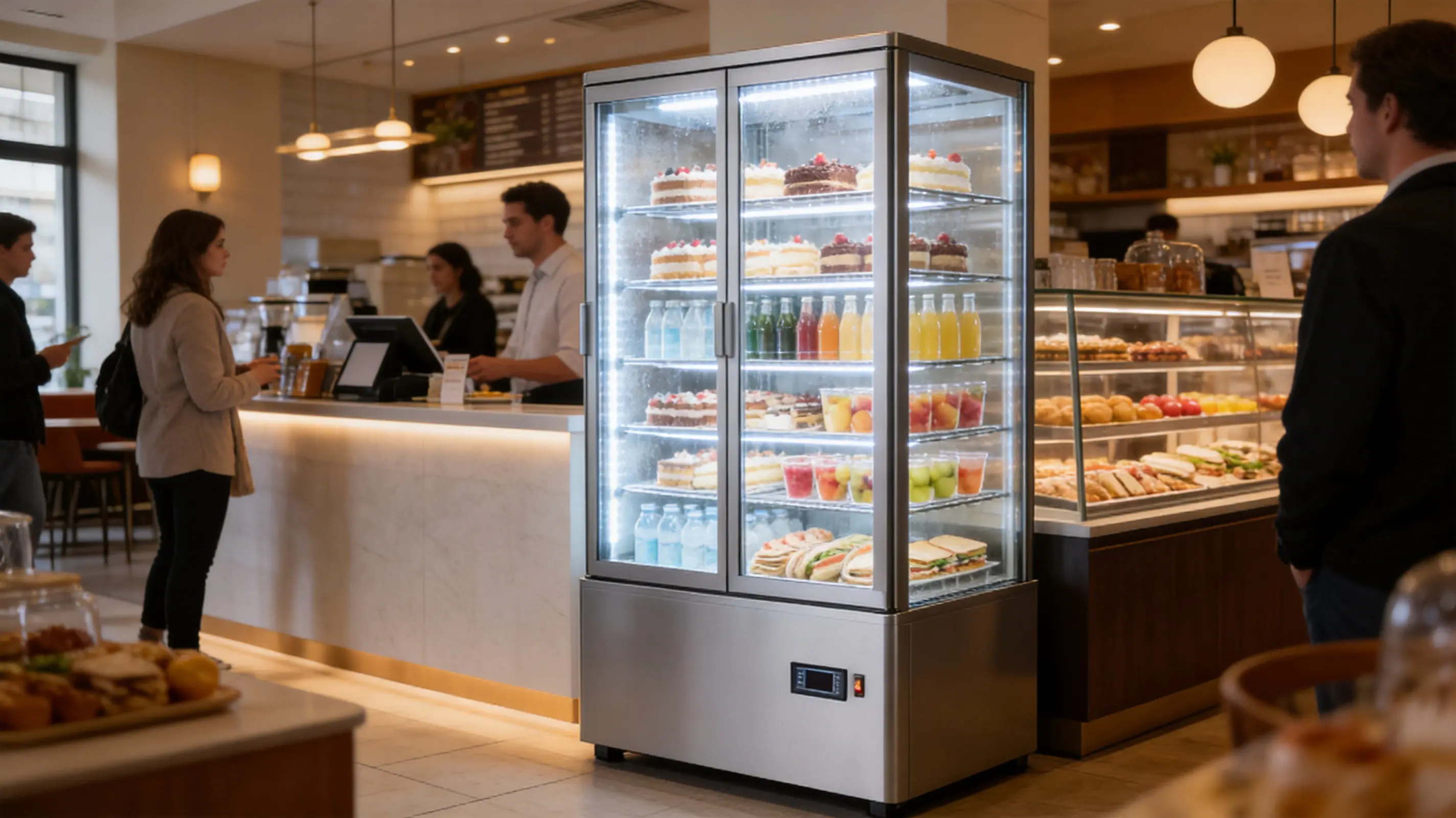
Construction and Configuration Options
The XC-98L is supplied with four-sided double glass, which supports visibility, insulation, and product presentation. Tempered glass is available as an option. Tempered glass is processed to improve its resistance to thermal and mechanical stress compared with ordinary glass. This option may be appropriate for commercial sites where additional glass performance is desired, although the final specification should be confirmed before ordering.
The choice of refrigerant is listed as R134a or R600a, according to configuration. Refrigerant selection may depend on market requirements, regional regulations, equipment configuration, and buyer preference. Importers and distributors should confirm the exact refrigerant type, electrical specification, labeling, and compliance documentation required for the destination market.
Climate class 4 indicates that the equipment is designed for a defined commercial ambient operating condition. Installation in a location with adequate ventilation and an appropriate ambient temperature is important. A display cooler should not be placed next to ovens, cooking equipment, radiators, direct sunlight, or other heat sources. Sufficient clearance around the cabinet allows heat to dissipate and supports reliable refrigeration performance.
The unit weighs approximately 39 kilograms net and 42 kilograms gross. Its manageable size makes it easier to transport and position than larger commercial display cabinets, while the packaging dimensions of approximately 502 × 456 × 1,160 millimeters provide a practical shipping format for distributors and project buyers.
Advantages Compared with Basic Display Refrigerators
More Viewing Directions
A common single-front display refrigerator concentrates visibility in one direction. The XC-98L provides four-sided viewing, which can make it more effective in open layouts and central merchandising locations. This is a significant advantage when customers circulate around the cabinet rather than approaching it from one fixed aisle.
Better Space Efficiency
The vertical design provides a useful display area while occupying a compact floor footprint. A business can use the cabinet to add chilled merchandising capacity without sacrificing as much floor space as a wide horizontal unit. This is particularly helpful for small shops, cafés, hotel lobbies, and compact food service areas.
Improved Product Organization
Adjustable shelves provide more flexibility than a fixed open compartment. Products can be separated by category and arranged at suitable heights. This improves the visual order of the display and can reduce the time required for restocking.
Enhanced Product Presentation
Internal LED lighting and transparent glass help make products visible and attractive. Customers can see the selection before opening the cabinet, which supports faster shopping and may reduce unnecessary door openings. The display format also gives operators a better opportunity to promote high-margin or seasonal products.
More Convenient Temperature Management
The digital thermostat, temperature display, ventilated cooling system, automatic defrost, and anti-fogging function combine to support practical commercial operation. These features do not replace responsible maintenance, but they reduce routine operating difficulties compared with a basic non-display refrigerator.
Manufacturing Experience and Quality-Oriented Production
The manufacturer, Ningbo XiangChi Electrical Co., Ltd., was established in 2007 and specializes in vertical display cabinets, cake cabinets, and warming cabinets. The company operates a modern management and production facility covering approximately 40,000 square meters. This industrial scale provides a foundation for organized production, product development, testing, assembly, and quality management.
Manufacturing commercial refrigeration equipment requires coordination between mechanical design, thermal engineering, electrical control, glass processing, insulation, sheet-metal work, assembly, and testing. A specialized manufacturer can develop repeatable processes for these different stages rather than treating each product as an isolated project.
The company maintains a professional research and development team and advanced testing facilities. These capabilities support continuous product improvement, design verification, and performance evaluation. Research and development are important in the display refrigeration sector because customers increasingly require improved visibility, efficient use of space, reliable temperature control, attractive lighting, flexible configurations, and compliance with international market standards.
A structured manufacturing process generally begins with product planning and engineering review. The design team evaluates cabinet dimensions, internal capacity, glass configuration, cooling circulation, shelf placement, lighting, electrical controls, and service accessibility. Prototype or pre-production samples can then be assessed before large-scale production. This approach helps identify design issues early and supports more consistent product output.
During assembly, the refrigeration system, cabinet structure, glass panels, shelving, lighting, thermostat, and electrical components must work together as an integrated product. Correct installation of insulation, gaskets, fans, temperature sensors, and control components is essential to reliable operation. Production line inspection can help confirm that each major assembly is installed according to the required specification.
Testing facilities are particularly important for commercial refrigeration. Testing may include temperature performance, electrical safety, insulation integrity, lighting operation, control response, defrost function, glass condition, packaging strength, and general operating stability. The exact test procedures depend on the product configuration, destination market, and applicable standards.
The company has obtained CE, GS, CCC, CB, RoHS, ETL, and other major certifications for relevant products and markets. Certifications must always be confirmed for the exact model and configuration being purchased, but the manufacturer’s experience with international certification systems demonstrates an orientation toward global compliance and export requirements.
Quality Control Considerations for Buyers
Commercial buyers should evaluate more than the appearance of a display cooler. They should review the complete technical specification, including voltage, frequency, refrigerant, temperature range, climate class, lighting configuration, shelf type, glass option, plug standard, packaging, and certification documents.
Before shipment, buyers may request confirmation of the model number, product dimensions, package dimensions, net weight, gross weight, loading quantity, and electrical requirements. They should also confirm whether the selected unit includes standard features only or includes optional elements such as a door lock, chromed shelves, tempered glass, or additional LED strips.
For large projects, sample approval can be useful. A sample allows the buyer to assess the visual presentation, glass clarity, shelf adjustment, temperature display, door movement, lighting, noise level, and overall finishing before approving a larger order. It can also help identify whether the product fits the intended retail environment.
Packaging is another important consideration. The XC-98L has a gross weight of approximately 42 kilograms and a package size of approximately 502 × 456 × 1,160 millimeters. During international transportation, the unit should be protected against impact, vibration, moisture, and improper handling. Distributors should also plan suitable warehouse and delivery procedures because glass equipment requires careful movement.
Container Loading and Distribution Efficiency
For wholesalers and importers, transport efficiency has a direct effect on landed cost. The listed loading quantities are approximately 110 units in a 20-foot general-purpose container and 230 units in a 40-foot high-cube container. These figures provide an initial planning reference for distribution programs and retail rollouts.
Actual loading quantities can vary according to packaging design, container restrictions, stacking requirements, pallet use, protective materials, and the final shipping plan. Buyers should request a confirmed packing list and loading plan for each order. Even so, the compact package format supports the distribution of multiple units in a single shipment.
A standardized model can also simplify spare parts management, staff training, installation procedures, and after-sales service. Retail groups operating multiple locations may benefit from deploying the same cabinet format across stores, since employees can use consistent loading and cleaning procedures.
Installation Recommendations
Correct installation is essential for the performance and service life of any commercial refrigerator. The cabinet should be placed on a stable, level surface. Level positioning supports proper door alignment, stable shelving, and reliable operation.
The cooler should be installed in a dry, well-ventilated indoor area unless the product documentation specifically permits another environment. It should be kept away from direct sunlight, ovens, hot water equipment, radiators, and other heat sources. Excessive ambient heat can increase the refrigeration workload and affect temperature stability.
Ventilation clearance should be maintained around the refrigeration components according to the manufacturer’s installation instructions. The cabinet should not be tightly enclosed in a way that prevents heat from escaping. If multiple refrigerated units are installed together, the layout should allow sufficient airflow and maintenance access.
After installation, the unit should be allowed to stabilize before being fully loaded. Operators should verify that the cabinet reaches the intended temperature and that the digital display, internal lighting, cooling fan, and defrost system operate correctly. Products should be loaded only after the cabinet has reached a suitable operating condition.
Loading and Merchandising Best Practices
Good loading practices protect both product quality and cooling performance. Shelves should not be overloaded, and products should not block air outlets or return passages. Air needs to circulate around the merchandise so that chilled air can reach all areas of the cabinet.
Products should be arranged with labels facing forward whenever possible. This improves customer recognition and makes stock checking easier. Heavier items should be placed on lower shelves when appropriate, while delicate desserts or premium products can be positioned where they are most visible and easy to handle.
Stock rotation should follow a first-in, first-out approach unless a different procedure is required for a particular product category. Staff should check use-by dates, packaging condition, and product temperature during restocking. Spills should be cleaned promptly to prevent odors, stains, or hygiene issues.
The quantity of products inside the cooler should be balanced. An empty cabinet may look unattractive and waste display potential, while an overfilled cabinet may restrict airflow and make products difficult to see. The adjustable shelves can be used to create a clean, organized presentation that matches actual stock levels.
Cleaning and Maintenance
Routine cleaning helps maintain hygiene, appearance, and cooling performance. The glass should be cleaned regularly with a suitable non-abrasive product. Shelves should be removed when practical and cleaned according to the material specification. Operators should avoid harsh chemicals or abrasive tools that could damage surfaces, coatings, seals, or glass.
The interior should be checked for spilled liquids, crumbs, food residue, and packaging fragments. These materials can create odors or obstruct drainage if they are not removed. The exterior should also be kept clean because a well-maintained cabinet contributes to customer confidence.
Door seals and glass edges should be inspected periodically. A damaged or poorly seated seal may allow warm air to enter, increase condensation, and reduce refrigeration efficiency. If unusual frost, water accumulation, noise, or temperature variation appears, the equipment should be inspected by qualified service personnel.
Electrical work and refrigeration-system service should be performed by appropriately trained technicians. Operators should follow the manufacturer’s manual for defrosting, cleaning, moving, and maintenance. Disconnecting power before cleaning or service is an important safety measure.

How the Cooler Supports Retail Sales
The commercial value of a display refrigerator comes from the relationship between preservation and presentation. A product that is stored correctly but hidden from view may not generate the same sales opportunity as a product that is clearly presented at the point of purchase.
The XC-98L can support impulse purchasing by placing chilled products in a visible, attractive, and accessible position. Beverages near a checkout area may appeal to customers waiting in line. Cakes near a café counter may encourage an additional dessert purchase. Ready-to-eat foods near a hotel reception area may provide a convenient option for guests.
Four-sided glass can increase the number of directions from which a product can attract attention. Internal lighting can strengthen that effect, especially in locations with uneven or low ambient light. Adjustable shelving allows the retailer to place best-selling items at prominent levels and create a more deliberate visual hierarchy.
Retailers can also use the cabinet for seasonal campaigns. Summer drinks, holiday desserts, promotional meal boxes, and limited-edition products can be displayed in a dedicated, highly visible space. After the campaign ends, the same cabinet can be reconfigured for a different product category.
Selection Guide for Different Buyers
For Small Businesses
Small businesses should focus on footprint, capacity, visibility, ease of use, and installation flexibility. The XC-98L offers a compact vertical structure that can add refrigerated display capacity without requiring a major renovation. The 98-liter volume may be suitable for a focused range of products rather than a broad supermarket assortment.
For Wholesalers and Distributors
Wholesalers should evaluate shipping dimensions, container loading, optional configurations, certification requirements, packaging, and after-sales support. The listed container quantities can assist preliminary planning, while the range of options allows distributors to serve different retail segments with a common base model.
For Retail Chains
Retail chains may value standardization. A consistent model across locations can simplify staff training, merchandising guidelines, maintenance procedures, replacement planning, and spare parts management. Buyers should establish clear specifications for glass type, lighting, shelves, refrigerant, electrical configuration, and branding or labeling before placing a multi-unit order.
For Hospitality Projects
Hotels, restaurants, and catering projects should prioritize appearance, operating convenience, cleanliness, and placement flexibility. The four-sided glass design can support open-plan interiors, while the compact footprint helps preserve customer circulation space. Optional lighting and chromed shelves may be suitable for higher-end presentation requirements.
Frequently Asked Questions
What products can be displayed in the XC-98L?
The cooler is suitable for many chilled products that require a temperature range from 2°C to 10°C, including beverages, dairy products, packaged snacks, sandwiches, desserts, cakes, and prepared foods. The required storage temperature should always be confirmed for each individual product.
Is this a freezer?
No. The XC-98L is a refrigerated display cooler, not a freezer. Its listed temperature range is 2°C to 10°C, so it is intended for chilled products rather than frozen goods.
What is the capacity of the cabinet?
The nominal capacity is 98 liters. The usable merchandising capacity may vary depending on shelf arrangement, product packaging, and the amount of space reserved for air circulation.
Why are four glass sides useful?
Four glass sides allow customers to view the products from multiple directions. This makes the cabinet suitable for freestanding placement in open areas, near entrances, beside checkout counters, or in central merchandising zones.
Does the cooler include lighting?
Yes. An internal top LED light is listed as a standard feature. Two-strip and four-strip LED light bar configurations are available as options for buyers who require additional illumination.
Are the shelves adjustable?
Yes. Adjustable PVC-coated shelves are included as a standard feature. Chromed shelves are available as an option, subject to the selected configuration.
Does the unit prevent glass fogging?
The cooler includes a glass fog-preventing system. Performance can be influenced by humidity, ambient temperature, door opening frequency, loading, and installation conditions. Regular cleaning and correct installation remain important.
Does the unit defrost automatically?
Yes. Automatic defrost is listed as a standard feature. Operators should still perform routine inspections and follow the recommended maintenance procedures.
Can the cooler be locked?
A door lock is available as an optional feature. Buyers should specify this requirement when confirming the order.
What refrigerant does the cooler use?
The listed refrigerant options are R134a and R600a. The exact refrigerant depends on the configuration and market requirements, so it should be confirmed before purchase.
What does climate class 4 mean?
Climate class 4 identifies a defined ambient operating condition for which the equipment is designed. The buyer should review the technical documentation and install the cabinet in a suitable environment with adequate ventilation.
How much does the cabinet weigh?
The net weight is approximately 39 kilograms, while the gross shipping weight is approximately 42 kilograms.
What are the product dimensions?
The approximate product dimensions are 447 millimeters wide, 400 millimeters deep, and 1,119 millimeters high. The package dimensions are approximately 502 × 456 × 1,160 millimeters.
How should the cabinet be maintained?
Maintenance should include regular glass and shelf cleaning, inspection of door seals, removal of spilled products, checking of air passages, temperature monitoring, and professional service when unusual performance occurs. Power should be disconnected before cleaning or service when required by the operating instructions.
Can this model be used in a supermarket?
Yes. It can be used as a compact supplementary display cabinet for beverages, desserts, chilled snacks, or promotional products. Its capacity is best suited to focused merchandising rather than serving as the sole refrigeration system for a large supermarket department.
Is this model suitable for export?
The manufacturer has experience with international markets and lists certifications including CE, GS, CCC, CB, RoHS, and ETL for relevant products. Export buyers should confirm that the specific model, electrical configuration, refrigerant, labeling, and certification documents meet the requirements of the destination country.
Conclusion
The XC-98L four-sided glass refrigerated standing display cooler combines compact capacity, commercial refrigeration, broad product visibility, and flexible merchandising in one practical cabinet. Its 98-liter interior is suitable for targeted displays, while the 447 × 400 millimeter footprint helps businesses use valuable floor space efficiently.
Its principal advantages include four-sided double-glass visibility, a 2°C to 10°C temperature range, ventilated cooling, automatic defrost, anti-fogging support, digital temperature control, internal LED lighting, adjustable shelves, and optional configuration choices. These features make it suitable for convenience stores, cafés, bakeries, hotels, restaurants, supermarkets, and other food service environments.
Beyond the product itself, the manufacturer brings more than a decade of experience in vertical display cabinets, cake cabinets, and warming cabinets. Its dedicated research and development team, testing facilities, modern production site, and experience with global certifications support a quality-oriented manufacturing approach. For distributors, wholesalers, and commercial operators seeking an attractive and space-conscious chilled display solution, the XC-98L offers a balanced combination of function, presentation, configuration flexibility, and international manufacturing capability.
References
1. Product technical specification for the XC-98L four-sided glass refrigerated standing display cooler.
2. Commercial refrigeration equipment operating and maintenance principles.
3. General guidance for refrigerated food display, temperature monitoring, and product rotation.
4. Manufacturer-provided information concerning vertical display cabinets, cake cabinets, warming cabinets, research and development, production facilities, and certification experience.
5. General commercial refrigeration considerations for installation, ventilation, cleaning, loading, defrosting, and preventive maintenance.
Product: 4 Sided Glass Refrigerated Standing Display Cooler

You May Also Like

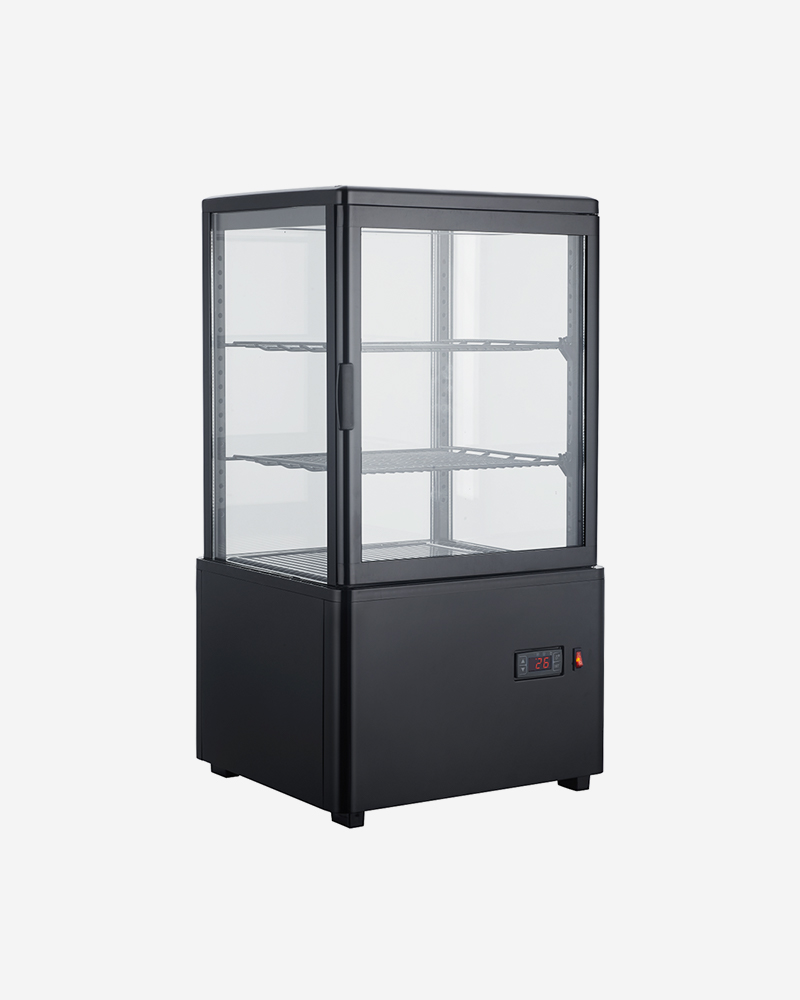




-
- Navigation
- Home
- About Us
- Products
- News
- Contact Us
 East Zone, Guanhaiwei Industrial Park, Cixi City, Ningbo, Zhejiang, China
 +86-574-63668678
 +86-574-63668108

Copyright © Ningbo XiangChi Electrical Co.,Ltd All Rights Reserved.
