
 简体中文
 English
 Español

News
Commercial Countertop Refrigerator Bakery Dairy Display Cooler Case
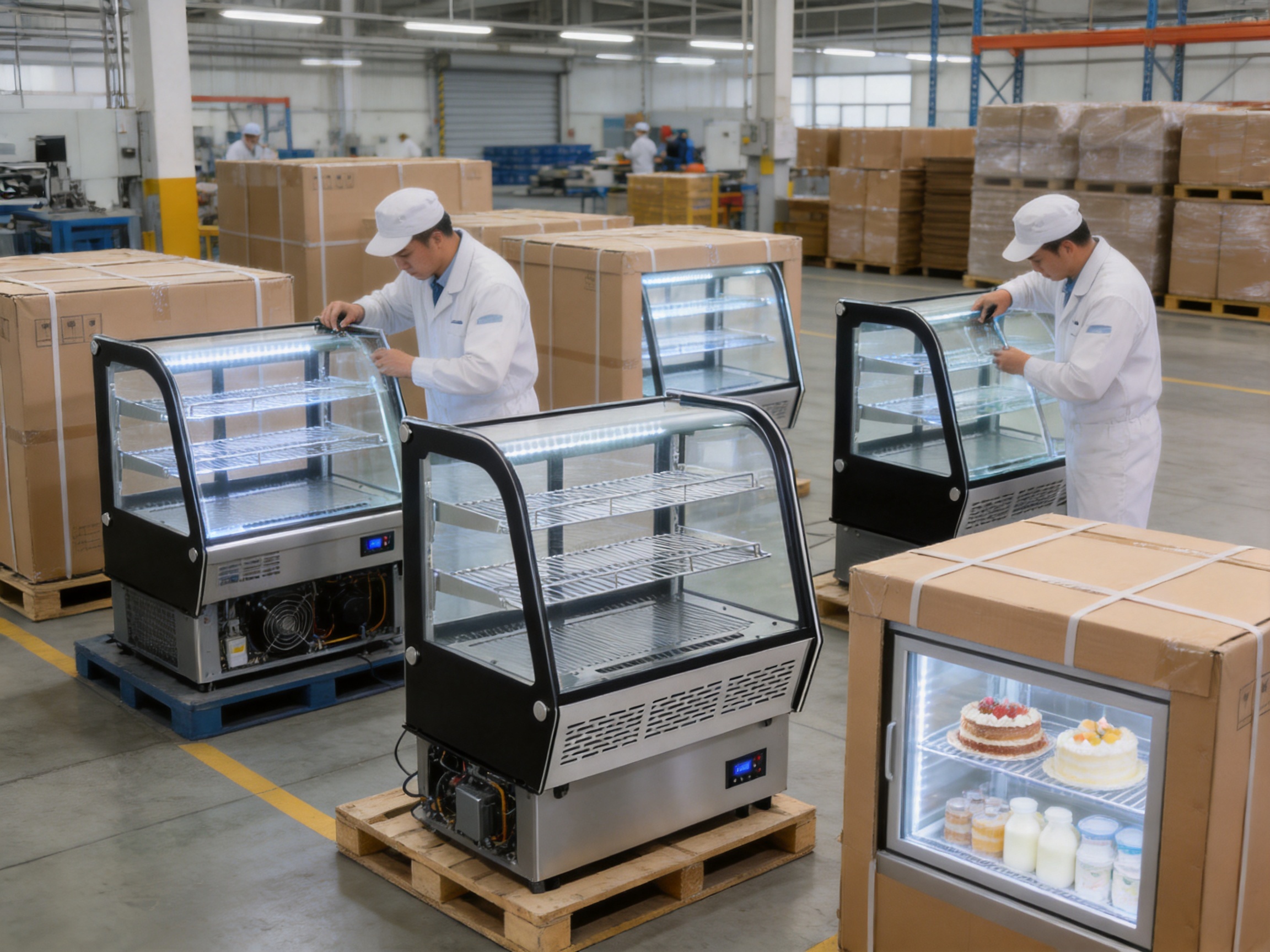
In modern food retail, presentation and preservation must work together. A chilled product can be safe and fresh, yet still lose sales if customers cannot see it clearly, if shelves are difficult to access, or if the cabinet occupies too much valuable floor space. The XCW-120L Commercial Countertop Refrigerator Bakery Dairy Display Cooler Case is designed to address these practical requirements in a single compact solution. It combines refrigerated storage, full product visibility, organized merchandising, and countertop installation in a cabinet intended for bakeries, cafés, convenience stores, restaurants, hotels, supermarkets, and other food-service environments.
With a rated capacity of 120 liters, a temperature range of 2–10°C, ventilated cooling, automatic defrost, internal LED illumination, and a front curved double-layer tempered-glass window, the unit is suitable for displaying chilled bakery products, dairy foods, desserts, prepared meals, sandwiches, beverages, fruit portions, and other temperature-sensitive merchandise. Its compact product dimensions of 710 × 568 × 686 mm make it especially useful where available floor area is limited but professional merchandising is still important.
Unlike a basic under-counter refrigerator or a closed storage cabinet, this countertop display refrigerator is designed to sell products as well as preserve them. Customers can view the contents from the front, while staff can arrange products on adjustable chromed shelves and replenish the case through the rear sliding glass doors. The result is a practical balance between attractive presentation, efficient operation, and everyday convenience.
Product Overview and Commercial Purpose
The XCW-120L is a countertop display refrigerator for businesses that require refrigerated merchandising without installing a large vertical cabinet. It is intended to sit on a stable counter, worktop, service station, or other suitable commercial surface. This design is valuable for businesses that want to place chilled products close to the point of purchase, such as at a bakery checkout, coffee shop counter, hotel breakfast area, deli service station, or restaurant front desk.
The 120-liter capacity provides useful display volume while keeping the external footprint relatively controlled. The cabinet is large enough to present several product categories but compact enough to fit into a variety of commercial layouts. A retailer may use it for cakes and pastries, while a café may dedicate it to dairy drinks, sandwiches, or chilled desserts. A hotel may position it beside a breakfast service counter, and a convenience store may use it for ready-to-eat foods or premium beverages.
The product’s temperature range of 2–10°C supports common chilled-food applications. It allows operators to select a suitable setting according to the merchandise being displayed, the operating environment, and the recommendations of the food manufacturer. Because different products have different preservation requirements, the digital thermostat and temperature display are important operational features. Staff can monitor the cabinet setting directly rather than relying on an approximate mechanical dial.
The cabinet is also designed for visual merchandising. Internal strip LED lights illuminate the displayed products, helping customers identify colors, shapes, labels, and product details. Clear glass on the front and sliding glass doors at the rear provide a more open visual experience than an opaque refrigerator. For businesses that depend on impulse purchases, the ability to see the merchandise clearly can be a meaningful commercial advantage.

Commercial Countertop Refrigerator Bakery Dairy Display Cooler Case
Key Specifications
The main specifications of the XCW-120L are summarized below. These specifications provide a practical basis for planning installation, electrical service, shipping, storage, and product use.
| Item | Specification |
|---|---|
| Model | XCW-120L |
| Rated capacity | 120 liters |
| Temperature range | 2–10°C |
| Input power | 240 W |
| Refrigerant options | R134a or R600a, according to configuration |
| Climate type | 4 |
| Net weight | 57 kg |
| Gross weight | 60 kg |
| Product dimensions | 710 × 568 × 686 mm |
| Package dimensions | 773 × 627 × 735 mm |
| 20-foot general-purpose container loading | 81 units |
| 40-foot high-cube container loading | 162 units |
The 240 W input power rating reflects the unit’s compact commercial refrigeration format. Actual energy consumption can vary depending on ambient temperature, door opening frequency, product loading, thermostat setting, cleaning condition, and installation clearance. Operators should provide adequate ventilation around the refrigeration system and follow the installation instructions supplied with the final configuration.
The climate type 4 classification indicates that the cabinet is designed for a defined commercial operating environment. Even so, performance depends on correct placement. The refrigerator should not be installed next to ovens, cooking equipment, radiators, direct sunlight, or other strong heat sources. Adequate air circulation is also important for maintaining stable cooling performance and protecting the refrigeration system from unnecessary stress.
Advantages of the Countertop Display Format
Efficient Use of Commercial Space
One of the clearest advantages of the XCW-120L is its countertop format. Traditional vertical display refrigerators may provide greater capacity, but they also require dedicated floor space and can affect customer movement. A countertop unit makes use of space that may otherwise be underutilized. This is particularly helpful in compact bakeries, small cafés, kiosks, hotel lobbies, and food-service counters.
By placing the refrigerator near the point of service, businesses can reduce the distance between the product and the customer. Staff can display frequently purchased items in a prominent position, while customers can make quick decisions without walking to a separate refrigerator aisle. The arrangement may also support cross-selling. For example, a café can display chilled desserts beside the beverage preparation area, or a bakery can place dairy products and ready-to-eat snacks near the checkout.
Improved Product Visibility
The front curved tempered-glass panel provides a broad viewing area and contributes to the cabinet’s display function. Its double-layer construction helps create a more robust barrier between the refrigerated interior and the surrounding environment. Clear visibility is particularly useful for delicate products such as cakes, pastries, mousse desserts, prepared salads, sandwiches, and premium dairy items, where appearance strongly affects the buying decision.
The combination of curved front glass, rear sliding doors, and internal LED lighting gives the cabinet a professional retail appearance. Compared with an ordinary refrigerator with a solid door, the product can be viewed before the customer or staff member opens the cabinet. This can reduce unnecessary door opening during browsing and support a cleaner, more organized presentation.
Flexible Shelf Arrangement
Adjustable chromed shelves allow operators to adapt the cabinet interior to different product sizes. A bakery may need shelf spacing for tall cakes on one occasion and smaller pastries or packaged desserts on another. A restaurant may arrange containers of prepared food, while a convenience outlet may use the cabinet for bottles, cans, sandwiches, and snack packages.
Adjustability is an important advantage over fixed-shelf display cases. A fixed interior can create unused vertical space or force operators to place products in unsuitable positions. Adjustable shelves allow the available volume to be used more efficiently, helping the operator create a fuller and more attractive display without overloading the cabinet.
Rear Sliding Glass Doors
The back sliding glass doors are designed for staff access. In a countertop service environment, employees can stand behind the unit and replenish or retrieve products without moving around to the customer side. This supports a practical front-of-house and back-of-house workflow.
Sliding doors are also useful where swing-door clearance would be inconvenient. Because the doors move horizontally, they do not require a large opening area behind the cabinet. This is beneficial on narrow counters, at busy service stations, and in locations where employees work close to the display unit. The glass doors allow staff to identify products before opening the cabinet, helping them select the correct item efficiently.
Cooling Performance and Temperature Management
Ventilated Cooling System
The XCW-120L uses a ventilated cooling system to distribute chilled air through the display area. Compared with a purely static cooling arrangement, ventilated cooling is intended to promote more even temperature distribution around the stored products. This is especially useful in a display cabinet where products may be arranged on multiple shelves and where the interior must maintain a suitable temperature across the visible merchandising area.
Air movement should not be confused with unlimited loading flexibility. Products must still be arranged so that air circulation paths are not blocked. Operators should avoid pushing packages tightly against air outlets or filling the cabinet beyond its practical display capacity. Proper spacing helps the cooling system work more efficiently and supports consistent product temperatures.
Temperature Range of 2–10°C
The 2–10°C operating range is suitable for many chilled food and beverage categories. Common applications may include dairy products, cream-based desserts, refrigerated cakes, sandwiches, fruit cups, prepared salads, cold dishes, and packaged drinks. The correct setting should always be selected according to the product’s required storage condition and applicable food-safety procedures.
A broad adjustable range gives operators flexibility, but it also places responsibility on the user. The cabinet should be pre-cooled before loading, and warm products should not be placed into the unit in quantities that exceed its cooling capability. New merchandise should be loaded in a way that does not obstruct the airflow or cause a sudden rise in cabinet temperature.
Digital Thermostat and Display
The digital thermostat and display provide a direct method for controlling and observing the cabinet temperature setting. This is more convenient than relying on a simple visual estimate or an unmarked control. Digital control can also help staff follow internal operating procedures, record settings, and respond more quickly if the display indicates a condition outside the expected range.
For commercial operators, temperature visibility is important because the refrigerator is part of the food-handling process. Staff should check the display routinely, particularly after restocking, cleaning, power interruptions, or periods of heavy service. A digital interface does not replace an independent food-safety thermometer or documented temperature-management program where such controls are required, but it provides a useful built-in reference.
Automatic Defrost
Automatic defrost reduces the need for frequent manual intervention. In refrigerated equipment, frost can gradually build up under certain operating conditions. Excessive frost may reduce usable interior space, restrict airflow, and affect cooling efficiency. An automatic defrost function helps manage this issue as part of normal operation.
Automatic defrost does not eliminate the need for cleaning and inspection. Operators should still wipe interior surfaces, clean the glass, check shelf condition, and remove spills promptly. Drainage areas and ventilation openings should remain clear. Regular maintenance is essential for hygiene, product presentation, and long-term equipment performance.
Display Design and Customer Experience
A refrigerated display case is both a preservation appliance and a sales tool. The XCW-120L is designed to make the product presentation part of the customer experience. The front curved glass gives the cabinet a polished appearance and supports a wide viewing angle. Customers can see the displayed products while approaching the counter, and staff can maintain the display without blocking the front of the cabinet.
Double-layer tempered glass provides a combination of visibility and durability. Tempered glass is processed to improve its resistance to ordinary mechanical stress compared with standard untreated glass. The double-layer structure also helps separate the chilled interior from the ambient environment. Like any glass component, it should be handled carefully, inspected for damage, and cleaned with suitable materials.
Internal strip LED lights provide focused illumination without relying entirely on the surrounding store lighting. Good lighting can help distinguish product colors and improve the visual impact of decorated cakes, pastries, sandwiches, desserts, and beverages. LED lighting is also commonly valued for its compact format and low heat output compared with traditional lighting technologies, making it appropriate for a refrigerated display environment.
Merchandising should be planned around visibility. Products should face forward, labels should be readable where possible, and different colors or package sizes can be grouped to create a clear visual structure. The adjustable chromed shelves make it possible to vary the arrangement according to the product assortment and seasonal sales plan.
Practical Applications
Bakeries and Cake Shops
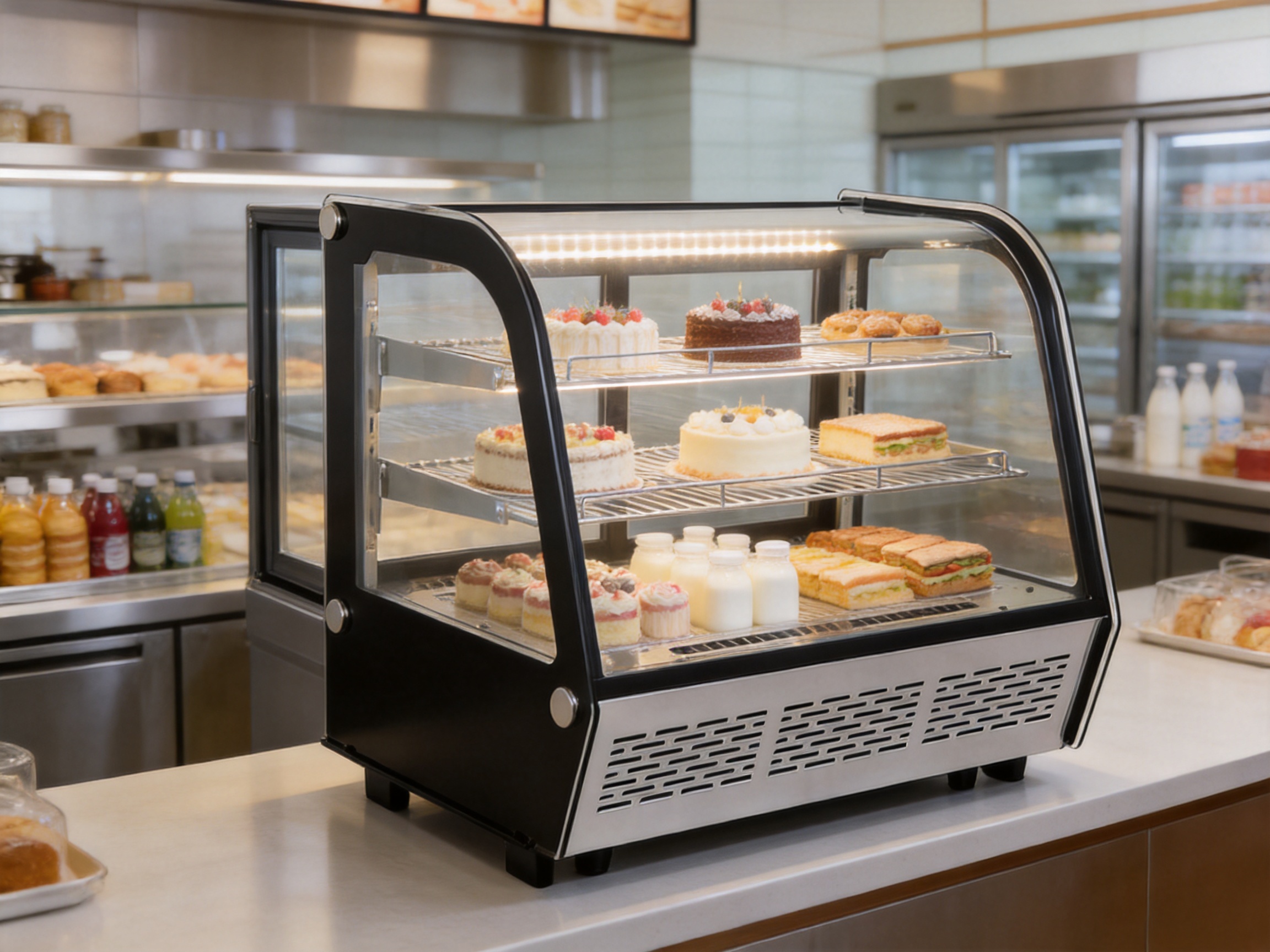
Bakeries can use the cabinet to display chilled cakes, cream pastries, mousse desserts, cheesecakes, tiramisu, fruit tarts, and other products that require refrigerated storage. The glass display allows customers to examine the appearance of the goods before purchasing, while the adjustable shelves help accommodate both individual portions and larger decorated items.
For a bakery counter, the countertop design can keep chilled products within the staff member’s working area. The rear sliding doors make it possible to retrieve products from behind the case while customers view the display from the front. This arrangement can support faster service during busy periods and reduce the need to place refrigerated merchandise in a separate room or floor-standing cabinet.
Cafés and Coffee Shops
Cafés often sell a combination of beverages, sandwiches, desserts, yogurt, fruit cups, and other chilled products. A 120-liter countertop display refrigerator can help organize these items close to the ordering point. The LED-lit interior can highlight premium desserts or ready-to-eat foods that may otherwise be overlooked.
The cabinet can also support a flexible menu. Shelf positions may be adjusted for bottled drinks during one season and for desserts or packaged meals during another. Because the case is not limited to one type of merchandise, it can adapt as customer preferences change.
Convenience Stores
Small convenience stores and neighborhood markets may not have enough room for a large refrigerated aisle. A countertop display case can provide a compact way to present high-margin chilled items near the register or in a targeted promotional area. It may be used for dairy snacks, packaged sandwiches, specialty desserts, chilled drinks, or seasonal products.
In a convenience-store setting, clear visibility and easy replenishment are especially important. Staff can see the product arrangement through the glass and access the cabinet from the rear. The unit’s compact dimensions make it easier to integrate into a store layout without creating a major obstruction.
Restaurants and Delis
Restaurants and delis can use the refrigerator for prepared foods, cold appetizers, desserts, salads, sandwiches, and packaged takeaway items. The front display can help customers understand the available choices, while the rear access suits service counters where staff work behind the cabinet.
For self-service or semi-self-service environments, operators should evaluate whether the rear sliding doors and display arrangement match the intended workflow. The cabinet is particularly suitable for staff-served applications in which employees control access and product handling.
Hotels and Catering Operations
Hotels may place the cabinet in breakfast areas, lobby cafés, executive lounges, or event-service zones. Its presentation-oriented design can complement a hospitality environment where product appearance and cleanliness are central to the guest experience. Catering businesses may also use it for temporary or semi-permanent display of chilled desserts and prepared foods, provided that the installation location offers a suitable power supply and stable countertop.
Comparison with Common Alternative Refrigeration Solutions
Businesses evaluating refrigerated display equipment commonly compare countertop cases with upright display refrigerators, under-counter refrigerators, open display coolers, and non-refrigerated showcases. Each type has a different purpose. The XCW-120L offers a particular balance of compact size, product visibility, staff access, and controlled cooling.
| Equipment type | Typical strength | Potential limitation | Positioning of the XCW-120L |
|---|---|---|---|
| Under-counter refrigerator | Good for concealed storage | Limited customer visibility | Adds visible merchandising and countertop placement |
| Large upright display cabinet | Higher display capacity | Requires more floor space | Offers a compact alternative for smaller sales areas |
| Open display cooler | Fast customer access | Greater exposure to ambient air and product handling | Uses glass doors for a more controlled staff-served display |
| Non-refrigerated showcase | Simple and economical display | Cannot maintain chilled temperatures | Combines display with active refrigeration |
| Basic glass-door refrigerator | Refrigerated product storage | May have less merchandising flexibility | Adds adjustable chromed shelves, rear sliding doors, and countertop design |
The most appropriate equipment depends on the store layout, product category, service model, and required capacity. The XCW-120L is not intended to replace every type of commercial refrigerator. Its principal advantage is that it integrates display and chilled storage in a compact cabinet intended for placement directly on a counter.
Compared with an open-front cooler, the glass-enclosed design provides a physical barrier between the products and the surrounding environment. This can support a more controlled display and reduce direct customer contact with merchandise. Compared with an opaque refrigerator, the glass construction makes the contents visible and gives the cabinet a stronger merchandising role.
Construction, Convenience, and Daily Operation
Chromed Shelves
The adjustable chromed shelves contribute to both organization and appearance. Their finish is suitable for a commercial display environment where shelves are visible through the front glass. Operators can configure the interior to create distinct product levels, avoid wasted space, and keep merchandise easy to identify.
Shelves should be removed and cleaned according to the maintenance instructions. Heavy products should be distributed evenly, and operators should avoid exceeding the allowable shelf load. A balanced arrangement supports cabinet stability and helps maintain a professional display.
Separated Power Button
The separated power button provides a straightforward way to control the appliance independently from the thermostat interface. This can be useful during cleaning, maintenance, or periods when the cabinet is not required. Staff should use the power control according to the operating instructions and should not repeatedly switch the unit on and off without allowing appropriate stabilization time.
Countertop Installation
Before installation, the operator should confirm that the countertop can safely support the net weight of approximately 57 kg as well as the weight of the products placed inside. The surface should be level, stable, clean, and resistant to moisture. Sufficient clearance should be provided around the refrigeration system to support heat dissipation and service access.
The package weight is approximately 60 kg, and the packaged dimensions are 773 × 627 × 735 mm. These figures should be considered when planning delivery access, storage, unpacking, and movement through doors or corridors. The unit should be transported carefully to protect the glass panels and refrigeration components.
Manufacturing Strengths and Engineering Capability
The product is manufactured by Ningbo XiangChi Electrical Co., Ltd., a Chinese producer specializing in vertical display cabinets, cake cabinets, warming cabinets, and related commercial refrigeration equipment. The company was established in 2007 and has developed more than a decade of experience in the field. Its stated manufacturing site covers approximately 40,000 square meters and is organized as a modern management and production facility.
A significant strength is the company’s focus on dedicated product development. A professional research and development team supports product innovation and improvement, while advanced testing facilities are used to evaluate performance and quality. For commercial refrigeration, this combination is important because a successful product must perform consistently across cooling, insulation, glass construction, electrical operation, shelf loading, lighting, and daily service conditions.
Manufacturing quality is not determined by one component alone. A commercial display refrigerator requires coordination among sheet-metal fabrication, glass processing, refrigeration assembly, electrical wiring, thermostat installation, sealing, shelf production, testing, packaging, and final inspection. A manufacturer with experience across these processes is better positioned to identify design interactions and improve production consistency.
The company reports compliance or certification experience involving CE, GS, CCC, CB, RoHS, ETL, and other major international certifications. Certification requirements vary according to the destination market, product configuration, refrigerant choice, electrical specification, and applicable legislation. Buyers should confirm the exact certificates and approvals supplied with the particular order. Nevertheless, experience with multiple certification systems reflects an orientation toward international markets and documented product requirements.
The company’s production capability also supports wholesale and project-based purchasing. The stated container-loading quantities of 81 units in a 20-foot general-purpose container and 162 units in a 40-foot high-cube container provide useful planning information for distributors, importers, hotel groups, food-service chains, and retail operators. Final loading quantities may vary depending on packaging, loading method, and shipping requirements, but the figures indicate that the product has been considered for efficient commercial logistics.
Quality Control Considerations
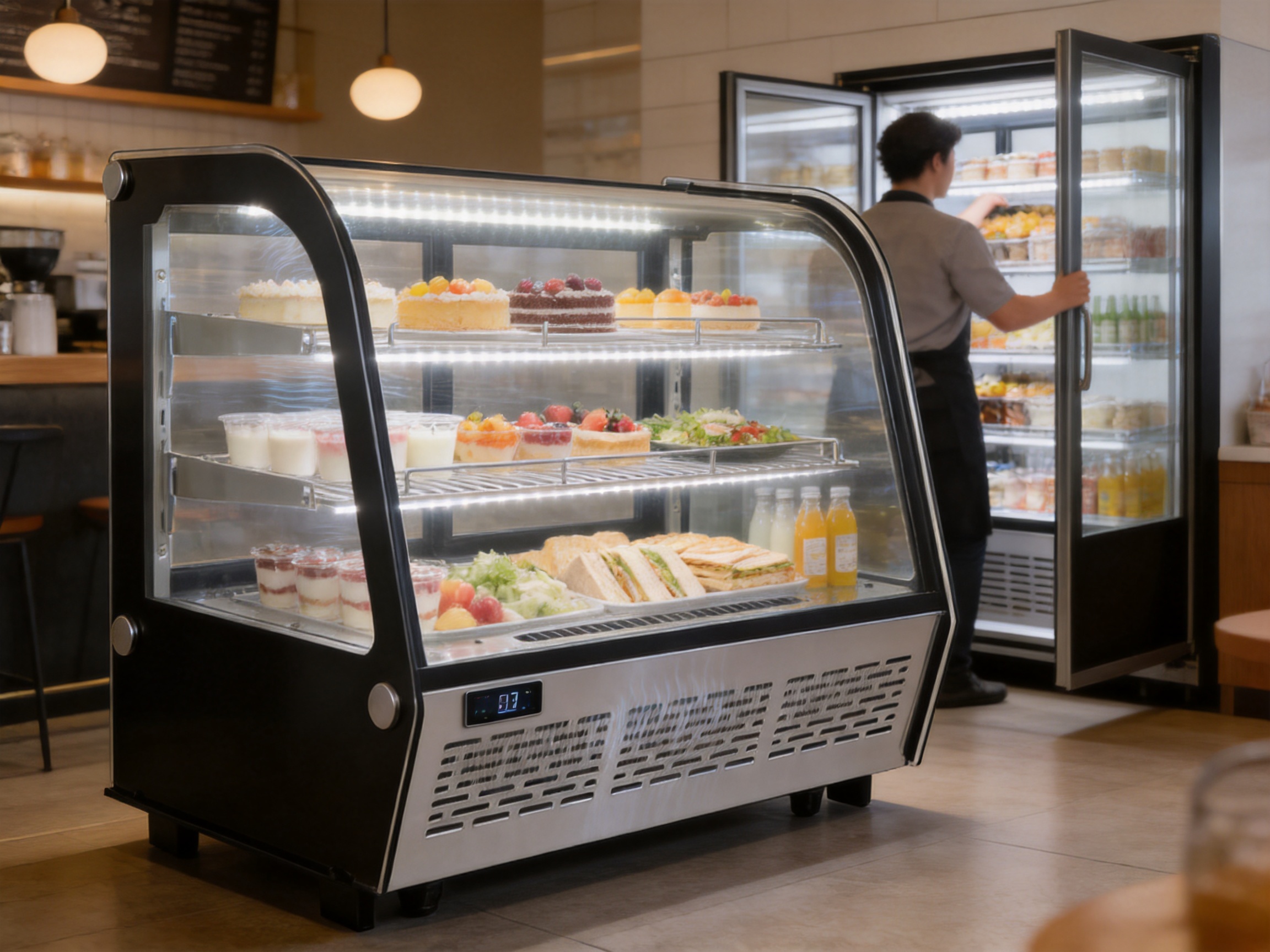
For display refrigeration equipment, quality control should cover both appearance and functional performance. Glass panels should be inspected for clarity, correct fitting, and damage. Sliding doors should move smoothly and close properly. Shelves should be level and secure. LED lights should operate correctly, and the digital thermostat should provide a clear display.
Refrigeration testing should verify that the cabinet can reach and maintain the intended temperature under defined test conditions. The ventilated cooling system should be checked for proper airflow, while automatic defrost operation should be evaluated as part of the product’s operating cycle. Electrical safety testing and insulation checks are also important before shipment.
Packaging is another essential part of manufacturing quality. A well-designed package should protect the glass, corners, doors, shelves, and refrigeration system during handling and transportation. Because the packaged unit weighs approximately 60 kg, lifting and movement procedures should be planned carefully. Buyers receiving multiple units should inspect cartons for impact damage and report any concerns promptly.
Manufacturers serving international customers must also manage differences in voltage, frequency, plug design, labeling, documentation, and certification. The final configuration should be confirmed before production. Refrigerant selection, electrical components, and control settings may vary according to the target market and order requirements.
Refrigerant and Environmental Considerations
The listed refrigerant options are R134a and R600a, depending on configuration. Refrigerant selection can influence the equipment design, service requirements, regulatory status, and environmental profile. Buyers should confirm which refrigerant is supplied in the actual model ordered and should ensure that installation and servicing are performed by qualified personnel.
R600a is widely used in certain refrigeration applications because of its favorable thermodynamic characteristics and low global warming potential, but it is classified as flammable and therefore requires appropriate handling and compliant system design. R134a has been used extensively in refrigeration equipment, although regulations and market preferences continue to evolve. The correct refrigerant must never be substituted without authorization from the manufacturer or a qualified refrigeration professional.
Environmental responsibility also involves the entire product life cycle. Proper operating temperature, clean condenser areas, unobstructed airflow, correct door closure, and regular maintenance can support efficient operation. At the end of the appliance’s service life, refrigerant recovery and equipment recycling should follow applicable local regulations.
Recommended Operating Practices
Before First Use
Place the refrigerator on a stable, level countertop and remove all packaging materials. Inspect the cabinet, glass, doors, shelves, power cord, and control panel. Allow the unit to stand for the period recommended in the operating instructions after transportation, particularly if it has been tilted or moved over a long distance.
Clean the interior surfaces and shelves with an appropriate food-equipment cleaning solution. Confirm that the air outlets are unobstructed. Connect the unit to a suitable electrical supply and allow it to cool to the required temperature before loading products.
Loading the Cabinet
Load products in an organized manner that leaves room for air movement. Do not block internal vents, overload shelves, or place hot food directly into the cabinet unless the equipment and food-handling procedure specifically permit it. Use product rotation practices such as first-in, first-out where appropriate.
Do not place merchandise against the glass in a way that prevents the doors from closing correctly. Products should be arranged so that customers can see them clearly and staff can retrieve them without disturbing the entire display.
During Daily Service
Check the digital display at regular intervals and observe whether the doors close properly. Keep the front glass clean because fingerprints, condensation, and product residue can reduce visual impact. Wipe spills promptly and remove expired or damaged products immediately.
Frequent opening of the rear sliding doors can increase the thermal load. Staff should retrieve and replenish products efficiently and should avoid leaving the doors open longer than necessary. The cabinet should not be used as a temporary storage area for products that are not intended for chilled display.
Cleaning and Maintenance
Disconnect power when performing cleaning or maintenance procedures that require access to electrical components. Do not spray water directly onto the thermostat, lighting, power switch, wiring, or refrigeration components. Clean glass with a suitable non-abrasive product, and avoid materials that could scratch or weaken the surfaces.
Inspect the shelves, door tracks, seals, ventilation openings, and visible refrigeration areas. Dust and debris around air circulation or heat-dissipation areas should be removed according to the manufacturer’s instructions. If the unit makes unusual sounds, fails to reach temperature, develops persistent condensation, or shows an electrical fault, it should be examined by qualified service personnel.
Merchandising Strategies for Better Results
The product’s commercial value depends partly on how it is used. A well-maintained refrigerator with poor merchandising may not achieve its full potential. Operators should group products logically, place high-demand items where they are easy to reach, and use the most visible shelves for products that benefit from presentation.
Color coordination can create a more attractive display. Cakes with contrasting toppings, brightly packaged beverages, fruit desserts, and neatly arranged sandwiches can make the cabinet look full and fresh. Products should not be packed so tightly that customers cannot distinguish one item from another.
Price labels and product information should be positioned so that they do not obstruct the glass or interfere with cleaning. Seasonal displays can be created by changing shelf height and product grouping. During holidays, for example, a bakery may use the upper shelf for decorated cakes and the lower shelves for individual desserts or gift packs.
The cabinet can also support promotional planning. A café may introduce a chilled dessert beside a featured coffee, while a deli may position prepared salads next to sandwiches. Because the unit is designed for countertop placement, it can be moved within a planned layout when permitted by the installation requirements, allowing the business to test different customer-flow arrangements.
Purchasing and Project Planning
Before placing an order, buyers should confirm the product dimensions, available countertop area, electrical requirements, glass-door configuration, refrigerant, temperature range, labeling, and destination-market certification needs. The stated model information identifies the unit as XCW-120L, but final specifications should be verified on the quotation, technical drawing, and commercial documentation.
Distributors should also consider packaging dimensions and container utilization. The listed loading information can assist with preliminary freight planning, warehouse capacity calculations, and landed-cost estimation. Importers should account for customs documentation, local electrical standards, insurance, unloading equipment, and last-mile delivery.
For multi-unit projects, buyers may request production schedules, spare-parts recommendations, warranty conditions, inspection procedures, and user manuals. A professional manufacturer should be able to clarify the available configurations and provide documentation appropriate to the destination market. It is also advisable to establish a communication process for technical questions and after-sales service before the order is finalized.
Businesses should select the capacity according to product turnover rather than simply choosing the largest available cabinet. The 120-liter format is appropriate when the operator needs visible chilled merchandising but has limited counter space or a moderate product assortment. If the business expects a high volume of stock or requires multiple product temperature zones, additional or larger equipment may be necessary.
Why This Model Is a Practical Competitive Choice
The XCW-120L competes by combining several features that are often purchased separately: compact installation, active refrigeration, clear product display, adjustable shelving, internal lighting, staff-side access, and digital temperature control. Its value is not based only on capacity. It is based on how effectively the cabinet supports the complete retail process from storage and temperature management to customer presentation and replenishment.
Its countertop format can be more suitable than a large upright cabinet for businesses that want to preserve floor space. Its enclosed glass design may be more controlled than an open cooler for staff-served applications. Its adjustable shelves offer more flexibility than a fixed interior, and its curved double-layer front glass contributes to a more polished display than a basic storage refrigerator.
The combination of ventilated cooling and automatic defrost supports routine commercial operation, while the digital thermostat makes the set temperature easier to manage. Internal strip LED lighting improves product visibility, and the separated power button provides straightforward operational control. These features address practical concerns that affect both daily labor and customer perception.
The manufacturer’s experience in display cabinets, cake cabinets, warming cabinets, and related products is another competitive factor. A company that focuses on this category can develop manufacturing knowledge around glass display construction, refrigeration integration, product presentation, and commercial-use requirements. Its R&D resources, testing facilities, international certification experience, and large production site further support its ability to serve professional buyers.
Frequently Asked Questions
What type of business is the XCW-120L designed for?
The refrigerator is designed for bakeries, cake shops, cafés, restaurants, delis, convenience stores, hotels, catering operations, and other businesses that need to display chilled products on a counter. Typical products may include cakes, pastries, dairy foods, sandwiches, desserts, prepared salads, fruit cups, and packaged beverages.
What is the usable temperature range?
The listed temperature range is 2–10°C. The correct setting depends on the product category, ambient conditions, loading pattern, and food-safety requirements. Operators should follow the storage instructions for the products being displayed and verify performance using appropriate temperature-monitoring procedures.
Does the cabinet have customer-side doors?
The standard features list identifies back sliding glass doors. These doors are intended to provide staff access from behind the counter while the front remains a clear display surface. This arrangement is suitable for staff-served retail and food-service environments.
Are the shelves adjustable?
Yes. The standard configuration includes adjustable chromed shelves. Shelf height can be arranged to suit different product sizes and merchandising plans, provided that loading does not obstruct airflow or exceed the applicable shelf capacity.
Does the refrigerator include interior lighting?
Yes. The unit includes internal strip LED lights. These lights illuminate the display area and help customers see the products more clearly.
What is the capacity?
The rated capacity is 120 liters. Actual product loading will depend on packaging dimensions, shelf arrangement, airflow requirements, and the need to maintain an attractive display.
What are the product dimensions?
The listed product dimensions are 710 × 568 × 686 mm. Buyers should also allow additional space for ventilation, service access, door operation, power connections, and safe countertop placement.
What is the input power?
The listed input power is 240 W. Actual energy use may vary according to ambient temperature, thermostat setting, operating time, product load, and maintenance condition. The electrical specification for the final order should be confirmed before installation.
Which refrigerant is used?
The listed options are R134a and R600a. The actual refrigerant depends on the product configuration and target market. Buyers should confirm the refrigerant on the technical documentation and ensure that servicing is performed by qualified personnel.
Is automatic defrost included?
Yes. Automatic defrost is included as a standard feature. Regular cleaning and inspection are still required to maintain hygiene, airflow, and display quality.
Can the refrigerator be installed on any counter?
The counter must be level, stable, moisture-resistant, and capable of supporting the approximately 57 kg net weight plus the product load. Adequate ventilation and service clearance are also necessary. Installation beside strong heat sources or in direct sunlight should be avoided.
How does this model differ from an under-counter refrigerator?
An under-counter refrigerator is generally designed for concealed storage. The XCW-120L is designed for visible merchandising. Its curved glass front, LED lighting, adjustable shelves, and countertop format allow the refrigerator to function as both storage equipment and a sales display.
Can it be used for cakes and desserts?
Yes. The temperature range, glass display, lighting, and adjustable shelves make it suitable for many refrigerated cakes and desserts. The specific product requirements should be checked before use, especially for items that require strict humidity or temperature control.
What maintenance is recommended?
Recommended maintenance includes cleaning the interior and glass, checking the rear sliding doors and tracks, keeping ventilation areas clear, inspecting shelves and seals, monitoring temperature, and arranging qualified service if unusual operation occurs. Power should be disconnected before maintenance that involves electrical components.
Is the product suitable for international distribution?
The manufacturer has experience with international markets and reports certification experience including CE, GS, CCC, CB, RoHS, and ETL. Exact certification depends on the final configuration and destination. Importers should confirm the applicable documents, voltage, frequency, plug type, labeling, and regulatory requirements before purchasing.
Conclusion
The XCW-120L Commercial Countertop Refrigerator Bakery Dairy Display Cooler Case is a practical solution for businesses that need refrigerated product storage without sacrificing presentation or valuable floor space. Its 120-liter capacity, 2–10°C temperature range, ventilated cooling, automatic defrost, digital thermostat, adjustable chromed shelves, and internal LED lighting provide a strong foundation for daily commercial use.
The front curved double-layer tempered glass creates a clear and attractive product presentation, while the rear sliding glass doors support efficient staff access. The countertop format allows the unit to be positioned close to customers and service staff, making it suitable for bakeries, cafés, restaurants, convenience stores, hotels, and specialty food outlets.
Its competitive strength comes from the way multiple functions are integrated into one compact cabinet. It offers more merchandising value than a concealed refrigerator, more controlled access than an open display cooler, and a smaller installation footprint than many upright display cases. Adjustable shelving also allows the interior to adapt to different product categories and seasonal sales plans.
Behind the product is a manufacturer with experience in commercial display equipment, an established production facility, dedicated R&D resources, advanced testing capabilities, and experience with international certification requirements. These manufacturing strengths support the consistency, adaptability, and export readiness expected by professional buyers.
For businesses seeking a compact refrigerated display case that combines product protection, customer visibility, staff convenience, and professional appearance, the XCW-120L provides a well-balanced option. Correct installation, responsible loading, regular cleaning, and appropriate temperature management will help the equipment perform effectively and support a reliable retail presentation over time.
References
1. Product specification sheet for the XCW-120L Commercial Countertop Refrigerator Bakery Dairy Display Cooler Case.
2. Manufacturer-provided standard feature list covering LED lighting, digital thermostat, adjustable chromed shelves, rear sliding glass doors, tempered front glass, ventilated cooling, automatic defrost, countertop design, and separated power control.
3. Manufacturer company information concerning production history, research and development, testing facilities, manufacturing area, and international certification experience.
4. General commercial refrigeration operation and maintenance principles for temperature-controlled food display equipment.
5. General food-service merchandising practices for refrigerated cakes, dairy products, desserts, sandwiches, prepared foods, and beverages.
Product: Commercial Countertop Refrigerator Bakery Dairy Display Cooler Case

You May Also Like





-
- Navigation
- Home
- About Us
- Products
- News
- Contact Us
 East Zone, Guanhaiwei Industrial Park, Cixi City, Ningbo, Zhejiang, China
 +86-574-63668678
 +86-574-63668108

Copyright © Ningbo XiangChi Electrical Co.,Ltd All Rights Reserved.
