
 简体中文
 English
 Español

News
Refrigerated Display Flat Glass 4-Layer Cake Showcase for Professional Food Presentation
Introduction
In modern bakeries, cafés, dessert shops, hotels, restaurants, and convenience stores, refrigeration is not only a method of preserving food. It is also an important part of merchandising, customer communication, and daily sales performance. A well-designed display cabinet must keep cakes and other chilled products within a safe temperature range while presenting them attractively, making them easy to see, and supporting efficient service. The Refrigerated Display Flat Glass 4-Layer Cake Showcase, model XC-275Y, is designed to meet these combined requirements in a single commercial refrigeration solution.
With a stated capacity of 390 liters, a working temperature range of 2–8°C, ventilated cooling, automatic defrost, LED illumination, and a stainless steel base, this showcase is suitable for businesses that need reliable chilled presentation in a compact vertical format. Its flat glass construction provides a clean, contemporary appearance, while sliding rear doors support practical loading and serving. The cabinet is also equipped with four castors, including two with brakes, allowing staff to reposition it during cleaning, shop remodeling, or service preparation.
Unlike a basic refrigerator that hides products behind opaque doors, a professional cake showcase turns refrigerated inventory into visible retail merchandise. Customers can immediately see the colors, shapes, layers, toppings, and finishes of cakes, pastries, desserts, fruit arrangements, sandwiches, and other chilled foods. This visibility can encourage impulse purchases and make the display a central feature of a store’s interior.
The XC-275Y combines presentation, temperature control, durability, and operating convenience. It is manufactured by Ningbo XiangChi Electrical Co., Ltd., a company with experience in vertical display cabinets, cake showcases, warming cabinets, and related commercial refrigeration products. The manufacturer operates a large production facility, maintains professional research and development capabilities, and uses testing and certification processes intended for international markets.
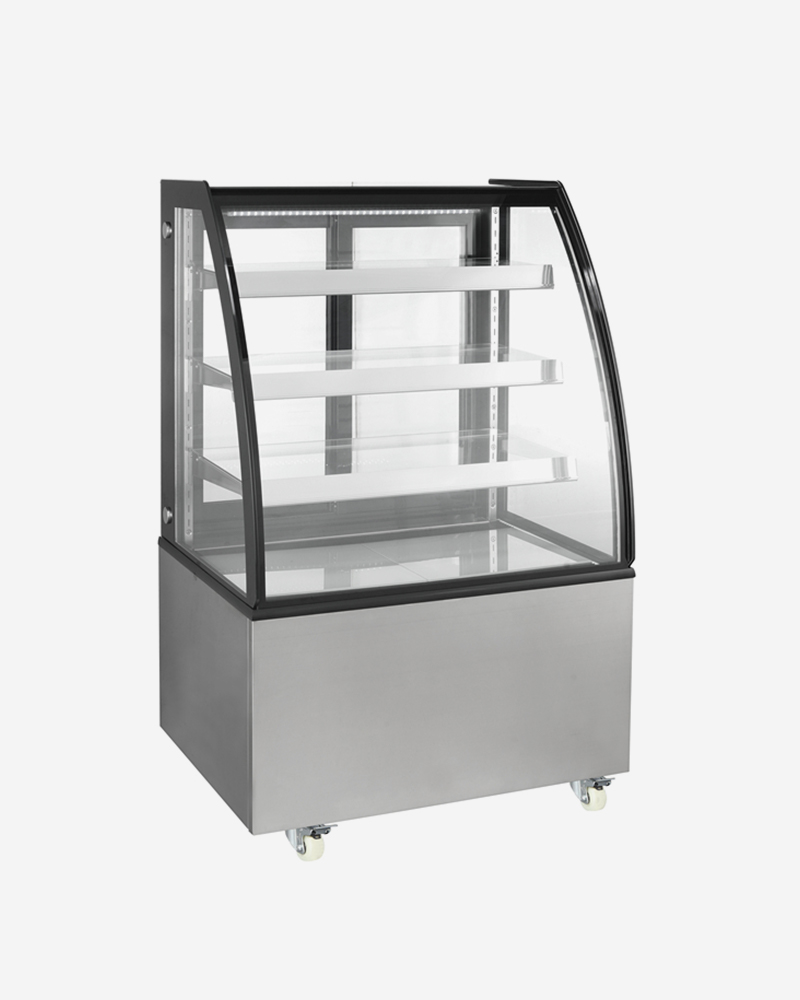
Refrigerated Display Flat Glass 4 Layer Cake Showcase
Product Overview
The XC-275Y is a vertical refrigerated display showcase with a flat glass front and rear sliding glass doors. Its design is intended for professional environments where products must remain chilled and clearly visible throughout the business day. The cabinet has a nominal capacity of 390 liters, giving retailers useful space without requiring the extensive floor area associated with a large horizontal counter.
The temperature range of 2–8°C is appropriate for many cakes, cream-based desserts, mousses, cheesecakes, pastries, cold sandwiches, prepared foods, and other products that require chilled storage. Actual storage suitability depends on the recipe, packaging, local food-safety requirements, loading density, ambient conditions, and the operating practices of the user. Nevertheless, the specified range places this model within the normal requirements of a broad range of commercial chilled display applications.
The showcase includes digital temperature control and a digital display. These features allow operators to monitor the cabinet more easily than they could with a basic mechanical thermostat. A visible temperature readout helps staff identify changes in operating conditions and supports more consistent daily management. It also assists service technicians when checking the cabinet during installation, maintenance, or troubleshooting.
Three LED light bars are included as standard. Interior lighting is particularly important in cake and dessert presentation because the visual appearance of a product strongly influences purchasing decisions. LED light bars can provide clear illumination across the display area while supporting a modern appearance. When properly positioned, they can help customers distinguish product colors and details without requiring staff to open the cabinet.
The product is described as a four-layer cake showcase, while the listed standard features specify two glass shelves. This information may reflect the display structure, shelf configuration, or a model-specific arrangement. Buyers should confirm the final number, spacing, dimensions, and adjustability of shelves with the manufacturer before placing an order. This confirmation is especially important when the cabinet will be used for tall celebration cakes, multi-level desserts, boxed products, or large serving trays.
Key Technical Specifications
Model | XC-275Y |
Product category | Refrigerated cake showcase |
Nominal capacity | 390 liters |
Temperature range | 2–8°C |
Input power | 470 watts |
Refrigerant options | R134a or R290, depending on configuration |
Net weight | 175 kilograms |
Product dimensions | 1,025 × 765 × 1,395 millimeters |
Package dimensions | 1,045 × 785 × 1,380 millimeters as supplied |
Lighting | Three LED light bars |
Cooling method | Ventilated cooling system |
Defrost method | Automatic defrost |
Base construction | Stainless steel |
Mobility | Four castors, with two fitted with brakes |
The supplied product information also includes a climate-type entry shown as “145.” Because this value does not follow the common format used for climate classifications, purchasers should request confirmation of the intended climate class before selecting the cabinet for a particularly hot or humid environment. This is a normal and prudent step when preparing technical documents, import records, or project specifications.
Designed for Attractive Product Presentation
The primary commercial advantage of a cake showcase is its ability to make products visible from outside the cabinet. Customers do not need to ask staff what is available, and staff do not need to open the doors repeatedly to show every item. This can make the purchasing process faster and more convenient, particularly during busy periods.
Flat glass creates a straightforward, orderly viewing area. It supports a clean visual line and can fit naturally into contemporary retail interiors. Compared with curved glass, flat glass may also simplify certain cleaning and replacement procedures because the surfaces and frame geometry are relatively direct. The appearance is suitable for bakeries, pastry shops, cafés, hotel breakfast areas, dessert counters, and food-service operations that want a professional display without excessive decorative styling.
Double tempered glass contributes to safety and durability. Tempered glass is processed to provide greater resistance to everyday thermal and mechanical stress than ordinary untreated glass. In a commercial environment, where doors are opened frequently and cleaning takes place every day, glass strength is important. Double glazing can also support insulation by creating a more effective barrier between the chilled interior and the surrounding room, although the final thermal performance depends on the complete cabinet construction and operating conditions.
Three LED light bars help distribute illumination through the cabinet. Good display lighting should reveal products clearly while avoiding unnecessary glare or harsh dark areas. Cakes often contain glossy icing, cream, fruit, chocolate decoration, and delicate color transitions. Proper lighting makes these details more visible and can help a store present a consistent visual identity.
The display can be arranged to support different product sizes and selling strategies. Smaller pastries may be placed together on a shelf to create variety, while larger cakes can be positioned where their height and decoration are most visible. Operators can organize the cabinet by flavor, price, product type, dietary category, or promotional priority. A well-organized interior reduces the time required for customers to make a decision and helps staff maintain a neat presentation throughout the day.
For businesses that sell made-to-order cakes, the showcase can also function as a visual portfolio. Finished products placed in the cabinet demonstrate the quality of the bakery’s decoration work. Seasonal cakes, celebration desserts, and premium items can be given prominent positions. In this way, the cabinet supports both product storage and brand communication.
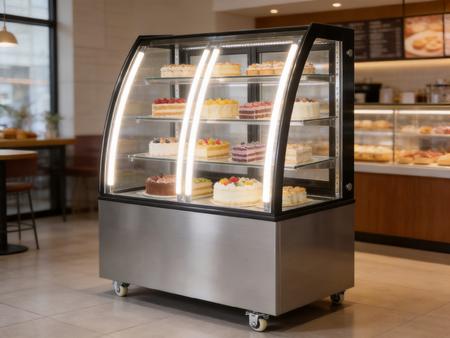
Stable Refrigerated Storage for Commercial Use
Visual appeal alone is not enough for a professional food display. A cake showcase must also provide stable refrigeration. The XC-275Y uses a ventilated cooling system to circulate chilled air inside the cabinet. Compared with a static cooling arrangement, ventilated refrigeration is intended to distribute temperature more evenly throughout the display space, especially when several shelves are loaded with products.
Ventilated cooling is valuable in a cabinet with multiple levels because warm air can otherwise collect in some areas while colder air remains concentrated near the evaporator. Air circulation helps reduce this variation, although operators should still avoid blocking air passages or loading products tightly against internal walls. Adequate spacing allows air to move around the merchandise and supports more consistent cooling.
The 2–8°C operating range suits many refrigerated cakes and desserts. Cream cakes, fresh fruit cakes, mousse products, custard desserts, and chilled pastries often benefit from controlled low temperatures. Maintaining an appropriate temperature can help preserve texture, appearance, freshness, and food quality. The correct temperature should always be selected according to the product recipe and applicable food-safety rules.
Automatic defrost is another useful feature for daily operation. Moisture naturally enters a refrigerated display when doors are opened and closed, particularly in warm or humid environments. Over time, this moisture can freeze on cold surfaces. Excessive ice can reduce heat-transfer efficiency and interfere with airflow. An automatic defrost cycle helps manage this accumulation without requiring staff to switch off the cabinet and remove ice manually at frequent intervals.
Automatic defrost does not eliminate the need for cleaning and maintenance. Staff should still inspect the interior, drainage area, condenser area, door seals, shelves, and glass surfaces according to a planned schedule. Food residue, dust, or blocked airflow can affect performance even when the refrigeration system is functioning correctly.
The stated input power is 470 watts. Actual energy use over a full day will depend on ambient temperature, humidity, cabinet loading, door-opening frequency, set temperature, lighting operation, defrost cycles, and the condition of the refrigeration system. Operators can improve efficiency by keeping the rear sliding doors closed when not serving, avoiding prolonged exposure to warm air, and placing products in the cabinet only after they have been properly prepared for chilled storage.
Refrigerant Configuration
The product information lists R134a/R290 as refrigerant options. The exact refrigerant may depend on the production configuration, market requirements, regulations, and customer order. R290 is propane-based and is commonly associated with lower global warming potential, while R134a has been widely used in commercial refrigeration equipment. Because refrigerant regulations differ by country and continue to develop, importers and project buyers should confirm the precise refrigerant, charge, safety documentation, and service requirements before shipment.
Professional refrigeration equipment should be installed and serviced by qualified personnel. Refrigerant handling, electrical connection, ventilation, and commissioning should comply with local codes and the manufacturer’s instructions. Correct installation helps protect performance, product quality, and operator safety.
Practical Construction Features
The cabinet includes a stainless steel base. Stainless steel is widely used in commercial food equipment because it is durable, easy to wipe, and resistant to many forms of routine moisture exposure. The base is also visually compatible with professional kitchens and retail counters. A strong lower structure can help protect the cabinet during daily use, especially in stores where carts, cleaning equipment, and staff movement create a demanding environment.
Smooth rear sliding glass doors provide access for loading and serving. Sliding doors are useful where space behind the cabinet is limited because they do not require a large swing radius. They also allow staff to open one section at a time instead of exposing the entire cabinet interior. This can reduce unnecessary air exchange and make service more orderly.
The rear-door arrangement separates customer viewing from staff operation. Customers see the front display, while employees access products from the back. This layout is appropriate for a counter positioned between a retail floor and a preparation or service area. It can also help keep staff movement away from the customer side of the cabinet.
Four castors provide mobility. Two castors include brakes, giving operators a balance between flexibility and stability. The cabinet can be moved for cleaning behind and beneath the unit, or repositioned to accommodate a new store layout. Once it is in the desired location, the brakes can be engaged to reduce unwanted movement during loading and service.
Mobility is particularly helpful for businesses that regularly change seasonal displays. A bakery may move the showcase closer to the entrance during a holiday promotion, reposition it near the checkout area during a sales campaign, or temporarily relocate it during maintenance. While the cabinet is heavy, the castor system makes controlled movement more practical than lifting or dragging the equipment.
The digital thermostat and separated power button support simple operation. A dedicated power control can make shutdown procedures more direct during cleaning or planned maintenance. The digital thermostat allows personnel to observe and adjust the operating setting according to the product requirements and environmental conditions.
Advantages Compared with Basic Display Refrigerators
Many basic refrigerators are designed primarily for storage. Their doors may be opaque, their internal lighting limited, and their shelves difficult to arrange for attractive retail presentation. The XC-275Y is designed from the beginning as a display cabinet. Its front glass, interior LED lighting, vertical format, and product-facing layout are intended to support both refrigeration and merchandising.
Compared with an open display cooler, the glass-door design provides a stronger physical separation between the chilled interior and the surrounding room. Open cases may offer faster customer access, but they can also experience greater exposure to ambient air and may require more attention to temperature control and energy use. A closed glass display can offer a more controlled environment while still allowing customers to see the merchandise clearly.
Compared with a countertop display refrigerator, the XC-275Y provides greater capacity and a taller product presentation area. Countertop units are useful where floor space is limited, but their smaller internal volume may not be sufficient for a bakery with a broad product range. A 390-liter vertical showcase can provide more visible space while preserving valuable counter surfaces for payment, packaging, or customer service.
Compared with a large horizontal case, the vertical format uses wall or aisle height efficiently. This can be valuable in stores where floor area is expensive. Products can be arranged across multiple levels, allowing the cabinet to present a wider selection without occupying a very large footprint.
Compared with a warmer or ambient display cabinet, the XC-275Y is suitable for products that require chilled storage. Cakes containing cream, mousse, custard, fresh fruit, or other temperature-sensitive ingredients can be displayed under refrigeration rather than being left at room temperature. The result is a more appropriate environment for maintaining product quality during service hours.
Compared with a cabinet without automatic defrost, this model can reduce the amount of routine manual intervention required to manage ice accumulation. Compared with a cabinet without digital temperature indication, it gives staff a clearer way to observe operating conditions. Compared with a cabinet without castors, it is easier to move for cleaning and layout changes.
These advantages do not mean that every business requires the same equipment. Product volume, store layout, climate, local regulations, and budget must be considered. However, the combination of presentation features and refrigeration functions makes this model a strong option for businesses seeking one cabinet to perform several commercial roles.
Comparison of Functional Benefits
Requirement | Benefit of the XC-275Y | Commercial result |
Product visibility | Flat glass front and illuminated interior | Customers can view products before purchase |
Chilled storage | 2–8°C temperature range | Suitable for many refrigerated cakes and desserts |
Temperature distribution | Ventilated cooling system | Supports more even cooling across display levels |
Ice management | Automatic defrost | Reduces frequent manual defrost work |
Staff access | Rear sliding glass doors | Allows practical replenishment and service |
Cleaning and movement | Four castors with two brakes | Supports repositioning and stable placement |
Display appearance | Double tempered glass and stainless steel base | Creates a durable professional presentation |
Operation monitoring | Digital thermostat and display | Helps staff observe cabinet conditions |
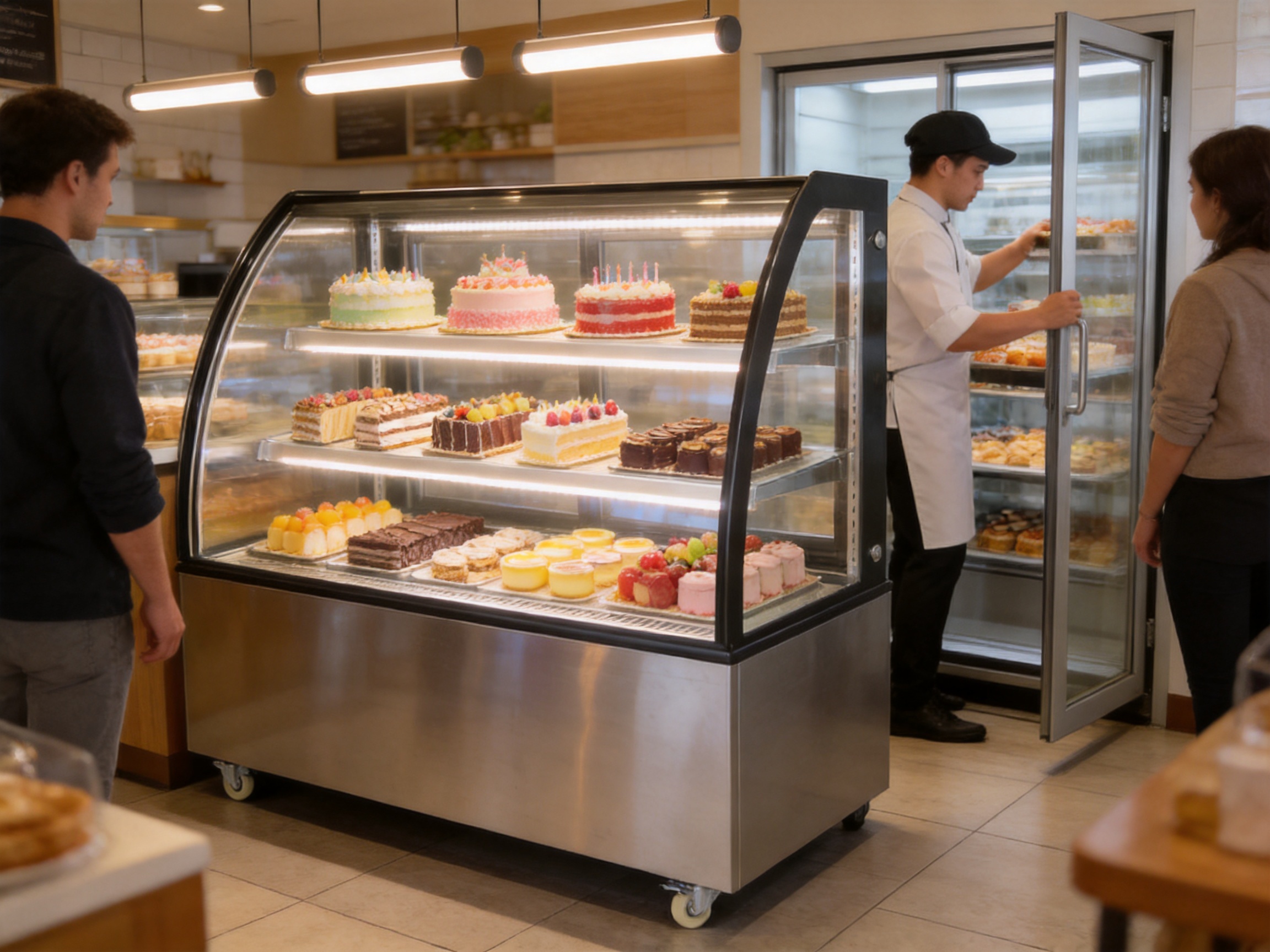
Applications in Different Commercial Environments
Bakeries and Pastry Shops
For bakeries, the display cabinet can hold a selection of finished cakes, slices, pastries, and chilled specialty desserts. The vertical design allows the operator to create a layered presentation, with premium products at eye level and smaller items on lower shelves. Staff can restock through the rear doors without interrupting customers viewing the front.
A bakery can use the cabinet to separate everyday products from seasonal or premium items. For example, fruit cakes, chocolate cakes, cream cakes, and individual desserts can each receive a dedicated area. Clear organization makes the product range easier to understand and can reduce the need for verbal explanations during busy periods.
Cafés and Coffee Shops
Cafés often need a refrigerated display that occupies a manageable footprint while supporting impulse sales. A customer ordering coffee may notice a slice of cake, cheesecake, tart, or chilled dessert in the showcase and add it to the order. The cabinet can therefore support average transaction value as well as food preservation.
The flat glass appearance can complement a modern café interior. LED lighting helps the desserts remain visible even in locations where general ambient lighting is subdued. The rear sliding doors allow baristas or service staff to replenish products while keeping the customer-facing side clean and uncluttered.
Hotels and Hospitality Venues
Hotels may use a cake showcase in lobby cafés, banquet service areas, breakfast outlets, executive lounges, or dessert stations. Its professional appearance can suit hospitality environments where equipment must look presentable as well as perform reliably. Castors can be useful when the cabinet must be moved for event preparation, cleaning, or changes in service layout.
Restaurants and Dessert Counters
Restaurants with a dedicated dessert menu can use the cabinet to display prepared items before service. Customers may be more likely to order a dessert when they can see its appearance rather than reading only a written description. The cabinet can also help staff maintain a clear separation between ready-to-serve desserts and products still in preparation.
Supermarkets and Specialty Food Stores
Specialty food retailers can use the display to present cakes, chilled pastries, fresh desserts, and packaged premium products. The 390-liter capacity offers meaningful display volume while remaining smaller than many large supermarket cases. Multiple units may also be placed together to create a coordinated refrigerated merchandising wall.
Manufacturing Capability and Quality Orientation
The manufacturer, Ningbo XiangChi Electrical Co., Ltd., was established in 2007 and has more than a decade of experience in the supplied company profile. Its product focus includes vertical display cabinets, cake cabinets, and warming cabinets. This specialization is relevant because commercial refrigeration requires knowledge of cabinet insulation, glass construction, airflow, refrigeration components, electrical control, assembly accuracy, and product testing.
The company operates a modern management garden factory covering approximately 40,000 square meters. A facility of this scale can support organized production planning, component handling, assembly operations, quality inspection, warehousing, and shipping coordination. The ability to manage these activities within a structured manufacturing environment is important for maintaining consistency between production batches.
The company also maintains a professional research and development team. Product development in commercial refrigeration involves more than changing the external appearance. Engineers must consider cooling performance, air distribution, cabinet dimensions, glass insulation, shelf loading, electrical safety, service access, energy consumption, and user convenience. An active R&D function allows these factors to be reviewed when products are improved or adapted for different markets.
Advanced testing facilities are identified as part of the company’s manufacturing strengths. Testing is essential because refrigeration equipment must operate under changing ambient conditions and repeated daily use. Important evaluation areas may include temperature performance, electrical safety, compressor operation, defrost behavior, door operation, lighting, glass quality, transport resistance, and overall reliability. The precise tests performed for a specific model should be confirmed in the technical documentation and quality records provided to the buyer.
The manufacturer states that it has obtained CE, GS, CCC, CB, RoHS, ETL, and other major certifications. Certification requirements vary according to the destination market, product configuration, electrical system, refrigerant, and applicable standards. Buyers should request current certificates and confirm that they apply to the exact model and production version being purchased. Even so, the stated certification experience indicates that the company has developed processes for serving multiple international markets.
From Design to Finished Cabinet
A reliable commercial display cabinet begins with product design. Engineers first define the intended capacity, temperature range, cabinet dimensions, display area, refrigeration layout, access method, electrical requirements, and appearance. These parameters must work together. For example, a larger glass area may improve visibility but also increases the importance of insulation and refrigeration capacity. More shelf levels may improve product density but require careful air distribution.
Material preparation is the next important stage. Sheet metal for the base and structural components must be cut and formed accurately. Stainless steel surfaces should be finished consistently, with edges treated to reduce sharp points and support safe cleaning. Glass panels must be selected, processed, and installed according to the cabinet design. Correct tolerances are necessary to ensure that doors slide smoothly and seals remain effective.
During assembly, refrigeration components, electrical controls, lighting, glass, shelves, doors, castors, and cabinet panels must be integrated in the correct sequence. Wiring should be routed securely and protected from abrasion or heat. Refrigeration lines require careful connection and inspection. The cooling system must be charged and commissioned according to the selected refrigerant and production specification.
Quality control should continue after assembly. A cabinet may look attractive but still require performance verification. Temperature testing, electrical inspection, door checks, lighting checks, defrost verification, and visual examination can help identify problems before shipment. Packaging is also important because glass and finished metal surfaces must be protected during handling and transportation.
The supplied company information describes a commitment to innovation, quality, and service. These principles are particularly relevant for commercial equipment because the buyer is not purchasing only a cabinet. The buyer is investing in a tool that will operate daily, display products to customers, and affect the efficiency of a food-service business. Technical support, spare-part availability, documentation, and communication therefore contribute to the total value of the equipment.
Installation and Commissioning Recommendations
Before installation, the buyer should verify that the intended location can support the cabinet’s net weight of approximately 175 kilograms, plus the weight of products and shelves. Doorways, elevators, loading docks, corridors, and turning areas should be measured in advance. The supplied product dimensions are approximately 1,025 × 765 × 1,395 millimeters, while the package dimensions are listed as approximately 1,045 × 785 × 1,380 millimeters. Because packaging data should be confirmed against the final shipping documents, buyers should allow additional clearance for handling and protection materials.
The cabinet should be placed on a level surface with sufficient ventilation around the refrigeration system. It should not be positioned directly beside equipment that releases substantial heat, unless the installation design accounts for that condition. Excessive ambient heat can increase the workload on the refrigeration system and may affect the ability of the cabinet to maintain the desired internal temperature.
After positioning, the castors should be locked where appropriate. The cabinet should be connected to a suitable electrical supply by qualified personnel. Voltage, frequency, plug type, grounding, circuit protection, and local electrical rules must be checked before operation. If the unit has been transported on its side or exposed to unusual handling conditions, the manufacturer’s required settling time should be observed before energizing the compressor.
The cabinet should be allowed to reach its operating temperature before products are loaded. Loading warm products immediately may increase the temperature inside the cabinet and place unnecessary stress on the refrigeration system. Products should be arranged with sufficient space for air circulation. Shelves and air outlets should not be covered by trays, boxes, or dense product stacks.
Maintenance and Daily Operating Practices
Routine cleaning is essential for both hygiene and appearance. Glass surfaces should be cleaned with products suitable for tempered glass and commercial food equipment. Abrasive materials should be avoided if they could scratch the glass or metal. Spills should be removed promptly, especially products containing cream, sugar, fruit, or chocolate, because residue can become difficult to remove if left in place.
Door tracks should be inspected and cleaned so that the rear sliding doors continue to move smoothly. Dirt or product fragments in the track can increase resistance and affect door alignment. Door seals should be checked for damage, distortion, or gaps. A compromised seal may allow warm air and moisture to enter the cabinet, increasing the refrigeration load.
The condenser and ventilation areas should be kept free of dust. Dust accumulation can restrict heat transfer and cause the compressor to operate for longer periods. The cleaning interval depends on the environment. A bakery with flour particles, a restaurant kitchen with grease, or a busy retail store may require more frequent inspection than a clean showroom.
Staff should monitor the digital temperature display and record readings where required by the business’s food-safety procedures. Unusual temperature changes, excessive noise, water accumulation, frost, lighting failure, or door resistance should be reported promptly. Early attention may prevent a minor issue from becoming a major service interruption.
Products should be rotated using a first-in, first-out method where appropriate. Shelves should not be overloaded, and air circulation should not be blocked. The display should be replenished in a way that keeps products attractive while leaving enough room for chilled air to move. Attractive merchandising and good refrigeration performance are not separate goals; both depend on thoughtful loading and organization.
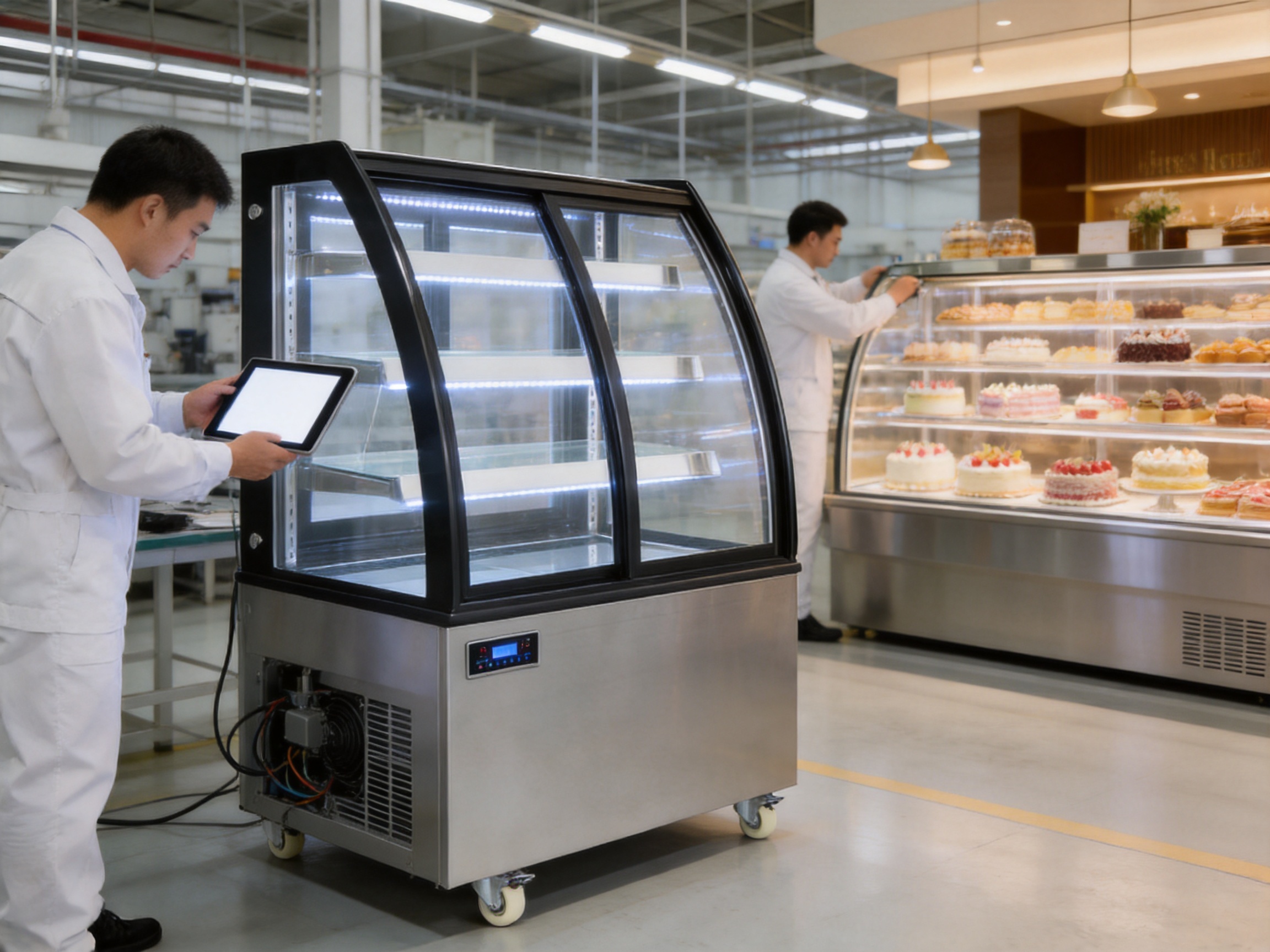
Purchasing Considerations for Distributors and End Users
Distributors should confirm the target market, electrical specification, refrigerant version, certification requirements, packaging method, warranty terms, spare-part support, and expected delivery schedule. If the cabinet is being purchased for a chain of stores, consistent configuration across all locations may be important. Buyers should also confirm whether the shelf layout, color, glass type, branding, plug, and control system can be customized.
End users should evaluate the available floor space, expected product volume, serving method, customer traffic, ambient climate, cleaning access, and location of the electrical outlet. The cabinet should be placed where customers can see it easily but where staff can reach the rear doors without obstruction. If several cabinets are installed together, spacing and ventilation requirements should be reviewed as part of the layout plan.
It is also useful to consider the total cost of ownership rather than only the purchase price. Energy consumption, cleaning time, maintenance access, spare parts, product loss prevention, service response, and expected operating life all affect the long-term value of commercial refrigeration equipment. A well-designed cabinet that improves product presentation and reduces daily inconvenience may provide benefits that are not visible in the initial quotation.
Technical information should be reviewed carefully before ordering. The supplied specification includes a net weight of 175 kilograms and a gross-weight field that appears to contain the dimension string “905 × 688 × 1,412.” This may be a formatting or data-entry issue. The buyer should request a corrected gross weight and confirmed shipping dimensions for freight planning. Clarifying such details before production helps prevent delays during transportation, customs processing, installation, and warehouse handling.
Why the XC-275Y Is a Strong Commercial Display Solution
The value of the XC-275Y lies in the way its features work together. A refrigerated cake cabinet must preserve products, but it must also help sell them. The flat glass front makes the merchandise visible. LED light bars improve presentation. The vertical format uses display height efficiently. Ventilated cooling supports temperature distribution. Automatic defrost reduces routine intervention. Rear sliding doors help staff serve and replenish. Stainless steel and tempered glass provide a professional structure. Digital controls support straightforward monitoring. Castors make cleaning and repositioning more practical.
These features address common weaknesses found in less specialized equipment. A storage refrigerator may not present products effectively. An open case may expose chilled merchandise to more ambient air. A small countertop unit may lack capacity. A cabinet without ventilation may provide less consistent cooling across multiple levels. A unit without automatic defrost may demand more manual attention. A fixed cabinet may complicate cleaning and layout changes.
The XC-275Y is therefore suited to businesses that want one coordinated piece of equipment to support refrigeration, merchandising, customer convenience, and staff efficiency. Its 390-liter capacity offers useful display volume, while the specified dimensions keep the format suitable for many commercial interiors. The manufacturer’s R&D resources, testing capabilities, factory infrastructure, and international certification experience further support its position as a professional equipment option.
As with any commercial refrigerator, the best performance depends on correct installation, appropriate loading, regular cleaning, qualified service, and compliance with local regulations. Buyers should confirm technical details that may vary by order, including refrigerant, climate classification, shelf arrangement, electrical configuration, certification, and shipping information.
Questions and Answers
What type of equipment is the XC-275Y?
The XC-275Y is a refrigerated vertical display showcase designed primarily for cakes, pastries, desserts, and other chilled food products. It has a flat glass display area and rear sliding glass doors for staff access.
What is the capacity of the cake showcase?
The stated nominal capacity is 390 liters. Usable space may vary depending on shelf placement, product dimensions, air-circulation requirements, and the amount of space reserved for proper loading.
What temperature range does it provide?
The specified temperature range is 2–8°C. The appropriate operating setting depends on the products being stored, ambient conditions, loading practices, and local food-safety requirements.
Does the cabinet use ventilated cooling?
Yes. The standard features list a ventilated cooling system. This system circulates chilled air through the display area and is intended to support more even cooling across multiple levels.
Does it have automatic defrost?
Yes. Automatic defrost is included as a standard feature. Staff should still clean the cabinet, inspect the drainage area, and maintain the condenser and air passages as part of regular service.
How is the display illuminated?
The cabinet includes three LED light bars. These lights help customers see cake colors, decoration, layers, and other product details more clearly.
How do employees access the products?
Employees access the cabinet through smooth rear sliding glass doors. This arrangement allows staff to load and serve products from the back while customers view the display from the front.
Is the glass suitable for commercial use?
The listed standard features include double tempered glass. Tempered glass is commonly used in commercial display equipment because it offers improved resistance to routine thermal and mechanical stress compared with ordinary glass.
Can the cabinet be moved?
Yes. It has four castors, and two of them include brakes. The castors support controlled movement during cleaning or layout changes, while the brakes help stabilize the cabinet in its operating position.
What refrigerant does the cabinet use?
The supplied information lists R134a/R290. The exact refrigerant depends on the configuration and destination market, so buyers should confirm the refrigerant type and relevant documentation before ordering.
Is the cabinet suitable for all types of cakes?
It is suitable for many cakes and desserts that require chilled storage, including products containing cream, mousse, custard, fruit, or other temperature-sensitive ingredients. Product-specific storage instructions should always be followed.
How many shelves does it include?
The product is described as a four-layer cake showcase, while the standard feature list specifies two glass shelves. Buyers should confirm the final shelf count, spacing, and arrangement for the exact production configuration.
What should be confirmed before shipment?
Buyers should confirm the electrical specification, refrigerant, climate classification, shelf configuration, certifications, package dimensions, gross weight, warranty terms, and installation requirements. These details may vary according to market and order configuration.
Who manufactures the product?
The product is manufactured by Ningbo XiangChi Electrical Co., Ltd., a Chinese commercial refrigeration manufacturer specializing in vertical display cabinets, cake cabinets, and warming cabinets.
What manufacturing strengths does the supplier provide?
The company profile identifies a factory of approximately 40,000 square meters, a professional R&D team, advanced testing facilities, more than a decade of industry experience at the time of the supplied profile, and experience with international certifications including CE, GS, CCC, CB, RoHS, and ETL.
Conclusion
The Refrigerated Display Flat Glass 4-Layer Cake Showcase, model XC-275Y, is designed for businesses that need more than simple cold storage. It provides a visible and organized platform for selling cakes, pastries, desserts, and other chilled products while supporting temperature control and practical daily operation.
Its 390-liter capacity, 2–8°C temperature range, ventilated cooling, automatic defrost, LED lighting, double tempered glass, digital thermostat, stainless steel base, rear sliding doors, and mobile castor system create a balanced package for professional retail and food-service environments. These features help address the central requirements of a commercial display: product protection, customer visibility, staff access, hygiene, durability, and efficient use of space.
The product is also supported by the manufacturing strengths described by Ningbo XiangChi Electrical Co., Ltd., including specialized product experience, factory infrastructure, research and development resources, testing capability, and international certification experience. For importers, distributors, bakeries, cafés, restaurants, hotels, and specialty retailers, the showcase can be considered a practical investment in both food preservation and visual merchandising.
Before purchase, technical details that appear ambiguous in the supplied information should be verified, including the climate classification, shelf configuration, gross weight, package dimensions, and refrigerant version. With those details confirmed and with proper installation and maintenance, the XC-275Y can provide a professional refrigerated presentation solution for demanding commercial applications.
References
1. Product specification sheet for refrigerated display flat glass four-layer cake showcase, model XC-275Y.
2. Manufacturer-provided company profile for Ningbo XiangChi Electrical Co., Ltd.
3. General commercial refrigeration principles concerning ventilated cooling, automatic defrost, cabinet loading, and temperature management.
4. General food-service equipment guidance concerning cleaning, sanitation, temperature monitoring, and preventive maintenance.
5. General international commercial refrigeration practice concerning tempered glass, LED display lighting, refrigerant selection, electrical safety, and product certification.
Product: Refrigerated Display Flat Glass 4 Layer Cake Showcase

You May Also Like





-
- Navigation
- Home
- About Us
- Products
- News
- Contact Us
 East Zone, Guanhaiwei Industrial Park, Cixi City, Ningbo, Zhejiang, China
 +86-574-63668678
 +86-574-63668108

Copyright © Ningbo XiangChi Electrical Co.,Ltd All Rights Reserved.
