
 简体中文
 English
 Español

News
Front Glass Door Cake Showcase Cabinet: A Practical Guide to Fresh, Attractive, and Efficient Heated Food Display
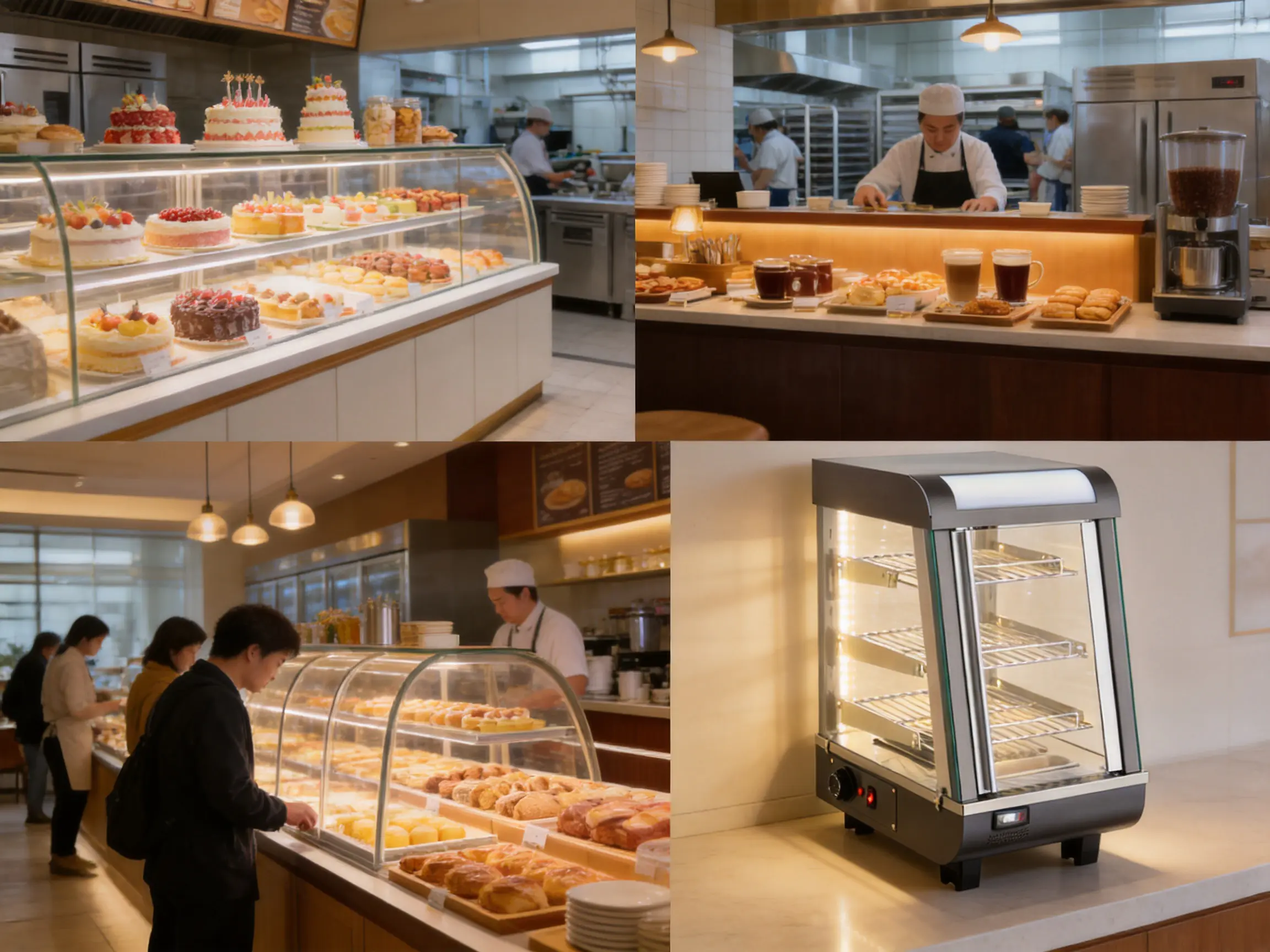
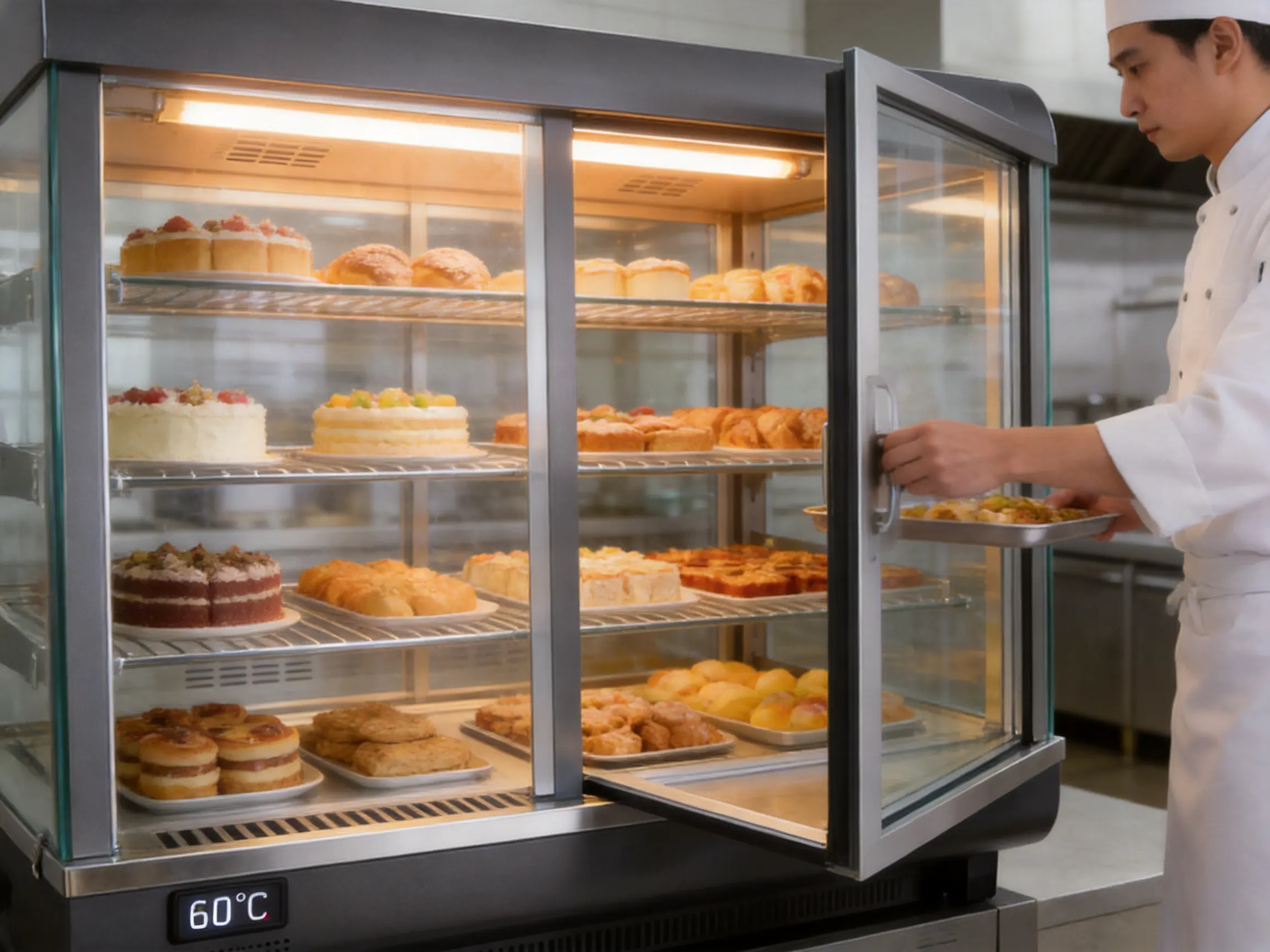
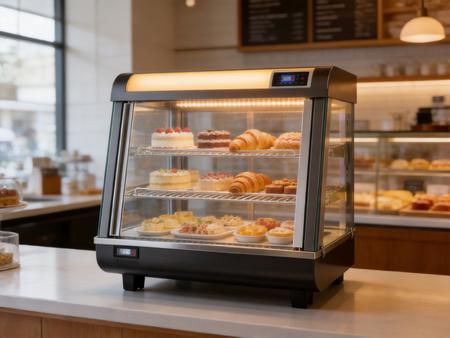
In commercial food service, presentation and serving temperature are closely connected. Cakes, pastries, baked snacks, sandwiches, prepared dishes, and other ready-to-eat products need to look appealing while remaining suitable for service. A display cabinet that offers clear visibility, stable heat, convenient access, and reliable daily operation can help a bakery, café, hotel, restaurant, convenience store, or catering business create a more professional customer experience.
The XCR-76L front glass door cake showcase cabinet is a compact display warmer designed for businesses that need an attractive heated presentation solution without occupying the floor space of a large cabinet. Its 76-liter capacity, front glass door, internal LED lighting, digital temperature control, direct cooling system, automatic defrost function, and top-and-bottom evaporator arrangement provide a practical combination of display performance and operational convenience.
Unlike an ordinary heated shelf or open counter, this type of cabinet creates a more controlled environment around displayed products. The glass front allows customers to view the contents clearly, while the enclosed structure helps reduce unnecessary exposure to the surrounding environment. The cabinet is particularly suitable for professional food outlets where appearance, cleanliness, temperature control, and efficient use of counter space all matter.
Why a Heated Display Cabinet Matters in Modern Food Service
Customers often make purchasing decisions before they speak with a member of staff. A clean, well-lit, organized display can communicate product quality immediately. Freshly prepared cakes, pastries, baked goods, snacks, and hot food become more attractive when they are presented at the right height, under suitable lighting, and behind clean glass.
A display warmer performs several functions at the same time. It keeps selected products warm, presents them in an organized manner, protects them from excessive contact, and gives staff a convenient way to monitor stock. The right equipment can also improve service speed because customers can see available products before ordering and staff can replenish the cabinet according to actual demand.
Open displays may provide easy access, but they can also expose products to air movement, dust, accidental contact, and temperature changes. A fully enclosed heated showcase offers a more controlled presentation area. The front glass door provides a barrier while still supporting visual merchandising. This is valuable in high-traffic environments where cleanliness and product protection are essential.
At the same time, a commercial cabinet must be more than visually attractive. It should operate consistently during busy service periods, be simple for staff to control, and use a construction method that supports repeated daily operation. The XCR-76L is designed around these practical requirements, combining a compact format with features normally expected in professional food display equipment.
Product Overview
The XCR-76L is a 76-liter front glass door cake showcase cabinet categorized as a display warmer. It is intended for countertop or compact commercial placement, making it appropriate for bakeries, cafés, dessert counters, hotel breakfast areas, restaurants, snack bars, convenience stores, and other food service environments.
The cabinet uses a heated display range of 30°C to 90°C. This broad range allows operators to select a suitable setting for different warm-display applications, depending on the type of food, local operating procedures, and the desired serving condition. The digital thermostat and display make it easier to monitor and adjust the cabinet compared with a basic mechanical control system.
With an input power rating of 800 watts, the unit provides the heating capacity needed for a compact professional display cabinet. The internal top LED light helps illuminate the products from above, supporting clear visibility and stronger presentation. The top-and-bottom evaporator arrangement and direct cooling system are designed to promote more effective temperature management within the cabinet.
The product has a net weight of 19 kilograms and a gross shipping weight of 22 kilograms. Its product dimensions are 338 by 486 by 636 millimeters, while the package dimensions are 397 by 549 by 675 millimeters. These measurements make the cabinet relatively easy to position on a service counter while also allowing it to be packed and transported efficiently.
| Specification | Details |
|---|---|
| Model | XCR-76L |
| Application | Display warmer and front glass door food showcase |
| Capacity | 76 liters |
| Temperature range | 30°C to 90°C |
| Input power | 800 watts |
| Net weight | 19 kilograms |
| Gross weight | 22 kilograms |
| Product dimensions | 338 × 486 × 636 millimeters |
| Package dimensions | 397 × 549 × 675 millimeters |
| Control system | Digital thermostat and display |
| Lighting | Internal top LED light |
| Defrost function | Automatic defrost |
| Cooling and temperature system | Direct cooling system with top-and-bottom evaporator arrangement |
| 20-foot general-purpose container loading | 180 units |
| 40-foot high-cube container loading | 484 units |
Front Glass Door Design and Customer Visibility
The front glass door is one of the most important elements of this cabinet. It allows customers to see the displayed products without requiring staff to open the cabinet repeatedly. This supports a more hygienic presentation and helps reduce unnecessary heat loss during normal operation.
Visibility is especially important for cakes and pastries because these products are purchased partly for their visual appeal. Frosting, decorative toppings, layers, colors, textures, and serving portions are all easier to appreciate when they are presented behind a clear front panel. The glass front also gives a counter a more professional appearance than an uncovered tray or standard heated shelf.
A glass-door design can improve staff workflow as well. Employees can check the available products, identify items requiring replenishment, and monitor the presentation without opening the door. In a busy café or bakery, reducing unnecessary door openings may help maintain a more stable internal operating condition and avoid interruptions during peak service.
Compared with open display equipment, a front glass door provides an additional level of separation between the food and the customer area. This can be useful in locations where counters are close to entrances, queues, payment terminals, or other sources of air movement. Although food operators must still follow their own sanitation procedures, an enclosed display generally supports a cleaner and more controlled serving environment.
76-Liter Capacity in a Compact Countertop Format
Capacity must be considered together with available floor and counter space. A cabinet that is too large can reduce working space, obstruct customer movement, or require a costly layout change. A cabinet that is too small may not provide enough display capacity during busy periods. The 76-liter internal volume of the XCR-76L is intended to offer a useful middle ground for businesses that need commercial presentation without installing a large floor-standing showcase.
The compact external dimensions allow the unit to be placed on a service counter, preparation counter, reception counter, or dedicated display stand, provided that the installation area is stable and suitable for the equipment. This flexibility can help smaller businesses improve product presentation without undertaking major remodeling.
For bakeries, the cabinet can be used to display selected warm pastries, individual cakes, savory baked goods, or packaged products that benefit from controlled heat. In cafés and restaurants, it can support the presentation of breakfast items, hot snacks, prepared portions, or specialty foods. Retailers may also use the cabinet for impulse purchases near a checkout or service area.
Good organization is essential to making the most of the internal volume. Operators can group products by type, serving time, price, or customer preference. Attractive spacing between items can make the cabinet look fuller and more orderly, while avoiding excessive loading helps maintain better air circulation around the products.
Adjustable Temperature Range from 30°C to 90°C
The XCR-76L provides a stated temperature range of 30°C to 90°C. This range gives the operator considerable flexibility for different display requirements. Lower settings may be useful when a product only needs gentle warming, while higher settings may be selected for foods that require a hotter serving environment, subject to the food manufacturer’s guidance and the operator’s food safety procedures.
Different products respond differently to heat. Cakes with delicate icing may require a gentler setting to help preserve their appearance. Pastries may need sufficient heat to remain inviting without becoming excessively dry. Savory prepared foods may have different holding requirements. A broad temperature range allows the business to adapt the display warmer to its menu rather than relying on a single fixed operating condition.
The digital thermostat and display are valuable because they provide a clearer reference than a simple dial. Staff can set the desired operating level and check the displayed temperature during service. This makes daily operation easier to standardize across shifts and can support internal temperature-monitoring routines.
Operators should remember that the displayed cabinet setting is not a substitute for a complete food safety system. Product-specific holding times, food preparation methods, internal food temperatures, cleaning procedures, and local regulations must all be considered. The cabinet is a professional holding and display appliance, while the business remains responsible for applying suitable food safety controls.
Top-and-Bottom Evaporator Arrangement
The cabinet is equipped with both top and bottom evaporators. This arrangement is intended to support a more balanced temperature environment than a system that concentrates its temperature-management components in only one area. In a vertical display cabinet, products may be positioned at different levels, so the ability to manage conditions across the upper and lower sections is important.
A two-level evaporator arrangement can help reduce the risk of noticeable temperature differences between shelves or display zones. More consistent conditions can be beneficial when several product types are presented at the same time. It also gives operators greater flexibility when arranging products, especially when the display is replenished throughout the day.
The design should be considered together with correct loading practices. Even a well-designed cabinet requires adequate spacing around products. Blocking internal passages, overloading shelves, or placing hot products into the cabinet in excessive quantities can affect performance. Following the operating instructions and leaving appropriate circulation space can help the cabinet perform closer to its intended design.
Direct Cooling System for Practical Commercial Operation
The direct cooling system is another standard feature of the XCR-76L. In a direct system, the temperature-management components work closely with the display chamber. This type of arrangement is commonly used in compact commercial cabinets because it can provide a straightforward construction and effective heat transfer within a relatively small enclosure.
Direct cooling can be suitable for countertop equipment where simplicity, compact dimensions, and reliable operation are important. The system is designed to work with the cabinet’s heating and temperature-control functions to maintain the selected display environment. Its value is particularly apparent in businesses that need equipment that can be operated by different employees with minimal complexity.
Because operating conditions vary by product load, ambient temperature, door-opening frequency, and installation location, businesses should allow the cabinet to reach its working condition before loading it fully. Correct placement away from excessive heat sources and direct sunlight is also advisable. A stable installation environment supports more predictable operation and can help reduce unnecessary workload on the equipment.
Automatic Defrost and Easier Maintenance
Automatic defrost is included as a standard feature. In commercial food display equipment, defrost management is important because excessive frost or ice can interfere with heat transfer, reduce available internal space, and make cleaning more difficult. An automatic function helps reduce the need for frequent manual intervention during normal operation.
Automatic defrost does not eliminate the need for routine maintenance. Staff should still clean the interior, glass, shelves, door seals, and accessible surfaces according to the company’s sanitation schedule. Spills should be addressed promptly, and the cabinet should not be allowed to accumulate residue. Regular cleaning improves presentation and supports hygienic operation.
Maintenance procedures should be performed with the equipment switched off and handled according to the manufacturer’s instructions. Electrical components, control panels, and other sensitive areas should be protected from inappropriate water exposure. A simple written cleaning checklist can help ensure that all shifts follow the same process.
The combination of automatic defrost and a digital control system can help reduce the daily workload associated with the cabinet. This is especially valuable in smaller businesses where employees may be responsible for multiple tasks, including food preparation, customer service, cleaning, and stock management.
Internal Top LED Light for Better Merchandising
Lighting has a direct influence on customer perception. The internal top LED light is designed to illuminate the cabinet from above so that products remain visible during service. Good lighting can make colors appear clearer, highlight decorative details, and help customers compare available options.
LED lighting is widely used in modern commercial display equipment because it can provide bright illumination in a compact format. It also supports a clean visual appearance without requiring a large lighting assembly. The top-mounted position helps direct light into the display area while keeping the cabinet interior visually organized.
For bakeries and dessert counters, lighting can emphasize the texture and finish of cakes, pastries, breads, and other products. For prepared foods, it can improve visibility of portion sizes and product arrangement. A well-lit cabinet may also reduce the need for customers to ask staff to open the door to inspect the contents.
Merchandising remains important even with built-in lighting. Operators should avoid placing large trays or tall packages where they block the products behind them. Product rotation, color arrangement, portion consistency, and clean shelving all contribute to the final visual effect.
Digital Thermostat and Display Control
The digital thermostat and display provide a modern control interface for commercial users. Compared with a basic mechanical control, a digital display gives staff a more direct reference for the selected temperature and operating status. This can make training easier and help businesses establish consistent operating routines.
A digital system is useful when several employees share responsibility for the same equipment. A clearly displayed setting reduces confusion between shifts and makes it easier to identify whether the cabinet is operating within the intended range. Managers can also include temperature checks in opening and closing procedures.
Clear controls are particularly important in environments where the cabinet is used for several product categories. Staff may adjust the setting according to the day’s menu, service schedule, or product requirements. The broad 30°C to 90°C range gives them room to make these adjustments while the digital interface supports more precise operation.
Training should cover more than simply pressing buttons. Employees should understand the relationship between the temperature setting, product type, loading level, door-opening frequency, and holding period. They should also know when to report unusual sounds, temperature fluctuations, damaged seals, or other signs that service may be required.
Advantages Compared with Basic Heated Shelves
A basic heated shelf can be useful for simple service applications, but it normally provides less protection and less visual structure than a glass-door showcase. Products placed on an open shelf are more exposed to air movement and customer contact. They may also be more difficult to organize into a polished display.
The XCR-76L provides an enclosed display chamber, front glass visibility, internal LED lighting, digital control, automatic defrost, and a broad temperature range. These features create a more complete solution for businesses that want both product holding and visual merchandising from one unit.
The enclosed structure can make the counter appear cleaner and more professional. It also reduces the need for staff to cover products with temporary lids or improvised barriers. The front door provides access when replenishment or service is required, while the glass allows normal viewing without opening the cabinet.
The compact countertop form is another advantage. Large floor-standing display cases can provide substantial capacity, but they may not be practical for small shops or businesses with limited layouts. A smaller cabinet can be deployed at a lower space requirement and may be easier to relocate when the counter arrangement changes.
Advantages Compared with Ordinary Non-Illuminated Cabinets
A cabinet without dedicated internal lighting may still hold products, but it may not present them as effectively. Shadows can reduce visibility, particularly in stores with uneven ceiling lighting or darker service areas. The internal top LED light in the XCR-76L is designed to give the display a more deliberate and attractive appearance.
Lighting also supports operational efficiency. Staff can identify the condition and quantity of products more easily, while customers can make decisions faster. This can be particularly useful during busy periods when the service team needs to minimize unnecessary conversation and door opening.
When combined with the front glass door, LED lighting creates a display that works continuously as a visual sales tool. The cabinet is not merely a storage appliance; it becomes part of the business’s merchandising strategy.
Advantages Compared with Fixed-Temperature Warmers
Some warming equipment offers only one preset temperature or a limited adjustment range. Such equipment may be suitable for a narrow product application, but it can be less flexible when the menu changes. The XCR-76L offers adjustment from 30°C to 90°C, giving operators more control over how different foods are displayed.
This flexibility can support seasonal menu changes, different service periods, and varied product requirements. A café may use a gentler setting for delicate baked products in the morning and a different setting for savory snacks later in the day. A bakery may adjust the operating condition depending on the product mix and presentation schedule.
Adjustability also helps the cabinet serve multiple business models. It can be used in a dessert shop, a hotel, a restaurant, a convenience store, or a catering operation without being restricted to one exact product type. The operator can adapt the equipment to the commercial application while retaining the same basic cabinet.
Manufacturing Strength and Product Development Experience
The manufacturer, Ningbo XiangChi Electrical Co., Ltd., specializes in vertical display cabinets, cake cabinets, warming cabinets, and related commercial refrigeration equipment. The company was established in 2007 and has developed more than a decade of experience in this product field according to the supplied company information.
The company operates a modern management and production facility covering approximately 40,000 square meters. A facility of this scale can support the coordinated handling of product development, component management, assembly, testing, packaging, and export preparation. For commercial equipment buyers, manufacturing depth is important because stable supply and repeatable quality are often as important as the product’s visible features.
The company also reports having a professional research and development team and advanced testing facilities. Product development capability can help a manufacturer improve cabinet structures, temperature-control systems, electrical safety, lighting, door construction, and user interfaces over time. This is especially relevant in commercial equipment, where small improvements can influence cleaning, energy use, reliability, and service life.
In addition to developing individual models, an experienced manufacturer can support variations in product capacity, dimensions, control systems, and display formats. This gives wholesalers, distributors, and project buyers more confidence when planning a product range rather than purchasing isolated units from an inexperienced supplier.
Quality Control and Testing Approach
Commercial display equipment must be tested as a complete system rather than judged only by the appearance of its cabinet. Temperature stability, electrical safety, lighting performance, door operation, defrost behavior, packaging strength, and control response all influence the final user experience.
The manufacturer states that it has advanced testing facilities intended to support quality improvement and product innovation. A structured testing process can include inspection of incoming components, assembly checks, electrical testing, temperature testing, operational testing, and final quality verification before shipment.
Quality control is particularly important for cabinets with heating and temperature-management systems because several components must work together. The thermostat must communicate properly with the control system, the heating elements must operate safely, the evaporator arrangement must support the intended cabinet environment, and the door must close correctly during repeated use.
Packaging is also part of product quality. The supplied package dimensions are larger than the product dimensions, providing room for protective packaging during transportation. The gross weight of 22 kilograms compared with the net weight of 19 kilograms reflects the cabinet, packaging materials, and shipping protection. Proper packaging can help reduce the risk of damage to the glass, corners, controls, and exterior surfaces during handling.
International Certification and Market Readiness
The manufacturer reports obtaining CE, GS, CCC, CB, RoHS, ETL, and other major international certifications. Certification requirements vary by country, product configuration, and intended market, so importers should confirm the exact documentation applicable to their purchasing destination before placing an order.
Nevertheless, experience with multiple certification systems indicates that the manufacturer has familiarity with international compliance processes. This can be valuable for distributors and commercial buyers who need documentation for import, resale, project approval, or internal quality procedures.
Compliance should always be verified against the specific model and shipment. Buyers may need to request certificates, test reports, rated voltage information, plug specifications, labeling details, manuals, and other technical documents. Early communication can help ensure that the supplied cabinet matches local electrical and regulatory requirements.
Installation Recommendations
The cabinet should be placed on a firm, level, and sufficiently strong counter. The installation surface must be able to support the equipment safely and should not be exposed to excessive vibration. A stable position helps the door operate correctly and supports consistent daily use.
Allow adequate clearance around the cabinet according to the operating manual. Ventilation space may be necessary around heat-producing or temperature-management components. The cabinet should not be pushed tightly against a wall or placed immediately beside equipment that releases substantial heat unless the installation instructions specifically allow it.
Direct sunlight, ovens, ranges, steam-producing equipment, and other intense heat sources can make temperature control more difficult. Selecting a cooler, well-ventilated position can support more stable operation. The cabinet should also be located where staff can open the front door safely without obstructing customer movement or emergency pathways.
Before normal operation, the cabinet should be connected to a suitable power supply and allowed to reach the desired working condition. Operators should check that the digital display functions correctly, the door closes fully, the interior light operates, and the cabinet is free of shipping materials.
Daily Operating Practices
Before opening the store, staff can inspect the cabinet for cleanliness, visible damage, correct electrical connection, and normal control-panel operation. The temperature setting should be checked against the product plan for the day. The glass should be cleaned so that customers can view the products clearly.
Products should be loaded in an organized manner with sufficient space for air movement. Avoid blocking the internal light or placing products directly against sensitive components. Items should be arranged so that staff can rotate stock using a first-in, first-out approach where appropriate.
The front door should remain closed except when loading, unloading, or serving products. Repeated unnecessary opening can affect the internal condition and may reduce operating efficiency. Staff should also avoid placing products into the cabinet in quantities that exceed its practical display capacity.
At the end of the service period, unsold products should be handled according to the business’s food safety policy. The cabinet should be cleaned and inspected, and any unusual operating condition should be reported. A small daily checklist can help protect both product quality and equipment reliability.
Cleaning and Hygiene Practices
Clean glass is essential because it affects both customer confidence and sales presentation. Fingerprints, grease, condensation, and food residue can make even high-quality products look less appealing. The front glass should be cleaned with an appropriate food-service glass-cleaning method and dried without leaving streaks.
Internal surfaces and shelves should be cleaned at scheduled intervals and whenever spills occur. Food residue can attract contamination and may become more difficult to remove if it dries. Cleaning tools should be suitable for commercial food equipment and should not scratch the glass or damage interior surfaces.
Door seals deserve particular attention. A damaged or dirty seal may prevent the door from closing properly and can affect the cabinet’s ability to maintain its selected operating condition. Staff should inspect the seal regularly and report deterioration so that replacement can be arranged if needed.
Cleaning should never be treated as a replacement for maintenance. The cabinet’s electrical components and temperature-management system may require inspection by qualified service personnel. Operators should follow the supplied manual and local workplace safety rules when performing any maintenance task.
Applications Across Different Commercial Settings
Bakeries and Cake Shops
The cabinet is naturally suited to bakeries and cake shops because it combines front visibility, internal lighting, and adjustable warming control. Businesses can display selected cakes, pastries, specialty breads, and warm baked snacks in a compact cabinet close to the ordering area.
The glass presentation can encourage impulse purchases and allow customers to compare options before placing an order. Product groups can be changed throughout the day depending on demand, seasonal promotions, or production schedules.
Cafés and Coffee Shops
Cafés often have limited space but need an attractive display near the point of sale. The countertop form allows the cabinet to be incorporated into a beverage and pastry service area. Warm pastries or prepared snacks can be presented beside coffee and other drinks, supporting combined purchases.
The LED light and digital temperature display make the cabinet easy for staff to monitor during fast service periods. The enclosed front can also provide a neater appearance in a small customer-facing environment.
Hotels and Breakfast Areas
Hotels may use display warmers for breakfast pastries, baked items, or selected prepared foods. A glass-door cabinet can help organize service areas and separate displayed products from general customer traffic. Its compact size is suitable for locations where a full-size buffet cabinet is unnecessary.
Restaurants and Snack Bars
Restaurants and snack bars can use the cabinet to display ready-to-serve products near the counter. This may help shorten ordering time because customers can see the available choices directly. The adjustable range allows the equipment to support different menus, provided that operating settings are selected according to product requirements.
Convenience Stores and Retail Counters
Retail businesses can position the cabinet near a checkout or prepared-food section. The illuminated display may increase the visibility of impulse products, while the front door supports a more controlled presentation than an open basket or tray.
Logistics and Wholesale Planning
The stated loading quantities are 180 units in a 20-foot general-purpose container and 484 units in a 40-foot high-cube container. These figures can assist distributors and project buyers when estimating shipment capacity and planning warehouse requirements.
Container loading figures should be confirmed with the supplier for each order because packaging configuration, pallet use, protective materials, and final shipping arrangements can affect the actual quantity. Buyers should also consider port handling, inland transportation, storage space, and local delivery access.
The gross package dimensions of 397 by 549 by 675 millimeters provide useful information for warehouse planning. Distributors can use these measurements to estimate pallet layouts, racking space, delivery vehicle requirements, and showroom storage capacity.
For wholesale projects, buyers should request detailed packing lists and technical documentation before shipment. Clear labeling of model numbers, quantities, electrical specifications, and destination information can simplify receiving and distribution procedures.
How to Select the Right Operating Temperature
The correct operating temperature depends on the food product, desired serving condition, holding time, loading level, and local food safety requirements. Operators should begin with the food supplier’s recommendations or established internal procedures rather than selecting a high setting automatically.
Delicate products may benefit from moderate heat that preserves appearance and texture. Products intended to be served hot may require a higher setting, but excessive heat can dry food, affect toppings, or reduce product quality. Testing a small quantity before full-scale service is a sensible way to establish a suitable operating routine.
Temperature should be monitored during actual service rather than only when the cabinet is empty. Door openings, product replenishment, ambient conditions, and cabinet load all influence performance. A written log may help identify patterns and support consistent operation across different shifts.
Value for Business Owners
The value of a commercial display warmer is not limited to its purchase price. Business owners should consider presentation quality, counter-space efficiency, staff convenience, product protection, cleaning workload, temperature flexibility, and expected service life.
The XCR-76L combines several functions in one compact unit. It provides a heated display environment, a front glass barrier, internal lighting, digital control, automatic defrost, and a 76-liter capacity. These functions may reduce the need for separate display and warming equipment, helping businesses make better use of their available counter area.
A professional display can also contribute to sales performance. Customers are more likely to consider products that are easy to see, well organized, and presented in a clean cabinet. The cabinet therefore supports both operational requirements and visual merchandising objectives.
For distributors, the product offers a practical category addition between small consumer appliances and large floor-standing commercial showcases. Its compact dimensions and international certification experience may make it suitable for different sales channels, subject to market-specific compliance confirmation.
Why Manufacturer Support Matters
Commercial equipment is often used every day and may operate for long service periods. Manufacturer support can therefore be important before and after delivery. Buyers may need assistance with specifications, installation, replacement parts, operation manuals, troubleshooting, certification documents, and warranty procedures.
Ningbo XiangChi Electrical Co., Ltd. provides contact channels for business communication and has experience producing display cabinets and warming equipment for international markets. Buyers should communicate their voltage, plug, destination market, packaging, documentation, and service expectations clearly before confirming an order.
For larger projects, it is useful to discuss production schedules, inspection arrangements, spare parts availability, order quantities, and after-sales procedures in advance. A clear relationship between the manufacturer, distributor, installer, and end user can reduce misunderstandings and support smoother long-term operation.
Q&A: Common Questions About the Front Glass Door Cake Showcase Cabinet
What type of equipment is the XCR-76L?
The XCR-76L is a 76-liter front glass door display warmer. It is designed to present and hold selected food products in a controlled heated environment.
Is the cabinet suitable only for cakes?
No. Although it is suitable for cake and bakery display, the cabinet may also be used for pastries, baked snacks, prepared foods, and other products that benefit from warm presentation. The correct setting should be selected according to each product’s requirements.
What is the temperature range?
The stated temperature range is 30°C to 90°C. The digital thermostat and display allow the operator to select and monitor an appropriate setting within this range.
Does the cabinet include lighting?
Yes. The standard features include an internal top LED light designed to improve product visibility and display presentation.
Does it have automatic defrost?
Yes. Automatic defrost is listed as one of the standard features. Routine cleaning and maintenance are still necessary.
What is the capacity?
The cabinet has a stated capacity of 76 liters. Actual usable display capacity depends on product size, shelf arrangement, packaging, and the space required for suitable internal circulation.
How much power does it use?
The listed input power is 800 watts. Actual energy consumption over time can vary according to ambient temperature, operating setting, door-opening frequency, product load, and usage schedule.
What are the product dimensions?
The product dimensions are 338 by 486 by 636 millimeters. The package dimensions are 397 by 549 by 675 millimeters.
Is it suitable for a small café?
Yes. Its compact countertop format is suitable for cafés and other businesses with limited space, provided the counter is stable and the installation area meets the equipment’s ventilation and electrical requirements.
How can the cabinet be kept clean?
Clean the glass, interior surfaces, shelves, door seal, and exterior regularly. Remove spills promptly and follow the manufacturer’s cleaning instructions. Electrical components should be protected from inappropriate water exposure.
Can the cabinet replace a complete food safety program?
No. The cabinet is a display and warming appliance. Businesses must still follow applicable food safety regulations, product-specific holding procedures, cleaning schedules, temperature checks, and holding-time controls.
What should buyers confirm before ordering?
Buyers should confirm the required voltage, plug type, destination-market certifications, packaging details, operating manual, warranty terms, spare parts support, production schedule, and shipping arrangements.
Conclusion
The XCR-76L front glass door cake showcase cabinet is a practical solution for commercial businesses that need attractive heated food presentation in a compact format. Its 76-liter capacity provides useful display space, while the 30°C to 90°C temperature range supports multiple applications. The digital thermostat and display make operation easier to monitor, and the internal top LED light improves the visual presentation of cakes, pastries, snacks, and prepared foods.
The top-and-bottom evaporator arrangement, direct cooling system, and automatic defrost function add practical value for regular commercial use. The front glass door supports visibility and product separation, while the countertop dimensions make the cabinet suitable for businesses that cannot accommodate a large floor-standing display case.
Compared with basic heated shelves, non-illuminated cabinets, and fixed-temperature warmers, this cabinet offers a more complete combination of display, heating, control, and convenience features. Its usefulness is strengthened by the manufacturer’s experience in commercial display equipment, reported research and development capability, modern production facilities, testing resources, and familiarity with international certification systems.
For bakeries, cafés, hotels, restaurants, convenience stores, and distributors, the cabinet can support both daily operation and customer-facing merchandising. When correctly installed, loaded, cleaned, and monitored, it can help businesses present food more professionally while making efficient use of valuable counter space.

Front glass door Cake Showcase Cabinet Cake Keep Fresh Cabinet
References
Commercial Refrigeration Equipment Design and Operation, technical industry reference.
Food Display and Holding Equipment: Principles of Commercial Food Service, professional equipment guidance.
HACCP-Based Food Safety Procedures for Retail and Food Service Operations, food safety reference.
Electrical Safety and Commercial Appliance Testing Standards, technical compliance reference.
LED Lighting Applications in Retail Food Display, commercial merchandising reference.
Manufacturer-provided XCR-76L product specifications and standard feature information.
Manufacturer-provided corporate information regarding production capability, research and development, testing facilities, and international certifications.
Product: Front glass door Cake Showcase Cabinet Cake Keep Fresh Cabinet

You May Also Like





-
- Navigation
- Home
- About Us
- Products
- News
- Contact Us
 East Zone, Guanhaiwei Industrial Park, Cixi City, Ningbo, Zhejiang, China
 +86-574-63668678
 +86-574-63668108

Copyright © Ningbo XiangChi Electrical Co.,Ltd All Rights Reserved.
