
 简体中文
简体中文 English
 Español
News
Commercial Fan-Cooling Refrigerated Cake Display Cabinets with Steam Humidification
Introduction
In modern bakeries, cafés, pastry shops, hotels, restaurants, and food-service counters, a display cabinet must do more than keep products cold. It must present cakes attractively, protect delicate textures, maintain a stable service environment, and support efficient daily operation. The Commercial Fan Cooling Refrigerated Cake Display Cabinet Steam For Humidification, model XC-370ZS, is designed around these requirements. It combines refrigerated preservation, front-facing product presentation, forced-air cooling, and a humidification function intended to help maintain the appearance and texture of selected desserts.
A cake showcase is both a refrigeration appliance and a merchandising tool. Customers often make purchasing decisions based on what they see through the glass. A well-designed cabinet can make cream cakes, mousse desserts, pastries, fruit tarts, sandwiches, and other chilled products look fresh and inviting throughout the selling period. At the same time, the cabinet must provide dependable temperature management, clear visibility, convenient access, and a hygienic internal environment.
The XC-370ZS belongs to the cake showcase category within a broader range of commercial refrigeration and food display equipment. Its design is suitable for businesses that require an attractive refrigerated presentation solution while also paying attention to product quality, operating consistency, and long-term equipment value. The combination of fan cooling and steam humidification distinguishes this type of cabinet from simple static display refrigerators that may offer less even air distribution or limited control over moisture-sensitive products.
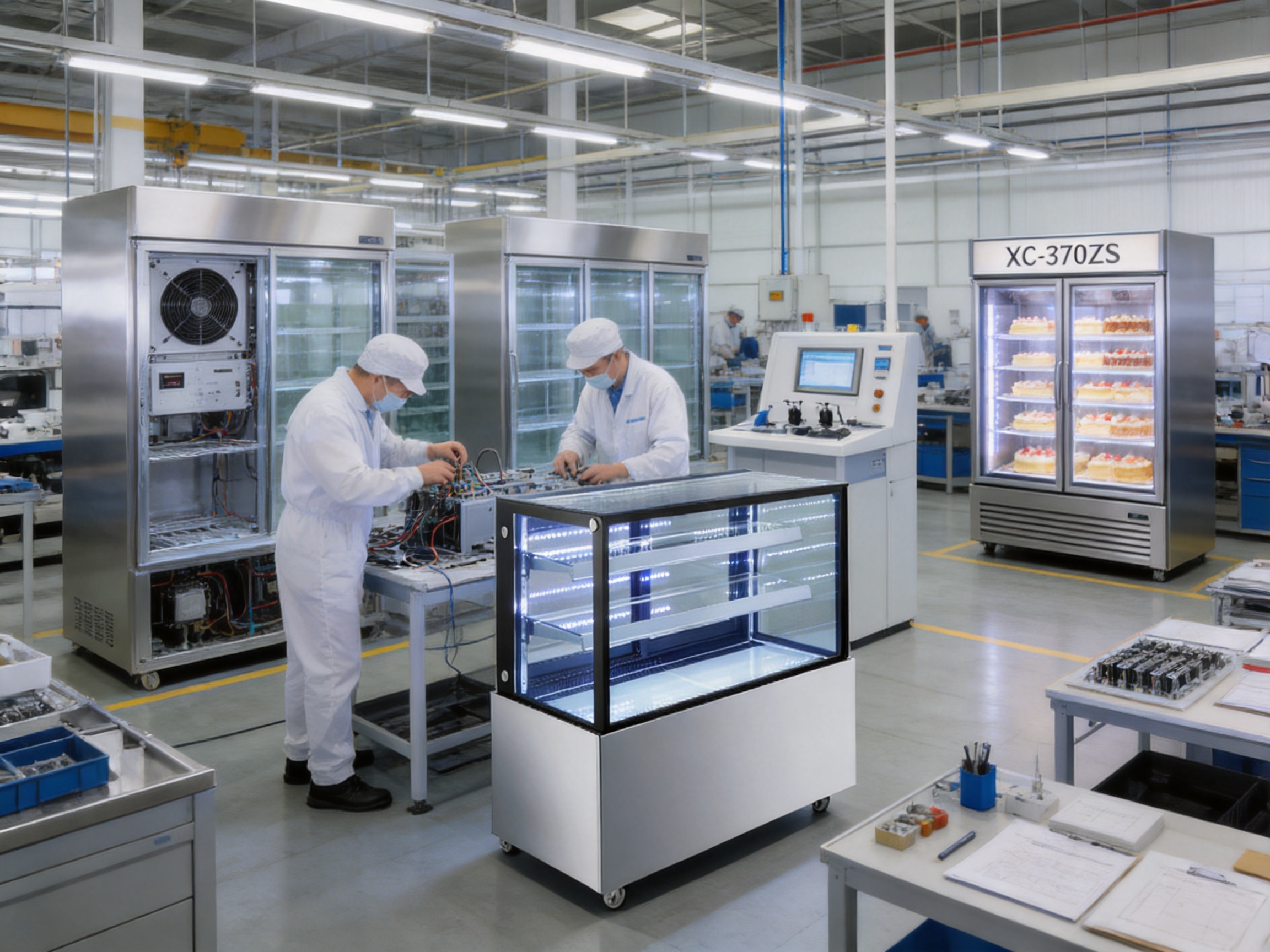
Manufactured by Ningbo XiangChi Electrical Co., Ltd., the product benefits from the experience of a specialized producer of vertical display cabinets, cake cabinets, warming cabinets, countertop display coolers, and related commercial refrigeration equipment. The company’s factory infrastructure, research and development capabilities, testing facilities, and international certifications support a manufacturing approach focused on product innovation, quality improvement, and global market requirements.
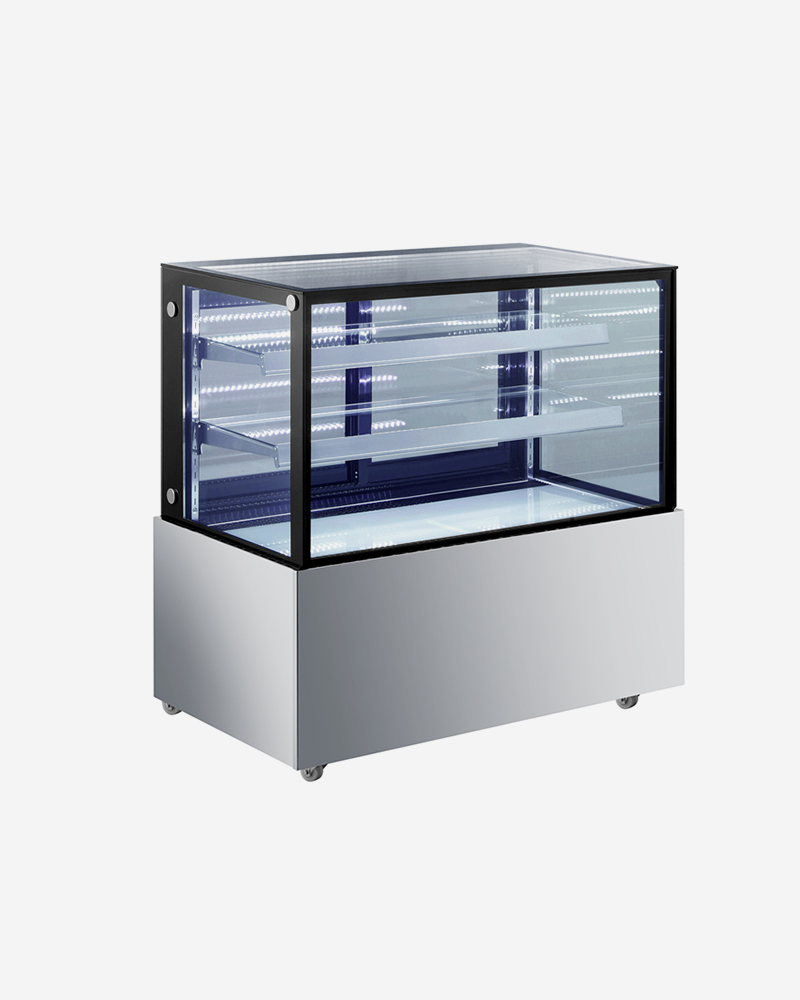
Commercial Fan Cooling Refrigerated Cake Display Cabinets Steam For Humidification
Product Overview
The XC-370ZS is a commercial fan-cooling refrigerated cake display cabinet with a steam humidification function. Its primary purpose is to refrigerate and display cakes and other chilled foods in a visually accessible cabinet. The transparent display structure allows customers to view the contents from outside, while the refrigeration system helps create an appropriate cold environment for products that require temperature-controlled storage during service.
Fan cooling is an important part of the cabinet’s operating concept. In a fan-assisted refrigeration system, air movement helps distribute cooled air through the display area rather than relying only on natural circulation. This can support a more consistent environment across different shelf positions when the cabinet is loaded and operated correctly. More uniform circulation may help reduce local warm areas and provide more predictable product protection compared with basic systems that have limited airflow movement.
The steam humidification function is intended to help manage moisture within the display environment. Many cakes and pastries can be affected by excessively dry air. Dry conditions may contribute to surface hardening, loss of visual freshness, or changes in the texture of cream, sponge, pastry, and decorative elements. Humidification can help support a more suitable atmosphere for particular products, although the correct humidity level depends on the recipe, packaging, storage time, temperature, and operating conditions.
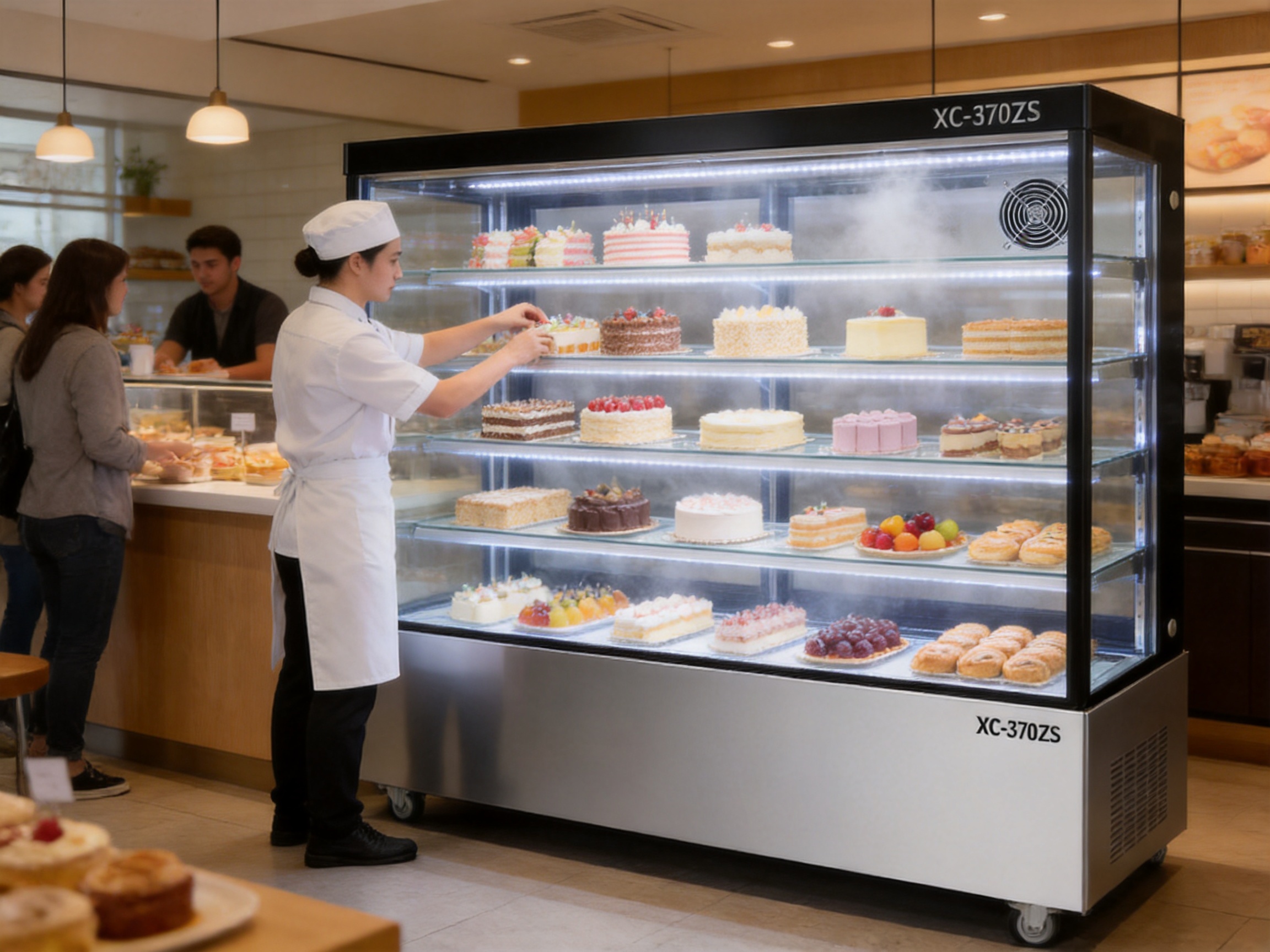
The cabinet is especially relevant to businesses that sell products throughout the day and need them to remain visually appealing from preparation through final sale. A refrigerated cake display cabinet can reduce the need to repeatedly move products between a back-room refrigerator and a service counter. It places products directly in front of customers while maintaining a controlled display environment.
Core Product Functions
The main function of the XC-370ZS is refrigerated product display. It is designed to combine cold storage with presentation, allowing operators to organize cakes and desserts on internal shelves while customers view them through transparent panels. This combination can improve workflow because staff can replenish and serve products from a dedicated display unit instead of using separate storage equipment for every service stage.
The second major function is forced-air circulation. A fan-assisted system is intended to move cooled air around the cabinet, supporting stable cooling performance when the door or access area is opened during normal service. Product arrangement remains important, because blocked air paths, overloaded shelves, or close contact between products and internal surfaces can affect airflow and cooling performance.
The third function is steam humidification. This feature offers an additional way to manage the display atmosphere for products that may benefit from moisture retention. It can be particularly useful where visual quality and softness are important selling factors. Operators should use the humidification system according to the cabinet’s operating instructions and the requirements of the displayed food.
The fourth function is visual merchandising. A glass display cabinet gives the product a prominent position in the retail environment. Cakes are often purchased as an indulgence, celebration item, or impulse purchase, so presentation can directly influence customer interest. A clean and well-lit cabinet with organized shelves can make the product range easier to understand and can support a more professional store image.
Why Fan Cooling Matters in Cake Display
Refrigerated display cabinets can use different cooling methods, including static cooling and fan-assisted cooling. Static systems may be suitable for certain products and applications, but their temperature distribution can be more dependent on natural air movement and shelf placement. Fan cooling introduces active air circulation, which can offer practical advantages in a commercial display environment.
With fan cooling, cold air is moved through the cabinet to support a more even distribution of temperature. This is important when a cabinet contains several shelves with products at different heights. Cakes placed near the top, center, or bottom should all receive suitable refrigeration, provided the cabinet is loaded within its intended capacity and the airflow passages are not obstructed.
Fan circulation can also help the cabinet recover after normal service activity. Every time a display area is opened or exposed to surrounding air, the internal environment may change. Active circulation helps move cooled air through the cabinet and supports the refrigeration system as it returns toward its operating condition. Actual recovery time depends on ambient temperature, humidity, product load, access frequency, and maintenance status.
Another advantage is flexibility in product placement. While correct loading is always required, fan-assisted cabinets may provide a more consistent operating environment than systems that depend heavily on cold air settling in one area. This can make the cabinet more suitable for mixed displays of cakes, pastries, desserts, and similar chilled products.
Supporting Product Quality
Cakes are sensitive products. Their quality can be affected by temperature fluctuations, excessive dryness, condensation, strong odors, poor handling, and extended display times. Refrigeration helps slow the deterioration of perishable ingredients, while the display cabinet protects the products from unnecessary exposure to the surrounding room environment.
Stable cooling can help preserve the structure of cream-based products, mousse desserts, custard fillings, fruit toppings, and other temperature-sensitive components. It may also help maintain the shape of decorative elements that become soft or unstable at higher temperatures. The cabinet does not replace food-safety procedures, recipe controls, or proper preparation, but it provides an important part of the cold-chain process during retail service.
Fan cooling is particularly valuable when the cabinet is used throughout a busy trading period. Frequent customer traffic, repeated staff access, and continuous product replenishment can place greater demands on the refrigeration system. The cooling design should therefore be evaluated not only by its appearance but also by its ability to support consistent commercial operation.
The Role of Steam Humidification
Humidity is a significant factor in the presentation of cakes and pastries. A refrigerated cabinet with very dry air may help control condensation, but it can also cause certain products to lose moisture over time. Sponge cakes may become firmer, pastry surfaces may lose their intended texture, and decorative cream or icing may appear less fresh. The steam humidification function is designed to help address this challenge in suitable applications.
Humidification adds moisture to the display environment in a controlled manner. The goal is not to make the cabinet wet or produce visible condensation on the glass. Instead, the function should be used to support a balanced internal atmosphere appropriate to the products being displayed. Excessive humidity can also create problems, so operation should follow the manufacturer’s guidance and the food operator’s experience.
Different products have different humidity requirements. A delicate mousse cake, a cream-covered sponge, a fruit tart, and a laminated pastry may respond differently to moisture. The best operating practice is to test the cabinet with the actual product range, observe the appearance and texture over the intended display period, and adjust the settings or operating method accordingly.
Steam humidification can also support visual freshness. In a retail setting, customers often judge product quality by the surface appearance of the cake. A product that looks dry, cracked, or dull may be less appealing even when it remains safe to eat. By supporting moisture retention, humidification may help the display maintain a more attractive appearance during the sales cycle.
Using Humidification Responsibly
Humidification should be treated as a product-management function rather than a substitute for refrigeration. The cabinet must still operate within the appropriate temperature range for the food being displayed. Humidification should also be balanced with regular cleaning, water-quality management, and inspection of the internal surfaces.
Operators should use clean water and follow the equipment’s maintenance instructions. Mineral deposits, contamination, or neglected water reservoirs can affect performance and hygiene. A written cleaning schedule can help staff identify responsibility for water replacement, internal wiping, glass cleaning, shelf sanitation, and inspection of drainage areas.
Businesses should also monitor condensation. If moisture collects excessively on the glass, shelves, or product surfaces, the humidity setting, ambient conditions, door or access frequency, product temperature, and cabinet loading should be reviewed. Proper operation is a combination of equipment function and staff practice.
Advantages Compared with Conventional Display Refrigerators
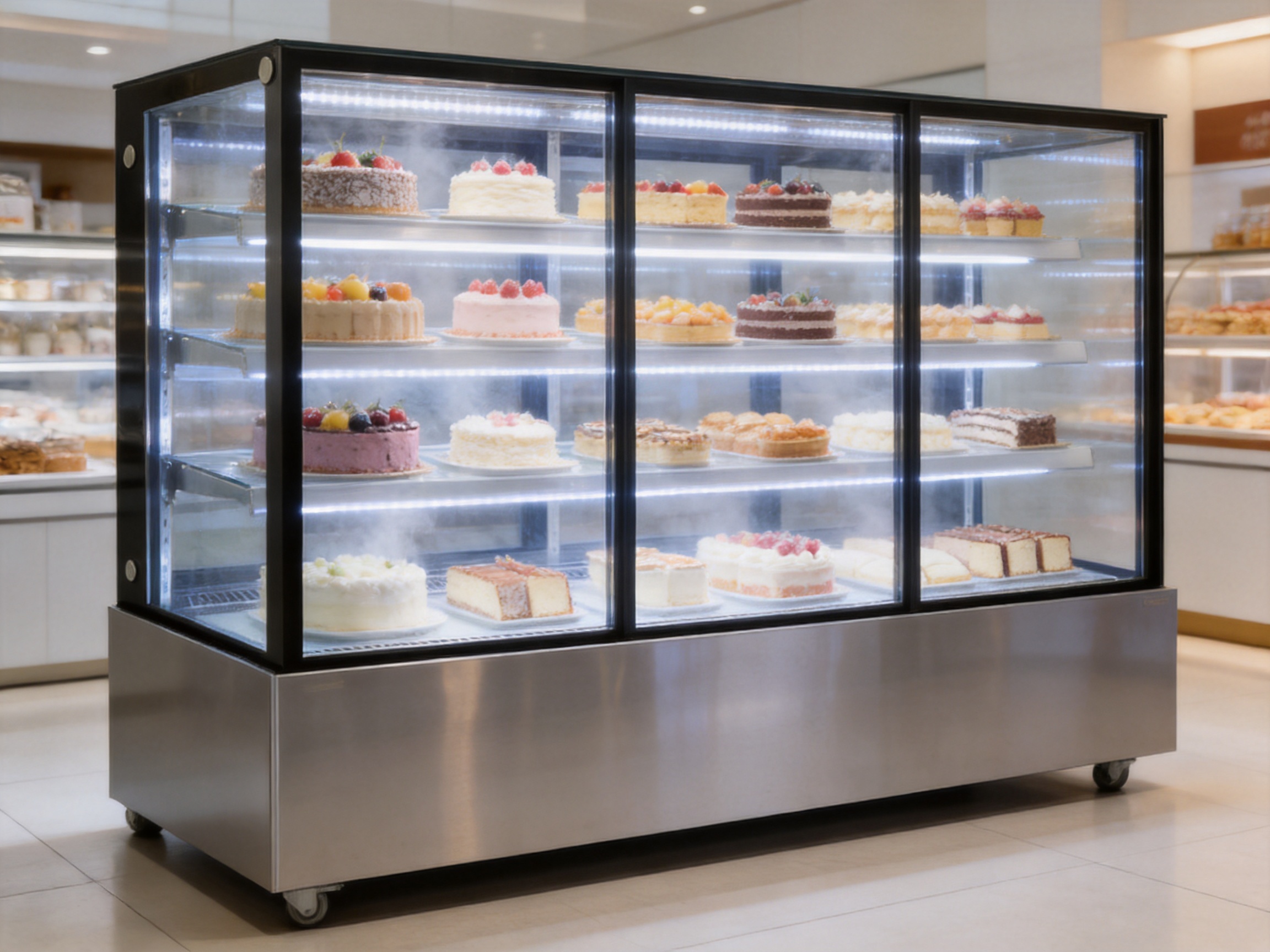
The XC-370ZS offers several potential advantages over simpler refrigerated display cabinets. These advantages come from the combination of forced-air cooling, humidification, product visibility, and commercial design. The exact performance of any cabinet depends on installation, ambient conditions, maintenance, and loading practices, but the product concept addresses many of the weaknesses commonly associated with basic display refrigeration.
More Balanced Air Distribution
Static refrigeration can create differences between areas of the cabinet, especially when shelves are heavily loaded or products are arranged at different heights. Fan cooling actively moves air, which can help support more balanced refrigeration throughout the display space. This is useful for businesses that want to display a variety of products rather than limiting the cabinet to one type of item.
Better Moisture Management
Many standard refrigerated displays focus primarily on lowering temperature. The XC-370ZS adds a humidification function, providing another tool for managing the condition of cakes and pastries. This can be an important advantage for businesses that sell products where softness, cream quality, and surface appearance are central to customer satisfaction.
Improved Merchandising Potential
A purpose-built cake showcase is designed to make food visible and attractive. Compared with storing cakes in a conventional refrigerator and removing them only when customers ask, a glass display cabinet creates a continuous sales presentation. Customers can compare flavors, sizes, colors, decorations, and prices before ordering. This may help increase impulse purchases and simplify the buying process.
Support for Continuous Service
Commercial food businesses often operate for many hours each day. A display cabinet must withstand repeated access, product movement, cleaning, and changing customer demand. A commercial model designed for continuous service can provide a more suitable solution than domestic refrigeration equipment, which may not be intended for frequent opening, heavy loading, or public-facing operation.
Professional Store Appearance
The appearance of the display equipment affects how customers perceive the business. A clean, organized refrigerated cake cabinet communicates attention to quality and food presentation. It can serve as a focal point in a bakery, coffee shop, dessert restaurant, hotel lobby, or catering counter. Professional presentation can strengthen customer confidence and help create a consistent retail environment.
Application Areas
The XC-370ZS can be considered for many commercial applications where chilled food must be presented attractively. Bakeries can use it to display decorated cakes, slices, cheesecakes, mousse products, and seasonal desserts. Pastry shops can organize different product categories on separate shelves while keeping them visible to customers.
Cafés may use a cake showcase near the ordering counter to present desserts alongside coffee and other beverages. In this environment, the cabinet can encourage customers to add a cake slice, tart, or pastry to their order. The display can also help staff answer product questions more efficiently because the available selection is visible.
Hotels and restaurants can use refrigerated cake displays in breakfast areas, dessert stations, banquet preparation zones, or lobby cafés. The cabinet can support an organized presentation for plated desserts, celebration cakes, and prepared cold dishes. Its suitability will depend on the menu, operating schedule, available space, and required capacity.
Catering businesses and food retailers may also benefit from a dedicated refrigerated display solution. Products can be arranged according to flavor, size, price, or customer occasion. During holiday seasons or special events, the display can help highlight themed decorations and limited-time products.
Although the product is categorized as a cake showcase, the operating concept may also suit selected chilled foods such as sandwiches, cream desserts, fruit cups, tarts, and other items that require refrigerated presentation. Food operators should confirm that the temperature, humidity, shelf design, and hygiene requirements are appropriate for each product before use.
Product Presentation and Retail Performance
Retail food equipment should support both product protection and customer communication. A display cabinet allows a business to communicate its product range visually. Customers can see the size, decoration, color, and portion format of the available items without relying entirely on printed menus or staff explanations.
Effective presentation begins with shelf organization. Larger cakes can be placed where they are easy to see, while individual slices, small pastries, and add-on products can be arranged at accessible levels. Consistent spacing makes the cabinet look less crowded and allows air to circulate more freely around the products.
Product labels should be positioned so that customers can identify names, flavors, allergens, and prices without blocking the view. Staff should rotate products according to preparation time and recommended display duration. A clean cabinet with clear labeling can improve customer confidence and reduce unnecessary handling.
Lighting, interior cleanliness, and glass condition also influence presentation. Fingerprints, fogging, crumbs, and water marks can reduce visual appeal. A regular cleaning routine is therefore part of the merchandising process, not merely a maintenance task. The cabinet should be cleaned using methods compatible with the glass, seals, internal surfaces, and electrical components.
Balancing Capacity and Airflow
Businesses may be tempted to fill a display cabinet to its maximum visual capacity, especially during busy periods. However, overloading can restrict air movement, obstruct cooling paths, and make products difficult to remove. A better approach is to maintain an attractive level of fullness while leaving sufficient space for proper circulation and staff access.
Product trays and shelves should be arranged according to the cabinet’s design. Items should not be placed directly against air outlets or internal cooling surfaces unless the operating instructions specifically allow it. Hot products should be cooled appropriately before entering the cabinet, because placing warm food inside can increase the refrigeration load and affect other products.
Manufacturing Strengths
The performance of a commercial display cabinet depends heavily on the manufacturer’s engineering, production control, testing procedures, and after-sales support. Ningbo XiangChi Electrical Co., Ltd. is presented as a professional manufacturer of vertical display cabinets, cake cabinets, and warming cabinets. The company was established in 2007 and has developed more than a decade of experience in this field.
The company operates a modern management garden factory covering approximately 40,000 square meters. A dedicated manufacturing site of this scale can support organized production planning, component handling, assembly operations, quality inspection, product testing, and logistics coordination. It also provides room for production-line development and continuous improvement.
A specialized product manufacturer can build experience across multiple equipment categories. Knowledge gained from vertical display coolers, countertop display coolers, cake showcases, display warmers, and related commercial refrigeration products can contribute to better understanding of customer requirements. These requirements include temperature control, glass visibility, cabinet structure, insulation, electrical safety, serviceability, and appearance.
Research and Development Capability
The company has its own professional research and development team. In commercial refrigeration, research and development involves more than creating an attractive exterior. Engineers must consider airflow, refrigeration performance, humidity control, electrical systems, structural durability, condensation management, energy use, cleaning access, and user safety.
An internal R&D team can help the manufacturer respond to market feedback and improve products in a controlled manner. It can also support the development of different product formats for different regions, store layouts, climate conditions, and customer preferences. In a competitive market, this capacity to improve and adapt is an important advantage.
Product innovation may include improvements to air circulation, control systems, cabinet insulation, shelf arrangements, glass design, humidification, lighting, component selection, and maintenance access. The practical value of innovation is measured by how effectively it supports the operator’s daily work and protects the displayed food.
Advanced Testing Facilities
The company reports having advanced testing facilities that support product innovation and quality improvement. Testing is essential for commercial refrigeration because equipment must perform under varying operating conditions. A cabinet may be exposed to high ambient temperatures, high humidity, repeated access, different product loads, and long operating hours.
Testing can involve refrigeration performance, temperature stability, electrical safety, component operation, insulation quality, structural strength, door or glass performance, humidity function, and general durability. Proper testing helps identify potential problems before products reach customers and provides a basis for continuous manufacturing improvement.
Testing is also important for consistency. A commercial customer expects equipment purchased at different times to provide comparable performance. Production inspection and functional testing can help reduce variation between units and support more reliable installation and operation.
Quality and International Certifications
Ningbo XiangChi Electrical Co., Ltd. has obtained CE, GS, CCC, CB, RoHS, ETL, and other major certifications, according to the provided company information. These certifications and compliance marks are relevant to international commercial appliance markets, although the applicable approval depends on the specific model, configuration, destination country, and current certification documentation.
CE marking is associated with conformity requirements for products placed on applicable European markets. GS is a recognized German-tested safety mark for certain products. CCC is connected with compulsory certification requirements in China. CB certification supports international recognition of electrical safety test results within participating certification systems. RoHS addresses restrictions on certain hazardous substances in electrical and electronic products. ETL is a North American safety certification mark used for products evaluated against applicable standards.
For buyers, certifications can provide additional confidence that the manufacturer understands international technical and safety requirements. They may also simplify the evaluation process for importers, distributors, project contractors, hotel groups, and food-service operators working across different markets.
However, buyers should request the relevant certificate and test documentation for the exact model being purchased. Certification status can vary by product series, electrical specification, refrigerant system, market, and production revision. Import regulations, energy requirements, labeling rules, and installation standards should also be confirmed before shipment.
Advanced Production Process
A reliable commercial display cabinet requires coordination among design, materials, component sourcing, assembly, inspection, and final testing. The manufacturing process begins with product planning. Engineers and product specialists consider the intended use, cabinet dimensions, display requirements, cooling method, humidification function, control arrangement, and target markets.
Material selection is another important stage. The cabinet structure must be suitable for commercial use, regular cleaning, and long operating hours. Transparent panels must provide clear visibility, while internal surfaces should support hygienic maintenance. Insulation materials help reduce heat transfer, and refrigeration components must be matched to the cabinet design and expected operating conditions.
Assembly quality affects both appearance and performance. Components must be installed correctly, wiring must be routed safely, seals must be fitted properly, and air channels must remain clear. Humidification components require particular attention because water and electrical systems operate in the same equipment environment. Correct assembly and inspection are necessary to support safe and reliable function.
Factory testing provides the final manufacturing checkpoint. Units may be inspected for appearance, electrical operation, cooling response, control function, glass condition, shelf stability, and general workmanship. Any abnormality should be identified and corrected before packaging and shipment.
Process Control and Continuous Improvement
Modern manufacturing depends on process control rather than relying only on final inspection. Standardized work procedures, component checks, assembly instructions, and inspection records can help ensure that each production stage is performed consistently.
Continuous improvement may be driven by test data, customer feedback, service information, energy observations, and production experience. A manufacturer with its own R&D team and testing facilities can evaluate improvements internally and integrate useful changes into future products. This approach can enhance reliability, reduce avoidable defects, and improve the user experience.
For international customers, process control is also important because products may travel long distances before installation. Packaging design, moisture protection, component security, and shipping preparation help reduce the risk of damage during transportation. Importers should still inspect the shipment upon arrival and follow the recommended installation procedure.
Installation and Operating Considerations
Correct installation is necessary for the cabinet to perform as intended. The unit should be placed on a stable, level surface with sufficient clearance for ventilation, cleaning, servicing, and safe operation. It should not be positioned next to equipment that produces excessive heat unless the installation plan accounts for the additional thermal load.
Ambient conditions affect refrigeration performance. A cabinet operating in a hot, humid, crowded kitchen may work harder than the same cabinet installed in a climate-controlled café. Operators should review the technical documentation for the acceptable ambient temperature range, electrical supply, ventilation requirements, and recommended installation clearances.
The power supply should match the product’s rated electrical specifications. Electrical installation should be completed according to local regulations by qualified personnel where required. Extension cords, overloaded circuits, damaged plugs, or improper grounding can create safety risks and should be avoided.
Before loading products, the cabinet should be allowed to reach its normal operating condition. Food should be prepared, chilled, and handled according to applicable food-safety procedures. The display cabinet is intended to maintain suitable conditions; it is not designed to rapidly cool large quantities of hot food.
Daily Operating Practice
Staff should avoid leaving the access area open longer than necessary. Frequent or prolonged access introduces warm, moist air and can increase condensation and energy use. Products should be arranged efficiently so that staff can serve customers quickly without repeatedly moving unrelated items.
Air outlets and circulation paths should remain unobstructed. Products should not be stacked in a way that blocks the movement of cooled air. Staff should also avoid placing items with strong odors beside delicate cakes unless the products are properly separated and the cabinet’s design supports mixed storage.
Temperature and humidity should be monitored according to the business’s food-safety plan. Any unusual noise, excessive frost, water accumulation, unstable temperature, or change in cooling behavior should be reported promptly. Early attention can help prevent product loss and reduce the risk of more serious equipment problems.
Cleaning and Maintenance
Cleaning is essential for both hygiene and presentation. Glass surfaces should be cleaned regularly to remove fingerprints, grease, dust, and condensation marks. Internal shelves and product trays should be removed or cleaned according to the manufacturer’s instructions. Food residue should not be allowed to accumulate around corners, seals, drainage points, or humidification components.
The humidification system requires particular care. Water should be replaced and reservoirs should be cleaned at the recommended intervals. If the local water supply contains significant minerals, scale may develop on steam-producing components. Operators should follow the approved descaling procedure and avoid using unsuitable chemicals that may damage the equipment or contaminate food-contact areas.
Fans and air passages should be kept free from dust and obstruction. Dirty filters, blocked vents, or accumulated grease can reduce airflow and increase the load on the refrigeration system. Maintenance personnel should inspect electrical connections, seals, control components, and refrigeration elements as part of a planned service program.
Cleaning should be performed with the cabinet isolated from the power supply whenever required by the operating instructions. Water should not be sprayed directly onto electrical components or control areas. Staff should use appropriate cleaning materials and observe workplace safety procedures.
Commercial Value and Total Cost of Ownership
The value of a refrigerated cake showcase is not determined only by its purchase price. Businesses should consider the total cost of ownership, including energy consumption, cleaning time, maintenance, product waste, service availability, and expected operating life. A cabinet that supports better product presentation and reduces unnecessary product loss may provide greater value over time.
Humidity management can be economically relevant when it helps preserve the appearance and texture of products during a normal selling period. If fewer cakes need to be discarded or discounted because of avoidable drying, the equipment may contribute to better inventory utilization. These benefits depend on the product range and correct operation.
Fan cooling can also support more consistent product conditions, which may reduce the risk of localized quality problems. However, energy performance depends on cabinet loading, ambient temperature, access frequency, condenser cleanliness, control settings, and maintenance. Operators should use the equipment efficiently and avoid unnecessary temperature or humidity settings.
Display value is another part of the investment. A cabinet that places products directly in front of customers can increase product exposure and support cross-selling. In a café, for example, an attractive cake display may encourage beverage customers to purchase dessert. In a bakery, it can help customers compare products and make decisions more quickly.
Selection Guide for Buyers
Before purchasing the XC-370ZS or a similar cabinet, businesses should assess the available floor or counter space, desired product capacity, electrical supply, ambient climate, access frequency, and product types. The cabinet should fit naturally into the service workflow without blocking customer movement or staff access.
Buyers should ask for the complete technical specification, including dimensions, rated voltage, frequency, refrigerant information, temperature range, humidity function, shelf arrangement, net capacity, lighting, packaging size, and applicable certifications. These details are necessary for correct planning and comparison with competing products.
The intended products should also be considered. If the cabinet will display highly decorated cakes, shelf height and access design may be important. If it will display individual slices or small pastries, shelf spacing and visibility may have greater priority. If products have different humidity requirements, the operator should confirm how the humidification function can be adjusted and maintained.
After-sales support is equally important. Buyers should confirm warranty terms, spare-parts availability, technical documentation, installation guidance, troubleshooting procedures, and service arrangements in the destination market. A manufacturer with experience in international trade may be better positioned to support distributors and commercial customers across different regions.
| Evaluation Area | Questions for Buyers | Why It Matters |
|---|---|---|
| Cooling method | Does the cabinet use fan-assisted circulation, and how should products be arranged? | Supports more consistent refrigeration and helps protect product quality. |
| Humidity control | How is steam humidification operated, cleaned, and adjusted? | Helps manage moisture-sensitive cakes and pastries. |
| Display visibility | Are the glass panels clear, accessible, and easy to clean? | Improves merchandising and customer confidence. |
| Capacity | Will the shelves accommodate the business’s product sizes and trays? | Prevents overloading and supports efficient product organization. |
| Installation | What electrical, ventilation, clearance, and ambient conditions are required? | Helps ensure safe and reliable operation. |
| Maintenance | Are cleaning, drainage, fan, and humidification components easy to access? | Reduces maintenance time and supports hygiene. |
| Compliance | Which certifications apply to the exact model and destination market? | Supports import, safety, and regulatory requirements. |
| Service support | Are manuals, spare parts, and technical assistance available? | Helps protect long-term operating value. |
Company Manufacturing and Supply Capability
Ningbo XiangChi Electrical Co., Ltd. is located in Cixi City, Ningbo, Zhejiang, China, in the East Zone of Guanhaiwei Industrial Park. The company’s stated product focus includes vertical display cabinets, cake cabinets, warming cabinets, countertop display coolers, and other commercial refrigeration products.
Its history since 2007 reflects sustained involvement in the commercial display equipment sector. More than a decade of industry experience can provide practical knowledge of component selection, cabinet construction, product testing, international customer requirements, and common operating challenges.
The company’s 40,000-square-meter modern management garden factory provides a substantial base for production and administration. A dedicated facility can support organized manufacturing flows and help separate product development, assembly, inspection, storage, and shipment activities. This is valuable for customers seeking stable supply and repeat orders.
The company describes innovation, quality, and service as central principles. These principles are relevant to commercial equipment because customers generally need more than a single delivered unit. They need clear specifications, dependable production, suitable packaging, installation information, replacement components, and responsive communication throughout the product life cycle.
With international certifications including CE, GS, CCC, CB, RoHS, and ETL, the manufacturer demonstrates attention to different market requirements. Importers and distributors should still verify the documents for each order, but the stated certification experience can support cooperation with global partners.
Recommended Use Cases
The XC-370ZS is well suited to businesses that prioritize the visual presentation of chilled cakes and desserts. A bakery with a varied daily selection can use it as a central sales display. A café can place it beside the ordering counter to combine food presentation with beverage sales. A hotel can use it in a lobby café or dessert service area where appearance and accessibility are important.
It may also be suitable for dessert shops that require a refrigerated showcase with additional moisture management. Businesses selling soft sponge cakes, cream cakes, fruit-topped desserts, or mousse products may find the humidification function relevant, provided the operating settings are matched to the actual products.
The cabinet can support seasonal merchandising as well. During holidays, birthdays, anniversaries, and local celebrations, businesses can use the display to highlight limited-edition cakes and pre-order designs. Clear visibility allows customers to see decorative details that may be difficult to communicate through printed menus alone.
Q&A
What is the XC-370ZS?
The XC-370ZS is a commercial fan-cooling refrigerated cake display cabinet with a steam humidification function. It is designed to refrigerate and present cakes, pastries, desserts, and selected chilled foods in a glass display environment.
What is the main advantage of fan cooling?
Fan cooling actively circulates cold air through the cabinet. This can help support more even temperature distribution across the display area compared with systems that rely mainly on natural air movement. Correct loading and unobstructed air passages remain essential.
Why is steam humidification useful for cakes?
Some cakes and pastries can become dry or lose visual freshness when exposed to overly dry conditions. Steam humidification adds moisture to the cabinet environment and may help support the texture and appearance of suitable products during display.
Can the cabinet display products other than cakes?
It may be suitable for selected chilled products such as pastries, tarts, mousse desserts, fruit desserts, sandwiches, and similar foods. The operator should confirm that the temperature, humidity, hygiene, and storage requirements of each product are compatible with the cabinet.
Does humidification replace refrigeration?
No. Humidification is an additional environmental control function and does not replace refrigeration or food-safety procedures. Products must still be prepared, chilled, stored, and handled according to applicable requirements.
How should the cabinet be loaded?
Products should be arranged with adequate space for air circulation and staff access. Air outlets and internal circulation paths should not be blocked. The cabinet should not be overloaded beyond its intended capacity.
What businesses can use this product?
Potential users include bakeries, pastry shops, cafés, dessert stores, hotels, restaurants, catering businesses, food retailers, and other commercial food-service operators that need refrigerated product presentation.
What manufacturing strengths support the product?
The manufacturer has operated since 2007, maintains a modern factory of approximately 40,000 square meters, and has its own R&D team and testing facilities. It also produces several categories of commercial display and warming equipment, creating experience across related product applications.
Which certifications are associated with the manufacturer?
The provided company information lists CE, GS, CCC, CB, RoHS, ETL, and other major certifications. Buyers should request documentation for the exact model, electrical configuration, and destination market before placing an order.
What should be checked before purchase?
Buyers should confirm dimensions, capacity, voltage, frequency, temperature range, humidity function, shelf arrangement, installation requirements, ambient operating conditions, certifications, warranty terms, spare-parts support, and delivery arrangements.
How can operators maintain performance?
Operators should keep the glass, shelves, air passages, fan areas, drainage points, and humidification components clean. They should monitor temperature and humidity, avoid overloading, minimize unnecessary access, and arrange professional service when abnormal operation occurs.
Conclusion
The Commercial Fan Cooling Refrigerated Cake Display Cabinet Steam For Humidification, model XC-370ZS, is designed to meet the combined needs of refrigeration, food presentation, air circulation, and moisture management. Its fan-cooling system can support more balanced refrigeration, while the steam humidification function provides an additional tool for maintaining the appearance and texture of suitable cakes and pastries.
Compared with basic display refrigerators, the product concept offers a broader approach to product protection. It recognizes that commercial cakes must not only remain cold but also look attractive, retain an appropriate texture, and remain easy for customers to view. The glass display format supports retail merchandising, while the commercial construction is intended for regular service use.
The manufacturer’s experience, factory capacity, internal R&D team, testing facilities, and stated international certifications provide a strong foundation for production. Its product range across vertical display cabinets, cake showcases, warming cabinets, and related commercial equipment demonstrates a focused understanding of food-service display requirements.
For businesses choosing a refrigerated cake showcase, the most important decision is to match the cabinet with the actual product range, store environment, operating schedule, and service requirements. When correctly installed, loaded, cleaned, and maintained, the XC-370ZS can become an important part of a bakery, café, hotel, restaurant, or dessert shop’s daily sales and food-preservation system.
References
1. Product information supplied for the XC-370ZS Commercial Fan Cooling Refrigerated Cake Display Cabinet with Steam Humidification.
2. Company profile and manufacturing information supplied for Ningbo XiangChi Electrical Co., Ltd.
3. General principles of commercial refrigeration equipment operation and maintenance.
4. General food-service guidance concerning temperature control, hygiene, display practices, and product rotation.
5. General overview of international electrical and product compliance marks, including CE, GS, CCC, CB, RoHS, and ETL.
Product: Commercial Fan Cooling Refrigerated Cake Display Cabinets Steam For Humidification

You May Also Like
.jpg?imageView2/2/w/500/h/500/format/jp2/q/100 "Four Sides Glasses Display Cooler")
.jpg?imageView2/2/w/500/h/500/format/jp2/q/100 "White 4-Sided Glass Refrigerated Display Case")
.jpg?imageView2/2/w/500/h/500/format/jp2/q/100 "Refrigerated Display Cake Countertop Four Sides Glasses Display Cooler")
.jpg?imageView2/2/w/500/h/500/format/jp2/q/100 "Four Sides Glasses Display Cooler")

-
- Navigation
- Home
- About Us
- Products
- News
- Contact Us
 East Zone, Guanhaiwei Industrial Park, Cixi City, Ningbo, Zhejiang, China
 +86-574-63668678
 +86-574-63668108
Copyright © Ningbo XiangChi Electrical Co.,Ltd All Rights Reserved.
