
 简体中文
简体中文 English
 Español
News
Professional Food Display Warmer Cake Showcase for Catering and Retail Environments
In modern foodservice, presentation is no longer a secondary concern. Customers make decisions quickly, often before reading a menu or speaking with staff, and the visual appeal of warm food can strongly influence purchasing behavior. A professional food display warmer cake showcase is designed to meet this exact need: it keeps prepared food at an appetizing serving temperature while displaying it clearly and attractively. The XCR-96L Display Warmer, with a 96-liter capacity, a 30°C to 90°C temperature range, and a compact countertop footprint, is a practical solution for bakeries, cafés, convenience stores, catering counters, hotel breakfast areas, dessert shops, buffet stations, snack bars, and quick-service restaurants.
This article explores the performance value, commercial advantages, technical specifications, usage scenarios, and manufacturing strengths behind this catering equipment. It also explains why a well-engineered display warmer can help food businesses improve product visibility, maintain service efficiency, and create a more reliable customer experience. In a competitive market where many display warmers look similar at first glance, the real difference comes from temperature stability, construction consistency, quality control, engineering experience, and the ability of the manufacturer to support long-term commercial use.
Catering Equipment Food Display Warmer Cake Showcase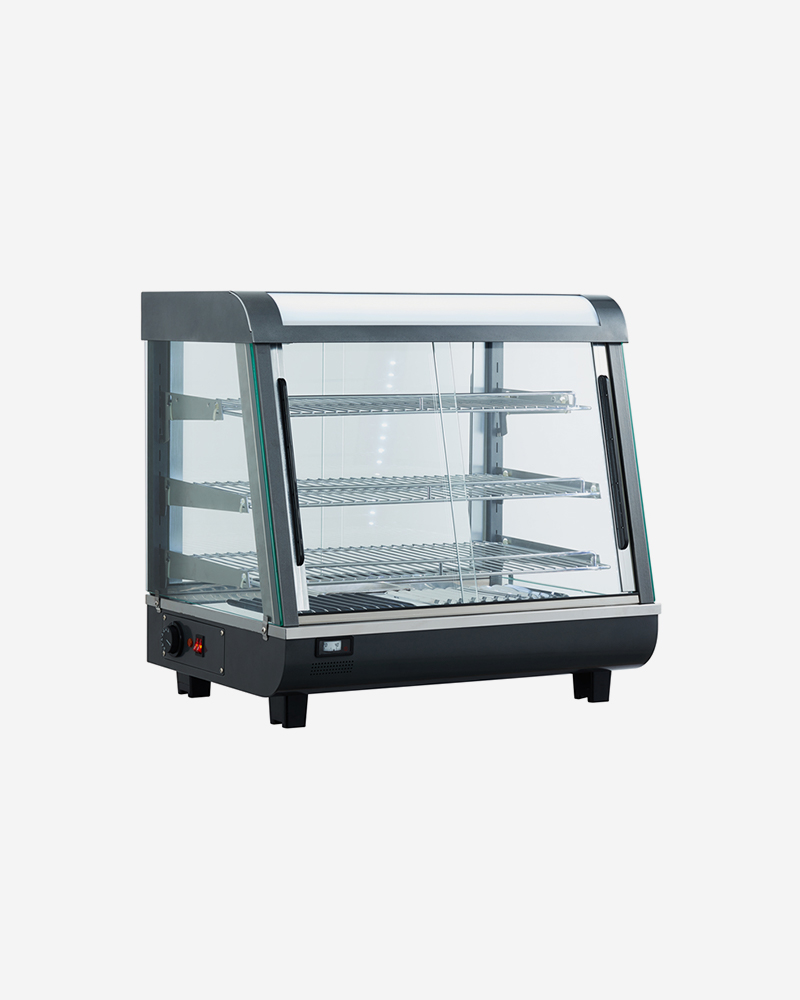
Understanding the Role of a Food Display Warmer Cake Showcase
A food display warmer cake showcase is a heated cabinet used to present food while keeping it warm within a controlled temperature range. Unlike ordinary storage equipment, it must perform two jobs at the same time. First, it must protect food quality by maintaining warmth within a suitable range. Second, it must allow customers to see the food clearly, encouraging impulse purchases and improving the overall image of the service counter. This dual function makes it important for the unit to be visually appealing, dependable, and easy to operate during busy business hours.
The XCR-96L is categorized as a display warmer and is particularly suitable for prepared foods that need to remain warm before serving. Its stated temperature range of 30°C to 90°C provides flexibility for different food presentation needs. Lower temperatures may be useful for gentle warming or holding delicate foods, while higher settings can be selected for products that require stronger heat retention. With 96 liters of internal capacity, the warmer offers enough room for a practical selection of items without taking up excessive counter space.
For commercial operators, equipment must fit the pace of real service. In a bakery or café, staff may need to load pastries, pies, warm cakes, sandwiches, or snacks quickly. In a catering setting, the warmer may be positioned where guests can view food directly. In a convenience store, the unit may operate for long hours and must be simple for staff to monitor. The XCR-96L addresses these needs by combining capacity, display visibility, and temperature control in a form suitable for daily professional environments.
Product Overview: XCR-96L Display Warmer
The XCR-96L is a 96-liter commercial display warmer designed for catering and food retail applications. It is built around the need to keep food warm and presentable while offering a compact size that can be integrated into many service layouts. The product size is 668 mm by 486 mm by 636 mm, making it large enough for practical food display but still suitable for countertop placement. This balance is important for businesses that need to maximize every square meter of service area.
With an input power of 1000 W, the warmer is designed to provide the heating capability required for commercial holding applications. The 30°C to 90°C temperature range gives operators useful control over the internal environment. The net weight of 30 kg suggests a substantial build for a countertop appliance, while the gross weight of 33 kg indicates packaging designed for transport and distribution. The package size of 727 mm by 549 mm by 675 mm supports logistics planning for dealers, distributors, and bulk buyers.
Because the unit is intended for display, visibility is a key part of its value. In foodservice, the customer must be able to see the food in a clean, organized, and appealing way. A display warmer that hides the product or looks cluttered can reduce the perceived value of the food. A well-designed showcase, by contrast, can turn prepared food into a selling point. The XCR-96L supports this goal by offering a dedicated heated display environment that can be positioned where customers naturally look during the purchasing process.
Key Technical Specifications
Model |
XCR-96L |
Product Category |
Display Warmer |
Capacity |
96 L |
Temperature Range |
30°C to 90°C |
Input Power |
1000 W |
Net Weight |
30 kg |
Gross Weight |
33 kg |
Product Size |
668 × 486 × 636 mm |
Package Size |
727 × 549 × 675 mm |
20-inch GP Loading Quantity |
93 units |
40-inch HQ Loading Quantity |
256 units |
These specifications show that the XCR-96L is positioned as a compact yet capable commercial warmer. The 96-liter capacity is especially useful for businesses that need more than a small display box but do not want a large floor-standing cabinet. The 1000 W power rating supports the heating function, while the wide temperature range increases its versatility for various warm food categories.
Why the 96-Liter Capacity Matters
Capacity is one of the most important considerations when choosing a display warmer. If a unit is too small, staff must refill it too often, which increases labor pressure and may interrupt service. If a unit is too large, it may take up unnecessary space, consume more energy than needed, or make the displayed food look sparse when inventory is low. The XCR-96L offers a middle-ground capacity that is practical for many commercial counters.
For a bakery, 96 liters can support a display of warmed pastries, filled bread, pies, or specialty snacks. For a café, it can hold items such as hot sandwiches, baked desserts, or warm breakfast products. For catering, it can help present food in a more refined and organized way than open trays alone. For convenience stores, it may support packaged warm snacks that need to remain visible to customers throughout the day.
The internal space also helps with merchandising. Operators can arrange food by type, price, flavor, or meal period. A well-organized display can make customers feel that the food is fresh, abundant, and worth purchasing. In this sense, the warmer is more than holding equipment; it is a sales tool. The 96-liter size gives businesses enough space to create an attractive presentation without committing to oversized equipment.
Temperature Range from 30°C to 90°C
The temperature range of 30°C to 90°C is one of the central advantages of the XCR-96L. Different foods have different warming requirements, and a narrow temperature range can limit practical use. With a broad adjustable range, operators can adapt the warmer to their menu and service pattern. Gentle warming may be needed for products that can dry out or lose texture under excessive heat, while stronger heat settings may be selected when food must remain hotter for immediate serving.
Temperature flexibility also helps businesses adjust to different operating periods. During peak hours, food turnover may be fast, and the warmer may be used mainly to keep products ready for short periods. During slower hours, food may remain in the cabinet longer, making careful temperature selection more important. The ability to adjust within a wide range supports better control and can reduce waste caused by improper holding conditions.
Compared with basic warmers that offer limited temperature control, a wider range provides a stronger operational advantage. Food businesses often sell different items throughout the day. Breakfast items, lunch snacks, desserts, and evening takeaway products may not require the same holding temperature. A versatile warmer can support changing menus without requiring multiple pieces of equipment.
Compact Footprint for Countertop Efficiency
Counter space is valuable in almost every food business. A display warmer must be large enough to hold food but compact enough to leave room for preparation, payment, packaging, and customer interaction. The XCR-96L product size of 668 × 486 × 636 mm makes it suitable for many countertop environments. It can be integrated into front-of-house service counters, self-service areas, concession stands, or back-counter pickup stations.
This compact form gives the unit an advantage over larger, less flexible warmers. Many small and medium businesses cannot accommodate bulky equipment, especially in urban shops where rental costs are high and layouts are narrow. A countertop warmer allows the operator to use vertical display space rather than expanding horizontally. This improves space utilization while still keeping products visible.
The relatively manageable footprint also supports repositioning when business needs change. A café may place the warmer near the cashier in the morning to promote breakfast items, then move it to another counter for afternoon snacks. A catering team may use it in different event layouts. While safe handling and proper installation must always be followed, the unit’s dimensions make it more adaptable than large fixed cabinets.
Visual Merchandising Advantages
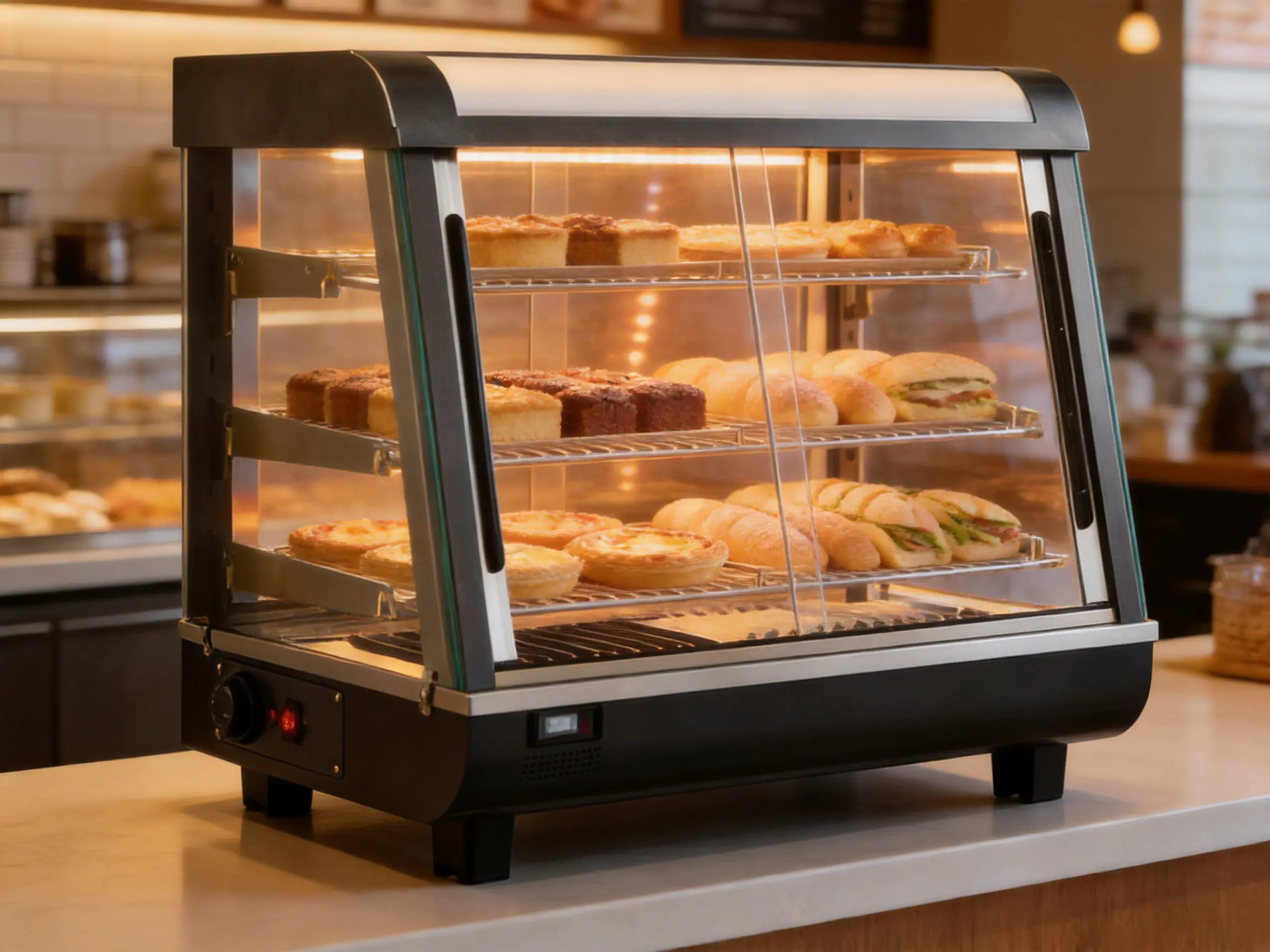
In retail foodservice, customers often buy what they can see. A display warmer helps convert prepared food into visible value. When food is placed inside a warm showcase, it looks organized, protected, and ready to serve. This can improve customer confidence compared with food left uncovered or poorly presented. A clean heated display also helps businesses communicate professionalism.
The XCR-96L is particularly useful for impulse sales. Warm food positioned near a payment area can encourage customers to add an item to their order. A guest buying coffee may decide to add a warm pastry. A customer entering a convenience store may choose a hot snack after seeing it displayed attractively. A hotel guest may select a warm breakfast item when it is presented in a neat cabinet rather than hidden behind the counter.
Visual merchandising is not only about appearance; it is also about flow. A good display warmer allows staff and customers to understand what is available quickly. This reduces the need for repeated explanations, speeds up decisions, and improves service efficiency. When the warmer is kept clean and loaded with a balanced selection, it becomes part of the selling environment rather than just a storage device.
Advantages Over Ordinary Competitor Units
Many display warmers in the market may look similar, but differences in engineering, quality control, and manufacturing discipline become clear during daily use. The XCR-96L offers several competitive advantages based on its practical specification balance and the manufacturing capabilities behind it. Its 96-liter capacity, compact footprint, broad temperature range, and commercial-grade power rating combine to provide a strong value proposition for foodservice operators.
One advantage is its balance between size and capacity. Some competitor units are too small for meaningful merchandising, while others are oversized for countertop environments. The XCR-96L provides a useful internal volume while maintaining a product size that can fit into many commercial spaces. This balance can reduce the need for multiple small warmers or a larger cabinet that overwhelms the counter.
Another advantage is temperature versatility. Competitor models with restricted temperature ranges may limit menu flexibility. The XCR-96L range of 30°C to 90°C supports a wider variety of food holding strategies. This makes it easier for operators to adapt the unit to their actual menu rather than forcing the menu to fit the equipment.
A third advantage is manufacturing consistency. Commercial buyers do not only purchase a single unit; many distributors, chain stores, and project buyers need equipment that can be supplied consistently. The manufacturer behind this product operates with professional production experience, a substantial factory environment, R&D capability, testing facilities, and international certifications. These strengths help create confidence in repeat orders, bulk purchasing, and long-term supply partnerships.
Designed for Commercial Foodservice Demands
Commercial foodservice equipment must withstand repetitive daily use. Doors are opened and closed frequently, staff members may operate the unit under time pressure, and the warmer may remain in use for extended periods. Equipment for this environment must therefore be reliable, understandable, and easy to integrate into routine operations. The XCR-96L is designed as a catering equipment solution rather than a household appliance, which means its specifications are aligned with professional requirements.
The 1000 W input power supports heating performance for the 96-liter cabinet volume. This power level is practical for a countertop warmer because it provides strong heat capacity while remaining suitable for many commercial electrical settings. Operators should always follow the correct power supply requirements and installation guidance, but the rating indicates that the unit is built to provide real warming performance rather than decorative display alone.
Commercial operators also value predictable packaging and logistics. The XCR-96L has a package size of 727 × 549 × 675 mm and stated container loading quantities of 93 units for a 20-inch GP container and 256 units for a 40-inch HQ container. These details matter to wholesalers, importers, and project buyers because they allow more accurate freight planning, warehouse allocation, and cost calculation.
Application in Bakeries and Pastry Shops
Bakeries and pastry shops rely heavily on display. Even when the food quality is excellent, poor presentation can reduce sales. A display warmer can help showcase selected warm products such as baked snacks, savory pastries, pies, rolls, filled bread, or warm dessert items. The XCR-96L is well suited to this environment because it provides a visible, warm, and organized space for products that should not be served cold.
Warm display can enhance the perceived freshness of bakery products. Customers often associate warmth with recent preparation, comfort, and flavor. When the aroma and appearance of warm baked goods are supported by an attractive display, the likelihood of purchase increases. The warmer also helps staff separate warm items from room-temperature products, creating clearer merchandising zones.
For small bakeries, the countertop size is particularly valuable. Many bakeries already use counter space for cash registers, packaging materials, coffee machines, and cold display cases. A compact 96-liter warmer can be positioned strategically without requiring a major layout change. For larger bakeries, multiple units may be used to separate different product groups or service areas.
Application in Cafés and Coffee Shops
Cafés often generate additional revenue from food sold alongside beverages. A customer who enters for coffee may be tempted by a warm sandwich, pastry, or snack if it is visible and ready. The XCR-96L Display Warmer supports this sales model by making warm food easy to see and convenient to serve. It can help cafés improve average transaction value without dramatically increasing service complexity.
Because café menus may change throughout the day, the temperature range is useful. Morning products may include breakfast pastries or warm rolls, while afternoon offerings may shift to cakes, snacks, or savory items. The adjustable temperature range allows staff to select a suitable holding condition for the products being displayed. This flexibility can be more efficient than relying on equipment designed for only one narrow category.
The visual role of the warmer is also important in café design. Many cafés invest in atmosphere, lighting, and interior presentation. Equipment placed at the front counter must match the professional image of the business. A neat display warmer helps create a sense of readiness and abundance while keeping food protected behind display surfaces.
Application in Catering and Event Service
Catering operations require equipment that can support presentation and practical service at the same time. Food may need to remain warm during a meeting, buffet, reception, or private event. The XCR-96L provides a compact heated display option that can be used in controlled service areas where food visibility matters. It can support a more refined presentation than open warming trays for selected items.
At events, guests often approach food displays without detailed instructions. A clear display helps them understand what is available quickly. Warm food shown through a showcase can look more premium and hygienic than items exposed directly to the surrounding environment. This can improve guest confidence, especially in corporate catering, hotel banquets, educational facilities, and institutional events.
The unit’s 30 kg net weight reflects a stable countertop appliance, while still being within a range that professional teams can plan around when arranging transport and setup. Event operators should always handle the unit safely and according to proper procedures, but the dimensions and capacity make it a practical addition to many catering equipment inventories.
Application in Convenience Stores and Quick-Service Counters
Convenience stores and quick-service counters depend on speed. Customers expect ready-to-eat food to be visible, accessible, and consistently available. A display warmer helps create a dedicated warm food zone that can encourage spontaneous purchases. The XCR-96L can be used to display warm snacks, packaged bakery items, or other suitable prepared foods, depending on local food safety rules and operating procedures.
In this environment, staff turnover may be higher than in specialized restaurants, so equipment should be straightforward to use. A display warmer with clear operating purpose and adjustable temperature control can be easier to train staff on than complicated multi-function equipment. The main task is simple: load suitable food, set the appropriate temperature, monitor product condition, and maintain cleanliness.
Compared with open heated shelves, an enclosed display warmer can provide a more organized visual presentation. It can also help protect products from unnecessary handling and environmental exposure. For stores focused on maximizing small-format retail space, the 96-liter countertop design provides a useful balance between merchandising capacity and footprint efficiency.
Manufacturing Strength Behind the Product
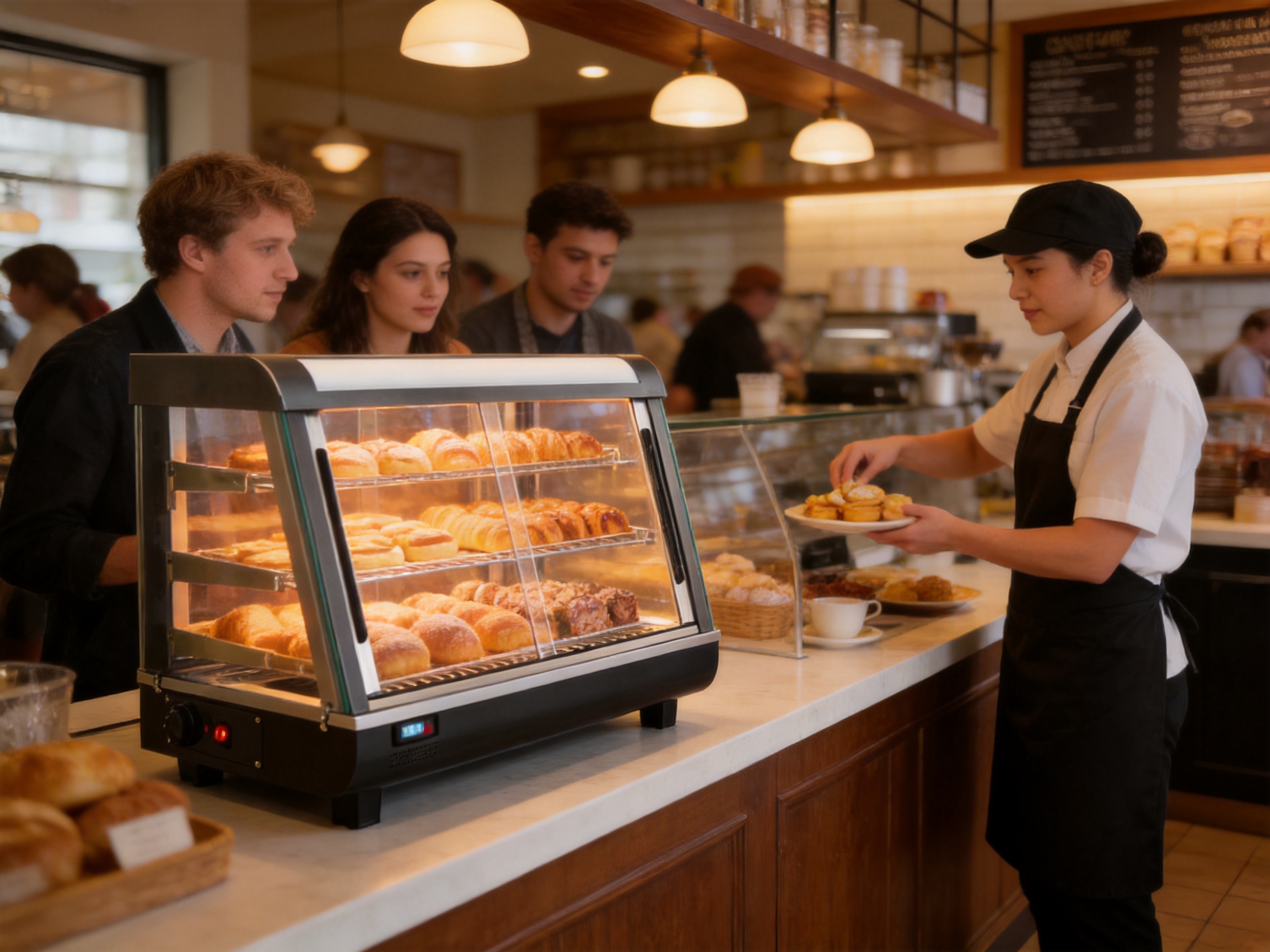
The quality of commercial refrigeration and warming equipment depends heavily on the manufacturer’s production system. A good design must be supported by reliable materials management, process control, assembly discipline, testing, and continuous improvement. The manufacturer of the XCR-96L has been established since 2007 and has more than 10 years of experience in vertical display cabinets, cake cabinets, warming cabinets, and related commercial display equipment. This experience is important because display temperature equipment requires both visual design and thermal performance knowledge.
The company operates a modern management garden factory of approximately 40,000 square meters. A factory of this scale supports organized production flow, material storage, assembly areas, testing zones, and quality inspection processes. For commercial buyers, factory scale matters because it indicates capacity for stable supply, batch production, and continuous improvement. It also supports the ability to manage multiple product categories, including vertical display coolers, countertop display coolers, cake showcases, display warmers, and glass freezers.
Advanced manufacturing is not only about machinery. It is also about engineering discipline. The company has its own professional R&D team and advanced testing facilities. This allows product development, performance verification, and quality improvement to happen internally. When issues are found, engineers can evaluate design details, test adjustments, and improve production standards. This creates a stronger foundation than relying only on outsourced designs or limited inspection.
R&D Capability and Product Innovation
A professional R&D team is a major advantage in the commercial display equipment industry. Foodservice trends change quickly, and buyers increasingly demand equipment that is compact, efficient, attractive, and reliable. R&D capability allows a manufacturer to respond to these needs with improved structures, better temperature management, more user-friendly layouts, and product lines that match different market segments.
For a display warmer such as the XCR-96L, R&D work may involve cabinet structure, heating layout, airflow behavior, safety considerations, user operation, packaging design, and durability testing. Even small design improvements can make a meaningful difference in daily operation. For example, better thermal balance can help reduce hot and cold spots, while improved structural design can support easier cleaning and more stable display performance.
Innovation is especially valuable for distributors and OEM buyers because they need products that remain competitive over time. A manufacturer with internal R&D can develop new models, refine existing products, and respond to market feedback. This helps partners avoid being trapped with outdated equipment. It also supports customization discussions when buyers have special requirements for size, appearance, certification, or market positioning.
Advanced Testing Facilities and Quality Assurance
Testing is essential for commercial temperature equipment. A display warmer must be evaluated for heating performance, temperature control, electrical safety, structural stability, and packaging reliability. Advanced testing facilities allow the manufacturer to check whether products meet intended standards before they reach customers. This reduces the risk of field failures and supports more consistent product quality across production batches.
Quality assurance is especially important because foodservice equipment is often used in public-facing areas. A malfunctioning unit can affect food quality, customer experience, and business operations. Buyers therefore need confidence that the product is manufactured under a systematic quality process. The presence of advanced testing facilities supports this confidence by showing that performance is measured, not assumed.
The manufacturer has obtained major certifications including CE, GS, CCC, CB, ROHs, and ETL. These certifications reflect the company’s commitment to meeting different market requirements. For international buyers, certification readiness can simplify purchasing decisions and support compliance planning. While each market has its own rules and buyers should confirm the applicable certification for their destination, a broad certification background demonstrates serious attention to global standards.
Production Scale and Supply Reliability
For individual restaurants, buying one reliable warmer is important. For wholesalers, distributors, chain businesses, and project contractors, supply reliability is equally important. A product may be attractive, but if the manufacturer cannot produce consistent quantities on schedule, the business relationship becomes difficult. The factory scale and production experience behind the XCR-96L provide an advantage for customers who need stable procurement.
The stated container loading data shows attention to export logistics. A 20-inch GP container can load 93 units, while a 40-inch HQ container can load 256 units. This information helps buyers plan shipments, calculate landed cost, and coordinate inventory. In commercial equipment purchasing, logistics efficiency can significantly affect final competitiveness. A product that is well packaged and efficiently loaded can reduce distribution costs and improve market pricing.
Supply reliability also supports after-sales planning. When a manufacturer maintains consistent models and production records, it becomes easier to provide replacement units, service information, and continued product availability. This is important for distributors building a catalog and for operators who may expand their business and want matching equipment later.
Certifications and International Market Readiness
Commercial equipment is sold into different markets with different safety, electrical, environmental, and quality expectations. Certification experience is therefore a key manufacturing strength. The manufacturer of the XCR-96L has obtained CE, GS, CCC, CB, ROHs, ETL, and other major world certifications. This broad certification background indicates that the company understands international compliance requirements and has experience preparing products for global distribution.
CE certification is commonly associated with products entering European markets. GS certification relates to tested safety standards. CCC is important for the Chinese market. CB certification supports international recognition of electrical safety testing. ROHs reflects attention to restrictions on certain hazardous substances. ETL is widely recognized in North American contexts. Together, these certifications show that the manufacturer is not limited to a single local market but is prepared for global business cooperation.
For buyers, certification readiness can reduce uncertainty. Importers and distributors often need documentation to satisfy local authorities, retailers, or project clients. A manufacturer with established certification experience can support this process more effectively than a supplier without international compliance knowledge. This becomes a practical advantage when comparing similar display warmers from different factories.
How Manufacturing Discipline Improves Daily User Experience
End users may not always see the manufacturing process, but they experience its results every day. When a warmer heats evenly, operates consistently, feels stable, and arrives safely packaged, those benefits are linked to production discipline. When equipment is difficult to use, inconsistent, or fragile, the cause is often weak design control or poor assembly standards. Therefore, manufacturing strength directly affects the user experience.
For the XCR-96L, the combination of engineering experience, factory scale, testing capability, and certification awareness supports dependable commercial use. A food business does not want equipment that requires constant attention. Staff should be able to focus on serving customers, preparing food, and maintaining cleanliness. A reliable display warmer reduces operational distraction and helps maintain a smooth service flow.
Manufacturing discipline also supports aesthetic consistency. Display equipment is visible to customers, so appearance matters. A well-built warmer should look professional on the counter and contribute positively to the shop environment. Consistent fit, finish, and packaging are important for distributors and retailers because customers judge equipment quality as soon as it is unpacked and installed.
Energy and Operational Considerations
The XCR-96L has an input power rating of 1000 W. In commercial operation, energy use depends on settings, ambient conditions, loading frequency, door opening frequency, and operating time. A display warmer should be operated responsibly by selecting an appropriate temperature rather than always using the maximum setting. Proper operation can help maintain food quality while avoiding unnecessary energy consumption.
Operators should also consider placement. The warmer should be located where ventilation and safe electrical connection requirements can be met. It should not be placed in a position where customers may accidentally interfere with operation, and staff should be trained to load products neatly and monitor holding times. Good operating procedures can improve both safety and food quality.
Compared with using multiple smaller warmers, a single 96-liter unit may help consolidate display space and simplify operation. This can reduce clutter and make it easier for staff to manage the warm food category. However, each business should evaluate its menu volume and service pattern to determine the best equipment configuration.
Food Quality and Holding Practice
A display warmer helps maintain food warmth, but it must be used as part of a proper food handling system. Operators should follow local food safety regulations, recommended holding temperatures, and product-specific guidelines. The temperature range of the XCR-96L provides flexibility, but the correct setting depends on the food type and the required service conditions.
Warm holding is not the same as cooking. Food should generally be properly prepared before being placed in a display warmer. The warmer is designed to maintain an appropriate serving condition, not to replace cooking equipment. Staff should also monitor holding time because even warm food can lose texture, moisture, or freshness if displayed for too long.
To preserve food quality, operators can use smaller batches, rotate products regularly, and clean the cabinet according to schedule. Products that dry out easily may require shorter display times or protective packaging depending on the foodservice format. By combining the warmer’s temperature control with good operating discipline, businesses can create a better customer experience and reduce waste.
Cleaning and Maintenance Considerations
Cleanliness is essential for any food display equipment. A display warmer is visible to customers, so residue, fingerprints, crumbs, or spills can quickly reduce customer confidence. Regular cleaning supports both hygiene and appearance. Operators should follow the manufacturer’s instructions and disconnect power when required before cleaning or maintenance.
A good cleaning routine includes removing food debris, wiping display surfaces, checking shelves or trays, and keeping the exterior presentable. Staff should be trained to clean gently and avoid abrasive tools that may damage visible surfaces. Because the unit is used for warm food, spills may dry or harden if not cleaned promptly, making regular attention important.
Maintenance also includes monitoring performance. If the warmer does not reach the selected temperature, if heating seems uneven, or if any electrical issue is suspected, the unit should be checked by qualified personnel. Preventive attention helps avoid service interruptions and supports longer equipment life. For commercial buyers, choosing equipment from a manufacturer with quality systems and export experience can also support better long-term service confidence.
Buyer Considerations: Choosing the Right Display Warmer
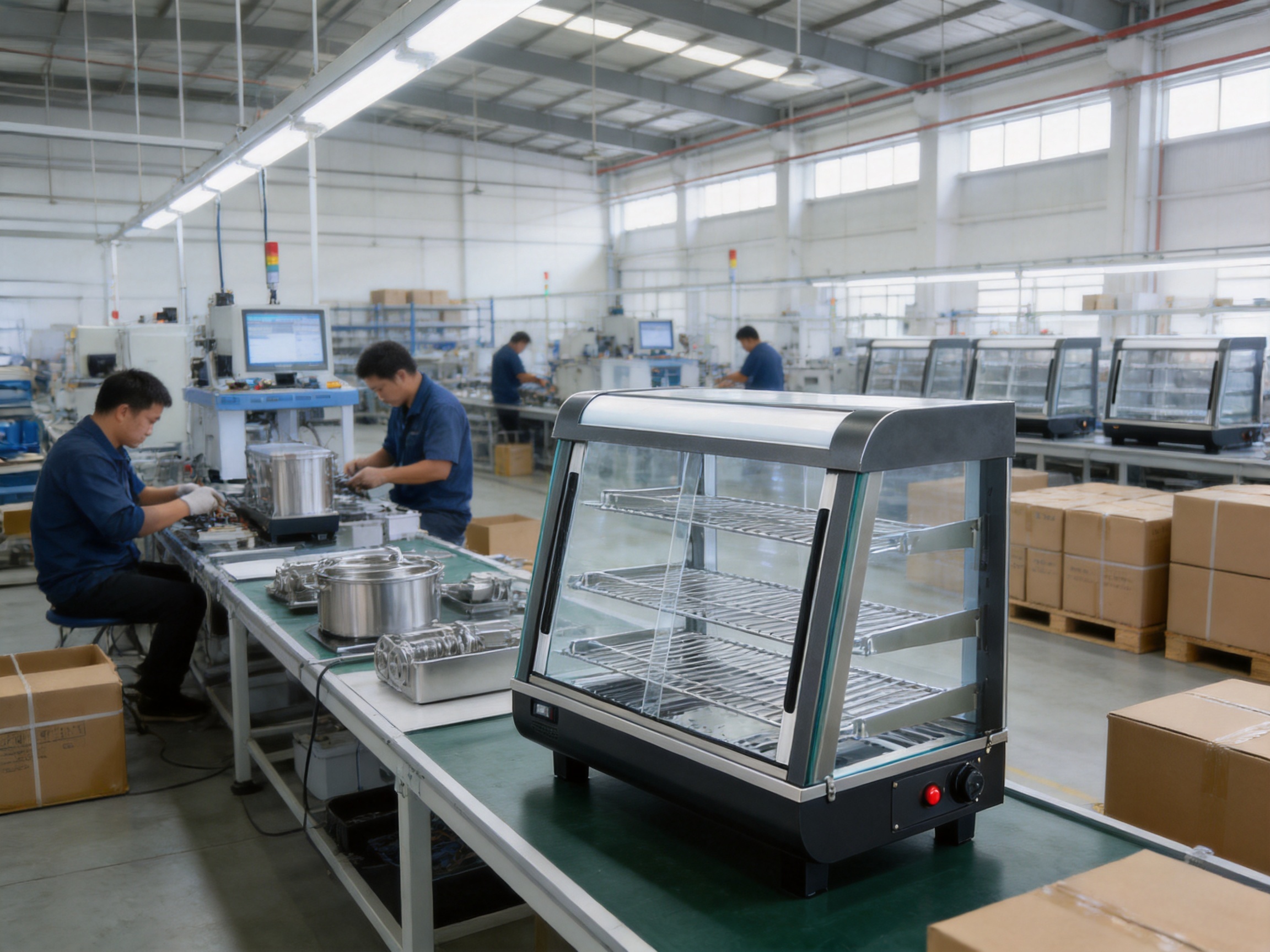
When choosing a display warmer, buyers should evaluate capacity, temperature range, footprint, appearance, power rating, certification, manufacturer strength, and logistics. The XCR-96L performs well across these categories. Its 96-liter capacity is suitable for many foodservice formats, while its compact countertop size supports efficient layout planning. The 30°C to 90°C range provides menu flexibility, and the 1000 W input power supports commercial warming performance.
Buyers should also consider the manufacturer’s background. A low-cost warmer from an unknown supplier may appear attractive at first, but weak quality control can lead to higher long-term costs. Equipment failures, inconsistent production, poor packaging, and lack of certification support can create problems for importers and end users. By contrast, a manufacturer with a 40,000-square-meter factory, R&D capability, testing facilities, and international certifications provides a stronger foundation for professional purchasing.
Another consideration is product category compatibility. The manufacturer’s broader product range includes four-sided glass display coolers, countertop display refrigerators, cake showcases, sushi showcases, open display coolers, display warmers, and four-sided glass freezers. This broad expertise in display temperature equipment suggests familiarity with both cooling and warming display requirements. For distributors, the ability to source multiple related products from one experienced manufacturer can simplify supplier management.
Wholesale and Distribution Value
The XCR-96L is not only suitable for individual food businesses; it also has value for wholesalers and distributors. Its specification balance makes it broadly marketable across several customer groups, including bakeries, cafés, convenience stores, catering companies, and small restaurants. A product with wide application potential is easier for distributors to promote because it does not depend on one narrow niche.
The package size and container loading data further support wholesale planning. Knowing that a 20-inch GP container can load 93 units and a 40-inch HQ container can load 256 units allows importers to estimate shipping efficiency. This helps with pricing strategy, warehouse planning, and inventory turnover. When a manufacturer provides clear logistics data, it reduces uncertainty and improves buyer confidence.
Distribution success also depends on repeatability. If the first shipment performs well, buyers may want to reorder the same model. A manufacturer with stable production experience can better support repeat orders and long-term cooperation. The company’s history since 2007 and its development into a leading enterprise in the field indicate the kind of operational maturity that professional buyers often seek.
Positioning Within a Complete Display Equipment Line
The XCR-96L Display Warmer fits into a larger commercial display equipment strategy. Food businesses often require both cooling and warming solutions. A bakery may use a cake showcase for chilled desserts and a display warmer for heated pastries. A convenience store may use open display coolers for beverages and warmers for snacks. A restaurant may use countertop refrigerators for ingredients and display warmers for prepared takeaway items.
Because the manufacturer specializes in vertical display cabinets, cake cabinets, warming cabinets, and related products, it can support customers seeking a coordinated equipment lineup. This is valuable for businesses that want consistent appearance, supplier reliability, and product compatibility across multiple display categories. It is also useful for project buyers designing complete retail food environments.
The XCR-96L is therefore more than a single warmer model. It represents part of a professional product ecosystem focused on commercial refrigeration and display equipment. This ecosystem gives buyers access to experience across temperature-controlled display design, whether the need is cooling, freezing, warming, or specialized food presentation.
Practical Tips for Maximizing Sales with the XCR-96L
To get the best commercial results from the XCR-96L, businesses should treat it as a merchandising tool, not merely as holding equipment. Placement is the first key factor. The warmer should be located where customers can see it easily, such as near the payment counter, ordering area, buffet line, or entrance to a food service zone. Visibility increases the chance of impulse purchases.
Product arrangement is equally important. Food should be organized neatly, with high-demand items placed at eye-catching positions. Operators should avoid overcrowding the display, because crowded food can look less premium and may restrict visual appeal. At the same time, the display should not look empty. A balanced presentation communicates freshness and availability.
Staff should monitor product rotation. Freshly prepared items can be placed behind or below earlier items depending on the service method, ensuring older products are sold first. Labels, pricing, or menu boards near the warmer can help customers make decisions quickly. The clearer the offer, the easier it is for customers to buy without asking multiple questions.
Why Professional Buyers Should Consider the XCR-96L
Professional buyers need equipment that provides a clear return on investment. The XCR-96L supports revenue generation by improving food visibility and holding warm products ready for sale. It supports operational efficiency by giving staff a dedicated place to manage warm display items. It supports layout flexibility with a compact countertop footprint. It supports menu flexibility with a wide temperature range. It supports purchasing confidence through the manufacturer’s experience, R&D strength, testing capability, and international certifications.
Compared with competitor products that may focus only on low price, the XCR-96L offers a more complete value package. Low purchase cost is not enough if a warmer lacks capacity, heats inconsistently, looks unprofessional, or cannot be supplied reliably. Commercial customers need equipment that can contribute to daily sales and withstand repeated use. The XCR-96L is positioned to meet these expectations through a practical combination of design and manufacturing foundation.
For distributors, the model is easy to explain because the specifications are straightforward and the applications are broad. For end users, the benefits are direct: warm food stays visible, service becomes easier, and the counter looks more professional. For project buyers, the manufacturer’s scale and certification background provide additional reassurance.
Q&A Section
What type of product is the XCR-96L?
The XCR-96L is a commercial display warmer designed for foodservice and catering environments. It is used to keep prepared food warm while displaying it attractively to customers.
What is the capacity of the XCR-96L?
The unit has a capacity of 96 liters, making it suitable for a wide range of countertop warm food display applications in bakeries, cafés, convenience stores, catering counters, and quick-service food areas.
What temperature range does it provide?
The XCR-96L offers a temperature range from 30°C to 90°C. This wide range allows operators to adjust the warmer according to different food types and service requirements.
How much power does the unit use?
The input power is 1000 W. Actual energy use depends on operating time, selected temperature, ambient conditions, product loading, and how frequently the unit is opened during service.
Is the XCR-96L suitable for bakeries?
Yes. It is suitable for displaying warm pastries, baked snacks, pies, rolls, savory bakery products, and other prepared foods that benefit from warm presentation.
Can cafés use this display warmer?
Yes. Cafés can use it to present warm food items near the beverage counter, helping encourage add-on sales and improving food visibility during breakfast, lunch, or snack periods.
What makes this warmer different from many competitor models?
Its advantages include a practical 96-liter capacity, compact countertop dimensions, a broad 30°C to 90°C temperature range, commercial 1000 W heating power, export-friendly packaging data, and the support of an experienced manufacturer with R&D capability, testing facilities, and international certifications.
What are the product dimensions?
The product size is 668 × 486 × 636 mm. This makes it suitable for many countertop layouts where space efficiency is important.
What is the package size?
The package size is 727 × 549 × 675 mm. This information is useful for distributors, importers, and logistics planners.
How many units can be loaded into containers?
According to the provided data, a 20-inch GP container can load 93 units, while a 40-inch HQ container can load 256 units.
Does the manufacturer have international certification experience?
Yes. The manufacturer has obtained certifications including CE, GS, CCC, CB, ROHs, ETL, and other major world certifications, supporting international market readiness.
Is a display warmer the same as cooking equipment?
No. A display warmer is intended to hold prepared food at a warm serving condition. Food should generally be cooked or prepared properly before being placed inside the warmer, and operators should follow local food safety regulations.
Conclusion
The XCR-96L Professional Food Display Warmer Cake Showcase is a practical and commercially valuable solution for businesses that need to present warm food attractively while maintaining service-ready temperature conditions. Its 96-liter capacity, 30°C to 90°C temperature range, 1000 W input power, and compact countertop dimensions make it suitable for bakeries, cafés, catering operations, convenience stores, quick-service counters, and other food retail settings.
Its value goes beyond basic warming. The unit supports visual merchandising, impulse sales, operational organization, and professional counter presentation. Compared with many ordinary competitor products, it offers a strong balance of capacity, flexibility, footprint efficiency, and supplier reliability. For wholesale and distribution channels, its clear packaging and container loading data support better logistics planning.
The manufacturing strength behind the product is equally important. With a history dating back to 2007, a modern 40,000-square-meter factory, a professional R&D team, advanced testing facilities, and certifications including CE, GS, CCC, CB, ROHs, and ETL, the manufacturer provides a solid foundation for quality, innovation, and international cooperation. For buyers seeking a dependable display warmer supported by professional production capability, the XCR-96L stands out as a well-positioned choice in the commercial food display equipment market.
References
Foodservice Equipment Reports. Commercial Food Holding and Display Equipment Selection Guide.
National Restaurant Association. Best Practices for Foodservice Equipment Operation and Maintenance.
International Electrotechnical Commission. Electrical Safety Principles for Commercial Appliances.
European Committee for Standardization. Foodservice Equipment Safety and Performance Considerations.
Commercial Kitchen Technology Review. Temperature Control and Merchandising in Modern Food Retail.
Product: Catering Equipment Food Display Warmer Cake Showcase

You May Also Like
.jpg?imageView2/2/w/500/h/500/format/jp2/q/100 "Four Sides Glasses Display Cooler")
.jpg?imageView2/2/w/500/h/500/format/jp2/q/100 "White 4-Sided Glass Refrigerated Display Case")
.jpg?imageView2/2/w/500/h/500/format/jp2/q/100 "Refrigerated Display Cake Countertop Four Sides Glasses Display Cooler")
.jpg?imageView2/2/w/500/h/500/format/jp2/q/100 "Four Sides Glasses Display Cooler")

-
- Navigation
- Home
- About Us
- Products
- News
- Contact Us
 East Zone, Guanhaiwei Industrial Park, Cixi City, Ningbo, Zhejiang, China
 +86-574-63668678
 +86-574-63668108
Copyright © Ningbo XiangChi Electrical Co.,Ltd All Rights Reserved.
