
 简体中文
简体中文 English
 Español
News
Small Countertop Square Glass Bakery and Cake Display Cooler for Professional Merchandising
Small Tabletop Counter Top Square Glass Bakery Pastry Cake Display Cooler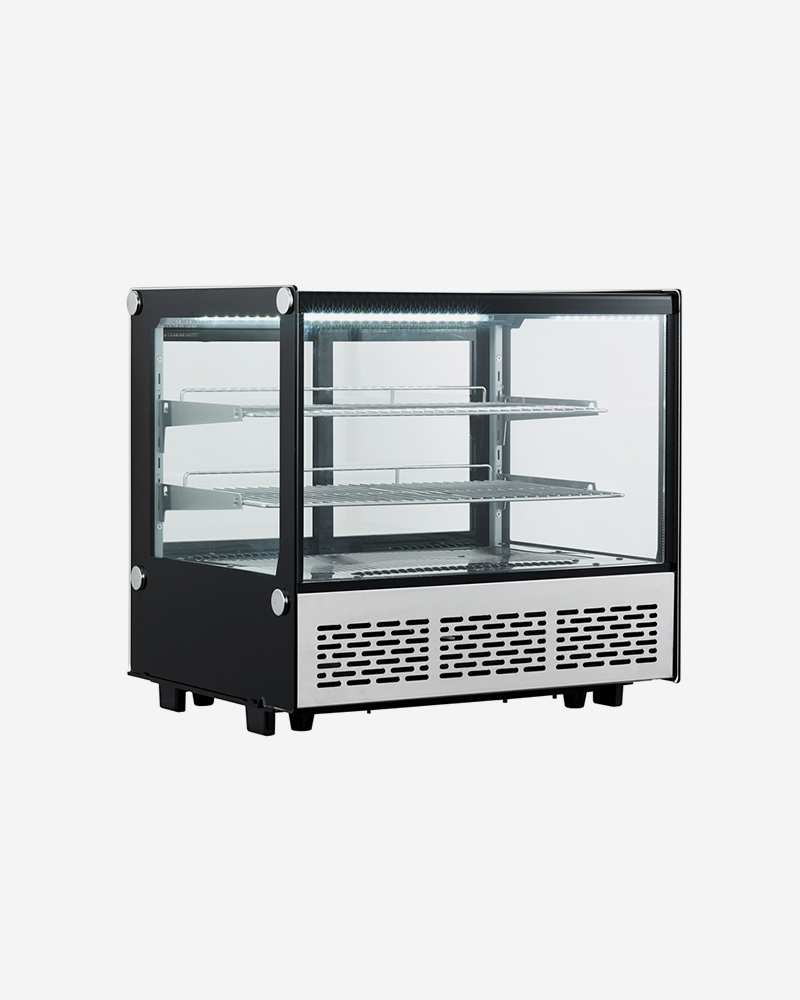
Product Overview: A Compact Showcase Built for Modern Food Retail
The small tabletop counter top square glass bakery pastry cake display cooler is designed for operators who need an attractive, reliable, and space-saving refrigerated merchandising solution. As a countertop display refrigerator, it is especially suitable for bakeries, cafés, dessert shops, convenience stores, sushi bars, hotel breakfast areas, canteens, and retail counters where fresh products must be kept visible, organized, and properly chilled.
This product belongs to the countertop display refrigerator category, but its application range extends far beyond basic cooling. It is a professional presentation unit created to help foodservice businesses combine refrigeration, merchandising, and counter efficiency in one compact machine. With a square glass structure, internal LED lighting, adjustable chromed shelves, a ventilated cooling system, automatic defrost, and digital temperature control, it gives operators a practical way to display cakes, pastries, sandwiches, desserts, chilled snacks, and other fresh foods while maintaining an appealing appearance.
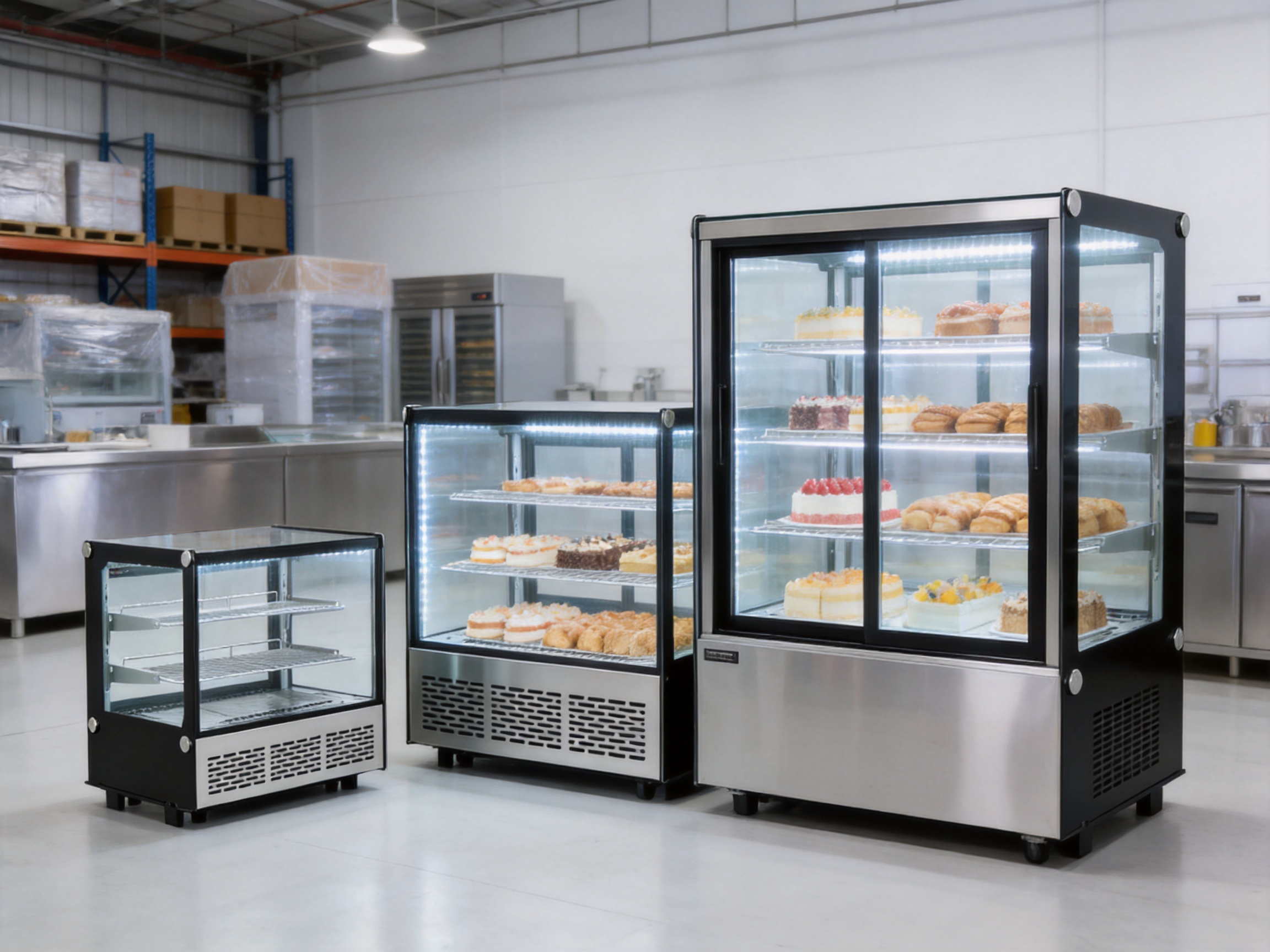
The available models include XCW-120F, XCW-160F, and XCW-200F, offering capacities from 135 liters to 240 liters. This model range gives buyers the flexibility to select the right size for their store layout, product volume, and counter space. Whether the operator needs a compact unit for limited countertop areas or a larger version for higher sales volume, the series provides a scalable solution with consistent design language and professional performance.
For businesses competing in today’s food retail market, presentation has become nearly as important as preservation. Customers often make purchasing decisions based on visual impression, product accessibility, freshness, and cleanliness. A high-quality countertop glass display cooler improves the way food is shown to customers, supports impulse purchases, and helps create a professional store atmosphere. Compared with ordinary enclosed refrigerators or basic cold storage units, this display cooler is built not only to store food but also to sell it.
Designed for Countertop Efficiency
One of the core advantages of this unit is its countertop-focused design. Many foodservice environments face the same challenge: limited floor space. A bakery counter, café bar, dessert station, or checkout area must accommodate service equipment, product displays, cash registers, packaging materials, and staff movement. A large floor-standing refrigerator may not fit the workflow or may take up valuable space needed for customers and employees.
This tabletop display cooler solves that problem by placing refrigerated merchandising directly on the counter. It allows operators to use vertical display space without sacrificing the footprint of the entire shop. The compact body size of the XCW-120F, for example, measures 710 x 568 x 686 mm, making it suitable for small counters while still offering 135 liters of refrigerated capacity. The XCW-160F and XCW-200F expand the capacity for businesses with higher display needs while maintaining the same practical countertop height.
The product is not merely small; it is purpose-built for compact professional presentation. Its square glass format allows the contents to be visible from multiple directions. This is particularly valuable in retail environments where customers approach the counter from different angles. In a bakery or café, the cooler can be positioned near the checkout counter to encourage last-minute dessert purchases. In a convenience store, it can serve as a compact chilled food island on a service counter. In a sushi or salad shop, it can keep prepared items neatly displayed while supporting fast customer selection.
Compared with conventional back-counter refrigerators that hide products behind solid doors, this cooler gives food items a premium display position. Compared with open display coolers, it offers enclosed protection, helping reduce exposure to dust, handling, and ambient temperature changes. Compared with larger cake showcases, it is easier to install, move, and integrate into existing counters. These benefits make it a smart choice for businesses seeking professional display without a full store renovation.
Magic Cube Shape: A Distinctive Visual Advantage
The standard feature list describes the unit as having a magic cube shape design. This square, balanced appearance is one of its most noticeable competitive strengths. Many countertop display refrigerators use curved glass or bulky forms that may look outdated or difficult to fit into modern interior styles. The cube-style structure gives this model a clean, contemporary look that blends well with minimalist cafés, premium bakeries, hotel service counters, and modern convenience retail environments.
A square glass design also provides practical benefits. The flat sides support clear visibility, efficient use of internal space, and easier cleaning. The straight lines make the display look orderly and professional. For pastry and cake displays, this is especially important because customers often associate cleanliness and visual symmetry with product quality. When cakes, slices, tarts, sandwiches, or desserts are arranged on chromed shelves under LED light, the glass cube becomes part of the merchandising experience.
In competitive retail settings, a display cooler must attract attention without distracting from the product. This model achieves that balance. The frame and glass structure present the food rather than dominating the counter. The internal light emphasizes product color, texture, and freshness. The clean geometry helps the unit look upscale, even in limited spaces.
For operators who compare products from different suppliers, this design offers a clear advantage over low-cost units that may appear industrial, heavy, or visually inconsistent. While price is always important, the visual impact of a display cooler can directly affect sales. A better-looking refrigerated showcase can help a small bakery appear more professional, a café increase dessert orders, or a hotel buffet improve guest perception. This product’s appearance is therefore not simply decorative; it supports commercial results.
Technical Specifications and Model Options
The product series includes three main models with different capacities and dimensions. All models share the same temperature range of 2–10°C, suitable for many chilled bakery, pastry, dessert, and ready-to-eat food applications. They are designed with climate type 4 and include certifications such as CB, CE, GS, and ETL, supporting use in multiple international markets.
Specification |
XCW-120F |
XCW-160F |
XCW-200F |
Capacity |
135L / 4.8 cu.ft |
172L / 6.1 cu.ft |
240L / 8.5 cu.ft |
Temperature Range |
2–10°C / 35.6–50°F |
2–10°C / 35.6–50°F |
2–10°C / 35.6–50°F |
Input Power |
240W |
240W |
370W |
Refrigerant |
R134a / R600a |
R154a / R600a |
R290 |
Climate Type |
4 |
4 |
4 |
Net Weight |
57 kg |
66 kg |
100 kg |
Gross Weight |
60 kg |
70 kg |
110 kg |
Product Size |
710 x 568 x 686 mm |
888 x 568 x 686 mm |
1227 x 568 x 686 mm |
Package Size |
773 x 627 x 735 mm |
951 x 627 x 735 mm |
1290 x 627 x 735 mm |
Approval |
CB, CE, GS, ETL |
CB, CE, GS, ETL |
CB, CE, GS, ETL |
Loading Quantity 20GP / 40HQ |
81 / 162 pcs |
63 / 126 pcs |
36 / 81 pcs |
This specification range allows distributors, wholesalers, and end users to choose according to sales volume and installation space. The 135-liter model is ideal for small counters and specialty displays. The 172-liter model provides additional display area while maintaining moderate dimensions. The 240-liter model is suitable for larger counters, high-traffic shops, or businesses that want to showcase a wider assortment of cakes and chilled foods.
The shared 2–10°C temperature range is practical for many refrigerated display applications. It supports the freshness requirements of cream cakes, mousse desserts, fruit tarts, chilled sandwiches, packaged sushi, salads, and bottled beverages, depending on local food safety requirements and product-specific storage guidelines. Operators should always follow food safety rules for their specific products, but the unit’s digital thermostat and ventilated cooling system provide an effective foundation for controlled display.
Ventilated Cooling for Even Temperature Distribution
A major performance advantage of this countertop display cooler is its ventilated cooling system. In a display refrigerator, consistent temperature is crucial. If cold air does not circulate properly, some products may become too warm while others may be exposed to excessive cold. Uneven temperatures can affect food quality, shorten shelf life, and reduce customer confidence.
Ventilated cooling helps move cold air throughout the cabinet, supporting a more uniform internal environment. This is especially important in a multi-shelf display, where products are placed at different heights. Cakes on the upper shelf, desserts on the lower shelf, and packaged foods near the rear door all need stable cooling. By circulating air, the unit reduces hot spots and supports consistent presentation quality.
Compared with basic static cooling units, ventilated cooling is more suitable for commercial display. Static cooling can be acceptable for simple storage, but it may not provide the same level of temperature consistency when doors are opened frequently or when products are arranged across multiple shelves. In a retail counter environment, staff may open the rear sliding doors many times per hour to serve customers. Ventilated cooling helps the cabinet recover more effectively and maintain a stable display condition.
For cake and pastry businesses, this matters because product appearance is sensitive to temperature variation. Cream, frosting, fruit toppings, chocolate decorations, and delicate fillings can all be affected by improper storage. A stable refrigerated showcase helps preserve the intended texture and look of the product, supporting both food quality and customer satisfaction.
Digital Thermostat and Display for Practical Control
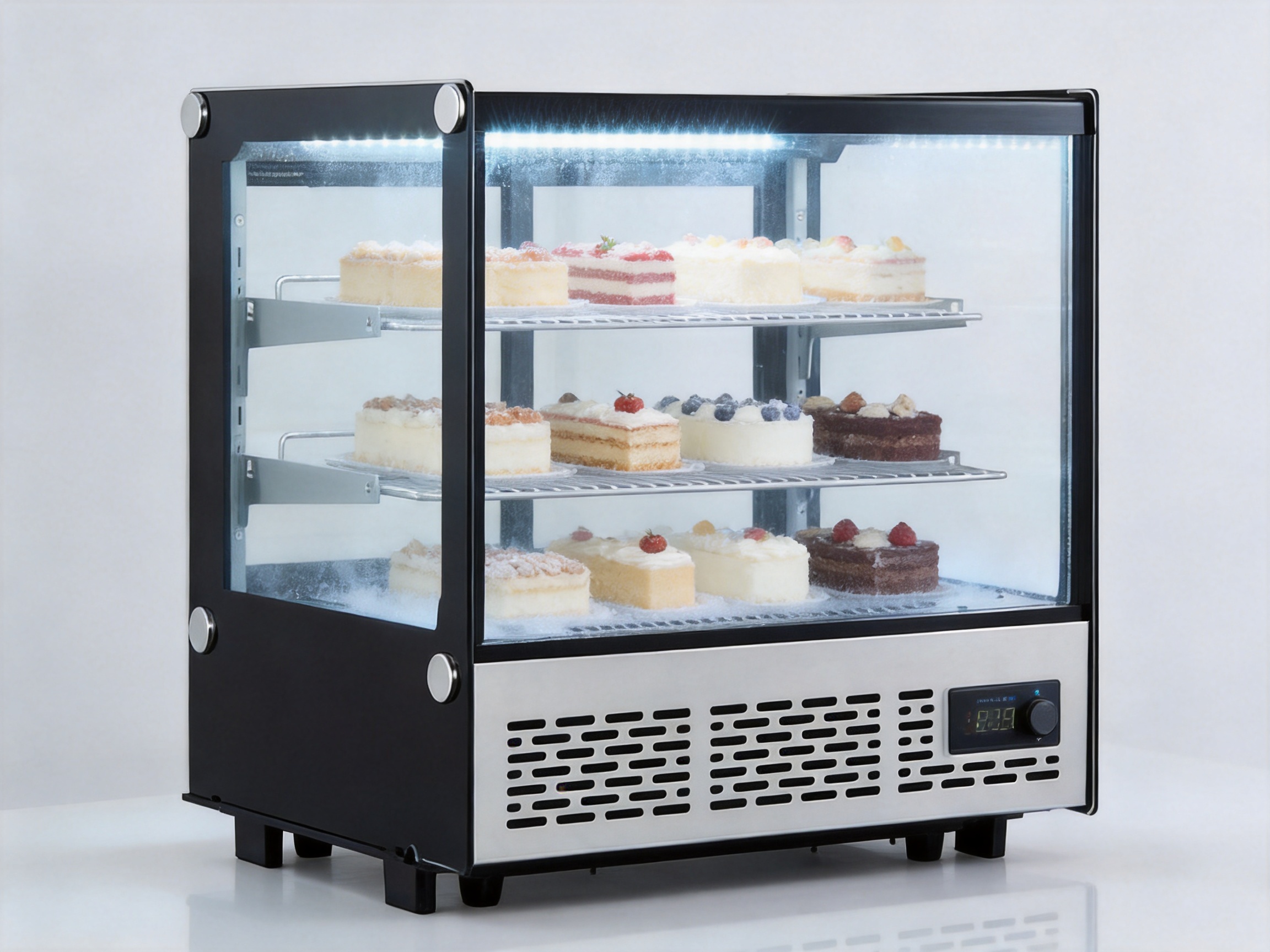
The digital thermostat and display give operators a convenient way to monitor and manage the internal temperature. In commercial settings, simple and visible controls are essential. Staff members may not have time to check mechanical dials or guess whether a unit is operating correctly. A digital temperature display improves transparency and allows users to identify temperature changes quickly.
Compared with low-end display coolers that rely on basic analog controls, digital control provides a more professional operating experience. It supports better consistency, easier adjustment, and more confident daily management. For businesses that must follow hygiene or food safety procedures, the ability to view the temperature directly is a practical advantage.
The separated power button is another useful feature. It allows staff to control power operation more clearly, which can simplify cleaning, maintenance, and end-of-day procedures. Small design details like this often determine whether equipment is convenient in real daily use. A professional display cooler should not only cool effectively; it should also be easy for staff to operate without unnecessary training.
Internal Top LED Light for Attractive Merchandising
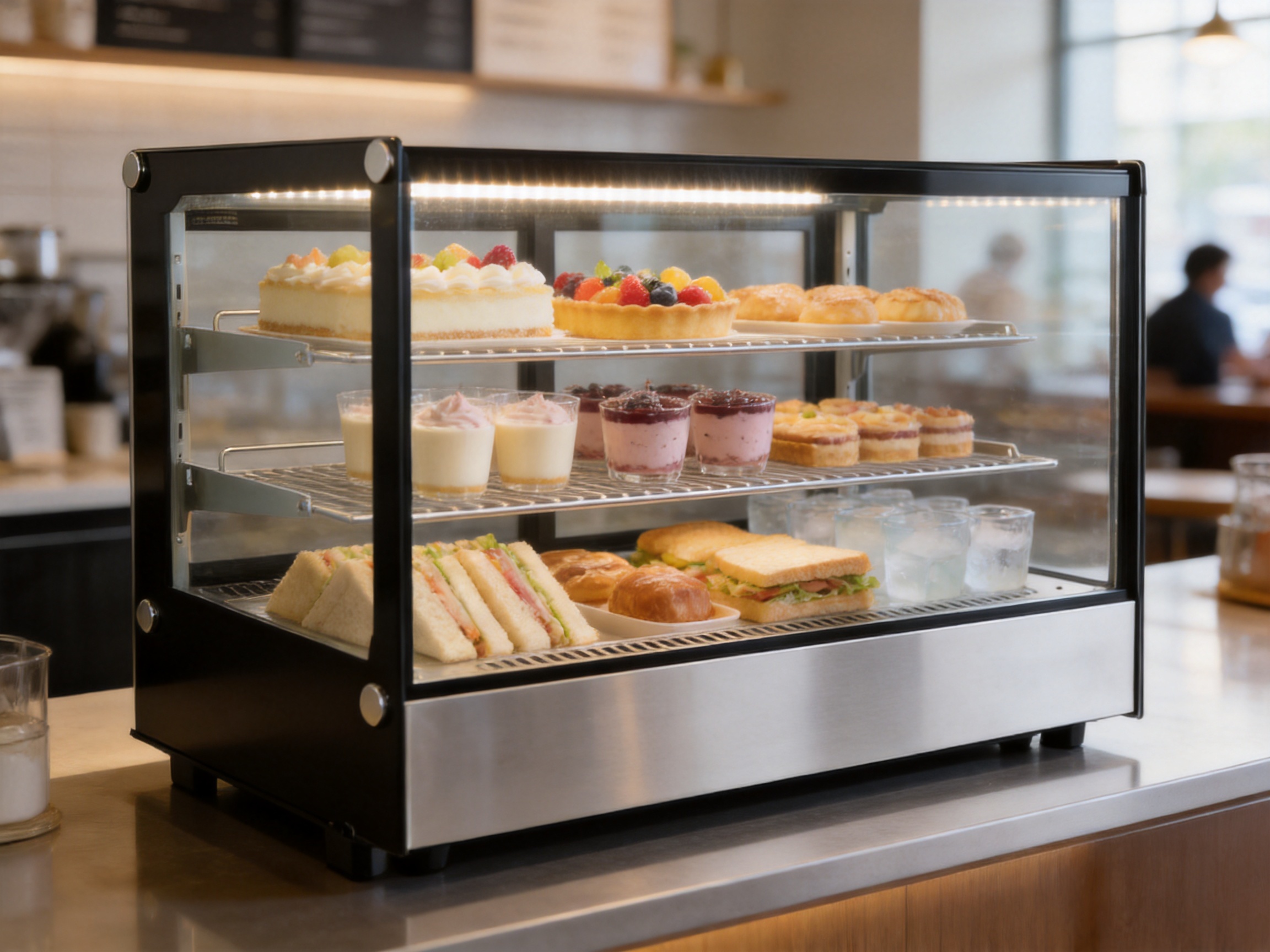
Lighting is one of the most important elements in food display. The internal top LED light in this countertop cooler improves product visibility and helps make desserts, cakes, pastries, and chilled foods look more appealing. Good lighting can highlight colors, layers, textures, and freshness, encouraging customers to notice products and make quick purchase decisions.
LED lighting also offers efficiency advantages compared with older lighting technologies. It generally produces less heat, which is beneficial in a refrigerated cabinet, and supports lower energy consumption. In a compact glass display cooler, minimizing heat from lighting helps maintain internal temperature stability and reduces unnecessary load on the refrigeration system.
For bakeries and cafés, LED display lighting can influence the perceived value of products. A cake slice that looks rich and carefully presented under clean lighting may justify a premium price more effectively than the same product stored in a dim refrigerator. The cooler therefore works as a sales tool as well as a preservation tool.
Adjustable Chromed Shelves for Flexible Display
The unit includes two layers of adjustable chromed shelves. This feature gives operators flexibility in arranging different product sizes. Tall cakes, layered pastries, boxed desserts, sandwiches, or beverage items may require different shelf spacing. Adjustable shelves allow the display to be changed according to the day’s menu, seasonal promotions, or customer demand.
Chromed shelves provide a clean and professional appearance that matches the glass structure. They also help create an open display effect, allowing air circulation and light penetration. This contributes to both cooling performance and product visibility. Compared with fixed shelves, adjustable shelving gives operators greater control over merchandising strategy.
In a bakery, the morning display may feature croissants, fruit tarts, and chilled desserts. In the afternoon, the same cooler may showcase cake slices, cream rolls, and mousse cups. In a café, the unit may display sandwiches and yogurt in the morning, then desserts and bottled drinks later in the day. Flexibility allows one machine to serve multiple business needs.
Flat Double-Layer Glass for Visibility and Insulation
The flat double-layer glass is a key part of the product’s design. Glass display coolers must balance two requirements: they must offer clear visibility, and they must help insulate the refrigerated interior from ambient conditions. Double-layer glass supports this balance by improving thermal separation while preserving transparency.
Flat glass also enhances the unit’s modern appearance. Curved glass can be attractive in some large cake showcases, but flat glass often fits better into compact countertop designs. It creates a clean, square display window and supports the magic cube aesthetic. The flat surface is also easier to wipe and maintain, which is valuable in foodservice environments where cleanliness is constantly visible to customers.
Compared with single-layer glass displays, double-layer glass offers better insulation potential. This can help the cooling system operate more efficiently and reduce condensation problems under suitable operating conditions. For commercial buyers, better insulation can translate into more stable temperature performance and a more professional presentation.
Back Sliding Glass Doors for Staff Convenience
The rear sliding glass doors allow staff to access products from behind the counter without interrupting the customer-facing display. This is a standard but important feature for bakery and café operations. Customers can view the products from the front while employees serve items from the back, maintaining an efficient service flow.
Sliding doors are especially suitable for countertop spaces because they do not require swing clearance. In a narrow service area, hinged doors can interfere with staff movement or nearby equipment. Sliding doors open within the footprint of the unit, making them practical for compact counters.
The rear access design also improves hygiene control. Customers are encouraged to view rather than touch the products, while trained staff handle serving. This helps reduce contamination risks and keeps the display more orderly. For businesses selling delicate cakes, pastries, or sushi items, controlled access is a strong operational benefit.
Automatic Defrost for Lower Maintenance
Automatic defrost is another practical advantage. Refrigeration equipment operating in humid or frequently opened environments can develop frost buildup. If frost is not managed, it may reduce cooling efficiency, affect airflow, and create maintenance problems. Automatic defrost helps reduce manual intervention and supports more consistent performance.
For small businesses, labor time is valuable. Staff should focus on serving customers and preparing food, not constantly managing refrigeration problems. A display cooler with automatic defrost reduces daily workload and helps the equipment remain presentable. In a glass showcase, frost or ice buildup can negatively affect visibility and customer perception. Automatic defrost helps maintain a cleaner look.
Compared with basic economy models that require frequent manual defrosting, this unit provides a more professional ownership experience. Lower maintenance requirements can be an important factor for distributors and commercial buyers who want fewer after-sales issues and more satisfied end users.
Advantages Over Common Competitor Products
In the countertop display refrigerator market, buyers often compare products based on price, appearance, capacity, cooling performance, certifications, and supplier reliability. This small square glass display cooler presents several advantages over many conventional competitor units.
First, its design is more modern and visually distinctive. The magic cube shape and flat glass structure create a premium presentation that can elevate the look of a counter. Many competing units use generic forms that may not match contemporary retail interiors. This cooler supports a clean and upscale display style.
Second, the series offers multiple capacity options. Instead of forcing every buyer into one size, the 135L, 172L, and 240L versions provide flexibility. This is useful for wholesalers and distributors because they can serve different market segments with one coherent product family.
Third, the ventilated cooling system and digital thermostat provide professional performance features that are not always available in low-cost tabletop refrigerators. These functions help maintain stable temperature control and simplify operation.
Fourth, the unit is designed specifically for countertop use. Its dimensions, rear sliding doors, internal shelves, LED light, and compact height all support real retail counter workflows. Some competing products are simply small refrigerators adapted for display, while this unit is purpose-built as a commercial merchandising cooler.
Fifth, the presence of international approvals such as CB, CE, GS, and ETL strengthens market confidence. Certifications matter for importers, distributors, and professional buyers because they indicate that the product has been developed with compliance expectations in mind.
Finally, the product is backed by a manufacturer with long experience in commercial refrigeration, modern facilities, research and development capability, and multiple global certifications. In commercial refrigeration, supplier capability is as important as the product itself. A good design must be supported by stable manufacturing, quality control, and service capacity.
Applications in Bakeries, Cafés, Sushi Bars, and Retail Counters
The product is especially suitable for bakeries that need to present cakes, mousse desserts, fruit tarts, cream pastries, and chilled sweet items. The glass structure allows customers to browse easily, while the LED lighting enhances the attractiveness of the products. The adjustable shelves support different cake heights and package sizes.
In cafés, the cooler can be placed near the point of sale to increase dessert and snack purchases. Customers ordering coffee may be attracted by cake slices, yogurt cups, sandwiches, or chilled pastries displayed at eye level. Because the unit is compact, it can fit into existing counters without requiring major layout changes.
In sushi shops or prepared food counters, the 2–10°C temperature range and enclosed glass design can support the display of packaged sushi, salads, and chilled meal items, subject to local food safety requirements. The rear sliding doors allow staff to serve quickly while maintaining display cleanliness.
Hotels and catering venues can use the cooler for breakfast buffets, dessert stations, meeting rooms, and lounge areas. Its square design looks professional in hospitality environments, and its countertop format makes it easy to position where needed.
Convenience stores and small retail shops can use the unit for premium chilled snacks, desserts, beverages, or grab-and-go foods. The display cooler helps separate higher-value products from ordinary refrigerated shelves and can create a more attractive impulse-buying zone.
Manufacturing Strengths Behind the Product
Ningbo XiangChi Electrical Co., Ltd is a professional manufacturer specializing in vertical display cabinets, cake cabinets, and warming cabinets. Established in 2007, the company has accumulated more than ten years of experience in commercial refrigeration equipment. This background is important because countertop display refrigerators require both attractive design and reliable refrigeration performance.
The company operates from a modern factory covering approximately 40,000 square meters in Cixi City, Ningbo, Zhejiang, China. A large and organized manufacturing base gives the company the ability to manage production, quality inspection, product development, and order fulfillment efficiently. For international buyers, factory scale can be an important indicator of supply stability.
One of the company’s strengths is its professional research and development team. Product innovation is essential in the commercial refrigeration industry because customer demands continue to change. Retailers want better display designs, lower energy consumption, more environmentally responsible refrigerants, compact structures, and reliable performance. A strong R&D team allows the manufacturer to improve existing models and develop new solutions for global markets.
The company also emphasizes advanced testing facilities. Testing is critical for refrigeration products because performance depends on temperature control, airflow, electrical safety, insulation, compressor matching, glass quality, door function, and durability. Before a product enters the market, it must be evaluated to ensure it can meet operating expectations in commercial environments. Advanced testing capability supports product reliability and reduces the risk of failures after delivery.
The manufacturer has obtained major certifications including CE, GS, CCC, CB, ROHS, and ETL. These certifications help demonstrate a commitment to quality, safety, and international market requirements. For distributors and wholesalers, certified products can reduce compliance barriers and increase customer confidence.
Advanced Production Processes and Quality Control
A professional countertop display cooler is the result of multiple manufacturing processes working together. The final product must combine refrigeration engineering, metal fabrication, glass assembly, electrical control, lighting installation, insulation, finishing, and packaging. The strength of the manufacturer lies in its ability to coordinate these processes consistently at scale.
The cabinet structure must be produced with accurate dimensions to ensure that glass panels, doors, shelves, and refrigeration components fit properly. Precision assembly supports better insulation, smoother door movement, and a cleaner appearance. In a glass display product, even small alignment errors can affect both performance and visual quality.
Glass assembly is another key process. The use of flat double-layer glass requires careful handling, sealing, and fitting. Good glass quality supports visibility, insulation, and safety. A professional factory must control glass installation to avoid gaps, distortion, condensation risks, or poor sealing.
The refrigeration system must be carefully matched to the cabinet size and intended temperature range. Compressors, refrigerants, evaporators, fans, condensers, thermostats, and wiring all affect performance. The XCW-120F and XCW-160F use 240W input power, while the larger XCW-200F uses 370W, reflecting the increased capacity and cooling demand. Correct system matching helps maintain the 2–10°C operating range efficiently.
Electrical assembly also requires strict quality control. The digital thermostat, internal LED light, separated power button, fan system, and refrigeration components must be connected safely and reliably. Each unit should be inspected for electrical safety, function, and performance before shipment.
Surface finishing and final assembly influence the product’s market appeal. A display cooler is customer-facing equipment, so it must look clean and professional. Edges, frames, glass surfaces, shelves, and doors must meet aesthetic expectations. A well-finished unit helps end users create a premium retail environment.
Packaging is also important for international shipments. The package sizes for the three models are designed to protect the units during transportation and support efficient container loading. Loading quantities such as 81/162 pcs for XCW-120F, 63/126 pcs for XCW-160F, and 36/81 pcs for XCW-200F indicate that the series has been considered from a logistics perspective. For importers, efficient loading can reduce per-unit freight costs and improve competitiveness.
Why Supplier Capability Matters in Commercial Refrigeration
Commercial refrigeration equipment is not a one-time purchase like simple furniture. It is an operating asset that affects food quality, sales presentation, energy use, and customer experience every day. For this reason, buyers should evaluate not only the cooler’s specifications but also the manufacturer behind it.
A company with long industry experience understands common market requirements, seasonal demand patterns, certification expectations, packaging needs, and after-sales concerns. It can support wholesalers with product consistency and help end users receive equipment that performs as expected.
The manufacturer’s focus on innovation, quality, and service is aligned with the needs of global partners. Innovation supports new product designs and improved features. Quality ensures reliable operation and lower failure rates. Service supports long-term cooperation with distributors, importers, and commercial buyers.
Compared with smaller or less experienced suppliers, a manufacturer with a modern 40,000-square-meter facility, professional R&D capability, advanced testing systems, and major certifications offers greater confidence. This is especially important for buyers placing volume orders or building a product line for their local market.
Commercial Value for Wholesalers and Distributors
The small countertop square glass bakery pastry cake display cooler offers strong commercial value for wholesalers and distributors. Its model range covers different capacity needs, making it easier to offer customers a choice without managing unrelated product designs. The three models share a consistent look, feature set, and application profile, simplifying sales communication.
The product’s international approvals support export opportunities. Distributors can position it as a professional countertop display solution for bakeries, cafés, restaurants, hotels, convenience stores, and specialty food retailers. Because the unit combines compact size with attractive presentation, it can appeal to both small independent businesses and larger chain customers.
The efficient loading quantities are also beneficial. Freight cost is a major factor in international trade, especially for refrigeration products that occupy significant volume. A product series with practical packaging and container loading data helps importers plan purchasing and pricing more accurately.
For retailers, the product can contribute directly to revenue. By placing chilled desserts and prepared foods in an attractive glass cabinet, operators can encourage impulse buying and improve product turnover. For distributors, this sales benefit is an important argument when presenting the product to customers.
Energy, Refrigerant, and Environmental Considerations
The product series includes refrigerant options such as R134a, R600a, and R290 depending on the model and configuration. Refrigerant selection is an increasingly important topic in commercial refrigeration because markets around the world are paying more attention to environmental impact, energy efficiency, and regulatory compliance.
R600a and R290 are commonly recognized as hydrocarbon refrigerants with low global warming potential compared with many traditional refrigerants. Their use requires appropriate design, manufacturing control, and safety compliance. The availability of such refrigerant options indicates that the product family is designed with modern refrigeration trends in mind.
Energy consumption is influenced by many factors, including ambient temperature, door opening frequency, product loading, maintenance, placement, and operating settings. Features such as double-layer glass, LED lighting, ventilated cooling, and appropriate compressor matching can support efficient operation when the unit is used correctly.
Operators can improve performance by placing the cooler away from direct sunlight, ovens, heating equipment, or strong air drafts. They should avoid overloading shelves, keep ventilation areas clear, clean the unit regularly, and monitor the digital temperature display. Proper use helps protect food quality and extend equipment life.
Daily Operation and Maintenance Recommendations
To gain the best performance from the countertop display cooler, operators should follow practical daily procedures. Before loading food, the unit should be switched on and allowed to reach the target temperature. Products should be pre-chilled when possible, because display coolers are designed to maintain temperature rather than rapidly cool large quantities of warm food.
Shelves should be arranged to allow air circulation. Blocking airflow can reduce cooling performance and create uneven temperatures. Staff should avoid placing products directly against air outlets or overfilling the cabinet. A visually attractive display is usually also a more efficient display because products are arranged with space between them.
The rear sliding doors should be closed promptly after service. Frequent or prolonged door opening allows warm air to enter, increasing the load on the refrigeration system. Staff training can help maintain stable operation during busy periods.
Cleaning should be performed regularly using appropriate foodservice cleaning methods. Glass surfaces should be wiped to maintain visibility, shelves should be cleaned to remove crumbs or spills, and the cabinet interior should be kept hygienic. The power button can support safe cleaning procedures, but users should follow the operating manual and local safety requirements.
The condenser area and ventilation openings should be checked according to maintenance instructions. Dust buildup can reduce efficiency and increase operating stress. Routine maintenance helps protect the equipment investment and ensures that the cooler continues to present products attractively.
How the Cooler Improves Customer Experience
Customers respond to freshness, clarity, and convenience. A well-designed glass display cooler allows customers to see products clearly before ordering. This reduces hesitation and makes service faster. When items are arranged neatly under LED light, customers can compare options quickly and feel more confident in their purchase.
The enclosed design also communicates hygiene. In many food environments, customers prefer products that are visible but protected. The glass barrier helps separate food from direct contact while preserving transparency. This is valuable for bakeries, cafés, and buffet-style service areas where presentation and cleanliness affect brand perception.
The countertop height can place products closer to eye level than low refrigerated cabinets. This improves visibility and can increase impulse sales. In a café, a customer who originally planned to buy only coffee may notice a cake slice or chilled dessert near the register. In a bakery, a premium cake displayed in a clean glass cabinet can attract attention and support higher-value sales.
Q&A Section
Q1: What type of business is this countertop display cooler best suited for?
It is best suited for bakeries, cafés, dessert shops, sushi counters, convenience stores, hotel service areas, restaurants, and retail counters that need compact refrigerated product display. It is especially useful where floor space is limited but attractive food presentation is important.
Q2: What products can be displayed inside the cooler?
The cooler can display cakes, pastries, cream desserts, fruit tarts, mousse cups, sandwiches, salads, packaged sushi, chilled snacks, and selected beverages, provided the products are suitable for the 2–10°C temperature range and local food safety requirements.
Q3: What are the available capacities?
The series includes 135L, 172L, and 240L models. These options allow businesses to select a compact, medium, or larger countertop display solution depending on available space and sales volume.
Q4: Why is ventilated cooling important?
Ventilated cooling helps circulate cold air inside the cabinet, supporting more even temperature distribution across shelves. This is important for maintaining product quality, especially in busy retail environments where doors are opened frequently.
Q5: How does the digital thermostat help daily operation?
The digital thermostat and display make it easier for staff to monitor and adjust the cabinet temperature. This improves control, supports food safety procedures, and gives operators greater confidence than basic mechanical controls.
Q6: What makes this model different from ordinary small refrigerators?
Unlike ordinary refrigerators designed mainly for storage, this model is built for commercial display. It includes glass visibility, LED lighting, adjustable chromed shelves, rear sliding glass doors, automatic defrost, and a countertop merchandising design.
Q7: Is the unit easy to place on a counter?
Yes. The product is specifically designed for countertop use. Its square shape, compact height, rear sliding doors, and multiple size options make it suitable for many counter layouts.
Q8: What certifications are available?
The listed approvals include CB, CE, GS, and ETL for the product models. The manufacturer also has broader certifications such as CE, GS, CCC, CB, ROHS, and ETL across its product development and manufacturing system.
Q9: Why is the manufacturer’s background important?
A reliable manufacturer provides consistent production, quality control, testing capability, certification support, and long-term supply stability. This is especially important for distributors, wholesalers, and commercial buyers who depend on reliable refrigeration equipment.
Q10: What maintenance practices are recommended?
Operators should keep the glass and shelves clean, avoid overloading the cabinet, maintain airflow, close doors promptly, monitor the digital temperature display, and keep ventilation areas clear. Regular cleaning and basic maintenance help ensure stable performance and attractive presentation.
Conclusion: A Professional Countertop Display Solution with Strong Commercial Appeal
The small tabletop counter top square glass bakery pastry cake display cooler combines compact size, modern appearance, practical refrigeration features, and flexible model options. It is designed for businesses that want to present chilled foods attractively while making efficient use of counter space. With capacities of 135L, 172L, and 240L, it can serve a wide range of retail and foodservice needs.
Its advantages include the magic cube shape design, internal LED lighting, digital thermostat and display, adjustable chromed shelves, flat double-layer glass, rear sliding glass doors, ventilated cooling, automatic defrost, countertop structure, and separated power button. Together, these features make the unit more than a refrigerator; they make it a sales-supporting display system.
Compared with many competitor products, it offers a stronger combination of presentation, practicality, temperature control, certification support, and manufacturer backing. The product is supported by a professional commercial refrigeration manufacturer with long experience, a modern production base, R&D capability, advanced testing facilities, and internationally recognized certifications.
For bakeries, cafés, sushi shops, hotels, convenience stores, and food retailers, this cooler can improve product visibility, support freshness, enhance customer confidence, and contribute to higher impulse sales. For wholesalers and distributors, it provides a marketable product family with multiple sizes, efficient loading quantities, and broad application potential.
In a competitive food retail environment, the right display cooler can influence both customer perception and operational efficiency. This countertop square glass display cooler offers a practical and attractive solution for businesses that want professional refrigeration, modern design, and reliable manufacturing support in one compact product.
References
ASHRAE Handbook: Refrigeration, American Society of Heating, Refrigerating and Air-Conditioning Engineers.
Commercial Refrigeration Equipment: Design, Application, and Maintenance Principles, industry technical reference materials.
Food Display Merchandising and Retail Presentation Guidelines, professional foodservice merchandising publications.
International Electrical Safety and Product Certification Standards for Commercial Refrigeration Equipment.
Refrigerant Selection and Environmental Considerations in Light Commercial Refrigeration, technical industry reports.
Product: Small Tabletop Counter Top Square Glass Bakery Pastry Cake Display Cooler

You May Also Like
.jpg?imageView2/2/w/500/h/500/format/jp2/q/100 "Four Sides Glasses Display Cooler")
.jpg?imageView2/2/w/500/h/500/format/jp2/q/100 "White 4-Sided Glass Refrigerated Display Case")
.jpg?imageView2/2/w/500/h/500/format/jp2/q/100 "Refrigerated Display Cake Countertop Four Sides Glasses Display Cooler")
.jpg?imageView2/2/w/500/h/500/format/jp2/q/100 "Four Sides Glasses Display Cooler")

-
- Navigation
- Home
- About Us
- Products
- News
- Contact Us
 East Zone, Guanhaiwei Industrial Park, Cixi City, Ningbo, Zhejiang, China
 +86-574-63668678
 +86-574-63668108
Copyright © Ningbo XiangChi Electrical Co.,Ltd All Rights Reserved.
