
 简体中文
 English
 Español

News
Four-Sided Glass Display Cooler for High-Visibility Commercial Merchandising
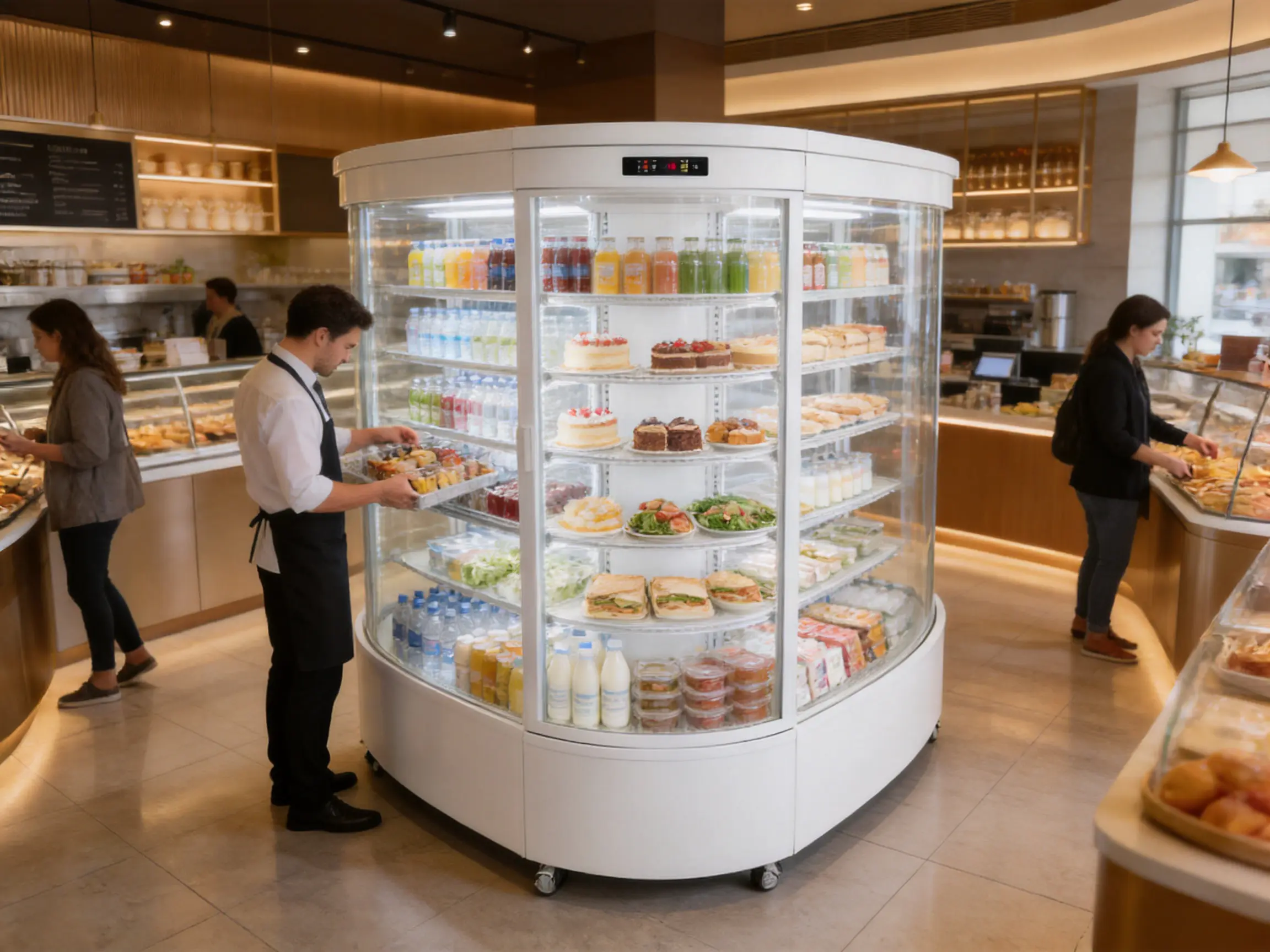
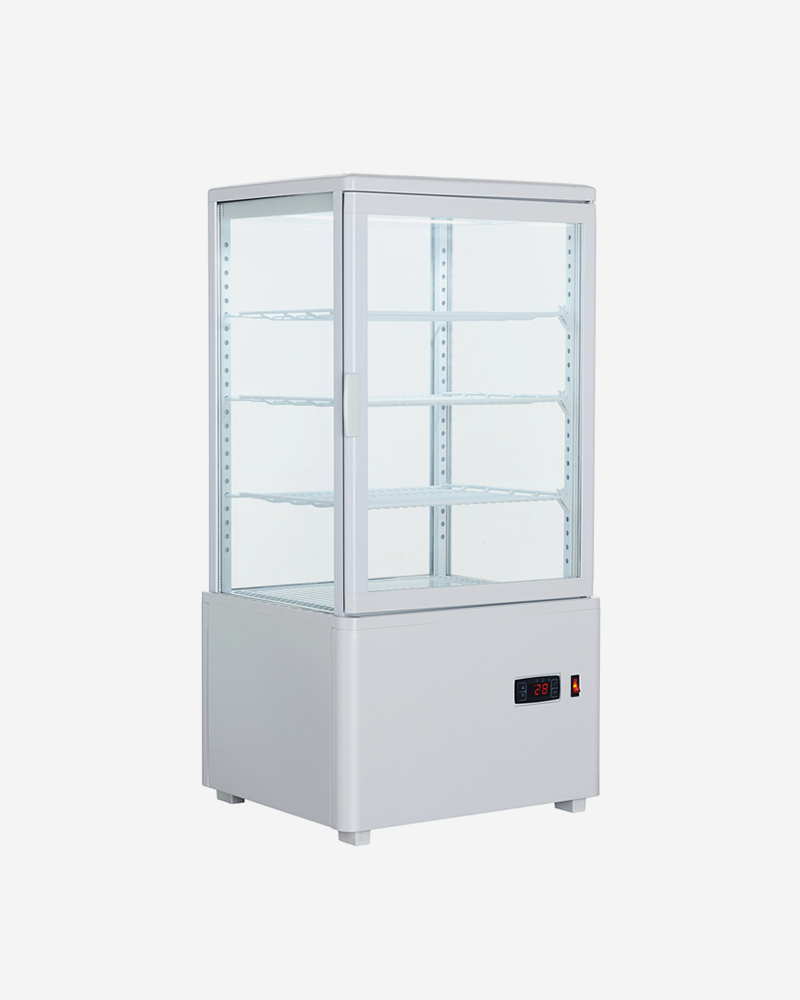
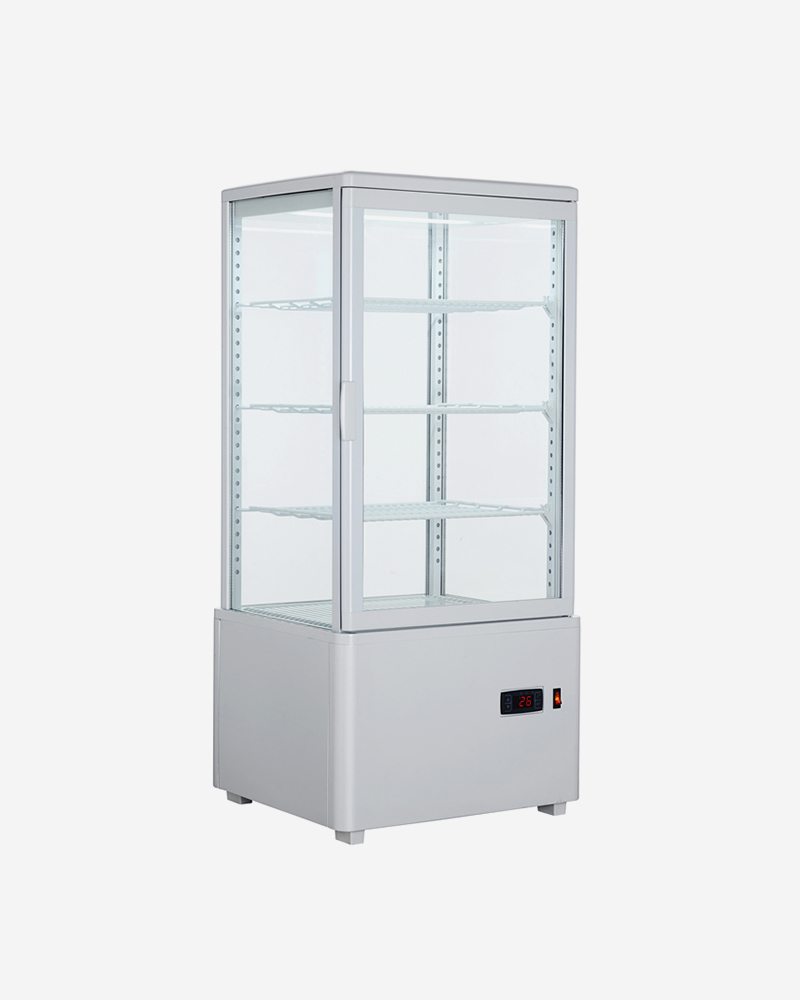
Commercial refrigeration is no longer limited to keeping food and beverages cold. In modern retail, hospitality, catering, and food-service environments, a refrigerator must also present products attractively, use floor space efficiently, maintain a stable temperature, and support convenient daily operation. The XC-278L Four Sides Glasses Display Cooler is designed to meet these combined requirements through a tall, highly visible cabinet, ventilated cooling, automatic defrost, adjustable shelving, internal LED illumination, and a digital temperature control system.
With a rated capacity of 278 liters and a temperature range of 2°C to 10°C, this vertical display cooler is suitable for a broad selection of chilled merchandise. It can be used for bottled drinks, packaged food, dairy products, desserts, fruit, prepared meals, and other items that require refrigerated storage while remaining clearly visible to customers. Its four-sided double-glass construction provides product visibility from multiple directions, making the cabinet suitable for supermarkets, convenience stores, cafés, restaurants, bakeries, hotels, canteens, and self-service retail areas.
The cabinet is manufactured by Ningbo XiangChi Electrical Co., Ltd., a professional producer of vertical display cabinets, cake cabinets, warming cabinets, and related commercial refrigeration equipment. With established production experience, dedicated research and development capabilities, testing facilities, and a large modern manufacturing site, the company has developed a product range intended for international commercial markets. The XC-278L reflects this approach by combining practical refrigeration performance with a presentation-focused design.
Why Product Visibility Matters in Commercial Refrigeration
A conventional refrigerator may preserve products effectively, but it does not always provide the visual impact required in a competitive retail environment. Customers are more likely to notice products that are well illuminated, neatly arranged, and visible without requiring them to open a door. This is especially important for impulse purchases, ready-to-eat foods, chilled beverages, desserts, and packaged products that depend on attractive presentation.
The XC-278L addresses this need with a four-sided glass cabinet. Customers can view the contents from the front, sides, and other approach angles, while store operators can position the unit in a more open merchandising layout. The cabinet does not need to be placed directly against a wall to remain useful. It can be used as a freestanding display point, a product island, or a supplementary cooler near a checkout area or service counter.
Four-sided visibility also assists staff during replenishment and stock checks. Products can be seen from more than one direction, reducing the need to walk around or open the cabinet repeatedly. In a busy retail or food-service environment, this can improve operational efficiency and help staff identify low-stock areas quickly.
The internal top LED light supports the same merchandising objective. Light from the upper section of the cabinet helps illuminate shelves and product labels, allowing merchandise to remain visible during indoor evening operation or in areas with limited ambient lighting. LED lighting is also well suited to commercial display equipment because it produces clear illumination with relatively low heat output compared with older lighting technologies.

Four Sides Glasses Display Cooler
Product Overview and Main Specifications
The XC-278L is a tall, narrow-format display refrigerator developed for commercial environments where vertical product presentation and efficient use of floor area are important. Its 278-liter capacity provides useful storage while its slim cabinet footprint allows it to fit into many retail and hospitality layouts.
| Specification | XC-278L |
|---|---|
| Product category | Four-sided glass display cooler |
| Rated capacity | 278 liters |
| Temperature range | 2°C to 10°C |
| Input power | 340 watts |
| Refrigerant options | R134a or R290 |
| Climate class | 4 |
| Net weight | 93 kilograms |
| Gross weight | 98 kilograms |
| Product dimensions | 515 × 485 × 1915 millimeters |
| Package dimensions | 590 × 550 × 1960 millimeters |
| Loading quantity in a 20-foot general-purpose container | 36 units |
| Loading quantity in a 40-foot high-cube container | 80 units |
The temperature range of 2°C to 10°C is appropriate for many chilled products. It provides flexibility for operators who need to display different merchandise categories in the same cabinet. The actual storage suitability of any product should always be confirmed according to the product manufacturer’s requirements and applicable food-safety regulations, but the operating range is broadly suited to refrigerated retail display applications.
The listed 340-watt input power represents a practical balance between cooling capacity, display performance, and operating requirements. Actual energy consumption may vary according to ambient temperature, product loading, door-opening conditions, thermostat settings, installation location, and maintenance practices. As with all commercial refrigeration equipment, proper installation and routine cleaning are important for maintaining performance.
Four-Sided Double Glass Construction
The cabinet’s four-sided double-glass design is one of its primary advantages over conventional single-view display refrigerators. Double glazing improves the separation between the refrigerated interior and the surrounding environment. It also helps reduce the influence of ambient conditions on the cabinet interior, supporting more stable operation when the unit is used in a busy commercial space.
From a merchandising perspective, the glass arrangement creates a transparent display case that makes products accessible to the customer’s view without sacrificing the enclosed character of a refrigerated cabinet. The display remains visually open, but the products are protected within the cabinet rather than being exposed directly to dust, handling, or surrounding air movement.
The front curved glass adds an additional presentation benefit. Curved glazing can create a softer visual profile than a flat-front cabinet, helping the unit appear more refined in cafés, bakeries, hotels, and premium retail interiors. It also gives customers a broader viewing angle when they approach the cabinet from the side.
Tempered glass is available as an option. This can be valuable for installations where additional glass strength and safety performance are desired. Buyers should identify their preferred glass specification during the purchasing process, particularly when the equipment will be used in high-traffic locations or transported frequently between sites.
Compared with an opaque refrigerator, a four-sided glass cooler encourages visual engagement. Compared with a basic open shelf, it provides a more controlled refrigerated environment. This combination makes the XC-278L especially useful when product presentation and temperature management must work together.
Stable Refrigerated Display Performance
The XC-278L uses a ventilated cooling system to distribute refrigerated air through the cabinet. Ventilated or forced-air cooling is commonly used in commercial display equipment because it helps circulate cold air around multiple shelves and product zones. This is particularly important in a tall cabinet, where passive cooling alone may not provide sufficiently even conditions from top to bottom.
Good internal air circulation supports more consistent product storage when shelves are loaded correctly. Operators should avoid blocking air outlets, placing products tightly against the interior surfaces, or exceeding the cabinet’s recommended loading arrangement. Allowing space for air movement helps the refrigeration system work more efficiently and supports more uniform cooling.
The digital thermostat and display provide a clear way to monitor the operating temperature. A digital control interface is more convenient than relying on an approximate mechanical dial because staff can read the set point or displayed condition directly. This supports routine checks, especially in businesses that maintain internal food-safety procedures or require regular temperature records.
The 2°C to 10°C operating range makes the cabinet suitable for chilled beverages, dairy items, packaged sandwiches, cold desserts, fresh-prepared foods, and similar merchandise. It is not intended to replace a freezer, and products that require frozen storage should be placed in equipment designed for temperatures below the freezing point. The same distinction is important when planning a mixed equipment layout: the XC-278L is a refrigerated display cabinet, not a frozen display cabinet.
Automatic defrost is included as a standard feature. Defrosting is necessary because moisture can accumulate on refrigerated surfaces during normal operation. An automatic defrost cycle helps control this accumulation without requiring staff to shut down the cabinet manually at frequent intervals. This reduces routine labor and helps keep the cabinet available for commercial use.
Adjustable Shelves for Flexible Merchandising
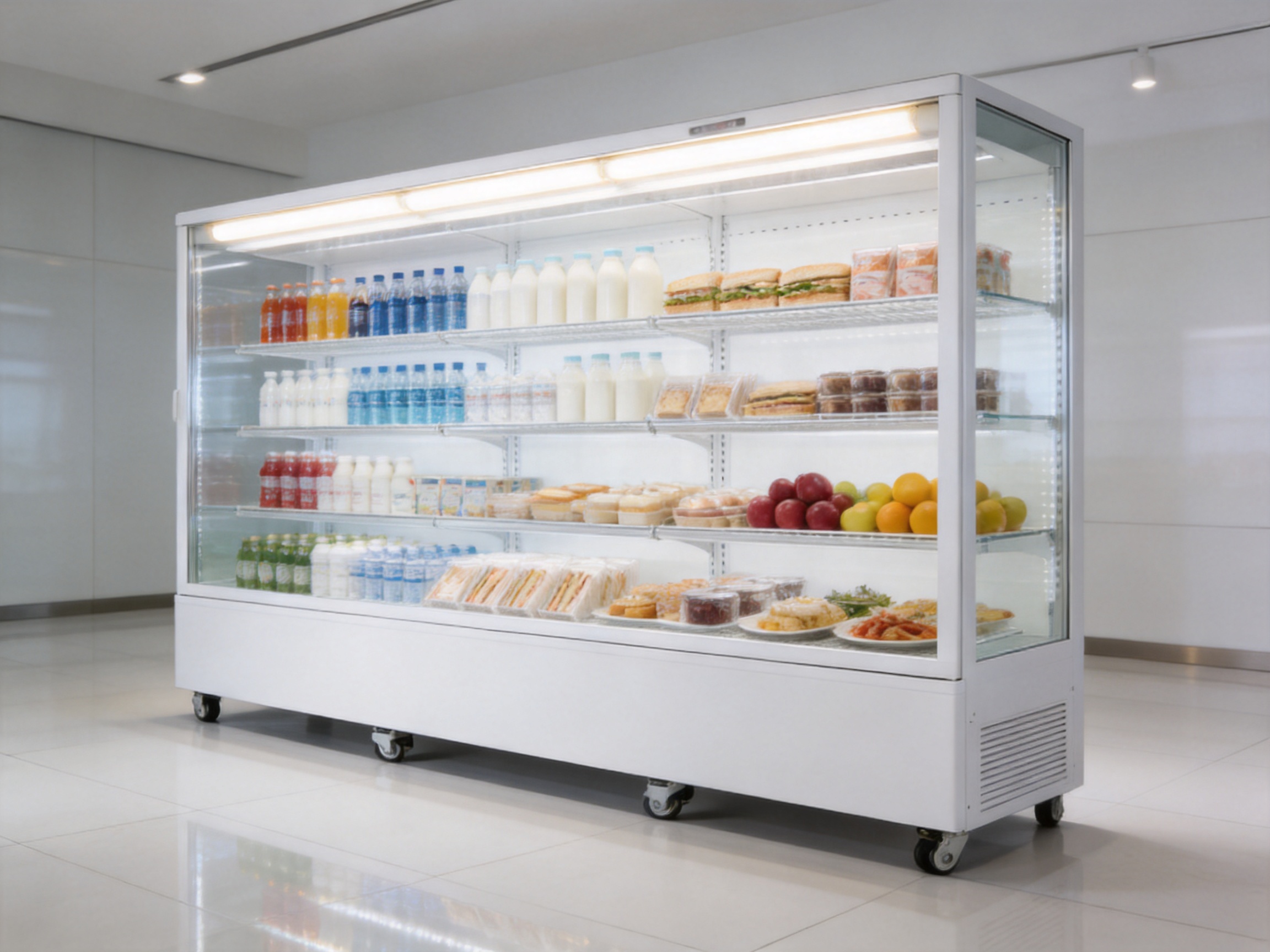
The standard adjustable PVC-coated shelves allow the interior to be configured for different product sizes and packaging formats. A beverage display may require relatively narrow vertical spacing, while cakes, food trays, large containers, or boxed products may need more clearance. Adjustable shelving allows the operator to adapt the cabinet rather than accepting a fixed arrangement that may waste space.
PVC coating provides a practical surface for commercial use. The coating helps create a finished shelf surface that can be cleaned as part of normal maintenance and helps protect the underlying shelf structure from everyday contact with packaged goods. The shelves can be arranged to create clear product tiers, improving both visibility and stock rotation.
Chromed shelves are available as an option for buyers seeking a different appearance or finish. The choice between standard PVC-coated shelves and optional chromed shelves can be based on the visual style of the store, the product category, and the purchasing budget. Both options allow the cabinet to be configured as a professional retail display.
Effective shelf planning is important for maximizing the value of a vertical cabinet. Frequently purchased or higher-margin products can be placed at eye level. Smaller packages can be grouped together, while taller containers can be placed on shelves with sufficient vertical clearance. Staff should also leave enough space for air circulation and avoid overloading shelves beyond their safe working capacity.
When products are arranged in consistent rows, the four-sided glass design becomes more effective. Customers can quickly understand the available selection, while employees can identify gaps and replenish stock efficiently. A well-organized cabinet also supports first-in, first-out stock rotation, which is important for products with limited shelf life.
Lighting and Customer-Facing Presentation
The internal top LED light is designed to enhance product visibility. In many commercial locations, a refrigerator is installed beneath ceiling lighting that may not reach every shelf evenly. Integrated cabinet lighting helps create a brighter interior and makes labels, colors, and packaging details easier to see.
Lighting can influence purchasing behavior because customers often make quick decisions based on what they notice first. A well-lit display can help beverages appear colder and more inviting, while cakes, desserts, and prepared foods can benefit from clearer visibility of their colors and presentation. For this reason, the LED system is not merely an electrical accessory; it is part of the cabinet’s merchandising function.
Two-strip and four-strip LED light bars are available as options. These options allow buyers to specify a lighting arrangement according to the display environment and product category. A unit used for high-value desserts may benefit from enhanced illumination, while a beverage display in a brightly lit store may require a simpler configuration.
When selecting optional lighting, purchasers should consider the cabinet’s location, the color and reflectivity of the products, the brightness of surrounding fixtures, and the desired visual effect. Lighting should make products clear without creating distracting glare on the glass.
Practical Mobility and Installation
The cooler is equipped with four castors, two of which include brakes. This arrangement allows the cabinet to be moved during installation, cleaning, store renovation, or layout changes. Once the unit has been positioned, the two braked castors help secure it in place.
Mobility is particularly useful for businesses that change their seasonal displays or operate in flexible service spaces. A café may move the cooler closer to a checkout point during busy periods. A hotel may reposition the unit for a banquet or event area. A supermarket may adjust the cabinet location during a promotional campaign.
Although the castors make relocation easier, the cabinet should be installed on a stable and reasonably level surface. The unit should have appropriate clearance for ventilation and service access, and it should not be positioned where it will be exposed to direct heat sources, excessive moisture, or obstructed air movement. A professional installation review is recommended for large commercial deployments.
The product dimensions are 515 millimeters in width, 485 millimeters in depth, and 1915 millimeters in height. This tall profile provides significant display height while requiring a relatively compact floor area. Before ordering, buyers should confirm doorway widths, elevator dimensions, ceiling clearance, aisle space, and the intended final position.
Applications Across Multiple Commercial Sectors
Supermarkets and Convenience Stores
In supermarkets and convenience stores, the XC-278L can be used for chilled drinks, dairy products, packaged meals, sandwiches, desserts, and grab-and-go foods. Its transparent design allows customers to browse quickly, while the narrow vertical footprint can help retailers add refrigerated capacity without occupying a large amount of floor space.
The cabinet can also be placed near checkout lanes or store entrances for impulse products. When combined with clear shelf organization and strong product labeling, it can support promotional campaigns, seasonal selections, or premium product presentation.
Cafés and Restaurants
Cafés and restaurants can use the cooler to display bottled beverages, cakes, pastries that require refrigeration, salads, sandwiches, and prepared foods. The four-sided glass format allows the cabinet to function as both equipment and interior display furniture.
For service businesses, the transparent cabinet may help customers make faster selections. Staff can see the remaining stock without opening the door or repeatedly inspecting an opaque storage refrigerator. This can be valuable during peak service periods when speed and visual clarity are important.
Bakeries and Dessert Shops
Bakeries and dessert shops often depend on presentation to communicate freshness and quality. The curved front glass, internal LED lighting, and adjustable shelves create a suitable environment for displaying chilled cakes, desserts, cream-based products, and other temperature-sensitive items.
The optional tempered glass and additional LED light-bar configurations may be considered for premium dessert environments where the cabinet is a prominent part of the customer experience. Operators should confirm that the selected temperature is appropriate for each product recipe and storage requirement.
Hotels, Canteens, and Institutional Food Service
Hotels, cafeterias, schools, offices, and institutional food-service areas can use the cooler for self-service beverages and prepared chilled foods. The clear cabinet allows users to select items efficiently, while staff can monitor product levels and maintain a more orderly presentation.
In larger facilities, several units can be deployed in different service areas. The stated container loading quantities of 36 units in a 20-foot general-purpose container and 80 units in a 40-foot high-cube container may support organized project purchasing and distribution planning for commercial buyers.
Advantages Compared with Basic Display Refrigerators
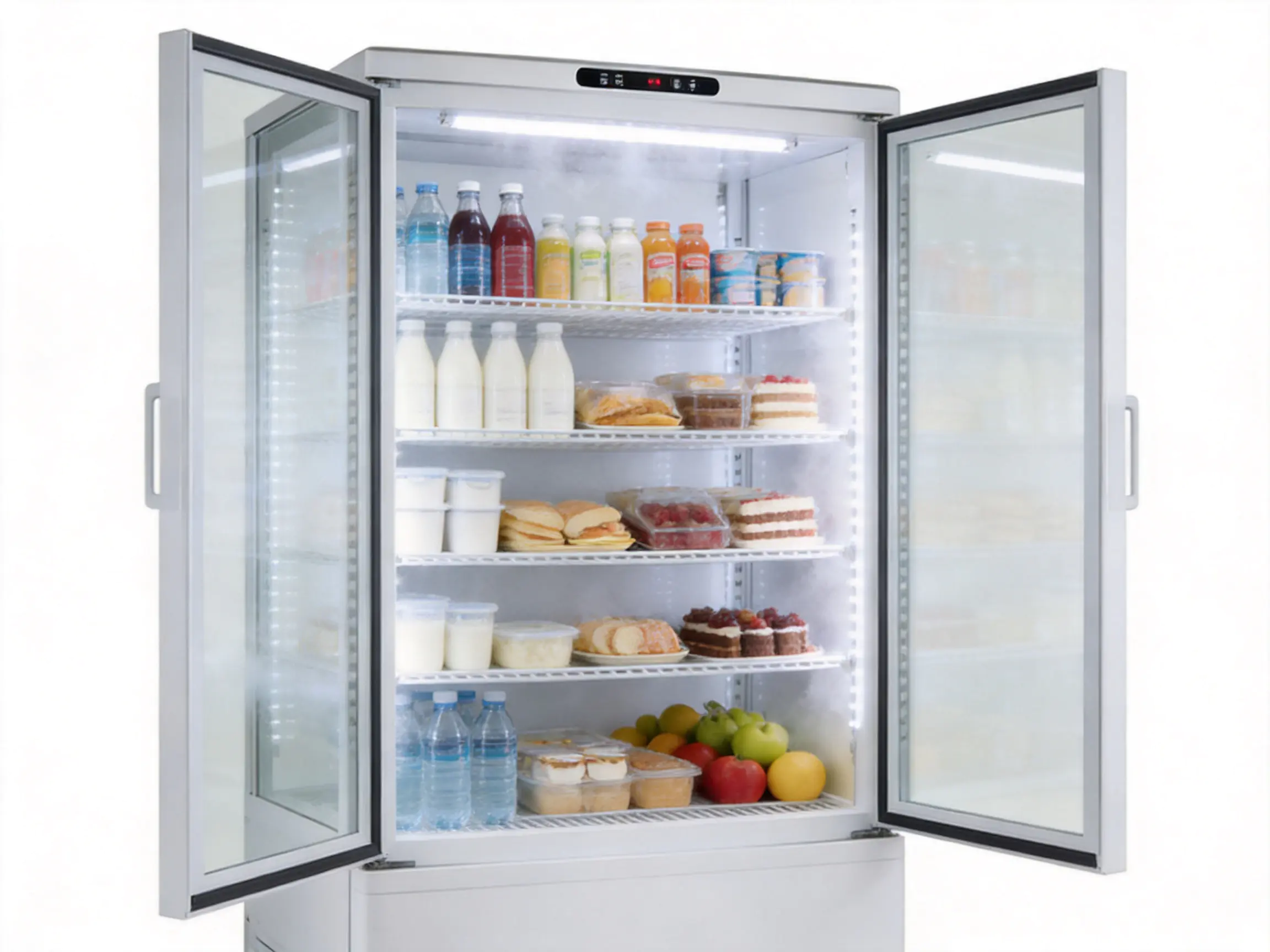
The XC-278L offers several advantages when compared with simpler display refrigerators that provide only front visibility or limited internal organization.
First, the four-sided glass construction provides a wider viewing area. This is useful when the cabinet is located in an open retail space or positioned away from a wall. A front-only cabinet may require a specific orientation, while a four-sided model can present products to customers approaching from different directions.
Second, the double-glass design supports a more controlled cabinet environment than an open display shelf. Open shelving may offer excellent accessibility, but it can expose products to ambient air, dust, and frequent handling. The XC-278L gives the retailer a transparent enclosed display that better separates merchandise from the surrounding environment.
Third, ventilated cooling and automatic defrost reduce the need for manual intervention. A basic cabinet without effective air circulation may produce uneven temperatures, while a unit without automatic defrost may require more frequent shutdown and cleaning procedures.
Fourth, the digital thermostat and display provide better operating visibility. Staff can check the cabinet setting and monitor conditions as part of routine store procedures. This is particularly useful where refrigerated products are managed under documented food-safety practices.
Fifth, adjustable shelves and optional lighting make the cabinet adaptable. A fixed interior may be acceptable for one product type but inefficient when the merchandise changes. The XC-278L can be configured for different packaging sizes and display styles, helping the equipment remain useful as the business evolves.
Finally, the tall and narrow format makes the cabinet a practical option where floor space is limited. It provides a substantial vertical display without the broad footprint associated with many horizontal cases.
Manufacturing Capability and Quality Approach
The performance of commercial refrigeration equipment depends not only on its visible features but also on the manufacturing systems behind those features. Ningbo XiangChi Electrical Co., Ltd. was established in 2007 and has developed experience in vertical display cabinets, cake cabinets, warming cabinets, and related products. The company operates a modern management and production facility covering approximately 40,000 square meters.
A dedicated research and development team supports product improvement and adaptation to different market requirements. Commercial refrigeration products must balance cabinet appearance, thermal performance, electrical safety, component reliability, serviceability, and shipping efficiency. A structured research and development process helps coordinate these requirements rather than treating each feature as an isolated addition.
Advanced testing facilities are also important. Before commercial equipment reaches the market, manufacturers need to evaluate temperature performance, electrical operation, component compatibility, structural stability, lighting, controls, and general product reliability. Testing helps identify potential weaknesses and supports more consistent production results.
The company states that it has obtained CE, GS, CCC, CB, RoHS, ETL, and other major certifications. Certification requirements vary by product configuration, destination market, electrical system, and applicable standard. Buyers should confirm the exact certification documentation available for the specific model, voltage, refrigerant, and market order. Nevertheless, the company’s certification experience demonstrates an orientation toward international compliance and export-oriented production.
Manufacturing strength also includes production planning, incoming material control, assembly procedures, inspection processes, packaging design, and after-sales coordination. A commercial cooler may perform well in a showroom, but it must also withstand transportation, installation, repeated daily use, cleaning, product loading, and long operating cycles. These wider production considerations are essential to the total value of the equipment.
Refrigerant and Market Configuration Options
The XC-278L specification lists R134a and R290 as refrigerant options. The final refrigerant selection should be confirmed before production because it may affect the refrigeration system, safety requirements, operating instructions, service procedures, and regulatory compliance in the destination market.
R290 is a natural refrigerant with a low global warming potential and is increasingly used in selected commercial refrigeration applications. Because it is flammable, equipment designed for R290 requires appropriate engineering, component selection, safety controls, labeling, installation practices, and servicing procedures. R134a has also been widely used in refrigeration equipment, although environmental regulations and market preferences differ by region.
Buyers should not assume that every listed option is available in every electrical or regional configuration without confirmation. Before placing an order, it is advisable to specify the destination country, voltage and frequency, required certification, refrigerant preference, glass specification, shelf type, lighting configuration, and packaging requirements.
This configurable approach can benefit importers, distributors, retail chains, and project purchasers because it allows the cooler to be aligned with local market requirements. It also makes it easier for buyers to create a consistent equipment specification across multiple stores or facilities.
Packaging, Logistics, and Project Purchasing
The XC-278L has a net weight of 93 kilograms and a gross weight of 98 kilograms. The difference reflects packaging materials and shipping protection. The packaged dimensions are 590 × 550 × 1960 millimeters, which should be considered when planning warehouse storage, container loading, unloading, and final-site delivery.
The listed loading quantities are 36 units in a 20-foot general-purpose container and 80 units in a 40-foot high-cube container. These figures are useful for preliminary freight planning and purchasing calculations. Actual loading results may depend on packaging configuration, container condition, loading method, destination requirements, and any additional protective materials requested by the buyer.
For larger commercial projects, container efficiency can influence the landed cost of each unit. A supplier with experience in export packaging can help reduce the risk of transport damage and coordinate documentation for international shipments. Purchasers should also assess whether the delivery includes port handling, customs clearance, inland transport, and final placement, as these services differ by supplier and destination.
Before shipment, buyers should request confirmation of the model, quantity, product configuration, electrical specification, refrigerant, accessories, packaging marks, and inspection arrangements. Clear communication at this stage helps reduce misunderstandings and supports smoother installation after arrival.
Installation and Daily Operating Recommendations
The cooler should be placed in a clean, dry, and adequately ventilated commercial area. Direct sunlight, ovens, cookers, radiators, hot-air outlets, and other heat sources can increase the refrigeration load. The unit should also be positioned so that service personnel can access relevant components when maintenance is required.
After installation, the cabinet should be allowed to reach its operating temperature before it is fully loaded with products. Product loading should be arranged so that air can circulate around the merchandise. Blocking internal air outlets or packing shelves too tightly can reduce cooling performance and create uneven temperature conditions.
The thermostat should be set according to the products being stored and the operating requirements of the business. Staff should avoid unnecessary temperature adjustments because frequent changes can make it more difficult to maintain stable conditions. The digital display should be checked routinely, especially after restocking, power interruptions, or changes in ambient conditions.
Glass surfaces and shelves should be cleaned using suitable materials that do not scratch or damage the finish. Spills should be removed promptly, especially when the cabinet is used for open food packaging or prepared meals. Cleaning procedures should follow the operator’s food-safety plan and the manufacturer’s recommendations.
Condenser and ventilation areas should be kept free from excessive dust. A dirty condenser can reduce heat rejection and increase the workload on the refrigeration system. Maintenance intervals depend on the environment, but equipment used in dusty kitchens, bakeries, warehouses, or high-traffic stores may require more frequent inspection.
Because the cabinet uses glass on multiple sides, staff should inspect the panels, seals, shelves, castors, and electrical connections during routine maintenance. Any damaged glass, abnormal noise, unusual temperature fluctuation, or refrigerant-system issue should be assessed by qualified service personnel.
How to Select the Right Configuration
The standard XC-278L configuration includes a front curved glass panel, internal top LED lighting, digital thermostat and display, adjustable PVC-coated shelves, four-sided double glass, ventilated cooling, automatic defrost, and four castors with two brakes. This configuration is suitable for many general commercial applications.
Buyers who want stronger visual impact can consider two-strip or four-strip LED light bars. Buyers who prefer a different internal appearance may choose chromed shelves. Tempered glass can be specified where additional strength and safety characteristics are important. These options should be selected according to the store environment, product category, project budget, and destination-market requirements.
It is also important to determine the desired refrigerant before production. R134a and R290 may involve different compliance and service considerations. A professional supplier should be able to clarify which configurations are available for the required market and electrical specification.
Businesses should calculate capacity based on product dimensions and turnover, not only the nominal liter rating. A cabinet filled with tall bottles uses space differently from one filled with small packaged desserts. Shelf spacing, product rotation, restocking frequency, and display priorities should all be considered when planning the interior arrangement.
Value for Retailers and Distributors
For retailers, the XC-278L combines refrigeration and merchandising in one cabinet. It can help transform chilled products from hidden inventory into visible selling opportunities. The four-sided display is especially useful in stores where customers move freely around the equipment and where product presentation contributes directly to sales.
For distributors, the model offers a broad application range. It can be marketed to beverage retailers, bakeries, cafés, restaurants, hotels, convenience stores, supermarkets, and institutional buyers. The availability of options such as alternative shelves, lighting configurations, tempered glass, and refrigerant choices may also support different customer segments.
For multi-site operators, standardized vertical display cabinets can create a consistent appearance across stores. A shared equipment specification may simplify staff training, maintenance planning, spare-parts organization, and replacement purchasing. The manufacturer’s research, testing, production, and certification capabilities can be valuable when the buyer requires repeat orders over time.
The equipment should be evaluated as part of a total ownership plan rather than only by initial price. Important considerations include product visibility, usable capacity, operating conditions, maintenance access, shipping requirements, configuration flexibility, certification, supplier support, and expected service life. A well-selected display cooler can support both daily operations and the commercial appearance of the store.
Frequently Asked Questions
What is the capacity of the XC-278L display cooler?
The rated capacity is 278 liters. Usable storage space may vary depending on shelf placement, product dimensions, packaging, and the clearance required for proper air circulation.
What temperature range does the cabinet provide?
The specified temperature range is 2°C to 10°C. Operators should select a suitable setting based on the products being displayed and the applicable food-storage requirements.
Is the XC-278L suitable for frozen products?
No. The XC-278L is a refrigerated display cooler for chilled products. Frozen products require a freezer designed to operate at subzero temperatures.
Can the shelves be adjusted?
Yes. Adjustable PVC-coated shelves are included as a standard feature. Chromed shelves are available as an option.
Does the cabinet have automatic defrost?
Yes. Automatic defrost is included in the standard configuration, helping reduce the need for frequent manual defrosting.
How is the cabinet cooled?
The cabinet uses a ventilated cooling system. Forced air circulation helps distribute refrigerated air through the display area when the shelves are loaded correctly.
Does the cooler include lighting?
Yes. An internal top LED light is included as a standard feature. Two-strip and four-strip LED light-bar arrangements are available as options.
Can the glass be specified as tempered glass?
Yes. Tempered glass is listed as an optional configuration. The exact availability should be confirmed for the intended order and destination market.
Can the cooler be moved after installation?
Yes. It includes four castors, with two fitted with brakes. The castors assist movement, while the brakes help secure the cabinet after positioning.
What refrigerants are available?
The listed options are R134a and R290. Buyers should confirm the selected refrigerant, local regulations, certification, and service requirements before ordering.
What is the climate classification?
The stated climate type is 4. Installation conditions should still be reviewed carefully, including ambient temperature, ventilation, heat sources, and humidity.
What are the product dimensions?
The product dimensions are 515 millimeters wide, 485 millimeters deep, and 1915 millimeters high. The packaged dimensions are 590 × 550 × 1960 millimeters.
Which businesses can use this display cooler?
Typical applications include supermarkets, convenience stores, cafés, restaurants, bakeries, dessert shops, hotels, canteens, offices, and other commercial food-service environments that need refrigerated product presentation.
What should buyers confirm before placing an order?
Buyers should confirm the electrical specification, refrigerant, glass type, shelf type, lighting option, destination certification, packaging requirements, delivery terms, and any special customization requirements.
Conclusion
The XC-278L Four Sides Glasses Display Cooler is designed for businesses that need more than basic cold storage. Its four-sided double-glass construction improves visibility from multiple directions, while the front curved glass creates a customer-friendly presentation. Ventilated cooling, automatic defrost, digital temperature control, and adjustable shelves support practical daily operation.
The cabinet’s internal LED lighting helps products stand out, and optional light bars, chromed shelves, and tempered glass allow buyers to adapt the equipment to different commercial environments. Four castors, including two with brakes, make the unit easier to position and manage during store changes or cleaning.
With a 278-liter capacity, 2°C to 10°C temperature range, narrow vertical format, and broad application potential, the cooler can serve retailers, food-service operators, hospitality businesses, and distributors. Its value is strengthened by the manufacturer’s experience in commercial display equipment, dedicated research and development resources, testing capabilities, modern production facilities, and international certification experience.
For buyers comparing commercial display refrigerators, the most important question is how effectively the equipment combines preservation, presentation, flexibility, and operational convenience. The XC-278L is developed around this combination, offering a practical solution for businesses that want chilled products to remain protected, organized, and highly visible throughout the customer journey.
References
1. Product specification sheet for the XC-278L Four Sides Glasses Display Cooler.
2. Manufacturer-provided information on standard features, optional configurations, dimensions, capacity, refrigeration range, and shipping data.
3. Commercial refrigeration equipment selection and installation principles.
4. General food-service guidance for chilled product storage and temperature monitoring.
5. Commercial display merchandising practices for refrigerated beverages, prepared foods, desserts, and dairy products.
6. General technical guidance concerning ventilated cooling systems, automatic defrost, LED cabinet lighting, and commercial refrigerator maintenance.
7. Manufacturer information regarding research and development, production facilities, quality management, testing capabilities, and international certification experience.
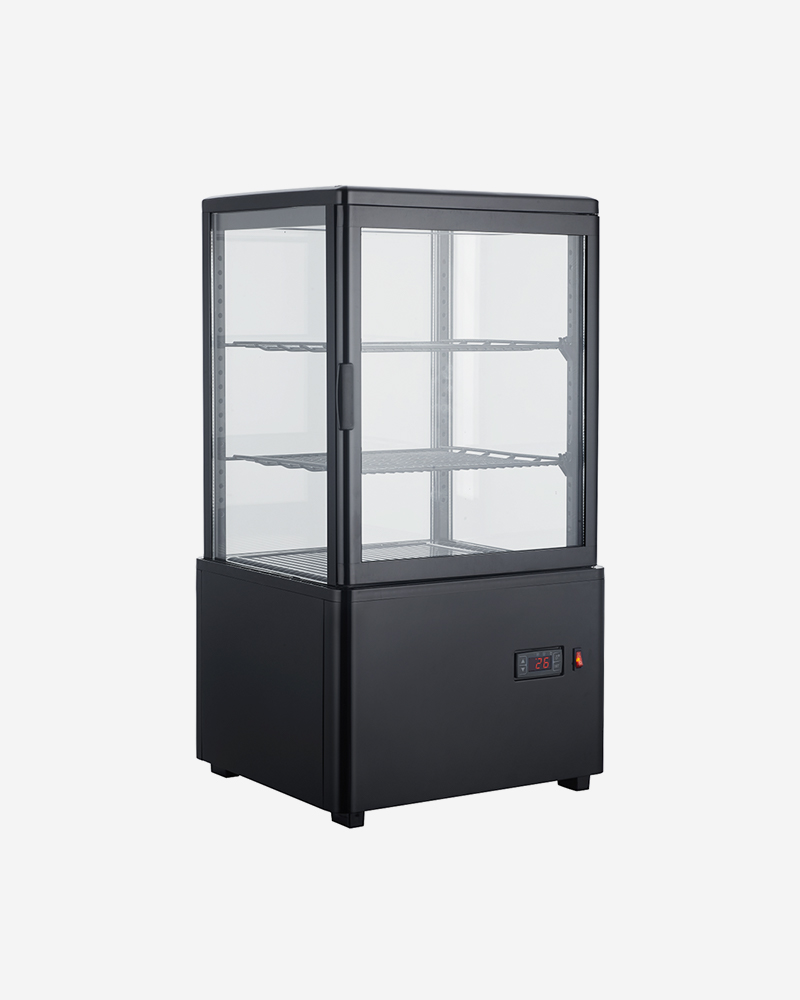
Product: Four Sides Glasses Display Cooler

You May Also Like





-
- Navigation
- Home
- About Us
- Products
- News
- Contact Us
 East Zone, Guanhaiwei Industrial Park, Cixi City, Ningbo, Zhejiang, China
 +86-574-63668678
 +86-574-63668108

Copyright © Ningbo XiangChi Electrical Co.,Ltd All Rights Reserved.
