
 简体中文
简体中文 English
 Español
News
Commercial Food Display Warmer and Cake Showcase: Performance, Design, and Manufacturing Advantages
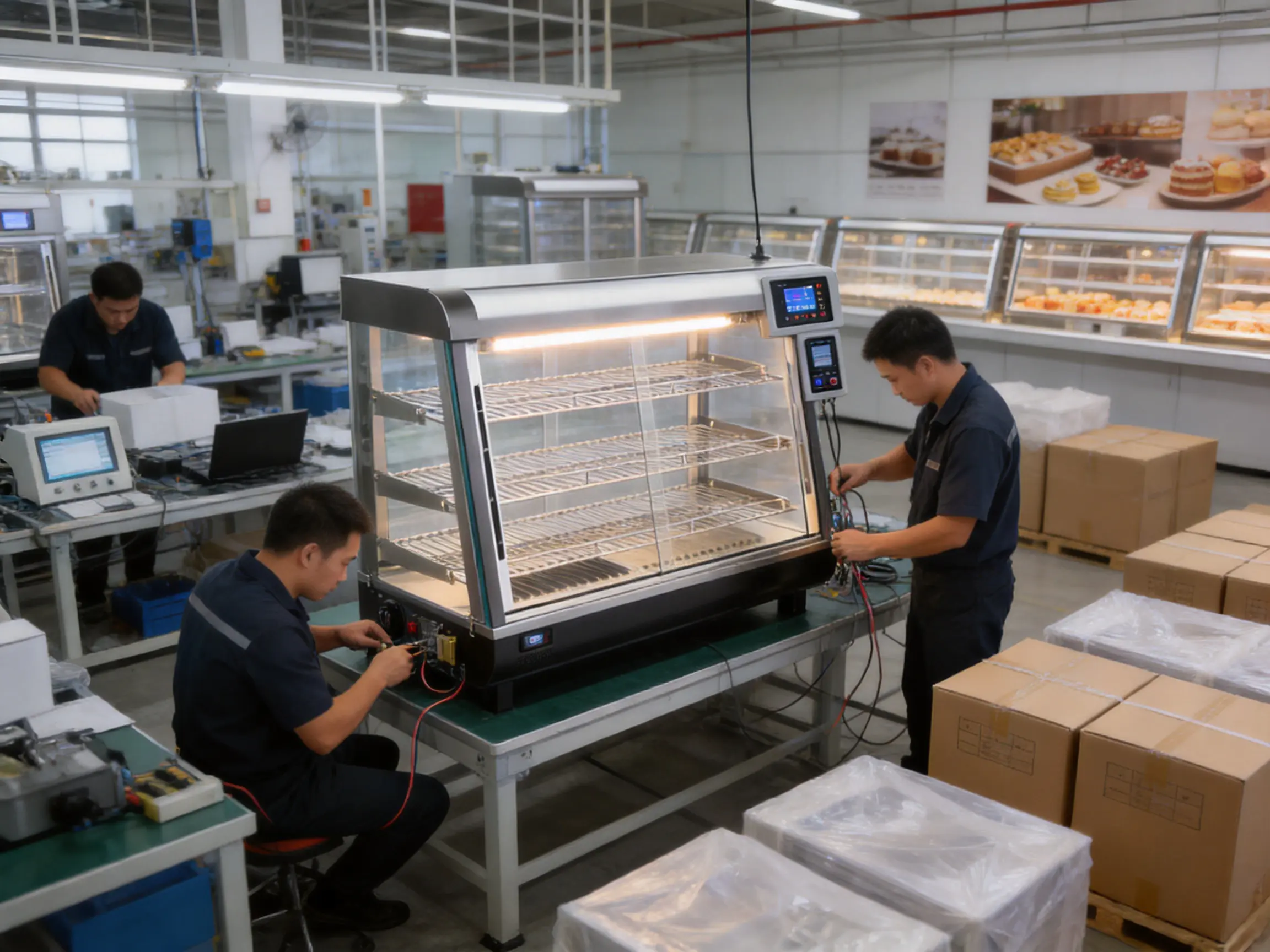
In commercial food service, presentation and temperature control are closely connected. A product may look attractive in a display cabinet, but it must also remain suitable for service, retain its visual quality, and be protected from unnecessary environmental exposure. The XCR-136L food display warmer is designed for restaurants, bakeries, cafés, hotels, convenience stores, buffet counters, and other businesses that need a practical heated showcase for prepared foods, cakes, pastries, snacks, and selected ready-to-serve products.
With a 136-liter capacity, a temperature range of 30–90°C, digital temperature control, internal LED illumination, automatic defrost, and a direct cooling system, this model combines the visibility of a commercial showcase with the operating functions required in a busy food environment. Its compact horizontal footprint makes it suitable for countertop or service-counter installation, while its glass display construction allows customers to view products before making a selection.
The warmer is manufactured by Ningbo XiangChi Electrical Co., Ltd., a specialist producer of vertical display cabinets, cake showcases, and warming cabinets. The company has developed its production capabilities through dedicated research and development, testing facilities, organized manufacturing lines, and experience serving international markets. These resources support a product strategy centered on functional design, consistent quality, safety certification, and the ability to adapt commercial refrigeration and warming equipment to different customer requirements.
Understanding the XCR-136L Food Display Warmer
The XCR-136L is a commercial display warmer identified by a 136-liter internal capacity. It is intended for businesses that need to display food attractively while maintaining a controlled warm environment. Unlike a simple open shelf or heated tray, the cabinet creates a more organized presentation area and provides a barrier between displayed products and the surrounding service environment.
The unit operates within a temperature range of 30–90°C. This broad range gives operators the flexibility to select a lower setting for products that require gentle warming or a higher setting for foods that need stronger heat retention. The correct operating temperature will depend on the food type, preparation method, local food-service regulations, holding time, humidity, and the operator’s food safety procedures.
The 1100-watt input power rating supplies the energy required by the warming and control systems. Because commercial food display applications may involve frequent door or service access, ambient temperature changes, and varying product loads, a dedicated electrical system helps the cabinet recover and maintain its selected operating condition. Operators should always confirm the local voltage, frequency, plug configuration, and installation requirements before ordering or commissioning the equipment.
With a net weight of 38 kilograms and a gross shipping weight of 41 kilograms, the unit is substantial enough for commercial use while remaining manageable for installation by trained personnel. The product dimensions are 904 × 486 × 636 millimeters, and the package dimensions are 963 × 549 × 675 millimeters. These measurements allow buyers to plan counter space, delivery access, doorway clearance, storage, and final positioning in advance.
| Specification | XCR-136L Information |
|---|---|
| Product type | Commercial food display warmer and cake showcase |
| Model | XCR-136L |
| Capacity | 136 liters |
| Temperature range | 30–90°C |
| Input power | 1100 watts |
| Net weight | 38 kilograms |
| Gross weight | 41 kilograms |
| Product dimensions | 904 × 486 × 636 millimeters |
| Package dimensions | 963 × 549 × 675 millimeters |
| 20-foot general-purpose container quantity | 72 units |
| 40-foot high-cube container quantity | 192 units |
The model is categorized as a display warmer, but its design can also support presentation requirements commonly associated with cake showcases and food display counters. Its application should be selected according to the products being held. Moisture-sensitive pastries, fried items, baked goods, prepared meals, and confectionery products may each require different temperature and humidity management practices.
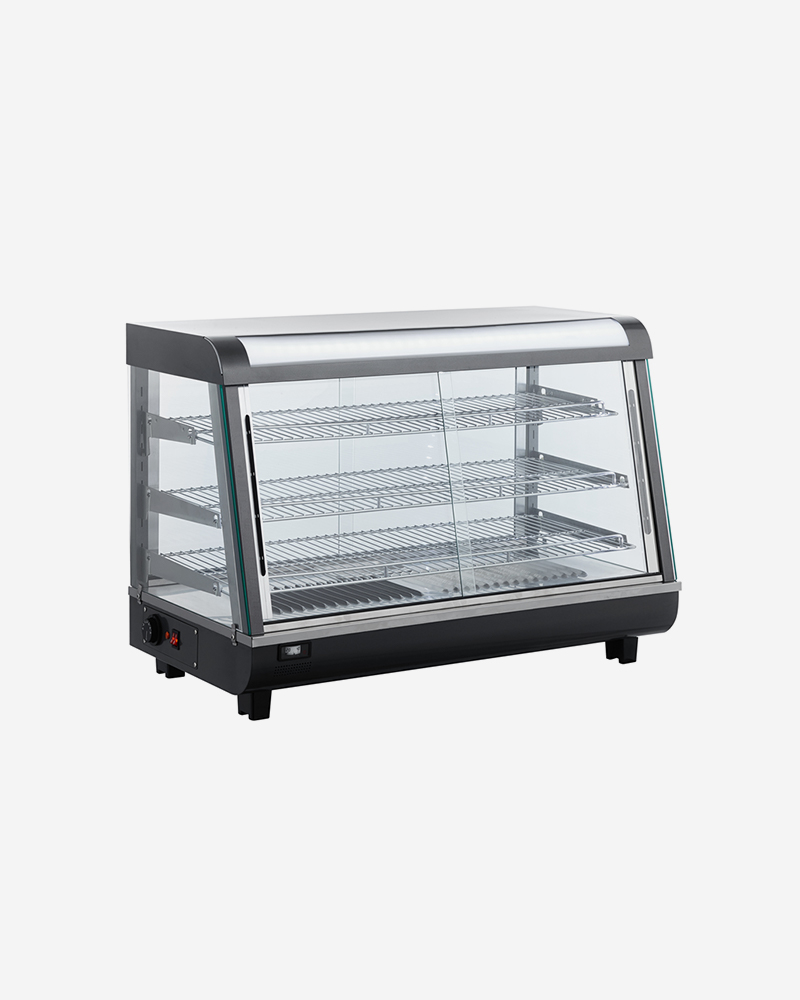
Display Equipment Food Display Warmer Cake Showcase
Core Features That Support Commercial Operation
Controlled Warm Holding from 30 to 90°C
The adjustable 30–90°C temperature range is one of the most important features of the XCR-136L. A fixed-temperature warmer may be suitable for only a narrow group of products, but an adjustable system gives food-service operators greater flexibility. A bakery may use a moderate setting for pastries, while a restaurant or buffet operation may choose another setting for cooked foods intended for short-term holding.
Temperature adjustment also helps operators respond to changing service conditions. During a quiet period, the cabinet may be configured for gentle heat retention. During a busy service period, a different setting may be appropriate, provided it remains suitable for the food and complies with local requirements. The goal is not simply to maximize heat, but to maintain a stable and appropriate product condition without excessive drying, overcooking, or quality loss.
The digital thermostat and display give staff a clear reference point for the selected operating temperature. A visible digital readout is easier to interpret than an imprecise mechanical dial, especially in a fast-paced commercial kitchen or retail counter. It also supports more consistent operating procedures between shifts because staff can follow defined temperature settings rather than relying only on personal judgment.
Digital Thermostat and Display
The digital thermostat is designed to simplify daily operation. Staff can identify the set temperature quickly and monitor the cabinet without needing to estimate the internal condition from product appearance alone. This is particularly useful when several employees share responsibility for the display area.
Consistent temperature control can help reduce operating variation. If one employee sets the cabinet too low and another sets it too high, product quality may vary throughout the day. A digital control interface supports repeatable procedures, which can improve training, shift handover, and routine monitoring.
Although a digital display is valuable, it should not replace proper food safety verification. Operators may use independent calibrated thermometers or documented checking procedures where required by their food safety management system. The displayed cabinet temperature and the actual product temperature can differ depending on loading, airflow, container type, product mass, and door-opening frequency.
Top and Bottom Evaporator Arrangement
The XCR-136L includes both a top and bottom evaporator. This arrangement is a notable design feature because it distributes the thermal and cooling-related components across the upper and lower areas of the cabinet. In a commercial display application, component placement can influence how heat, moisture, and internal conditions are managed around the displayed products.
The dual evaporator arrangement is paired with a water channel under the top evaporator. This design addresses moisture that may form during operation and defrost cycles. Providing a defined water path helps control condensation instead of allowing it to collect randomly inside the cabinet. Proper drainage and cleaning remain essential, but a dedicated channel gives operators a more orderly internal system.
Many competing display units focus primarily on external appearance, while internal thermal and moisture management may receive less attention. The inclusion of top and bottom evaporator components, together with a water channel, indicates a more considered approach to the functional interior. This can be valuable for businesses that need a showcase to remain presentable during extended service periods.
Internal Top LED Lighting
The internal top LED light improves product visibility and supports visual merchandising. Lighting is especially important for cakes, pastries, sandwiches, prepared foods, and other products whose appearance influences purchasing decisions. A well-illuminated display helps customers identify product shape, color, decoration, and portion size through the glass.
LED lighting is generally well suited to display equipment because it provides bright illumination with relatively low heat generation compared with older lighting technologies. Positioning the light at the top helps illuminate the display area from above while minimizing obstruction to the customer’s view.
Good lighting can also support staff operations. Employees can inspect product condition, identify empty areas, and replenish trays more efficiently. In retail environments, attractive lighting may improve the perceived freshness and value of displayed products, contributing to a stronger presentation at the point of sale.
Direct Cooling System
The direct cooling system is part of the cabinet’s internal thermal design. In this type of system, the thermal effect is transferred through the cabinet’s internal surfaces and components rather than depending entirely on a strong circulating-air arrangement. This can be suitable for display applications where operators want to limit unnecessary air movement across exposed or packaged products.
Reduced air movement may be beneficial for some products because excessive circulation can accelerate surface drying. However, product behavior depends on the food itself, packaging, loading pattern, temperature, and operating duration. The cabinet should therefore be tested with the intended product range before large-scale use.
The direct cooling system also works together with the thermostat, evaporator arrangement, and automatic defrost function. The performance of the complete system is more important than any single component. The cabinet’s value comes from the coordination of temperature control, moisture handling, illumination, display visibility, and service practicality.
Automatic Defrost
Automatic defrost reduces the need for frequent manual interruption. During operation, moisture can accumulate on cold surfaces or internal components. If it is allowed to build up, it may affect thermal performance, reduce usable space, and increase cleaning demands. An automatic defrost function helps manage this condition according to the cabinet’s operating cycle.
Automatic defrost is particularly useful in commercial environments where staff need to concentrate on food preparation, service, replenishment, and customer care. It supports more predictable maintenance and reduces the possibility that a busy team will postpone necessary defrosting for too long.
Automatic defrost does not eliminate cleaning. The water channel, internal surfaces, trays, glass, seals, and accessible components should still be cleaned according to an established schedule. Food residue and condensation should be removed promptly, and drainage areas should be checked to ensure that water can move as intended.
Display Design for Cakes, Pastries, and Prepared Foods
The visual presentation of food can directly influence customer confidence and purchasing behavior. A commercial showcase should make products easy to see, help organize different items, and preserve a clean appearance throughout the service period. The XCR-136L is designed around this principle by combining a glass display format with controlled warming and internal illumination.
Cake and pastry businesses can use a warmer display to present selected baked products in a prominent position near the sales counter. Products may include decorated cakes, slices, muffins, buns, tarts, savory pastries, and other items that benefit from protection and visibility. The appropriate temperature must be determined product by product, since some cakes and fillings may require cool storage rather than warming.
Restaurants can use the display for short-term presentation of prepared foods, snacks, side dishes, or service items. In a buffet or cafeteria setting, the cabinet can help create a defined presentation area while limiting unnecessary contact with the surrounding environment. Cafés and convenience stores may use it to showcase ready-to-eat products where customers make quick purchasing decisions.
The 136-liter capacity offers a balance between display volume and countertop practicality. A cabinet that is too small may require frequent replenishment, while a much larger unit may occupy excessive space or encourage overloading. The XCR-136L gives operators a useful middle-capacity format for stores and food counters that need visible product variety without installing a full-size floor-standing cabinet.
Advantages Over Basic Heated Shelves
A basic heated shelf may provide warmth, but it often offers limited product protection and weaker visual organization. The XCR-136L provides an enclosed display format that can help separate food from the surrounding service area. Its glass construction allows visibility while creating a more structured presentation environment.
The built-in LED light is another advantage over a simple heated tray. A tray may depend on ambient lighting, whereas the showcase can draw attention to the products inside. The digital thermostat also provides a more controlled operating experience than a basic on-or-off heating element.
In addition, the automatic defrost function, water channel, and top-and-bottom evaporator configuration indicate a more complete cabinet design. These features support the long-term management of moisture, temperature, and routine operation, rather than focusing only on initial heating.
Advantages Over Inconsistent Open Display Areas
Open shelves can be convenient, but they may expose products to dust, air movement, accidental contact, and changing room conditions. They also provide less control over the appearance of the display. A glass showcase gives the business a clearer boundary between product and customer area while maintaining direct visual communication.
For operators, a defined enclosed cabinet may make cleaning and merchandising more systematic. Products can be arranged on designated display surfaces, and staff can use the glass area as a visual standard for maintaining presentation quality. This is useful in branded retail environments where consistency matters across shifts or locations.
Advantages Over Narrow-Use Warming Equipment
Some warming equipment is designed for only one product format, such as heated trays for fried foods or dedicated cabinets for large catering pans. The XCR-136L offers more versatility for businesses with changing menus or mixed display requirements. Its adjustable temperature range and 136-liter capacity allow it to serve different commercial roles within a suitable product category.
Versatility can reduce the need to purchase multiple specialized units. A bakery café, for example, may use the cabinet for pastries during morning service and prepared savory items later in the day. The cabinet should not be overloaded or used outside its intended temperature and capacity limits, but its adaptable design can support more flexible merchandising than a fixed-purpose warmer.
Manufacturing Strengths Behind the Product
Product performance depends not only on the specification sheet but also on the manufacturing system used to produce the equipment. Ningbo XiangChi Electrical Co., Ltd. has operated since 2007 and has built experience in vertical display cabinets, cake cabinets, and warming cabinets. Its stated manufacturing base includes a modern management garden factory covering approximately 40,000 square meters.
A facility of this scale can support more than simple assembly. It may provide space for material preparation, sheet-metal processing, cabinet forming, insulation work, electrical assembly, component integration, testing, finished-goods storage, packaging, and shipment coordination. When these stages are organized within a controlled production system, the manufacturer can improve process consistency and respond more effectively to customer orders.
The company also maintains a professional research and development team. In commercial display equipment, research and development is important because the product must combine several competing requirements: thermal stability, visibility, moisture control, energy use, durability, service access, appearance, and shipping efficiency. Improving one area without considering the others can create new problems. An integrated R&D approach helps balance the complete product.
Design and Engineering Integration
The XCR-136L demonstrates how engineering functions can be integrated into a relatively compact cabinet. The product is not defined only by its external glass panels. Its operating system includes temperature control, a 1100-watt input rating, top and bottom evaporator components, a water channel, direct cooling, automatic defrost, and LED lighting.
These features must work together within the available cabinet volume. The internal layout must provide enough display capacity while reserving room for thermal components, wiring, drainage, and service access. The outer dimensions also need to remain practical for countertop use and efficient for shipping.
Engineering attention is particularly important in glass display equipment because the cabinet must support visibility without compromising structural stability. Glass panels, frames, doors, seals, shelves, lighting, and internal components need to be coordinated. Accurate assembly helps reduce gaps, misalignment, vibration, and unnecessary heat loss or gain.
Advanced Testing Facilities
The manufacturer states that it has advanced testing facilities to support product innovation and quality improvement. Testing is essential for commercial equipment because products are expected to operate for long periods under repeated use. A unit may be exposed to frequent loading, changing room temperatures, regular cleaning, transport vibration, and continuous electrical operation.
Testing can include evaluation of temperature performance, control response, defrost operation, electrical safety, lighting function, component reliability, cabinet integrity, and packaging strength. The exact procedures may differ by model and destination market, but a structured testing program provides a foundation for identifying defects before shipment.
Testing also supports design improvement. If a cabinet does not recover quickly after loading, engineers may examine the thermal layout, control parameters, insulation, or airflow behavior. If condensation appears in an unexpected area, the drainage path and surface temperatures can be reviewed. If transport damage occurs, packaging materials and internal protection can be redesigned.
Quality Improvement and Process Control
Quality is most effective when it is built into the manufacturing process rather than checked only at the end. Process control may include incoming inspection of materials and components, standardized assembly instructions, electrical verification, visual inspection, temperature testing, and final packaging checks.
For a display warmer, consistent quality is important in several visible and functional areas. Glass panels should be properly fitted, lighting should operate reliably, digital controls should respond correctly, and the cabinet should maintain an appropriate internal condition. Small variations can affect the customer’s experience and the operator’s confidence in the equipment.
A manufacturer with dedicated production lines can establish repeatable procedures for these tasks. Standardized production also helps with replacement components, technical documentation, operator training, and after-sales support. These advantages are particularly important for importers and distributors managing multiple units across different commercial sites.
International Certification Capability
Ningbo XiangChi Electrical Co., Ltd. states that its products have obtained CE, GS, CCC, CB, RoHS, ETL, and other major certifications. Certification requirements vary by product, market, electrical system, and applicable standard. Buyers should confirm the exact certification coverage of the selected model and destination before placing an order.
International certification capability demonstrates that the manufacturer is familiar with the documentation, testing, and compliance processes required by different markets. It can simplify communication with importers, distributors, commercial contractors, and regulatory authorities. It also indicates that product development considers more than local use conditions.
Compliance should be viewed as part of responsible manufacturing rather than merely a marketing statement. Electrical safety, material restrictions, insulation performance, grounding, temperature behavior, and construction requirements can all affect commercial equipment. A professional manufacturer must coordinate design, component selection, testing, and documentation to meet the expectations of the target market.
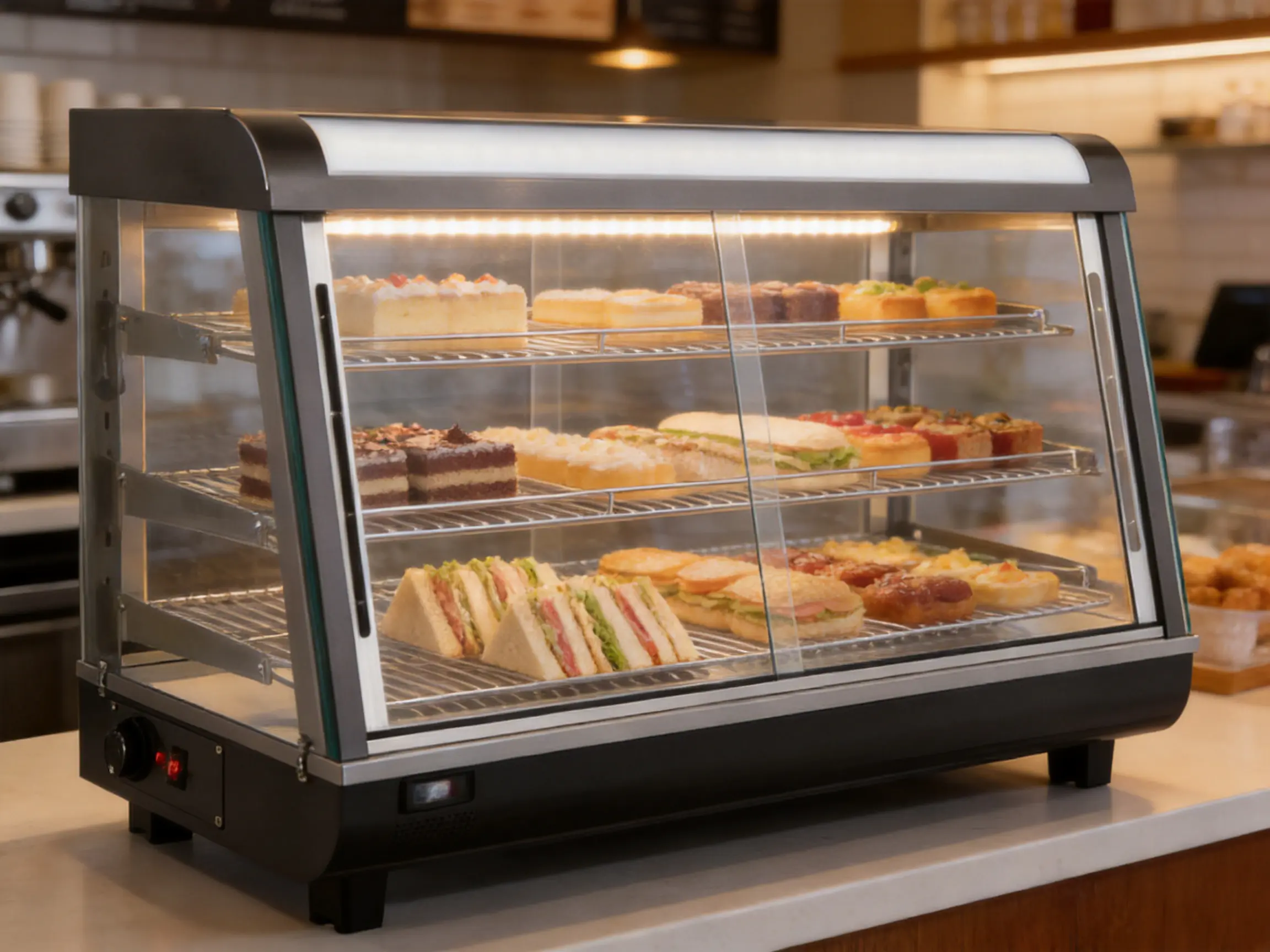
Production Process from Materials to Finished Cabinet
Material Selection and Incoming Inspection
The production process begins with the selection and inspection of materials and components. A glass display warmer may include metal panels, glass sections, seals, insulation materials, electrical controls, lighting components, evaporator parts, drainage components, fasteners, wiring, and packaging materials.
Incoming inspection helps verify that supplied parts match the required specifications. Dimensions, surface quality, electrical ratings, connector condition, and visible defects can be checked before components enter the production line. Early inspection reduces the risk that defective materials will be built into a completed cabinet.
Cabinet Forming and Surface Preparation
Metal cabinet parts must be formed accurately so that the finished structure is square, stable, and compatible with the glass panels and internal components. Proper forming supports clean assembly and reduces stress on doors, seals, and frames. Surface preparation may include cleaning, finishing, coating, or other treatment appropriate to the design.
Commercial equipment must withstand regular handling and cleaning. Smooth, properly finished surfaces are easier to maintain and can help the cabinet retain a professional appearance. The visual quality of the exterior is important because the product is installed in front of customers rather than hidden in a back-of-house area.
Insulation and Thermal Assembly
Thermal performance depends on the coordination of insulation, evaporator placement, temperature sensors, controls, and cabinet construction. Insulation helps reduce unwanted heat transfer between the interior and surrounding environment. Proper installation is necessary to avoid gaps or weak areas that could reduce efficiency and create uneven conditions.
The top and bottom evaporator arrangement is integrated during this stage, along with the water channel under the top evaporator. The drainage path must be positioned correctly so that moisture can be directed away from sensitive areas and managed during operation and defrost.
Electrical and Control Installation
The electrical system includes the thermostat, digital display, LED lighting, heating or thermal control components, wiring, connectors, and safety-related parts. Assembly must follow controlled procedures to reduce the possibility of loose connections, incorrect routing, or damage during later cabinet installation.
Electrical testing can confirm that the digital thermostat responds correctly, the temperature display is legible, the LED light operates, and the input power behavior is within the intended specification. Because the unit is designed for commercial use, proper grounding and local electrical installation are essential.
Glass and Display Assembly
Glass panels are central to the showcase’s purpose. They provide visibility, help protect displayed products, and contribute to the appearance of the cabinet. During assembly, the glass must be positioned securely and aligned with the frame and seals. Careful handling is needed to prevent scratches, chips, or stress points.
The display area should also be arranged to make cleaning and product replenishment practical. Operators need to be able to place, remove, and rotate products without unnecessary difficulty. A well-designed display system balances maximum visibility with enough internal space for safe and orderly merchandising.
Final Testing and Packaging
After assembly, the completed unit can undergo functional checks before packaging. These checks may include startup operation, temperature control, lighting, defrost behavior, drainage, appearance, dimensions, and electrical safety. A final inspection helps confirm that the product is ready for shipment and installation.
The package dimensions of the XCR-136L are 963 × 549 × 675 millimeters, compared with product dimensions of 904 × 486 × 636 millimeters. The additional space allows protective packaging around the cabinet. Packaging must limit movement, protect glass surfaces, and reduce the risk of damage from impact or vibration during domestic and international transport.
Commercial Benefits for Different Businesses
Bakeries and Cake Shops
Bakeries and cake shops depend heavily on presentation. Customers often choose products based on decoration, color, freshness, and visual arrangement. A glass warming showcase can place selected products directly within the customer’s view and create a more attractive sales area.
The internal LED light can emphasize icing, toppings, crust color, and product shape. The 136-liter capacity allows a business to present a selection without using a large floor-standing cabinet. The adjustable temperature range gives operators an opportunity to match the display setting to the product, although delicate cakes, cream-filled products, and temperature-sensitive items must be handled according to their specific storage requirements.
Cafés and Coffee Shops
Cafés often need compact equipment near the ordering counter. The XCR-136L can be used to display pastries, savory snacks, breakfast products, and other items that complement beverages. The countertop format can support quick customer decisions while keeping displayed food visually organized.
Because cafés commonly experience concentrated morning and afternoon demand, a display warmer can help staff maintain a ready-to-serve product range during peak periods. The digital thermostat and automatic defrost function may simplify daily routines, while the internal light can improve the appearance of the counter area.
Restaurants and Buffets
Restaurants may use a warmer showcase for short-term presentation of selected prepared foods or service items. In buffet environments, the cabinet can support a more controlled and visually defined presentation than an unprotected open counter.
Restaurants should establish procedures for loading, temperature checks, replenishment, cleaning, and end-of-day shutdown. The equipment is most effective when integrated into a wider food-service workflow rather than treated as a standalone appliance.
Convenience Stores and Retail Counters
Convenience stores and small food retailers often work with limited floor and counter space. A 904-millimeter-wide cabinet can provide a useful display area without requiring a major store redesign. The glass enclosure and LED lighting may help attract attention to ready-to-eat products placed near the checkout or service area.
Retailers can also benefit from the cabinet’s merchandising flexibility. Products may be arranged by category, price, meal period, or promotional theme. A consistent display standard can make it easier for employees to maintain the cabinet throughout the day.
Hotels, Catering Operations, and Institutional Food Service
Hotels, catering businesses, schools, and institutional kitchens may use display warmers for breakfast service, meeting refreshments, event presentation, or controlled short-term holding. The correct application depends on menu requirements and local regulations.
For catering and event use, the cabinet’s shipping weight and dimensions should be considered carefully. It is not a portable unit in the same sense as a small countertop appliance, but its compact format may make it easier to transport and position than large floor-standing equipment.
Installation and Operating Guidance
Before installation, measure the intended counter or service surface and confirm that it can support the cabinet’s 38-kilogram net weight. Allow sufficient space for ventilation, electrical access, cleaning, and maintenance. The cabinet should stand on a stable, level surface to support proper operation and reduce stress on glass, doors, and internal components.
Confirm that the available electrical supply matches the unit’s requirements. The 1100-watt input rating should be considered when planning circuits, especially where several appliances share the same electrical connection. Installation should be performed according to local codes and by qualified personnel where required.
After positioning, clean the accessible interior and exterior surfaces using suitable food-service cleaning materials. Avoid abrasive products that could damage glass, coated surfaces, seals, or control panels. Allow the cabinet to reach the selected operating condition before loading products.
Do not exceed the available capacity or block internal components. Products should be arranged so that the display remains attractive and the thermal system can operate as intended. Overloading can reduce temperature stability, obstruct drainage, and make replenishment and cleaning more difficult.
Operators should establish a daily checklist covering temperature verification, glass cleanliness, product rotation, drainage condition, lighting, door or panel condition, and unusual sounds or odors. Regular observation can identify issues before they develop into service interruptions.
Cleaning and Maintenance
Glass surfaces should be cleaned regularly because fingerprints, grease, condensation, and food particles can reduce product visibility. The interior should be cleared of crumbs, spills, and residue. Food-contact surfaces must be handled according to the business’s sanitation procedures.
The water channel under the top evaporator should be kept clear. If drainage becomes blocked, condensation may accumulate in unwanted areas. Staff should inspect the channel as part of routine cleaning and report persistent water accumulation to qualified service personnel.
The LED light, digital thermostat, seals, electrical cable, and visible cabinet surfaces should also be checked. Maintenance work involving electrical components or refrigeration-related parts should be completed by trained technicians. Unauthorized modifications may affect safety, performance, warranty terms, or certification status.
Why Manufacturing Experience Matters to Buyers
Commercial buyers usually need more than a single appliance. They may require consistent models for several stores, reliable export packaging, documentation, technical communication, private labeling, replacement components, or coordinated delivery schedules. A manufacturer with long-term experience and dedicated production infrastructure is better positioned to support these broader requirements.
Ningbo XiangChi Electrical Co., Ltd. has more than a decade of experience since its establishment in 2007 and focuses on display cabinets and warming equipment. This specialization can help the company understand the practical requirements of food retailers and professional kitchens, including product visibility, counter integration, thermal control, cleaning, durability, and shipment planning.
The company’s stated 40,000-square-meter factory, R&D team, testing facilities, and international certification experience form a useful foundation for OEM, wholesale, and distribution cooperation. A customer evaluating the XCR-136L can therefore consider not only its capacity and functions but also the manufacturing system available behind the model.
Manufacturing strength is especially important when comparing similar-looking products. Two showcases may have comparable dimensions, but differences in component quality, assembly accuracy, thermal design, drainage, testing, and packaging can influence long-term ownership cost. A lower initial price may not represent better value if the unit has inconsistent temperature control, weak glass protection, difficult maintenance, or limited technical support.
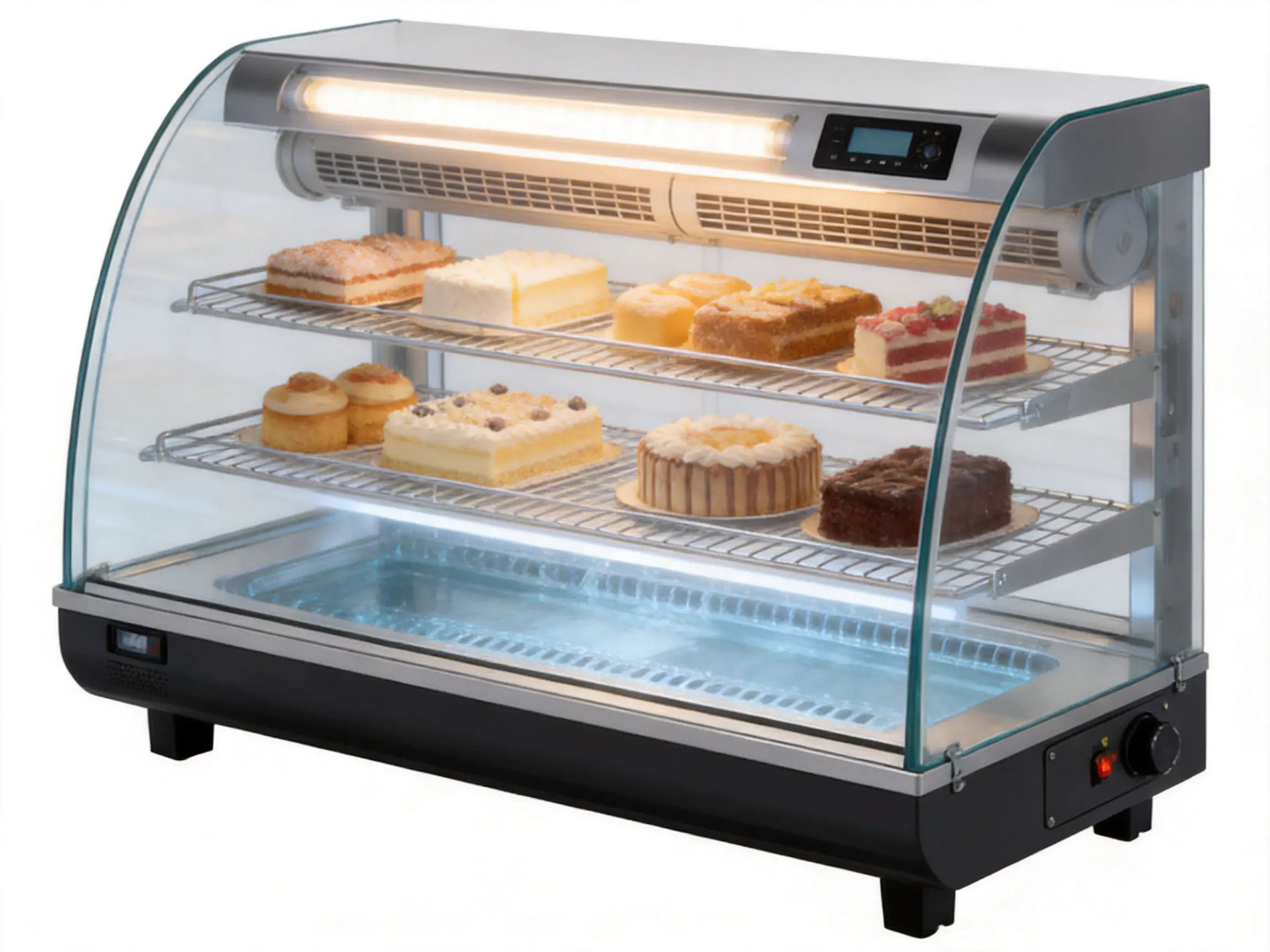
Purchasing Considerations for Distributors and Project Buyers
Distributors should confirm the intended market, electrical requirements, certification documents, carton markings, spare-parts policy, warranty terms, and minimum order quantity before purchase. Container-loading information is also useful. The stated loading quantity is 72 units in a 20-foot general-purpose container and 192 units in a 40-foot high-cube container, subject to final packing configuration and logistics conditions.
Project buyers should evaluate the cabinet as part of the entire store or kitchen layout. Consider the position of the customer queue, access for staff, adjacent heating equipment, ventilation, cleaning space, power outlets, and product replenishment routes. A technically suitable cabinet may still be inconvenient if placed where employees cannot safely load or clean it.
Retail operators should also calculate the expected product turnover. A 136-liter cabinet is suitable for a defined display range, but the best loading plan depends on product dimensions, tray configuration, packaging, and sales volume. A merchandising test before rollout can show how many items fit while preserving attractive spacing and convenient staff access.
For international orders, buyers should request the technical data applicable to their destination. This may include voltage and frequency, plug type, installation instructions, user manuals, certification reports, carton specifications, and spare component information. Clear technical communication before shipment can reduce delays during installation.
Frequently Asked Questions
What is the primary application of the XCR-136L?
The XCR-136L is a commercial food display warmer designed for heated presentation and short-term holding of suitable food products. It can be used in bakeries, cafés, restaurants, convenience stores, hotels, buffets, catering operations, and other food-service environments.
What is the capacity of the cabinet?
The cabinet has a stated capacity of 136 liters. The practical number of products it can hold depends on product size, packaging, tray arrangement, and the spacing needed for attractive presentation and proper operation.
What temperature range does it provide?
The specified temperature range is 30–90°C. Operators should select a temperature appropriate for the food being displayed and should follow applicable food safety procedures and local regulations.
Does the unit have digital temperature control?
Yes. The XCR-136L includes a digital thermostat and display. This allows staff to set and observe the operating temperature more clearly than with a basic mechanical control.
Does the warmer include lighting?
Yes. It includes an internal top LED light. The light improves the visibility and presentation of cakes, pastries, snacks, and other suitable products.
What is the purpose of the water channel?
The water channel is located under the top evaporator. It provides a defined path for managing moisture and condensation associated with operation and defrost. The channel should be inspected and cleaned regularly.
Does the unit require manual defrosting?
The XCR-136L includes automatic defrost. Automatic defrost reduces the need for manual defrost interruptions, but it does not eliminate routine cleaning or inspection of the water channel and internal surfaces.
What is the input power?
The stated input power is 1100 watts. Buyers should confirm the exact electrical configuration for their market before installation and should ensure that the available circuit is suitable.
Can it be used for all types of cakes?
No single display temperature is suitable for every cake. Some products, particularly those containing cream, fresh fruit, chocolate, or temperature-sensitive fillings, may require refrigeration or another controlled environment. The cabinet should be used only for products compatible with its warming range and the operator’s food safety procedures.
How does it compare with an open shelf?
The XCR-136L provides a glass-enclosed display format, controlled temperature, digital monitoring, internal lighting, and automatic defrost. An open shelf may be simpler, but it generally provides less environmental control and less protection from surrounding contact and air movement.
What are the product and package dimensions?
The product dimensions are 904 × 486 × 636 millimeters. The package dimensions are 963 × 549 × 675 millimeters. Buyers should allow additional space for installation access, ventilation, cleaning, and electrical connection.
How much does the unit weigh?
The net weight is 38 kilograms, and the gross shipping weight is 41 kilograms. Installation and movement should be planned with suitable handling procedures.
What certifications are associated with the manufacturer?
The manufacturer states that it has obtained CE, GS, CCC, CB, RoHS, ETL, and other major certifications for its products. Buyers should request the certification documents applicable to the specific model and destination market.
What should be checked before ordering?
Buyers should confirm electrical specifications, certification requirements, product suitability, warranty terms, packaging, delivery schedule, spare parts, manuals, after-sales service, and the final loading quantity. A sample or technical review may be useful for larger projects.
Conclusion
The XCR-136L food display warmer is designed to combine attractive presentation with controlled commercial warming. Its 136-liter capacity, 30–90°C temperature range, 1100-watt input power, digital thermostat, internal top LED lighting, automatic defrost, direct cooling system, and top-and-bottom evaporator arrangement give it a practical feature set for modern food-service environments.
Its advantages over simpler display solutions include better temperature adjustability, clearer monitoring, improved product visibility, more organized moisture management, and a glass showcase format suitable for customer-facing counters. These features can help bakeries, cafés, restaurants, convenience stores, hotels, and catering businesses present suitable products in a more professional and consistent manner.
The product is also supported by the manufacturing capabilities of Ningbo XiangChi Electrical Co., Ltd. The company’s experience since 2007, specialized product focus, approximately 40,000-square-meter factory, professional R&D team, advanced testing facilities, dedicated production lines, and international certification experience provide a strong foundation for commercial equipment production and export cooperation.
For the best results, buyers should evaluate the cabinet according to their product range, local regulations, electrical conditions, counter layout, cleaning procedures, and service requirements. When correctly selected, installed, loaded, and maintained, the XCR-136L can serve as a reliable and visually effective display warmer for businesses that value both food presentation and controlled operation.
References
1. Product specification sheet for the XCR-136L commercial food display warmer.
2. Manufacturer-provided standard feature information for display warming and showcase equipment.
3. General commercial food-service equipment installation and maintenance practices.
4. General principles of food display, temperature monitoring, sanitation, and short-term heated holding.
5. Manufacturer information concerning research and development, testing facilities, factory capabilities, and international certification experience.
Product: Display Equipment Food Display Warmer Cake Showcase

You May Also Like
.jpg?imageView2/2/w/500/h/500/format/jp2/q/100 "Four Sides Glasses Display Cooler")
.jpg?imageView2/2/w/500/h/500/format/jp2/q/100 "White 4-Sided Glass Refrigerated Display Case")
.jpg?imageView2/2/w/500/h/500/format/jp2/q/100 "Refrigerated Display Cake Countertop Four Sides Glasses Display Cooler")
.jpg?imageView2/2/w/500/h/500/format/jp2/q/100 "Four Sides Glasses Display Cooler")

-
- Navigation
- Home
- About Us
- Products
- News
- Contact Us
 East Zone, Guanhaiwei Industrial Park, Cixi City, Ningbo, Zhejiang, China
 +86-574-63668678
 +86-574-63668108
Copyright © Ningbo XiangChi Electrical Co.,Ltd All Rights Reserved.
