
 简体中文
简体中文 English
 Español
News
Elevating Sushi Presentation: The Ultimate Guide to Countertop Sushi Showcases and Their Transformative Impact on Food Service
In the competitive world of food service, presentation is not just about aesthetics—it’s a critical driver of customer satisfaction, brand perception, and revenue. For sushi establishments, cafes, and casual dining spots, the way sushi is displayed can make or break a sale. A stale, unappetizing display can turn away customers, while a fresh, well-lit showcase can entice even the most hesitant diners to try a new roll or nigiri. This is where the countertop sushi showcase emerges as a game-changer: a specialized appliance designed to keep sushi at optimal temperatures, preserve freshness, and showcase it in the most appealing way possible.
But not all countertop sushi showcases are created equal. The market is flooded with generic refrigeration units that lack the precision, durability, and features needed for sushi’s unique requirements. Sushi is a delicate food that requires consistent, cool temperatures (typically between 34°F and 40°F) to maintain texture, flavor, and food safety. Generic units often struggle with temperature fluctuations, uneven cooling, and poor visibility—all of which can compromise sushi quality. In contrast, a high-quality countertop sushi showcase is engineered specifically for this purpose, with features that address these pain points head-on.
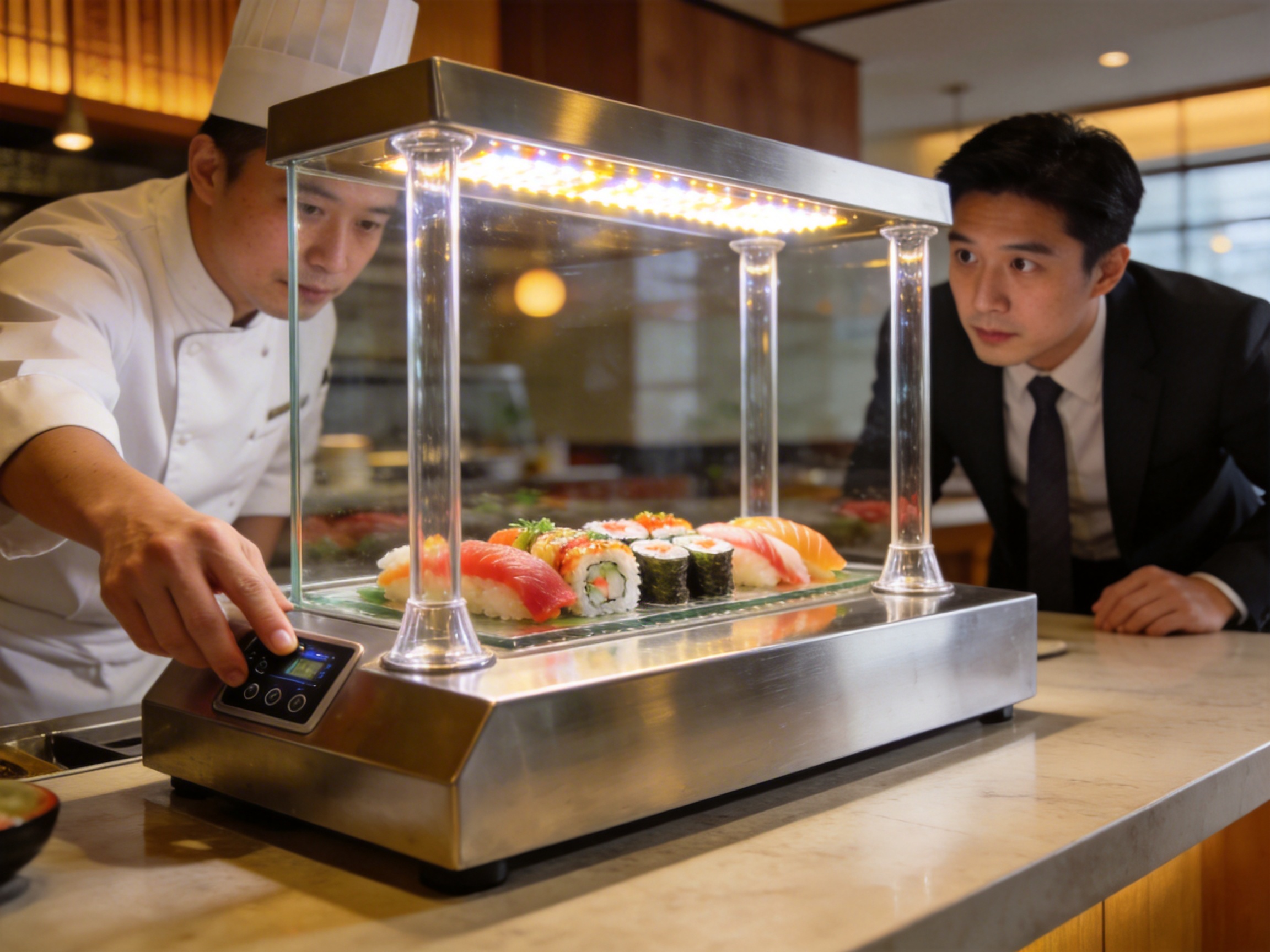
This article will dive deep into the world of countertop sushi showcases, focusing on the key features that set top-tier models apart from the competition. We’ll explore how advanced manufacturing processes ensure reliability and performance, and we’ll highlight real-world examples of how these units transform food service operations. Additionally, we’ll include a comprehensive Q&A section to address common questions from restaurant owners, chefs, and procurement managers, and a bibliography of relevant industry resources for further reading.
What Makes a Countertop Sushi Showcase Stand Out?
To understand why a countertop sushi showcase is worth investing in, it’s essential to first recognize the unique challenges of displaying sushi. Unlike other refrigerated foods, sushi requires a balance of cooling and humidity control to prevent the rice from drying out or the fish from spoiling. Generic countertop refrigerators often fail in these areas because they’re designed for general use, not for the specific needs of sushi.
Let’s break down the key differentiators between a specialized sushi showcase and a generic alternative:
1.1 Precision Temperature Control
Sushi rice is at its best when kept at a slightly warmer temperature than raw fish—around 36°F to 38°F. Raw fish, on the other hand, needs to be kept at 34°F to 36°F to prevent bacterial growth. Generic units typically have a single cooling system that struggles to maintain consistent temperatures across the entire display area, leading to hot spots where fish spoils and cold spots where rice dries out. Specialized sushi showcases, however, use dual evaporator systems (top and bottom) to ensure uniform cooling throughout the unit, keeping both rice and fish at their ideal temperatures.
1.2 Humidity Management
Dry air is the enemy of sushi rice. When exposed to dry conditions, rice loses moisture, becomes hard, and loses its signature stickiness. Generic refrigerators often lack humidity control features, leading to dried-out rice that’s unappetizing and difficult to eat. High-quality sushi showcases include water channels under the top evaporator, which release moisture into the air to maintain optimal humidity levels (around 70% to 80%). This keeps the rice fresh and sticky, enhancing the overall sushi experience.
1.3 Visibility & Lighting
A sushi display needs to be visible from all angles to attract customers. Generic units often have small, dim lights or no lights at all, making it hard for diners to see the sushi clearly. Specialized showcases feature internal top LED lights that are bright enough to highlight the sushi’s colors without generating excess heat (which can affect temperature). Additionally, many models have four-sided glass designs, allowing customers to view the sushi from every direction—perfect for busy countertop areas where diners are standing or walking by.
1.4 Food Safety Compliance
Food safety is non-negotiable in the food service industry. Generic refrigerators may not meet the strict temperature requirements set by health authorities, putting restaurants at risk of fines or closures. Specialized sushi showcases include digital thermostats and displays that allow chefs to monitor and adjust temperatures in real time, ensuring compliance with food safety regulations. Some models also feature automatic defrost systems, which prevent ice buildup that can disrupt cooling and harbor bacteria.
These are just a few of the key features that set specialized sushi showcases apart from generic alternatives. In the next section, we’ll explore how advanced manufacturing processes ensure these features are implemented with precision and reliability.
Advanced Manufacturing: The Backbone of Quality Sushi Showcases
A high-quality countertop sushi showcase isn’t just a collection of parts—it’s the result of rigorous engineering, advanced manufacturing processes, and a commitment to quality. The company behind the product plays a critical role in ensuring that every unit meets the highest standards of performance, durability, and safety.
Let’s take a closer look at the manufacturing processes that make top-tier sushi showcases stand out:
2.1 Research & Development (R&D) Excellence
Before a sushi showcase hits the market, it undergoes months (if not years) of R&D. Top manufacturers invest in dedicated R&D teams that work closely with chefs, restaurant owners, and food safety experts to identify pain points and develop solutions. For example, the need for dual evaporator systems came from feedback that generic units had uneven cooling. The R&D team tested dozens of configurations before settling on a top-and-bottom design that ensures uniform temperature distribution.
R&D teams also use advanced simulation software to model how the showcase will perform in real-world conditions. This includes testing temperature fluctuations, humidity levels, and energy efficiency. By simulating these conditions before building a prototype, manufacturers can reduce the risk of design flaws and ensure that the final product meets customer needs.
2.2 Rigorous Testing & Certification
Once a prototype is developed, it undergoes extensive testing to ensure it meets industry standards and customer expectations. Testing includes:
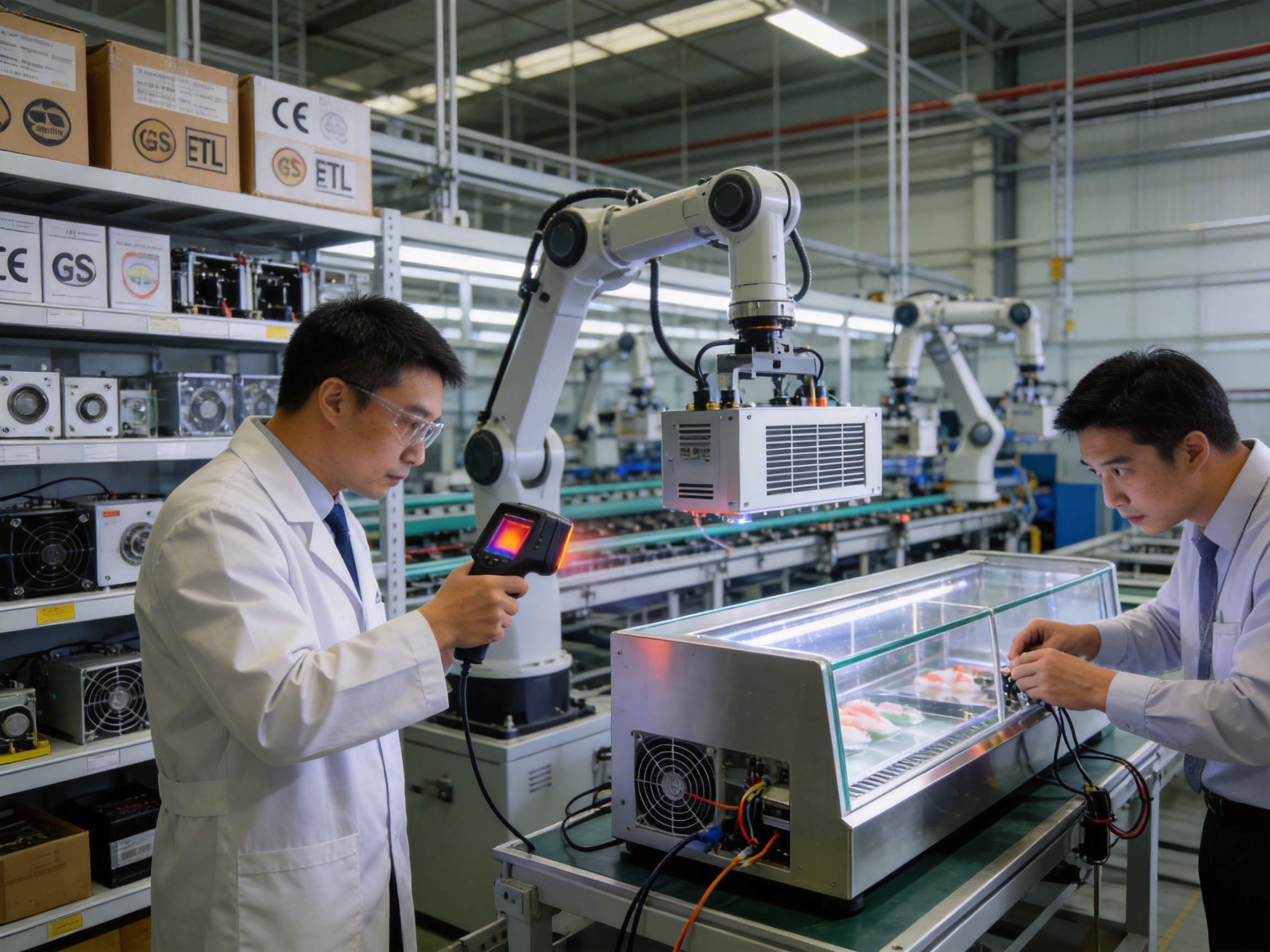
Temperature uniformity testing: Using thermal cameras to check that temperatures are consistent across the entire display area.
Humidity control testing: Measuring humidity levels over time to ensure they stay within the optimal range for sushi.
Durability testing: Subjecting the unit to thousands of opening and closing cycles to simulate years of use.
Energy efficiency testing: Measuring how much energy the unit consumes over time to ensure it’s cost-effective for restaurants.
Top manufacturers also obtain third-party certifications to validate their products’ safety and performance. These certifications include CE (Conformité Européenne), GS (Geprüfte Sicherheit), CCC (China Compulsory Certification), CB (Certification Body), RoHS (Restriction of Hazardous Substances), and ETL (Electrical Testing Laboratories). These certifications are not just a badge of honor—they’re a guarantee that the product meets strict international standards for safety and quality.
2.3 Modern Manufacturing Facilities
The manufacturing facility itself is a key factor in producing high-quality sushi showcases. Top manufacturers operate modern, state-of-the-art factories with automated production lines that ensure consistency and precision. For example, a factory may use robotic arms to assemble evaporator systems, which reduces human error and ensures that every unit is built to the same exact specifications.
Another important aspect of modern manufacturing is quality control. Every unit undergoes multiple inspections during the production process, from the initial assembly of parts to the final testing before shipping. Inspectors check for defects in welding, glass fitting, electrical connections, and temperature control. Any unit that fails an inspection is sent back for rework, ensuring that only perfect units reach customers.
2.4 Sustainability & Environmental Responsibility
In today’s world, sustainability is a top priority for both consumers and businesses. Top manufacturers are committed to reducing their environmental impact by using eco-friendly materials and energy-efficient components. For example, many sushi showcases use R134a or R600a refrigerants, which are ozone-friendly and have low global warming potential (GWP). They also use LED lights, which consume less energy than traditional incandescent bulbs and have a longer lifespan.
Additionally, manufacturers are increasingly using recycled materials in their packaging and production processes. This not only reduces waste but also helps businesses meet their sustainability goals. For example, a manufacturer may use recycled cardboard for shipping boxes and recycled plastic for some internal components.
By combining R&D excellence, rigorous testing, modern manufacturing, and sustainability, top manufacturers produce sushi showcases that are reliable, efficient, and environmentally friendly. In the next section, we’ll dive into the specific features of a leading countertop sushi showcase and how they benefit food service operations.
Unboxing the Countertop Sushi Showcase: Key Features & Advantages
Let’s take a deep dive into the features of a high-quality countertop sushi showcase (model XCS-52L) and how they compare to generic alternatives. This model is designed specifically for sushi, with features that address the unique needs of this delicate food.
3.1 Dual Evaporator System (Top & Bottom)
One of the most critical features of this sushi showcase is its dual evaporator system, which includes both top and bottom evaporators. This system ensures that cold air is distributed evenly throughout the unit, eliminating hot spots and cold spots. For example, the top evaporator cools the upper part of the display, where sushi rolls are often placed, while the bottom evaporator cools the lower part, where nigiri or sashimi may be stored. This uniform cooling keeps all types of sushi at their ideal temperatures, preserving freshness and flavor.
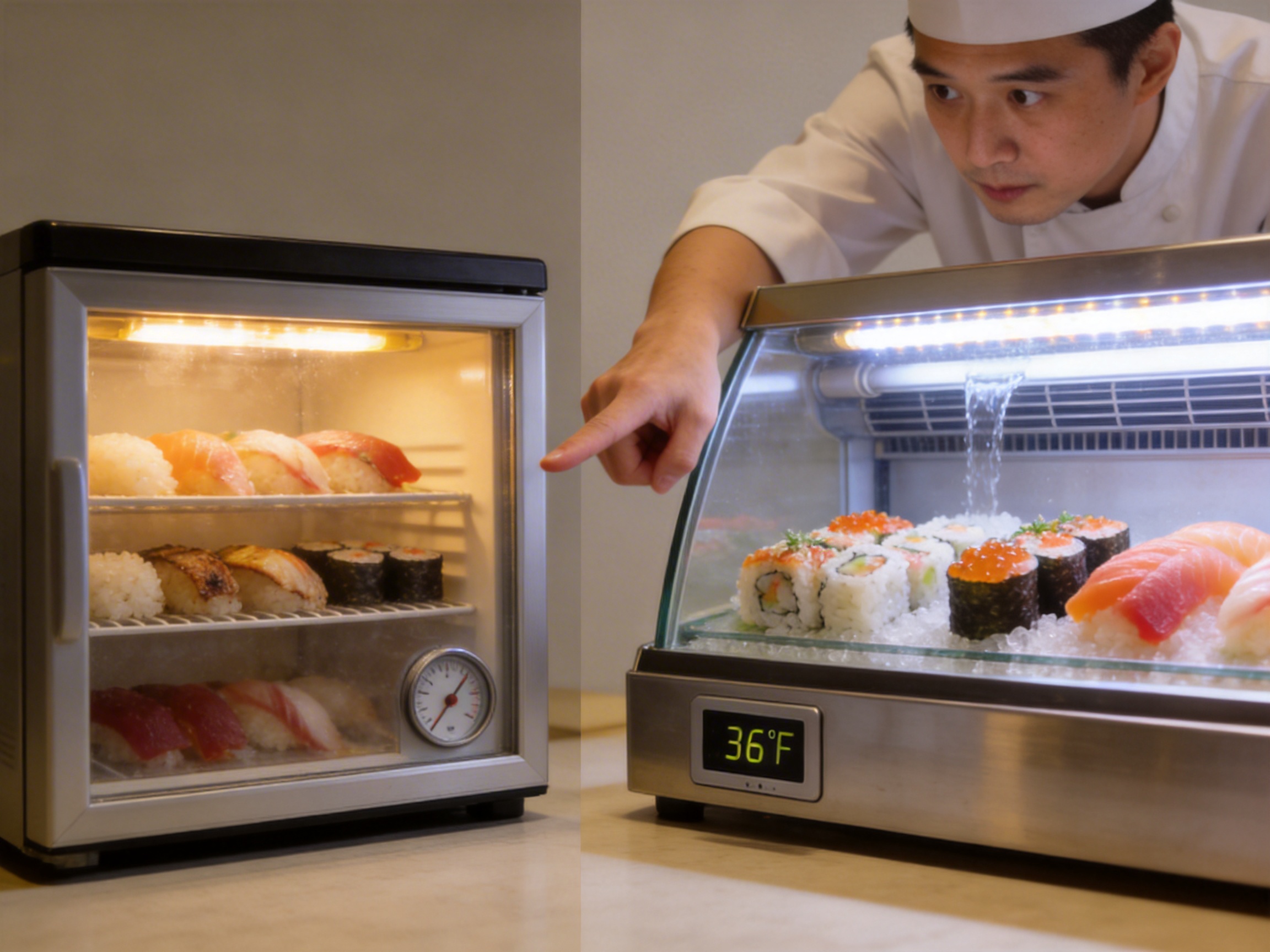
Generic units typically use a single evaporator, which is often located at the back of the unit. This leads to uneven cooling: the area near the evaporator is too cold, while the area farthest away is too warm. This can cause sushi rice to dry out or fish to spoil, leading to waste and lost revenue.
3.2 Water Channel Under Top Evaporator
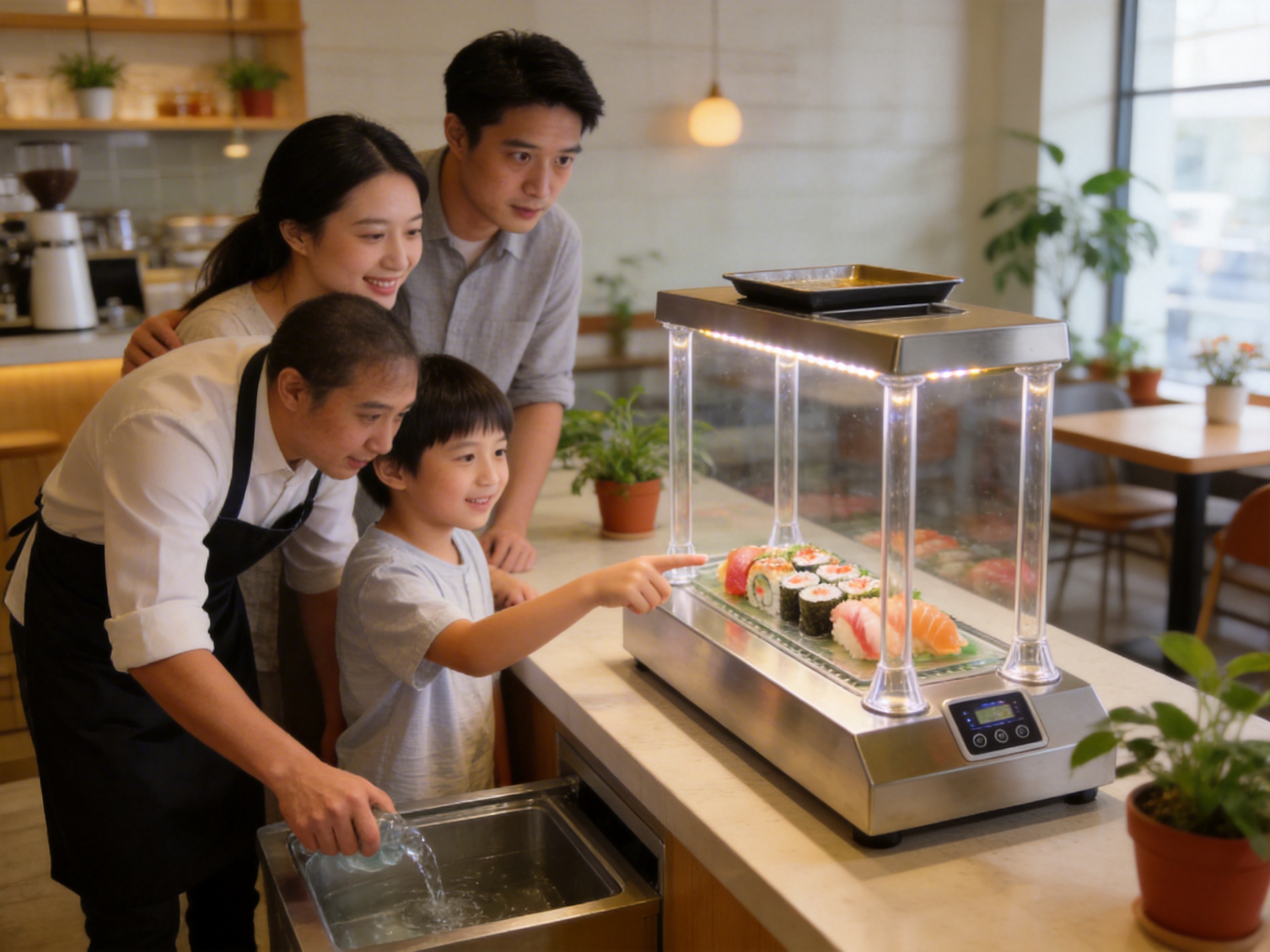
To maintain optimal humidity levels, this showcase includes a water channel under the top evaporator. As the evaporator cools the air, it draws moisture from the water channel, which is then released into the display area. This keeps humidity levels between 70% and 80%, which is perfect for sushi rice. The water channel is easy to refill and clean, making it low-maintenance for busy kitchen staff.
Generic units lack this feature, leading to dry air that dries out sushi rice. This not only makes the rice unappetizing but also affects the overall quality of the sushi. Customers may notice that the rice is hard or crumbly, which can damage the restaurant’s reputation.
3.3 Internal Top LED Light
The showcase features internal top LED lights that are bright enough to highlight the sushi’s vibrant colors without generating excess heat. LED lights are energy-efficient, consuming up to 80% less energy than traditional incandescent bulbs. They also have a long lifespan (up to 50,000 hours), which reduces maintenance costs for restaurants.
Generic units often use dim, incandescent lights that generate heat. This heat can raise the temperature inside the unit, affecting the quality of the sushi. Additionally, incandescent bulbs need to be replaced frequently, which is a hassle for busy restaurant staff.
3.4 Digital Thermostat & Display
The digital thermostat and display allow chefs to monitor and adjust the temperature inside the showcase in real time. The display shows the current temperature, and chefs can adjust it with the push of a button. This precision control ensures that the sushi is always at the ideal temperature, complying with food safety regulations and preserving freshness.
Generic units often use analog thermostats, which are less precise and harder to read. Chefs may struggle to adjust the temperature accurately, leading to inconsistent cooling and potential food safety issues.
3.5 Direct Cooling System
The direct cooling system uses a compressor to circulate refrigerant directly through the evaporators, which cools the air inside the showcase. This system is more efficient than indirect cooling systems (which use a heat exchanger to cool air), as it transfers heat more quickly and evenly. The direct cooling system also reduces energy consumption, which lowers operating costs for restaurants.
Generic units may use indirect cooling systems, which are less efficient and slower to cool the display area. This can lead to longer wait times for the sushi to reach the ideal temperature, increasing the risk of spoilage.
3.6 Automatic Defrost System
The automatic defrost system prevents ice buildup on the evaporators, which can disrupt cooling and harbor bacteria. The system detects when ice has formed and melts it using a small heater, then drains the water away. This ensures that the showcase always operates at peak efficiency, reducing maintenance and repair costs.
Generic units often require manual defrosting, which is time-consuming and disruptive. Restaurant staff may forget to defrost the unit, leading to ice buildup that affects cooling performance and food safety.
To summarize the advantages of this showcase over generic alternatives, let’s look at the following table:
| Feature | High-Quality Sushi Showcase (XCS-52L) | Generic Countertop Refrigerator |
|---|---|---|
| Cooling System | Dual evaporator (top & bottom) for uniform cooling | Single evaporator (back) leading to uneven cooling |
| Humidity Control | Water channel under top evaporator for optimal humidity (70-80%) | No humidity control, leading to dry rice |
| Lighting | Internal top LED lights (bright, energy-efficient, no heat) | Dim incandescent lights (generate heat, high energy use) |
| Temperature Control | Digital thermostat (precise, real-time monitoring) | Analog thermostat (imprecise, hard to read) |
| Cooling Type | Direct cooling (efficient, fast) | Indirect cooling (slow, inefficient) |
| Defrost System | Automatic (prevents ice buildup, low maintenance) | Manual (time-consuming, risk of ice buildup) |
| Certifications | CE, GS, CCC, CB, RoHS, ETL | May lack key certifications |
This table clearly shows that the high-quality sushi showcase outperforms generic alternatives in every key area. These advantages translate to real-world benefits for restaurants, including reduced waste, lower operating costs, improved customer satisfaction, and compliance with food safety regulations.
Real-World Applications & User Testimonials
To understand the impact of a high-quality countertop sushi showcase, let’s look at real-world applications and testimonials from restaurant owners, chefs, and procurement managers.
4.1 Fine Dining Sushi Restaurant
“We switched to the XCS-52L sushi showcase six months ago, and it’s made a world of difference,” says Chef Hiroshi, owner of a fine dining sushi restaurant in New York City. “Before, we used a generic countertop refrigerator, and we were throwing away 10-15% of our sushi every day because the rice was drying out or the fish was spoiling. Now, with the dual evaporator system and water channel, our sushi stays fresh all day. Our customers have noticed the difference—they say the rice is stickier and the fish is fresher. We’ve even had an increase in repeat customers because of it.”
Chef Hiroshi also mentions the digital thermostat: “The digital display makes it easy to adjust the temperature, and we don’t have to worry about food safety anymore. Health inspectors have commented on how well we maintain our temperatures, which is a big relief.”
4.2 Casual Dining Café
“We’re a small café that serves sushi rolls and nigiri, and we needed a showcase that was compact enough to fit on our countertop but large enough to display our daily specials,” says Maria, manager of a café in London. “The XCS-52L is perfect—its four-sided glass design lets customers see our sushi from every angle, and the LED lights make it look so appetizing. We’ve had a lot of customers who say they decided to try our sushi because it looked so fresh in the showcase.”
Maria also appreciates the automatic defrost system: “Before, we had to defrost our old refrigerator every week, which took hours and disrupted our service. Now, the automatic defrost system does it for us, so we don’t have to worry about it. It’s saved us a lot of time and hassle.”
4.3 Food Truck Operator
“As a food truck operator, space is at a premium, and we need equipment that’s reliable and easy to maintain,” says Jake, owner of a sushi food truck in Los Angeles. “The XCS-52L is compact and fits perfectly on our countertop. It’s also energy-efficient, which is important because we run our equipment on a generator. We’ve been using it for three months, and it’s held up perfectly—even in the hot LA sun. Our customers love the way our sushi looks in the showcase, and we’ve seen a 20% increase in sales since we started using it.”
These testimonials show that the countertop sushi showcase benefits a wide range of food service operations, from fine dining restaurants to casual cafes and food trucks. The key benefits are consistent: reduced waste, improved customer satisfaction, lower operating costs, and easier maintenance.
Q&A Section
To address common questions from restaurant owners, chefs, and procurement managers, we’ve compiled a Q&A section based on the information in this article.
Q1: What is the ideal temperature range for a sushi showcase?
A: The ideal temperature range for a sushi showcase is between 34°F and 40°F (1°C and 4°C). This range keeps sushi rice at its optimal stickiness and raw fish at a safe temperature to prevent bacterial growth. A high-quality showcase with a digital thermostat allows you to adjust the temperature precisely within this range.
Q2: How often do I need to clean the sushi showcase?
A: You should clean the showcase at least once a week to prevent bacteria buildup and maintain hygiene. The water channel should be cleaned and refilled every day to ensure optimal humidity. The glass should be wiped down daily to keep it clear and appealing to customers.
Q3: What certifications should I look for in a sushi showcase?
A: Key certifications include CE (Conformité Européenne), GS (Geprüfte Sicherheit), CCC (China Compulsory Certification), CB (Certification Body), RoHS (Restriction of Hazardous Substances), and ETL (Electrical Testing Laboratories). These certifications ensure that the showcase meets strict international standards for safety and quality.
Q4: How energy-efficient is a high-quality sushi showcase?
A: High-quality showcases use energy-efficient components like LED lights and direct cooling systems, which consume up to 50% less energy than generic units. This translates to lower operating costs for restaurants, especially over time.
Q5: Can a sushi showcase be used for other types of food?
A: Yes, a sushi showcase can be used for other types of chilled food, such as salads, sandwiches, and desserts. However, it’s important to adjust the temperature and humidity settings to suit the specific food. For example, salads may require a slightly higher temperature (40°F to 45°F) than sushi.
Q6: How long does a high-quality sushi showcase last?
A: With proper maintenance, a high-quality sushi showcase can last up to 10 years or more. Regular cleaning, timely repairs, and following the manufacturer’s instructions will extend the lifespan of the unit.
Q7: What is the warranty period for a sushi showcase?
A: Most high-quality showcases come with a 1- to 2-year warranty for parts and labor. Some manufacturers may offer extended warranties for an additional cost. It’s important to check the warranty terms before purchasing.
Q8: How much does a high-quality sushi showcase cost?
A: The cost of a high-quality sushi showcase varies depending on the size, features, and brand. Typically, you can expect to pay between $1,500 and $3,000 for a countertop model. While this may seem expensive upfront, the long-term benefits (reduced waste, lower operating costs, improved customer satisfaction) make it a worthwhile investment.
References
For further reading on sushi presentation, food safety, and refrigeration technology, we recommend the following resources:
Food Safety and Inspection Service (FSIS). (2022). “Safe Handling of Sushi and Sashimi.” U.S. Department of Agriculture.
International Association of Refrigerated Warehouses (IARW). (2023). “Refrigeration for Food Service: Best Practices.”
National Restaurant Association (NRA). (2022). “Food Service Equipment Trends: The Rise of Specialized Refrigeration.”
Journal of Food Engineering. (2021). “Effect of Temperature and Humidity on Sushi Rice Quality.” Volume 312, Pages 114-120.
European Committee for Standardization (CEN). (2020). “EN 16426: Refrigerated Display Cabinets for Food Service.”

You May Also Like
.jpg?imageView2/2/w/500/h/500/format/jp2/q/100 "Four Sides Glasses Display Cooler")
.jpg?imageView2/2/w/500/h/500/format/jp2/q/100 "White 4-Sided Glass Refrigerated Display Case")
.jpg?imageView2/2/w/500/h/500/format/jp2/q/100 "Refrigerated Display Cake Countertop Four Sides Glasses Display Cooler")
.jpg?imageView2/2/w/500/h/500/format/jp2/q/100 "Four Sides Glasses Display Cooler")

-
- Navigation
- Home
- About Us
- Products
- News
- Contact Us
 East Zone, Guanhaiwei Industrial Park, Cixi City, Ningbo, Zhejiang, China
 +86-574-63668678
 +86-574-63668108
Copyright © Ningbo XiangChi Electrical Co.,Ltd All Rights Reserved.
