
 简体中文
 English
 Español

News
Commercial Front Glass Door Cake Showcase Cabinet for Professional Food Display
In commercial food service, presentation and product protection must work together. Cakes, pastries, desserts, prepared foods, and other temperature-sensitive products need to remain attractive while being held at a controlled serving temperature. A display cabinet must therefore do more than provide a transparent enclosure. It must offer dependable heating, clear visibility, practical access, easy cleaning, efficient use of counter space, and a professional appearance suitable for demanding retail environments.
The XCR-76L front glass door cake showcase cabinet is designed for this purpose. With a 76-liter capacity, a compact footprint, a temperature range of 30°C to 90°C, an 800-watt input rating, digital temperature control, internal LED lighting, automatic defrost, and a direct cooling or heating circulation system, it provides a practical solution for cafés, bakeries, restaurants, hotels, convenience stores, catering operations, and commercial food counters.
Although often described as a cake showcase or cake keep-fresh cabinet, this model is categorized as a display warmer. Its operating range is intended for products that require controlled warmth rather than refrigerated storage. This makes it especially suitable for warm pastries, baked snacks, cooked foods, heated desserts, and other prepared products that benefit from an attractive, ready-to-serve presentation.
The cabinet is manufactured by Ningbo XiangChi Electrical Co., Ltd., a Chinese commercial refrigeration and food display equipment manufacturer with experience in vertical display cabinets, cake cabinets, warming cabinets, and related products. The company’s manufacturing capabilities, engineering resources, testing facilities, certifications, and export experience support the cabinet’s suitability for professional applications in international markets.

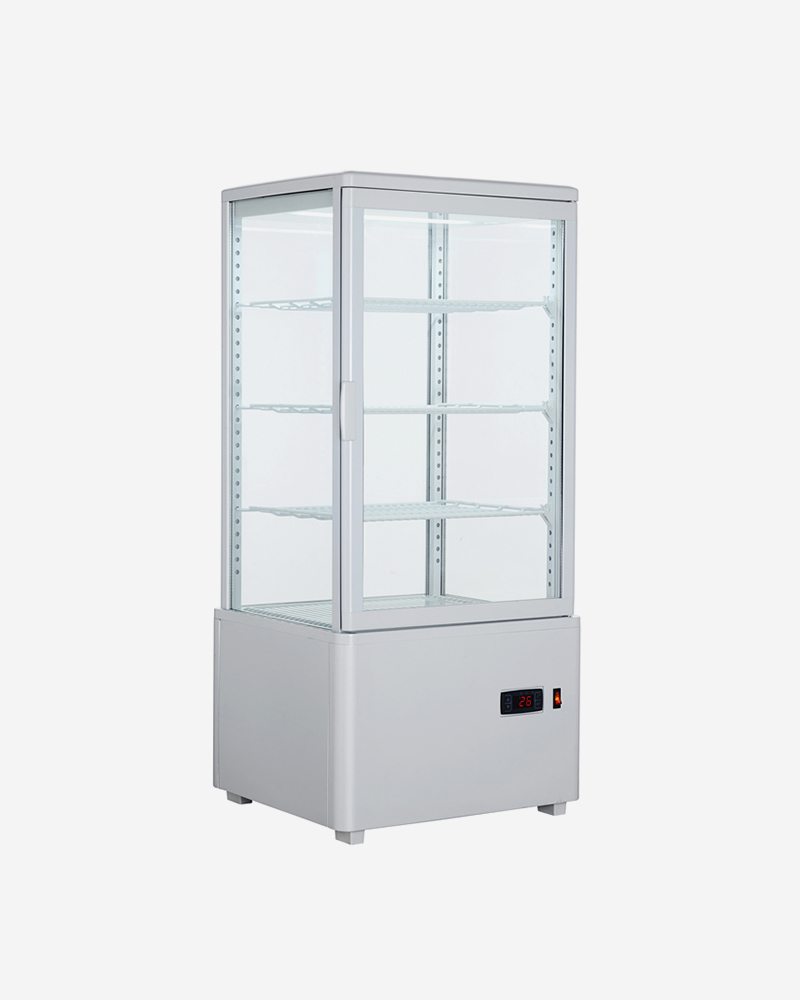
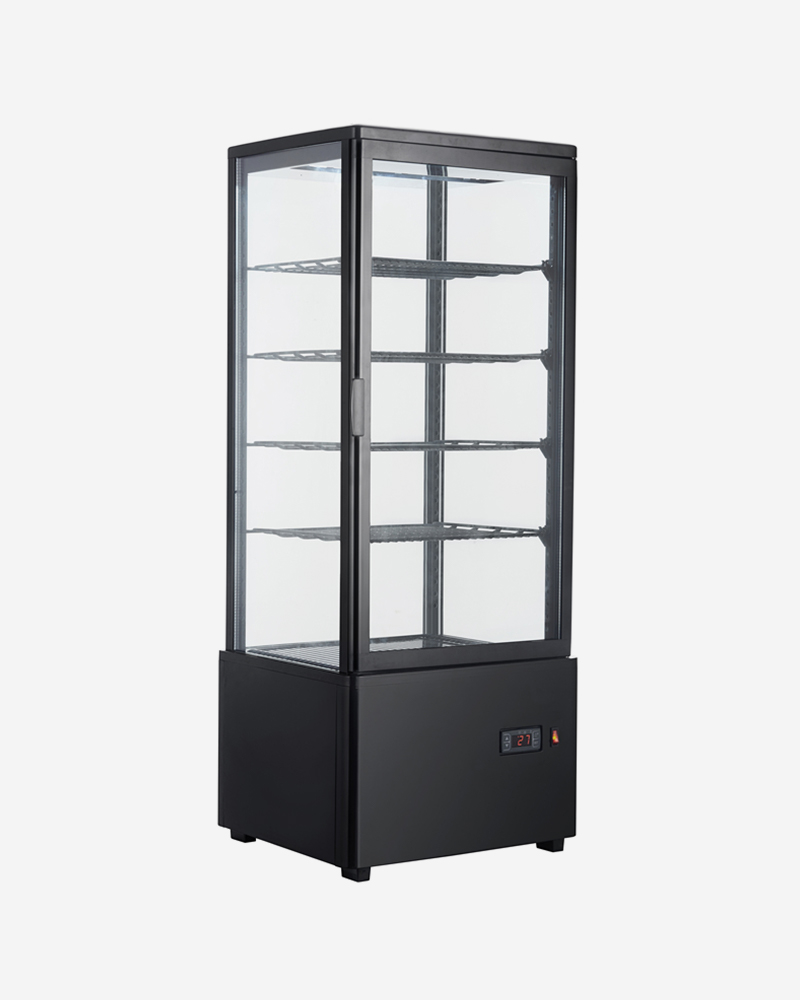
Front glass door Cake Showcase Cabinet Cake Keep Fresh Cabinet
Designed for Attractive and Controlled Food Presentation
A successful food display cabinet must satisfy two requirements at the same time. First, it must make the food look appealing to customers. Second, it must help operators maintain an appropriate environment inside the cabinet. The XCR-76L addresses both requirements through its front glass door, integrated lighting, adjustable digital temperature control, and compact commercial design.
The front glass door gives customers a direct view of the displayed food without requiring the cabinet to remain open. This reduces unnecessary exposure to the surrounding environment and helps create a more orderly presentation. Staff can open the door when loading or serving products, then close it again to support temperature stability and protect the contents from dust, accidental contact, and busy counter traffic.
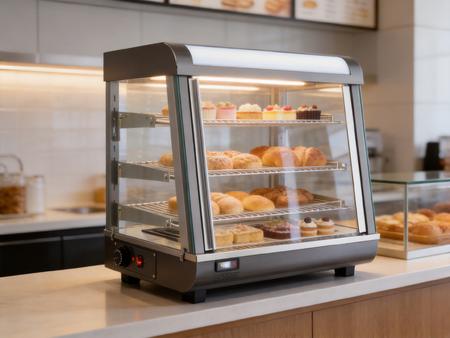
Clear visibility is especially important for cakes, pastries, sandwiches, hot snacks, and prepared foods. Customers often make purchasing decisions based on appearance. A well-lit cabinet can emphasize texture, color, layers, glazing, toppings, and decoration. The internal top LED light included as a standard feature helps illuminate the display area while using a modern, low-maintenance lighting technology.
The cabinet’s vertical form makes efficient use of counter space. Rather than spreading products across a large horizontal area, operators can use the internal volume to create a compact multi-level presentation. This is useful in cafés and bakeries where every section of the service counter must support sales, preparation, or customer movement.
With a 76-liter capacity, the cabinet provides enough space for a focused product selection while remaining easier to position than a large floor-standing display unit. It can be used as a dedicated showcase for one category of food or as a supplementary warmer placed beside a cashier station, serving counter, buffet line, or self-service area.
Temperature Range for Warm Display Applications
The XCR-76L has a listed temperature range of 30°C to 90°C. This range clearly positions the cabinet as a warming and hot-display appliance rather than a low-temperature refrigerator. The operator can select a suitable setting according to the food type, serving method, and local food-handling procedures.
A lower setting may be useful for gently holding products that should remain warm without excessive drying. A higher setting may be selected for products that require a hotter presentation environment. Because different foods have different moisture, texture, and safety requirements, operators should always establish the correct operating setting through their own food safety procedures and product testing.
The digital thermostat and display make temperature monitoring more straightforward than relying on a basic mechanical dial. A digital display gives staff a visible reference point and allows them to identify changes more quickly during daily operation. This supports repeatable routines when the cabinet is used by different employees or across multiple service periods.
The presence of a defined control range is also valuable for businesses offering several types of products. A bakery may use the cabinet for warm pastries during the morning, prepared snacks during lunch, and heated desserts later in the day. A restaurant may use it for bread, side dishes, or selected ready-to-serve items. The cabinet’s adjustable range provides operational flexibility while retaining a clear focus on warm display service.
It is important to distinguish warm holding from cooking. The cabinet is intended to display and maintain products that have already been prepared. It should not be treated as a replacement for an oven, a cooking appliance, or a certified long-term food storage system. Operators should follow product-specific holding times, loading procedures, and sanitation requirements.
Front Glass Door and Customer-Facing Accessibility
The front glass door is one of the cabinet’s most important commercial features. It creates a transparent barrier between the food and the outside environment while allowing customers to see the products clearly. This is particularly helpful in high-traffic locations where open food exposure could create hygiene, handling, or presentation concerns.
A closed glass door also helps separate the display environment from drafts and sudden changes in surrounding air conditions. In a busy shop, doors may open frequently and customers may move close to the counter. A dedicated door can help the operator maintain a more consistent internal environment than an open display format.
For staff, the door provides direct access for loading, rearranging, cleaning, and removing products. A front-access design is practical when the unit is positioned on a service counter with customer visibility on one side. It also supports a clean merchandising arrangement because products can be aligned and refreshed without moving the entire cabinet.
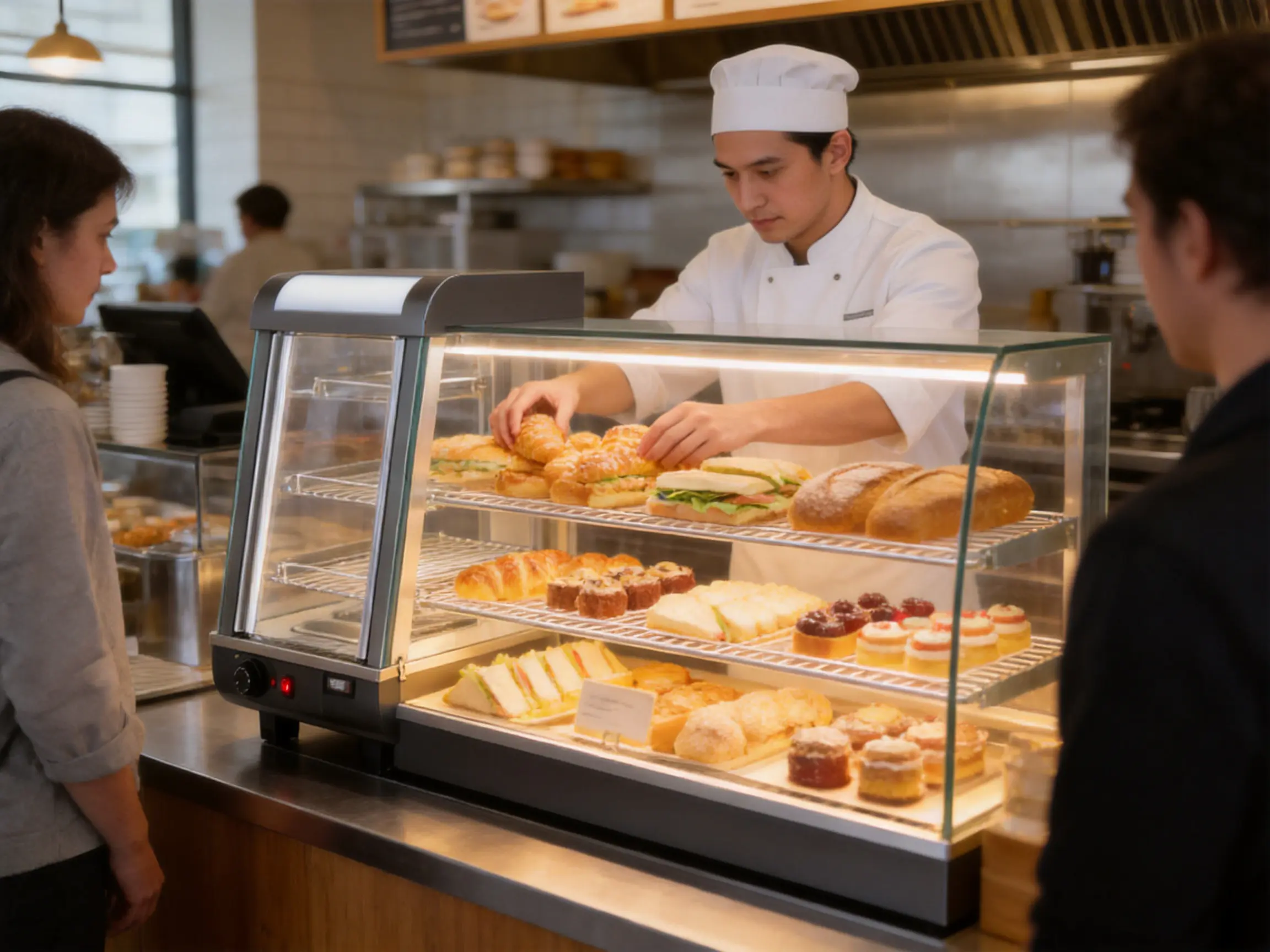
The transparent front creates opportunities for more effective product organization. Operators can position larger signature products at eye level, place smaller items on other shelves or levels, and use the internal LED light to guide attention toward premium items. This type of visual merchandising can help increase impulse purchases and improve the perceived value of displayed products.
Compared with an opaque warming unit, a glass-door display cabinet offers a direct sales function. The equipment does not merely preserve warmth; it becomes part of the retail environment. Its appearance, lighting, cleanliness, and product arrangement all contribute to the customer experience.
Internal LED Lighting for Improved Merchandising
The XCR-76L includes an internal top LED light as a standard feature. Lighting positioned inside the upper section of a display cabinet can illuminate the products from above and reduce dark areas that may otherwise make food appear less attractive.
LED lighting is widely used in commercial display equipment because it generally offers long service life, low heat generation compared with older lighting technologies, and efficient operation. In a food display setting, these characteristics are helpful because the lighting should support visibility without becoming an unnecessary source of heat inside the cabinet.
Good lighting can improve the appearance of cake decoration, pastry layers, bread crust, toppings, fillings, and surface color. It can also make the cabinet appear cleaner and more professional. For businesses that rely on visual sales, the internal lamp is not merely an accessory; it is part of the product presentation system.
Operators can further enhance the effect of the LED light through thoughtful loading. Products should be arranged with sufficient spacing so that light can reach visible surfaces. Tall products should not block all smaller items behind them. A balanced arrangement helps customers understand the available selection quickly.
The lighting system also assists employees. A well-lit interior makes it easier to check stock, identify empty spaces, inspect product condition, and clean the cabinet at the end of a service period. This can reduce the chance that products remain hidden or that small spills go unnoticed.
Direct System Design and Automatic Defrost
The product information lists a direct cooling system and automatic defrost among the standard features. In the context of this display warmer, these features form part of the cabinet’s internal temperature-management and moisture-control arrangement. The supplied specifications also refer to both top and bottom evaporator components and a water channel beneath the top evaporator.
A direct system can provide a straightforward internal structure for transferring thermal energy within the cabinet. Simpler system architecture may assist service technicians during inspection and maintenance because the principal operating components are organized around the cabinet’s main thermal zones.
The top and bottom evaporator arrangement is intended to support temperature distribution through the display area. A multi-zone thermal layout can help reduce the difference between upper and lower sections, although actual performance will depend on ambient conditions, loading density, door-opening frequency, product type, and operating settings.
The water channel under the top evaporator is a practical design detail. Moisture management is important in any cabinet that experiences changes in temperature. A defined drainage or collection path can help direct condensed water away from visible product areas and reduce the likelihood of uncontrolled water accumulation.
Automatic defrost reduces the need for staff to perform frequent manual defrosting. In commercial food service, labor time is valuable, and equipment that can manage its defrost cycle automatically is easier to incorporate into a regular operating schedule. Automatic defrost can also help maintain the thermal surfaces in a more usable condition over time.
Operators should still inspect the cabinet regularly. Automatic defrost does not eliminate the need for cleaning, drainage checks, door inspection, or general preventive maintenance. Any water channel, drain path, seal, and internal surface should be kept clear and hygienic in accordance with the business’s sanitation program.
Compact Dimensions for Countertop Installation
The listed product dimensions are 338 by 486 by 636 millimeters. This compact size is one of the cabinet’s strongest practical advantages. It allows the unit to be installed on many commercial counters without requiring the floor space associated with a large upright cabinet.
Countertop equipment is valuable in locations where floor space is limited. Small cafés, bakeries, kiosks, hotel breakfast areas, convenience stores, and restaurant service counters often need to add display capacity without redesigning the entire premises. A compact cabinet can be placed near the point of sale or beside other food preparation equipment, subject to appropriate clearance and ventilation requirements.
The vertical proportion also helps preserve counter width. The cabinet can occupy a relatively narrow area while presenting products at a visible height. This is useful when multiple pieces of equipment must share the same service line.
Before installation, the operator should confirm that the counter can safely support the cabinet’s net weight of 19 kilograms and that adequate clearance is available around the equipment. The cabinet should be positioned on a stable, level surface and connected to a suitable electrical supply by qualified personnel where required by local regulations.
The package dimensions are listed as 397 by 549 by 675 millimeters, with a gross weight of 22 kilograms. These shipping specifications are useful for distributors, importers, retailers, warehouse managers, and installers planning transport and storage. The difference between net and gross weight accounts for packaging materials and protects the equipment during handling.
Capacity and Practical Product Arrangement
With a 76-liter internal capacity, the XCR-76L is sized for focused commercial display rather than bulk storage. This is an advantage for businesses that want to present a curated selection of products close to customers. A smaller capacity can encourage more frequent replenishment, helping the display remain fresh and visually appealing.
For a cake or dessert counter, the cabinet may be used to present individual portions, small cakes, pastries, baked desserts, or packaged specialty items. For a restaurant, it may hold warm snacks, bread, selected prepared dishes, or items intended for rapid service. For a catering operation, it can provide an organized display during a reception, buffet, or self-service event.
Product arrangement should take into account the desired air circulation and heat distribution. The cabinet should not be overloaded or packed so tightly that warm air cannot move around the products. Staff should leave suitable space between items and avoid placing food directly against internal thermal components unless the operating instructions specifically permit it.
Clear labeling can further improve the commercial value of the display. Product names, prices, allergens, serving information, and promotional messages can be positioned outside the cabinet without blocking the glass. A well-organized display reduces customer hesitation and helps staff answer questions more efficiently.
The 76-liter format is also suitable for businesses that want several specialized cabinets rather than one large, mixed-use unit. One cabinet can be assigned to pastries, another to savory snacks, and another to premium desserts. This approach may improve product separation and create a more organized service layout.
Advantages Compared with Basic Warming Equipment
Compared with an open tray or uncovered warming shelf, the XCR-76L provides a more controlled and attractive display environment. The front glass door helps protect the products from unnecessary contact and airborne contamination, while the lighting and vertical format make the food easier to see.
Compared with a simple heated box, the cabinet offers stronger merchandising value. Customers can view the products without staff needing to open the unit repeatedly. The digital thermostat gives a clearer operating reference than a basic analog control, and the internal LED light improves visibility.
Compared with a large floor-standing display cabinet, the XCR-76L requires less installation space and may be easier to reposition. Its compact countertop format is particularly useful for small businesses, temporary food service areas, seasonal displays, and locations with limited floor area.
Compared with an ordinary household appliance, the cabinet is designed around commercial presentation requirements. It combines a visible front door, internal display lighting, a defined warming range, a commercial capacity, automatic defrost, and shipping specifications suitable for wholesale distribution.
These advantages do not mean that one cabinet is appropriate for every application. A refrigerated cake showcase is necessary for products that must remain chilled, while the XCR-76L is intended for warm holding and display. The key advantage is the alignment between its features and businesses that need a compact, front-facing heated showcase.
Suitable Commercial Applications
Bakeries and Pastry Shops
Bakeries can use the cabinet to display warm pastries, bread products, filled rolls, savory baked goods, and selected desserts. The illuminated glass front helps customers compare products, while the adjustable temperature range allows the business to establish suitable holding conditions for different items.
Cafés and Coffee Shops
Cafés often need a compact food display positioned near the ordering counter. The XCR-76L can support the sale of warm breakfast items, pastries, snacks, and desserts without occupying the floor area required by a large cabinet. Its appearance can complement a modern service counter and encourage add-on purchases with coffee or other beverages.
Restaurants and Quick-Service Operations
Restaurants may use the cabinet for ready-to-serve products during busy periods. A visible warm display can reduce service time because staff can identify and retrieve prepared items quickly. It may also be useful for buffet-style service, subject to the restaurant’s food safety procedures and applicable local requirements.
Hotels and Catering Businesses
Hotels, event venues, and caterers can use a countertop warmer for breakfast service, conferences, receptions, and temporary food stations. The compact design makes transportation and positioning more manageable than large fixed equipment, while the front glass allows guests to see the available selection.
Convenience Stores and Retail Counters
Convenience stores can position the cabinet near the checkout area to present warm snacks and impulse-purchase products. The enclosed front display helps create a cleaner retail presentation than an open tray, and the digital temperature display gives employees a clear operational reference.
Institutional and Workplace Food Service
Schools, offices, hospitals, and institutional kitchens may use the cabinet for controlled presentation of selected warm foods. Any institutional application should be evaluated against the organization’s hygiene procedures, electrical standards, cleaning routines, and food-holding policies.
Manufacturing Expertise Behind the Product
The cabinet is produced by Ningbo XiangChi Electrical Co., Ltd., which was established in 2007 and has developed experience in commercial refrigeration, vertical display cabinets, cake cabinets, and warming cabinets. The company operates a modern factory described as covering approximately 40,000 square meters and maintains professional research and development resources.
A large and organized manufacturing base can support multiple stages of production, including sheet-metal processing, cabinet assembly, electrical installation, thermal system integration, quality inspection, packaging, and shipment preparation. For commercial equipment, consistent manufacturing is important because the cabinet must perform reliably across repeated daily service cycles.
The company’s professional R&D team is an important strength. Product development in commercial display equipment requires the coordination of thermal engineering, electrical control, cabinet structure, glass installation, lighting, drainage, service access, and appearance. An experienced development team can evaluate these systems together rather than treating each feature as an isolated component.
Advanced testing facilities also contribute to product quality. Commercial warming cabinets should be evaluated for temperature behavior, electrical safety, component reliability, door operation, lighting function, defrost performance, packaging security, and general construction. Testing helps identify manufacturing variation before products are shipped to distributors and end users.
The company states that it has obtained CE, GS, CCC, CB, RoHS, ETL, and other major international certifications. Certification requirements vary by market and product configuration, so buyers should confirm the applicable documentation for the exact model and destination country. Nevertheless, experience with multiple certification systems demonstrates an awareness of international regulatory and technical expectations.
Export-oriented production also requires attention to packaging, labeling, documentation, container loading, and communication with overseas customers. The listed loading quantities of 180 units in a 20-foot general-purpose container and 484 units in a 40-foot high-cube container provide useful planning information for distributors and wholesale buyers.
Quality Control and Production Consistency
Quality control for a glass display warmer begins with incoming materials. Glass panels, metal sheets, insulation materials, electrical components, control systems, lighting assemblies, fasteners, seals, and thermal components must meet defined specifications before they enter production. Consistent material quality helps reduce variation in fit, appearance, and performance.
During cabinet fabrication, accurate dimensions are important. The door must align correctly with the frame, glass must be installed securely, and internal components must be positioned so that they do not interfere with product loading or cleaning. Surface finishing should be inspected for sharp edges, inconsistent coatings, dents, or other defects that could affect safety or presentation.
Electrical assembly requires careful routing and secure connections. The thermostat, digital display, LED light, heating or thermal components, switches, and power wiring must be installed according to the intended design. Proper inspection can reduce the risk of loose connections, insulation damage, incorrect wiring, or intermittent operation.
Thermal testing is particularly important for a display warmer. The cabinet should be evaluated under controlled conditions to confirm that the temperature control responds as intended and that the internal environment reaches the selected operating range. Testing may also examine temperature recovery after door opening and behavior under different loading conditions.
Final inspection should include visual appearance, door operation, display function, lighting, internal cleanliness, packaging, labeling, and accessories. A complete quality process is not limited to checking whether the unit powers on. It should consider whether the cabinet is ready for commercial installation and whether it can withstand normal handling during distribution.
For buyers, manufacturing strength provides benefits beyond the individual cabinet. A capable factory can support repeat orders, product customization discussions, replacement parts, technical communication, and consistent production across multiple shipments. These factors are especially important for importers and private-label distributors building a long-term product range.
Packaging, Logistics, and Wholesale Advantages
The XCR-76L has a listed gross weight of 22 kilograms and package dimensions of 397 by 549 by 675 millimeters. These details help wholesalers calculate warehouse capacity, transportation costs, pallet arrangements, and container utilization.
The listed container loading quantities are 180 units for a 20-foot general-purpose container and 484 units for a 40-foot high-cube container. Actual loading results may vary depending on packaging configuration, container restrictions, pallet use, and shipping requirements, but the figures provide a useful preliminary basis for logistics planning.
Compact packaging can be an advantage for distributors serving multiple regions. More units can be transported within a standard shipment, helping reduce the shipping cost allocated to each cabinet. Smaller packaged dimensions may also simplify warehouse handling and make regional distribution more flexible.
Packaging must protect the glass door and cabinet structure against vibration, impact, moisture, and repeated handling. A professional manufacturer should consider internal cushioning, corner protection, separation of vulnerable components, secure door protection, and clear handling instructions. These measures are important because a product can be well designed yet damaged if packaging is inadequate.
For wholesale buyers, it is advisable to confirm the packaging method, carton markings, spare parts policy, warranty terms, instruction manuals, electrical plug configuration, and destination-market documentation before placing an order. These details support a smoother import and installation process.

Installation and Daily Operating Practices
Before installation, the cabinet should be inspected for visible shipping damage. The glass, door frame, body panels, power cord, digital controller, LED light, and internal surfaces should be checked. If damage is found, it should be documented and reported according to the supplier’s transportation and warranty procedures.
The cabinet should be placed on a firm, level countertop capable of supporting its weight. The surrounding area should provide sufficient clearance for ventilation, service access, door operation, and cleaning. It should not be positioned where water can enter the electrical components or where excessive heat from an oven, range, or other appliance will affect performance.
After installation, the cabinet should be allowed to stabilize according to the operating instructions before products are loaded. Staff should learn how to set the thermostat, read the digital display, use the lighting system, open and close the door correctly, and respond to abnormal noise, temperature changes, or water accumulation.
Products should be preheated or prepared before loading when required by the food service procedure. The cabinet should not be used to compensate for insufficient cooking or reheating. Food should be arranged to permit suitable circulation and should not block the door, display, drainage path, or thermal components.
Frequent and unnecessary door opening should be avoided. Staff should plan replenishment so that several products can be loaded or removed during one access cycle. This practice can help reduce temperature fluctuation and improve energy management.
At the end of the operating period, products should be removed according to the business’s food-handling policy. The cabinet should be switched off or placed into its approved standby condition if appropriate, then cleaned after the interior has reached a safe temperature for handling.
Cleaning, Hygiene, and Preventive Maintenance
Cleanliness is essential for any food display appliance. The glass door should be cleaned regularly so that fingerprints, grease, condensation, and food particles do not reduce visibility. Interior surfaces should be wiped with suitable food-service cleaning materials, and residues should not be allowed to accumulate in corners or around door seals.
Operators should follow the manufacturer’s cleaning instructions and avoid abrasive tools that could scratch glass or damage finished surfaces. Electrical components, control panels, and lighting assemblies should not be exposed to excessive water. Before deep cleaning, the cabinet should be disconnected from the power supply when required by the maintenance procedure.
The water channel beneath the top evaporator should be inspected and kept clear. If moisture is not draining correctly, staff should investigate the cause rather than allowing water to collect inside the cabinet. Drainage problems may result from food debris, improper leveling, blocked passages, or a component requiring service.
The door seal should be checked for dirt, deformation, cracking, or poor contact with the frame. A damaged or contaminated seal can reduce the cabinet’s ability to maintain the selected internal condition. Hinges and door hardware should also be inspected for alignment and smooth operation.
Preventive maintenance should include checking the power cord, plug, display, LED light, temperature controller, internal surfaces, and external panels. Commercial operators may benefit from maintaining a simple service log recording cleaning, temperature checks, unusual conditions, and repairs.
Only qualified technicians should service electrical or thermal components. Attempting to modify the cabinet without authorization may create safety risks, affect certification status, or invalidate warranty coverage. Replacement parts should be compatible with the specific model and electrical configuration.
Energy and Operating Efficiency
The XCR-76L has a listed input power of 800 watts. Actual energy consumption depends on operating temperature, ambient conditions, loading, door-opening frequency, defrost cycles, installation clearance, and daily operating hours. The input rating should therefore be treated as an electrical design specification rather than a direct prediction of monthly consumption.
Efficient use begins with correct installation. The cabinet should not be placed next to a strong heat source or in direct sunlight. Adequate ventilation should be maintained, and the door should remain closed except when loading or serving products.
Operators should select the lowest temperature setting that safely meets the requirements of the displayed products. Excessive heating may increase energy use and can negatively affect texture, moisture, or appearance. Product testing should determine the most appropriate setting for each menu item.
The internal LED light contributes to product visibility with a generally efficient lighting technology. Staff can also improve overall efficiency by maintaining clean surfaces, ensuring that the door closes properly, and preventing excessive frost or moisture accumulation through regular maintenance.
Because the cabinet is compact, it may offer a practical balance between display capacity and operating resources for businesses that do not need a large warmer. A smaller unit can be more appropriate than running a large display case for a limited product selection.
Why the Cabinet Is a Strong Choice for Competitive Retail Environments
The XCR-76L combines several functions that are often purchased separately: controlled warming, customer-facing display, internal lighting, digital monitoring, enclosed product protection, and countertop installation. This combination gives it a clear position between basic warming equipment and large commercial showcase systems.
Its compact dimensions help businesses add a professional display without committing to a major renovation. Its 76-liter capacity supports a curated assortment rather than unnecessary overstock. Its front glass door turns the cabinet into a sales tool, while the digital thermostat and automatic defrost support more consistent operation.
The cabinet also benefits from a manufacturer that specializes in commercial display and warming equipment. Experience in related product categories can support better understanding of common operator requirements, including visibility, temperature control, service access, sanitation, packaging, and international compliance.
Compared with competitors that offer only a heated enclosure, this model provides stronger visual merchandising. Compared with competitors that focus only on large refrigerated showcases, it provides a more accessible countertop solution for warm food display. Compared with low-cost non-commercial appliances, it offers a feature set more closely aligned with repeated business use.
Buyers should still compare warranty conditions, local service support, electrical configuration, certification documentation, shelf arrangement, available colors or finishes, and any customization options before making a final purchasing decision. Product suitability depends on the exact application, but the XCR-76L presents a well-defined solution for professional warm display.
Frequently Asked Questions
What type of equipment is the XCR-76L?
The XCR-76L is a commercial display warmer with a front glass door. It is designed to hold and present prepared products in a controlled warm environment. It is not primarily a refrigerated cake cabinet.
What is the temperature range?
The listed temperature range is 30°C to 90°C. Operators should select the setting appropriate for the product and follow applicable food safety procedures.
Can the cabinet be used for refrigerated cakes?
No. The listed temperature range identifies the model as a warming cabinet. Products that require chilled storage should be placed in a suitable refrigerated display cabinet instead.
What is the capacity?
The internal capacity is listed as 76 liters. The practical amount of food that can be displayed will depend on product size, packaging, spacing, and the need to maintain suitable thermal circulation.
What are the product dimensions?
The listed product dimensions are 338 by 486 by 636 millimeters. These compact dimensions make the cabinet suitable for many countertop installations.
What is the input power?
The listed input power is 800 watts. Actual energy consumption will vary according to the selected temperature, operating time, ambient conditions, door opening, defrost cycles, and product loading.
Does the cabinet have internal lighting?
Yes. An internal top LED light is included as a standard feature. It helps illuminate the food and improve the visual presentation.
Does it have digital temperature control?
Yes. The cabinet includes a digital thermostat and display, allowing staff to monitor and adjust the operating temperature more clearly than with a basic mechanical control.
What does the automatic defrost feature do?
Automatic defrost helps manage moisture or frost accumulation without requiring frequent manual defrosting. Regular cleaning and inspection remain necessary even when automatic defrost is available.
What is the purpose of the front glass door?
The front glass door allows customers to view the products while helping protect the display from unnecessary contact, dust, and surrounding air movement. It also permits staff to load and remove products when required.
Where can the cabinet be used?
Typical applications include bakeries, cafés, restaurants, hotels, catering operations, convenience stores, workplace dining areas, buffet stations, and other commercial food counters requiring warm product display.
What is the net weight?
The listed net weight is 19 kilograms. The gross shipping weight is 22 kilograms, including packaging materials.
What are the package dimensions?
The listed package dimensions are 397 by 549 by 675 millimeters. Buyers should confirm final shipping dimensions with the supplier if palletization or customized packaging is required.
How many units can fit in a container?
The listed loading quantities are 180 units in a 20-foot general-purpose container and 484 units in a 40-foot high-cube container. Actual quantities may vary according to packaging, pallets, and shipping arrangements.
Who manufactures the cabinet?
The cabinet is manufactured by Ningbo XiangChi Electrical Co., Ltd., a Chinese producer of commercial refrigeration, vertical display cabinets, cake cabinets, and warming cabinets.
What manufacturing strengths does the supplier provide?
The supplier reports a factory established in 2007, a modern management and production facility of approximately 40,000 square meters, a professional R&D team, advanced testing facilities, and experience with international certifications including CE, GS, CCC, CB, RoHS, and ETL.
Can the cabinet replace an oven?
No. It is intended for holding and displaying prepared products. It should not be used as a substitute for cooking or baking equipment unless a separate product specification explicitly permits that use.
How should the cabinet be cleaned?
The glass, interior surfaces, door seal, water channel, and external panels should be cleaned according to the manufacturer’s instructions and the operator’s food hygiene procedures. Water should not be allowed to enter electrical components.
Is professional installation required?
Installation requirements depend on local regulations and the site. The cabinet should be positioned on a stable, level surface with suitable electrical service and clearance. Electrical work or internal servicing should be performed by qualified personnel.
Conclusion
The XCR-76L front glass door cake showcase cabinet is a compact commercial display warmer developed for businesses that need attractive, controlled presentation of warm food products. Its 76-liter capacity, 30°C to 90°C temperature range, 800-watt input power, digital thermostat, internal LED light, automatic defrost, direct system design, and front glass door create a balanced solution for countertop food service.
Its strongest competitive advantages are its combination of merchandising visibility and warming functionality. The cabinet helps products remain visible, organized, and ready for service while occupying a relatively small amount of counter space. The transparent door and internal light support sales, while the digital control and automatic defrost support operational convenience.
The manufacturing background of Ningbo XiangChi Electrical Co., Ltd. adds further value for commercial buyers. Experience since 2007, a substantial production facility, professional R&D resources, advanced testing capabilities, international certification experience, and wholesale logistics information provide a solid foundation for distributors and food service operators seeking dependable commercial display equipment.
For bakeries, cafés, restaurants, hotels, catering companies, convenience stores, and institutional food counters, the cabinet offers a practical way to bring warm products closer to customers. When installed correctly, operated within its intended temperature range, cleaned regularly, and maintained according to professional procedures, it can support both efficient service and an appealing retail presentation.
References
Product specification sheet for the XCR-76L commercial display warmer, including capacity, temperature range, input power, dimensions, weights, container loading data, and standard features.
Manufacturer information for Ningbo XiangChi Electrical Co., Ltd., including company history, factory resources, product categories, research and development capabilities, testing facilities, and international certification experience.
General commercial food equipment operating principles concerning temperature control, enclosed food display, sanitation, preventive maintenance, and countertop installation.
Commercial refrigeration and warming equipment quality-control practices covering material inspection, electrical assembly, thermal testing, packaging, and final product inspection.
Food-service merchandising principles concerning product visibility, internal lighting, customer access, product arrangement, and point-of-sale display organization.
Product: Front glass door Cake Showcase Cabinet Cake Keep Fresh Cabinet

You May Also Like





-
- Navigation
- Home
- About Us
- Products
- News
- Contact Us
 East Zone, Guanhaiwei Industrial Park, Cixi City, Ningbo, Zhejiang, China
 +86-574-63668678
 +86-574-63668108

Copyright © Ningbo XiangChi Electrical Co.,Ltd All Rights Reserved.
