
 简体中文
 English
 Español

News
Single-Curve Cake Showcase Display Warmer for Professional Foodservice
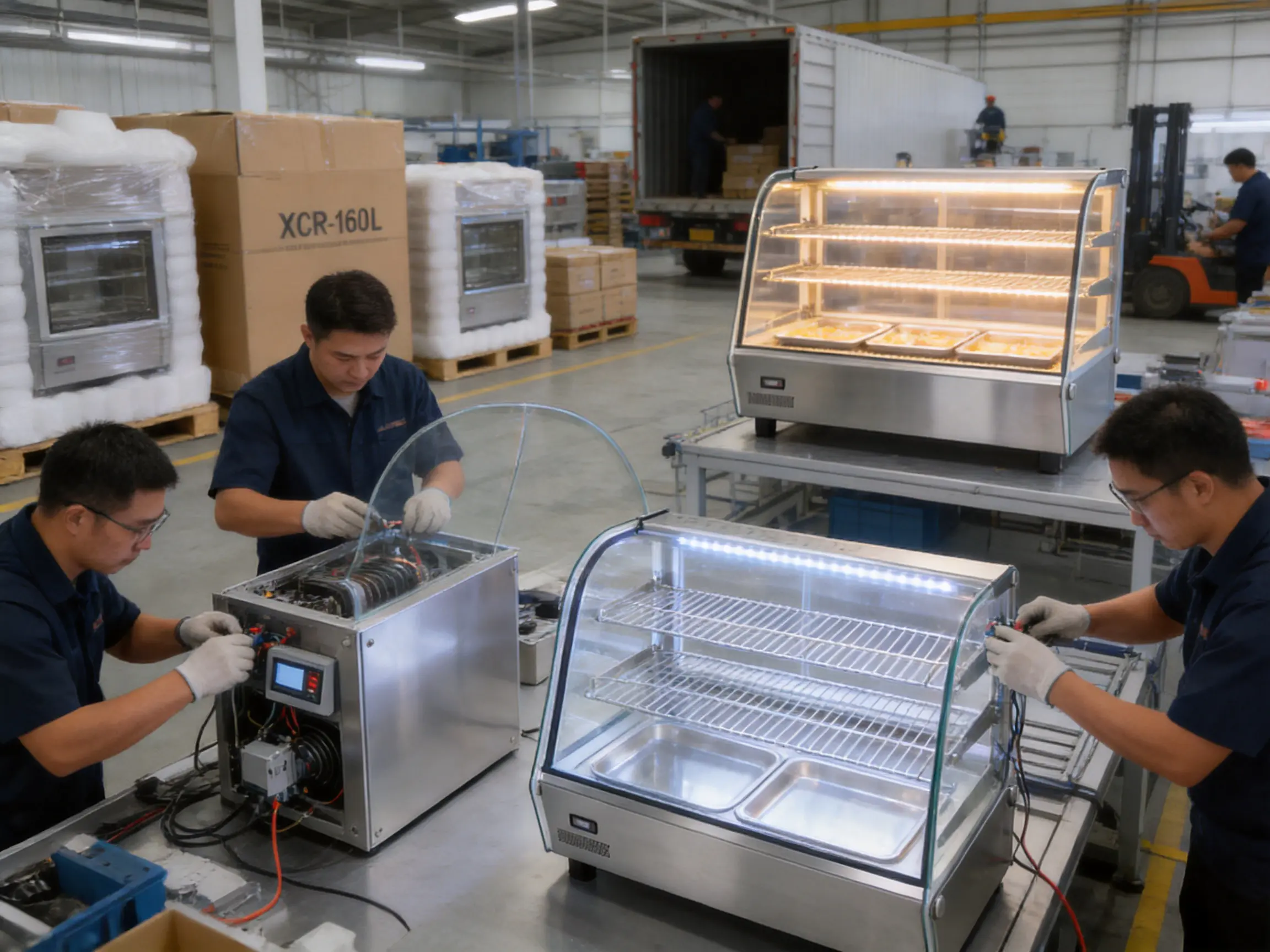
In commercial foodservice, presentation and temperature control are equally important. Cakes, pastries, pies, bread products, cooked snacks, and other prepared foods must look attractive while remaining suitable for service throughout the business day. A professional display warmer provides a practical way to combine merchandising, product visibility, and controlled heat in one compact piece of equipment.
The XCR-160L Single Curve Cake Showcase Display Warmer is designed for bakeries, cafés, restaurants, hotels, convenience stores, dessert shops, catering operations, and other businesses that need a heated countertop or front-of-house display. Its curved glass presentation area creates a broad viewing angle, while its 160-liter internal capacity provides useful space for organized product presentation. With a temperature range of 30–90°C and a rated input power of 1500 W, the unit is intended for warm display applications that require more control than ordinary open shelving.
This article examines the product’s design, performance characteristics, commercial advantages, operating value, manufacturing background, and selection considerations. It also explains how the product can help businesses improve display quality and service efficiency while supporting the food merchandising standards expected in modern retail environments.
1. The Role of a Display Warmer in Modern Foodservice
A display warmer is more than a heated cabinet. It is a merchandising tool positioned where customers make purchasing decisions. The equipment must keep products visible, accessible to staff, and presented in an attractive condition. At the same time, it should provide a stable environment that helps reduce the rapid cooling of suitable warm foods during service.
In a bakery or café, products may be prepared in batches and sold progressively over several hours. If these items are left uncovered, they can quickly lose heat, become exposed to dust or accidental contact, and appear less appealing. If they are placed in a closed cabinet without suitable viewing access, customers may not notice the available selection. A glass display warmer addresses both problems by creating a protected and highly visible sales area.
The XCR-160L is especially appropriate for businesses that want a professional display without occupying the floor space associated with a large vertical cabinet. Its countertop-oriented format can be placed near a cash register, service counter, buffet station, bakery worktop, or café pickup area. This positioning allows customers to see the products at close range and allows employees to replenish or serve them efficiently.
Warm display equipment is commonly used for baked goods, savory pastries, prepared snacks, breakfast items, and other products that are intended to be served warm. It is important to distinguish a display warmer from a cooking appliance. The warmer is designed primarily to maintain a presentation and service temperature within its specified operating range. Food operators should always follow their own food-safety procedures, product-specific holding requirements, and local regulations.
2. Product Overview
The XCR-160L combines a curved glass showcase with a controlled heating system. The single-curve glass profile gives the cabinet a smooth appearance and helps customers view products from different angles. This is valuable in busy retail environments where customers may approach the counter from the front or side rather than standing directly in front of a flat display.
The 160-liter capacity offers a practical middle ground. It is larger than a small countertop warmer intended for a few trays, but more compact than a large floor-standing display cabinet. The capacity can support a varied assortment of products while allowing operators to maintain reasonable separation between different items. Product placement can therefore be arranged by flavor, category, price, or serving time.
The temperature range of 30–90°C provides operating flexibility for different display requirements. Lower settings can be suitable for gentle warming or products that need to remain above ambient conditions without excessive heat. Higher settings may be selected for applications requiring a stronger holding environment, subject to the product manufacturer’s instructions and the operator’s food-safety program.
The 1500 W input rating indicates that the unit is equipped for active heating rather than passive insulation alone. The heating system is intended to bring the cabinet to a useful operating condition and maintain warmth during service. Actual recovery time and energy use can vary according to ambient temperature, loading pattern, door or access frequency, product temperature, and operating practice.
Specification |
XCR-160L |
Product type |
Single-curve cake showcase display warmer |
Category |
Display warmer |
Capacity |
160 liters |
Temperature range |
30–90°C |
Input power |
1500 W |
Net weight |
56 kg |
Gross weight |
58 kg |
Product size |
856 × 568 × 685 mm |
Package size |
928 × 627 × 731 mm |
20-foot general-purpose container loading |
63 units |
40-foot high-cube container loading |
126 units |
3. Curved Glass Presentation and Customer Appeal
The visual design of a food display can influence purchasing behavior. Customers are more likely to consider products that are easy to see, neatly arranged, and presented in a clean environment. Curved glass supports this objective by reducing the visual interruption associated with sharp cabinet corners and by creating a more continuous presentation surface.
A single-curve showcase can make the display appear more open and inviting. The curved front may also help reduce reflections and visual barriers from certain viewing positions, although the exact effect depends on lighting, surrounding surfaces, and the angle of observation. In a bakery or café, the glass can highlight the texture, color, icing, fillings, and shape of cakes and pastries without requiring customers to open the cabinet.
Glass enclosure also contributes to product protection. Compared with an uncovered countertop, a closed display can help limit exposure to airborne particles, accidental contact, and unnecessary handling. It creates a visible separation between customers and the food while still preserving the merchandising effect of an open presentation.
The design is suitable for environments where the equipment itself forms part of the interior image. A modern curved showcase can complement bakery counters, hotel breakfast areas, coffee shops, dessert bars, and convenience-store food zones. It can also help standardize the appearance of multiple locations when used as part of a consistent store layout.
For best results, operators should pay attention to lighting around the unit. Strong direct light may create reflections on the glass, while insufficient counter lighting may make products appear dull. Neutral, well-distributed lighting normally provides the most accurate appearance. The display should also be kept free of unnecessary packaging, cleaning materials, or promotional materials that block the view of the products.

Single Curve Cake Showcase Display Warmer Cake Showcase
4. Temperature Control for Warm Display Applications
The temperature range of 30–90°C is one of the most important functional characteristics of the XCR-160L. It allows the operator to select a setting according to the type of product, the intended holding condition, and the length of the service period. Different foods respond differently to heat, so a flexible control range is more useful than a single fixed temperature.
Delicate bakery products may require gentle warming to protect texture and appearance. Other products, such as savory pastries or prepared snacks, may need a higher setting to remain suitable for service. A variable control range gives staff the ability to make practical adjustments rather than applying the same heat level to every product.
Operators should remember that the displayed or selected cabinet temperature is not necessarily identical to the internal temperature of every food item. Product mass, tray material, loading density, initial food temperature, and air movement can all affect actual product conditions. For this reason, businesses should validate the operating setting with appropriate thermometers and documented procedures where food safety requires it.
The 1500 W heating input provides a substantial heating capability for a 160-liter cabinet. It can support the warming process after startup and help compensate for heat loss during normal use. However, performance is influenced by the environment. A unit placed beside an open doorway, under strong air-conditioning flow, or in direct sunlight may behave differently from one installed in a stable indoor service area.
Good operating practice also includes preheating the cabinet before loading products. Preheating gives the internal environment time to reach the selected setting and reduces the thermal shock that can occur when cold products are placed into an unheated cabinet. Staff should avoid overloading the interior, because densely packed trays can restrict heat circulation and make it harder to maintain a consistent display condition.
Recommended Operating Principles
First, place the warmer on a stable, level, heat-resistant counter with sufficient ventilation around the equipment. Second, allow the unit to reach its operating condition before placing products inside. Third, arrange products so that air can move around the trays and so that each item remains clearly visible. Fourth, use clean trays and remove products that no longer meet the business’s quality standards. Finally, monitor the display regularly rather than relying only on the control setting.
These practices help the equipment perform more consistently and also improve the appearance of the display. A well-organized warmer is easier to clean, easier to replenish, and easier for customers to understand.
5. Capacity and Countertop Space Efficiency
Capacity is important because commercial operators need to balance product variety with available space. A cabinet that is too small may require frequent replenishment and limit the number of products available at one time. A cabinet that is too large may consume valuable floor area and encourage operators to hold more inventory than can be sold efficiently.
The 160-liter capacity of the XCR-160L can accommodate a useful selection of cakes, pastries, baked snacks, or warm prepared foods. The best arrangement depends on tray size and product dimensions. Businesses can organize the interior by product category, sales priority, or time of preparation. High-demand items may be placed in the most visible area, while less frequently selected items can occupy secondary positions.
With a listed product size of 856 × 568 × 685 mm, the unit has a relatively compact footprint for a commercial heated showcase. The exact counter requirement should be confirmed during installation, including space for electrical connections, ventilation, cleaning access, and staff movement. The 685 mm height can help maintain a customer-friendly viewing level when the unit is positioned on a suitable service counter.
Countertop equipment can also improve workflow. Staff can prepare products behind the counter, place them directly into the warmer, and serve them from the same work zone. This reduces unnecessary movement between separate storage, warming, and display areas. In a busy café or bakery, even small workflow improvements can accumulate into meaningful time savings over a full operating day.
Another advantage is layout flexibility. The warmer can be used as a primary display in a small shop or as a supplementary heated section beside a refrigerated cake case, beverage cooler, or open display cooler. Because the business can combine different display formats, it can present chilled desserts, ambient bakery products, and warm snacks in separate equipment that is better suited to each product category.
6. Advantages Compared with Basic Display Solutions
When compared with an ordinary open shelf, the XCR-160L offers controlled warmth and a more protected presentation environment. An open shelf may be inexpensive and easy to access, but it does not provide active heating and exposes products to the surrounding environment. The glass showcase therefore offers a more professional solution for businesses where temperature, cleanliness, and presentation are important.
Compared with a small non-commercial warming tray, the XCR-160L provides greater enclosed capacity and a more complete customer-facing display. A warming tray may keep a limited number of products warm, but it generally does not create the same visual separation or merchandising impact. The showcase format is better suited to retail areas where customers need to see the products before ordering.
Compared with a large floor-standing cabinet, the countertop format can reduce the amount of space required for installation. This is particularly useful for independent bakeries, compact cafés, kiosks, hotel counters, and convenience stores with restricted floor plans. A smaller footprint may also simplify transportation within the store and make future layout changes easier.
Compared with a flat-front cabinet, the single curved glass design provides a distinctive appearance and may give customers a broader viewing experience. The smooth curve can make the unit look more refined and can support a premium presentation for cakes and specialty pastries. It also adds visual interest without requiring complicated exterior decoration.
These comparisons should be understood as general application advantages rather than universal performance claims. The best equipment depends on product type, operating volume, available space, local electrical requirements, and service expectations. Nevertheless, the combination of 160-liter capacity, adjustable warming, curved glass, and countertop installation gives the XCR-160L a balanced position for many commercial applications.
7. Applications Across Different Businesses
Bakeries and Cake Shops
Bakeries can use the warmer to display pastries, filled buns, pies, individual cakes, and selected baked products. The curved glass places emphasis on appearance, while the temperature control supports a warm service environment. For cake shops, the cabinet can also be used for suitable warm desserts or baked accompaniments alongside refrigerated cake showcases.
Cafés and Coffee Shops
Cafés often sell food in combination with beverages. A heated showcase near the ordering point can encourage add-on purchases by placing pastries and snacks in the customer’s direct line of sight. Staff can quickly identify available items, and customers can make decisions without asking to inspect every product individually.
Hotels and Breakfast Areas
Hotels may use a display warmer for breakfast pastries, baked snacks, or selected hot food items. The enclosed glass design can help organize the buffet presentation and provide a cleaner visual boundary. Operators should select settings and holding times according to the food items and the hotel’s food-safety plan.
Convenience Stores
Convenience stores need equipment that supports fast service and clear product visibility. A countertop warmer can be placed near the checkout or prepared-food zone. Its capacity allows the store to offer several choices without installing a large foodservice line.
Catering and Event Service
Catering businesses may use the unit for temporary or semi-permanent service stations where suitable electrical supply and stable placement are available. The gross shipping weight of 58 kg means transport planning is necessary, but the cabinet remains more manageable for organized commercial relocation than many large floor-standing systems.
Restaurants and Self-Service Counters
Restaurants can use the warmer for breads, pastries, appetizers, or selected prepared foods. It can form part of a self-service counter or be positioned where servers can access it quickly. The glass enclosure helps maintain a consistent presentation during busy meal periods.
8. Manufacturing Strengths Behind the Product
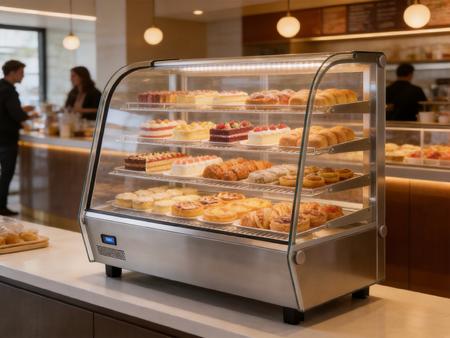
The product is manufactured by Ningbo XiangChi Electrical Co., Ltd., a company specializing in vertical display cabinets, cake cabinets, and warming cabinets. The company was established in 2007 and has developed more than a decade of experience in this field. Its stated manufacturing base includes a modern factory area of approximately 40,000 square meters, providing a foundation for organized production, testing, storage, and product development.
A large and purpose-oriented factory can support a more controlled production structure than a small workshop. Different activities may be arranged into dedicated areas for component preparation, cabinet assembly, electrical installation, inspection, packaging, and finished-goods storage. This type of organization helps reduce unnecessary movement and creates clearer responsibility at each stage of production.
The company also reports having its own professional research and development team. In commercial refrigeration and warming equipment, in-house development capability can be valuable because product performance depends on the integration of cabinet structure, glass design, heating components, electrical controls, insulation, airflow, and service access. A coordinated R&D process allows these elements to be evaluated as one system rather than as unrelated parts.
Advanced testing facilities are another stated strength. Testing is important for display equipment because a product must do more than operate electrically. The cabinet should be checked for temperature behavior, electrical safety, structural integrity, component reliability, and packaging protection. Testing can also help identify design improvements before a product is delivered to a large market.
Manufacturing quality begins with incoming materials and components. Glass panels, metal parts, electrical controls, heating elements, wiring, fasteners, and other components should be checked against the required specifications. Consistent material selection helps reduce variation between production batches and supports a more uniform final product.
During assembly, accurate fitting is particularly important for glass display equipment. The glass must be positioned securely, metal joints must be assembled correctly, and access panels should be aligned for service and cleaning. Electrical wiring must be routed carefully to avoid unnecessary stress, contact with hot surfaces, or interference with moving or removable components.
Heating equipment also benefits from process discipline. The heating system, temperature control, sensor placement, and internal cabinet arrangement must work together. A manufacturing line that includes functional checks can help verify that the unit responds properly to control adjustments and that the finished cabinet reaches the intended operating range.
Packaging is another important part of the manufacturing process. The listed package size is 928 × 627 × 731 mm, and the gross weight is 58 kg. Curved glass requires careful protection during handling and transport. Appropriate packaging should limit movement, reduce impact risk, and keep the unit stable during loading and unloading. Export-oriented packaging is especially important when products travel through multiple logistics stages.
9. Quality Management and International Market Readiness
The manufacturer states that its products have obtained CE, GS, CCC, CB, RoHS, ETL, and other major certifications. Certification requirements differ by product configuration, market, and applicable standard, so buyers should confirm the precise certification documents for the model and destination country. Even so, experience with multiple certification systems demonstrates an awareness of the compliance expectations involved in international commercial equipment sales.
Certification is not a replacement for good manufacturing practice, but it can provide a structured framework for evaluating electrical safety, materials, construction, and product performance. For importers and distributors, available certification documentation can simplify product review and help address questions from commercial customers, inspectors, or local authorities.
RoHS-related compliance is relevant to buyers who are concerned about restricted substances in electrical and electronic products. Electrical safety certifications are also significant because a commercial warmer may operate for long periods and may be used in environments where staff and customers are nearby. Compliance information should be reviewed together with the correct voltage, frequency, plug, and installation requirements.
A professional manufacturer should maintain traceability throughout production. This may include model identification, component records, inspection results, production dates, packaging records, and shipment information. Traceability helps a company respond more effectively to technical questions and supports continuous improvement when recurring issues are identified.
The company’s stated philosophy emphasizes innovation, quality, and service. These principles are relevant to commercial buyers because the initial purchase is only one part of the equipment relationship. Product information, spare parts, troubleshooting support, warranty handling, and communication with distributors all influence the long-term value of the equipment.
10. Design Details That Support Commercial Use
The single-curve form gives the cabinet a recognizable visual identity while supporting product visibility. For a food business, appearance matters because the display is part of the sales environment. Equipment that looks clean, coordinated, and purpose-built can reinforce customer confidence in the products being sold.
The glass enclosure allows staff to keep products visible without leaving them fully exposed. This can help maintain a more orderly display during long service periods. Operators can create sections for different products and replenish only the areas that need attention, rather than repeatedly rebuilding an open counter arrangement.
The 160-liter internal volume supports a variety of display plans. For example, a bakery may reserve one section for sweet pastries, another for savory items, and a third for seasonal products. A café may arrange products according to meal period, with breakfast items in the morning and afternoon snacks later in the day. Flexible arrangement can make the equipment useful across changing menus.
The temperature range also supports menu flexibility. A business that changes its product assortment does not necessarily need a different cabinet for every type of warm item. Instead, staff can establish operating procedures for several product groups, provided that the products are compatible with heated display and that food-safety requirements are met.
Commercial equipment must also withstand repeated daily use. Opening, closing, loading, cleaning, temperature adjustment, and staff movement all place demands on the cabinet. A manufacturer with dedicated R&D and testing capabilities is better positioned to refine these practical details over time than a supplier focused only on basic appearance.
11. Installation and Operating Recommendations
Before installation, confirm that the counter can support the 56 kg net weight of the equipment, plus the weight of trays and products. The surface should be level and stable. Uneven placement can affect door or glass alignment, product presentation, and the general safety of the unit.
Provide enough clearance for ventilation and service access. The exact clearance should follow the manufacturer’s installation instructions and the requirements of the local electrical code. Avoid placing the warmer directly beside equipment that releases substantial heat or moisture unless the installation has been evaluated for that condition.
Use the correct power supply for the product configuration. The 1500 W input rating should be considered when planning the electrical circuit. A qualified technician should verify the voltage, frequency, plug type, grounding, and circuit protection before the warmer is placed into regular service.
After installation, clean the interior and exterior surfaces according to the approved procedure. Remove packaging materials and check that glass panels, trays, controls, and access areas are correctly positioned. The first startup should be observed so staff can become familiar with the controls and confirm that the unit responds as expected.
Preheat the cabinet before loading food. Avoid placing products tightly against internal surfaces or blocking heat circulation paths. Use trays that fit securely and do not interfere with the glass or access doors. Products should be arranged at a height that allows customers to see them clearly without staff needing to move items repeatedly.
Monitor product condition during service. Excessive heat may dry some baked goods, alter icing, or affect texture, while insufficient heat may not meet the intended holding requirement. A practical operating setting should be established through product testing, temperature checks, and staff observation.
Cleaning and Maintenance
Cleaning should be performed according to the manufacturer’s instructions and the business’s sanitation program. Glass surfaces should be cleaned with suitable materials that do not scratch or leave harmful residue. Food debris should not be allowed to accumulate on trays, shelves, seals, or the base of the display area.
Before cleaning electrical components, disconnect the equipment from the power supply as required by the service procedure. Do not spray water directly into controls, wiring areas, heating components, or ventilation openings. Any unusual noise, damaged glass, overheating, inconsistent temperature, or electrical fault should be reported and investigated by qualified service personnel.
Regular inspection is preferable to waiting for a failure. Staff can check the condition of the glass, door or access mechanism, power cord, control panel, trays, and visible seals as part of a daily or weekly routine. A planned maintenance approach helps protect product quality and can reduce unexpected disruption during peak trading periods.
12. Logistics and Export Considerations
The XCR-160L is listed with a package size of 928 × 627 × 731 mm and a gross weight of 58 kg. These figures are useful for importers, distributors, warehouse managers, and transport planners. They help determine pallet configuration, storage requirements, loading procedures, and delivery vehicle suitability.
The stated loading quantities are 63 units in a 20-foot general-purpose container and 126 units in a 40-foot high-cube container. Actual loading should be confirmed with the supplier because packing methods, protective materials, pallet use, and local shipping requirements can affect available space. Buyers should also verify whether the quoted quantities assume floor loading, stacked cartons, or another arrangement.
Because the product includes curved glass, handling procedures should be planned carefully. Cartons should remain upright when required, and warehouse personnel should use appropriate lifting and moving equipment. Damage prevention is particularly important because a cabinet can appear structurally intact while hidden glass or electrical damage affects its later performance.
For international orders, buyers should confirm destination-market requirements before production. Important points may include voltage, frequency, plug configuration, language of labels, certification documents, customs classification, packaging markings, and warranty terms. Clear communication at the quotation stage helps prevent delays after shipment.
For distributors, the product’s balance of capacity and size can make it suitable for a range of customer segments. It can be stocked for independent businesses while also being offered to multi-location operators that need consistent equipment across several stores. The manufacturer’s experience with international certifications and export packaging can support this type of distribution model.
13. Why Manufacturer Capability Matters to Buyers
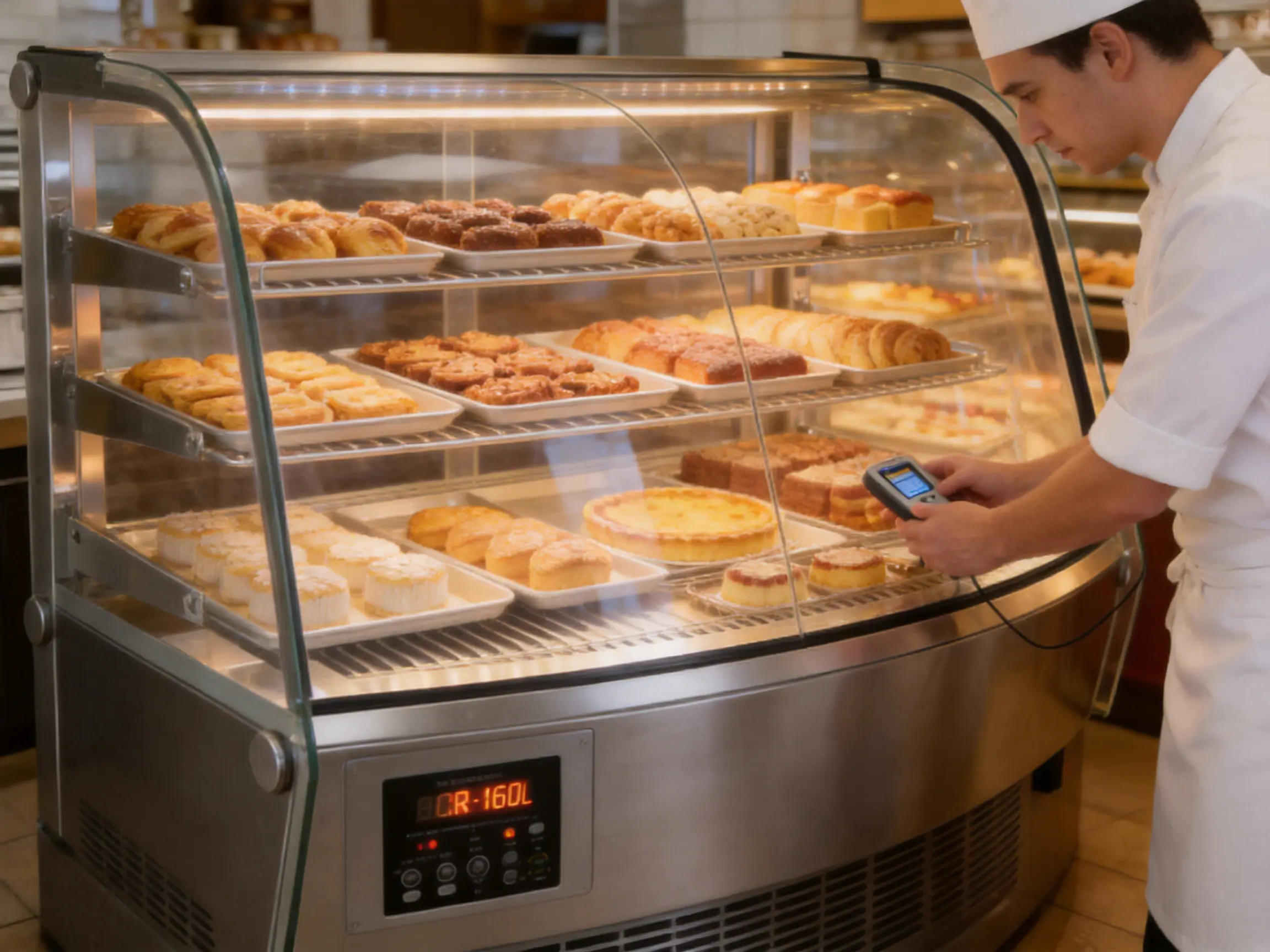
Choosing a commercial display warmer is not only a matter of comparing external dimensions and price. The reliability of the supplier, the consistency of production, the availability of technical information, and the ability to support future orders all affect the total cost of ownership.
A manufacturer with an established product focus can accumulate practical knowledge about the challenges of heated display cabinets. This knowledge may cover glass integration, cabinet insulation, temperature control, electrical protection, cleaning access, packaging, and the demands of repeated commercial operation. Over time, that experience can contribute to more refined designs and more predictable production.
The manufacturer’s dedicated R&D team is especially relevant for buyers who require customized specifications or market adaptations. Not every project needs a completely new cabinet, but customers may require changes to electrical configuration, labeling, packaging, control style, or product presentation. A company with internal technical resources may be able to evaluate such requirements more effectively.
Advanced testing facilities also provide confidence that products are not assessed only by appearance. A professional testing process can identify whether the warmer reaches its intended temperature range, whether controls operate correctly, and whether the cabinet remains stable during ordinary use. Buyers should request appropriate technical documents and inspection records when required for their procurement process.
The company’s more than ten years of experience, modern factory infrastructure, and stated certification portfolio indicate an organization prepared to serve international commercial-equipment customers. These characteristics can be important for wholesalers, chain stores, hospitality groups, and foodservice-equipment dealers that need repeatable quality and dependable communication.
14. Purchasing Considerations for Different Customers
For Independent Retailers
Independent retailers should evaluate available counter space, daily sales volume, product mix, and staff routines. The XCR-160L may be appropriate when the store needs a visible heated display but does not have room for a full floor-standing cabinet. The retailer should calculate whether 160 liters is enough for peak periods and whether the 1500 W electrical demand is suitable for the site.
For Foodservice Distributors
Distributors should focus on packaging, container loading, spare parts, product documentation, certification, and after-sales support. The stated container quantities can assist with freight planning, but a distributor should confirm the final shipping configuration before placing a bulk order. Consistent product information is also important when the warmer is offered to different customer segments.
For Hotel and Restaurant Groups
Multi-site operators should consider standardization. Using the same model across locations can simplify staff training, procurement, maintenance, and replacement planning. Before making a large purchase, the group may wish to conduct a pilot installation to evaluate customer visibility, counter fit, temperature performance, cleaning routines, and integration with the existing menu.
For Export Importers
Importers should verify destination-market regulations, electrical requirements, certification scope, shipping protection, and documentation. The product data should be reviewed carefully because a small difference in voltage, plug, or control specification can affect installation. It is also useful to establish a process for inspecting units upon arrival and documenting any transport-related damage.
15. Practical Merchandising Strategies
The display warmer will produce the best commercial result when it is treated as part of a merchandising plan. Products should not simply be placed wherever space is available. Instead, operators can arrange the cabinet to communicate freshness, variety, and value within a few seconds of customer observation.
High-margin or high-demand products can be placed in the most visible positions. Complementary products can be grouped together to encourage additional purchases, such as pastries near coffee service or savory snacks near lunch beverages. Seasonal products can be moved to the front during promotions, while core products remain available in consistent locations.
Visual height also matters. If products are arranged too low, customers may not see them clearly. If products are stacked too high, the display may look crowded and the upper items may block those behind them. A balanced arrangement with clear spacing generally creates a more premium impression and makes replenishment easier.
Labels and price information should be positioned outside the main viewing area whenever possible. Excessive signage can reduce the effect of the glass showcase. Product labels should be clear, concise, and easy for customers to read without obstructing the food.
Staff presentation standards should be consistent. Trays should be aligned, crumbs should be removed promptly, and products that are sold out should be replaced or the space should be rearranged. A clean and full-looking display can communicate better value than a cabinet containing scattered or unevenly spaced items.
16. Sustainability and Operating Efficiency
Commercial operators increasingly consider energy use, product waste, equipment life, and maintenance when evaluating new equipment. The XCR-160L has a 1500 W input rating, but actual consumption depends on how often the heating system cycles, how long the unit operates, ambient conditions, loading patterns, and the selected temperature.
Operators can support efficient use by avoiding unnecessarily high settings, keeping the cabinet properly loaded, minimizing prolonged opening, and switching the unit off when it is not required. A daily operating schedule can help prevent the warmer from running unattended during closed hours.
Reducing food waste is another part of efficiency. A well-organized display helps staff monitor stock and sales more easily. Products can be loaded in appropriate quantities and replenished according to demand rather than placing the entire production batch in the cabinet at once. This approach can improve freshness and reduce the number of unsold items discarded at the end of service.
Equipment durability also influences sustainability. A cabinet that remains in service for many years, supported by maintenance and available parts, may provide greater resource efficiency than equipment that must be replaced frequently. Manufacturing expertise, testing, and quality control all contribute to the possibility of longer service life, although service life will also depend on installation, usage, cleaning, and maintenance.
17. Q&A: Common Questions About the Display Warmer
Q1: What type of equipment is the XCR-160L?
The XCR-160L is a single-curve cake showcase display warmer. It is intended for commercial heated display applications in bakeries, cafés, restaurants, hotels, convenience stores, and similar foodservice environments.
Q2: What is the capacity of the cabinet?
The listed capacity is 160 liters. The practical number of products or trays depends on their dimensions, shape, packaging, and the spacing required for proper visibility and heat circulation.
Q3: What temperature range does it provide?
The specified temperature range is 30–90°C. Operators should select a setting according to the product, service objective, and applicable food-safety procedures.
Q4: Is this a cooking appliance?
No. It is primarily a display warmer for holding suitable prepared products in a warm showcase environment. It should not be treated as a substitute for an oven, fryer, or other cooking equipment unless a specific product and operating procedure has been approved for that use.
Q5: Why is the curved glass useful?
The single-curve glass improves the visual character of the cabinet and supports product visibility from multiple customer approaches. It also creates an enclosed, more protected display compared with an uncovered shelf.
Q6: How much power does the unit use?
The listed input power is 1500 W. Actual energy consumption will vary according to operating conditions, temperature setting, ambient environment, loading, and heating-cycle frequency.
Q7: What are the product dimensions?
The listed product size is 856 × 568 × 685 mm. Buyers should also allow additional space for installation, ventilation, electrical connection, cleaning, and service access.
Q8: How heavy is the unit?
The net weight is listed as 56 kg, while the gross shipping weight is 58 kg. Counter strength and safe handling procedures should be confirmed before installation or relocation.
Q9: Can it be used for cakes and pastries?
It can be used for suitable cakes, pastries, baked goods, and warm snacks, provided that the products are compatible with heated display. Some cakes require refrigeration or ambient display, so the correct equipment should be selected according to the product’s storage requirements.
Q10: How should food be arranged inside?
Products should be placed on clean, suitable trays with enough spacing for visibility and heat circulation. Avoid overloading the cabinet or blocking internal airflow paths. Products should be arranged so staff can replenish and inspect them efficiently.
Q11: What should be checked before purchase?
Customers should confirm electrical specifications, local certification requirements, installation space, counter load capacity, packaging details, warranty terms, spare-parts support, and the intended product application. Bulk buyers should also confirm shipping configuration and documentation.
Q12: What manufacturing advantages does the supplier offer?
The supplier states that it has operated since 2007, maintains a modern factory area of approximately 40,000 square meters, has an in-house R&D team, uses advanced testing facilities, and holds or supports multiple international certifications for its products.
Q13: Is the product suitable for export?
The product information includes container loading figures and the manufacturer reports experience with international certifications, indicating export capability. The exact electrical configuration, certification documents, packaging, and import requirements should be confirmed for each destination market.
Q14: How can operators improve performance?
Preheat the cabinet, avoid overloading, use appropriate settings, keep the glass and interior clean, limit unnecessary opening, monitor product condition, and follow the manufacturer’s maintenance instructions. Proper installation and a stable power supply are also important.
18. Final Assessment
The XCR-160L Single Curve Cake Showcase Display Warmer offers a balanced combination of visual presentation, adjustable warming, useful capacity, and countertop practicality. Its 160-liter interior is suitable for businesses that need more display space than a small warmer can provide but do not want to dedicate floor space to a large cabinet. The 30–90°C temperature range provides flexibility for suitable warm display products, while the 1500 W input supports active heating during commercial service.
The curved glass design is a major presentation advantage. It helps the cabinet function as a sales display as well as a warming appliance, allowing customers to see products clearly while providing a more protected environment than an open shelf. This combination is relevant to bakeries, cafés, hotels, convenience stores, restaurants, catering operations, and other businesses where product appearance influences purchasing decisions.
The manufacturer’s stated strengths add further value for commercial buyers. Ningbo XiangChi Electrical Co., Ltd. has specialized in display cabinets and warming equipment since 2007 and reports a modern 40,000-square-meter factory, professional R&D resources, advanced testing facilities, and a portfolio of international certifications. These capabilities support a structured approach to product development, production control, quality verification, and export service.
As with any commercial foodservice appliance, correct application and operation are essential. Buyers should verify electrical and regulatory requirements, while operators should establish appropriate temperature, cleaning, stocking, and food-safety procedures. When installed and managed correctly, the XCR-160L can help businesses create a more attractive warm-food presentation, improve counter organization, and support efficient daily service.
References
1. Product specification sheet for the XCR-160L Single Curve Cake Showcase Display Warmer.
2. Manufacturer-provided company profile for Ningbo XiangChi Electrical Co., Ltd.
3. General principles of commercial food display, holding, sanitation, and equipment maintenance.
4. General guidance on electrical safety, commercial appliance installation, and foodservice equipment operation.
5. General guidance on international product conformity, export packaging, and commercial equipment logistics.
Product: Single Curve Cake Showcase Display Warmer Cake Showcase

You May Also Like





-
- Navigation
- Home
- About Us
- Products
- News
- Contact Us
 East Zone, Guanhaiwei Industrial Park, Cixi City, Ningbo, Zhejiang, China
 +86-574-63668678
 +86-574-63668108

Copyright © Ningbo XiangChi Electrical Co.,Ltd All Rights Reserved.
