
 简体中文
简体中文 English
 Español
News
Four-Sided Glass Display Freezer Showcase with Digital Temperature Control
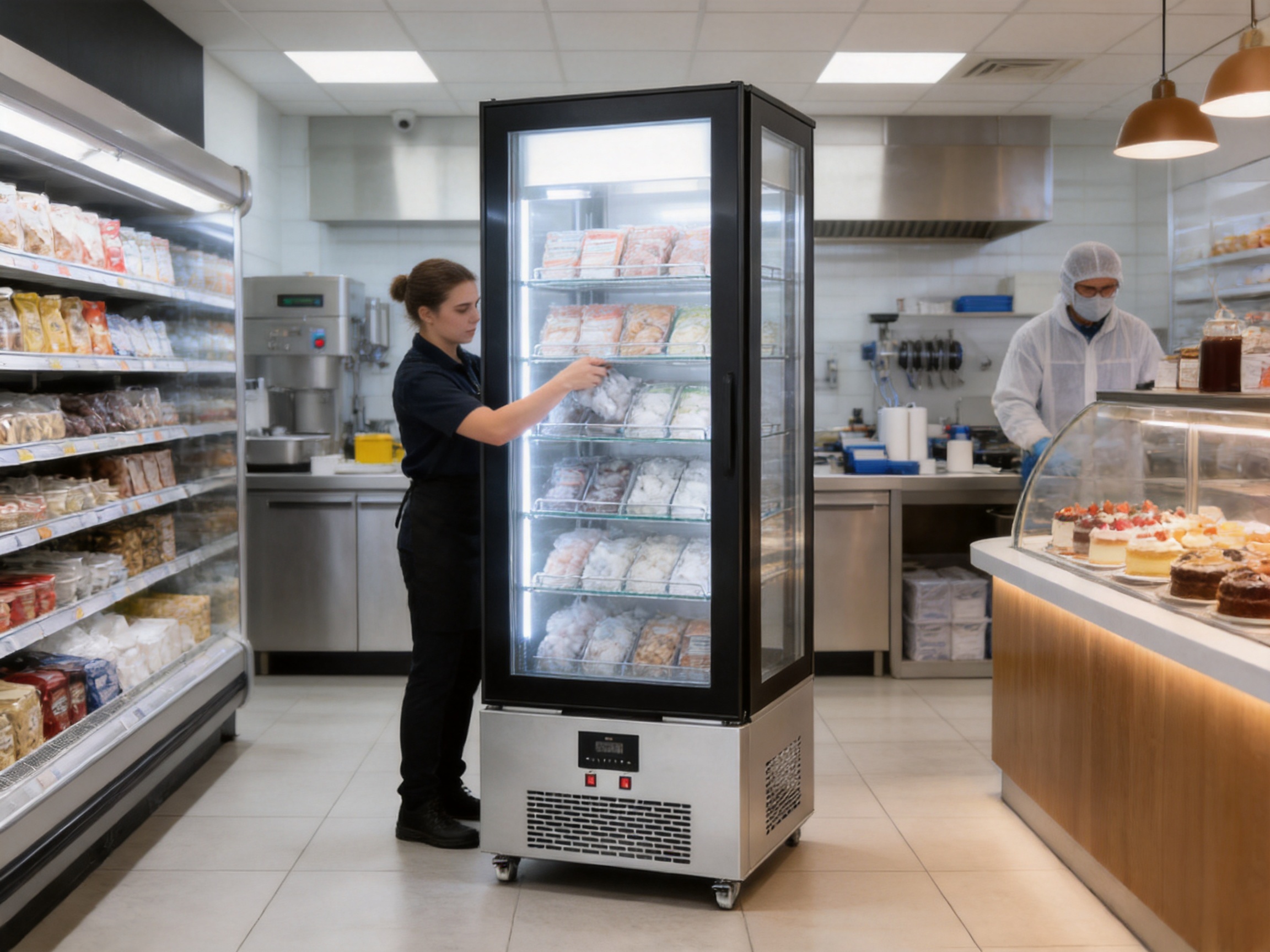
Commercial frozen-food presentation requires more than low temperature alone. Retailers, cafés, bakeries, convenience stores, supermarkets, hotels, and foodservice operators need equipment that protects product quality while making merchandise easy to see, easy to organize, and easy to access. The Four Sided Glass Display Freezer Showcase with Digital Temperature Controller XCLD-440C is designed to meet these combined requirements in a compact vertical format.
With a 405-liter capacity, a temperature range of -18°C to 0°C, four-sided triple-glass construction, internal LED lighting, adjustable tempered-glass shelves, ventilated cooling, and automatic defrost, this showcase combines professional frozen storage with high-visibility merchandising. Its upright design uses vertical space efficiently, while its transparent enclosure allows customers to view products from multiple directions.
The unit is suitable for displaying frozen desserts, packaged frozen food, ice cream, frozen pastries, pre-prepared meals, seafood, meat products, and other temperature-sensitive goods. It is available in black, white, and stainless steel finishes, allowing distributors and commercial operators to select an appearance that matches their store environment.
Manufactured by Ningbo XiangChi Electrical Co., Ltd., the display freezer reflects the company’s focus on vertical display cabinets, cake showcases, warming cabinets, and other commercial refrigeration products. The manufacturer combines dedicated research and development resources, testing facilities, modern production lines, and a 40,000-square-meter factory environment to support product consistency and continuous improvement.
1. The Role of a Four-Sided Display Freezer in Modern Retail
Traditional chest freezers can provide useful frozen storage, but their horizontal layout often requires customers to bend down, search through stacked products, or open a lid repeatedly. These actions can make product selection slower and can reduce the visual impact of the merchandise. A vertical glass display freezer takes a different approach by presenting products at eye level and organizing them across multiple shelves.
The XCLD-440C is particularly useful in areas where customers move around the equipment from different directions. Its four-sided glass design supports visibility from the front, sides, and other viewing angles. This can be valuable in open retail floors, central display zones, café interiors, hotel dining areas, dessert shops, and convenience stores.
Visibility is an important part of product merchandising. When customers can immediately identify flavors, package sizes, colors, and product categories, they can make purchasing decisions more efficiently. Internal LED lighting further improves the presentation by illuminating products without depending entirely on surrounding store lighting.
The unit also supports a more organized sales environment. Adjustable shelves allow operators to position products according to their dimensions and sales strategy. Tall packages, cartons, tubs, boxes, and smaller items can be arranged in a way that reduces wasted space and improves the appearance of the display.
2. Product Overview and Main Specifications
The XCLD-440C is a commercial four-sided glass freezer showcase intended for professional display and frozen storage. Its operating range extends from -18°C to 0°C, giving operators flexibility for different types of frozen merchandise and chilled products that require a low-temperature environment.
Product category |
Four-sided glass freezer |
Model |
XCLD-440C |
Refrigerant |
R290 |
Climate type |
4 |
Net volume |
405 liters / 14.3 cubic feet |
Temperature range |
-18°C to 0°C |
Input power |
696 watts |
Product dimensions |
650 × 665 × 2005 mm |
Net weight |
175 kg |
Available finishes |
Black, white, and stainless steel |
Certifications |
CB, CE, and GS |
The external footprint is approximately 650 mm wide and 665 mm deep, while the overall height is 2005 mm. This narrow vertical configuration helps operators use floor space efficiently without giving up useful storage capacity. The 405-liter volume offers substantial display capacity for a relatively compact footprint.
The unit has a net weight of 175 kg, reflecting its commercial construction, glass enclosure, refrigeration system, shelving, lighting, and stainless steel body. Its four castors make positioning easier, while front brakes help stabilize the cabinet after it has been placed in the desired location.
3. Temperature Performance for Frozen Product Display
Temperature stability is one of the most important considerations when selecting commercial freezer equipment. Frozen products need an environment that minimizes temperature fluctuation and helps preserve texture, appearance, safety, and shelf life. The XCLD-440C is designed to operate between -18°C and 0°C, covering common requirements for frozen retail display.
The digital temperature controller and display provide a direct way to monitor and adjust operating conditions. Instead of relying on a basic mechanical dial or estimating the internal temperature, staff can use the digital control interface to check the cabinet setting. This improves day-to-day management and supports more consistent operating procedures.
The separated power button gives operators independent control over the refrigeration system. The separated light button allows the internal LED lighting to be switched independently. These controls can be helpful when the cabinet needs to remain cold while the display lighting is adjusted, or when lighting is turned off during closing hours while refrigeration continues.
The ventilated cooling system distributes cold air throughout the cabinet. In a multi-shelf display freezer, circulation is important because products may be stored at different heights and in different positions. A ventilated system can help reduce temperature differences between shelves when the cabinet is loaded and operated correctly.
Automatic defrost is another practical feature. Ice accumulation can reduce cooling efficiency, obstruct airflow, and make shelves difficult to use. Automatic defrost reduces the need for frequent manual intervention and helps the cabinet maintain its intended working condition. Operators should still follow appropriate cleaning and maintenance procedures, but automatic defrost can simplify routine operation.
Suitable Product Applications
The temperature range and display configuration make the freezer suitable for a broad selection of products, including ice cream, frozen cakes, frozen pastries, frozen dumplings, packaged meals, seafood, meat products, vegetables, and other commercially packaged frozen goods.
Food businesses should always verify the storage requirements of each product before placing it in the cabinet. Different products may require specific temperatures, humidity conditions, packaging protection, or maximum holding times. The freezer provides the refrigeration environment, while correct loading, monitoring, and stock rotation remain essential operational responsibilities.
4. Four-Sided Triple Glass for Visibility and Insulation
The cabinet uses four-sided triple glass. This construction serves two important purposes: it supports all-around product visibility and contributes to thermal separation between the refrigerated interior and the surrounding room.
Many display freezers offer visibility mainly from one side. That arrangement can be effective when the equipment is installed against a wall, but it limits the range of merchandising layouts. A four-sided glass showcase can be positioned in a more central location, allowing customers to view the products from multiple directions.
All-around visibility can improve customer flow in several ways. A shopper approaching from the side can see the product assortment before reaching the main aisle. Customers can continue browsing while moving around the unit. Staff can also identify low-stock shelves more easily from different positions in the store.
Triple-glass construction provides multiple layers that help reduce heat transfer compared with a simple single-pane enclosure. In a freezer application, improved insulation is important because the cabinet must maintain a low internal temperature while exposed to warmer ambient air. Better thermal separation can also reduce the impact of short periods when nearby doors open or when the store experiences changes in room temperature.
Glass selection and cabinet sealing should always be considered together. The performance of a display freezer depends not only on the number of glass layers but also on the quality of the frame, gaskets, joints, airflow design, and refrigeration controls. The XCLD-440C combines the four-sided triple-glass enclosure with a ventilated cooling system and automatic defrost to create a complete display solution rather than relying on glass alone.
5. Internal LED Lighting for Stronger Merchandising
Lighting has a direct influence on how products are perceived. A dark or unevenly lit freezer can make packaging difficult to read and can reduce the visual appeal of frozen goods. The XCLD-440C includes brilliant internal LED lighting at four sides, creating a well-lit display environment from multiple directions.
LED lighting is suited to commercial display applications because it provides clear illumination in a compact format. It can highlight product packaging, improve visibility of labels, and help customers distinguish items on different shelves. A well-lit cabinet may also make the store look cleaner, brighter, and more organized.
The four-side lighting arrangement supports the cabinet’s transparent design. Instead of concentrating illumination only at the front, the system is intended to support visibility across the display area. This is especially useful when the freezer is positioned in an open space where customers can view it from several angles.
The separated light button provides operational flexibility. Retailers can turn the lighting off when the store closes, during cleaning, or when display illumination is not required. Meanwhile, the refrigeration function can continue independently. This separation also gives operators greater control over the appearance of the cabinet during different business periods.
6. Adjustable Tempered-Glass Shelves
Fixed shelves can make it difficult to display products with different dimensions. A vertical freezer may be used for small tubs one day and larger cartons or boxed products the next. Adjustable tempered-glass shelves help operators adapt the internal layout to changing inventory.
Tempered glass is appropriate for display shelving because it offers a clean, transparent appearance and can support the presentation of products without visually blocking the cabinet. Its smooth surface is also practical for routine cleaning when handled according to the manufacturer’s instructions.
Adjustability allows the operator to create more suitable vertical spacing. Shelves can be positioned closer together for small products, or separated to accommodate taller packages. This helps reduce unused space and may improve the quantity and visibility of products shown at one time.
Good shelf organization also supports stock rotation. Products with earlier expiry dates can be placed in accessible positions, while newly delivered items can be arranged behind them. Clear shelf levels make it easier for employees to conduct inventory checks and maintain a consistent display standard.
Operators should observe the recommended loading limits and should not block internal air passages. Ventilated freezers require adequate space around products so that cold air can circulate effectively. Shelves should be loaded evenly, with sufficient clearance for airflow and door or service access where applicable.
7. Stainless Steel Body and Available Finishes
The standard construction includes a stainless steel body. Stainless steel is widely used in commercial refrigeration because it offers a professional appearance and is practical for foodservice environments. Its smooth surface can be cleaned regularly and can complement stainless steel counters, preparation equipment, ovens, sinks, and other commercial fixtures.
The availability of black, white, and stainless steel finishes gives buyers more flexibility when planning a retail interior. Black can create a modern, premium appearance and may provide visual contrast against bright packaging. White can support a clean and simple environment. Stainless steel can coordinate with professional kitchens, supermarkets, cafés, and food halls.
Finish selection can also support brand presentation at the point of sale. A display freezer is not merely a storage appliance; it is part of the customer-facing environment. Its height, color, lighting, and glass structure all contribute to how the product area is perceived.
Regardless of finish, regular maintenance is important. Operators should use suitable cleaning materials, remove spills promptly, avoid abrasive tools, and keep ventilation areas free of dust and obstructions. Proper care helps preserve both appearance and operating performance.
8. Mobility and Placement Flexibility
The XCLD-440C includes four castors, with brakes on the front two. This design makes the cabinet easier to move during installation, cleaning, layout changes, or store renovation. Once the unit is positioned, the front brakes help prevent unwanted movement.
Mobility can be particularly valuable for businesses that change their merchandising layout seasonally. A dessert shop may place frozen cakes near the service counter during one promotion and move the freezer closer to the entrance during another. A supermarket may reposition the unit to support a seasonal campaign or product launch.
The castors also help cleaning teams reach the floor area beneath and around the cabinet. Dust and debris can accumulate in commercial environments, so the ability to move the unit carefully can assist with hygiene routines. Movement should be performed with appropriate care because the cabinet is a substantial commercial appliance weighing 175 kg.
Before final installation, operators should confirm that the floor is level, the route is wide enough, and the location provides adequate ventilation and electrical access. The cabinet should not be placed where it blocks emergency exits, obstructs customer paths, or is exposed to excessive heat.
9. Compact Vertical Design and 405-Liter Capacity
Floor space is a major commercial consideration. Retailers often need to increase product variety without expanding the sales area. The XCLD-440C addresses this challenge with a tall, narrow profile and 405 liters of usable display volume.
At 650 mm wide and 665 mm deep, the cabinet can fit into many areas where a larger horizontal freezer would be impractical. Its 2005 mm height uses vertical space to provide multiple product levels. This makes it a useful option for stores that want high display capacity within a controlled footprint.
The 405-liter capacity can support different merchandising plans. Operators may dedicate the entire cabinet to one product category, such as ice cream or frozen desserts, or divide it into sections for different product families. Adjustable shelves make it easier to modify the internal arrangement as sales patterns change.
Capacity should always be evaluated alongside access and airflow. Filling every available space may reduce product visibility or interfere with circulation. The most effective display is usually one that balances stock quantity with clear presentation, sufficient cooling space, and easy customer access.
10. R290 Refrigerant and Environmental Considerations
The freezer uses R290 refrigerant. R290 is propane-based refrigerant commonly used in modern commercial refrigeration equipment. It is recognized for its low global warming potential compared with many older refrigerant options, although it is flammable and must be handled under appropriate safety requirements.
Using R290 reflects the industry’s movement toward refrigerants with lower environmental impact. Refrigerant selection is only one part of overall sustainability, however. Energy consumption, insulation, temperature control, maintenance, product loading, and operating practices also influence the environmental performance of a commercial freezer.
Because R290 is flammable, installation, servicing, recovery, and repair should be performed by trained and qualified technicians who understand the relevant regulations and safety procedures. Operators should not attempt to modify the refrigeration circuit or service refrigerant components without proper authorization.
Businesses purchasing equipment for international markets should confirm local requirements concerning refrigerant charge, installation, electrical connections, ventilation, and technician qualifications. The CB, CE, and GS certifications associated with the product provide important evidence that the equipment has been evaluated against applicable standards, but local compliance checks remain necessary for each installation.
11. Digital Temperature Control and Operational Management
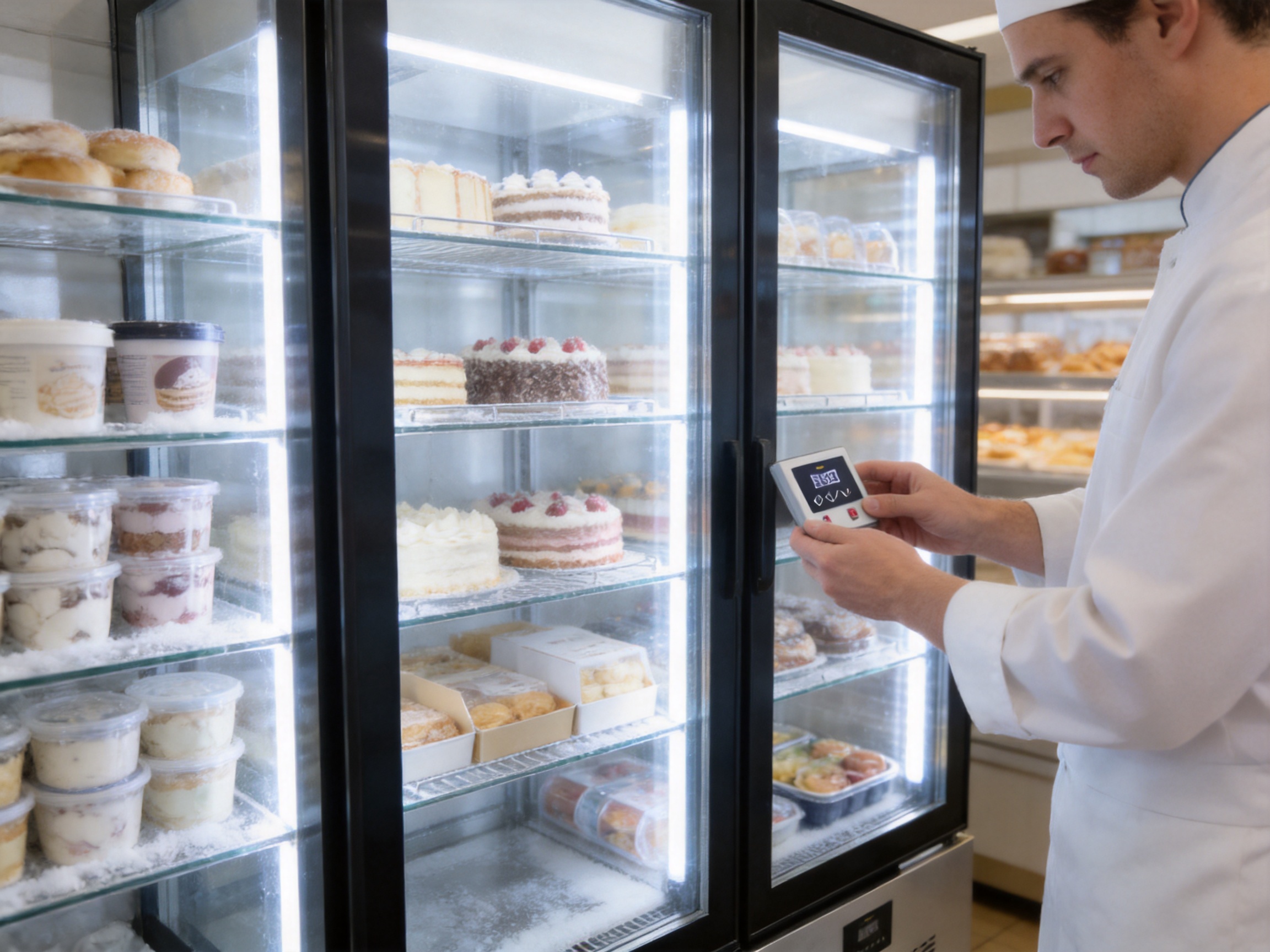
A digital temperature controller gives staff a more precise and convenient interface than a basic manual control. The digital display makes it easier to check the configured temperature and identify unexpected changes. This supports routine opening checks, closing checks, and periodic monitoring.
Temperature management should be integrated into the store’s operating procedures. Staff can record readings at scheduled intervals, inspect the display for unusual behavior, and verify that products remain in the correct temperature category. A visible digital controller can also help maintenance personnel understand the cabinet’s operating condition during service visits.
The temperature range of -18°C to 0°C provides flexibility, but the appropriate setting should be selected based on the product type, load, ambient conditions, and business requirements. A freezer should not be operated outside the manufacturer’s recommended range. Excessively low settings may increase energy use, while insufficiently low settings may compromise frozen product quality.
Stable operation also depends on good loading practices. Hot products should not be placed into the cabinet unless the equipment and product handling plan specifically allow it. Newly delivered goods should be moved into the freezer promptly, and doors or access openings should not be left open unnecessarily.
12. Automatic Defrost and Maintenance Efficiency
Frost is a normal concern in low-temperature equipment. When humid air enters the cabinet, moisture can freeze on cold surfaces. Excessive frost may reduce heat transfer, restrict airflow, and affect the available display area. Automatic defrost helps control this condition without requiring frequent manual shutdowns.
Automatic defrost can contribute to more consistent equipment availability, especially in busy retail environments where a manual defrost cycle would interrupt sales. It also reduces the labor burden associated with removing ice by hand.
Automatic defrost does not eliminate maintenance requirements. Staff should still clean the interior, inspect shelves, check door or frame seals where applicable, keep the condenser and ventilation areas clean, and watch for unusual noise, water accumulation, or temperature changes.
A preventive maintenance plan can extend equipment life. Technicians can inspect electrical connections, controls, fans, refrigeration components, lighting, castors, and structural elements. Early identification of a problem is often more efficient than waiting for a complete failure during peak trading hours.
13. Advantages Compared with Conventional Display Freezers
The XCLD-440C offers several advantages when compared with basic single-view display freezers or conventional open storage freezers. Its four-sided glass enclosure supports a wider range of placement options. It can function as a central merchandising fixture rather than only as a wall-mounted cabinet.
Its triple-glass construction provides a more substantial enclosure than a single-glass showcase. This is valuable in a freezer because insulation and temperature retention are central to product protection. The combination of insulated glass, ventilated cooling, and digital control creates a stronger technical foundation for commercial use.
The vertical format also improves the use of floor area. A chest freezer may have a large horizontal footprint and can make product search less convenient. The upright design of the XCLD-440C places products across shelves, making them easier to see and organize.
Compared with an unlit cabinet, the four-side LED lighting system provides a more attractive and practical display. Compared with a cabinet with fixed shelves, adjustable tempered-glass shelves offer greater flexibility for changing product dimensions and seasonal assortments.
The separated power and light controls, front-brake castors, automatic defrost, stainless steel body, and digital temperature display further distinguish the unit from simpler equipment. Each feature addresses a specific operational need: control, mobility, hygiene, visibility, maintenance, or temperature management.
Design feature |
Practical benefit |
Commercial value |
Four-sided triple glass |
Visibility from multiple directions and improved thermal separation |
Flexible placement and stronger product presentation |
405-liter vertical capacity |
Substantial storage in a narrow footprint |
Better use of limited sales-floor space |
R290 refrigerant |
Modern low-global-warming-potential refrigerant option |
Supports current environmental objectives when correctly serviced |
Digital temperature controller |
Clear temperature setting and display |
Improved monitoring and operating discipline |
Four-side LED lighting |
Bright product illumination |
Enhanced merchandising and package visibility |
Adjustable tempered-glass shelves |
Flexible interior configuration |
Supports changing product assortments |
Automatic defrost |
Reduced manual frost removal |
Lower routine labor requirements |
Four castors with two front brakes |
Easy relocation and stable positioning |
Convenient installation, cleaning, and layout changes |
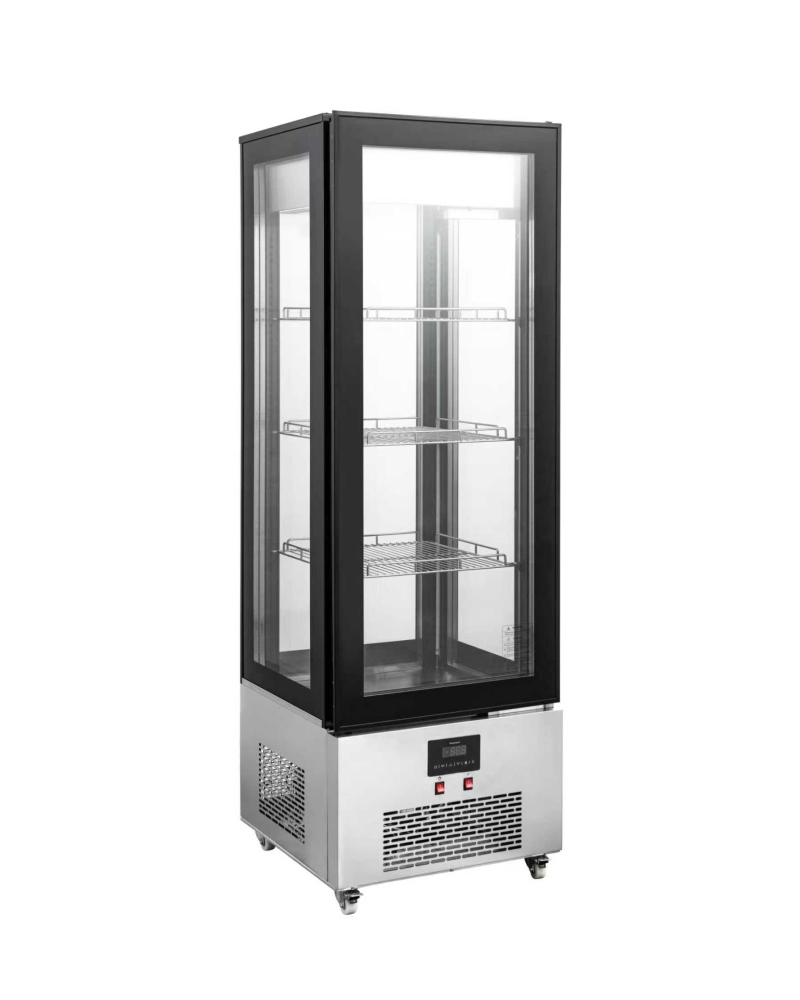
Four Sided Glass Display Freezer Showcase with Digital Temperature Controller XCLD-440C
14. Manufacturing Strengths Behind the Product
The performance of a commercial display freezer depends on more than its visible features. Manufacturing discipline influences refrigeration reliability, glass alignment, insulation, electrical safety, finish quality, shelf support, and long-term serviceability. Ningbo XiangChi Electrical Co., Ltd. has built its business around commercial display equipment and related refrigeration products.
The company was established in 2007 and has more than ten years of industry experience according to the supplied company information. It operates a modern management garden factory covering 40,000 square meters. This scale provides a foundation for organized production, material handling, quality control, testing, assembly, and product development.
A dedicated professional research and development team supports the company’s product innovation and quality improvement activities. In a product category such as vertical display refrigeration, research and development can involve cabinet structure, airflow distribution, refrigeration performance, glass construction, lighting, control interfaces, energy use, and ease of maintenance.
Advanced testing facilities are also important. Commercial refrigeration products must operate under demanding conditions, including extended running times, repeated door or access activity, changing ambient temperatures, heavy product loads, and frequent cleaning. Testing helps manufacturers identify weaknesses before products reach customers.
The company states that it has obtained CE, GS, CCC, CB, RoHS, ETL, and other major certifications for global markets. The XCLD-440C is identified with CB, CE, and GS certifications. Certification requirements vary by market and product configuration, but recognized third-party evaluation can give distributors and buyers greater confidence in electrical safety, construction, and conformity.
Production Organization
A modern factory environment can support a more structured manufacturing process. Components can be received and checked before production. Metal panels can be formed and finished according to defined specifications. Glass components can be prepared and fitted. Refrigeration, electrical, lighting, shelving, and control assemblies can then be integrated into the cabinet.
At each stage, process consistency matters. A well-aligned glass panel supports appearance and sealing. Correctly fitted insulation helps maintain thermal performance. Secure electrical connections support safe operation. Properly installed fans and refrigeration components help maintain airflow and temperature control.
Production lines also make it easier to standardize repeated operations. Standardization can reduce variation between units, support training, and simplify inspection. When a manufacturer produces multiple categories of display cabinets, experience from one product family can also support improvements in related models.
Research, Testing, and Quality Improvement
The company’s stated emphasis on innovation, quality, and service reflects the needs of international commercial-equipment buyers. A professional R&D and testing structure allows the manufacturer to evaluate new designs and make controlled improvements rather than relying only on informal adjustments.
For the XCLD-440C, relevant evaluation areas may include temperature uniformity, defrost performance, LED operation, controller response, shelf stability, glass construction, castor movement, brake function, and electrical safety. The precise testing program depends on the manufacturer’s internal procedures and certification requirements, but these areas are central to the reliability of a commercial freezer showcase.
Quality improvement is especially important because display refrigeration is used continuously. A cabinet may operate for many hours each day in a warm retail environment. Its refrigeration system, fans, controls, lighting, and structural components must work together over an extended service life.
15. Quality and Certification Considerations
Commercial buyers often need equipment that can be introduced into different national markets. Certifications such as CB, CE, and GS can help support this process by demonstrating that the product has been evaluated according to relevant technical or safety requirements.
CE marking is associated with conformity requirements for products placed on applicable European markets. GS certification is commonly recognized as an indication of tested safety in the German market context. The CB Scheme supports the mutual recognition of test reports and certificates among participating countries for certain electrical and electronic products.
Certification does not replace proper installation or maintenance. The final installation must still comply with local electrical codes, refrigerant regulations, ventilation requirements, and workplace safety rules. Buyers should also confirm that the delivered configuration, voltage, plug type, labeling, and documentation match the target market.
The manufacturer’s broader certification experience, including references to CCC, RoHS, and ETL, indicates familiarity with international compliance expectations. This can be valuable for distributors that require documentation, consistent production, and export-oriented support.
16. Recommended Commercial Applications
Ice Cream and Frozen Dessert Stores
Ice cream shops and dessert retailers can use the cabinet to display packaged ice cream, frozen cakes, popsicles, and specialty desserts. The transparent four-sided design makes colorful products visible, while the internal lighting helps create an attractive presentation.
For stores with a compact footprint, the vertical design can provide a large display area without occupying the floor space required by several horizontal freezers. Adjustable shelves allow the operator to adapt the cabinet to tubs, cartons, boxes, or individually packaged products.
Bakeries and Cake Shops
Frozen cakes, frozen pastries, and prepared dessert products can be displayed in a dedicated low-temperature cabinet. The glass enclosure supports visual presentation, which is important when customers are selecting premium or seasonal desserts.
The stainless steel body and clean glass appearance can also complement the professional image of a bakery or cake shop. Operators should confirm that each product is suitable for the selected temperature range and that packaging prevents moisture or odor transfer.
Convenience Stores and Supermarkets
Convenience stores can place the freezer in a high-traffic area to encourage impulse purchases. Supermarkets can use it as an end-cap, promotional island, or specialty frozen-food display. The castors make future layout changes easier.
The four-sided visibility is especially useful in open supermarket areas. Customers do not need to approach from one specific direction to see the products. This can support better traffic flow and improve awareness of new or seasonal items.
Hotels, Restaurants, and Foodservice Locations
Hotels and restaurants may use the cabinet for packaged desserts, frozen ingredients, specialty products, or self-service food areas. The digital controller supports routine temperature checks, while the stainless steel body fits naturally into professional environments.
Foodservice operators should position the unit away from cooking equipment, direct sunlight, high-heat exhaust, and areas where water may splash onto electrical components. Adequate space around the cabinet is necessary for safe operation and service access.
17. Installation and Daily Operating Guidance
Before installation, inspect the cabinet for visible damage and confirm that all required components are present. The unit should be moved carefully using suitable equipment and placed on a stable, level floor. Once positioned, engage the front castor brakes.
Electrical installation should follow the rating plate, user documentation, and local regulations. The appliance should be connected to a suitable grounded power supply by qualified personnel where required. Extension cords or unsuitable adapters should not be used unless specifically approved for the application.
After installation, allow the cabinet to reach its operating temperature before loading a full product assortment. The initial cooling period depends on ambient conditions, product load, and installation circumstances. Staff should confirm that the displayed temperature is appropriate before placing temperature-sensitive goods inside.
Products should be arranged without blocking air outlets or return paths. Shelves should be loaded evenly, and the display should not be packed so tightly that customers cannot identify individual products. Good organization supports both temperature performance and sales presentation.
Staff should keep the surrounding area clean and should not place objects on top of the cabinet unless the manufacturer permits it. The lighting and power buttons should be used according to the operating schedule. Any unusual alarm, temperature change, vibration, odor, or electrical behavior should be reported promptly.
18. Cleaning and Preventive Maintenance
Regular cleaning protects hygiene and preserves the appearance of the showcase. Shelves can be removed or repositioned according to the product instructions, then cleaned with suitable materials. Glass surfaces should be wiped with a non-abrasive cleaner that does not damage seals, frames, or printed markings.
Spills should be cleaned quickly, especially when they contain sugar, oils, or food particles. Accumulated residue can create odors and make later cleaning more difficult. Cleaning schedules should reflect the product category, traffic level, and local food-safety procedures.
Ventilation openings and refrigeration components should be kept free from dust. Restricted airflow can reduce performance and increase the workload on the refrigeration system. Maintenance access should be provided so qualified technicians can inspect relevant components safely.
Door or frame seals, where fitted, should be checked for damage, deformation, or gaps. A compromised seal can allow warm air and moisture to enter, increasing frost formation and energy consumption. Damaged glass, shelves, castors, or electrical components should be addressed before they create a safety risk.
Refrigerant service must be performed by qualified professionals familiar with R290 systems. Because R290 is flammable, unauthorized repairs or modifications are not appropriate. Maintenance personnel should follow all applicable safety procedures for ventilation, ignition-source control, recovery, charging, and leak detection.
19. How the Product Supports a Better Retail Experience
A commercial display freezer contributes to more than product preservation. Its design can influence how customers move through a store, how quickly they find products, and how they perceive the quality of the merchandise.
The four-sided glass structure makes the freezer a visual merchandising fixture. Products can be grouped by flavor, size, category, or price level. Lighting can draw attention to premium products, new arrivals, or promotional assortments. Adjustable shelves can be changed as the product mix evolves.
The digital controller and clear display support staff confidence. Employees can check the operating setting without opening the cabinet or relying on guesswork. The separated controls allow the display appearance and refrigeration function to be managed independently.
The stainless steel body, clean glass, and available finishes also help the freezer integrate with the broader retail design. A well-maintained cabinet can make the product area appear more professional and can support customer trust in the store’s handling standards.
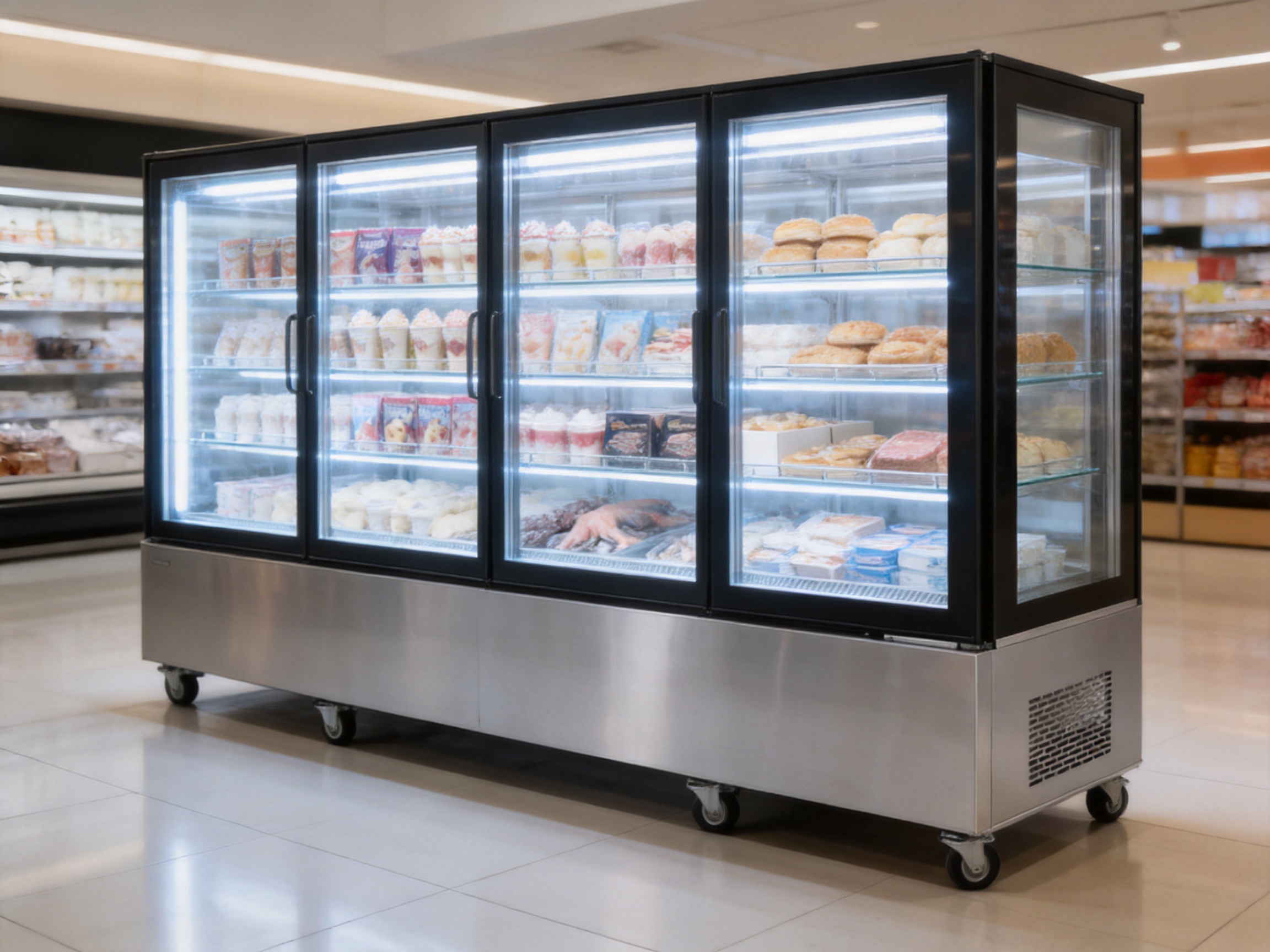
20. Purchasing Considerations for Distributors and Commercial Buyers
When evaluating a four-sided glass display freezer, buyers should consider the complete operating environment rather than focusing only on capacity. Important factors include available floor space, ambient temperature, electrical supply, product category, display orientation, expected daily usage, service access, and local compliance requirements.
The XCLD-440C provides 405 liters of volume in a vertical cabinet approximately two meters high. Buyers should measure ceiling clearance, delivery routes, doorways, elevators, and final placement areas before ordering. The cabinet’s height and net weight should be included in logistics planning.
Finish selection should be based on the intended interior. Black and white finishes may be suitable for branded retail environments, while stainless steel may be preferred for foodservice or professional kitchen applications. Distributors can offer customers a choice that supports different design requirements.
Buyers should also clarify technical details such as voltage, frequency, plug configuration, warranty terms, spare parts availability, packaging, shipping conditions, and installation instructions. These details may vary depending on the destination market and order configuration.
For larger projects, operators may benefit from reviewing the complete product range. A manufacturer specializing in vertical display coolers, countertop display refrigerators, cake showcases, sushi showcases, open display coolers, display warmers, and four-sided glass freezers can potentially support multiple departments with coordinated equipment solutions.
21. Why Manufacturing Experience Matters to OEM and Wholesale Customers
Wholesale and OEM customers often need more than a single finished product. They may require consistent specifications across multiple orders, finish options, documentation, packaging support, and communication during production. A manufacturer with an established factory, R&D team, testing resources, and export experience is better positioned to address these needs.
Ningbo XiangChi Electrical Co., Ltd. has operated since 2007 and focuses on commercial display cabinets and related equipment. Its 40,000-square-meter factory environment provides a substantial base for production organization. The company’s stated international certifications and product categories indicate experience serving markets with different technical and commercial expectations.
For distributors, product consistency is important because customers expect replacement units and repeat orders to match earlier purchases. Standardized components, controlled production processes, and documented specifications can support a more reliable supply relationship.
For OEM projects, communication between product design, engineering, production, quality control, and logistics teams is essential. The manufacturer’s dedicated R&D capabilities can help evaluate practical modifications while maintaining a clear understanding of refrigeration, electrical, safety, and manufacturing constraints.
22. Overall Product Assessment
The XCLD-440C combines the core functions required of a commercial frozen display cabinet with a strong emphasis on visibility and operational flexibility. Its four-sided triple-glass enclosure makes it suitable for open-floor merchandising. Its 405-liter capacity provides useful volume without requiring a broad horizontal footprint.
The temperature range of -18°C to 0°C supports a wide range of frozen and low-temperature display applications. R290 refrigerant reflects a modern refrigerant direction, while the ventilated cooling system and automatic defrost support practical day-to-day operation.
The product’s internal LED lighting, digital temperature controller, separated power and light buttons, adjustable tempered-glass shelves, stainless steel body, and castors with front brakes address the needs of busy commercial environments. These are not isolated decorative features; together, they support product visibility, maintenance, flexibility, mobility, and temperature management.
The manufacturer’s established history, R&D team, testing facilities, factory resources, and international certification experience add value for distributors and commercial customers seeking a dependable supply partner. The result is a display freezer that can function as both a temperature-control appliance and an important merchandising tool.
Questions and Answers
What type of equipment is the XCLD-440C?
The XCLD-440C is a four-sided glass display freezer showcase with a digital temperature controller. It is designed for commercial frozen-food storage and product presentation.
What is the capacity of the freezer?
The net volume is 405 liters, equivalent to approximately 14.3 cubic feet.
What temperature range does it provide?
The stated temperature range is -18°C to 0°C. The correct operating setting should be selected according to the product requirements and operating conditions.
Which refrigerant does the cabinet use?
The freezer uses R290 refrigerant. Service and repair should be performed by qualified technicians trained to work safely with R290 systems.
Why is four-sided glass useful?
Four-sided glass allows customers to view products from multiple directions. This gives retailers more flexibility when positioning the freezer in a central or open display area rather than only against a wall.
Does the cabinet have internal lighting?
Yes. It has brilliant internal LED lighting at four sides. A separated light button allows the lighting to be controlled independently from the main power function.
Are the shelves adjustable?
Yes. The cabinet includes adjustable tempered-glass shelves, allowing operators to adapt the internal arrangement to different product sizes and merchandising plans.
Does the freezer require manual defrosting?
The product includes automatic defrost. Regular cleaning and preventive maintenance are still necessary, but automatic defrost reduces the need for routine manual ice removal.
Can the cabinet be moved after installation?
Yes. It has four castors, with brakes on the front two. The castors assist with positioning and cleaning, while the front brakes help keep the cabinet stable after placement.
What finishes are available?
The listed finishes are black, white, and stainless steel. Availability may depend on order configuration and market requirements.
What certifications are associated with the product?
The supplied product information lists CB, CE, and GS certifications. Buyers should confirm the certification documents and market-specific compliance details for the exact configuration being ordered.
Where can the freezer be used?
Typical applications include supermarkets, convenience stores, ice cream shops, bakeries, cake stores, cafés, hotels, restaurants, food halls, and other commercial locations that need low-temperature product display.
How should products be loaded?
Products should be arranged evenly and should not block air outlets or return paths. Operators should avoid overloading the cabinet and should leave sufficient space for cold-air circulation and clear product visibility.
What makes the manufacturer suitable for wholesale buyers?
Ningbo XiangChi Electrical Co., Ltd. has operated since 2007, has a 40,000-square-meter factory environment, maintains a professional R&D team and testing facilities, and produces several categories of commercial display equipment. These resources can support product development, quality improvement, and international supply requirements.
Conclusion
The Four Sided Glass Display Freezer Showcase with Digital Temperature Controller XCLD-440C is designed for businesses that need reliable low-temperature storage and strong product visibility in the same cabinet. Its 405-liter vertical format makes effective use of floor space, while its four-sided triple-glass enclosure supports open-plan merchandising.
Ventilated cooling, automatic defrost, R290 refrigerant, digital temperature control, four-side LED lighting, adjustable tempered-glass shelves, stainless steel construction, independent power and light controls, and mobile castors provide a comprehensive feature set for commercial use.
Its advantages are strengthened by the manufacturing resources of Ningbo XiangChi Electrical Co., Ltd., including an established operating history, a large modern factory environment, professional R&D capabilities, advanced testing facilities, and experience with international certifications. For retailers, foodservice operators, wholesalers, and OEM customers, the product offers a practical combination of presentation, capacity, flexibility, and professional manufacturing support.
References
1. Product specification sheet for the Four Sided Glass Display Freezer Showcase with Digital Temperature Controller XCLD-440C.
2. Manufacturer-provided technical information covering refrigerant, climate type, volume, temperature range, input power, dimensions, and net weight.
3. Manufacturer-provided standard feature list for commercial display refrigeration equipment.
4. Manufacturer company profile concerning factory capacity, product development, testing facilities, certifications, and industry experience.
5. General commercial refrigeration principles concerning temperature control, ventilated cooling, automatic defrost, product loading, and preventive maintenance.
6. General guidance on the responsible handling and servicing of R290 refrigerant in commercial refrigeration systems.
Product: Four Sided Glass Display Freezer Showcase with Digital Temperature Controller XCLD-440C

You May Also Like
.jpg?imageView2/2/w/500/h/500/format/jp2/q/100 "Four Sides Glasses Display Cooler")
.jpg?imageView2/2/w/500/h/500/format/jp2/q/100 "White 4-Sided Glass Refrigerated Display Case")
.jpg?imageView2/2/w/500/h/500/format/jp2/q/100 "Refrigerated Display Cake Countertop Four Sides Glasses Display Cooler")
.jpg?imageView2/2/w/500/h/500/format/jp2/q/100 "Four Sides Glasses Display Cooler")

-
- Navigation
- Home
- About Us
- Products
- News
- Contact Us
 East Zone, Guanhaiwei Industrial Park, Cixi City, Ningbo, Zhejiang, China
 +86-574-63668678
 +86-574-63668108
Copyright © Ningbo XiangChi Electrical Co.,Ltd All Rights Reserved.
