
 简体中文
 English
 Español

News
Commercial Refrigerated Display Cake Showcase for Professional Food Presentation
A well-designed refrigerated cake showcase does much more than keep desserts cold. It protects delicate products, presents them attractively, supports efficient service, and helps retailers turn visual appeal into purchasing decisions. The Snack Food Commercial Refrigerated Display Cake Showcase, identified as model XC-270ZS, is designed for food businesses that need dependable chilled presentation in a compact and professional format.
Cake shops, bakeries, cafés, hotel restaurants, dessert counters, convenience stores, supermarkets, and food-service operators all face the same challenge: products must remain fresh while being clearly visible to customers. A refrigerated display cabinet must therefore combine temperature management, product visibility, structural durability, operational convenience, and visual consistency. The XC-270ZS addresses these requirements through a four-sided glass presentation concept that allows customers to view displayed products from multiple directions.
Unlike an ordinary refrigerator, a cake showcase is part of the sales environment. Its purpose is not simply to store food. It must make cakes, pastries, snacks, and other chilled products look inviting while maintaining an appropriate refrigerated environment. The cabinet becomes part of the store’s merchandising strategy, helping operators display products at the point where customers make purchasing decisions.
The product is manufactured by Ningbo XiangChi Electrical Co., Ltd., a specialist producer of vertical display cabinets, cake cabinets, and warming cabinets. Established in 2007, the company has developed more than a decade of experience in commercial refrigeration and food-display equipment. Its modern management garden factory covers approximately 40,000 square meters and includes professional research and development resources, production facilities, and advanced testing capabilities.
With certifications including CE, GS, CCC, CB, RoHS, and ETL, the manufacturer is positioned to serve customers in a wide range of international markets. These certifications demonstrate attention to electrical safety, product compliance, material requirements, and market access. For importers, distributors, and commercial users, certification support can simplify purchasing decisions and provide greater confidence in equipment suitability.
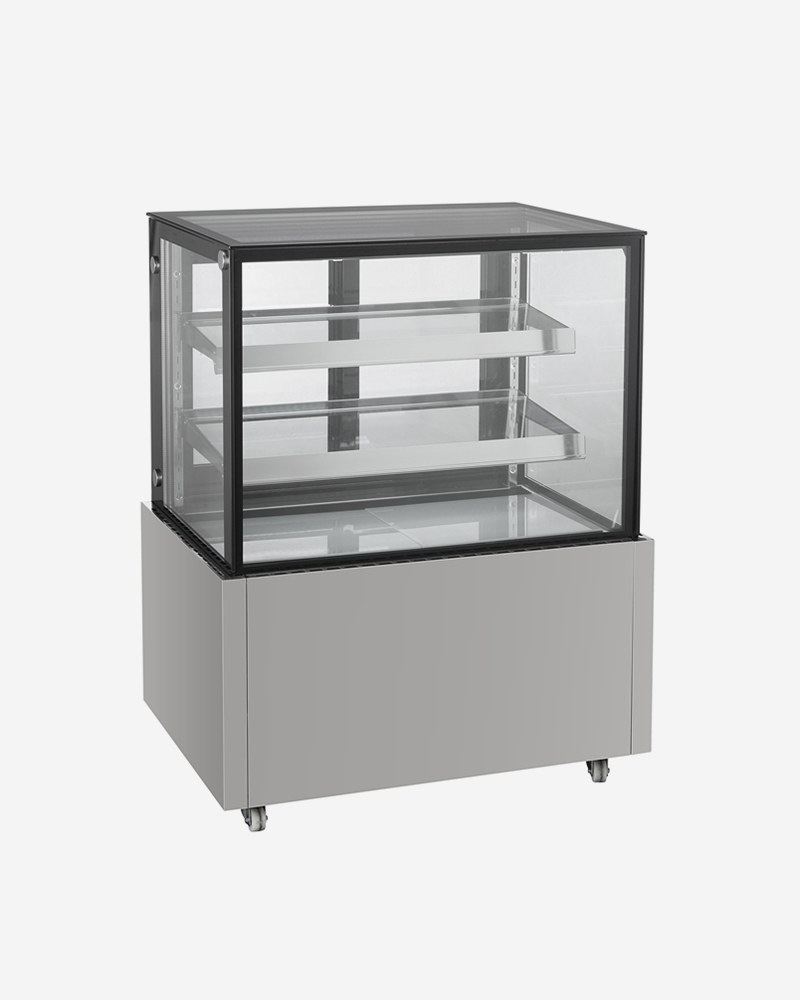
Snack Food Commercial Refrigerated Display Cake Showcase
Why Refrigerated Cake Display Equipment Matters
Fresh cakes and desserts are sensitive products. Their appearance, texture, aroma, filling, icing, and decoration can all be affected by unsuitable storage conditions. Products may lose quality when exposed to excessive heat, unstable temperatures, dry air, poor handling, or repeated door opening. A dedicated refrigerated display cabinet helps create a controlled environment while keeping products available for immediate customer selection.
A cake showcase also creates a direct connection between refrigeration and merchandising. Products remain visible instead of being hidden behind an opaque refrigerator door or stored in a back-room cabinet. Customers can compare colors, shapes, sizes, and decoration before making a purchase. This is particularly important for impulse purchases, where visual presentation can influence buying behavior within a few seconds.
For a bakery, the display cabinet can support a complete product story. Cakes may be arranged by flavor, size, occasion, or price category. Individual pastries can be grouped as premium items, daily favorites, or promotional products. For a café, the cabinet can complement coffee and beverage sales by presenting desserts near the ordering point. In a hotel or restaurant, it can help create a polished service counter and improve product visibility during busy periods.
Commercial refrigeration must also support food safety and operational discipline. A dedicated cabinet provides a defined place for chilled products, reducing the need to move desserts repeatedly between storage areas and service counters. When the cabinet is correctly loaded, cleaned, monitored, and maintained, it can help operators establish more consistent handling practices.
Product Overview: XC-270ZS Snack Food Commercial Refrigerated Display Cake Showcase
The XC-270ZS is a commercial refrigerated display cake showcase intended for businesses that need attractive chilled presentation for cakes, snacks, pastries, and related food products. Its showcase format emphasizes visibility and accessibility while preserving the function of refrigerated storage.
The four-sided glass design is a central feature. Transparent panels allow customers and staff to view products from different angles, which is especially useful when the cabinet is placed in an open retail area rather than against a wall. The display can be approached from several directions, making it suitable for central counters, island merchandising arrangements, reception areas, food courts, and service zones.
A four-sided glass cabinet can provide a more open visual effect than a conventional front-glass refrigerator. When lighting and product arrangement are coordinated, customers can see more of the cabinet interior and identify products more easily. This can help reduce visual obstruction and support a clean, modern commercial appearance.
The cabinet is designed for professional use rather than casual household storage. Its role is to operate as part of a commercial sales environment, where appearance, reliability, hygiene, and ease of use are equally important. The unit can be incorporated into bakery counters, café interiors, dessert shops, supermarkets, snack retailers, and other food-service locations.
Because the available material does not specify a complete technical data sheet, buyers should confirm final details such as external dimensions, internal capacity, temperature range, refrigerant, rated power, voltage, frequency, shelf configuration, lighting, packaging, and optional features before placing an order. This approach allows the equipment to be matched accurately with local regulations, store layout, and product requirements.
Four-Sided Glass Visibility and Merchandising Value
The main competitive advantage of the XC-270ZS is its focus on visibility. Traditional refrigeration equipment may provide only a single viewing face, limiting customer access to the displayed information. A four-sided glass showcase creates a broader visual field and allows the unit to function as a display centerpiece.
Greater visibility can be particularly valuable in stores with open-plan layouts. When a cabinet is positioned in the middle of a sales area, customers may encounter it while approaching from different directions. Products remain visible even when the shopper does not approach the cabinet from the front. This can create more opportunities for discovery and can make the cabinet effective as both storage equipment and a merchandising fixture.
Transparent surfaces also support staff efficiency. Employees can check product availability, arrangement, and presentation without opening the cabinet unnecessarily. Fewer unnecessary openings may help reduce temperature disturbance and support more disciplined operation. Staff can identify items that require replenishment, products that need rearrangement, or areas that require cleaning while the cabinet remains closed.
For premium cakes, presentation quality is closely connected with perceived value. Customers expect decorated cakes to look clean, bright, and carefully protected. Glass panels help establish a visual separation between the products and the surrounding service environment. This can communicate hygiene and professionalism while allowing the details of the products to remain visible.
The glass design also supports flexible store planning. In a wall-mounted arrangement, the cabinet can present products toward the main customer route. In a central arrangement, its multiple viewing sides can support circulation around the unit. In a café or hotel lobby, it can function as a visual attraction without creating a solid barrier within the room.
Compared with closed storage, open visual presentation can contribute to stronger product communication. A customer does not need to ask staff what is available before seeing the selection. This may shorten the decision process, improve customer engagement, and make daily promotions easier to communicate through product arrangement and signage.
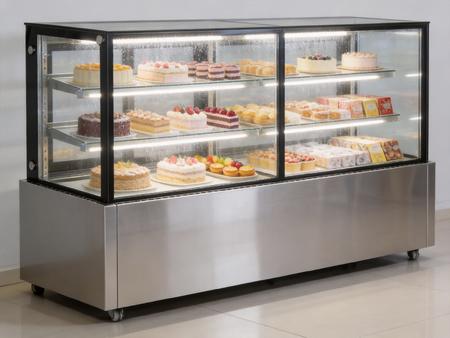
Refrigerated Protection for Cakes and Snacks
Display appeal must be balanced with product protection. A cake showcase needs to maintain a suitable chilled environment while allowing customers to see products clearly. The refrigerated structure of the XC-270ZS is intended to help preserve the quality of displayed goods during normal commercial operation.
Refrigeration is particularly important for products containing cream, custard, mousse, fruit, dairy fillings, or other temperature-sensitive ingredients. The exact storage requirements vary according to the recipe, packaging, local food regulations, and manufacturer guidance for each product. Operators should always establish product-specific temperature procedures rather than assuming that one setting is appropriate for every type of food.
A professional display cabinet can help separate customer-facing presentation from back-room storage. Products can be placed in the showcase in controlled quantities, while reserve stock remains in a larger cold-storage system. This arrangement may reduce repeated handling and help staff maintain a more organized replenishment routine.
Refrigerated display equipment also helps protect products from dust, accidental contact, and the general movement of a busy retail environment. Glass panels provide a physical barrier while preserving visual access. In a bakery or café, this can be an important part of the overall hygiene and presentation strategy.
Operators should avoid overloading the cabinet or blocking internal air circulation. Display shelves and products should be arranged so that cold air can circulate as intended. Cakes should be placed securely, with adequate spacing between products where necessary. Staff should also follow a cleaning schedule for glass surfaces, shelves, seals, drip areas, and other accessible components.
Design Advantages Compared with Conventional Display Refrigerators
The XC-270ZS competes in a market that includes upright glass-door refrigerators, countertop display coolers, open display coolers, and built-in pastry counters. Each format has a different purpose. The four-sided cake showcase offers several advantages when visibility and presentation are more important than maximum storage volume.
| Equipment format | Typical strength | Potential limitation | Why a four-sided cake showcase may be preferred |
|---|---|---|---|
| Opaque commercial refrigerator | Efficient enclosed storage | Products are hidden from customers | Provides direct product visibility and sales presentation |
| Single-front glass cabinet | Good visibility from one main direction | Less effective in open-plan positioning | Allows viewing from multiple sides |
| Open display cooler | Fast customer access | Greater exposure to ambient conditions and contact | Offers protected presentation behind glass |
| Countertop display cooler | Compact placement on an existing counter | Usually limited in height and display impact | Can create a stronger standalone visual feature |
| Built-in cake counter | Integrated appearance in a fixed shop design | Less flexible to relocate or replace | Can provide more installation flexibility as a dedicated cabinet |
| Four-sided glass showcase | Multi-angle display and product visibility | Requires careful cleaning and product arrangement | Combines commercial refrigeration with 360-degree merchandising |
This comparison does not mean that one equipment type is ideal for every business. The correct choice depends on menu, sales volume, store design, available floor space, product sensitivity, and operating procedures. The four-sided showcase is especially valuable when the cabinet itself needs to attract attention and communicate product quality.
Compared with an open display cooler, the glass-enclosed design can offer a more controlled presentation environment. Open cases may expose food to more ambient air movement and customer contact, while a glass showcase provides a visible barrier. Compared with a single-front cabinet, the four-sided format can make better use of central floor space and support customer circulation from more than one direction.
Applications Across Different Commercial Environments
Bakeries and Cake Shops
In a bakery, the cabinet can be used to present whole cakes, sliced cakes, cream desserts, pastries, and seasonal products. The four-sided structure can help customers view decorated products from different angles, which is useful when the appearance of the top, sides, and finishing details influences purchasing decisions.
A cake shop may arrange the showcase by product type, price point, or occasion. For example, one section can feature celebration cakes, another can show individual desserts, and a third can present limited-time products. Clear visual organization helps customers compare options while enabling staff to replenish the display efficiently.
Cafés and Coffee Shops
Cafés often benefit from placing desserts near the ordering area. Customers who arrive intending to purchase coffee may be encouraged to add a pastry or cake when the products are displayed attractively. A refrigerated showcase can make this cross-selling opportunity more visible without requiring additional staff explanation.
The cabinet may also help maintain a consistent interior style. Its glass construction can create a clean, contemporary appearance that complements a range of café designs. Because customers can view the selection while waiting in line, the display may contribute to faster ordering and better use of waiting time.
Hotels and Restaurants
Hotels may use cake showcases in lobby cafés, breakfast areas, banquet preparation zones, or dessert counters. Restaurants can use them for chilled desserts, prepared cakes, and specialty snacks. A professionally presented refrigerated cabinet can reinforce the impression that food is handled carefully and presented to a high standard.
In hospitality environments, equipment must often balance appearance with practical service requirements. Staff need to identify products quickly, replenish them without disrupting customers, and clean the unit regularly. A display cabinet with broad visibility can support both guest presentation and back-of-house oversight.
Supermarkets and Convenience Stores
Retail stores can use a refrigerated cake showcase to create a focused dessert zone. The cabinet may be placed near bakery products, ready-to-eat foods, beverages, or checkout routes. Its visual presence can help distinguish premium chilled products from standard packaged goods.
In convenience retail, customers often make quick decisions. A clearly arranged display can communicate product availability immediately. Product labels, pricing, allergens, and promotional information can be positioned near the cabinet according to local requirements and store policy.
Catering and Food-Service Operations
Catering businesses may use a cake showcase for temporary or permanent service points, depending on the layout and equipment configuration. It can support events where desserts need to remain visible and chilled before service. Operators should confirm transport, electrical, and installation requirements if the unit will be used in changing locations.
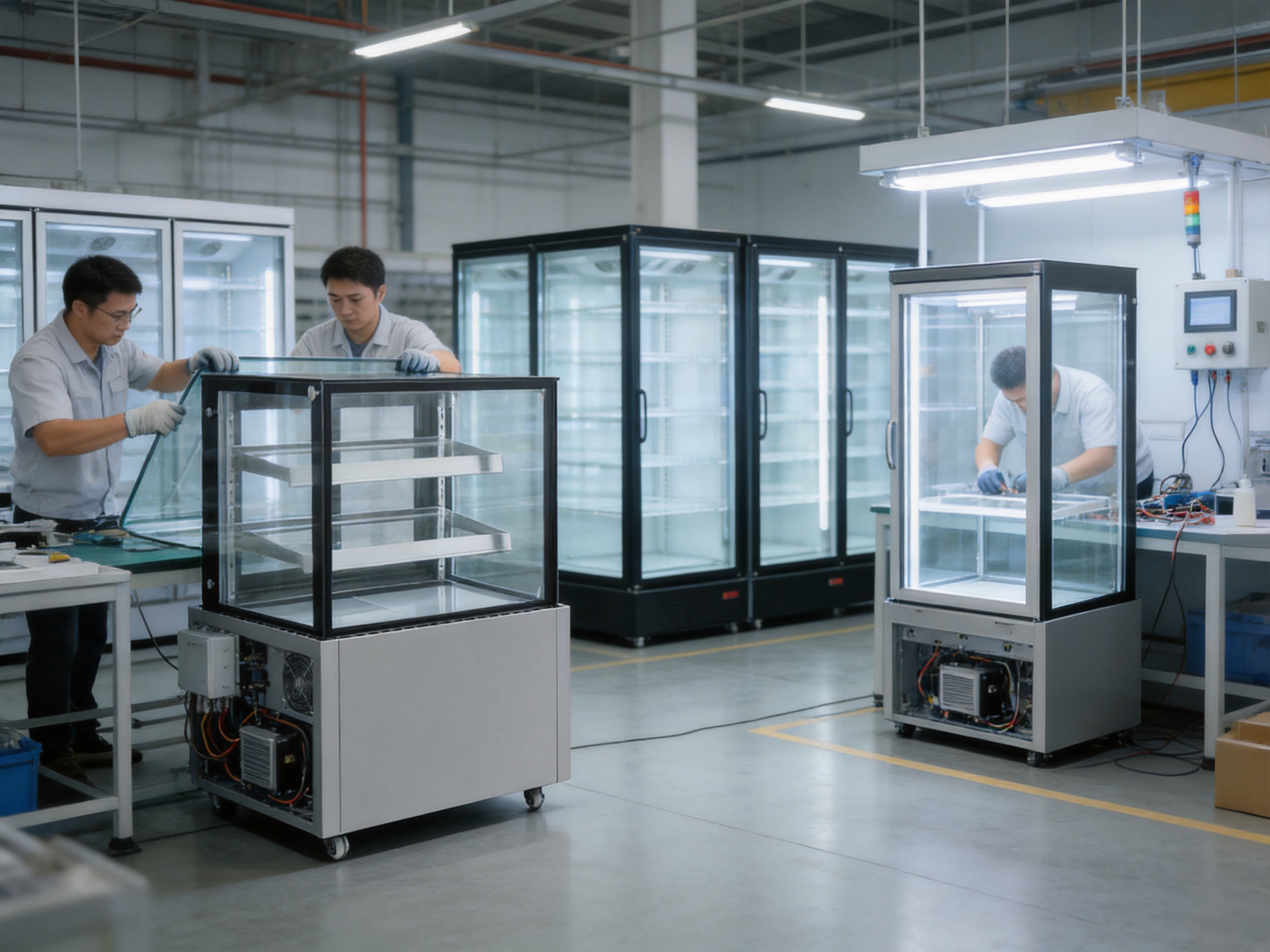
Manufacturing Strengths and Product Development Capability
The quality of commercial refrigeration equipment depends heavily on the manufacturing organization behind the product. A cabinet may look attractive, but long-term performance also depends on design control, component selection, assembly consistency, testing, and after-sales support. The manufacturer of the XC-270ZS has built its business around commercial display equipment and related refrigeration products.
Ningbo XiangChi Electrical Co., Ltd. was established in 2007 and has accumulated more than ten years of experience in the sector. This experience is relevant because commercial refrigeration requires knowledge of both electrical systems and food-display applications. Product development must account for refrigeration performance, cabinet construction, glass integration, appearance, safety, cleaning, and daily operator behavior.
The company operates a modern management garden factory covering approximately 40,000 square meters. A facility of this scale can support organized material flow, production planning, quality management, product assembly, and testing. It also provides a foundation for serving wholesale and international customers that need repeatable production and stable supply.
The company maintains a professional research and development team. A dedicated R&D function allows product improvements to be approached systematically rather than relying only on isolated production changes. Research and development can support improvements in cabinet appearance, internal layout, refrigeration performance, energy use, safety, serviceability, and compatibility with market requirements.
Advanced testing facilities are another important strength. Commercial refrigeration products should be checked for electrical safety, operating stability, temperature behavior, structural performance, and general reliability before shipment. Testing helps identify defects and reduces the risk that products with unsuitable performance will reach customers.
Production lines and R&D facilities also enable the company to continue refining its product range. The manufacturer produces vertical display cabinets, cake cabinets, warming cabinets, and other commercial display equipment. This broader product experience can support knowledge sharing between product categories, including lessons about visibility, heat management, glass construction, control systems, and customer needs.
Quality Management and International Certification
Commercial refrigeration is an international business, and products may need to meet different electrical, safety, environmental, and market-entry requirements. The manufacturer reports certifications including CE, GS, CCC, CB, RoHS, and ETL. These certifications are significant because they indicate that products or product families have been evaluated against applicable standards or conformity requirements.
CE marking is associated with conformity requirements for products placed on the European market. GS is a recognized German product-safety mark. CCC is used for applicable products in the Chinese market. CB provides an international system for recognition of electrical and electronic test results. RoHS addresses restrictions on certain hazardous substances. ETL certification is widely recognized in North America for applicable electrical products.
The exact scope of each certification depends on the model, configuration, market, and certificate documentation. Buyers should request current certificates and verify that the specific XC-270ZS configuration is covered before making compliance claims in a particular country. Even so, the manufacturer’s certification portfolio demonstrates an established commitment to serving international customers.
Quality should not be viewed as a single inspection performed at the end of production. A reliable manufacturing process begins with suitable design and continues through incoming material control, assembly, wiring, refrigeration-system integration, glass installation, functional testing, packaging, and shipment preparation.
For distributors and importers, consistent quality is especially important. A product that performs well in one shipment but varies in another can create installation problems, warranty costs, and damage to customer relationships. A structured factory, professional engineering team, and testing capability can help reduce this risk by making production more controlled and repeatable.
Manufacturing Process Considerations
Design and Engineering
The production process begins with a design that balances appearance, refrigeration requirements, usability, and manufacturability. A four-sided glass cabinet requires careful coordination between transparent panels, frame structure, shelves, doors or access areas, lighting, electrical components, and refrigeration components. Engineering decisions affect both the final appearance and the long-term service experience.
Design teams must consider how products will be loaded, how staff will clean the cabinet, how customers will view the interior, and how service technicians will access key components. A visually attractive design is most valuable when it also remains practical during daily operation.
Material and Component Selection
Commercial display cabinets depend on the quality of their materials and components. Glass must be suitable for the intended application. Structural parts must maintain alignment and support the display load. Insulation, seals, shelves, fans, controls, lighting, and refrigeration components must work together as a system.
Material selection also affects hygiene and maintenance. Smooth surfaces are easier to wipe and inspect. Properly finished edges can reduce areas where dirt accumulates. Durable shelf supports and well-fitted seals can contribute to a more stable service life.
Cabinet Assembly
Cabinet assembly requires dimensional control. Glass panels, frames, shelves, and access components need to align correctly so that the finished unit looks professional and operates smoothly. Poor alignment can affect appearance, cleaning, door performance, or sealing. Organized production lines and trained personnel help maintain consistency during this stage.
Refrigeration and Electrical Integration
The refrigeration system and electrical system must be installed in a controlled manner. Wiring should be routed safely, connections should be secure, and components should be checked before the cabinet is released. Refrigeration performance depends on the coordinated operation of the compressor, condenser, evaporator, fans, controls, insulation, and airflow paths.
The cabinet’s design should help prevent avoidable operating problems, such as blocked air passages, poor access for maintenance, or excessive heat accumulation around critical components. Final configuration should be checked against the customer’s voltage and frequency requirements.
Testing and Inspection
Testing is an essential part of commercial equipment production. Functional checks may include electrical operation, refrigeration startup, temperature behavior, lighting, controls, fan operation, cabinet appearance, and general assembly quality. Testing facilities enable the manufacturer to evaluate products before shipment instead of relying only on customer feedback after installation.
Inspection should also consider packaging. Glass products require careful protection during handling and transport. Appropriate packaging design can reduce the risk of damage caused by vibration, impact, moisture, or improper stacking. Importers should follow the manufacturer’s instructions for unloading, storage, and installation.
Operational Benefits for Commercial Users
The XC-270ZS can contribute to a more organized sales counter. Its dedicated display function gives staff a clear location for chilled cakes and snacks, helping prevent products from being placed in unsuitable areas. A defined presentation zone can make stock rotation and cleaning routines easier to manage.
Visibility can also reduce the need for repeated cabinet opening. Staff can inspect the display from outside, while customers can see the available selection without direct handling. This supports a more orderly shopping experience and may help preserve the cabinet’s internal conditions during busy periods.
The unit can support flexible merchandising. Product groups can be rearranged according to season, time of day, sales performance, or promotional campaigns. A bakery might highlight festive cakes during holidays, individual desserts during afternoon service, or premium items during special events. Because the cabinet itself is a visual fixture, rearrangement can refresh the appearance of the sales area without major renovation.
Another benefit is the potential to improve space utilization. A four-sided cabinet can serve multiple customer routes and may be more effective than a single-facing unit in a central position. The best placement depends on clearances, electrical access, ventilation, staff movement, and local safety requirements, but the design offers more layout possibilities than a wall-only display.
For businesses operating several branches, standardized display equipment can help create a consistent brand environment, even when individual stores have different layouts. Consistent cabinet design may support common merchandising guidelines, product placement methods, cleaning procedures, and staff training.
Energy and Responsible Operation
Commercial refrigeration operates for long periods, so responsible use is important. The cabinet should be installed in a location appropriate for its design, away from avoidable heat sources and with adequate ventilation around the refrigeration system. Operators should follow the manufacturer’s installation instructions and avoid placing the unit where ambient conditions exceed its intended operating environment.
Energy performance depends on more than the cabinet alone. Correct product loading, clean condenser surfaces, intact door or panel seals, appropriate temperature settings, and regular maintenance all influence operating efficiency. Staff should avoid leaving access openings open longer than necessary and should not load products while they are still excessively warm unless the equipment is specifically designed for that purpose.
Cleaning also contributes to responsible operation. Dust and grease accumulation around heat-rejection components can reduce efficiency and increase stress on the refrigeration system. A maintenance schedule should identify which components can be cleaned by trained staff and which tasks require qualified service personnel.
Because the provided product information does not include a verified energy-consumption figure, buyers should request the relevant technical data for the intended configuration. Energy requirements may vary according to voltage, climate class, refrigerant system, lighting, temperature setting, and operating conditions.
Installation and Maintenance Guidance
Before installation, operators should confirm the cabinet’s dimensions and ensure that the planned location provides sufficient space for delivery, positioning, cleaning, and service access. The floor or counter must be stable and capable of supporting the equipment. The cabinet should be level so that doors, shelves, drainage, and refrigeration functions operate correctly.
Electrical requirements must be checked before connection. The supply should match the nameplate information, and the installation should comply with local electrical regulations. Where required, a qualified electrician should complete the connection. Extension cords, overloaded outlets, and unsuitable adapters should be avoided.
After installation, the cabinet should be allowed to operate according to the manufacturer’s commissioning instructions before products are loaded. Staff should confirm that the internal environment has reached the required operating condition. Product loading should then be carried out without blocking airflow or exceeding shelf capacity.
Daily maintenance may include wiping glass panels, cleaning food-contact surfaces, checking product arrangement, removing spills, inspecting seals, and monitoring temperature. Periodic maintenance may include condenser cleaning, electrical inspection, refrigeration-system checks, fan inspection, and verification of control accuracy.
Employees should receive training on safe loading, cleaning chemicals, glass handling, temperature monitoring, and emergency procedures. Training is particularly important when multiple staff members operate the cabinet across different shifts. A simple written checklist can improve consistency and provide a record of completed maintenance tasks.
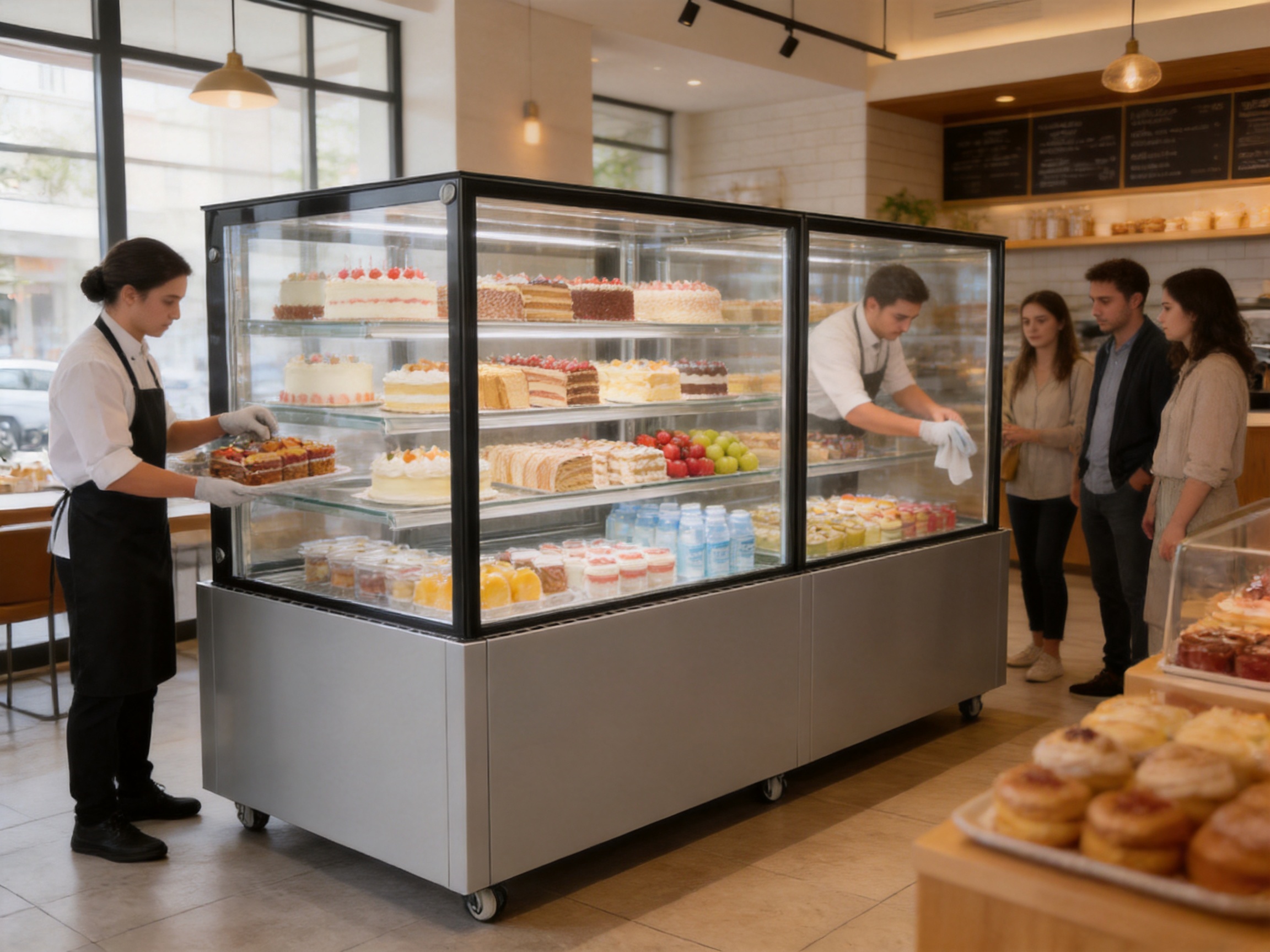
How to Select the Correct Configuration
Before purchasing the XC-270ZS or a similar refrigerated cake showcase, a business should define its operating requirements. The first consideration is product type. Cakes containing cream, fruit, custard, mousse, or dairy ingredients may require different storage conditions from packaged snacks or dry pastries. The cabinet should be selected according to the most demanding product requirement that will be displayed.
The second consideration is capacity. A cabinet that is too small may require frequent replenishment and create overcrowding. A cabinet that is too large may consume unnecessary floor space and energy. Buyers should estimate the number of products displayed during normal service, peak periods, weekends, and seasonal events.
Store layout is equally important. A four-sided model is most valuable when customers can approach it from more than one direction. If the unit will be placed against a wall, a front-facing design may sometimes be more practical. If it will stand near a central walkway, the four-sided concept can provide a stronger advantage.
Buyers should also confirm the required electrical specification, local certification needs, ambient operating conditions, delivery route, packaging dimensions, warranty terms, spare-parts availability, and technical support. These points are particularly important for international orders.
| Selection factor | Questions to confirm | Why it matters |
|---|---|---|
| Product type | What cakes, snacks, or desserts will be displayed? | Determines suitable refrigeration and presentation requirements |
| Capacity | How many products are displayed during normal and peak periods? | Prevents overloading or inefficient use of space |
| Location | Will customers approach from one side or several sides? | Helps determine whether four-sided visibility provides maximum value |
| Electrical supply | What voltage and frequency are available? | Ensures compatibility and safe operation |
| Compliance | Which local certifications or documents are required? | Supports legal installation and market access |
| Maintenance | Who will clean and service the cabinet? | Helps establish reliable operating procedures |
| Logistics | Can the unit pass through doors, elevators, and delivery routes? | Reduces installation delays and transport risk |
Competitive Positioning of the Product
The XC-270ZS is positioned for customers who value both refrigeration and visual merchandising. Its strongest distinction is not simply that it is a chilled cabinet, but that it is designed to make food presentation a central part of the equipment’s function.
Many low-cost display refrigerators compete primarily on initial purchase price. However, commercial users should consider the complete operating value of a cabinet. Visibility, product protection, cleaning requirements, reliability, certification, serviceability, and manufacturing consistency all affect the long-term cost of ownership.
A product with broad viewing angles may help a retailer make better use of central floor space. A product supported by an experienced manufacturer may reduce uncertainty during customization, documentation, and after-sales service. A product manufactured with structured testing may provide greater confidence than equipment selected only on appearance.
The manufacturer’s broader product experience also offers a potential advantage for distributors and project buyers. Customers may be able to source related display equipment, including vertical display cabinets, countertop display coolers, cake showcases, display warmers, and other commercial refrigeration products from an experienced specialist. This can simplify product selection and support a more consistent equipment program.
International certification capability is another competitive consideration. Importers often need documentation for customs, electrical approval, retail installation, or internal procurement procedures. A supplier familiar with international certification can be better prepared to discuss market-specific requirements, although every buyer should still verify the documentation applicable to the exact order.
Role of Research and Development in Product Improvement
Research and development is essential in a competitive commercial refrigeration market. Customer expectations change as stores adopt new layouts, food businesses introduce new products, and regulations evolve. An R&D team can help a manufacturer respond through product refinement rather than relying on outdated designs.
For a refrigerated cake showcase, development priorities may include improved viewing angles, easier cleaning, better shelf usability, more convenient controls, stronger structural integration, refined lighting, improved temperature stability, and reduced service complexity. Not every improvement is visible to the customer, but many influence daily operating costs and equipment life.
Engineering feedback can also come from distributors, installers, service technicians, and end users. Their experience may identify common loading problems, transport concerns, maintenance access issues, or regional preferences. A manufacturer that remains engaged with these practical considerations can continue improving both products and support systems.
The company’s stated commitment to innovation, quality, and service reflects the importance of this development process. For international partners, cooperation with a manufacturer’s R&D team can be valuable when a project requires a particular configuration, documentation package, or adaptation to local market conditions.
Best Practices for Product Presentation
The performance of a display cabinet depends partly on how it is used. Even a high-quality showcase can look ineffective when products are poorly arranged. Cakes should be placed at visually comfortable heights, with enough space for customers to distinguish one item from another. Similar products can be grouped together, while premium or promotional products can be placed in prominent positions.
Labels should be clear and easy to read without blocking the view of the products. Price, flavor, size, allergen, and ingredient information should be provided according to applicable rules. Staff should remove empty trays and adjust displays regularly so that the cabinet remains attractive throughout the day.
Products should be rotated according to the business’s food-safety system. Older products should not be hidden behind newly prepared items. A visible and orderly display can support both customer confidence and staff accountability.
Glass should be cleaned frequently because fingerprints, condensation, dust, and smudges reduce visibility. Cleaning products must be suitable for the relevant surfaces and should not leave residues near food. Staff should follow the manufacturer’s instructions for removing shelves or internal components.
Conclusion
The Snack Food Commercial Refrigerated Display Cake Showcase, model XC-270ZS, is designed for businesses that need more than ordinary cold storage. Its four-sided glass format combines refrigerated product protection with multi-angle visibility, allowing cakes, snacks, pastries, and desserts to become a central part of the customer experience.
The product can provide advantages over conventional opaque refrigerators, single-front display cabinets, and open cases when a business requires flexible placement and broad visual access. It is suitable for bakeries, cafés, hotels, restaurants, supermarkets, convenience stores, dessert shops, and other commercial food environments.
Its value is supported by the manufacturing capabilities of Ningbo XiangChi Electrical Co., Ltd. The company has operated since 2007, maintains a modern 40,000-square-meter factory, employs a professional R&D team, and uses advanced testing facilities. Its experience in vertical display cabinets, cake cabinets, and warming cabinets provides a focused foundation for commercial display equipment development.
Certification coverage including CE, GS, CCC, CB, RoHS, and ETL further demonstrates an orientation toward international markets. Buyers should confirm the exact certification and technical documentation for the required configuration, but the manufacturer’s established compliance experience is a meaningful advantage for global procurement.
For the best results, the showcase should be selected according to product requirements, installed correctly, loaded without blocking airflow, cleaned consistently, and maintained through a documented service program. When these practices are combined with effective merchandising, the XC-270ZS can serve as both a reliable refrigerated cabinet and a valuable sales-support tool.
Questions and Answers
What is the XC-270ZS refrigerated cake showcase?
The XC-270ZS is a commercial refrigerated display cabinet designed for presenting cakes, snacks, pastries, desserts, and related chilled foods. Its four-sided glass construction allows products to be viewed from multiple directions while they remain inside a refrigerated display environment.
What types of businesses can use this product?
The showcase can be used by bakeries, cake shops, cafés, coffee shops, hotels, restaurants, supermarkets, convenience stores, dessert retailers, catering businesses, and other food-service operators that need attractive chilled product presentation.
What is the main advantage of four-sided glass?
Four-sided glass provides broad visibility around the cabinet. This is especially useful when the unit is positioned in the center of a store, near a customer walkway, or in another location where shoppers may approach from several directions.
Is the cabinet suitable for all cakes?
Suitability depends on the ingredients, preparation method, packaging, and required storage temperature of each product. Businesses should confirm the product’s refrigeration requirements and compare them with the cabinet’s verified technical specifications before use.
How does the product compare with an open display cooler?
An open display cooler provides direct customer access but may expose food and the refrigerated space more openly to ambient conditions and customer contact. A glass-enclosed cake showcase offers visible presentation behind a protective barrier and may be more suitable for delicate or premium products.
Can the cabinet be placed in the center of a store?
The four-sided design is suitable for consideration in central or open-plan positions, provided that the installation location has adequate floor stability, electrical access, ventilation, customer clearance, and service access. Final placement should follow the manufacturer’s installation requirements.
What information should be confirmed before ordering?
Buyers should confirm dimensions, capacity, temperature range, electrical specification, refrigerant, shelf arrangement, lighting, packaging dimensions, operating conditions, certification documents, warranty terms, spare-parts availability, and delivery requirements.
Does the manufacturer support international markets?
The manufacturer reports certifications including CE, GS, CCC, CB, RoHS, and ETL and describes its products as serving global customers. Importers should request current documentation for the exact model and configuration required in their market.
Why is factory testing important?
Testing helps verify electrical operation, refrigeration behavior, controls, lighting, assembly quality, and other functional characteristics before shipment. It can reduce the risk of receiving equipment with defects that might otherwise appear only after installation.
How should the showcase be maintained?
Routine maintenance should include cleaning glass and internal surfaces, checking product arrangement, monitoring temperature, inspecting seals, removing spills, and keeping heat-rejection areas clean. More technical refrigeration and electrical work should be performed by qualified service personnel.
Can the cabinet improve sales presentation?
It can support sales presentation by keeping products visible, organized, and protected near the customer purchasing area. Effective merchandising still depends on product arrangement, clear labeling, suitable lighting, cleanliness, and regular replenishment.
Is energy consumption specified in the available product information?
No verified energy-consumption figure is included in the supplied information. Buyers should request the current technical data for the exact model, electrical configuration, and operating conditions before evaluating energy performance.
References
1. Manufacturer-provided product information for the XC-270ZS Snack Food Commercial Refrigerated Display Cake Showcase.
2. Manufacturer-provided company profile for Ningbo XiangChi Electrical Co., Ltd., including factory history, production experience, research and development capability, and certification information.
3. General commercial refrigeration principles concerning product visibility, temperature control, food presentation, cleaning, and preventive maintenance.
4. General retail merchandising practices for bakery products, cakes, pastries, snacks, and chilled desserts.
5. General international product-compliance concepts associated with CE, GS, CCC, CB, RoHS, and ETL certification systems.
Product: Snack Food Commercial Refrigerated Display Cake Showcase

You May Also Like





-
- Navigation
- Home
- About Us
- Products
- News
- Contact Us
 East Zone, Guanhaiwei Industrial Park, Cixi City, Ningbo, Zhejiang, China
 +86-574-63668678
 +86-574-63668108

Copyright © Ningbo XiangChi Electrical Co.,Ltd All Rights Reserved.
