
 简体中文
简体中文 English
 Español
News
Single Curve Cake Display Warmer for Professional Food Merchandising
In modern foodservice environments, a display warmer is more than a heating appliance. It is a merchandising tool, a food protection system, and a presentation platform that influences customer confidence at the moment of purchase. The Single Curve Cake Showcase Display Warmer, model XCR-160L, is designed for bakeries, cafes, convenience stores, hotels, canteens, dessert shops, supermarkets, and quick-service food counters that need to present heated cakes, pastries, snacks, and prepared foods in an attractive and practical way.
This product belongs to the Display Warmer category and is engineered around a 160-liter capacity, a working temperature range of 30 to 90 degrees Celsius, and a 1500-watt input power configuration. Its compact external size of 856 by 568 by 685 millimeters allows it to fit on service counters while still offering enough internal space for high-visibility product arrangement. With a net weight of 56 kilograms and a gross weight of 58 kilograms, it is sturdy enough for professional use yet practical for distribution, installation, and relocation within commercial settings.
The main purpose of this article is to explain how this display warmer supports food merchandising, why its specifications matter in real business scenarios, how it compares with common alternatives, and how advanced manufacturing capability strengthens its long-term value. For buyers, distributors, and foodservice operators, selecting a display warmer is not simply about choosing a heating cabinet. It is about choosing equipment that can improve product appeal, protect food quality, support workflow, and reduce unnecessary operating complications.
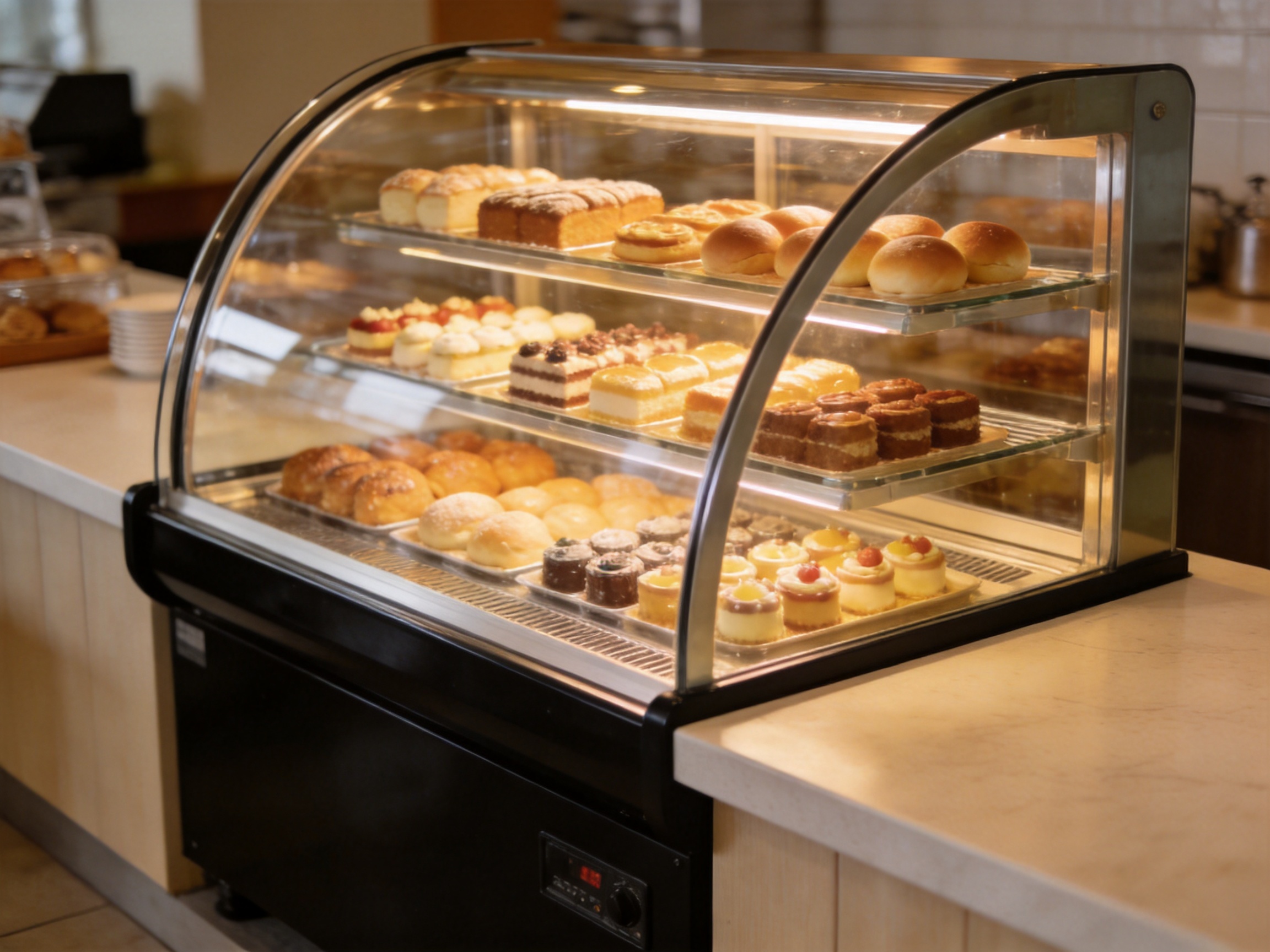
Product Overview
The XCR-160L Single Curve Cake Showcase Display Warmer is a countertop display unit created for businesses that want to maintain warm products at an appropriate serving temperature while showcasing them clearly to customers. The single curved glass design gives the warmer a clean visual profile, helping food items appear more attractive from the customer-facing side. In commercial food display, appearance matters because customers often make quick purchase decisions based on what they can see clearly and trust immediately.
The 160-liter capacity provides a useful balance between space efficiency and display volume. Many foodservice counters have limited room, especially in bakeries, coffee shops, and grab-and-go retail environments. A unit that is too large may occupy valuable workspace, while a unit that is too small may require frequent restocking or limit the range of products that can be offered. The XCR-160L addresses this balance by offering a generous interior volume within a countertop-friendly footprint.
The temperature range of 30 to 90 degrees Celsius is suitable for many warmed display applications. Lower settings can help maintain gentle warmth for delicate items, while higher settings can support products that require stronger heat retention. This range gives operators flexibility, allowing one cabinet to serve different product types across different selling periods. Morning pastries, lunchtime snacks, warmed desserts, and selected prepared foods may all benefit from controlled warm display.
The input power of 1500 watts gives the warmer the heating capacity needed for commercial operation. In display equipment, insufficient heating can lead to inconsistent holding conditions and disappointing customer experiences. At the same time, excessive or poorly controlled heat can dry products too quickly. A well-designed display warmer should provide adequate heating performance while allowing the operator to select the correct temperature range for the food being displayed.
Core Specifications
The following table summarizes the key specifications of the XCR-160L Single Curve Cake Showcase Display Warmer.
Item |
Specification |
Model |
XCR-160L |
Product Category |
Display Warmer |
Capacity |
160 L |
Temperature Range |
30-90 degrees Celsius |
Input Power |
1500 W |
Net Weight |
56 kg |
Gross Weight |
58 kg |
Product Size |
856 x 568 x 685 mm |
Package Size |
928 x 627 x 731 mm |
20-foot General Purpose Container Loading |
63 units |
40-foot High Cube Container Loading |
126 units |
These specifications indicate a product designed for professional distribution as well as daily operation. The package size supports organized export handling, while the container loading quantities are important for wholesale buyers, project procurement teams, and regional equipment distributors. A product that is easy to ship, store, and install often provides a commercial advantage beyond its visible features.
Why a Single Curve Display Warmer Matters
The single curve front is one of the defining features of this type of display warmer. In food retail, curved glass often creates a softer and more premium presentation than a flat-front cabinet. The curve helps reduce the box-like appearance of the equipment and can make the displayed food feel more accessible and appetizing. For cake, pastry, and snack presentation, this visual softness can be important because the customer is not only buying a food product but also responding emotionally to the display.
Compared with basic straight-glass warmers, a single curve showcase can provide a more refined appearance at the point of sale. Many lower-cost display units perform a basic warming function, but they may not contribute much to the shop environment. A warmer that looks professional can strengthen the perceived quality of the food inside. This is especially valuable for bakeries and dessert counters, where presentation is closely connected to product value.
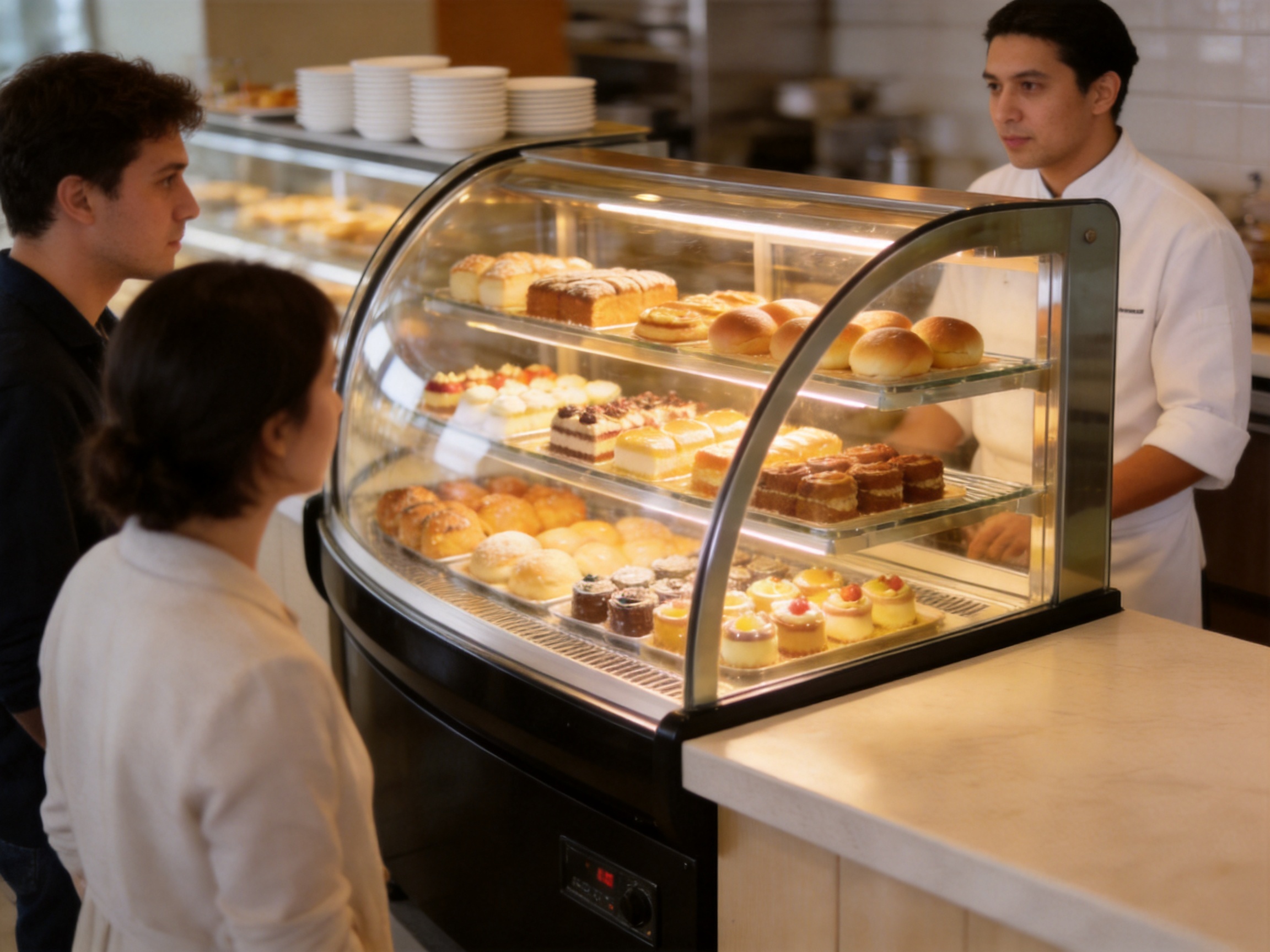
The curved glass also supports customer visibility. Clear visibility reduces hesitation. When customers can easily inspect color, shape, topping, texture, and freshness, they are more likely to make a purchase. In high-traffic environments, products need to sell themselves quickly. A well-structured display warmer helps staff by turning the cabinet into a silent salesperson.
For operators, the design also supports product organization. The cabinet can be used to separate product types, highlight best sellers, or create a layered presentation that encourages upselling. For example, a cafe may place premium warmed cakes at eye level and everyday pastries in another section. A convenience store may use the warmer for hot bakery items during breakfast hours and switch to snack foods later in the day.
Temperature Performance and Food Appeal
The 30 to 90 degrees Celsius temperature range gives this display warmer flexibility across many foods and service models. Warm display should not be confused with cooking. The goal is usually to maintain a suitable serving condition after the food has been prepared. Different products require different holding conditions, and the operator should always follow food safety practices and local regulations. However, the wider adjustment range helps adapt the cabinet to changing menus.
For delicate bakery products, too much heat can dry the surface or alter texture. Lower temperature settings can be useful when the purpose is gentle warmth and visual display. For denser items or foods that lose heat quickly, higher settings may be selected. This adaptability is one of the major advantages over simpler equipment with narrow or fixed heating levels.
A properly controlled display warmer can help maintain product appeal during peak and off-peak hours. During peak periods, products may turn over quickly, and the cabinet primarily supports fast presentation. During slower periods, the warmer must help retain quality for longer. The balance between heat and presentation becomes important because customers judge both appearance and serving condition.
The 1500-watt power rating supports commercial use by giving the unit the heating strength needed for a cabinet of this size. In practical terms, this helps the warmer recover and maintain temperature when doors are opened and closed during service. Frequent access is common in retail food operations, and equipment that struggles to recover can create uneven holding conditions.
Space Efficiency for Countertop Operations
Countertop display equipment must be carefully sized. A warmer that consumes too much counter space can interfere with service workflow, payment areas, packaging zones, and employee movement. The XCR-160L has product dimensions of 856 by 568 by 685 millimeters, making it suitable for many professional counters while still providing a 160-liter interior capacity.
This size makes the unit especially useful for small and medium-sized businesses. Independent bakeries, coffee bars, campus cafes, hotel breakfast areas, and convenience stores often need commercial-grade equipment but cannot allocate floor space to large standing cabinets. A countertop warmer allows these operators to add heated display capability without redesigning the entire shop layout.
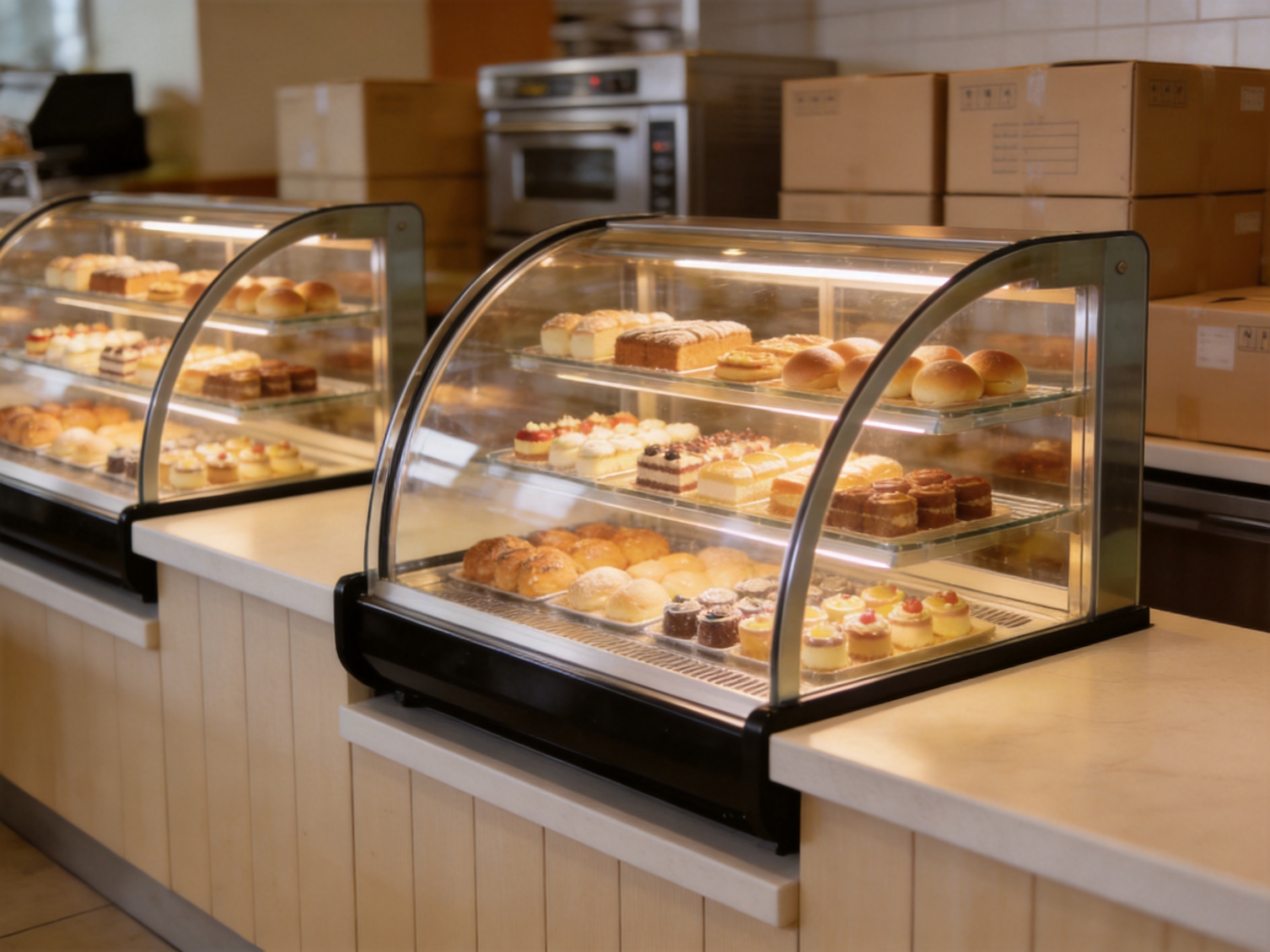
For larger businesses, the same model can be used in multiples. A supermarket bakery department may place several warmers in different zones, separating products by category. A hotel buffet may use the warmer for rotating service periods. A food court operator may install it at the front counter to create impulse purchases. The compact form gives buyers flexibility in how they design their merchandising area.
The packaging dimensions of 928 by 627 by 731 millimeters also support efficient logistics. Distributors and project buyers need predictable package sizes for warehousing, container planning, and regional delivery. The ability to load 63 units in a 20-foot general purpose container and 126 units in a 40-foot high cube container is an important commercial consideration for wholesale procurement.
Advantages Over Common Competitor Products
Many display warmers on the market offer basic heat and glass enclosure, but commercial buyers usually need more than the minimum. The XCR-160L stands out through a combination of practical capacity, broad temperature range, countertop usability, professional appearance, and manufacturing backing. These advantages help it compete not only on function but also on merchandising value and long-term reliability.
Balanced Capacity Instead of Oversized Bulk
Some competing display warmers are either too small for serious commercial display or too large for practical countertop use. A small unit may save space but can limit sales potential because it cannot present enough variety. A large unit may hold more products but can dominate the counter and create installation challenges. The 160-liter capacity of the XCR-160L offers a balanced solution. It allows attractive product arrangement while maintaining a manageable footprint.
Flexible Temperature Range Instead of Limited Heating
Lower-end competitors may provide limited temperature control, which can restrict their usefulness. A wider range from 30 to 90 degrees Celsius gives operators more control over product condition. This is particularly useful for businesses that change their menus throughout the day. A bakery may use the cabinet differently in the morning than in the afternoon. A cafe may warm pastries at one setting and display savory snacks at another. Flexibility helps the same equipment serve more functions.
Professional Visual Presentation Instead of Utility-Only Design
Competitors that focus only on heating may overlook the role of design. A display warmer sits in front of customers, so it must look clean, modern, and trustworthy. The single curve glass style gives the product a presentation advantage. Food appears more inviting when the showcase has a refined customer-facing surface. This can increase impulse purchases and support premium product positioning.
Commercial-Ready Build Instead of Light-Duty Construction
The unit’s 56-kilogram net weight suggests a stable and substantial construction suitable for professional environments. A display warmer in a busy shop experiences repeated door opening, cleaning, product loading, and customer-facing use. Light-duty equipment can become unstable, noisy, or visually worn too quickly. A sturdier cabinet supports confidence in daily operation.
Export-Friendly Logistics Instead of Unclear Supply Planning
For distributors, clear container loading information is a competitive advantage. Knowing that 63 units can fit into a 20-foot general purpose container and 126 units into a 40-foot high cube container helps buyers calculate shipping costs, delivery schedules, and inventory plans. Many competitors provide product dimensions but do not present logistics data clearly, creating uncertainty for wholesale orders.
Applications in Foodservice and Retail
The XCR-160L display warmer is suitable for a wide range of business settings. Its appearance and performance make it especially valuable wherever customers choose food visually. In such environments, keeping products warm is only part of the task. The warmer must also help the business display, protect, and sell.
Bakeries and Pastry Shops
Bakeries can use the warmer to present warmed cakes, pastries, tarts, buns, and selected baked snacks. The curved glass format helps create a premium display area near the counter. This is useful for items that benefit from being served warm or slightly heated. The cabinet also helps separate warm products from room-temperature products, giving the shop a clearer merchandising structure.
Cafes and Coffee Bars
Cafes often rely on add-on food sales to increase average transaction value. A customer who enters for coffee may also buy a warmed pastry or dessert if it is displayed attractively. Placing the XCR-160L near the ordering area can encourage impulse purchasing. The compact countertop size makes it practical even for cafes with limited interior space.
Convenience Stores
Convenience stores benefit from fast, visible, ready-to-buy food displays. Warm bakery items, packaged snacks, and prepared foods can be arranged in the warmer for quick service. The clear glass display helps customers make fast decisions without needing staff assistance. This can improve throughput during busy hours.
Hotels and Buffet Service
Hotels may use the warmer in breakfast areas, lounges, or event service points. It can support temporary service arrangements where warm presentation is required but a large floor-standing cabinet is unnecessary. The product’s professional look fits many hospitality environments.
Supermarkets and Specialty Food Counters
Supermarkets with bakery, deli, or prepared food sections can use countertop warmers to highlight selected products. Rather than placing all hot items in large heated shelves, a dedicated showcase can be used for premium or promotional items. This creates visual focus and helps guide customers toward higher-margin selections.
Manufacturing Strength Behind the Product
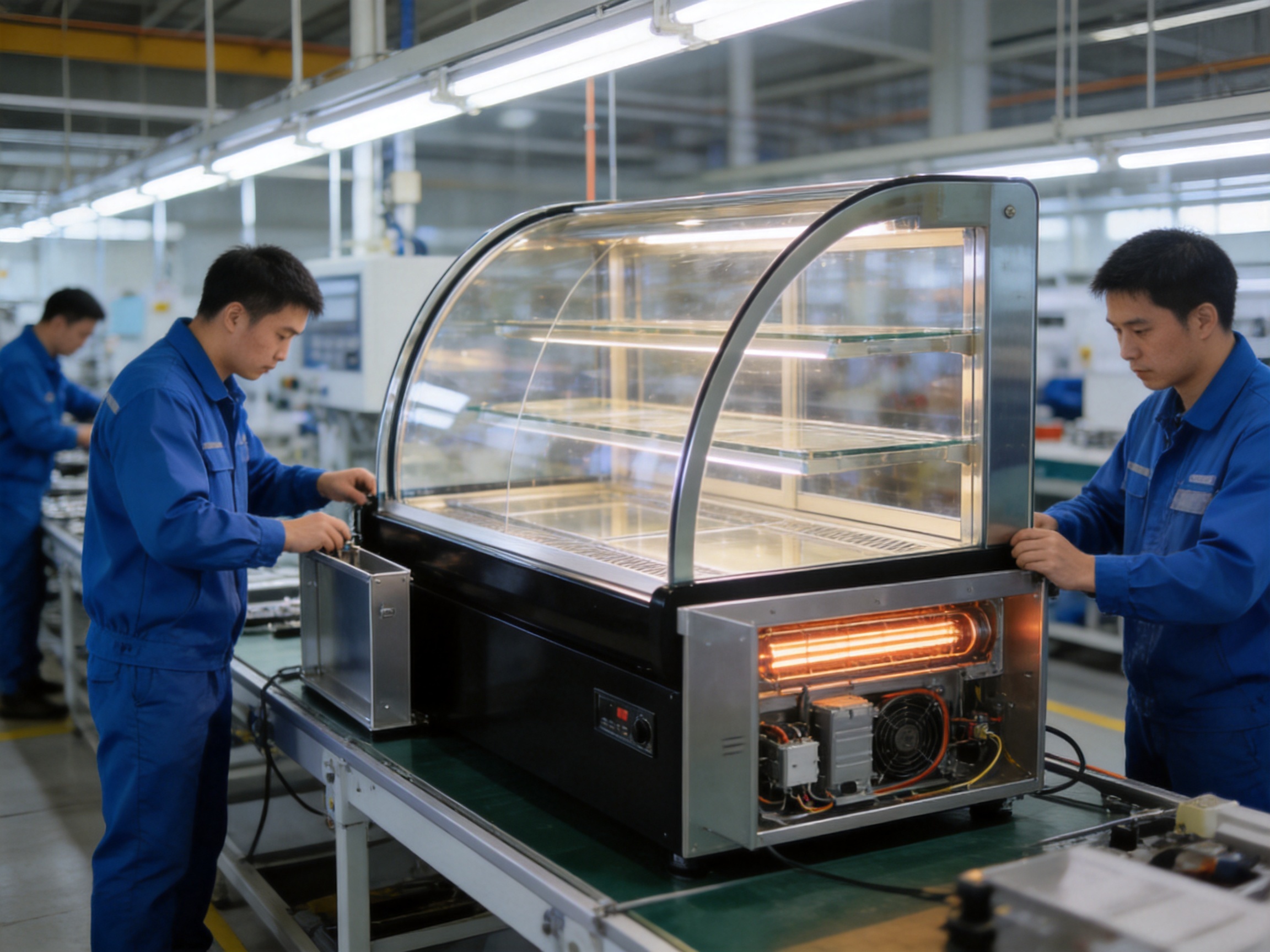
A display warmer’s performance depends not only on its visible specifications but also on the manufacturer’s ability to design, produce, test, and improve the equipment consistently. The company behind this product is a professional manufacturer of vertical display cabinets, cake cabinets, and warming cabinets. Established in 2007, it has accumulated more than ten years of experience in commercial refrigeration and display equipment manufacturing.
The manufacturing base covers approximately 40,000 square meters and operates as a modern management garden factory. This scale matters because commercial buyers need supply stability. A factory with substantial production space, organized management, and specialized product focus is better positioned to support volume orders, repeat procurement, and consistent quality control.
The company has its own professional research and development team, which is important in a competitive equipment market. Foodservice equipment must continuously adapt to changing customer needs, energy expectations, safety standards, store designs, and logistics requirements. An internal R&D capability allows product improvement to happen more directly and efficiently. It also supports customization and new product development for distributors and project clients.
Advanced testing facilities further strengthen product reliability. Testing is essential for display warmers because heating performance, temperature stability, electrical safety, material durability, and packaging strength all affect user satisfaction. A product may look attractive in a showroom, but only rigorous testing can confirm that it is suitable for repeated commercial use.
Quality Certifications and Global Market Readiness
The manufacturer has obtained major international certifications, including CE, GS, CCC, CB, RoHS, and ETL. These certifications demonstrate a commitment to meeting different market requirements and give buyers additional confidence when sourcing products for international distribution. For importers and equipment dealers, certification readiness can reduce procurement risk and simplify market entry.
CE certification is widely recognized in European markets and relates to compliance with relevant safety, health, and environmental protection standards. GS certification is associated with tested safety and is valued in certain international markets. CCC certification supports access to the Chinese domestic market. CB certification helps with international electrical product recognition through a global testing framework. RoHS compliance relates to restrictions on certain hazardous substances. ETL certification is recognized in North American markets for product safety compliance.
For the end user, certifications may not be visible during daily operation, but they represent a deeper layer of manufacturing discipline. They indicate that the factory understands regulatory expectations and invests in processes that support safe, compliant products. For distributors, certifications can be decisive because uncertified equipment may create sales limitations or additional testing costs.
Advanced Production Processes
Commercial display equipment requires coordination across multiple manufacturing steps. A high-quality display warmer involves metal processing, glass handling, heating component installation, electrical assembly, insulation considerations, structural assembly, surface finishing, testing, packaging, and final inspection. Each step affects the finished product.
Material Selection
The production process begins with suitable material selection. Display warmers require materials that can withstand heat, cleaning, and frequent use. Structural materials need to be stable and durable. Glass components need clarity and strength. Electrical and heating components must be appropriate for the cabinet’s power and operating temperature range. Careful material selection supports longer service life and better user experience.
Precision Fabrication
Accurate fabrication is essential for the cabinet structure. If panels, frames, or glass supports are not formed correctly, the cabinet may have alignment issues, poor sealing, unstable shelves, or inconsistent appearance. Precision manufacturing helps ensure that the unit looks professional and performs as intended. It also supports easier assembly and more consistent mass production.
Heating System Assembly
The heating system is central to any display warmer. Components must be installed securely and connected correctly to support safe operation. The 1500-watt input power must be managed through appropriate electrical design and temperature control. Proper assembly helps the warmer maintain consistent internal conditions and withstand the demands of commercial use.
Glass Installation and Display Clarity
Glass quality and installation influence both safety and merchandising. The single curve front must be positioned accurately to provide a clean appearance and reliable enclosure. Clear glass helps customers view products easily, while correct installation helps protect the interior environment. Poor glass alignment can reduce visual appeal and may create maintenance problems over time.
Electrical Safety Testing
Electrical testing is critical because display warmers operate with heating elements and power circuits in public-facing commercial spaces. Testing procedures may include checking insulation resistance, grounding, wiring correctness, control function, and safe operation under expected conditions. Strong testing processes help reduce the risk of failures in the field.
Temperature Testing
Temperature testing confirms whether the cabinet can reach and maintain the required range. For the XCR-160L, the 30 to 90 degrees Celsius range must be supported by reliable heating and control performance. Temperature consistency helps operators protect product quality and deliver predictable serving conditions.
Packaging and Transport Protection
Packaging is part of quality. A display warmer can be well manufactured but still arrive damaged if packaging is inadequate. The stated package size of 928 by 627 by 731 millimeters reflects planned transport protection. Export packaging must account for handling, stacking, container movement, and long-distance shipping. Good packaging reduces damage claims and improves customer satisfaction.
Operator Benefits
For daily users, the value of a display warmer is measured in practical results. Does it help sell more food? Is it easy to place? Does it support the menu? Does it look professional? Does it remain stable during busy hours? The XCR-160L is designed to address these concerns through a combination of performance, capacity, and presentation.
Improved Product Visibility
The glass showcase format helps products remain visible from the customer side. Clear visibility encourages confidence. Customers are more likely to buy when they can see the food’s appearance, portion size, color, and arrangement. In retail food sales, uncertainty reduces conversion. A display warmer reduces that uncertainty by presenting products openly and attractively.
Better Impulse Sales Potential
Warm food displays can encourage impulse purchases because they communicate freshness and immediate enjoyment. A customer waiting at a counter may notice a warm dessert or snack and decide to add it to the order. The warmer therefore helps increase sales without requiring aggressive staff promotion.
Flexible Menu Support
Because the temperature range is adjustable, the cabinet can support different product categories. Operators can adapt the warmer to changing menus, seasonal products, promotional items, and time-of-day sales strategies. This flexibility improves equipment utilization and can make the purchase more cost-effective.
Efficient Counter Use
The countertop format helps businesses use existing service areas more effectively. Rather than requiring floor space or extensive installation, the warmer can be integrated into the counter layout. This is particularly useful for businesses that want to add a warm display section without major renovation.
Professional Customer Impression
Clean, organized display equipment communicates professionalism. Customers often judge food safety and product quality based on the condition of the display area. A well-designed warmer can help businesses present themselves as careful, reliable, and quality-oriented.
Distributor and Wholesale Advantages
For distributors and wholesale buyers, the XCR-160L offers advantages that extend beyond end-user features. The product comes from a manufacturer with specialized experience, a broad product category background, international certification capability, and container loading data. These factors are important when building a product line for commercial refrigeration and display equipment markets.
A distributor needs products that can be explained clearly to customers. The XCR-160L has straightforward selling points: 160-liter capacity, 30 to 90 degrees Celsius temperature range, 1500-watt power, countertop dimensions, single curve glass appearance, and professional manufacturing support. These points are easy to communicate in catalogs, showrooms, online listings, and sales presentations.
Container efficiency is another advantage. The ability to load 63 units in a 20-foot general purpose container or 126 units in a 40-foot high cube container helps distributors plan cost-effective procurement. Shipping efficiency can influence final market pricing. A product that ships predictably and efficiently can be more competitive after freight costs are included.
Certification readiness also supports distribution. Different regions may require different documentation, and buyers often prefer suppliers familiar with international standards. A manufacturer that has already obtained recognized certifications can help reduce uncertainty for importers and project contractors.
Comparison With Alternative Display Solutions
Businesses that need warm food display may consider several alternatives, including simple heated shelves, flat-front warmers, enclosed cabinets without strong visual design, or larger floor-standing heated displays. Each option has a place, but the XCR-160L offers a strong balance for many commercial scenarios.
Display Option |
Main Strength |
Common Limitation |
XCR-160L Advantage |
Basic heated shelf |
Easy access and simple operation |
Less enclosure and weaker presentation protection |
Provides glass showcase visibility with a more protected display environment |
Small flat-front warmer |
Compact size |
Limited display impact and reduced capacity |
Offers 160 L capacity and curved glass presentation |
Large floor-standing warmer |
High product volume |
Requires more floor space and may be excessive for small counters |
Fits countertop layouts while still providing useful capacity |
Low-cost generic warmer |
Lower initial price |
May have weaker control, appearance, testing, or support |
Backed by professional manufacturing, testing capability, and certification experience |
This comparison shows that the XCR-160L is not designed to be merely the cheapest choice. Its value comes from balanced commercial performance, attractive presentation, and manufacturing reliability. For businesses that depend on food display as part of their sales strategy, these qualities can be more important than the lowest initial cost.
Food Presentation Strategy
A display warmer performs best when the operator uses it strategically. The arrangement of products can influence buying behavior. Items should be placed neatly, with popular or premium products in highly visible positions. Colors and shapes should be balanced so the display looks abundant without appearing crowded. Empty spaces should be refilled promptly because a sparse warmer may suggest slow sales or reduced freshness.
Warm display also benefits from product rotation. Older items should be sold first, and new items should be arranged in a way that maintains visual appeal. Staff should be trained to check product condition regularly. Even with good equipment, food quality depends on proper preparation, holding time, and service procedures.
The XCR-160L’s capacity allows operators to create a meaningful display assortment. Instead of showing only one or two items, businesses can present variety. Variety increases the chance that different customers will find something appealing. A cafe may display sweet and savory products together. A bakery may organize items by flavor or price. A convenience store may use the warmer for fast-moving products during rush hours.
Cleaning and Maintenance Considerations
Commercial display equipment must be cleaned regularly to maintain hygiene and appearance. Glass surfaces should be kept clear because fingerprints, crumbs, and condensation marks can reduce customer confidence. The warmer should be cleaned according to the operator’s internal sanitation procedures and applicable food safety rules. Power should be disconnected when appropriate before cleaning, and staff should avoid unsafe cleaning methods that could damage electrical components.
Daily cleaning typically focuses on visible surfaces, shelves, trays, and food contact areas. Periodic maintenance may include checking door operation, inspecting seals or contact points, verifying temperature control, and ensuring that vents or heat circulation areas are not blocked. Proper maintenance helps preserve performance and extends service life.
One advantage of using a professional display warmer rather than improvised heating equipment is that the cabinet is designed for repeated commercial cleaning and presentation. A shop’s display area is part of its brand image. Clean equipment communicates care, while neglected equipment can harm customer trust even if the food itself is well prepared.
Energy and Operating Considerations
The input power of 1500 watts should be considered in relation to operating hours, local electricity costs, and menu strategy. Display warmers are often used during active sales periods rather than continuously throughout the entire day. Operators can manage energy use by turning the unit on in advance of service, loading it appropriately, maintaining correct temperature settings, and switching it off when not needed.
Using the correct temperature setting is important. Higher temperatures may not always improve food quality and can increase energy use. Operators should select the lowest suitable setting that maintains the desired product condition and complies with safety requirements. This approach supports both product quality and operating efficiency.
Equipment placement can also affect performance. The warmer should be installed on a stable surface with adequate clearance according to operating guidance. It should not be placed in areas where airflow problems, direct drafts, or improper surroundings interfere with performance. A stable installation supports safety and consistent heating.
Why Manufacturing Experience Matters to Buyers
When purchasing commercial equipment, buyers sometimes focus only on product photos and price. However, manufacturing experience can be a major difference between a reliable supplier and a risky one. A company established in 2007 with more than a decade of industry experience has had time to refine product designs, understand international customer expectations, improve production systems, and respond to market feedback.
The company’s product background includes vertical display cabinets, cake cabinets, warming cabinets, vertical display coolers, countertop display coolers, cake showcases, display warmers, four-sided glass display coolers, sushi showcases, open display coolers, and four-sided glass freezers. This broad category experience means the manufacturer understands both cooling and warming display principles, as well as the merchandising needs of food retailers.
A specialized manufacturer can often provide better technical understanding than a general trading supplier. Product development, testing, certification, production scheduling, quality inspection, and after-sales support are all easier to coordinate when manufacturing expertise is internal. For business buyers, this reduces communication problems and improves long-term cooperation potential.
The company also emphasizes innovation, quality, and service. These values are important because commercial equipment markets change quickly. Customers want better design, improved reliability, more efficient logistics, and compliance with global standards. A supplier committed to continuous improvement can help partners remain competitive.
Practical Buying Guidance
Before purchasing the XCR-160L or any display warmer, buyers should evaluate their intended use. The first question is product type. What foods will be displayed? Are they cakes, pastries, savory snacks, packaged warm foods, or buffet items? The second question is sales volume. How many items must be displayed at one time? The third question is space. Will the counter support the product size and weight? The fourth question is electrical supply. Can the installation location support a 1500-watt appliance safely?
Buyers should also consider appearance. A display warmer is visible to customers, so it should match the shop’s style and service concept. The single curve design is suitable for businesses that want a more polished and customer-friendly presentation. It is particularly useful where the warmer is positioned near the point of purchase.
For distributors, purchasing decisions should include container loading, certification requirements, spare parts planning, regional voltage considerations, and market positioning. A product like the XCR-160L can be positioned as a professional countertop display warmer for bakeries, cafes, convenience stores, and food counters. Its selling points are clear and practical, which makes it suitable for catalog-based sales and showroom demonstration.
Long-Term Commercial Value
The long-term value of a display warmer comes from more than its purchase price. It includes sales contribution, durability, food presentation quality, ease of operation, maintenance needs, and supplier reliability. A lower-priced unit that fails early, looks unattractive, or cannot maintain proper temperature may cost more over time than a better-designed professional model.
The XCR-160L offers long-term value by combining a useful capacity, flexible temperature range, professional design, and strong manufacturing support. For a bakery or cafe, even a modest increase in impulse purchases can help justify the investment. For a distributor, a reliable and well-specified model can generate repeat orders and reduce complaints. For a hotel or foodservice operator, a professional warmer supports consistent service standards.
Commercial equipment should help a business operate smoothly. It should not create unnecessary problems for staff or customers. By offering a stable and attractive platform for warm food display, the XCR-160L supports both front-of-house presentation and back-of-house operational planning.
Q&A Section
What is the main purpose of the XCR-160L display warmer?
The main purpose is to display and maintain warm food products in a professional, customer-facing showcase. It is suitable for cakes, pastries, snacks, and selected prepared foods that benefit from warm presentation.
What is the capacity of this model?
The XCR-160L has a capacity of 160 liters, providing enough space for a practical countertop display assortment while maintaining a compact footprint.
What temperature range does it support?
The display warmer supports a temperature range of 30 to 90 degrees Celsius. This allows operators to adjust the holding condition based on the product type and service requirements.
Why is the single curve glass design useful?
The single curve glass design improves visual presentation and helps create a more attractive customer-facing display. It makes products easier to view and can support impulse purchases.
Where can this display warmer be used?
It can be used in bakeries, cafes, coffee bars, convenience stores, supermarkets, hotel breakfast areas, buffet service points, dessert shops, and quick-service food counters.
How does it compare with low-cost generic warmers?
Low-cost generic warmers may provide basic heat but often lack refined presentation, flexible control, certification support, and strong manufacturing backing. The XCR-160L provides a more complete commercial solution.
Is this product suitable for distributors?
Yes. The product has clear specifications, export-friendly packaging data, and container loading information. A 20-foot general purpose container can hold 63 units, while a 40-foot high cube container can hold 126 units.
What makes the manufacturer reliable?
The manufacturer has specialized experience in commercial display cabinets, a 40,000-square-meter modern factory, an internal R&D team, advanced testing facilities, and certifications including CE, GS, CCC, CB, RoHS, and ETL.
Does the product cook food?
A display warmer is primarily intended to maintain prepared foods at a warm serving condition and display them attractively. Operators should prepare food properly before display and follow applicable food safety standards.
What should buyers check before installation?
Buyers should check counter space, load-bearing capability, electrical supply, ventilation requirements, intended food types, operating hours, and local safety regulations.
Conclusion
The XCR-160L Single Curve Cake Showcase Display Warmer is a professional display solution for businesses that need to present warm foods attractively and reliably. Its 160-liter capacity, 30 to 90 degrees Celsius temperature range, 1500-watt input power, and compact countertop dimensions make it suitable for a wide range of foodservice and retail environments. The single curve glass design improves product visibility and strengthens the customer-facing appearance of the display area.
Compared with many competitor products, this warmer offers a stronger balance between capacity, appearance, flexibility, and commercial practicality. It is not merely a heating box; it is a merchandising tool that can help increase impulse sales, improve food presentation, and support organized service. For distributors, its packaging and container loading information support efficient procurement and logistics planning.
The product’s value is further strengthened by the manufacturer’s advanced production capability, professional R&D team, testing facilities, international certifications, and extensive experience in commercial display equipment. These strengths help ensure that buyers receive not only a useful product but also the support of a serious manufacturing partner. For bakeries, cafes, convenience stores, supermarkets, hotels, and food counters, the XCR-160L is a practical and visually appealing choice for warm food display.
References
International Electrotechnical Commission. Electrical Safety Principles for Commercial Foodservice Equipment.
International Organization for Standardization. Quality Management Systems and Manufacturing Process Control Guidelines.
Foodservice Equipment Reports. Best Practices for Heated Display Merchandising.
Commercial Food Equipment Standards Review. Temperature Holding and Display Equipment Considerations.
Retail Bakery Operations Handbook. Presentation, Product Rotation, and Warm Display Management.
Global Certification Overview for Electrical Appliances. CE, CB, RoHS, GS, CCC, and ETL Compliance Concepts.

You May Also Like
.jpg?imageView2/2/w/500/h/500/format/jp2/q/100 "Four Sides Glasses Display Cooler")
.jpg?imageView2/2/w/500/h/500/format/jp2/q/100 "White 4-Sided Glass Refrigerated Display Case")
.jpg?imageView2/2/w/500/h/500/format/jp2/q/100 "Refrigerated Display Cake Countertop Four Sides Glasses Display Cooler")
.jpg?imageView2/2/w/500/h/500/format/jp2/q/100 "Four Sides Glasses Display Cooler")

-
- Navigation
- Home
- About Us
- Products
- News
- Contact Us
 East Zone, Guanhaiwei Industrial Park, Cixi City, Ningbo, Zhejiang, China
 +86-574-63668678
 +86-574-63668108
Copyright © Ningbo XiangChi Electrical Co.,Ltd All Rights Reserved.
