
 简体中文
简体中文 English
 Español
News
Direct Cooling Countertop Display Refrigerators for Modern Foodservice Merchandising
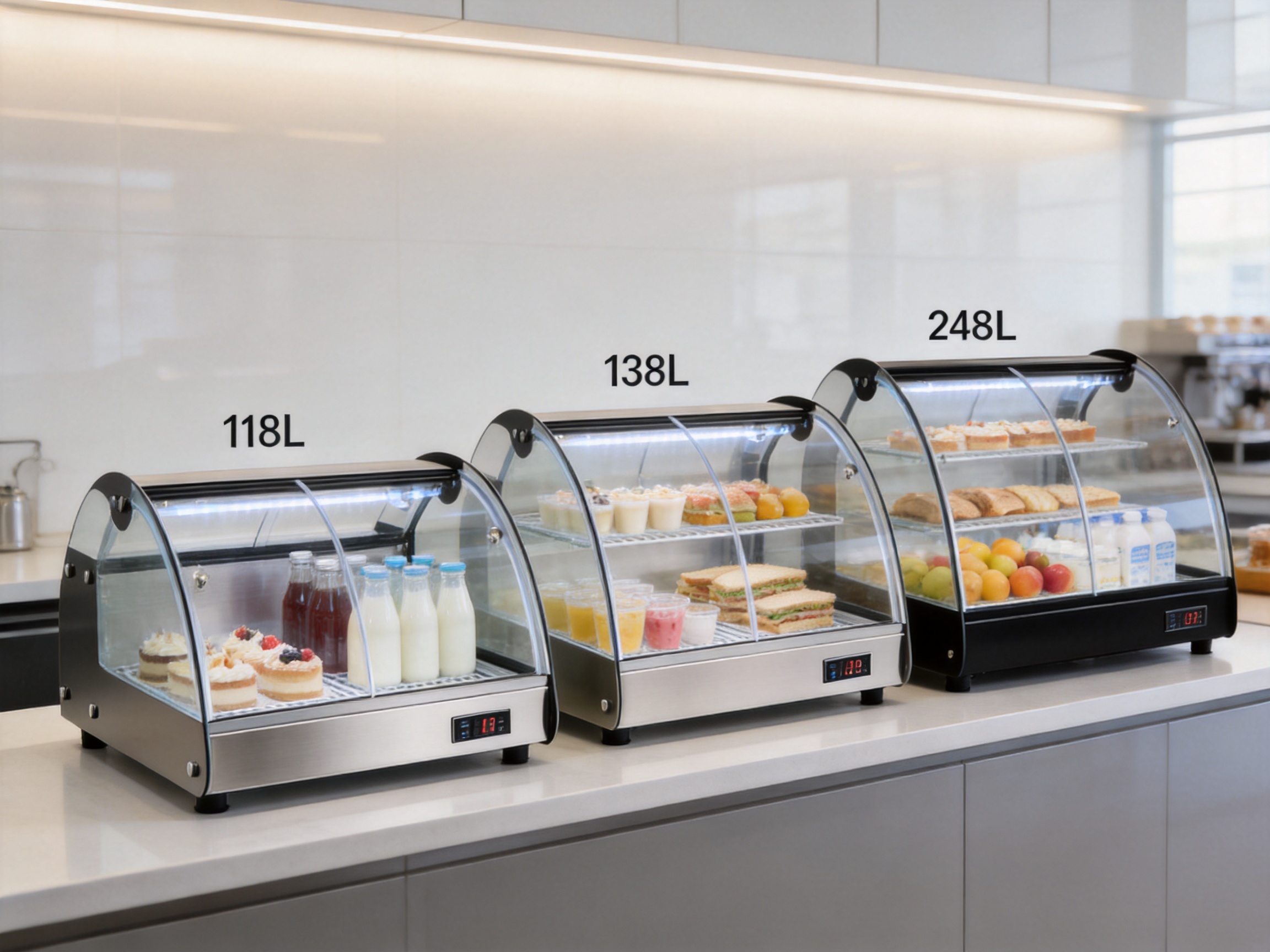
Countertop display refrigeration has become an essential part of modern foodservice, convenience retail, bakery operations, beverage merchandising, and specialty food presentation. The XCW-118L, XCW-138L, and XCW-248L direct cooling countertop display refrigerators are designed for businesses that need reliable cold storage, attractive product visibility, and practical daily operation in a compact commercial format. With gross capacities of 118 liters, 138 liters, and 248 liters, these models give operators flexible choices for different store layouts, product volumes, and display strategies.
Unlike ordinary storage refrigerators that hide products behind solid doors, countertop display refrigerators are built to sell. They combine temperature control with merchandising visibility, allowing customers to see cakes, desserts, packaged beverages, salads, sushi ingredients, dairy items, fruit cups, sandwiches, and other chilled products before making a purchase decision. The XCW series supports this purpose with front curved glass, front and back sliding doors, a digital temperature controller, a visible temperature display, separated power and light switches, adjustable feet, and an efficient direct cooling system.
Direct Cooling Countertop Display Refrigerators XCW-118L/138L/248L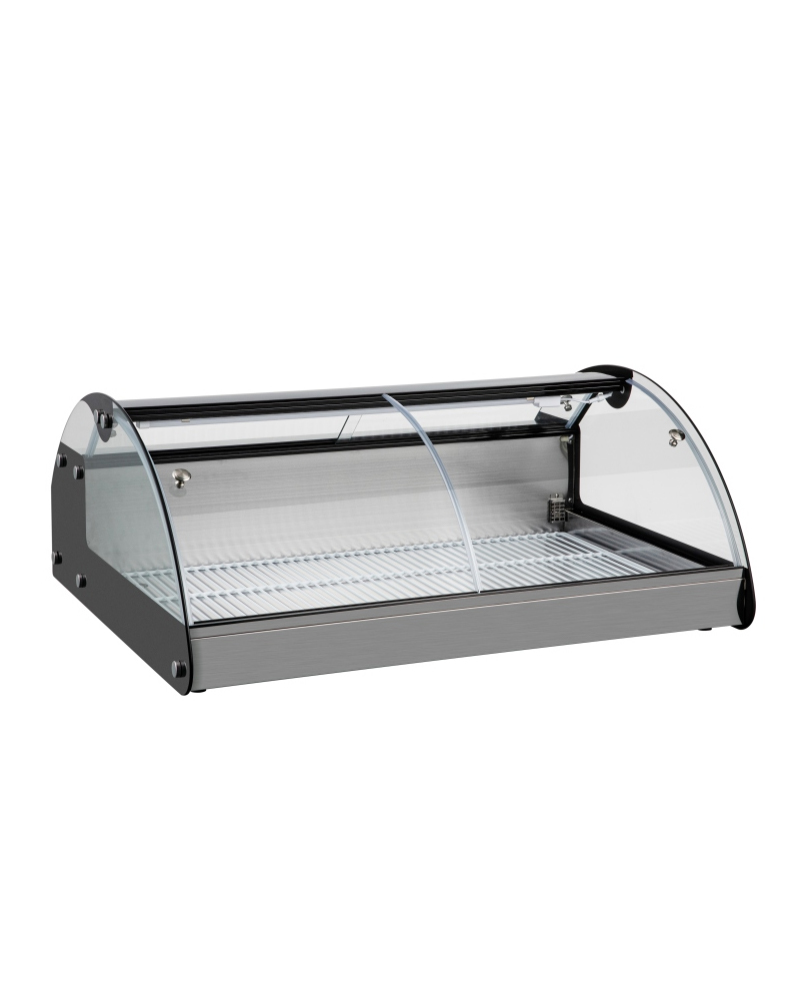
Product Overview
The XCW-118L, XCW-138L, and XCW-248L models are commercial countertop display refrigerators engineered for chilled presentation. They operate within a temperature range of 2 to 8 degrees Celsius, equivalent to 35.6 to 46.4 degrees Fahrenheit. This range is widely suitable for many fresh and packaged foods that require refrigeration but not freezing. The models use R290 refrigerant, a natural hydrocarbon refrigerant known for low environmental impact and good thermodynamic performance in commercial refrigeration systems.
The three models share the same core design philosophy: stable direct cooling, clear product presentation, practical access, and simple control. Each model uses 150 W input power, helping businesses maintain cooling performance without excessive energy demand. The direct cooling structure is designed for dependable operation and efficient internal cooling, while the curved front glass improves the visual appeal of displayed products. The front and back sliding doors make the units convenient for both customer-side presentation and staff-side service, especially in bakeries, coffee shops, dessert counters, buffet areas, and convenience stores.
The XCW-118L is suitable for smaller counters, boutique cafés, limited product selections, and locations where space is valuable. The XCW-138L offers increased capacity while maintaining a countertop-friendly footprint, making it ideal for businesses that want more display volume without moving to a large floor-standing cabinet. The XCW-248L provides a much wider display area, making it suitable for high-volume environments, larger dessert selections, hotel breakfast stations, supermarket counters, or specialty food outlets requiring stronger merchandising capacity.
Core Specifications
Model |
XCW-118L |
XCW-138L |
XCW-248L |
Gross Capacity |
118 L / 4.2 cu. ft. |
138 L / 4.9 cu. ft. |
248 L / 8.8 cu. ft. |
Temperature Range |
2 to 8 °C / 35.6 to 46.4 °F |
2 to 8 °C / 35.6 to 46.4 °F |
2 to 8 °C / 35.6 to 46.4 °F |
Input Power |
150 W |
150 W |
150 W |
Refrigerant |
R290 |
R290 |
R290 |
Climate Type |
6 |
6 |
6 |
Net Weight |
39 kg |
50 kg |
62 kg |
Gross Weight |
42 kg |
54 kg |
98.5 kg |
Product Size |
700 × 845 × 410 mm |
1000 × 845 × 410 mm |
1800 × 845 × 410 mm |
Product Size |
27.6 × 33.3 × 16.1 in. |
39.4 × 33.3 × 16.1 in. |
70.9 × 33.3 × 16.1 in. |
Package Size |
800 × 950 × 590 mm |
1100 × 950 × 590 mm |
1900 × 950 × 590 mm |
Loading Quantity |
56 / 140 pcs, 20GP / 40HQ |
48 / 120 pcs, 20GP / 40HQ |
18 / 48 pcs, 20GP / 40HQ |
Direct Cooling for Practical Commercial Performance
A key feature of the XCW series is the direct cooling system. Direct cooling is valued in countertop refrigerated display applications because it offers a dependable cooling method with a relatively straightforward structure. For many small and medium foodservice businesses, equipment simplicity is a real advantage. Fewer complicated air circulation components can mean easier maintenance, reduced operational complexity, and stable performance when the unit is correctly installed and used.
Direct cooling helps maintain the chilled environment required for products in the 2 to 8 °C range. This is especially important for items such as cakes with cream, mousse desserts, puddings, packaged sandwiches, prepared salads, dairy products, and chilled beverages. These goods need to be displayed attractively, but they also need a stable environment that supports freshness and food safety practices. The XCW series is designed to support these commercial needs by combining cooling function with display function.
Compared with some low-cost display cases that prioritize appearance while neglecting refrigeration performance, these models focus on the balance between presentation and preservation. For operators, this balance matters because attractive display alone cannot protect product quality. A refrigerated showcase must help keep goods at a suitable temperature during service hours, reduce unnecessary product waste, and support consistent customer satisfaction. The direct cooling system provides a practical foundation for this balance.
Temperature Control and User-Friendly Operation
The XCW models include a digital temperature controller and display, allowing operators to monitor and manage internal temperature more easily. In daily commercial use, staff members may open and close doors frequently, add new products, reorganize shelves, or clean the display area. A digital display allows quick temperature checking without guesswork, helping employees maintain better operating discipline.
Digital temperature control is also useful because different product categories may have different display priorities. For example, bottled beverages and packaged drinks may tolerate brief fluctuations more easily, while cream cakes, dairy desserts, and certain prepared foods require closer attention. Having a clear controller and display gives the operator more confidence in the unit’s performance and reduces dependence on manual thermometers alone.
The separated power button and separated light button further improve operational convenience. Staff can control illumination independently from refrigeration operation, which is practical during cleaning, restocking, closing procedures, or energy-saving periods. Many competing low-end display refrigerators integrate controls in a less convenient way, forcing users to operate lighting and refrigeration together or making routine management less intuitive. Separate controls show attention to real commercial work habits.
Curved Glass for Stronger Merchandising Appeal
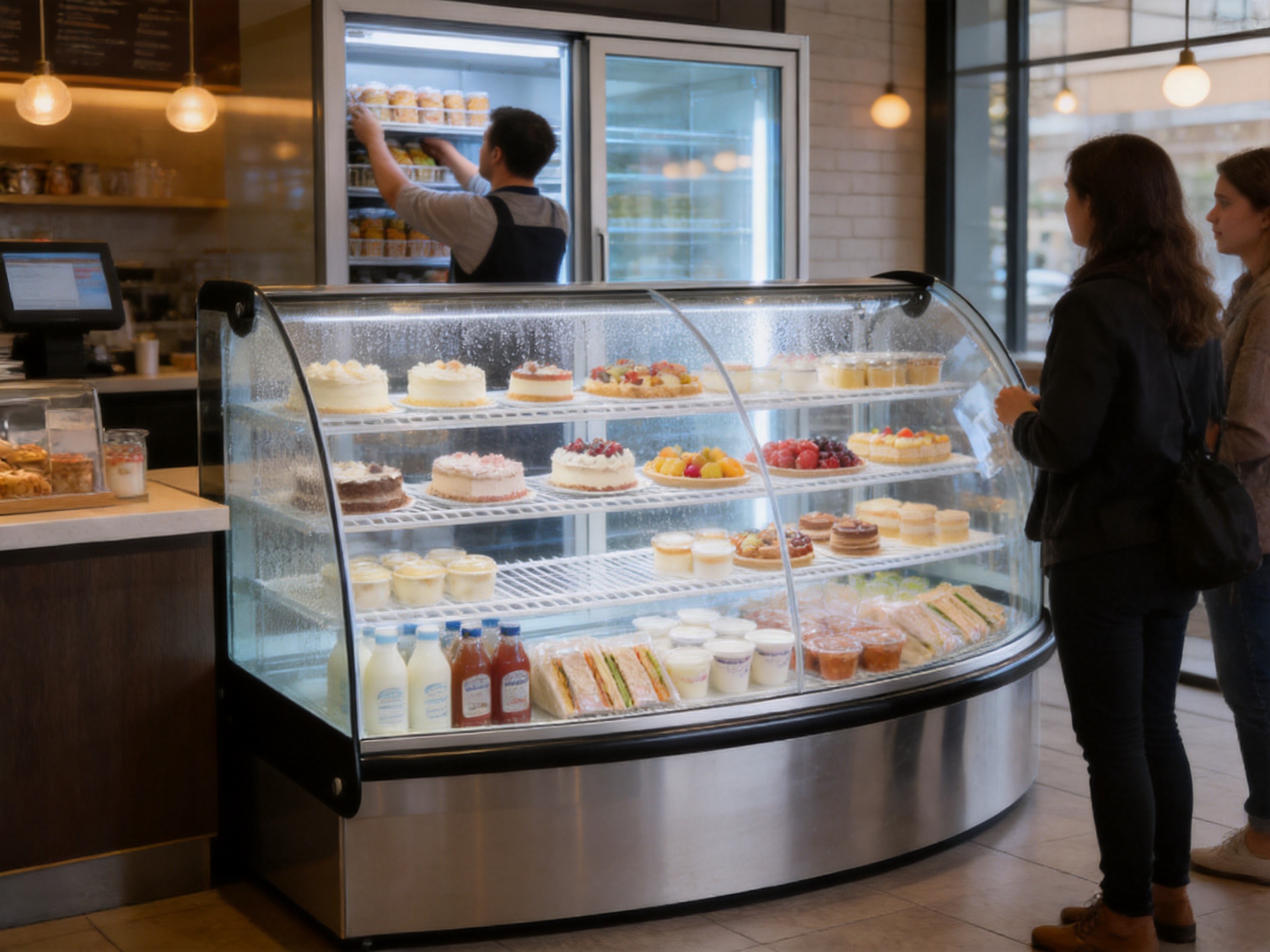
In retail food display, visibility is not simply a decorative feature; it is part of the sales process. The front curved glass of the XCW series gives products a more premium and inviting look. Curved glass can soften the visual lines of the cabinet, reduce the boxy appearance common in basic countertop coolers, and create a more elegant display for cakes, pastries, sushi trays, desserts, and premium packaged foods.
Customers often make quick purchase decisions based on what they see at the counter. A clear and attractive glass display can encourage impulse purchases, especially in cafés, bakeries, convenience stores, and dessert shops. When products are arranged neatly inside a curved glass refrigerated showcase, they become part of the store’s visual identity. The equipment is not only a refrigerator; it becomes a selling surface.
Compared with flat-front models, curved-front display refrigerators often provide a more refined presentation. This can be important for businesses that compete on product appearance, such as cake shops and boutique bakeries. The XCW series helps operators present chilled goods with a professional commercial look while still maintaining a compact countertop format.
Front and Back Sliding Doors for Efficient Service
The XCW series is equipped with front and back sliding doors. This feature is valuable in many operating scenarios. Back-side access allows staff to load, organize, and retrieve products from behind the counter, while front-side access can support certain self-service or customer-facing arrangements depending on the store layout and service model. Sliding doors also save space compared with hinged doors because they do not require a wide swing area.
In cafés and bakeries, counter space is often limited. Staff need room for coffee machines, pastry trays, packaging materials, payment terminals, and customer interaction. A display refrigerator with sliding doors helps reduce interference with surrounding equipment. The doors move along the cabinet instead of projecting outward, which makes daily use more practical in tight working environments.
The ability to access products from both sides also supports faster restocking. During busy hours, staff can add products from the back while customers view the selection from the front. This improves workflow and reduces disruption. In higher-volume locations using the XCW-248L, the wide body and dual access design can be especially helpful because multiple product groups may need to be arranged and replenished throughout the day.
Adjustable Feet for Stable Countertop Placement
Commercial counters are not always perfectly level. Uneven floors, worn countertops, stainless steel preparation tables, and mobile service counters can all create placement challenges. Adjustable feet are included to help operators position the refrigerator securely and level it correctly. Proper leveling supports door operation, internal drainage behavior, product stability, and the overall professional appearance of the display.
This detail may seem small, but it matters in daily use. A display refrigerator that rocks, tilts, or sits unevenly can create operational problems and reduce customer confidence. Adjustable feet help the equipment adapt to real installation conditions, which is particularly useful for restaurants, coffee shops, bakery counters, hotel buffet stations, and temporary service locations.
R290 Refrigerant and Environmental Responsibility
The XCW series uses R290 refrigerant. R290, also known as propane refrigerant, is widely recognized as a natural refrigerant with very low global warming potential compared with many conventional synthetic refrigerants. In the commercial refrigeration industry, R290 has become increasingly important as businesses and regulations move toward more environmentally responsible cooling solutions.
From a performance perspective, R290 offers strong thermodynamic characteristics, which can support efficient cooling when used in a properly designed system. From a market perspective, using R290 can help equipment buyers align with sustainability expectations from customers, regulators, and commercial partners. Many modern retailers and foodservice chains increasingly consider refrigerant type when selecting refrigeration equipment.
For businesses seeking to reduce environmental impact while maintaining professional refrigeration capability, R290 is a meaningful advantage. It allows the XCW series to compete strongly against older units that still rely on refrigerants with higher environmental burden. This can be important for distributors, importers, and end users who want equipment suitable for future-facing commercial refrigeration markets.
Three Sizes for Different Business Needs
One of the strengths of the XCW series is that it is available in three capacity options. Not every business needs the same display volume, and not every counter has the same available space. By offering 118 L, 138 L, and 248 L models, the series gives operators the ability to choose a unit based on actual business conditions rather than forcing them into a single standard size.
The XCW-118L is suitable for compact counters and focused product selections. A small café may use it for cheesecakes, yogurt cups, bottled drinks, or a small range of desserts. Its 700 mm width makes it practical for stores with limited counter space while still providing professional display capability. The unit is also easier to position in smaller shops where every centimeter of working area matters.
The XCW-138L provides a middle option with a 1000 mm width and 138 L gross capacity. It is suitable for businesses that need more display area but still prefer a compact depth. This model can support a broader dessert or beverage selection and may be appropriate for bakeries, convenience stores, small supermarkets, and fast-casual restaurants. It offers a practical balance between capacity and space efficiency.
The XCW-248L is the largest model in the group, with 248 L gross capacity and an 1800 mm width. It is designed for higher-volume display needs. This model may be used in larger bakeries, hotel buffet lines, food courts, specialty dessert counters, and commercial retail environments where visibility and capacity are both important. Its wide display area allows operators to separate product categories, organize premium goods more attractively, and keep a larger selection available during peak hours.
Advantages Over Common Competing Products
The XCW direct cooling countertop display refrigerators offer several competitive advantages in the commercial refrigeration market. First, the series combines strong display visibility with a practical refrigeration range. Some competitors focus heavily on aesthetics but provide limited practical features. Others perform adequately as refrigerators but look too industrial for customer-facing environments. The XCW series is designed to achieve both goals: it cools and it sells.
Second, the use of front curved glass creates a more attractive presentation than many basic flat-front countertop coolers. For foodservice businesses, display quality can directly influence customer perception. A well-presented cake or chilled dessert appears more premium when shown behind clean, curved glass. This improves the perceived value of the product and can support higher sales.
Third, the front and back sliding door design gives the equipment flexibility that many simpler models lack. Dual access can improve service speed, simplify restocking, and adapt to different shop layouts. In environments with limited space, sliding doors provide a clear advantage over hinged doors because they reduce interference with staff movement.
Fourth, the separated power and light buttons support better operational control. Businesses can manage lighting according to service hours while maintaining refrigeration as required. This small but important feature reflects an understanding of real store routines. Equipment that is easier to control is less likely to be misused, and it helps staff work more efficiently.
Fifth, R290 refrigerant positions the product series for modern environmental expectations. As commercial buyers become more aware of refrigerant impact, R290 becomes a differentiating feature. It helps the series compete with older designs that may be less aligned with current sustainability trends.
Finally, the availability of three sizes creates a product family rather than a single unit. This is useful for distributors and project buyers because they can offer different solutions under the same design concept. A chain store, for example, may use smaller models in compact outlets and larger models in flagship locations while maintaining consistent appearance and operating logic.
Applications in Foodservice and Retail
The XCW series can be used in a wide range of chilled display applications. In bakery shops, it can display cream cakes, mousse cakes, fruit tarts, puddings, cheesecakes, and other desserts that benefit from both refrigeration and visual presentation. The curved glass and internal lighting help emphasize color, texture, and decoration, which are important for bakery sales.
In cafés, the units can display chilled bottled beverages, sandwiches, yogurt, prepared snacks, and desserts near the ordering counter. This placement encourages add-on purchases. A customer ordering coffee may decide to add a cake slice or fruit cup simply because it is visible and attractively displayed. The countertop format keeps products near the point of sale.
In convenience stores and small supermarkets, these refrigerators can serve as compact promotional displays for premium chilled products. They can be placed near checkout areas, fresh food zones, or beverage counters. Because the models are available in different widths, stores can select the appropriate size according to floor plan and product category.
In sushi and prepared food shops, the 2 to 8 °C range can support chilled display of selected packaged items, sauces, dessert cups, and cold side dishes, provided all food safety requirements and local regulations are observed. The clean glass display helps customers inspect product freshness and presentation before purchase.
In hotels and catering environments, the XCW-248L can be useful for breakfast buffets, dessert stations, conference refreshment counters, and executive lounge service. The wide display space allows staff to arrange multiple product types neatly while maintaining a professional refrigerated presentation.
Manufacturing Strength and Quality Assurance
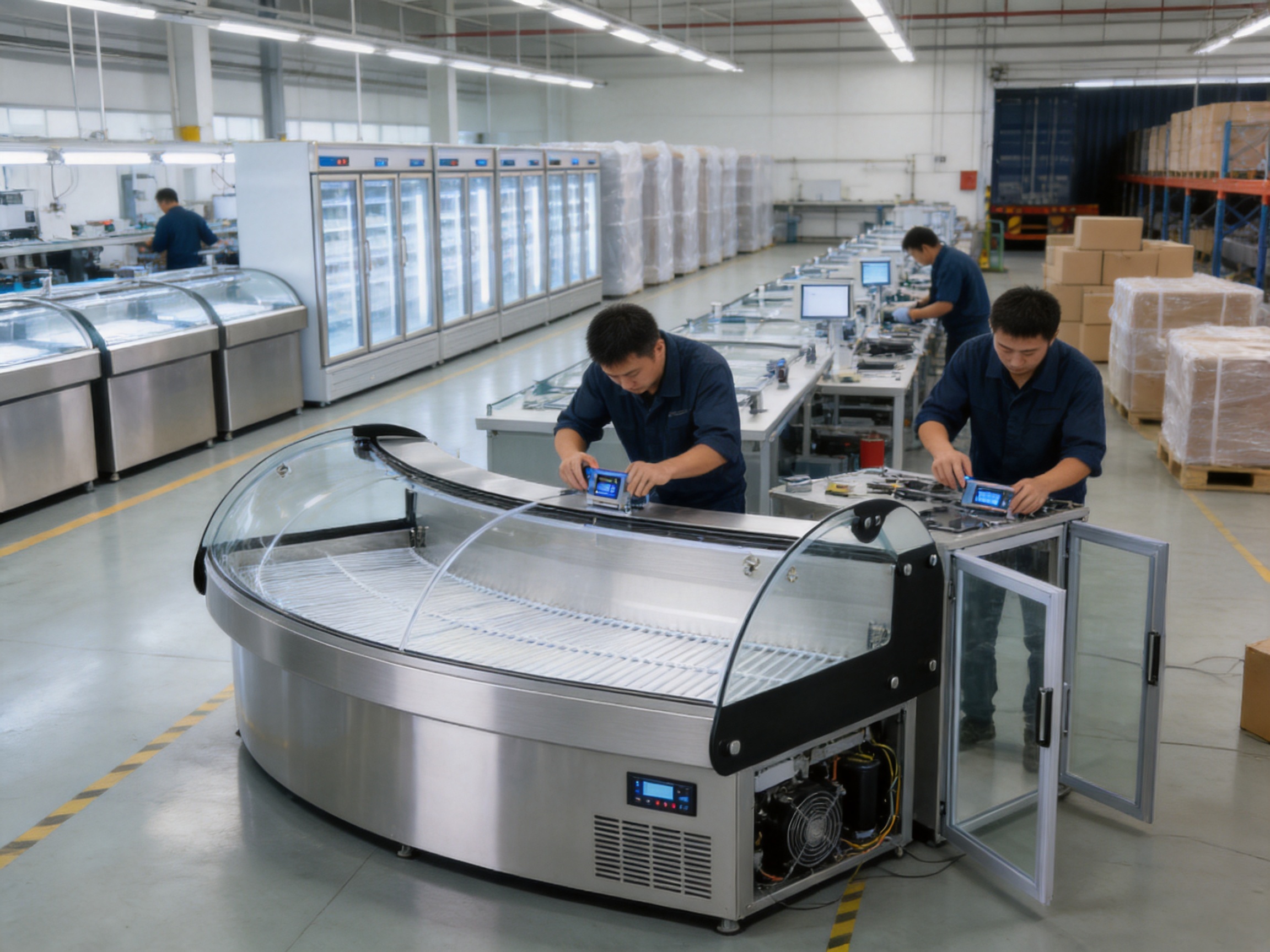
The manufacturer behind this product series is a professional producer of commercial display refrigeration equipment, including vertical display cabinets, cake showcases, countertop display coolers, and display warmers. Established in 2007, the company has developed more than a decade of manufacturing experience and operates from a modern garden-style factory covering approximately 40,000 square meters. This scale supports organized production, stable capacity, and systematic quality control.
Advanced manufacturing capability is especially important in commercial refrigeration because product performance depends on many linked details. Sheet metal processing, glass fitting, refrigeration circuit assembly, insulation quality, electrical wiring, controller installation, door alignment, cabinet sealing, and final testing must all be handled carefully. A professional production environment helps ensure that every unit leaving the factory meets consistent requirements.
The company’s R&D team supports product innovation and continuous improvement. In commercial refrigeration, research and development are not limited to creating new model shapes. They include improving cooling performance, optimizing airflow or cooling distribution, selecting better components, reducing energy consumption, enhancing user convenience, and adapting products to different global markets. The XCW series reflects this development mindset through its practical direct cooling system, R290 refrigerant, digital controller, dual sliding doors, and curved glass presentation.
Testing facilities are another important strength. Reliable commercial refrigeration equipment must be evaluated under realistic operating conditions. Temperature performance, electrical safety, component reliability, cabinet structure, and packaging durability all influence final customer satisfaction. With advanced testing resources, the manufacturer can verify product quality before shipment and continue improving designs based on test data and market feedback.
The company has obtained major certifications including CE, GS, CCC, CB, RoHS, and ETL. These certifications indicate a commitment to meeting diverse international market requirements. For importers, distributors, and commercial buyers, certification support reduces procurement risk and improves confidence in product compliance. In a market where safety and regulatory expectations are increasingly strict, certified manufacturing capability is a strong competitive advantage.
Advanced Production Processes Behind the Product
A dependable display refrigerator is the result of coordinated manufacturing processes. The production of the XCW series begins with careful material selection and cabinet design. Structural components must be strong enough for daily commercial use while maintaining a clean exterior appearance. Countertop display refrigerators are often placed directly in customer view, so surface quality, glass alignment, and overall finish are important.
Metal processing must be accurate to ensure proper cabinet assembly. Even small deviations can affect door movement, glass fitting, insulation consistency, and final appearance. Modern production lines help maintain dimensional precision and repeatability. This is particularly important for a product family with multiple lengths, such as 700 mm, 1000 mm, and 1800 mm models.
Glass installation is another critical process. Curved front glass must be fitted securely and attractively. Poor glass fitting can lead to gaps, poor appearance, or reduced thermal performance. Professional assembly processes help ensure that the display window supports both product visibility and cabinet performance.
The refrigeration system requires careful assembly of the compressor circuit, evaporator, condenser, capillary or control components, and related tubing. Since the XCW series uses R290 refrigerant, correct manufacturing and safety practices are essential. R290 systems must be designed and assembled with attention to refrigerant charge, sealing, ventilation, electrical safety, and compliance with applicable standards.
Electrical installation includes the digital temperature controller, temperature display, separated switches, lighting system, and power connections. Clear wiring and secure connections help improve long-term reliability. Commercial equipment may operate for long hours every day, so electrical quality directly affects customer experience.
Final inspection and performance testing help confirm that each unit is ready for shipment. Testing may include cooling performance verification, temperature control checks, visual inspection, electrical safety checks, door movement inspection, and packaging review. Strong quality assurance reduces after-sales issues and supports distributor confidence.
Logistics and Global Distribution Advantages
The specifications include loading quantities for 20GP and 40HQ containers, which are important for international trade planning. The XCW-118L can be loaded at approximately 56 pieces in a 20GP container and 140 pieces in a 40HQ container. The XCW-138L can be loaded at approximately 48 pieces in a 20GP container and 120 pieces in a 40HQ container. The XCW-248L can be loaded at approximately 18 pieces in a 20GP container and 48 pieces in a 40HQ container.
These loading figures help importers, wholesalers, and project buyers estimate shipping efficiency and total landed cost. In commercial refrigeration, logistics efficiency can strongly influence competitiveness. A product that is well packaged, efficiently loaded, and available in practical quantities is easier to distribute across regional markets.
Packaging dimensions are also important because glass display refrigerators require careful protection during transport. The XCW series uses package sizes designed to protect the cabinet while supporting container loading. Strong packaging reduces the risk of transit damage, which is especially important for products with glass fronts and sliding doors.
Design Value for Merchandising and Customer Experience
Food display is a visual conversation between the business and the customer. A refrigerated showcase communicates freshness, cleanliness, professionalism, and product value. The XCW series supports this communication by presenting chilled goods clearly behind glass while keeping the cabinet compact enough for counter placement.
For bakeries, visual display can be as important as recipe quality. A cake that looks appealing behind curved glass can become the centerpiece of a counter. For cafés, chilled desserts displayed next to beverages can increase average transaction value. For convenience stores, a small refrigerated display at the checkout area can create impulse sales. For hotel service, a neat chilled display can elevate the guest experience.
The equipment’s clean operation also contributes to customer trust. Customers often judge food safety and freshness by the appearance of the display environment. A stable, professional display refrigerator helps reinforce the impression that products are handled properly. When the cabinet looks organized and temperature is visibly controlled, customers feel more confident making a purchase.
Operational Efficiency and Cost Considerations
Commercial operators must consider not only purchase price but also daily operating efficiency. A display refrigerator affects labor, merchandising, product waste, electricity use, maintenance, and customer perception. The XCW series is designed to deliver value across these areas.
The 150 W input power rating across the models suggests a practical energy profile for countertop display use. While actual energy consumption depends on ambient conditions, door opening frequency, thermostat settings, product load, and maintenance, the rated input provides buyers with a useful reference when comparing equipment. Efficient cooling and appropriate use of lighting can help businesses manage operating costs.
The digital controller supports better temperature management, which can reduce unnecessary product loss caused by improper settings or unnoticed temperature changes. Dual sliding doors improve staff efficiency during restocking and service. Adjustable feet reduce installation issues. R290 refrigerant supports environmental responsibility. Each feature contributes to the total value of ownership.
In competitive foodservice markets, equipment that improves product visibility can also contribute to revenue generation. A cheaper refrigerator that hides products or presents them poorly may save money at purchase but reduce sales potential. The XCW series is designed to be both a cooling appliance and a merchandising asset.
Installation and Use Recommendations
For best performance, the refrigerator should be installed on a stable, level counter or support surface capable of handling its weight. Operators should use the adjustable feet to level the cabinet. The unit should be placed away from direct sunlight, heating equipment, strong air drafts, and high-temperature zones, because these conditions can affect cooling performance and energy use.
Adequate ventilation around the refrigeration components should be maintained according to installation guidelines. Blocking ventilation areas may reduce cooling efficiency and shorten component life. Staff should avoid overloading the cabinet or blocking cooling surfaces, as proper internal temperature distribution depends on correct product arrangement.
Products placed inside the unit should already be chilled when possible. Display refrigerators are intended to maintain product temperature rather than rapidly cool large quantities of warm food. Loading warm items can increase internal temperature and place additional demand on the cooling system.
Regular cleaning is important for both hygiene and presentation. Glass should be cleaned with suitable materials to maintain clarity. Sliding door tracks should be kept free of debris. Internal surfaces should be cleaned according to foodservice sanitation practices. Temperature should be checked regularly, and the digital display should be monitored during business hours.
Maintenance Considerations
Routine maintenance helps extend equipment life and maintain cooling performance. Operators should keep the condenser area clean and free from dust, as dust buildup can reduce heat exchange efficiency. Door seals and sliding mechanisms should be inspected periodically to ensure proper closure. Damaged seals or poorly moving doors can affect internal temperature stability.
Staff should observe unusual sounds, temperature instability, excessive frost, or condensation problems and respond promptly. Early attention to small issues can prevent larger service problems. Because the unit uses R290 refrigerant, any refrigerant circuit repair should be handled by qualified personnel familiar with hydrocarbon refrigerant safety practices.
Good maintenance also protects the visual value of the showcase. Scratched, dirty, or poorly maintained display equipment can weaken customer trust. A clean, well-functioning refrigerator supports both food quality and brand image for the store using it.
Why This Series Is a Strong Choice for Buyers
The XCW-118L, XCW-138L, and XCW-248L series is a strong choice for buyers who need a practical combination of commercial refrigeration, countertop display, product visibility, and operational convenience. The models cover different capacity needs while maintaining the same temperature range, refrigerant choice, control features, and merchandising concept.
For end users, the series offers an attractive way to display chilled products close to the point of sale. For distributors, it provides a coherent product family that can serve multiple market segments. For project buyers, it offers certified manufacturing support, flexible sizing, and container loading data for procurement planning.
The series stands out because it is not limited to one advantage. It combines direct cooling, digital temperature control, R290 refrigerant, curved glass, dual sliding doors, adjustable feet, separate switches, and multiple size choices. This combination gives it a clear position in the market: professional, practical, visually appealing, and suitable for modern commercial refrigeration needs.
Company Capability and Long-Term Partnership Value
Ningbo XiangChi Electrical Co., Ltd. supports the product with a strong manufacturing foundation. The company is located in the East Zone of Guanhaiwei Industrial Park, Cixi City, Ningbo, Zhejiang, China, an area with established industrial resources and export capability. With experience in vertical display cabinets, countertop display coolers, cake showcases, and display warmers, the company understands the requirements of commercial food display equipment.
Its factory scale of approximately 40,000 square meters supports production capacity and systematic management. Its professional R&D team and advanced testing facilities support product improvement and adaptation to international markets. Certifications such as CE, GS, CCC, CB, RoHS, and ETL strengthen confidence for buyers who need compliance-ready refrigeration products.
The company’s development concept emphasizes innovation, quality, and service. These values are important in commercial refrigeration because customers require not only equipment but also reliable supply, technical support, quality consistency, and long-term cooperation. By combining product development with manufacturing strength, the company is positioned to support wholesalers, distributors, and commercial buyers seeking stable refrigeration solutions.
Q&A Section
What products are included in this countertop display refrigerator series?
The series includes the XCW-118L, XCW-138L, and XCW-248L direct cooling countertop display refrigerators. They provide gross capacities of 118 L, 138 L, and 248 L, giving buyers options for small, medium, and larger display needs.
What is the operating temperature range?
The operating temperature range is 2 to 8 °C, or 35.6 to 46.4 °F. This range is suitable for many chilled foods and beverages that require refrigerated display rather than frozen storage.
What type of refrigerant does the series use?
The series uses R290 refrigerant. R290 is a natural refrigerant valued for low environmental impact and strong refrigeration performance when used in a properly designed commercial system.
What are the main standard features?
The standard features include a direct cooling system, digital temperature controller and display, separated power button, separated light button, front curved glass, front and back sliding doors, and adjustable feet.
Why is front curved glass useful?
Front curved glass improves product presentation and creates a more refined customer-facing appearance. It is especially valuable for cakes, desserts, beverages, and premium chilled foods where visual appeal influences purchase decisions.
How do front and back sliding doors help daily operation?
Front and back sliding doors provide flexible access for service and restocking. They also save space compared with hinged doors, making the refrigerators practical for compact counters and busy foodservice environments.
Which model is best for a small café?
The XCW-118L is often a practical choice for a small café because it provides 118 L of gross capacity in a compact 700 mm wide format. It is suitable for desserts, bottled drinks, yogurt cups, and small chilled food selections.
Which model is best for high-volume display?
The XCW-248L is the best option for higher-volume display needs. With 248 L gross capacity and an 1800 mm width, it provides a wide display area for bakeries, hotel buffets, specialty food counters, and larger retail environments.
What competitive advantages does this series offer?
The series offers a strong combination of direct cooling, digital control, R290 refrigerant, curved glass, dual sliding doors, adjustable feet, separated switches, and multiple size options. These features make it practical, attractive, and suitable for professional commercial use.
What manufacturing strengths support the product?
The product is supported by a professional commercial refrigeration manufacturer with a large modern factory, experienced R&D team, advanced testing facilities, and certifications including CE, GS, CCC, CB, RoHS, and ETL. These strengths help ensure reliable production and international market readiness.
Conclusion
The XCW-118L, XCW-138L, and XCW-248L direct cooling countertop display refrigerators are designed for businesses that need reliable chilled display, attractive merchandising, and efficient daily operation. Their 2 to 8 °C temperature range, R290 refrigerant, direct cooling system, digital temperature controller, curved glass, sliding doors, adjustable feet, and multiple capacity choices create a product family suitable for cafés, bakeries, convenience stores, supermarkets, hotels, and specialty foodservice locations.
Beyond the product itself, the manufacturer’s advanced production capability, R&D strength, testing resources, certification support, and experience in commercial refrigeration add significant value. For buyers comparing display refrigerators in a competitive market, this series offers a strong balance of performance, appearance, practicality, environmental responsibility, and supply confidence.
In modern foodservice and retail, a countertop display refrigerator must do more than keep products cold. It must help sell products, support staff workflow, protect freshness, fit the space, and represent the professionalism of the business. The XCW series answers these needs with a practical and commercially focused design.
References
Commercial Refrigeration Equipment Design and Application Guidelines, Industry Technical Handbook.
Food Retail Display Refrigeration: Temperature Management and Merchandising Practices, Professional Foodservice Reference.
Natural Refrigerants in Commercial Cooling Systems, Refrigeration Technology Review.
Hydrocarbon Refrigerant Safety and Performance Considerations, HVACR Engineering Publication.
Commercial Food Display Equipment Maintenance and Operation Manual, Foodservice Equipment Standards Reference.
Product: Direct Cooling Countertop Display Refrigerators XCW-118L/138L/248L

You May Also Like
.jpg?imageView2/2/w/500/h/500/format/jp2/q/100 "Four Sides Glasses Display Cooler")
.jpg?imageView2/2/w/500/h/500/format/jp2/q/100 "White 4-Sided Glass Refrigerated Display Case")
.jpg?imageView2/2/w/500/h/500/format/jp2/q/100 "Refrigerated Display Cake Countertop Four Sides Glasses Display Cooler")
.jpg?imageView2/2/w/500/h/500/format/jp2/q/100 "Four Sides Glasses Display Cooler")

-
- Navigation
- Home
- About Us
- Products
- News
- Contact Us
 East Zone, Guanhaiwei Industrial Park, Cixi City, Ningbo, Zhejiang, China
 +86-574-63668678
 +86-574-63668108
Copyright © Ningbo XiangChi Electrical Co.,Ltd All Rights Reserved.
