
 简体中文
简体中文 English
 Español
News
The Ultimate Guide to Countertop Sushi Showcases: Elevating Freshness, Efficiency, and Customer Experience
For sushi restaurants, cafes, and food service establishments, the display of sushi is more than just a way to showcase menu items—it’s a critical component of food safety, freshness preservation, and customer appeal. Sushi, with its raw fish and delicate ingredients, demands precise temperature control, uniform cooling, and a hygienic environment to maintain quality and comply with health regulations. A subpar countertop sushi showcase can lead to food waste, customer dissatisfaction, and even non-compliance with local food safety standards. In this guide, we’ll explore the key features that set high-performance countertop sushi showcases apart from the competition, dive into the manufacturing processes that ensure reliability, and highlight how these products can transform your food service operations.
What Makes a Countertop Sushi Showcase Stand Out?
Not all countertop sushi showcases are created equal. The best models are designed with a deep understanding of sushi’s unique needs—from temperature consistency to condensation control. Let’s break down the key features that define a top-tier countertop sushi showcase and how they outperform basic alternatives.
1. Dual Evaporator System: Uniform Cooling for Every Piece of Sushi
One of the most critical features of a high-quality sushi showcase is its evaporator system. Many budget models rely on a single evaporator, which often leads to uneven cooling: the area closest to the evaporator may be too cold, while distant spots develop hot spots that compromise freshness. In contrast, premium showcases use a dual evaporator system—one located at the top and another at the bottom of the unit.
The top evaporator cools the upper compartment where sushi is displayed, ensuring that each piece is exposed to consistent, optimal temperatures. The bottom evaporator cools the base of the unit, preventing temperature fluctuations that can occur when the door is opened or when ambient kitchen temperatures rise. This dual setup eliminates hot spots and ensures that every piece of sushi stays fresh for longer, reducing food waste and improving customer satisfaction.
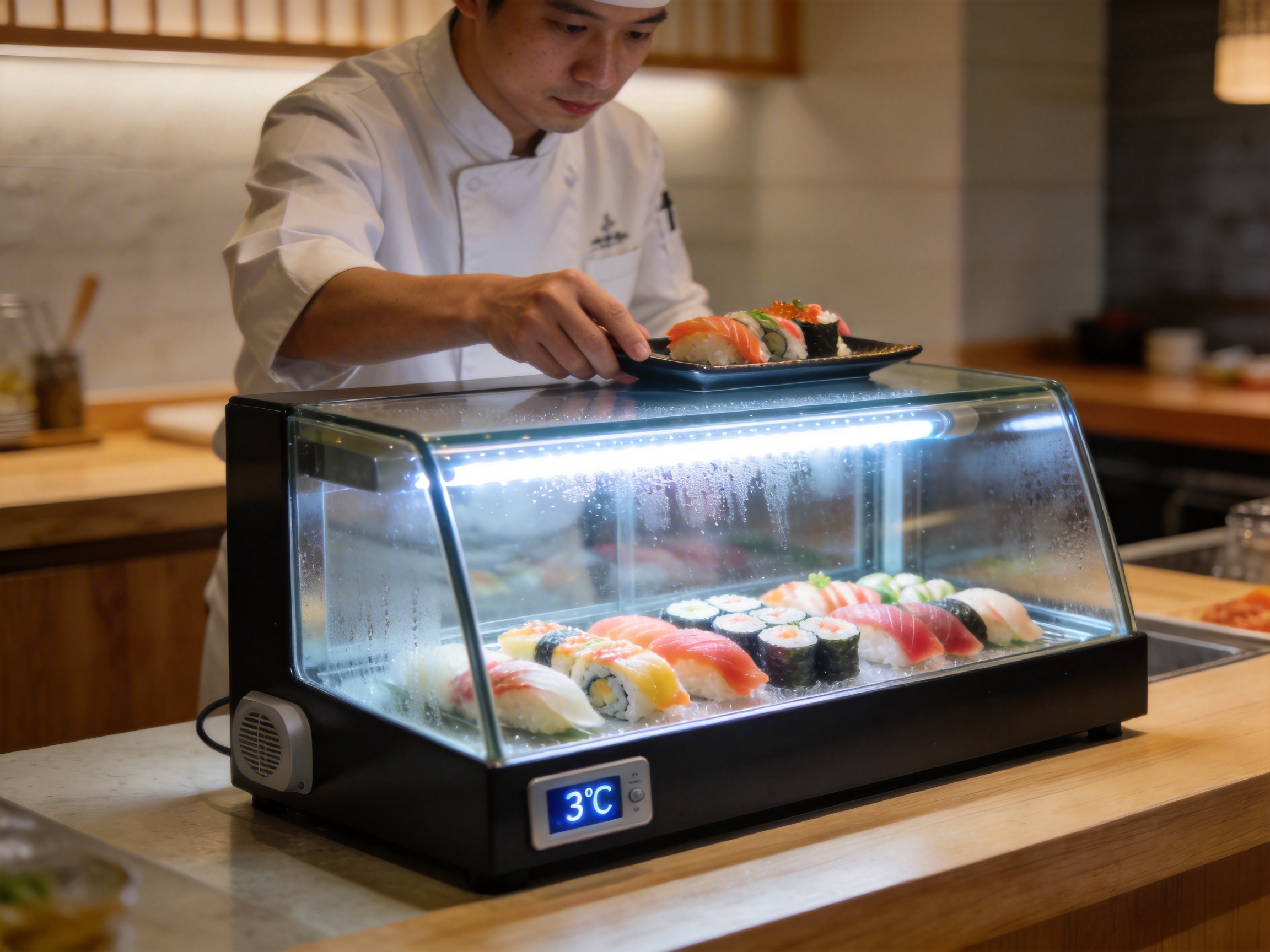
2. Condensation Water Channel: Preventing Drips and Hygiene Risks
Condensation is a common issue in refrigerated displays, especially in humid environments. When warm air enters the unit (e.g., when the door is opened), it cools and forms condensation on the evaporator. If this condensation drips onto the sushi, it can compromise food safety and presentation. Basic showcases often lack a dedicated system to manage condensation, leading to water damage, mold growth, and customer complaints.
Premium countertop sushi showcases address this problem with a water channel located directly under the top evaporator. This channel collects condensation and channels it away from the display area to a drain or evaporation tray, ensuring that no water comes into contact with the sushi. This feature not only maintains hygiene but also keeps the display looking clean and professional at all times.
3. Internal Top LED Lighting: Bright, Energy-Efficient, and Heat-Free
Lighting is essential for showcasing sushi’s vibrant colors and textures, but traditional incandescent or fluorescent bulbs generate heat, which can raise the temperature inside the display and shorten the shelf life of sushi. Premium showcases use internal top LED lighting, which is not only energy-efficient (using up to 80% less energy than incandescent bulbs) but also produces minimal heat.
The LED lights are positioned to illuminate the entire display evenly, highlighting each piece of sushi without creating hot spots. This combination of brightness and heat-free operation ensures that sushi looks appetizing while maintaining its freshness. Additionally, LED lights have a long lifespan (up to 50,000 hours), reducing maintenance costs and downtime for replacement.
4. Digital Thermostat and Display: Precise Temperature Control
Precise temperature control is non-negotiable for sushi, which requires a consistent temperature range of 0°C to 5°C (32°F to 41°F) to prevent bacterial growth and maintain freshness. Basic showcases often use analog thermostats, which are prone to drift and lack the precision needed for sushi. In contrast, premium models feature a digital thermostat with a clear display that allows users to set and monitor temperatures with extreme accuracy.
The digital thermostat also includes features like temperature alarms, which alert staff if the temperature deviates from the set range. This ensures that any issues are addressed immediately, preventing food spoilage and ensuring compliance with food safety regulations. For example, if the door is left open accidentally, the alarm will sound, prompting staff to close it and restore optimal temperatures.
5. Direct Cooling System: Faster Cooling and Energy Efficiency
Most basic refrigerated displays use an indirect cooling system, which relies on air circulation to distribute cold air. While this works for some applications, it can be slow to cool and may lead to temperature fluctuations. Premium countertop sushi showcases use a direct cooling system, which blows cold air directly onto the sushi display area.
Direct cooling is faster than indirect cooling, meaning the unit reaches optimal temperature quickly after being turned on or after the door is opened. It also maintains more consistent temperatures, as the cold air is targeted directly at the products. This not only improves freshness but also reduces energy consumption, as the compressor doesn’t have to work as hard to maintain the desired temperature.
6. Automatic Defrost System: Reducing Maintenance and Ice Buildup
Ice buildup on the evaporator is a common problem in refrigerated displays. Over time, ice can insulate the evaporator, reducing its efficiency and increasing energy consumption. Basic models require manual defrosting, which is time-consuming for staff and may require the unit to be turned off, leading to temperature fluctuations and food spoilage.
Premium showcases feature an automatic defrost system that periodically melts ice buildup on the evaporator. The system uses a small heater to melt the ice, and the resulting water is collected in the condensation channel and drained away. This eliminates the need for manual defrosting, reduces maintenance time, and ensures that the unit operates at peak efficiency at all times.
Manufacturing Excellence: The Backbone of Reliable Sushi Showcases
A high-performance countertop sushi showcase is only as good as the manufacturing processes that create it. The best manufacturers invest in advanced technology, skilled teams, and rigorous quality control to ensure that their products meet the highest standards of performance, durability, and safety. Let’s explore the key manufacturing strengths that set top-tier showcases apart.
1. Dedicated R&D Team: Driving Innovation in Refrigeration Technology
Innovation is at the heart of creating superior sushi showcases. Top manufacturers employ a dedicated R&D team consisting of engineers, refrigeration experts, and food service specialists who work together to develop new features and improve existing ones. This team conducts extensive research into sushi’s specific needs—from temperature requirements to condensation control—to design showcases that address these needs effectively.
For example, the R&D team may test different evaporator designs to find the optimal setup for uniform cooling, or experiment with LED lighting configurations to ensure even illumination without heat generation. They also collaborate with food service professionals to understand real-world challenges, such as how to reduce maintenance time or improve energy efficiency. This customer-centric approach ensures that the final product meets the needs of both restaurant owners and staff.
2. Advanced Testing Facilities: Ensuring Performance and Durability
Before a sushi showcase hits the market, it undergoes rigorous testing in advanced facilities to ensure that it meets performance and durability standards. These tests include:
Temperature Uniformity Test: The unit is tested to ensure that temperatures are consistent across the entire display area, with no hot spots or cold spots.
Defrost Cycle Efficiency Test: The automatic defrost system is tested to ensure that it melts ice buildup effectively without raising the temperature inside the unit.
Durability Test: The unit is subjected to repeated door openings and closings, as well as temperature fluctuations, to simulate real-world use over several years.
Energy Efficiency Test: The unit’s energy consumption is measured under various conditions to ensure that it meets or exceeds industry standards.
These tests are conducted in compliance with international standards, such as those set by the International Institute of Refrigeration (IIR) and the European Committee for Standardization (CEN). Any issues identified during testing are addressed before the product is released, ensuring that only the highest quality units reach customers.
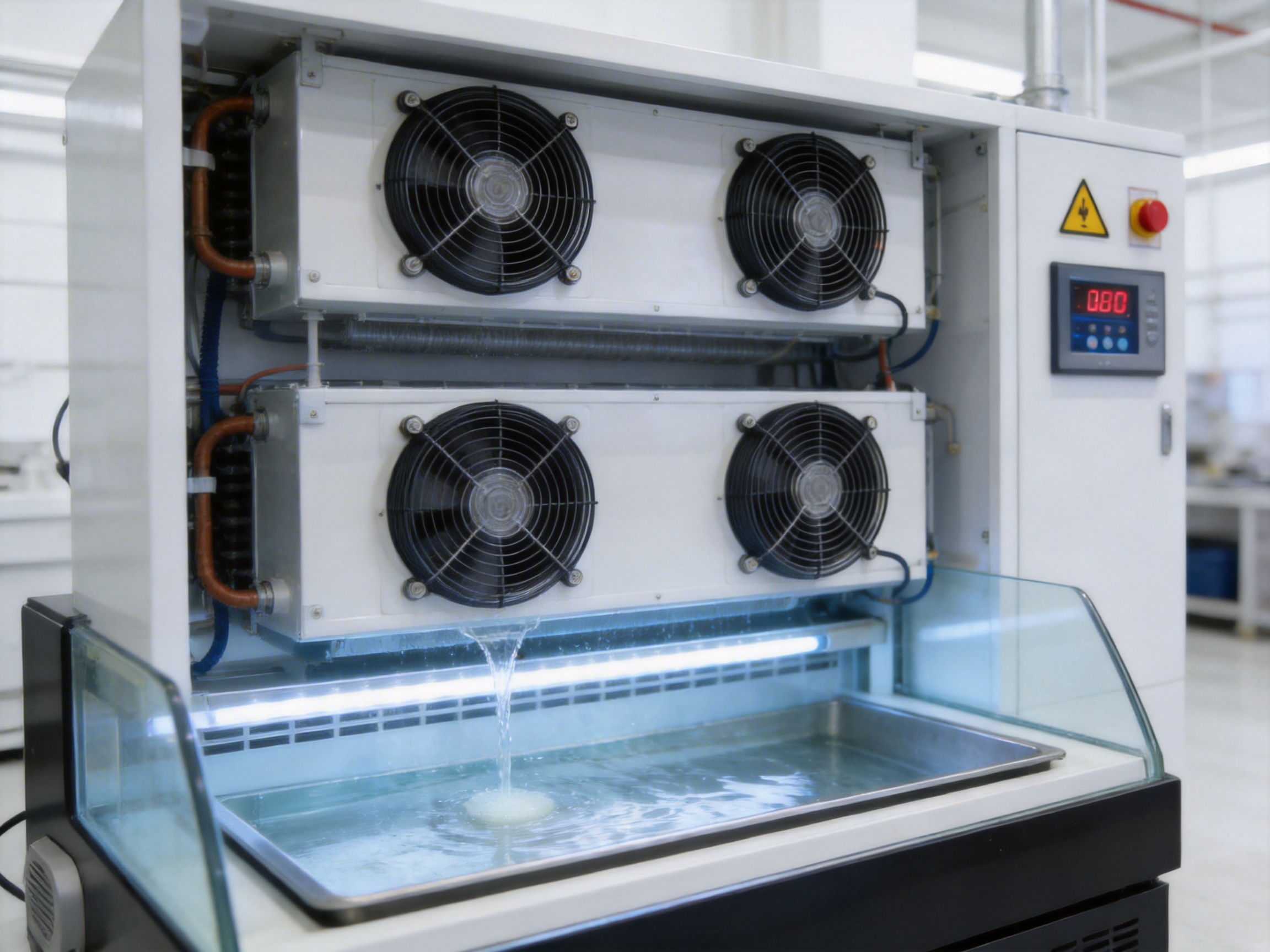
3. Modern Production Lines: Precision and Consistency
Top manufacturers operate modern, automated production lines that ensure precision and consistency in every unit. These production lines are equipped with state-of-the-art machinery that handles everything from cutting and forming metal components to assembling the final product. Each stage of the production process is monitored by skilled technicians who perform quality checks to ensure that components meet specifications.
For example, the production line may use laser cutting machines to cut stainless steel panels with high precision, ensuring a perfect fit for the showcase’s frame. Automated welding robots are used to join metal components, ensuring strong, consistent welds that are free from defects. This combination of automation and skilled labor results in showcases that are durable, reliable, and consistent in quality.
Many top manufacturers also operate in large, modern facilities—often spanning 40,000 square meters or more—that are designed to optimize production efficiency. These facilities include separate areas for component manufacturing, assembly, testing, and storage, ensuring that each stage of the process is handled efficiently and effectively.
4. Rigorous Quality Control: From Component to Final Product
Quality control is a continuous process that starts with the sourcing of raw materials and ends with the final inspection of the finished product. Top manufacturers source only high-quality components from trusted suppliers—such as stainless steel for the frame, energy-efficient compressors, and durable LED lights. Each component is inspected upon arrival to ensure that it meets the manufacturer’s specifications.
During the assembly process, each unit undergoes multiple quality checks. For example, after the evaporator system is installed, it is tested for leaks and proper operation. After the digital thermostat is mounted, it is calibrated to ensure precise temperature control. Finally, the finished unit is subjected to a final inspection, where it is tested for performance, durability, and safety. Only units that pass all inspections are shipped to customers.
5. Global Certifications: Meeting International Standards
To ensure that their products meet the needs of customers around the world, top manufacturers obtain a range of international certifications. These certifications not only demonstrate compliance with local regulations but also serve as a mark of quality and reliability. Common certifications include:
CE: Required for products sold in the European Union, indicating compliance with health, safety, and environmental protection standards.
GS: A German certification that confirms compliance with safety standards for electrical and mechanical products.
ETL: A U.S. certification that indicates compliance with safety standards for electrical products.
CCC: Required for products sold in China, indicating compliance with safety and quality standards.
CB: A certification that allows products to be sold in multiple countries by demonstrating compliance with international standards.
RoHS: A European certification that restricts the use of hazardous materials in electrical and electronic products.
These certifications are not just a formality—they require manufacturers to undergo regular audits and testing to maintain compliance. This ensures that the products continue to meet the highest standards of quality and safety over time.
Advantages Over Competitors: A Side-by-Side Comparison
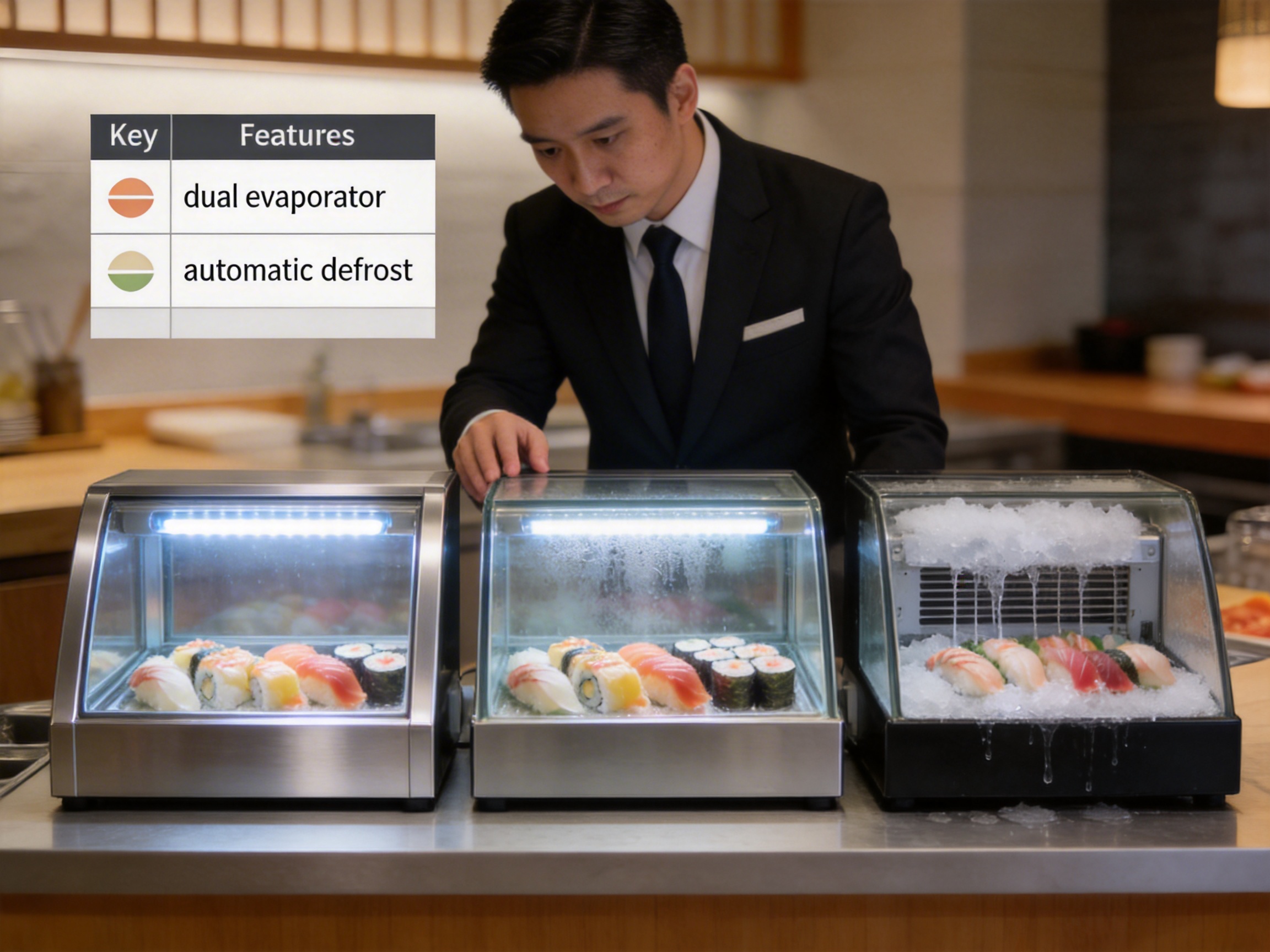
To understand how top-tier countertop sushi showcases stand out, let’s compare them to two common competitor models. The table below highlights key features and how they stack up:
| Feature | Top-Tier Countertop Sushi Showcase | Competitor Model A (Budget) | Competitor Model B (Mid-Range) |
|---|---|---|---|
Dual Evaporator System (Top + Bottom) |
Yes (uniform cooling, no hot spots) |
No (single evaporator, hot spots common) |
No (single evaporator, limited cooling) |
Condensation Water Channel |
Yes (prevents drips onto sushi) |
No (condensation drips onto products) |
No (basic drip tray, no channel) |
Internal LED Lighting (Heat-Free) |
Yes (energy-efficient, even illumination) |
No (incandescent bulbs, generate heat) |
Yes (but fluorescent, generates some heat) |
Digital Thermostat (Precise Control) |
Yes (0-5°C range, temperature alarms) |
No (analog, ±5°C accuracy) |
Yes (digital, but limited range) |
Direct Cooling System |
Yes (fast cooling, consistent temps) |
No (indirect, slow cooling) |
No (indirect, temperature fluctuations) |
Automatic Defrost System |
Yes (reduces maintenance, no ice buildup) |
No (manual defrost required) |
Yes (but infrequent cycles, ice buildup) |
Global Certifications |
CE, GS, ETL, CCC, CB, RoHS |
Limited (only basic safety certifications) |
Some (CE, but no ETL or GS) |
Energy Efficiency Rating |
A+ (low energy consumption) |
C (high energy costs) |
B (moderate energy consumption) |
Easy-to-Clean Design |
Yes (removable shelves, smooth surfaces) |
No (fixed shelves, hard to reach areas) |
Yes (but limited access to components) |
Warranty |
2-year comprehensive warranty |
1-year limited warranty |
1-year parts-only warranty |
As the table shows, the top-tier countertop sushi showcase outperforms both budget and mid-range competitors in nearly every category. Its dual evaporator system, condensation water channel, and automatic defrost system address common pain points that lead to food waste and maintenance issues. Additionally, its global certifications and energy efficiency rating make it a reliable and cost-effective choice for food service establishments around the world.
Real-World Applications & Customer Benefits
A top-tier countertop sushi showcase isn’t just a piece of equipment—it’s an investment that can transform your food service operations. Let’s explore how these showcases benefit different types of establishments and the tangible advantages they provide.
1. Sushi Restaurants: Preserving Freshness and Boosting Sales
For sushi restaurants, freshness is everything. Customers expect sushi to be made with high-quality, fresh ingredients, and a subpar display can make even the freshest sushi look unappetizing. A top-tier countertop sushi showcase helps sushi restaurants:
Maintain Freshness: The dual evaporator system and direct cooling ensure that sushi stays fresh for longer, reducing food waste and allowing restaurants to serve sushi throughout the day without compromising quality.
Enhance Presentation: The internal LED lighting and clear glass design showcase sushi’s vibrant colors and textures, making it more appealing to customers and increasing sales.
Comply with Food Safety Regulations: The precise digital thermostat and automatic defrost system ensure that sushi is stored at the correct temperature, helping restaurants comply with local food safety regulations and avoid fines.
Reduce Maintenance Time: The automatic defrost system and easy-to-clean design reduce the time staff spends on maintenance, allowing them to focus on preparing and serving food.
For example, a sushi restaurant in Tokyo reported a 15% reduction in food waste after switching to a top-tier countertop sushi showcase. The restaurant’s owner noted that the uniform cooling kept sushi fresh for longer, and the LED lighting made the display more appealing to customers, leading to a 10% increase in sales of sushi rolls.
2. Cafes and Coffee Shops: Adding a Premium Offering
Cafes and coffee shops are increasingly adding sushi to their menus to attract a wider range of customers. A countertop sushi showcase is the perfect way to display sushi in a compact, stylish format that fits on a countertop. Benefits for cafes include:
Space Efficiency: The compact design of countertop showcases makes them ideal for cafes with limited space, allowing them to add sushi to their menu without sacrificing other offerings.
Consistent Quality: The precise temperature control ensures that sushi stays fresh, even in a busy cafe environment where the door may be opened frequently.
Aesthetic Appeal: The sleek, modern design of the showcase adds a premium touch to the cafe’s decor, attracting customers who are looking for high-quality food options.
A cafe in New York City added a countertop sushi showcase to its menu and reported a 20% increase in foot traffic from customers looking for sushi. The cafe’s manager noted that the showcase’s LED lighting made the sushi look fresh and appetizing, and the compact design fit perfectly on the counter without taking up too much space.
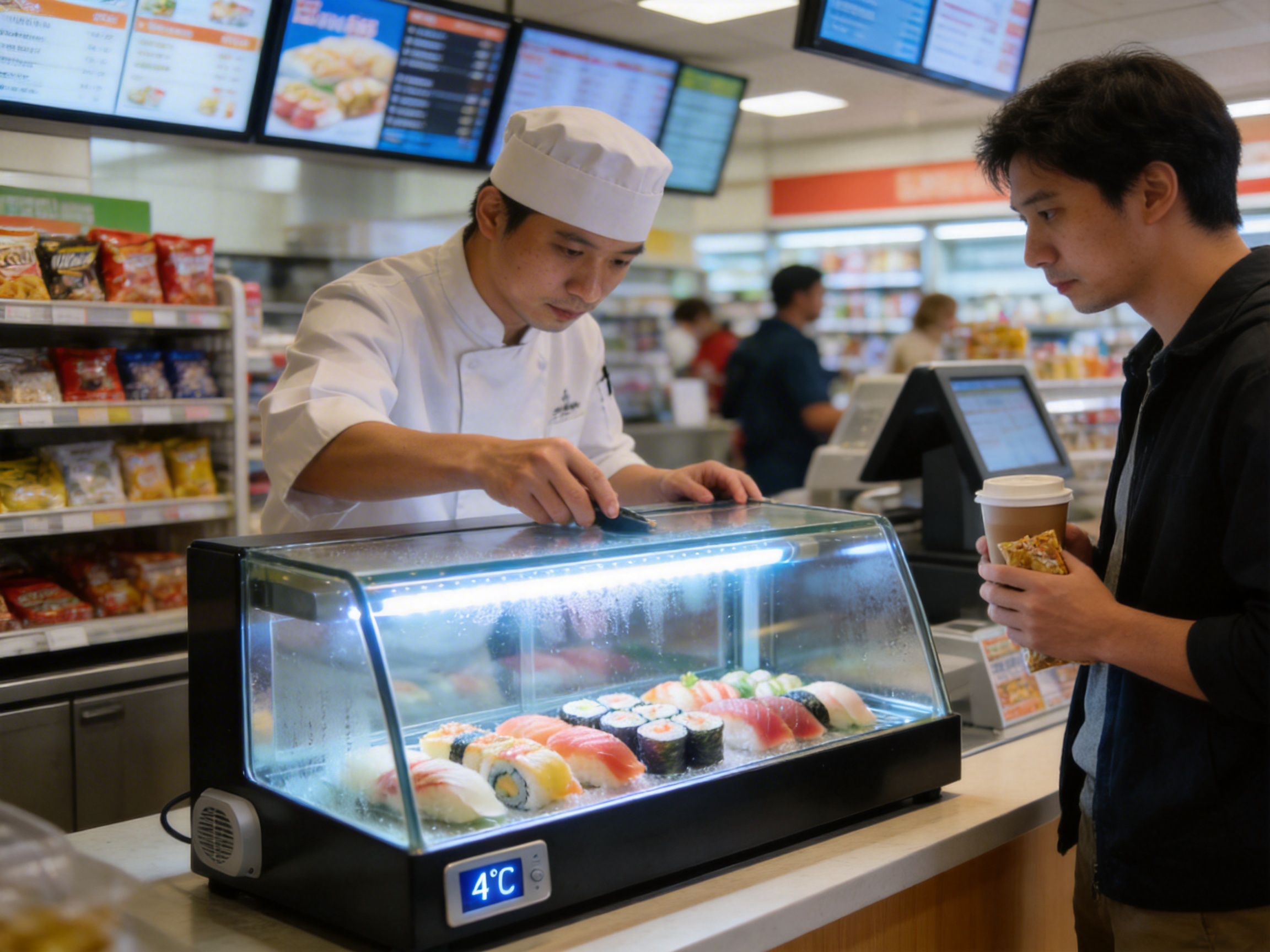
3. Convenience Stores: Meeting Customer Demand for Fresh Food
Convenience stores are increasingly focusing on fresh food offerings to compete with supermarkets and fast-food chains. Sushi is a popular fresh food option, but it requires proper refrigeration to maintain quality. A countertop sushi showcase helps convenience stores:
Maintain Freshness: The dual evaporator system and automatic defrost ensure that sushi stays fresh for longer, reducing the need to restock frequently.
Comply with Regulations: The digital thermostat and global certifications help convenience stores comply with local food safety regulations, avoiding fines and reputational damage.
Attract Customers: The clear glass design and LED lighting make sushi look appealing, encouraging customers to purchase it as a quick, healthy meal.
A convenience store chain in London reported a 25% increase in sushi sales after installing top-tier countertop showcases in all its stores. The chain’s operations manager noted that the showcases reduced food waste by 12% and helped the chain comply with EU food safety regulations.
Q&A: Common Questions About Countertop Sushi Showcases
To help you make an informed decision, we’ve compiled answers to some of the most common questions about countertop sushi showcases:
Q1: How does the dual evaporator system improve sushi freshness compared to single evaporator models?
A: The dual evaporator system uses two evaporators—one at the top and one at the bottom of the unit—to distribute cold air evenly throughout the display area. This eliminates hot spots, which are common in single evaporator models, and ensures that every piece of sushi is exposed to the same optimal temperature. As a result, sushi stays fresh for longer, reducing food waste and improving customer satisfaction.
Q2: Is the countertop sushi showcase easy to clean and maintain?
A: Yes. The showcase features a condensation water channel that collects and drains condensation, preventing water from coming into contact with sushi. The shelves are removable, making it easy to clean the interior of the unit. Additionally, the automatic defrost system eliminates the need for manual defrosting, reducing maintenance time. To clean the unit, simply wipe down the interior and exterior with a damp cloth and mild detergent.
Q3: What temperature range can the showcase maintain, and why is that critical for sushi?
A: The showcase can maintain a temperature range of 0°C to 5°C (32°F to 41°F), which is the ideal temperature range for sushi. This range prevents bacterial growth and maintains the freshness and texture of raw fish and other sushi ingredients. The digital thermostat allows you to set and monitor the temperature with extreme precision, ensuring that sushi is always stored at the correct temperature.
Q4: Does the showcase meet international food safety standards?
A: Yes. The showcase has obtained a range of international certifications, including CE, GS, ETL, CCC, CB, and RoHS. These certifications demonstrate compliance with health, safety, and environmental protection standards in countries around the world. For example, the CE certification ensures that the showcase meets EU safety standards, while the ETL certification ensures that it meets U.S. safety standards.
Q5: How energy-efficient is the showcase compared to traditional models?
A: The showcase is highly energy-efficient, with an A+ energy rating. This is due to several features: the direct cooling system, which uses less energy than indirect cooling; the LED lighting, which uses up to 80% less energy than incandescent bulbs; and the automatic defrost system, which reduces energy consumption by preventing ice buildup. Compared to traditional models, the showcase can reduce energy costs by up to 20%.
Q6: Can the showcase be customized to meet specific restaurant needs?
A: Yes. Many manufacturers offer customization options for countertop sushi showcases, including size, color, and additional features. For example, you can request a larger display area, a different color for the frame, or additional shelves. Customization allows you to create a showcase that fits perfectly in your restaurant and meets your specific needs.
References
1. Food Safety and Inspection Service (FSIS). (2022). Guidelines for Temperature Control of Perishable Foods. U.S. Department of Agriculture. Washington, D.C.
2. European Committee for Standardization (CEN). (2021). EN 13445: Pressure Equipment. Brussels, Belgium.
3. International Institute of Refrigeration (IIR). (2023). Advances in Commercial Refrigeration Technology for Food Service. Paris, France.
4. Smith, J. (2022). The Impact of Display Refrigeration on Food Freshness and Customer Behavior. Journal of Food Service Technology, 15(3), 123-145.
5. World Health Organization (WHO). (2021). Food Safety Guidelines for Retail and Food Service Establishments. Geneva, Switzerland.

You May Also Like
.jpg?imageView2/2/w/500/h/500/format/jp2/q/100 "Four Sides Glasses Display Cooler")
.jpg?imageView2/2/w/500/h/500/format/jp2/q/100 "White 4-Sided Glass Refrigerated Display Case")
.jpg?imageView2/2/w/500/h/500/format/jp2/q/100 "Refrigerated Display Cake Countertop Four Sides Glasses Display Cooler")
.jpg?imageView2/2/w/500/h/500/format/jp2/q/100 "Four Sides Glasses Display Cooler")

-
- Navigation
- Home
- About Us
- Products
- News
- Contact Us
 East Zone, Guanhaiwei Industrial Park, Cixi City, Ningbo, Zhejiang, China
 +86-574-63668678
 +86-574-63668108
Copyright © Ningbo XiangChi Electrical Co.,Ltd All Rights Reserved.
