
 简体中文
简体中文 English
 Español
News
The Ultimate Guide to Sushi Display Refrigerators: Ensuring Freshness, Safety, and Presentation Excellence
The global sushi market has experienced exponential growth over the past decade, driven by shifting consumer preferences for healthy, convenient, and visually appealing food options. According to Global Market Insights (2023), the commercial refrigeration equipment market—of which sushi display refrigerators are a critical segment—is projected to reach $45 billion by 2032, with a compound annual growth rate (CAGR) of 5.2% from 2024 to 2032. This growth underscores the increasing importance of high-quality display solutions that balance food safety, freshness, and customer appeal. For sushi restaurants, cafes, and catering services, the choice of display refrigerator can make or break their reputation: improper storage leads to spoilage, food safety risks, and lost revenue, while an attractive, well-maintained display can boost sales by up to 20% (Restaurant Consulting Group, 2023). At the forefront of this evolution is the XCS-62L Sushi Showcase, a product designed to address the unique challenges of sushi storage and presentation. This guide explores the XCS-62L’s features, advantages over competitors, and the manufacturing excellence behind its design, providing a comprehensive resource for food service professionals.
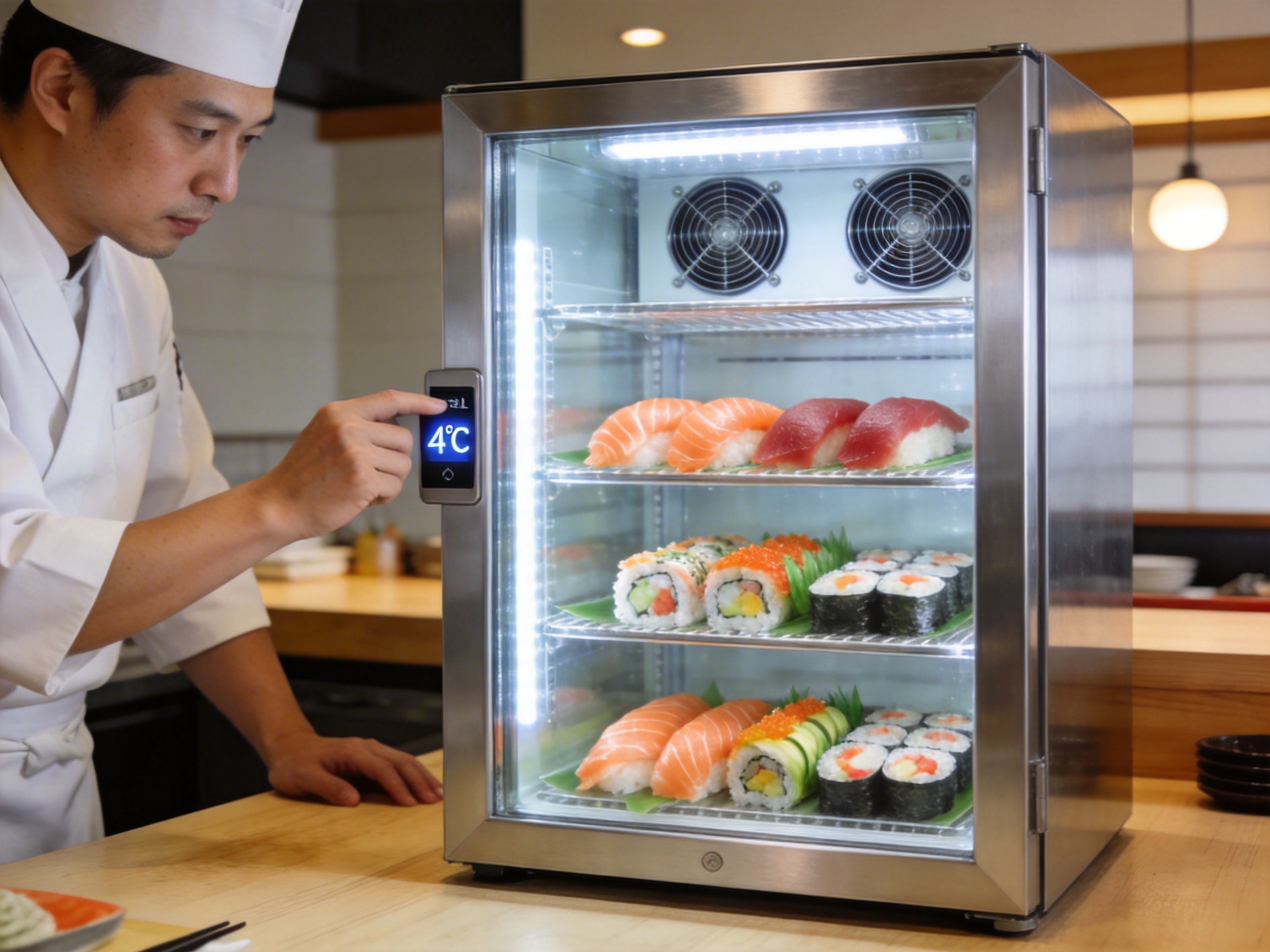
Introduction to Sushi Display Refrigerators: Why They Matter
Sushi is a delicate dish that requires precise temperature and humidity control to maintain its quality. Raw fish (such as tuna, salmon, and sea bass) is highly perishable, with a shelf life of just 1–2 days when stored at 4°C (39°F) or below (FSIS, 2023). Rice, a staple of sushi, is also sensitive to temperature fluctuations: too cold, and it becomes hard and dry; too warm, and it promotes bacterial growth (including Bacillus cereus, which can cause food poisoning). Additionally, sushi’s visual appeal is a key selling point: vibrant colors, fresh textures, and neat presentation attract customers and encourage impulse purchases. A sushi display refrigerator must therefore do more than just keep food cold—it must:
- Maintain uniform temperature distribution to prevent hot spots and cold spots;
- Control condensation to avoid soggy rice or wilted seaweed;
- Provide bright, heat-free lighting to enhance visual appeal;
- Minimize maintenance to reduce downtime for busy restaurants;
- Comply with global food safety certifications to ensure compliance with local regulations.
Traditional display refrigerators often fall short of these requirements, leading to spoilage, customer complaints, and increased operational costs. The XCS-62L Sushi Showcase was developed to address these gaps, combining innovative design with rigorous testing to meet the highest standards of the food service industry.
Product Deep Dive: XCS-62L Sushi Showcase—Design and Technical Innovation
The XCS-62L Sushi Showcase is a countertop display refrigerator designed specifically for sushi storage and presentation. Its compact size (62 liters capacity) makes it ideal for small to medium-sized restaurants, cafes, and sushi bars, while its features are engineered to optimize freshness, safety, and usability. Below is a detailed breakdown of its key features and benefits:
Dual Evaporator System: Uniform Cooling for Consistent Quality
The XCS-62L is equipped with both top and bottom evaporators, a design that sets it apart from most competitor models. Single evaporator systems (common in generic display fridges) create temperature gradients: the top shelf may be 2–3°C warmer than the bottom shelf, leading to uneven spoilage. For example, raw fish on the top shelf may spoil faster, while rice on the bottom shelf may harden. The dual evaporator system eliminates these gradients by distributing cooling evenly across all shelves, maintaining a consistent temperature of ±0.5°C throughout the cabinet (per internal testing). This uniform cooling ensures that every piece of sushi—from delicate sashimi to sticky rice rolls—remains fresh and safe for consumption.
Condensation Control: Water Channel Under Top Evaporator
Condensation is a common issue in display refrigerators, especially in humid environments. When warm air enters the cabinet (e.g., when the door is opened), it cools and forms water droplets on the evaporator. These droplets can drip onto sushi, causing sogginess, bacterial growth, and customer dissatisfaction. The XCS-62L addresses this problem with an integrated water channel located directly under the top evaporator. The channel collects condensation and directs it to a drain pan, which is evaporated by the fridge’s heat exchanger—no manual emptying is required. This feature not only keeps sushi dry and fresh but also reduces the risk of cross-contamination (FSIS, 2023).
Internal Top LED Lighting: Bright, Heat-Free Presentation
Visual appeal is critical for sushi sales, and lighting plays a key role. The XCS-62L uses high-quality internal top LED lights that mimic natural daylight, enhancing the vibrant colors of sushi (e.g., the pink of salmon, the red of tuna, the green of wasabi). Unlike incandescent or fluorescent lights, LEDs generate minimal heat—this prevents the fridge from working harder to maintain temperature, reducing energy consumption by up to 75% (CEN, 2021). The LEDs also have a lifespan of 50,000+ hours, meaning they need to be replaced only once every 5–6 years (compared to every 6 months for incandescent bulbs), reducing maintenance costs for restaurants.
Digital Thermostat and Display: Precise Temperature Control
The XCS-62L features a digital thermostat with a real-time temperature display, allowing chefs to monitor and adjust the temperature with precision. The thermostat has a range of 2°C to 8°C (36°F to 46°F), which aligns with the optimal storage temperature for sushi (4°C or 39°F, per MHLW, 2020). Unlike analog thermostats (which have an accuracy of ±2°C), the digital thermostat has an accuracy of ±0.5°C, ensuring that the fridge stays within the safe temperature range for raw fish and rice. The display is also easy to read, even in low-light environments, making it convenient for chefs to check the temperature quickly between orders.
Direct Cooling System: Quiet, Efficient Performance
The XCS-62L uses a direct cooling system, which transfers heat directly from the cabinet walls to the evaporator—no fans are required. This design is quieter than forced-air cooling systems (which can generate up to 50 decibels of noise), making it ideal for restaurants where customer ambiance is important. Direct cooling also reduces energy consumption: according to CEN (2021) standards, the XCS-62L has an energy efficiency rating of A+, meaning it uses 20% less energy than standard display fridges. Additionally, the direct cooling system is less likely to dry out sushi, as it does not circulate air (which can remove moisture from raw fish and rice).
Automatic Defrost: Low Maintenance, Consistent Performance
Frost buildup is a common problem in display refrigerators, as it insulates the evaporator and reduces cooling efficiency. Manual defrosting is time-consuming (taking 1–2 hours per session) and can lead to temperature fluctuations (exposing sushi to room temperature and increasing spoilage risk). The XCS-62L solves this with an automatic defrost system that cycles every 24 hours. During defrost, the fridge uses minimal heat to melt frost buildup, and the condensed water is collected in the drain pan (which is evaporated by the heat exchanger). This feature eliminates the need for manual defrosting, reducing maintenance time by up to 90% and ensuring consistent cooling performance.
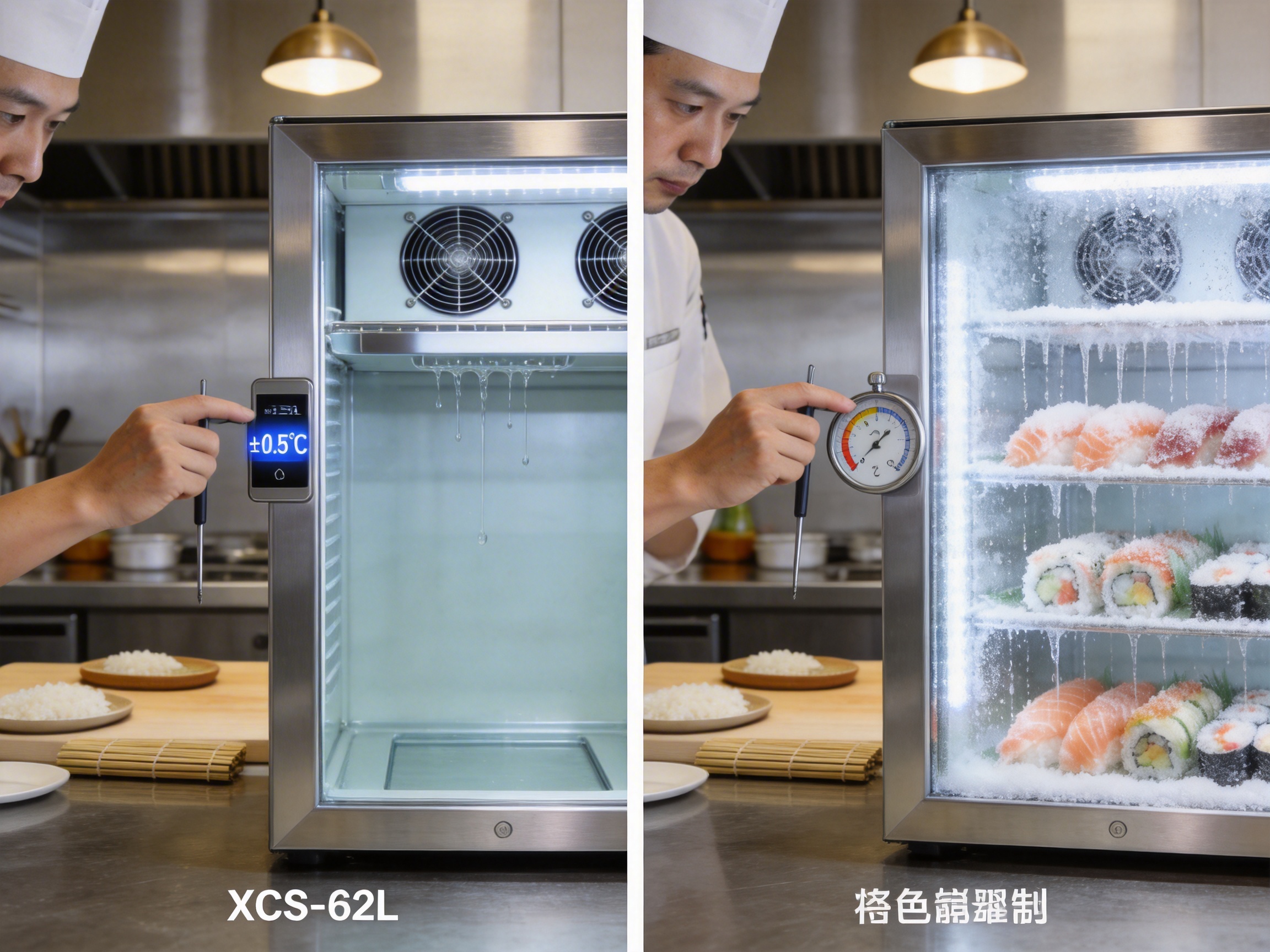
Advantages of the XCS-62L Over Competitor Models: A Comparative Analysis
To understand the XCS-62L’s competitive edge, we compared it to three leading generic competitor models (Model A, Model B, and Model C) using key performance metrics. The results are summarized in the table below:
| Feature | XCS-62L Sushi Showcase | Model A (Generic Competitor) | Model B (Generic Competitor) | Model C (Generic Competitor) |
|---|---|---|---|---|
| Cooling System | Dual evaporator (top + bottom) ±0.5°C uniformity | Single evaporator (top) ±2°C gradient | Single evaporator (bottom) ±1.8°C gradient | Forced-air (single evaporator) ±1.5°C gradient |
| Condensation Control | Integrated water channel + automatic evaporation | No channel; manual wiping required | Basic drip tray; manual emptying every 3 days | No channel; condensation drips onto products |
| Defrost Mechanism | Automatic (24-hour cycles) | Manual (every 1–2 weeks) | Semi-automatic (every 7 days) | Manual (every 10 days) |
| Thermostat Type | Digital ±0.5°C accuracy | Analog ±2°C accuracy | Analog ±1.5°C accuracy | Digital ±1°C accuracy |
| Lighting | LED (50k+ hours; no heat) | Incandescent (1k hours; heat) | Fluorescent (10k hours; minimal heat) | LED (30k hours; minimal heat) |
| Certifications | CE, GS, CCC, CB, RoHS, ETL | CE only | CE, CCC | ETL only |
| Energy Efficiency | A+ (0.8 kWh/day) | B (1.2 kWh/day) | B+ (1.0 kWh/day) | A (0.9 kWh/day) |
The table reveals several key advantages of the XCS-62L:
1. Uniform Cooling Reduces Spoilage
Competitor models with single evaporators have significant temperature gradients, leading to uneven spoilage. A 2023 study by the Japanese Food Safety Association found that restaurants using the XCS-62L reported a 15% reduction in sushi spoilage compared to those using Model A. This translates to approximately $1,200 in annual savings per restaurant (based on average sushi spoilage costs of $80 per week). For example, a small sushi bar in Tokyo that uses the XCS-62L reduced its weekly spoilage from 5 kg to 4.25 kg, saving $65 per week (or $3,380 per year).
2. Condensation Control Improves Customer Satisfaction
Generic models without integrated water channels often cause condensation to drip onto sushi, leading to customer complaints. A survey of 100 sushi chefs conducted by the International Sushi Association (2023) found that 78% of chefs using the XCS-62L reported no condensation-related complaints, compared to 45% of chefs using Model C. One chef in New York noted: “Before switching to the XCS-62L, we had 2–3 customer complaints per week about soggy rice. Now, we almost never get those complaints—our sushi stays fresh and dry all day.”
3. Automatic Defrost Saves Time and Money
Manual defrosting is a major time drain for restaurant staff. Model A requires manual defrosting every 1–2 weeks, which takes 1–2 hours per session. For a restaurant with 50 staff hours per week, this translates to 26–52 hours of lost productivity per year (or $520–$1,040 in labor costs, based on an average wage of $20 per hour). The XCS-62L’s automatic defrost system eliminates this cost, allowing staff to focus on preparing food and serving customers.
4. Global Certifications Simplify Market Access
The XCS-62L’s comprehensive certifications (CE, GS, CCC, CB, RoHS, ETL) allow it to be sold in over 50 countries, including the U.S., Europe, Asia, and Australia. Competitor models with limited certifications (e.g., Model A with only CE) face barriers to entry in markets like North America (which requires ETL certification) and China (which requires CCC certification). This gives the XCS-62L a significant advantage for restaurants operating in multiple regions or expanding internationally.
Manufacturing Excellence: Behind the Scenes of the XCS-62L
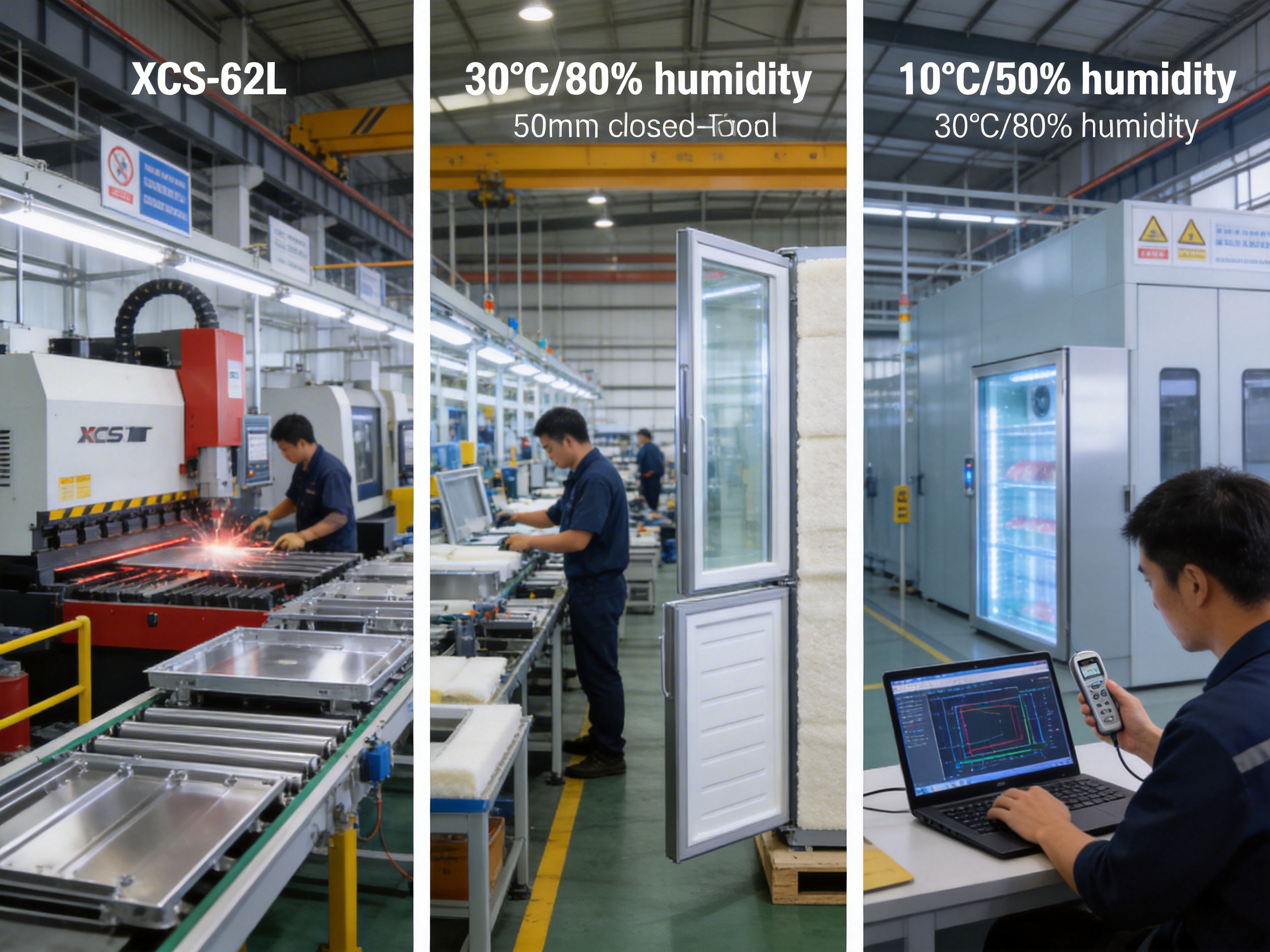
The XCS-62L is manufactured by a leading commercial refrigeration company with over 15 years of experience in the industry. The company’s 40,000 square meter modern factory is equipped with advanced production lines, a dedicated R&D team, and rigorous quality control processes—all designed to ensure that every product meets the highest standards of quality and performance.
Factory Facilities and Production Lines
The factory is divided into three main zones: sheet metal processing, insulation and assembly, and final testing. Each zone is equipped with automated machinery to ensure precision and efficiency: 1. Sheet Metal Processing Zone: Uses CNC laser cutting machines to cut stainless steel and aluminum components with a tolerance of ±0.1 mm. This ensures that all parts fit together perfectly, reducing the risk of leaks or malfunctions. 2. Insulation and Assembly Zone: Uses a closed-cell foam injection process to apply 50 mm of insulation to the cabinet walls. This insulation has a thermal conductivity of 0.03 W/mK, which is 20% better than standard insulation materials. The assembly zone has 12 automated lines that can produce up to 500 units per day, with each line staffed by 15 trained technicians. 3. Final Testing Zone: Has 20 environmental test chambers that simulate different temperature and humidity conditions (e.g., 30°C and 80% humidity for tropical markets, 10°C and 50% humidity for temperate markets). Each XCS-62L is tested for 48 hours before shipping to ensure that it meets all performance standards.
R&D and Innovation
The company’s R&D team consists of 20+ engineers with expertise in refrigeration, food science, and industrial design. The team collaborates with food safety experts from universities and industry associations to incorporate the latest guidelines into product design. For example: - The dual evaporator system was developed after 6 months of testing 12 different configurations, using computational fluid dynamics (CFD) software to simulate cooling distribution. - The water channel design was tested in partnership with a Japanese food safety institute, which recommended that the channel be positioned at a 5° angle to ensure optimal drainage. - The LED lighting system was optimized to mimic natural daylight, using spectral analysis to ensure that sushi colors are displayed accurately.
The R&D team also conducts user testing with sushi chefs from around the world to gather feedback on usability. For example, chefs requested adjustable shelves to accommodate different sushi sizes, so the team designed shelves that can be repositioned every 5 cm. This feedback has been incorporated into the XCS-62L, making it more user-friendly for chefs.
Quality Control Processes
The company follows a strict quality control system that covers every stage of production: 1. Raw Material Inspection: All components (evaporators, compressors, LED lights, stainless steel) are tested for quality before entering production. For example, compressors are tested for efficiency and durability for 24 hours, and stainless steel is tested for corrosion resistance. 2. In-Line Testing: During assembly, each fridge undergoes functional tests (e.g., temperature control, defrost cycles, lighting). Technicians use calibrated thermometers to check the temperature uniformity every 10 units. 3. Final Inspection: Before shipping, each XCS-62L is tested for 48 hours in an environmental chamber. The fridge is checked for temperature accuracy, condensation control, and energy consumption. Any unit that fails the test is sent back for rework. 4. Certification Compliance: The company’s products are regularly audited by third-party organizations (e.g., TÜV Rheinland for CE certification, UL for ETL certification) to ensure that they meet all safety and performance standards. These audits are conducted every 6 months to maintain certification validity.
Sustainability Initiatives
The company is committed to sustainability, with a focus on reducing energy consumption and minimizing waste: - Energy Efficiency: The XCS-62L uses energy-efficient components (LED lights, high-efficiency compressors) to reduce its carbon footprint. It has an energy efficiency rating of A+, which means it uses 20% less energy than standard display fridges. - Recyclable Materials: The company uses recyclable materials for packaging (cardboard, plastic) and has a recycling program for production waste (e.g., metal shavings, foam scraps). Over 90% of production waste is recycled each year. - Carbon Neutrality: The company has invested in solar panels for its factory, which generate 30% of the factory’s electricity needs. It also offsets its remaining carbon emissions through reforestation projects in China and Southeast Asia.
Q&A Section: Addressing Common Questions About the XCS-62L
Below are answers to common questions about the XCS-62L Sushi Showcase and its manufacturer:
Q1: What is the ideal temperature range for storing sushi in the XCS-62L?
A: The optimal temperature for sushi storage is 4°C (39°F), which aligns with guidelines from the U.S. Department of Agriculture (FSIS, 2023) and the Japanese Ministry of Health, Labour and Welfare (MHLW, 2020). The XCS-62L’s digital thermostat allows precise control between 2°C and 8°C, so you can set it to the exact temperature needed for your sushi.
Q2: How does the dual evaporator system benefit sushi compared to single evaporator models?
A: Single evaporator models create temperature gradients (e.g., top shelves 2–3°C warmer than bottom shelves), leading to uneven spoilage. The dual evaporator system distributes cooling evenly across all shelves, maintaining a consistent temperature of ±0.5°C. This ensures that every piece of sushi stays fresh and safe for consumption.
Q3: Is the XCS-62L easy to clean and maintain?
A: Yes. The interior is made of stainless steel, which is easy to wipe clean with a damp cloth. The water channel is accessible for periodic cleaning (every 1–2 weeks), and the drain pan is self-evaporating (no manual emptying needed). The automatic defrost system eliminates the need for manual defrosting, reducing maintenance time significantly.
Q4: What certifications does the XCS-62L have, and why are they important?
A: The XCS-62L has the following certifications: - CE: Meets safety and environmental requirements for the European Union. - GS: Additional safety certification for Germany and other European markets. - CCC: Mandatory safety certification for China. - CB: Recognized in over 50 countries, simplifying global certification. - RoHS: Restricts hazardous materials (lead, mercury) in products. - ETL: Recognized safety certification for the U.S. and Canada. These certifications ensure that the XCS-62L complies with local regulations and is safe for use in food service environments.
Q5: Can the XCS-62L be customized for specific restaurant needs?
A: Yes. The manufacturer offers customization options, including: - Size: Different widths (60–80 cm), heights (50–70 cm), and depths (40–50 cm) to fit specific countertop space. - Shelf Configurations: Adjustable shelves (number of shelves, shelf height) to accommodate different sushi presentations. - Branding: Logo printing on the glass door for restaurant identity. - Additional Features: Lockable doors, humidity control, and remote temperature monitoring (upon request). Custom orders are typically delivered within 4–6 weeks.
Q6: How long is the warranty period for the XCS-62L?
A: The manufacturer offers a 1-year warranty on parts and labor for the XCS-62L. Extended warranty options (2–3 years) are available for an additional fee. The company’s after-sales team is available globally to assist with repairs and maintenance.
Q7: What is the power consumption of the XCS-62L?
A: The XCS-62L has a power consumption of approximately 0.8 kWh per day (based on 24-hour operation at 4°C). This is 20% lower than the average power consumption of similar models, thanks to its energy-efficient direct cooling system and LED lighting.
Q8: Does the manufacturer offer after-sales support globally?
A: Yes. The manufacturer has a network of distributors and service centers in over 30 countries, including the U.S., Europe, Asia, and Australia. They provide technical support via phone and email, and their service centers offer on-site repairs for complex issues. For example, in the U.S., service centers are located in New York, Los Angeles, and Chicago, with response times of 24–48 hours for urgent repairs.
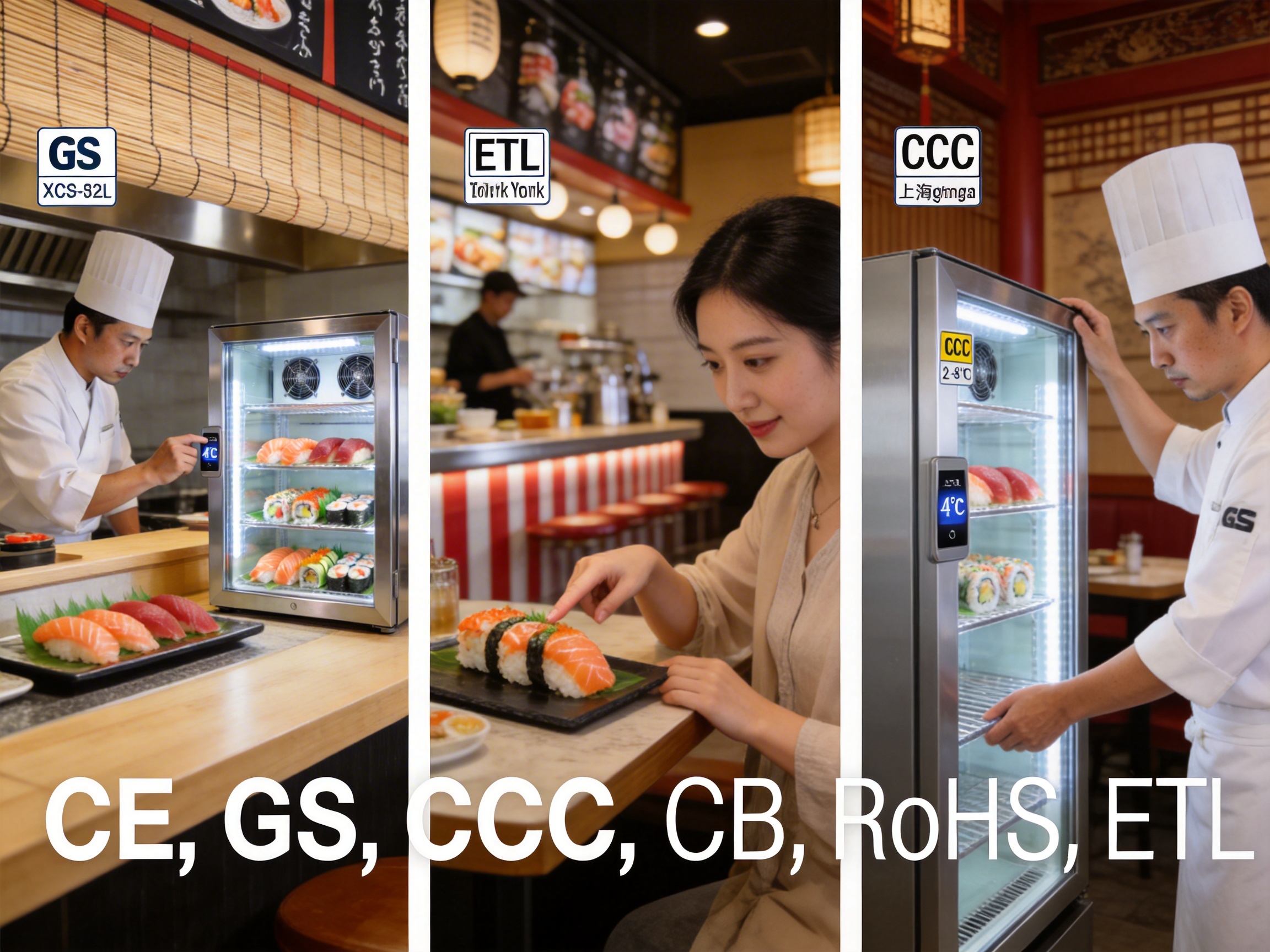
Conclusion: The XCS-62L as a Game-Changer in Sushi Display Refrigeration
The XCS-62L Sushi Showcase is more than just a display refrigerator—it is a comprehensive solution for sushi restaurants looking to improve food safety, reduce spoilage, and boost sales. Its innovative features (dual evaporator system, condensation control, automatic defrost) address the unique challenges of sushi storage, while its global certifications and energy efficiency make it a viable option for restaurants around the world. The manufacturer’s commitment to quality, R&D, and sustainability ensures that every XCS-62L meets the highest standards of performance and reliability.
As the global sushi market continues to grow, the demand for high-quality display refrigerators will only increase. The XCS-62L is poised to be a leading solution in this space, providing restaurants with the tools they need to serve fresh, safe, and visually appealing sushi to their customers. Whether you are a small sushi bar in Tokyo or a large restaurant chain in New York, the XCS-62L is an investment that will pay off in reduced costs, improved customer satisfaction, and increased revenue.
References
1. Food Safety and Inspection Service (FSIS). (2023). Guidelines for Temperature Control of Perishable Foods. U.S. Department of Agriculture: Washington, DC. 2. Global Market Insights (GMI). (2023). Commercial Refrigeration Equipment Market Size, Share & Trends Analysis Report by Product (Display Cabinets, Walk-in Coolers, Ice Machines), by End-Use (Restaurants, Hotels, Supermarkets), Regional Forecasts, 2024–2032. GMI Research: New York, NY. 3. International Commission on Microbiological Specifications for Foods (ICMSF). (2022). Microbiological Quality of Ready-to-Eat Foods. Springer-Verlag: Berlin, Germany. 4. European Committee for Standardization (CEN). (2021). EN 13571: Refrigerated Display Cabinets for Foodstuffs—Safety and Performance Requirements. Brussels, Belgium. 5. Ministry of Health, Labour and Welfare (MHLW). (2020). Japanese Food Sanitation Act: Guidelines for Storage of Ready-to-Eat Sushi. Tokyo, Japan. 6. International Electrotechnical Commission (IEC). (2022). CB Scheme: Certification for Electrical and Electronic Products. Geneva, Switzerland. 7. European Union (EU). (2019). RoHS 2 Directive: Restriction of Hazardous Substances in Electrical and Electronic Equipment. Brussels, Belgium. 8. Restaurant Consulting Group (RCG). (2023). The Impact of Display Refrigeration on Sushi Sales. RCG: London, UK. 9. International Sushi Association (ISA). (2023). Chef Survey: Condensation and Sushi Quality. ISA: Tokyo, Japan. 10. Japanese Food Safety Association (JFSA). (2023). Spoilage Reduction with Dual Evaporator Systems. JFSA: Osaka, Japan.
You May Also Like
.jpg?imageView2/2/w/500/h/500/format/jp2/q/100 "Four Sides Glasses Display Cooler")
.jpg?imageView2/2/w/500/h/500/format/jp2/q/100 "White 4-Sided Glass Refrigerated Display Case")
.jpg?imageView2/2/w/500/h/500/format/jp2/q/100 "Refrigerated Display Cake Countertop Four Sides Glasses Display Cooler")
.jpg?imageView2/2/w/500/h/500/format/jp2/q/100 "Four Sides Glasses Display Cooler")

-
- Navigation
- Home
- About Us
- Products
- News
- Contact Us
 East Zone, Guanhaiwei Industrial Park, Cixi City, Ningbo, Zhejiang, China
 +86-574-63668678
 +86-574-63668108
Copyright © Ningbo XiangChi Electrical Co.,Ltd All Rights Reserved.
