
 简体中文
 English
 Español

News
Four-Sided Glass Display Freezer Showcase with Digital Temperature Control
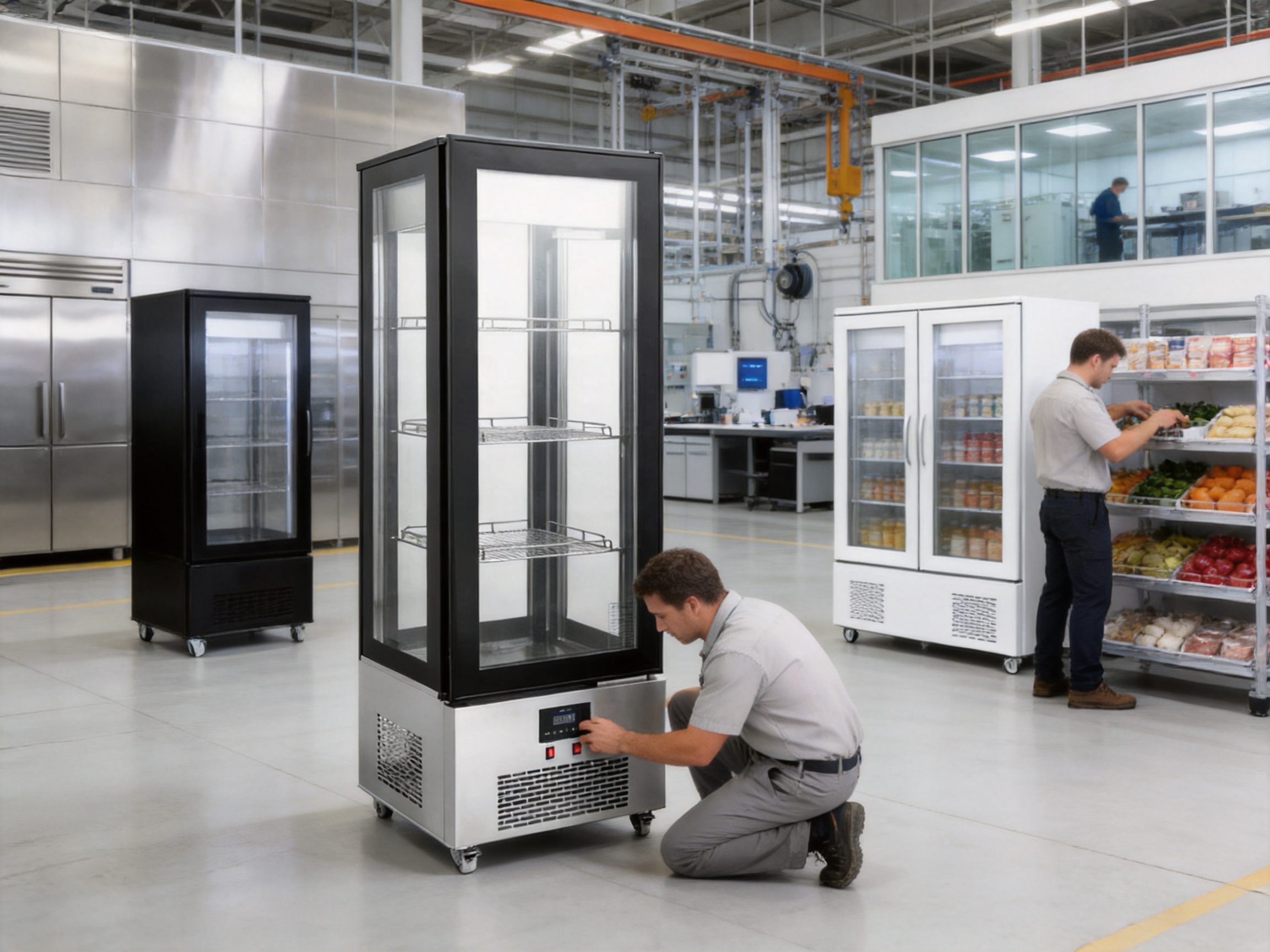
Commercial food retail depends on more than cold storage. Products must remain within a safe and attractive temperature range while also being visible, accessible, and presented in a way that encourages customer selection. A well-designed display freezer therefore has to combine reliable refrigeration, efficient use of floor space, strong product visibility, convenient maintenance, and a professional appearance. The Four Sided Glass Display Freezer Showcase with Digital Temperature Controller XCLD-440C is designed to meet these requirements in supermarkets, convenience stores, specialty food shops, restaurants, cafés, bakeries, hotels, and other commercial environments.
With a 405-liter capacity, a temperature range of -18°C to 0°C, four-sided triple-glass construction, internal LED lighting, adjustable tempered-glass shelves, and a ventilated cooling system, this vertical freezer offers a practical way to merchandise frozen food while maintaining stable low temperatures. Its tall, narrow profile makes it suitable for locations where floor space is valuable, while its transparent construction gives customers a clear view of products from multiple directions.
The unit is available in black, white, and stainless steel finishes. It uses R290 refrigerant and includes a digital temperature controller and display, separated power and light switches, automatic defrost, and four castors with front brakes. These features contribute to a flexible, service-oriented appliance that can be positioned, adjusted, and operated according to the needs of a commercial sales area.
Why a Display Freezer Must Perform as Both Equipment and Merchandising Furniture
A commercial freezer in a back-of-house storage area has a different purpose from a freezer placed directly in front of customers. A display freezer must preserve frozen products and present them attractively at the same time. The glass must remain clear, the internal temperature must be controlled, the shelves must support a wide range of product sizes, and the cabinet must fit naturally into the store layout.
The XCLD-440C addresses these demands through a vertical four-sided design. Instead of restricting visibility to a single front panel, its glass enclosure allows customers and staff to see products from multiple sides. This can be especially helpful when the freezer is positioned at the end of an aisle, near a checkout area, in the center of a retail floor, or as part of an open merchandising arrangement.
Its 405-liter internal volume provides useful capacity without requiring the footprint of a large horizontal island freezer. The dimensions of 650 mm in width, 665 mm in depth, and 2,005 mm in height create a tall display format that makes use of vertical space. For retailers, this can help preserve valuable floor area for customer movement, additional displays, or promotional equipment.
A vertical cabinet also makes product organization more visible. Shelves can be arranged to separate product categories, sizes, flavors, brands, or promotional items. Customers can quickly scan the contents without repeatedly opening a lid or bending down to search through stacked products. This improves the shopping experience and can support faster service in busy commercial environments.
Core Product Specifications
Product category |
Four-sided glass display freezer |
Model |
XCLD-440C |
Refrigerant |
R290 |
Climate type |
4 |
Net volume |
405 liters / 14.3 cubic feet |
Temperature range |
-18°C to 0°C |
Input power |
696 watts |
Product dimensions |
650 × 665 × 2,005 mm |
Net weight |
175 kg |
Glass construction |
Four-sided triple glass |
Lighting |
Internal LED lighting on four sides |
Cooling system |
Ventilated cooling |
Defrost system |
Automatic defrost |
Shelves |
Adjustable tempered-glass shelves |
Mobility |
Four castors with front two brakes |
Available finishes |
Black, white, and stainless steel |
Certifications stated |
CB, CE, and GS |
Four-Sided Triple Glass for Product Visibility and Insulation
The most noticeable feature of the XCLD-440C is its four-sided glass enclosure. Visibility is important in commercial display refrigeration because products that can be seen easily are more likely to be noticed and selected. A customer approaching the freezer from the side can begin browsing immediately, rather than waiting to stand directly in front of a solid-door cabinet.
The use of triple glass on all four sides supports a balance between visibility and thermal performance. Multiple glass layers help reduce the transfer of heat between the surrounding environment and the chilled interior. They also create a more substantial barrier than a single glass panel, which is valuable for a cabinet operating at freezer temperatures.
Four-sided glass can provide a stronger visual presence than a conventional enclosed freezer. Frozen desserts, packaged foods, ice cream, frozen seafood, prepared meals, and other merchandise can be displayed as part of the store environment. The cabinet can function as both refrigeration equipment and a merchandising feature, particularly when it is positioned in a high-traffic location.
The glass design also supports easier inventory recognition. Staff can inspect several sides of the cabinet before opening the door or beginning restocking work. Customers can compare products more conveniently, while store personnel can identify gaps, misplaced items, and low-stock shelves with less effort.
Because glass surfaces are visible from multiple directions, cleaning and presentation remain important parts of daily operation. The stainless steel body and carefully organized shelf layout can support a clean, professional appearance when the unit is maintained correctly. In retail settings, the appearance of refrigeration equipment contributes directly to customer confidence in the quality and hygiene of the products being sold.
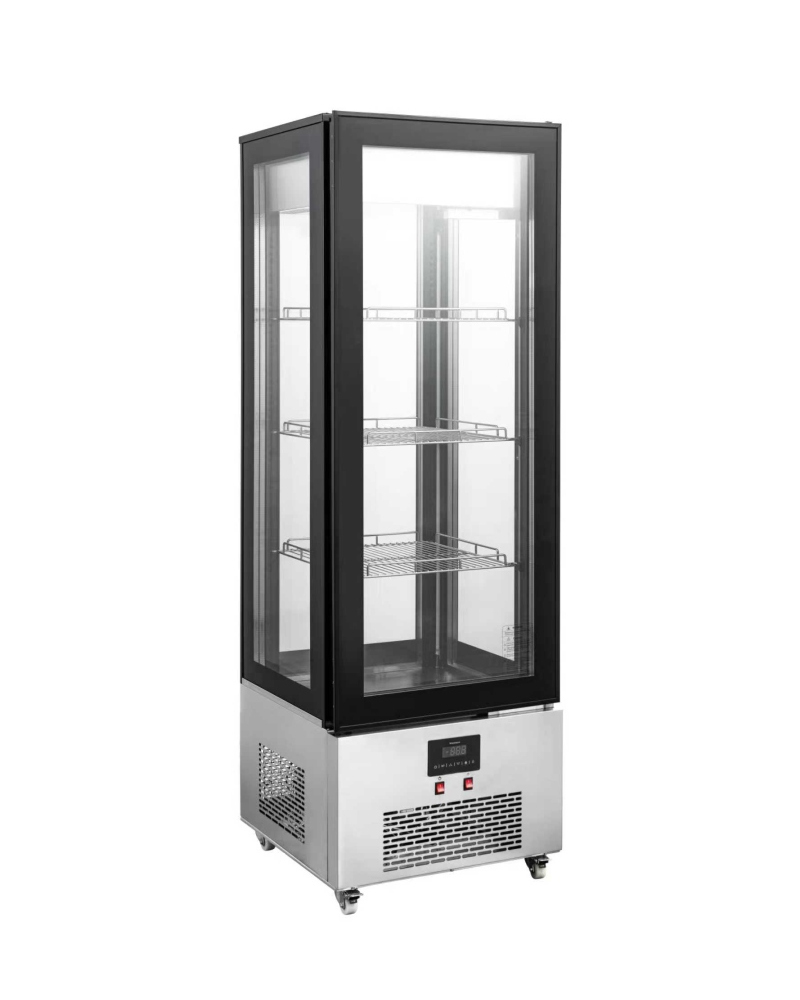
Four Sided Glass Display Freezer Showcase with Digital Temperature Controller XCLD-440C
Low-Temperature Performance from -18°C to 0°C
The XCLD-440C is designed for frozen-product applications, with a stated operating range from -18°C to 0°C. This range provides flexibility for different types of frozen merchandise and allows the operator to select an appropriate set point according to the product category and operating conditions.
A cabinet that can operate at temperatures well below the freezing point is suitable for products such as ice cream, frozen meat, frozen seafood, frozen vegetables, frozen prepared foods, dumplings, pastry products, and other packaged items requiring low-temperature storage. The upper part of the stated range can also be useful for products that require cold holding but do not need the lowest available freezer temperature, subject to the product supplier’s storage instructions.
The digital temperature controller and display provide a direct way to monitor the cabinet. Rather than relying on a basic mechanical dial or estimating the internal condition from product appearance, staff can use the displayed reading as part of a more organized operating routine. A clear digital display is particularly valuable in commercial locations where several employees may need to check equipment quickly during opening, restocking, cleaning, or closing procedures.
Temperature control is influenced by ambient conditions, door-opening frequency, product loading, airflow, and maintenance. The cabinet’s ventilated cooling system is designed to circulate cold air through the storage area, helping distribute cooling more evenly than a system that depends only on natural air movement. Correct loading remains essential: products should not block air circulation, and the cabinet should not be overloaded beyond its useful capacity.
For commercial operators, the combination of a digital controller, visible display, ventilated cooling, and automatic defrost provides a practical operating foundation. These systems do not remove the need for routine checks, but they can make temperature management more systematic and easier to supervise.
Ventilated Cooling for Organized Commercial Display
The ventilated cooling system is an important feature for a tall, multi-shelf cabinet. In a vertical display freezer, products are stored at different heights, so the refrigeration design must support cold-air distribution throughout the cabinet rather than concentrating cooling in only one area.
Ventilated circulation helps move refrigerated air around the storage space. This supports a more consistent environment for products placed on different shelves, provided that the shelves are loaded correctly and air passages are not obstructed. It also makes the cabinet more suitable for organized merchandising, where products are arranged across several levels rather than piled in a single compartment.
Compared with a basic non-ventilated arrangement, a ventilated system can offer practical advantages for display use. It can help reduce the likelihood of pronounced temperature differences between upper and lower areas and can improve the usefulness of the available 405-liter volume. The result is a cabinet that is designed not just to store frozen goods, but to present them across a complete vertical display area.
Automatic defrost is another important operating feature. Frost accumulation can reduce available space, interfere with airflow, and make glass surfaces less attractive. An automatic defrost system helps manage this issue as part of the cabinet’s normal operating cycle, reducing the need for frequent manual defrosting. This can save staff time and help maintain more consistent equipment performance.
Operators should still follow appropriate maintenance practices, including keeping air openings clear, cleaning accessible surfaces, checking door seals, and allowing sufficient clearance around the refrigeration system. A well-maintained ventilated freezer is more likely to deliver dependable service and retain its intended display quality over time.
Internal LED Lighting on Four Sides
Lighting has a direct effect on product visibility. The XCLD-440C includes brilliant internal LED lighting on four sides, allowing products to remain visible across the cabinet rather than relying only on surrounding store illumination.
LED lighting is well suited to commercial display equipment because it provides bright illumination in a compact format. The lights can help customers distinguish packaging, read product labels, and compare items on different shelves. Better internal visibility also assists employees during restocking and inventory checks.
Four-sided lighting complements the four-sided glass design. If a freezer has transparent panels but insufficient internal illumination, products may appear dark or unevenly presented. The combination of transparent construction and internal lighting creates a more complete display solution. It can make frozen products stand out in a supermarket aisle, café, convenience store, hotel lobby, or specialty retail environment.
The separate light button gives operators additional control. Lighting can be switched independently from the main refrigeration power, allowing the display function to be managed according to store hours, cleaning activities, promotional periods, or operating policies. The separated power button and light button also make the control arrangement easier for staff to understand.
Lighting should be used as part of a broader merchandising plan. Products should be faced forward, labels should remain visible, and shelf heights should be selected according to product dimensions. When the lighting, shelf layout, and glass panels work together, the freezer can present merchandise in a clean and professional manner.
Adjustable Tempered-Glass Shelves
The internal arrangement of a display freezer strongly influences how much of its capacity can be used effectively. The XCLD-440C is equipped with adjustable tempered-glass shelves, enabling operators to change the spacing according to the products being displayed.
Adjustable shelves are useful because commercial frozen products are not uniform in shape or height. Small packaged foods may benefit from closely spaced shelves, while larger cartons, tubs, or multi-piece packages require greater vertical clearance. The ability to adjust shelf positions allows the cabinet to serve different product mixes without requiring a different appliance for each category.
Tempered glass provides a clean, modern appearance and allows light to pass through the cabinet. Unlike opaque shelves, transparent shelves can help maintain visibility of products positioned below. This supports the open, layered appearance expected from a premium display case.
Retailers can use shelf adjustment to create dedicated product zones. For example, one section can be arranged for individual frozen desserts, another for family-sized packs, and another for prepared foods. Restaurants and cafés can organize packaged ingredients or take-away products by category. Hotels and food-service locations can use the shelves to present products in a way that matches their service model.
Proper shelf loading is important. Products should be distributed evenly, heavy items should be positioned securely, and air movement should not be blocked. The shelves should be adjusted before loading whenever possible, rather than repeatedly rearranging a fully stocked cabinet. Good organization improves appearance and can make replenishment faster.
Stainless Steel Body for Commercial Environments
The standard feature list includes a stainless steel body, while the product is available in black, white, and stainless steel finishes. This combination provides flexibility for different visual environments while retaining a commercial-grade exterior structure.
Stainless steel is widely used in food-service and refrigeration equipment because it presents a clean, professional appearance and is practical to maintain. Smooth exterior surfaces can be wiped down as part of regular cleaning. The material also complements the transparent glass enclosure, creating a modern cabinet suitable for customer-facing locations.
The choice of finish allows the freezer to be coordinated with the surrounding interior. A stainless steel appearance may suit professional kitchens, restaurants, and contemporary supermarkets. Black can create a strong contrast with bright product packaging and modern retail décor. White can blend into lighter interiors and provide a clean, neutral appearance.
A commercial display appliance must withstand repeated daily interaction, including door operation, product replenishment, cleaning, and movement during store layout changes. The robust cabinet construction and net weight of 175 kg give the unit a substantial presence on the sales floor. The castors add flexibility without making the cabinet feel temporary or unstable when the brakes are engaged.
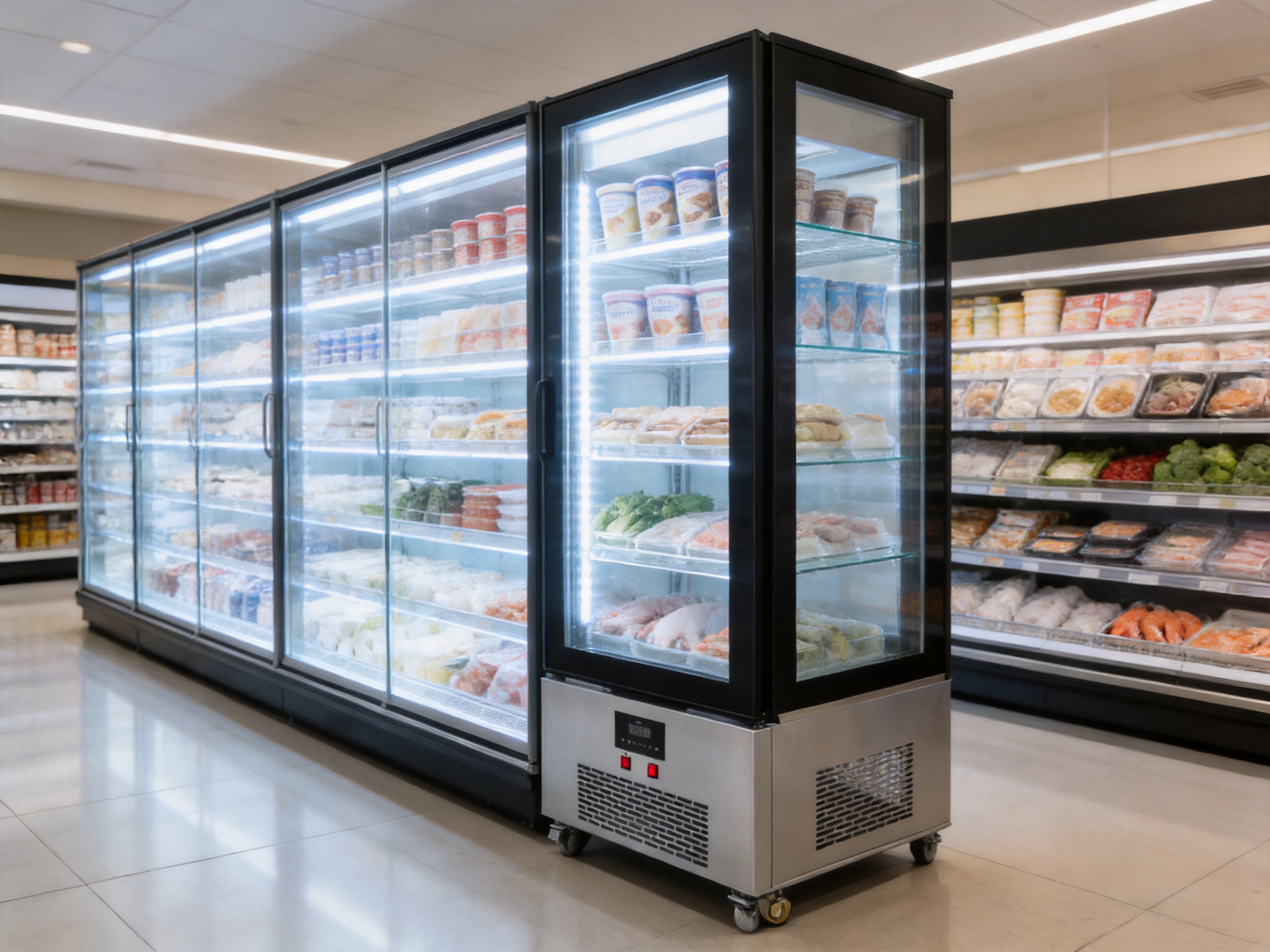
Mobility with Four Castors and Front Brakes
Commercial spaces change frequently. Retailers may revise aisle layouts, restaurants may reorganize service areas, and event venues may need to reposition equipment for seasonal promotions. The XCLD-440C includes four castors to make movement more practical during installation, cleaning, or layout changes.
The front two castors include brakes. Once the freezer has been placed in its intended position, the brakes can help prevent unwanted movement during normal operation. This provides a useful balance between mobility and stability. Staff can move the cabinet when necessary, then secure it for customer use and product loading.
Mobility also makes cleaning more manageable. Dust and debris can accumulate around equipment bases, particularly in busy food-service locations. A movable cabinet can provide better access to the surrounding floor area during scheduled cleaning. Operators should follow safe movement procedures and ensure that the power connection and refrigeration system are handled correctly whenever the unit is repositioned.
The tall form of the cabinet makes correct placement especially important. It should be positioned on a suitable level surface, with adequate clearance for ventilation and service access. The front brakes should be engaged after installation, and the cabinet should not be moved while heavily loaded unless appropriate handling equipment and procedures are available.
R290 Refrigerant and Contemporary Refrigeration Design
The XCLD-440C uses R290 refrigerant. R290, commonly known as propane refrigerant, is used in a range of modern commercial refrigeration applications. Its inclusion reflects the move toward refrigerant solutions with a lower global warming potential than many older refrigerant options.
Because R290 is classified as a flammable refrigerant, installation, servicing, and repair must be performed according to applicable safety requirements and by suitably qualified personnel. Operators should not modify the sealed refrigeration system or attempt unauthorized repairs. Product documentation and local regulations should always be followed.
For buyers comparing commercial freezers, refrigerant selection is an important part of the overall specification. It can influence environmental considerations, service requirements, regulatory compliance, and the long-term direction of the product range. R290 provides the XCLD-440C with a contemporary refrigerant platform appropriate for many modern commercial applications.
Refrigerant type alone does not determine overall efficiency. Actual energy use depends on ambient temperature, door-opening frequency, product load, set temperature, maintenance, ventilation, and operating habits. The stated input power of 696 watts provides a useful reference for electrical planning, but operators should consider the complete operating environment when estimating running costs.
Efficient Use of Floor Space
One of the strongest advantages of the vertical format is its efficient use of floor area. Measuring 650 mm wide by 665 mm deep, the cabinet provides a 405-liter display volume while maintaining a relatively compact footprint compared with many horizontal freezer formats.
This configuration can be valuable in convenience stores, small supermarkets, cafés, bakeries, hotel reception areas, and specialty food shops where every square meter must support sales or customer movement. A retailer can use vertical space to display multiple product levels without occupying a large portion of the walking area.
The cabinet can also serve as a promotional display. Seasonal frozen desserts, newly launched products, special meal packages, and high-margin products can be placed at eye level or in a prominent location. The transparent sides allow the display to be viewed from multiple approaches, making the freezer suitable for aisle ends and central promotional zones.
Space planning should include room for customer access, door operation if applicable, ventilation, cleaning, and service. The freezer should not be positioned where glass visibility is blocked by other fixtures or where air circulation is restricted. A well-planned installation allows the cabinet to contribute to the sales environment rather than becoming an obstacle.
Advantages Compared with Conventional Display Freezers
The XCLD-440C offers several characteristics that can distinguish it from more basic commercial freezer designs. Its advantages should be considered as a combination of features rather than as the result of one individual component.
More Complete Visibility
Many conventional display freezers provide visibility primarily through a front door or a single glass panel. The four-sided glass design allows products to be seen from several directions. This can improve customer awareness and make the unit more effective in open retail layouts.
Greater Merchandising Flexibility
Fixed shelves or deep horizontal compartments can limit product organization. Adjustable tempered-glass shelves allow the operator to adapt the cabinet to different product dimensions and merchandising strategies. This makes the equipment more versatile for businesses with changing inventories.
Professional Presentation
Internal LED lighting, transparent shelving, glass panels, and multiple finish choices provide a more refined presentation than an ordinary storage freezer. The unit can be incorporated into customer-facing areas without appearing out of place.
Practical Temperature Management
The -18°C to 0°C range, digital temperature display, ventilated cooling, and automatic defrost provide a set of functions designed for daily commercial use. These features support easier monitoring and reduce some of the routine work associated with manual freezer management.
Better Use of Vertical Space
The tall cabinet format provides a substantial display capacity within a narrow footprint. For stores that cannot spare the area required by large horizontal equipment, this can be a meaningful operational advantage.
Flexible Positioning
Four castors and two front brakes allow the cabinet to be moved during installation, cleaning, and layout adjustments while still providing stability during normal operation.
Applications in Different Commercial Settings
Supermarkets and Convenience Stores
In supermarkets and convenience stores, the freezer can be used for packaged frozen foods, ice cream, frozen meals, frozen vegetables, seafood, meat products, and seasonal promotions. Its four-sided visibility can be particularly useful at aisle ends or in high-traffic areas.
Cafés and Bakeries
Cafés and bakeries may use the cabinet for frozen desserts, packaged pastries, prepared foods, or take-away items. The internal LED lighting can help create a clean presentation that complements the customer-facing environment.
Restaurants and Hotels
Restaurants and hotels can use a display freezer to present packaged products, frozen desserts, specialty items, or retail products offered to guests. The adjustable shelves allow the cabinet to be configured around the establishment’s product range.
Specialty Food Shops
Specialty food retailers often carry products with different package sizes and storage requirements. The combination of adjustable shelves, broad temperature range, and vertical capacity can help them organize products by category while keeping the merchandise visible.
Event and Promotional Retail
Retailers may also use a mobile display freezer for seasonal campaigns, temporary promotions, or layout changes. The castors make it easier to reposition the unit, although movement should always be carried out safely and in accordance with installation guidance.
Manufacturing Strengths and Product Development Capabilities
The product is manufactured by Ningbo XiangChi Electrical Co., Ltd., a company established in 2007 with a stated focus on vertical display cabinets, cake cabinets, and warming cabinets. The company reports more than ten years of experience in the field and operates a modern management garden factory covering 40,000 square meters.
A dedicated production base of this scale can support more coordinated manufacturing, quality control, warehousing, product development, and testing activities. For commercial refrigeration buyers, supplier capability is important because the purchase is not limited to one cabinet. It also involves technical communication, production consistency, spare-part planning, documentation, and the ability to support repeat orders.
The company states that it has its own professional research and development team and advanced testing facilities. These capabilities are significant for a product such as the XCLD-440C, which combines refrigeration, glass construction, electrical controls, lighting, mobility, shelving, and cabinet fabrication in one system.
Product development for a multi-function display freezer requires coordination between several technical areas. The refrigeration system must provide the required low-temperature range. The glass structure must support visibility while contributing to insulation. The cabinet must accommodate shelves, lighting, airflow, controls, wiring, and service access. The exterior must also meet practical requirements for commercial appearance and cleaning.
An internal R&D team can help the manufacturer refine these interactions through product testing and design improvement. The company’s stated emphasis on innovation, quality, and service indicates an approach aimed at continuing product development rather than treating the cabinet as a static design.
The reported testing facilities are also relevant to international supply. Commercial refrigeration equipment must perform under different climate conditions, electrical environments, retail layouts, and user expectations. Testing helps manufacturers identify performance issues before products reach customers and supports the development of more consistent production standards.
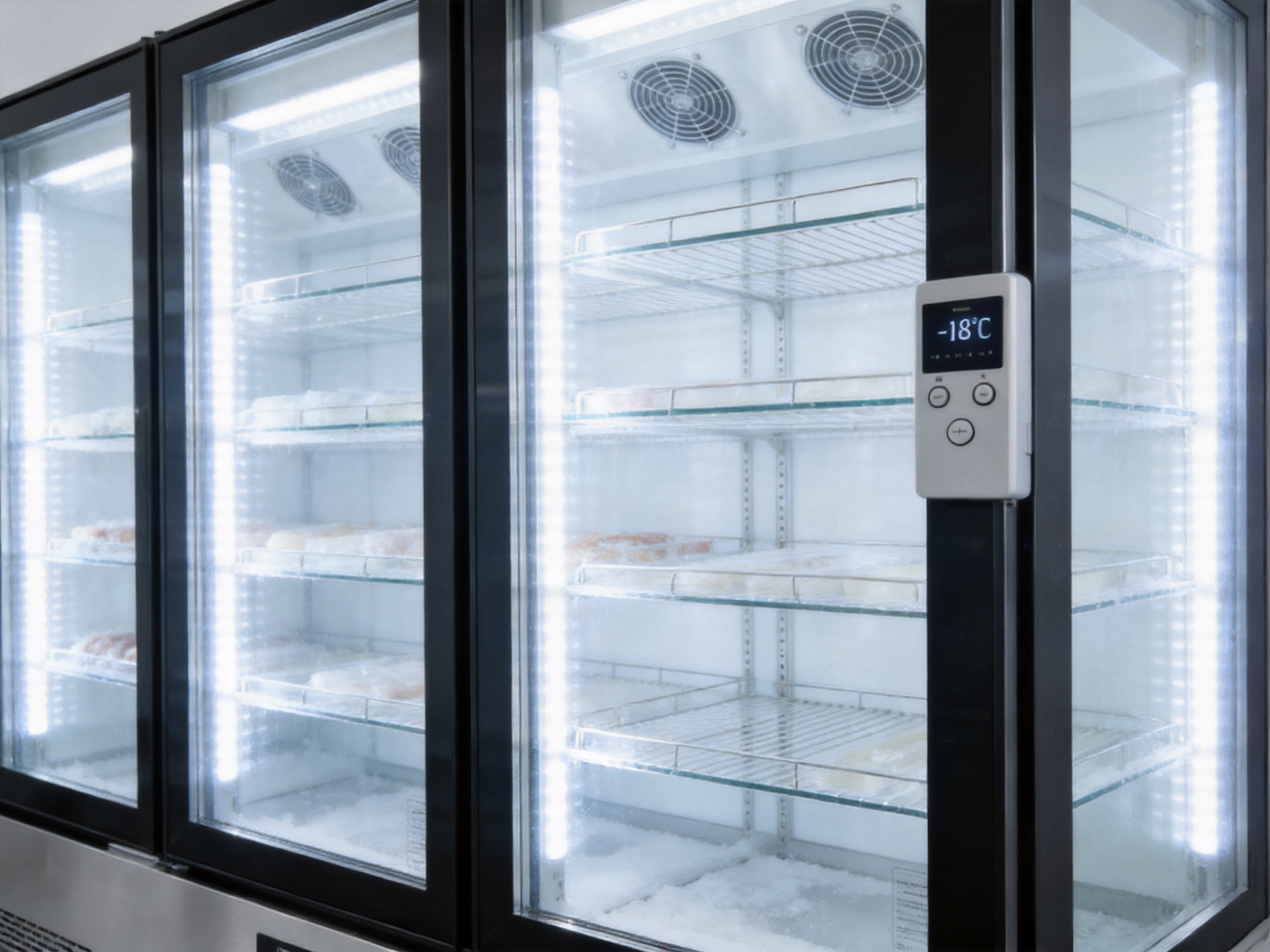
Quality and Certification Orientation
The XCLD-440C is identified with CB, CE, and GS certifications. These certifications are important indicators for buyers who require equipment suitable for international markets, although the precise scope and applicable standards should always be confirmed in the official product documentation for the specific model and configuration.
CE marking is associated with conformity requirements for products placed on applicable European markets. The CB Scheme supports international recognition of electrical and electronic equipment test results. GS is a recognized mark associated with tested product safety in the German market. Together, these certifications can support export-oriented purchasing and provide a framework for evaluating electrical and product safety requirements.
The company also states that it has obtained CE, GS, CCC, CB, ROHS, ETL, and other major world certifications across its product range. This suggests experience with different market requirements and a willingness to develop equipment for international customers. Buyers should request current certificates, test reports, and technical files relevant to the exact model before making regulatory or import decisions.
Certification is only one element of product quality. Consistent materials, reliable assembly, functional testing, accurate temperature control, secure electrical connections, glass inspection, and final quality checks are also important. A manufacturer with dedicated testing facilities and an established product focus is better positioned to manage these requirements systematically.
Manufacturing Process Considerations
Although individual production procedures depend on factory design and model configuration, the XCLD-440C requires a coordinated manufacturing process. The stainless steel cabinet must be formed and assembled with suitable accuracy. Glass panels must be prepared and installed securely. Shelves, castors, lights, controls, refrigeration components, and insulation must be integrated into the completed unit.
Cabinet fabrication is central to the product’s appearance and durability. Accurate panel dimensions help maintain proper alignment of the four glass sides and the structural frame. Smooth finishing supports easier cleaning and contributes to a professional appearance in customer-facing locations.
Glass assembly requires careful handling because the cabinet relies heavily on transparent panels for its visual identity. Triple-glass construction must be integrated into the enclosure while preserving alignment and sealing. Each panel should be inspected for damage, clarity, and secure installation during production and final checking.
Refrigeration assembly involves the installation of the cooling circuit, compressor-related components, airflow paths, controls, and refrigerant system. Since the product uses R290, appropriate manufacturing and service procedures are particularly important. Electrical components, lighting, switches, and digital controls must be connected and checked as part of the complete system.
Final testing can include visual inspection, electrical checks, control verification, cooling performance evaluation, lighting operation, door and shelf inspection, castor stability, and packaging review. The company’s stated advanced testing facilities provide an important foundation for this type of quality assurance.
For buyers purchasing multiple units, process consistency is especially valuable. A repeat order should maintain the same dimensions, finish, shelf arrangement, operating controls, and refrigeration performance. Experience in commercial display equipment and a dedicated production facility can help support that consistency.
Installation and Operating Recommendations
The freezer should be installed by qualified personnel in a location appropriate for commercial refrigeration. It should stand on a stable, level surface, and the front castor brakes should be engaged after positioning. Adequate clearance should be maintained around ventilation and service areas according to the manufacturer’s instructions.
Before loading products, the cabinet should be allowed to reach the required operating temperature. Food should be loaded in a way that does not block air circulation. Shelves should be adjusted to provide suitable clearance, and products should not be placed directly against air outlets or in a way that prevents the cabinet from circulating cold air.
The digital temperature display should be checked as part of a routine opening and closing procedure. Staff should be trained to recognize unusual temperature changes, excessive frost, abnormal noise, lighting failures, or visible damage. Early attention to problems can help prevent product loss and reduce the risk of equipment downtime.
Operators should avoid leaving the cabinet overloaded or repeatedly opening it unnecessarily. Although display access is important, disciplined use supports more stable temperature performance. Products should be rotated according to the retailer’s inventory policy, and shelves should be cleaned regularly.
Cleaning and Maintenance
Regular cleaning is essential for both hygiene and presentation. Glass surfaces should be cleaned with suitable materials that do not scratch or damage the panels. Stainless steel surfaces should be wiped according to recommended cleaning practices, with attention to removing food residue, fingerprints, dust, and spills.
Shelves should be removed and cleaned as appropriate, provided that the equipment is handled safely. Spilled products should be dealt with promptly to prevent odors, staining, or contamination. The area around the castors and beneath the cabinet should also be checked during routine cleaning.
Airflow openings and refrigeration components should remain unobstructed. Dust accumulation around accessible ventilation areas can reduce heat dissipation and affect performance. Maintenance of the refrigeration circuit, electrical system, and R290 charge must be performed only by authorized or suitably qualified technicians.
The automatic defrost function reduces the need for manual defrosting, but it does not eliminate all maintenance responsibilities. Staff should monitor the cabinet for unusual frost accumulation, water drainage problems, temperature instability, or other changes in normal operation.
Purchasing Considerations for Distributors and Commercial Buyers
Distributors and project buyers should evaluate the freezer according to the intended market, product category, ambient conditions, electrical requirements, installation location, and service expectations. The stated climate type is 4, and buyers should confirm that the model is suitable for the specific environment in which it will operate.
Important commercial questions include the required quantity, finish selection, shelf configuration, packaging method, delivery conditions, warranty terms, spare-parts availability, service arrangements, and documentation requirements. Certification documents should be reviewed for the target market, especially when equipment will be imported or installed in regulated commercial premises.
The available black, white, and stainless steel finishes allow distributors to offer more than one appearance option. This can make the product suitable for different retail concepts without requiring entirely different equipment platforms. The vertical design also provides a practical option for customers who need display capacity but have limited floor space.
Because the unit weighs 175 kg, delivery and installation planning should include suitable handling equipment and access measurements. Doorways, elevators, ramps, corridors, and final positioning areas should be checked before delivery. Proper logistics planning helps prevent damage to the glass and cabinet during installation.
How the Product Supports Retail Sales
Refrigeration equipment can influence purchasing behavior through visibility, accessibility, organization, and presentation. A four-sided glass display freezer offers several opportunities to improve these areas simultaneously.
Visibility helps customers discover products. Internal lighting helps them examine packaging. Adjustable shelves allow retailers to group products logically. The vertical profile places merchandise at several heights, including eye-level positions that can be used for promotional or higher-margin items. A clean stainless steel body and choice of exterior finishes help the equipment fit into a professional commercial environment.
The freezer can also support cross-selling. For example, frozen desserts can be positioned near drinks, prepared meals can be placed near complementary sauces or snacks, and seasonal items can be displayed in a high-traffic location. The four-sided format can make these promotions visible from more than one customer approach.
Merchandising results depend on store layout, product selection, pricing, signage, and staff practices, but the cabinet provides a strong physical platform for these activities. It is designed to make the refrigerated product part of the sales environment rather than hiding it inside a storage compartment.
Conclusion
The Four Sided Glass Display Freezer Showcase with Digital Temperature Controller XCLD-440C combines cold-storage performance with a highly visible commercial display format. Its 405-liter capacity, -18°C to 0°C operating range, R290 refrigerant, ventilated cooling, automatic defrost, and digital temperature control provide a practical foundation for frozen-food merchandising.
Its four-sided triple glass construction, four-sided LED lighting, adjustable tempered-glass shelves, stainless steel body, available finishes, and mobile castor system add value beyond basic refrigeration. These features help the cabinet operate as a flexible retail fixture suited to supermarkets, convenience stores, restaurants, hotels, cafés, bakeries, and specialty food shops.
Compared with more limited freezer formats, the unit offers broader product visibility, more adaptable merchandising, efficient use of vertical space, and a professional appearance. Its design is particularly suitable for businesses that want to place frozen products directly within the customer’s line of sight while maintaining organized, low-temperature storage.
The manufacturer’s experience since 2007, 40,000-square-meter production base, professional R&D team, testing facilities, and stated international certification capabilities provide additional support for commercial buyers seeking an experienced refrigeration supplier. With correct installation, loading, cleaning, and maintenance, the XCLD-440C can serve as a dependable and attractive display solution for modern food retail and food-service environments.
Questions and Answers
What type of equipment is the XCLD-440C?
The XCLD-440C is a four-sided glass display freezer showcase with a digital temperature controller. It is designed for commercial display and storage of frozen products.
What is the capacity of the freezer?
The stated net volume is 405 liters, equivalent to approximately 14.3 cubic feet.
What temperature range does it support?
The stated temperature range is -18°C to 0°C. The correct operating set point should be selected according to the products being stored and the relevant storage instructions.
What refrigerant does the unit use?
The freezer uses R290 refrigerant. Servicing of the refrigeration system should be performed by qualified personnel familiar with the safety requirements for this refrigerant.
Why is four-sided glass useful in a commercial store?
Four-sided glass allows products to be seen from multiple directions. This can improve product visibility when the freezer is placed at an aisle end, in an open sales area, or in another location where customers approach from different sides.
Does the freezer have internal lighting?
Yes. It includes brilliant internal LED lighting on four sides. The light has a separate button, allowing the operator to control it independently from the main power button.
Are the shelves adjustable?
Yes. The cabinet includes adjustable tempered-glass shelves. Shelf spacing can be adapted to different product sizes and merchandising arrangements.
How does the cooling system work?
The unit uses a ventilated cooling system. This circulates cold air through the cabinet and supports the display of products on multiple shelf levels.
Does the freezer require manual defrosting?
The standard features include automatic defrost. Operators should still monitor the cabinet and follow the manufacturer’s maintenance recommendations.
Can the cabinet be moved?
Yes. It includes four castors. The front two castors have brakes to help secure the freezer after it has been positioned.
What finishes are available?
The product is available in black, white, and stainless steel finishes.
What are the product dimensions?
The stated dimensions are 650 mm wide, 665 mm deep, and 2,005 mm high.
How much does the freezer weigh?
The stated net weight is 175 kg. Delivery and installation should therefore be planned with suitable handling equipment and adequate access.
Which businesses can use this display freezer?
Potential applications include supermarkets, convenience stores, specialty food shops, restaurants, hotels, cafés, bakeries, and other commercial locations that need visible low-temperature product storage.
What certifications are associated with the product?
The product information identifies CB, CE, and GS certifications. Buyers should request current documentation applicable to the exact model and destination market.
What should buyers check before ordering?
Buyers should confirm the required quantity, finish, electrical specification, installation space, climate suitability, certification documents, delivery conditions, warranty terms, spare-parts support, and service arrangements.
References
Product specification sheet for the Four Sided Glass Display Freezer Showcase with Digital Temperature Controller XCLD-440C.
Manufacturer-provided technical information covering refrigeration system, capacity, dimensions, temperature range, features, and certifications.
Manufacturer company profile concerning production experience, research and development facilities, factory area, quality improvement, and international certification capabilities.
General commercial refrigeration equipment operating and maintenance principles.
General guidance concerning refrigerated food display, cold-chain management, equipment cleaning, and safe servicing of hydrocarbon refrigerant systems.
Product: Four Sided Glass Display Freezer Showcase with Digital Temperature Controller XCLD-440C

You May Also Like





-
- Navigation
- Home
- About Us
- Products
- News
- Contact Us
 East Zone, Guanhaiwei Industrial Park, Cixi City, Ningbo, Zhejiang, China
 +86-574-63668678
 +86-574-63668108

Copyright © Ningbo XiangChi Electrical Co.,Ltd All Rights Reserved.
