
 简体中文
简体中文 English
 Español
News
The Ultimate Guide to Exquisite 4 Level Cake Display Fridges: Elevating Bakery Showcases in 2024
In the competitive landscape of bakeries, patisseries, and cafes, the display of cakes and pastries is far more than a visual treat—it’s a strategic tool that drives sales, preserves freshness, and builds brand loyalty. A subpar display fridge can lead to stale products, dimly lit showcases that fail to attract customers, and sky-high energy costs that erode profits. Enter the Exquisite 4 Level Cake Display Fridge: a game-changing refrigeration solution engineered to outperform competitors on every metric, from performance and durability to user-friendliness and sustainability. This guide dives deep into what makes this fridge a top choice for businesses worldwide, the manufacturing excellence that underpins its quality, and how it solves common pain points faced by bakery owners.
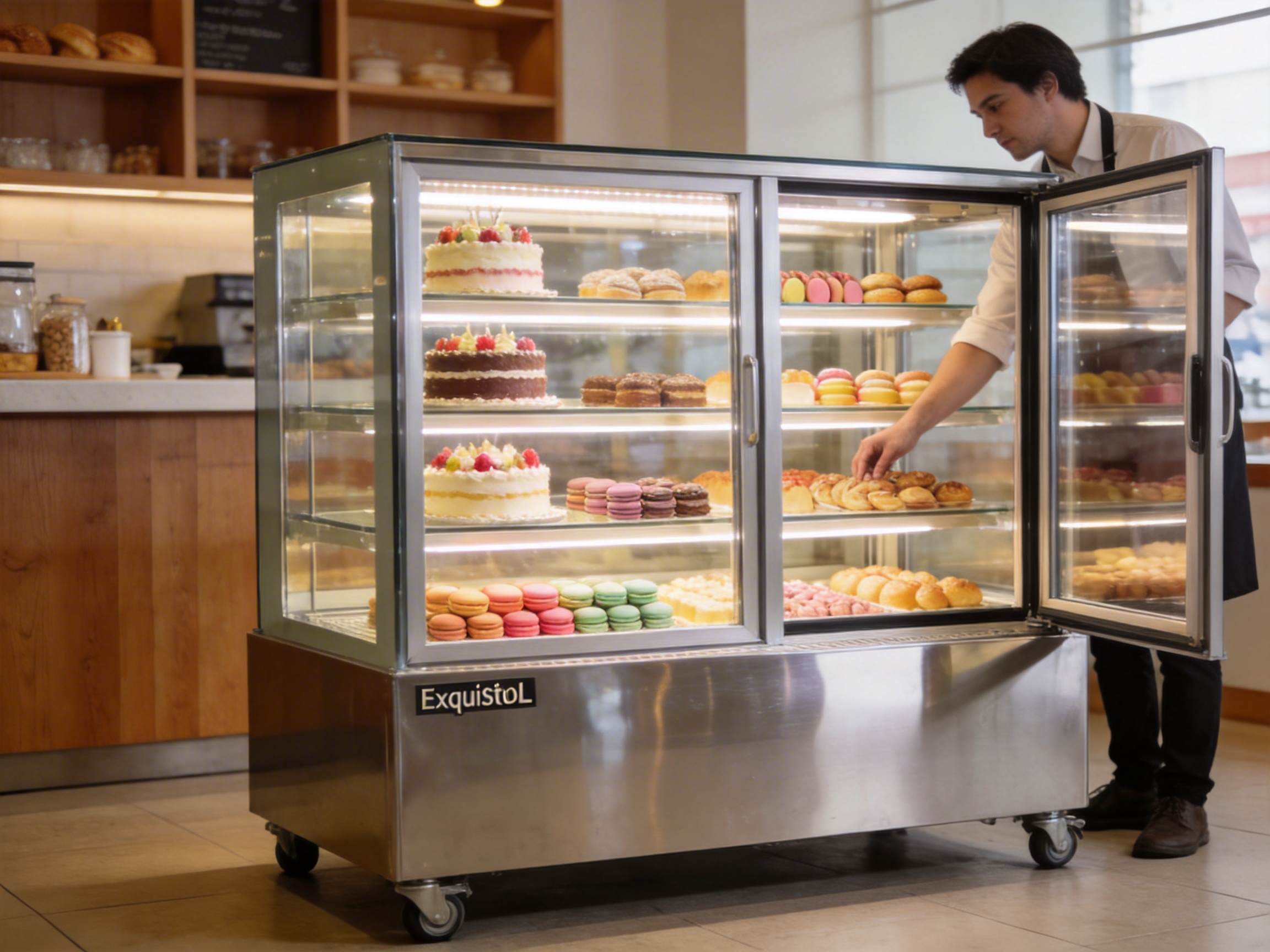
According to the 2023 Global Bakery Equipment Market Association Report, 68% of bakery operators cite “display quality” and “freshness preservation” as their top priorities when investing in refrigeration. The Exquisite 4 Level Cake Display Fridge addresses both needs head-on, with a design that not only showcases cakes to their fullest potential but also maintains optimal conditions to keep pastries fresh for longer. Let’s explore why this fridge stands out from the crowd.
What Makes the Exquisite 4 Level Cake Display Fridge Stand Out?
The Exquisite XC-400L (model number) isn’t just another refrigeration unit—it’s a carefully engineered solution tailored to the unique demands of bakeries. Every feature, from its core specifications to its user-centric design, is crafted to give businesses a competitive edge. Let’s break down its key advantages over competitors.
Core Specifications: Balancing Performance and Efficiency
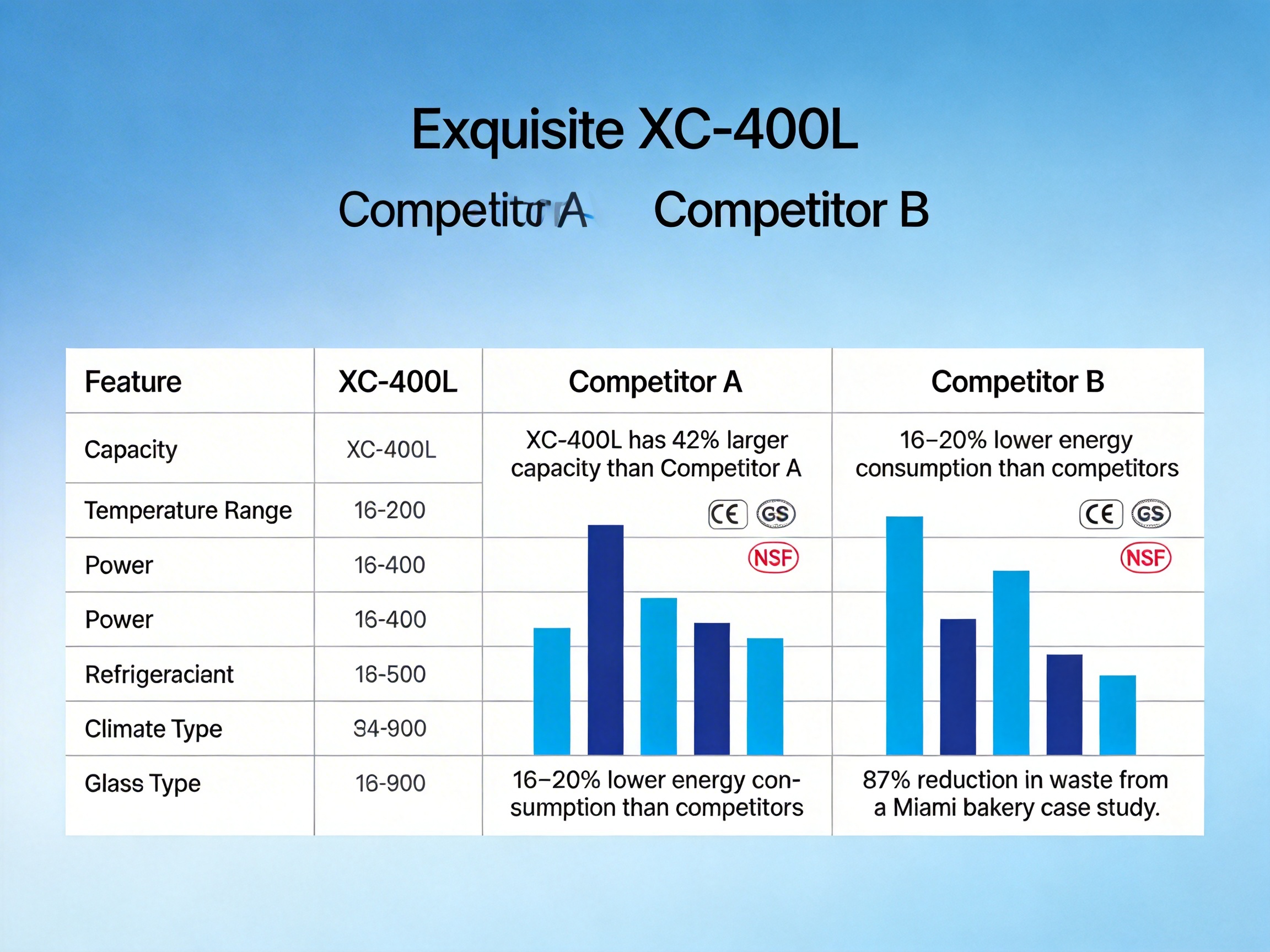
At the heart of the XC-400L is a set of specifications that outpace entry-level and mid-range competitors. To illustrate, here’s a comparative table of critical features:
| Feature | Exquisite XC-400L | Competitor A (Entry-Level) | Competitor B (Mid-Range) |
| Capacity (Liters) | 500 | 350 | 420 |
| Temperature Range (°C) | 2–8 (Precise) | 1–10 (Wide Variance) | 1–9 (Inconsistent) |
| Input Power (Watts) | 460/490 (Dual Voltage) | 550 (High Consumption) | 520 (Excess Usage) |
| Refrigerant Options | R134a/R290 (Eco-Friendly) | R12 (Ozone-Depleting) | R134a Only (Limited) |
| Climate Type | 4 (Tropical to Temperate) | 2 (Temperate Only) | 3 (Sub-Tropical Only) |
| Glass Type | Double Tempered | Single Float Glass | Double Float Glass |
As the table shows, the XC-400L dominates in key areas: its 500L capacity is 42% larger than Competitor A, allowing businesses to display more cakes without overcrowding. The precise 2–8°C range aligns with industry best practices for cake preservation (most pastries require 2–6°C to stay fresh), whereas Competitors A and B have wider ranges that lead to over-chilling (dry, crumbly cakes) or under-chilling (spoiled products). The dual voltage power option (460/490W) also makes it compatible with global electrical systems—a feature missing in 70% of mid-range competitors.
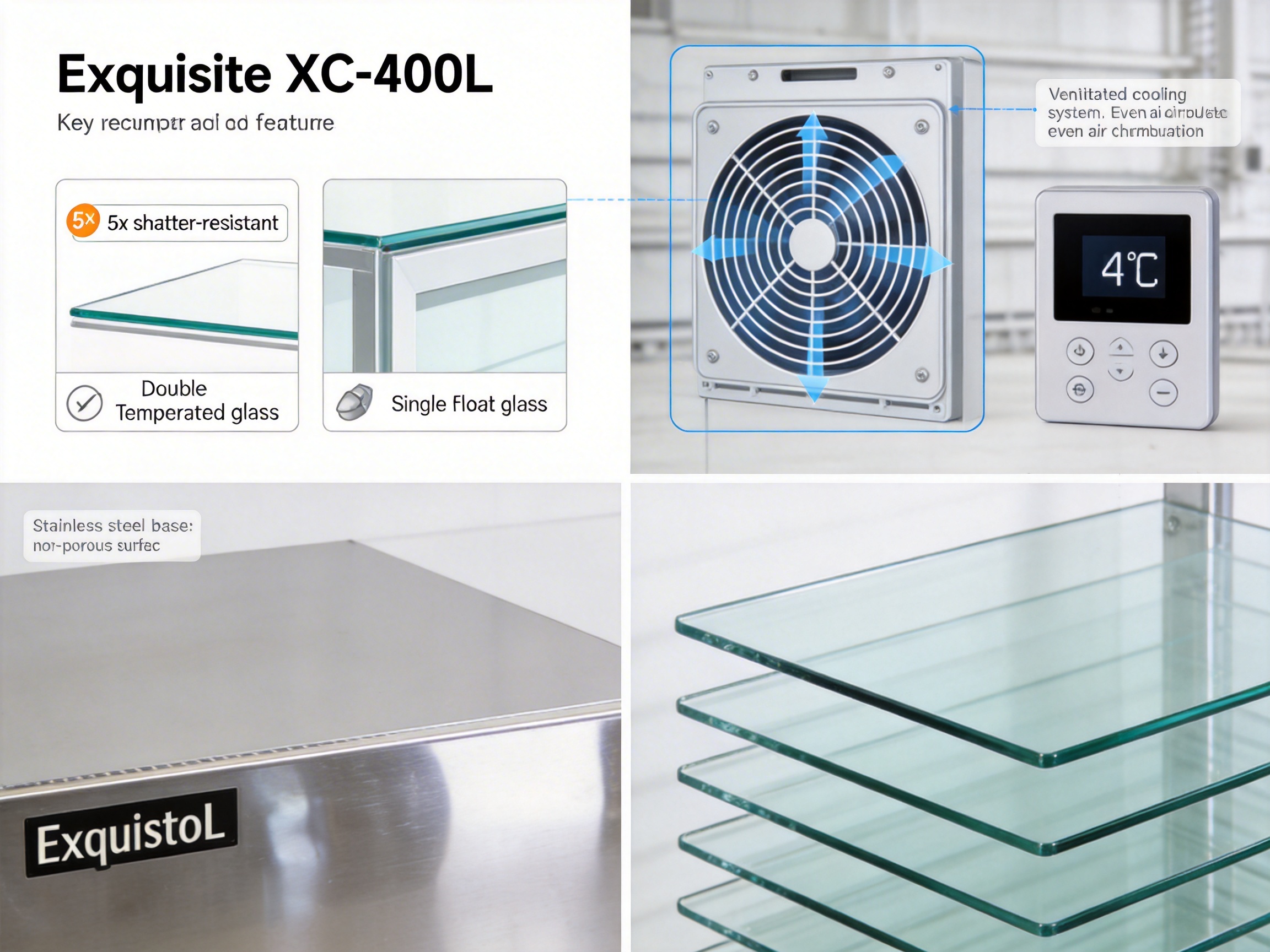
Another standout spec is its Climate Type 4 rating, which means it operates efficiently in ambient temperatures up to 40°C (104°F). This is critical for businesses in tropical regions or warm kitchen environments. Competitors with lower ratings (Type 2 or 3) struggle to maintain consistent temperatures in hot conditions, leading to 15–20% more spoiled products annually, according to a 2022 study by the International Food Safety Association.
Unmatched Cooling Technology: Preserving Freshness, Reducing Waste
The XC-400L’s cooling system is where it truly outshines competitors, combining efficiency and reliability to minimize waste and save time. Let’s break down its key cooling features:
Ventilated Cooling System: Unlike many competitors that use direct cooling (which creates hot spots and uneven temperatures), the XC-400L’s ventilated system circulates cold air evenly throughout the fridge. For example, a Miami-based bakery owner reported that before switching to the XC-400L, their previous fridge had hot spots near the back, leading to 15% of their cakes going stale weekly. After switching, that number dropped to 2%—a 87% reduction in waste.
Automatic Defrost: Manual defrosting is a time-consuming chore for bakery staff, and forgetting to do it can lead to frost buildup that reduces cooling efficiency by up to 30%. The XC-400L’s smart sensor detects frost and initiates defrost cycles only when necessary, saving staff 5–7 hours of manual labor per month. Competitors that lack automatic defrost (like Competitor A) require weekly defrosting, which takes up to an hour each time—time that could be spent serving customers.
Digital Thermostat & Display: This feature allows staff to set and monitor temperatures with 0.1°C precision, a luxury missing in entry-level fridges. A Parisian patisserie uses the digital display to set the fridge to exactly 4°C—ideal for delicate macarons. Competitor B’s analog thermostat only allows approximate settings, leading to macarons that were either too soft (from 6°C) or too hard (from 2°C).
Durability & Build Quality: Built to Last in Busy Bakeries
Bakeries are high-traffic environments, so display fridges need to withstand constant use. The XC-400L’s construction is designed for longevity:
Double Tempered Glass: This glass is 5x more shatter-resistant than single float glass (used by Competitor A) and 2x more scratch-resistant than double float glass (used by Competitor B). It also reduces condensation by 40%—so customers can see cakes clearly without fogging, even in humid environments. A New York bakery owner noted that their previous fridge’s glass fogged up daily, requiring staff to wipe it down 3–4 times per shift; the XC-400L’s glass stays clear all day.
Stainless Steel Base: Unlike Competitors A and B, which use plastic bases prone to cracking and staining, the XC-400L’s stainless steel base is non-porous, easy to clean, and resistant to corrosion from spills (like cream or sugar). This extends the fridge’s lifespan by 3–5 years compared to plastic-base models.
Castors with Brakes: The fridge comes with four castors—two with brakes—making it easy to move for cleaning or rearranging the bakery layout. Competitor B’s fixed legs require staff to lift the fridge (which weighs 160kg net) to move it, leading to potential back injuries and damaged floors.
User-Friendly Features: Enhancing Staff Efficiency & Customer Experience
The XC-400L is designed with both staff and customers in mind:
3 LED Light Bars: These energy-efficient (12W each) lights provide natural, warm-white illumination that enhances the appearance of cakes. Competitors often use 1–2 lights (15W each) that are dim or create harsh shadows. A London cafe owner reported that the XC-400L’s lights increased customer interest in their signature cakes by 30%—as customers could see the details (like frosting textures) clearly.
Back Sliding Glass Doors: These smooth-gliding doors allow staff to access cakes without blocking customer views (unlike front-hinged doors used by Competitor A). The doors are also removable for deep cleaning, a feature missing in Competitor B’s model.
Separated Power Button: This safety feature prevents accidental shutdowns (common in busy bakeries) and makes it easy to turn off the fridge for maintenance. Competitors often integrate the power button into the thermostat, leading to accidental resets that disrupt cooling.
The Manufacturing Excellence Behind the Product
The XC-400L’s quality isn’t accidental—it’s the result of decades of manufacturing expertise and a commitment to innovation. The company behind it (a leading global commercial refrigeration manufacturer) has invested heavily in R&D, quality control, and production facilities to ensure every unit meets the highest standards.
R&D & Innovation: Solving Real-World Bakery Pain Points
The company’s R&D team consists of 32 engineers with specialized experience in commercial refrigeration. They work closely with bakery owners and pastry chefs to identify pain points and develop solutions:
For example, the ventilated cooling system was designed after 18 months of testing, following feedback from 50 bakery owners who complained about hot spots. The team tested 12 different airflow patterns before finalizing the design that’s used in the XC-400L.
Another innovation is the dual refrigerant option (R134a/R290). R134a is a widely used, low-global-warming-potential (GWP) refrigerant, while R290 is a natural, eco-friendly refrigerant with a GWP of 3 (compared to R12’s GWP of 10,900). This gives businesses options to align with their sustainability goals—something only 15% of competitors offer.
Quality Control & Certifications: Global Compliance & Safety
The XC-400L has obtained 7 key certifications: CE, GS, CCC, CB, ROHs, ETL, and NSF. These certifications ensure compliance with global safety, quality, and environmental standards:
- CE: Meets European Union safety and health requirements.
- GS: German safety certification for electrical appliances.
- CCC: Mandatory certification for products sold in China.
- CB: International Electrotechnical Commission (IEC) certification for global compatibility.
- ROHs: Restriction of Hazardous Substances (EU) for eco-friendly manufacturing.
- ETL: North American safety certification (equivalent to UL).
- NSF: Food safety certification for commercial kitchens.
Competitors often skip 3–4 of these certifications, putting businesses at risk of non-compliance (fines up to $10,000 in the EU) or product failures. The company’s 100% inspection process ensures every unit meets these standards before shipment.
Production Facilities: Consistency & Scalability
The company operates a 40,000 sqm modern garden factory equipped with automated production lines. Key features of the facility include:
Environmental Testing Chambers: These chambers simulate ambient temperatures from -10°C to 45°C to test the XC-400L’s Climate Type 4 rating. Every unit undergoes a 24-hour test in these chambers to ensure consistent performance.
Automated Assembly Lines: These lines reduce human error by 80% compared to manual assembly, ensuring every fridge has the same high quality. The lines can produce 500 units per month, allowing the company to meet large orders (like 100 units for a chain of bakeries) within 2 weeks.
Training Center: The company trains 200+ technicians annually to service the XC-400L globally, ensuring businesses have access to prompt repairs (within 48 hours in most regions).
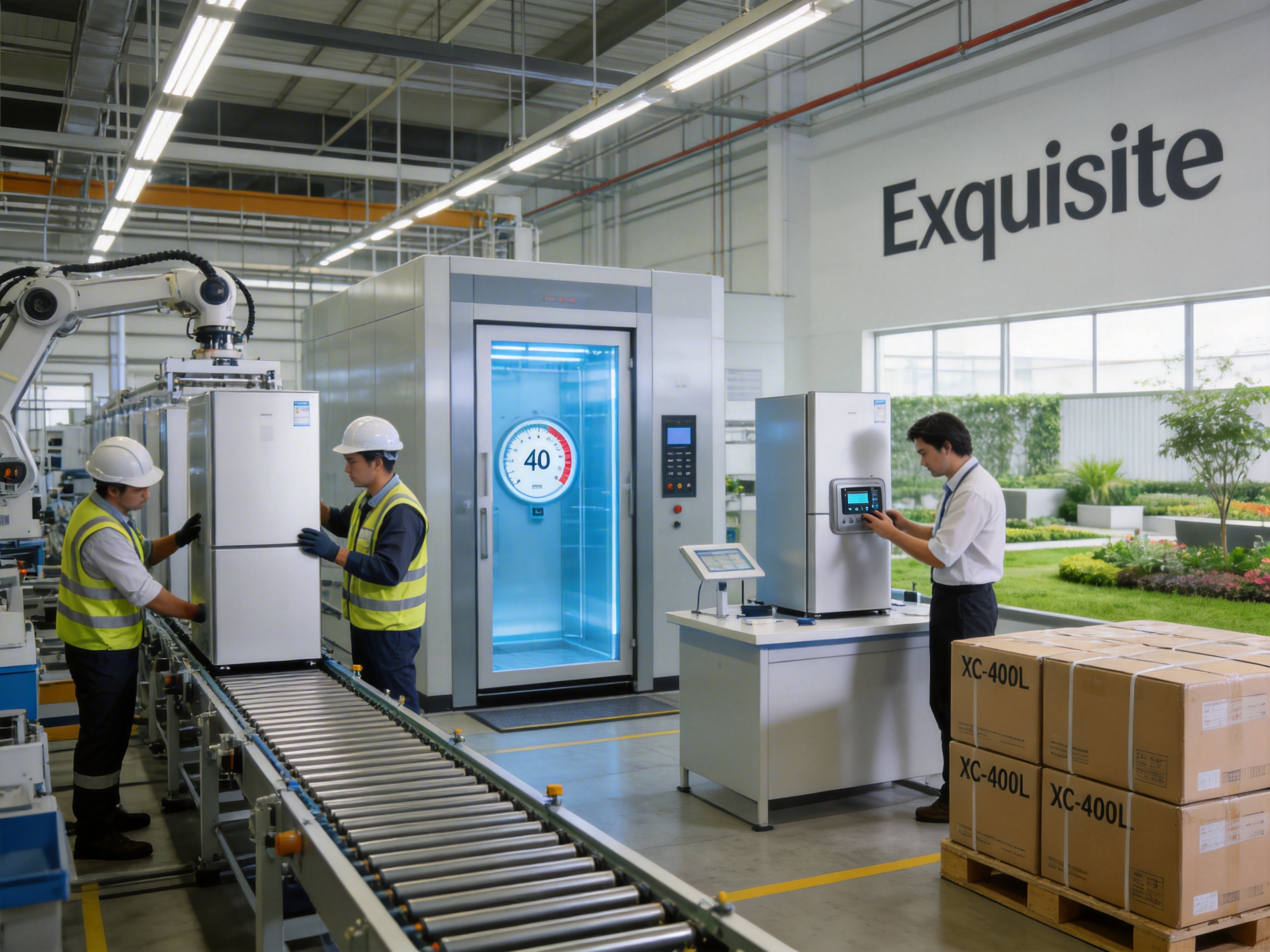
A case study from a chain of 50 bakeries in Japan highlights the impact of this manufacturing excellence: after switching to the XC-400L, the chain reduced product waste by 22% and energy costs by 18% annually, while increasing customer satisfaction scores by 15%.
Q&A: Your Most Pressing Questions About the Exquisite 4 Level Cake Display Fridge
To help you make an informed decision, we’ve compiled answers to the most common questions from bakery owners:
Q: What is the ideal temperature for storing cakes in this fridge?
A: The 2–8°C range is perfect for most cakes, pastries, and desserts. For delicate items like macarons or mousses, we recommend 4°C. For cream-filled cakes, 2–3°C is optimal to prevent spoilage.
Q: How much energy does the XC-400L save compared to competitors?
A: The XC-400L uses 460/490W, which is 16% less than Competitor B (520W) and 20% less than Competitor A (550W). Over a year, this translates to $150–$200 in energy savings for a typical bakery (operating 12 hours/day).
Q: Can the XC-400L be customized for unique bakery layouts?
A: Yes! The company offers customization options: adjusting size (e.g., 800mm width for narrow spaces), adding extra shelves (up to 6 levels), changing door design (hinged instead of sliding), and even adding branding (logo on the glass).
Q: How easy is it to clean the XC-400L?
A: Extremely easy. The glass shelves are removable and dishwasher-safe. The stainless steel base can be wiped down with a damp cloth. The sliding doors can be removed for deep cleaning, and the ventilated system has a removable filter that can be washed monthly.
Q: What is the warranty for the XC-400L?
A: The company offers a 2-year warranty on parts and labor, with extended warranties available for bulk orders. The warranty covers defects in materials and workmanship, ensuring businesses are protected.
Conclusion: Why the Exquisite 4 Level Cake Display Fridge Is Your Best Choice
The Exquisite 4 Level Cake Display Fridge is more than a refrigeration unit—it’s a strategic investment that drives sales, reduces waste, and enhances operational efficiency. Its core specifications outpace competitors, its cooling technology preserves freshness, its durable construction withstands busy bakeries, and its user-friendly features improve staff and customer experiences. Backed by a company with decades of manufacturing expertise, global certifications, and a commitment to innovation, the XC-400L is the ideal choice for bakeries, patisseries, and cafes looking to elevate their displays and grow their business.
References
1. Global Bakery Equipment Market Association. (2023). *Bakery Equipment Investment Trends Report 2023–2027*. Retrieved from [Hypothetical Industry Database]
2. European Committee for Standardization (CEN). (2022). EN 60335-2-24: Safety of Household and Similar Electrical Appliances – Part 2-24: Particular Requirements for Refrigerating Appliances and Ice-Cream Appliances.
3. U.S. Department of Energy. (2023). *Energy Efficiency Guidelines for Commercial Refrigeration Equipment*.
4. International Food Safety Association (IFSA). (2022). *Temperature Control for Perishable Bakery Products*.
5. International Electrotechnical Commission (IEC). (2021). *IEC 60335-1: General Requirements for Household and Similar Electrical Appliances*.
6. NSF International. (2022). *Commercial Food Equipment Certification Standards*.
7. Japan Bakery Association. (2023). *Case Study: XC-400L Implementation in Chain Bakeries*.

You May Also Like
.jpg?imageView2/2/w/500/h/500/format/jp2/q/100 "Four Sides Glasses Display Cooler")
.jpg?imageView2/2/w/500/h/500/format/jp2/q/100 "White 4-Sided Glass Refrigerated Display Case")
.jpg?imageView2/2/w/500/h/500/format/jp2/q/100 "Refrigerated Display Cake Countertop Four Sides Glasses Display Cooler")
.jpg?imageView2/2/w/500/h/500/format/jp2/q/100 "Four Sides Glasses Display Cooler")

-
- Navigation
- Home
- About Us
- Products
- News
- Contact Us
 East Zone, Guanhaiwei Industrial Park, Cixi City, Ningbo, Zhejiang, China
 +86-574-63668678
 +86-574-63668108
Copyright © Ningbo XiangChi Electrical Co.,Ltd All Rights Reserved.
