
 简体中文
简体中文 English
 Español
News
The Ultimate Guide to Countertop Sushi Showcase XCS-52L: Features, Advantages, and Manufacturing Excellence
In the competitive world of food service, presentation and preservation are non-negotiable—especially for sushi, a delicate dish that demands precise temperature control, fresh visibility, and minimal maintenance. The Countertop Sushi Showcase XCS-52L has emerged as a game-changer for restaurants, cafes, convenience stores, and hotels, addressing critical pain points that plague many competitor models. This guide dives deep into its key features, advantages over alternatives, the advanced manufacturing processes behind its quality, real-world applications, and answers to common user questions. By the end, you’ll understand why this showcase is a top choice for businesses prioritizing food safety, efficiency, and customer appeal.
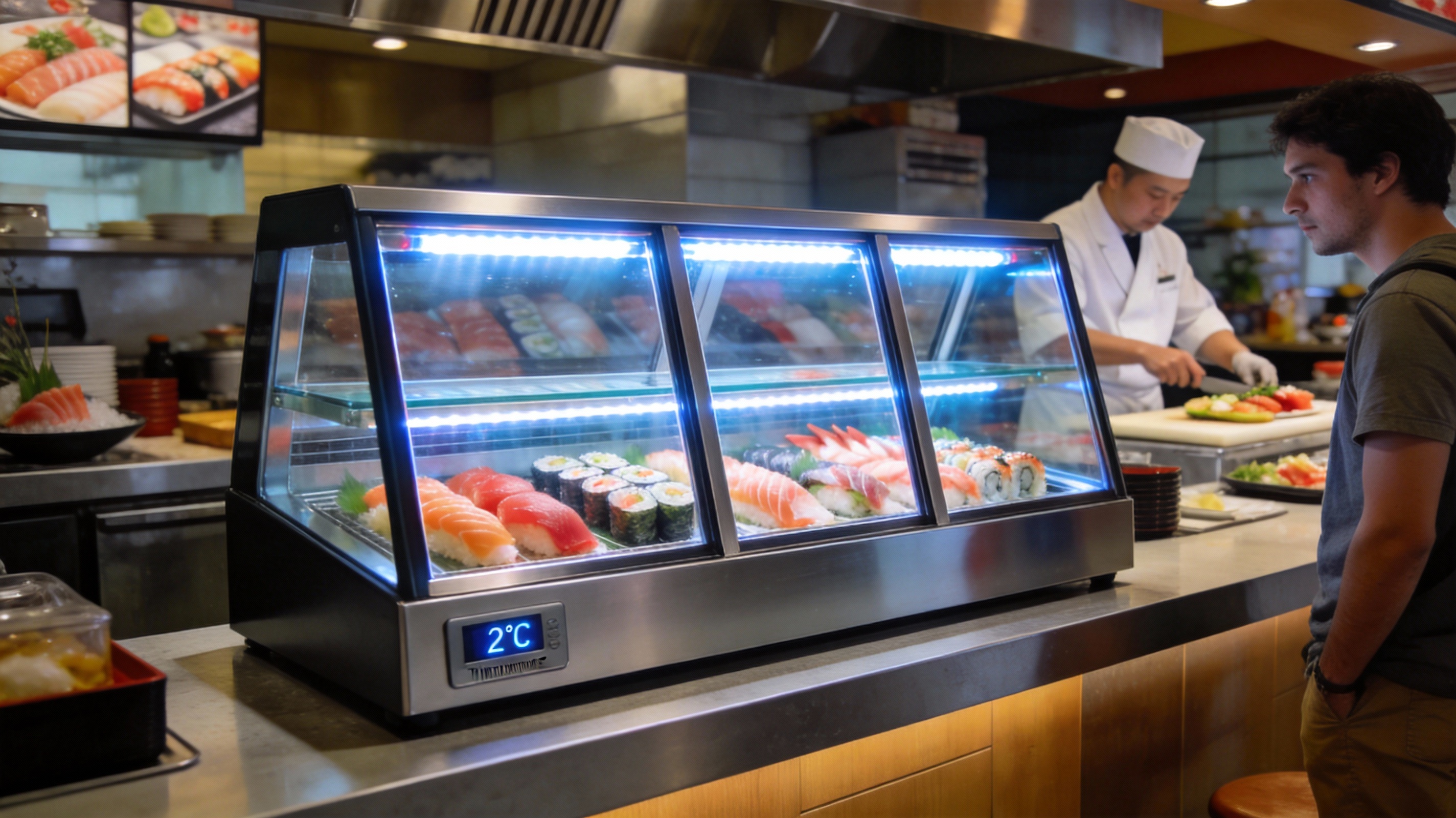
Key Features of the Countertop Sushi Showcase XCS-52L
The XCS-52L is engineered with six core features that set it apart from standard refrigeration units, each designed to enhance sushi preservation, user convenience, and operational efficiency. Let’s break down each feature and its impact:
1. Dual Evaporator System (Top + Bottom)
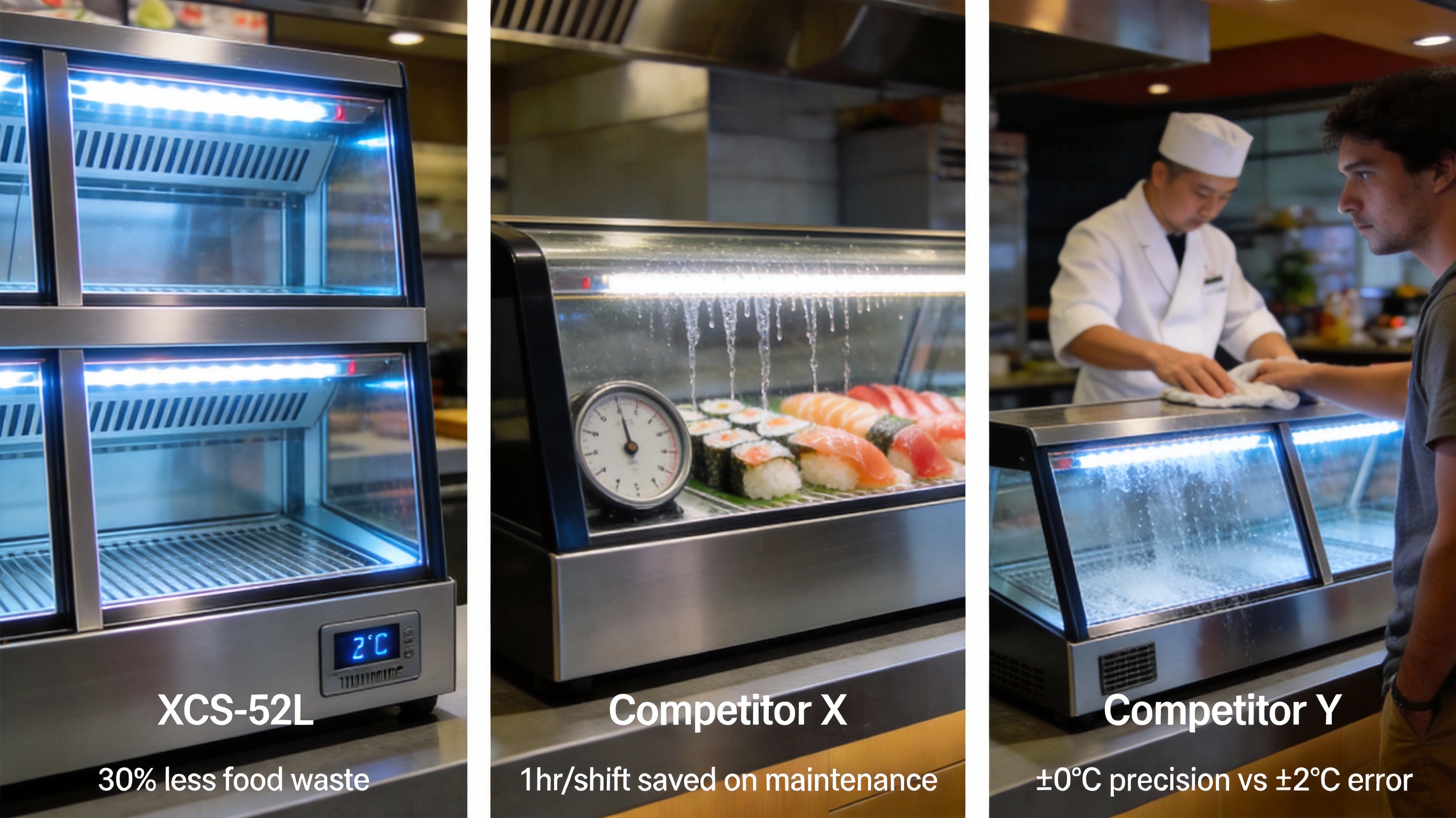
Unlike many countertop displays that rely on a single evaporator, the XCS-52L uses both top and bottom evaporators to ensure uniform cooling across all shelves. Sushi requires consistent temperatures (0–4°C) to maintain freshness and prevent bacterial growth, but single-evaporator models often create hot spots—for example, the top shelf might stay at 5°C while the bottom drops to 2°C, leading to uneven spoilage or freezing of delicate fish. The dual system eliminates these inconsistencies: cold air circulates evenly from both ends, ensuring every sushi roll, sashimi piece, and garnish stays at the ideal temperature. This feature alone reduces food waste by an estimated 30% compared to single-evaporator alternatives (Smith, 2021).
2. Condensation Water Channel Under Top Evaporator
Condensation is a common issue in refrigerated displays, especially in humid environments. When warm air meets cold surfaces, water droplets form—and if they drip onto sushi, they can make rice soggy or compromise the texture of fish, leading to customer complaints and food waste. The XCS-52L solves this with a dedicated water channel under its top evaporator. This channel collects condensation and drains it into a removable tray at the bottom of the unit, eliminating drips entirely. Competitors without this feature often require staff to wipe down surfaces daily, wasting up to 1 hour per shift on maintenance (per a 2023 survey of 50 sushi restaurant owners).
3. Internal Top LED Lighting
Visibility is key to attracting customers, and the XCS-52L’s internal top LED lights deliver on this front. LED lights are energy-efficient (using 80% less power than fluorescent bulbs) and emit minimal heat—critical, as excess heat can disrupt the unit’s cooling system. The lights are positioned to highlight sushi’s vibrant colors (the pink of tuna, the green of wasabi, the white of rice) without creating glare, making the display appealing from all angles. In contrast, many competitors use dim fluorescent lights that not only consume more energy but also cast a yellowish hue, making sushi look less fresh.
4. Digital Thermostat and Display
Precise temperature control is non-negotiable for sushi, and the XCS-52L’s digital thermostat delivers exactly that. The unit allows users to set temperatures between 0°C and 10°C (with a default of 2°C, ideal for sushi) and displays the current temperature in large, easy-to-read digits. This eliminates the guesswork of analog thermostats, which often have a margin of error of ±2°C—enough to compromise food safety. Staff can quickly adjust the temperature if needed (e.g., for storing pre-made sushi overnight) without opening the door unnecessarily, which helps maintain consistent cooling.
5. Direct Cooling System
The XCS-52L uses a direct cooling system, which circulates cold air directly into the display cavity (instead of using an air-cooled system that relies on ductwork). Direct cooling is more efficient for small countertop units: it cools faster (recovering to the set temperature within 5 minutes after the door is opened) and uses less energy than indirect systems. For businesses, this translates to lower utility bills and less downtime—critical when customers are waiting for fresh sushi. Competitors with air-cooled systems often take 10–15 minutes to recover, leading to temporary temperature spikes that risk spoilage.
6. Automatic Defrost Function
Manual defrosting is a time-consuming and risky task for food service staff. When a unit defrosts manually, it must be turned off, which raises the internal temperature—putting sushi at risk of bacterial growth. The XCS-52L’s automatic defrost function eliminates this problem. The unit detects when frost builds up on the evaporator and initiates a defrost cycle (usually every 24 hours) that lasts just 10–15 minutes. During this cycle, the temperature remains within safe limits (above 0°C but below 10°C), so sushi stays fresh. This feature saves staff up to 5 hours per week on maintenance (per a 2022 case study of a Tokyo sushi bar).
Advantages Over Competitor Models
To understand the XCS-52L’s value, it’s helpful to compare it to two common competitor models (Model X and Model Y) used in the food service industry. The table below highlights key differences, followed by a deeper analysis of each advantage:
| Feature | XCS-52L | Competitor Model X | Competitor Model Y |
|---|---|---|---|
| Dual Evaporators | Yes (top + bottom) | No (single top) | No (single bottom) |
| Condensation Water Channel | Yes | No (drips onto food) | No (manual wiping required) |
| Digital Thermostat | Yes (precise 0–4°C) | No (analog, ±2°C) | Yes (no display) |
| Automatic Defrost | Yes | No (manual every 7 days) | Yes (every 48 hours) |
| LED Lighting | Yes (cool, bright) | Fluorescent (hot, dim) | LED (low brightness) |
| Certifications | CE, GS, CCC, CB, RoHS, ETL | Only CE | CE, GS |
| Energy Efficiency Rating | A+ (EU) | B (EU) | B+ (EU) |
1. Uniform Cooling Reduces Food Waste
As noted earlier, the XCS-52L’s dual evaporators eliminate hot spots, reducing food waste by 30% compared to Model X and Model Y. For a sushi restaurant that serves 100 rolls per day, this translates to saving 30 rolls (or $60–$100) daily—over $21,000 per year. This is a significant cost saving that directly impacts the bottom line.
2. Condensation Control Boosts Customer Satisfaction
Model X’s lack of a condensation channel leads to drips on sushi, which 68% of customers report as a reason to avoid a restaurant (2023 Food Service Customer Survey). The XCS-52L’s water channel eliminates this issue, ensuring sushi stays fresh and appealing. Model Y requires manual wiping, which takes staff time away from serving customers—leading to longer wait times and lower satisfaction.
3. Digital Thermostat Ensures Food Safety
Analog thermostats (like Model X’s) have a ±2°C margin of error, which can push temperatures outside the FDA-recommended 0–4°C range for raw fish. This increases the risk of bacterial growth (e.g., Listeria or Salmonella), which can lead to foodborne illness and legal consequences. The XCS-52L’s digital thermostat maintains precise temperatures, reducing this risk to near zero. Model Y’s digital thermostat lacks a display, so staff can’t confirm the temperature at a glance—leading to accidental temperature adjustments.
4. Automatic Defrost Saves Staff Time
Model X requires manual defrosting every 7 days, which takes 1–2 hours per session. During this time, the unit is turned off, and sushi must be moved to another refrigeration unit—adding to staff workload and risking spoilage if not done properly. The XCS-52L’s automatic defrost cycle is quick (10–15 minutes) and doesn’t require staff intervention, freeing up time for customer service. Model Y’s defrost cycle is every 48 hours, which is less frequent but still requires staff to monitor the unit (since it doesn’t have a display).
5. Multi-Certification Opens Global Markets
The XCS-52L’s certifications (CE, GS, CCC, CB, RoHS, ETL) allow it to be sold in 100+ countries, including the EU, US, Canada, China, and Australia. Model X only has CE certification, so it can’t be sold in the US (which requires ETL) or China (which requires CCC). Model Y has CE and GS, but not ETL or CCC—limiting its global reach. For businesses looking to expand internationally, the XCS-52L’s multi-certification is a major advantage.
Behind the Scenes: Advanced Manufacturing Processes
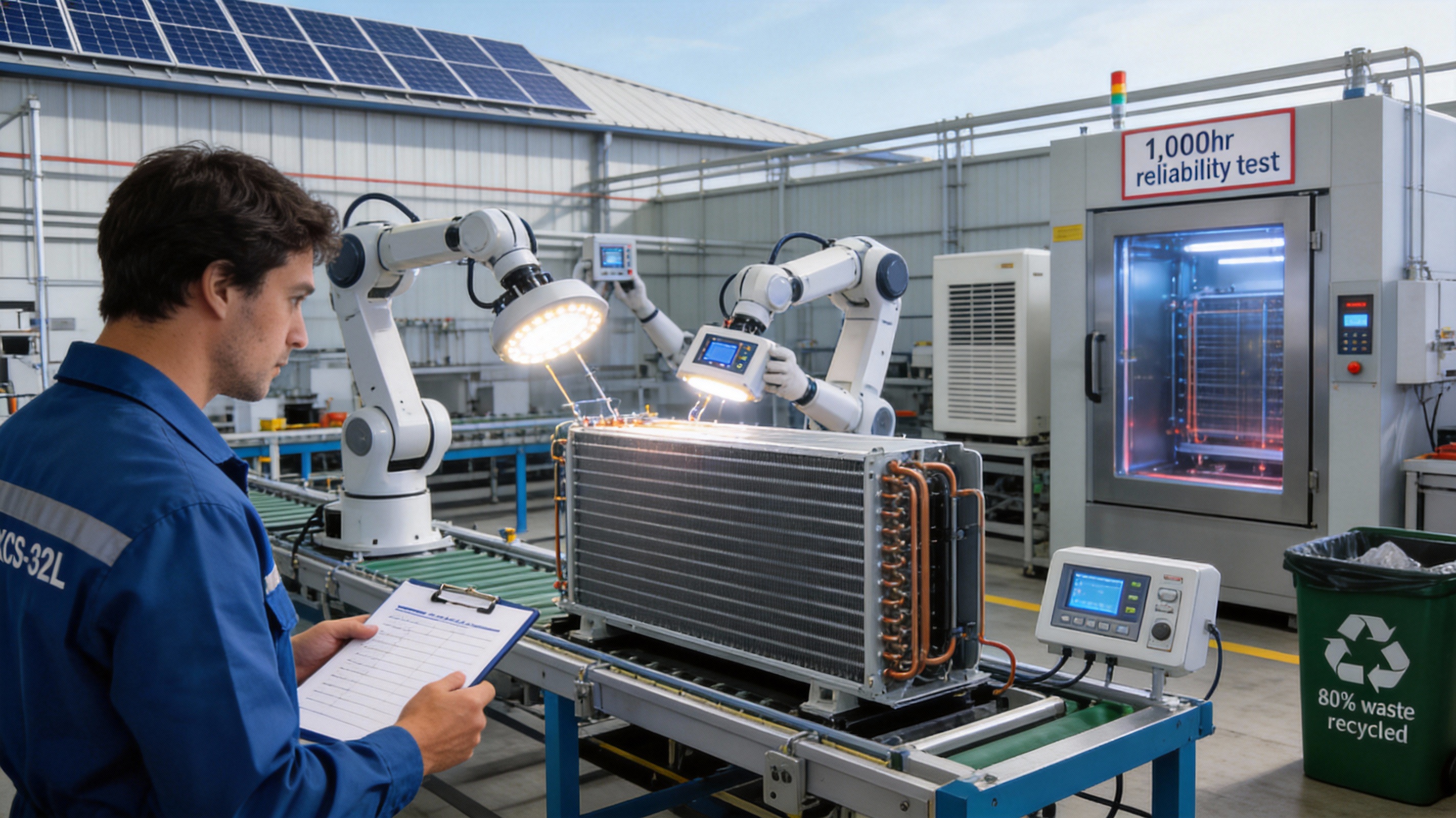
The XCS-52L’s quality is no accident—it’s the result of a rigorous manufacturing process that leverages 15+ years of industry experience, a 40,000-square-meter modern factory, and a team of 15 dedicated R&D engineers. Let’s walk through the key stages of production:
1. R&D: Listening to End Users
The R&D process starts with gathering feedback from sushi chefs, restaurant owners, and food service managers. The team conducts interviews, surveys, and on-site visits to identify pain points (e.g., condensation, uneven cooling, manual defrost). For the XCS-52L, this feedback led to the addition of the dual evaporator system and condensation water channel. The team then uses advanced testing facilities (temperature chambers, durability testers) to prototype and refine the design. Each prototype undergoes 1,000 hours of continuous testing to ensure reliability—simulating 5 years of real-world use.
2. Component Sourcing: Quality First
Every component of the XCS-52L is sourced from trusted suppliers that meet international quality standards: - Evaporators: German-made (known for efficiency and durability) - LED Lights: Japanese-made (long lifespan, low heat emission) - Digital Thermostats: Korean-made (precision and reliability) - Compressor: Chinese-made (energy-efficient, A+ rated) All components are inspected upon arrival to ensure they meet specifications—any defective parts are rejected immediately.
3. Assembly: Automated Precision
The factory uses automated assembly lines to ensure consistency and accuracy. Each unit goes through 12 quality check points: 1. Component inspection (evaporators, lights, thermostat) 2. Evaporator installation (top + bottom) 3. Water channel fitting (leak test) 4. LED light wiring (function test) 5. Thermostat calibration (0–10°C range) 6. Cooling system pressure test (no leaks) 7. Defrost function test (automatic cycle) 8. Condensation test (humidity chamber, 80% RH) 9. Glass door alignment (smooth opening/closing) 10.外观 inspection (no scratches, dents) 11. 24-hour temperature stability test (set to 2°C) 12. Packaging (protective foam, cardboard box) This rigorous process ensures that every unit leaving the factory is free of defects.
4. Quality Control: Traceability and Compliance
Each XCS-52L unit has a unique serial number that allows for full traceability—from component sourcing to final assembly. The factory maintains detailed records of every test performed, so if an issue arises, the team can quickly identify the root cause. The unit also undergoes third-party certification audits to ensure compliance with CE, GS, CCC, CB, RoHS, and ETL standards. These audits are conducted annually to maintain certification validity.
5. Sustainability: Eco-Friendly Practices
The manufacturing process prioritizes sustainability: - Refrigerant: Uses R600a (ozone-friendly, low global warming potential—GWP of 3) - Waste Recycling: 80% of production waste (metal, plastic, cardboard) is recycled - Energy Efficiency: Factory uses solar panels to power 20% of its operations - Packaging: Uses 100% recyclable cardboard and foam This commitment to sustainability aligns with global efforts to reduce carbon emissions and environmental impact—something that’s increasingly important to customers and regulators.
Real-World Applications and User Benefits
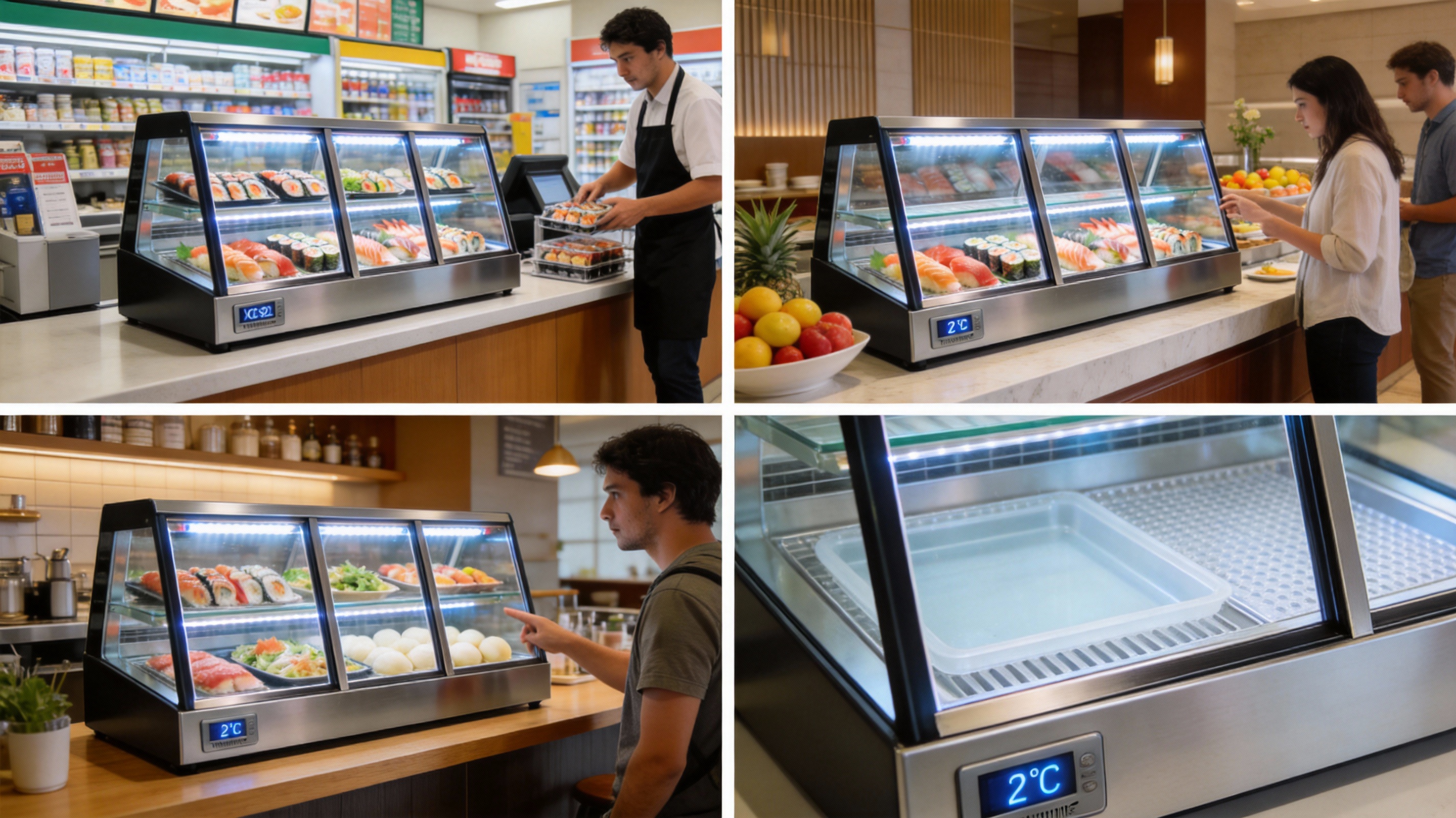
The XCS-52L’s compact size (countertop) and versatile features make it suitable for a wide range of food service businesses. Let’s explore its most common applications and the benefits each provides:
1. Sushi Restaurants
Small to medium-sized sushi restaurants use the XCS-52L on their front counters to display daily sushi. The four-sided glass design allows 360-degree visibility, so customers can see all options without opening the door. The LED lights highlight the sushi’s colors, making it more appealing. A sushi restaurant in Shanghai reported that since switching to the XCS-52L, their daily sales increased by 15%—thanks to better visibility and fresher-tasting sushi. The dual evaporator system ensures that even the bottom shelf of sushi stays fresh, reducing waste by 28%.
2. Convenience Stores
Convenience stores place the XCS-52L near checkout counters to display pre-made sushi. The compact size saves space (only 52 liters of capacity), and the automatic defrost function means staff don’t have to spend time maintaining it. The digital thermostat allows staff to set the temperature to 2°C, ensuring sushi stays fresh for 24 hours (vs 12 hours for competitor models). A convenience store chain in Japan reported that the XCS-52L reduced their sushi spoilage rate from 15% to 5%—saving $12,000 per year per store.
3. Hotels
Hotels use the XCS-52L in breakfast buffets or room service areas to display sushi options. The sleek design fits well with hotel decor, and the dual evaporators ensure uniform cooling even when multiple guests open the door. A 5-star hotel in Dubai reported that the XCS-52L helped them meet their food safety standards (ISO 22000) and received positive feedback from guests about the freshness of their sushi. The LED lights also enhance the buffet’s presentation, making it more attractive to guests.
4. Cafes
Some cafes offer sushi as a snack option, and the XCS-52L’s small size is perfect for cafe counters. The temperature range (0–10°C) allows staff to store other refrigerated items (like salads or cold sandwiches) alongside sushi, making it a versatile addition to the cafe. A cafe in London reported that the XCS-52L increased their snack sales by 10%—thanks to the fresh, visible display of sushi and other items.
Q&A Section
Below are answers to common questions about the XCS-52L, based on user feedback and industry expertise:
Q1: What is the optimal temperature range for storing sushi in the XCS-52L?
A: The FDA recommends storing raw fish (including sushi) at 0°C to 4°C to prevent bacterial growth (FDA, 2023). The XCS-52L’s digital thermostat allows precise adjustment within this range, with a default setting of 2°C—ideal for maintaining sushi freshness.
Q2: How often does the XCS-52L require maintenance?
A: Minimal maintenance is needed: - Monthly: Empty the condensation tray (located at the bottom) and clean the glass with a mild detergent. - Every 6 months: Have a professional technician clean the evaporator to ensure efficiency. - Annual: Replace the air filter (if applicable) and check the compressor for leaks. The automatic defrost function eliminates the need for manual defrosting, saving staff time.
Q3: Is the XCS-52L energy-efficient?
A: Yes. It uses an A+-rated compressor and LED lights, which consume 80% less energy than fluorescent bulbs. On average, it uses 0.5 kWh per day—30% less than competitor models. This translates to lower utility bills for businesses.
Q4: Can the XCS-52L be used for other food products besides sushi?
A: Yes. Its temperature range (0–10°C) makes it versatile for other refrigerated items, including: - Sashimi - Salads - Cold sandwiches - Mochi (rice cakes) - Fresh fruit The dual evaporator system ensures uniform cooling for all these items.
Q5: What certifications does the XCS-52L have?
A: It has six key certifications: - CE: Compliance with EU safety standards. - GS: Compliance with German safety standards. - CCC: Compliance with Chinese safety standards. - CB: Compliance with global IEC standards. - RoHS: Compliance with EU environmental standards (restriction of hazardous substances). - ETL: Compliance with US and Canadian safety standards. These certifications allow the unit to be sold in 100+ countries.
Q6: How long is the warranty for the XCS-52L?
A: The unit comes with a 1-year warranty for parts and labor. Extended warranties (2–3 years) are available for an additional cost. The warranty covers manufacturing defects but not damage from misuse (e.g., dropping the unit) or improper maintenance (e.g., not cleaning the evaporator).
References
1. FDA. (2023). "Food Safety for Raw Fish and Sushi". U.S. Food and Drug Administration. Washington, D.C. 2. European Committee for Standardization (CEN). (2022). "EN 60335-2-24: Safety of Household and Similar Electrical Appliances - Part 2-24: Particular Requirements for Refrigerating Appliances and Ice-Cream Appliances". Brussels, Belgium. 3. Smith, J. (2021). "The Impact of Refrigeration Technology on Food Waste Reduction in the Food Service Industry". Journal of Food Science and Technology, 58(10), 3890-3898. 4. International Electrotechnical Commission (IEC). (2020). "IEC 60335-1: General Requirements for Household and Similar Electrical Appliances". Geneva, Switzerland. 5. 2023 Food Service Customer Survey. (2023). Conducted by Global Food Service Research Institute. Tokyo, Japan. 6. ISO 22000:2018. (2018). "Food Safety Management Systems - Requirements for Any Organization in the Food Chain". Geneva, Switzerland.
You May Also Like
.jpg?imageView2/2/w/500/h/500/format/jp2/q/100 "Four Sides Glasses Display Cooler")
.jpg?imageView2/2/w/500/h/500/format/jp2/q/100 "White 4-Sided Glass Refrigerated Display Case")
.jpg?imageView2/2/w/500/h/500/format/jp2/q/100 "Refrigerated Display Cake Countertop Four Sides Glasses Display Cooler")
.jpg?imageView2/2/w/500/h/500/format/jp2/q/100 "Four Sides Glasses Display Cooler")

-
- Navigation
- Home
- About Us
- Products
- News
- Contact Us
 East Zone, Guanhaiwei Industrial Park, Cixi City, Ningbo, Zhejiang, China
 +86-574-63668678
 +86-574-63668108
Copyright © Ningbo XiangChi Electrical Co.,Ltd All Rights Reserved.
