
 简体中文
简体中文 English
 Español
News
Commercial Countertop Cake Showcase Display Warmer: Design, Performance, and Manufacturing Advantages
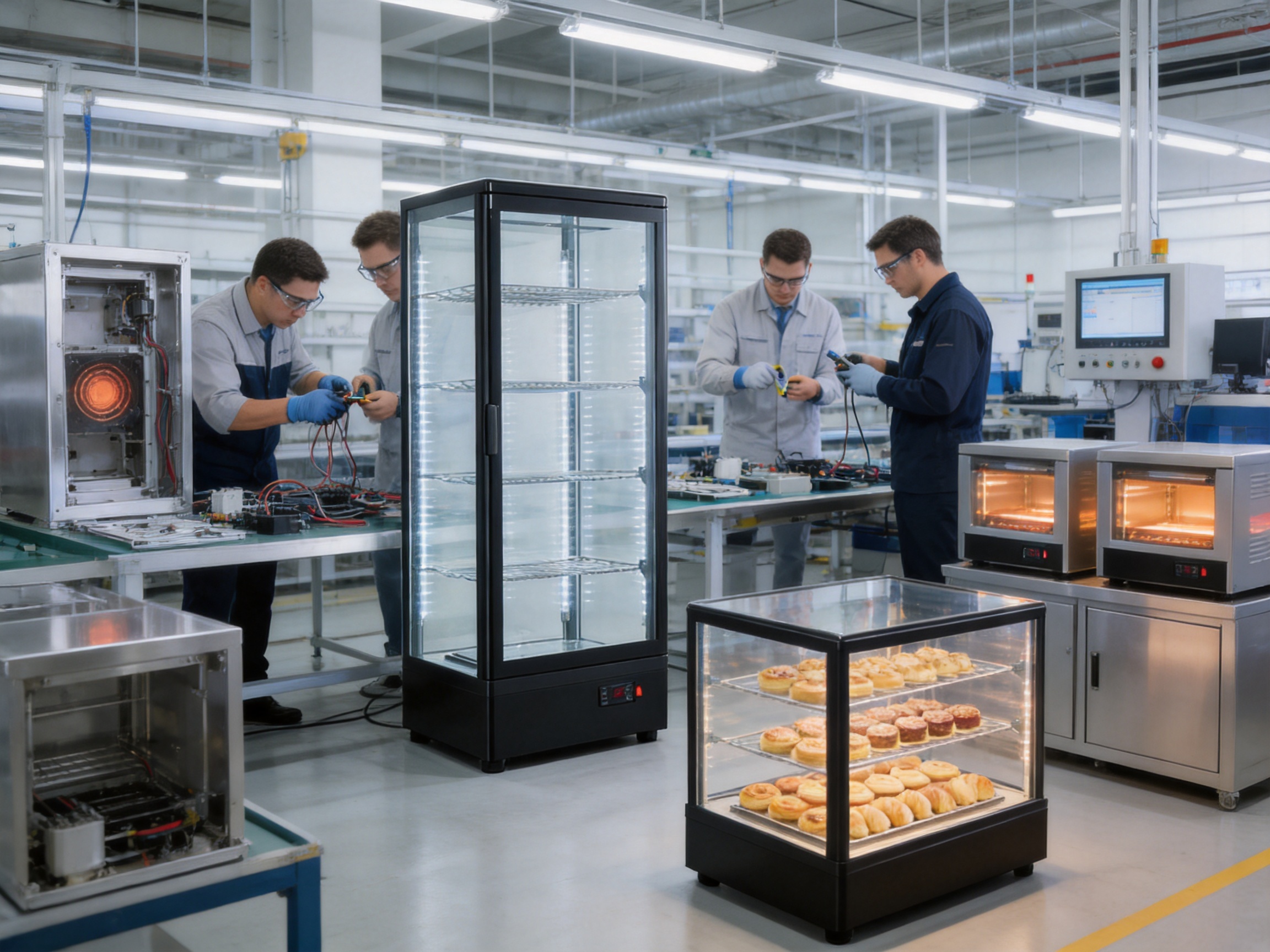
In modern foodservice, presentation and temperature control are equally important. Cakes, pastries, sandwiches, baked snacks, and prepared foods must look attractive while remaining protected from dust, handling, and changing room conditions. A countertop display warmer answers this need by combining a compact merchandising format with controlled heat retention and broad product visibility.
The XCR-98L catering equipment table-top cake showcase display warmer is designed for businesses that need an efficient way to present food at service counters, cafés, bakeries, hotels, restaurants, convenience stores, catering venues, and buffet areas. Its four-sided display concept supports visibility from multiple directions, allowing customers to view products before making a selection. At the same time, the warming function helps food businesses maintain a suitable serving condition for products intended to be offered warm.
This article examines the product’s commercial value, display advantages, construction principles, manufacturing strengths, quality considerations, and practical applications. It also explains how a professional equipment manufacturer can support buyers seeking reliable commercial refrigeration and food display solutions.
1. The Role of a Countertop Display Warmer in Foodservice
A display case is more than a storage unit. It is part of a food business’s sales environment. Customers often make purchasing decisions based on appearance, freshness, accessibility, and confidence in food hygiene. A well-designed display warmer brings these factors together in one compact piece of equipment.
Traditional open trays may allow easy access, but they provide limited protection and can make the food area appear untidy during busy service periods. A standard cold display refrigerator is suitable for chilled desserts and beverages, yet it may not be appropriate for products that are intended to remain warm. A countertop display warmer fills this gap by providing an enclosed, visible, and temperature-conscious presentation area.
For bakeries and cafés, a heated showcase can be used for savory pastries, pies, buns, bread-based snacks, breakfast items, and selected desserts. For catering operations, it can provide a professional serving station for pre-prepared food. In convenience stores and hotel breakfast areas, it can support self-service or assisted service while helping the business create a more organized product presentation.
The compact countertop format is particularly useful where floor space is limited. Instead of requiring a large freestanding cabinet, the operator can position the warmer on a counter, service island, buffet table, or dedicated merchandising platform. This makes it suitable for both new premises and established businesses that want to add a warming display without redesigning the entire shop layout.
2. Product Overview: XCR-98L Table-Top Cake Showcase Display Warmer
The XCR-98L is identified as a catering equipment table-top cake showcase display warmer. Its primary product category is a display warmer, while its design is associated with cake showcases and countertop display equipment.
The equipment is intended to provide an attractive enclosed display area for food products that benefit from warm presentation. Its glass showcase format allows customers and staff to see the contents clearly. The four-sided glass concept also creates a stronger visual connection between the displayed products and the surrounding service area.
Because the product is positioned on a countertop, it can be installed close to the point of sale or the food preparation area. This proximity can reduce unnecessary movement by staff and make replenishment more convenient. It can also help operators place high-margin or impulse-purchase products in a highly visible location.
A countertop warmer should not be viewed as a replacement for every type of commercial oven, hot holding cabinet, or refrigerated display case. Instead, it is a merchandising and holding solution for products that have already been prepared and need to be presented attractively for a limited service period. The correct operating temperature and holding duration should always be determined according to the food product, local food safety requirements, and the operator’s procedures.
Key product characteristics
The principal characteristics of the XCR-98L concept include a countertop format, glass-sided visibility, enclosed food presentation, warming functionality, and suitability for commercial catering environments.
The display area is designed to make food visible from several angles. This can be valuable in a busy café or retail setting because a customer does not necessarily approach from one fixed direction. A multi-sided showcase can support visibility across a service counter, allowing the same equipment to work for front-facing retail, side-access buffet layouts, and island-style merchandising.
The enclosed design can also help separate displayed food from direct contact with the surrounding environment. This does not eliminate the need for cleaning, safe handling, and proper food protection procedures, but it can provide a more controlled presentation area than an uncovered tray.
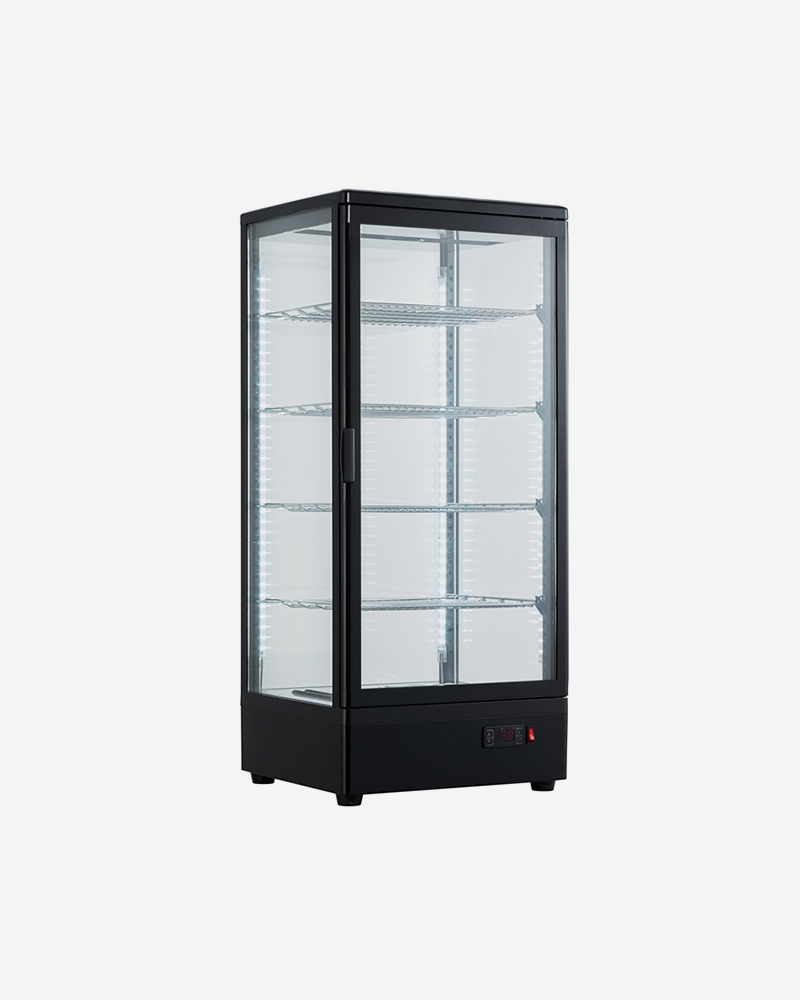
Catering Equipment Table Top Cake Showcase Display Warmer Cake Showcase
3. Four-Sided Glass Visibility and Merchandising Value
One of the strongest advantages of a four-sided glass display warmer is visual accessibility. Conventional cabinets with a single viewing face can be effective when positioned against a wall, but they may lose merchandising value when placed in an open service area. A four-sided structure is more flexible because it can be viewed from the front, sides, and, depending on the configuration, the rear.
Multiple viewing surfaces help customers recognize available products quickly. In a bakery, different pastries can be arranged by type, flavor, or price. In a café, warm snacks can be displayed beside the payment area. In a hotel or buffet setting, the unit can be positioned where guests approach from different directions.
Glass also contributes to perceived freshness. Customers can see the shape, color, texture, and arrangement of the products without opening the cabinet. This reduces unnecessary door or panel handling and allows staff to maintain a more consistent display. Clear visibility is especially important for decorated cakes, premium pastries, and specialty items whose appearance supports their selling price.
A well-organized display can improve customer decision-making. When products are visible and logically arranged, customers may spend less time asking staff what is available. This can support faster service during peak periods. It can also encourage add-on purchases, particularly when warm products are placed near beverages, desserts, or checkout areas.
Visual presentation as a sales tool
Food presentation has a direct relationship with perceived value. A product displayed behind clean glass in a well-lit, orderly showcase generally appears more professional than the same product placed in an overcrowded or exposed tray. For this reason, the equipment’s appearance contributes to the overall image of the business.
Operators can use the showcase to create product groupings. For example, breakfast pastries may occupy one level, savory snacks another, and seasonal products a third. Product labels, pricing cards, and promotional signs can be positioned around the case without obstructing the primary viewing areas.
Although the display warmer is compact, merchandising discipline remains important. Products should not be stacked so high that the glass becomes visually blocked. Trays should be arranged with enough space for staff to replenish products safely. A clean, balanced layout usually creates a stronger impression than a fully packed cabinet.
4. Warming Performance and Food Holding Considerations
The warming function is intended to help maintain the serving condition of suitable food products after preparation. This can be beneficial for items that are best enjoyed warm, including certain pastries, baked snacks, pies, buns, and prepared foods intended for immediate service.
Commercial warming equipment is not simply about producing heat. Effective food holding depends on stable temperature management, consistent heat distribution, suitable product placement, and correct operating procedures. If the temperature is too low, food may not remain in the desired serving condition. If it is too high, products may dry out, over-brown, or lose their intended texture.
The operator should therefore select the correct setting for each food type and follow applicable food safety standards. Product-specific procedures are essential because cakes, bread, pastry, meat-filled snacks, and other prepared foods may require different conditions. The display warmer should be integrated into a broader food safety system that includes preparation, cooking, holding, replenishment, cleaning, and end-of-service procedures.
A heated display can support a first-in, first-out rotation system. Staff can place newer items behind or below older items, depending on the cabinet arrangement, and remove products in the correct sequence. Clear glass allows employees to monitor stock levels without opening the unit repeatedly.
Balancing warmth and product quality
Some products benefit from warm holding, while others are better stored at ambient or refrigerated temperatures. Cakes containing cream, custard, fresh fruit, or temperature-sensitive fillings may require refrigeration rather than warming. The display warmer should therefore be used for products that are suitable for the intended holding environment.
Businesses can divide product categories between different types of showcase equipment. Chilled cakes may be placed in a countertop display refrigerator or cake showcase, while savory pastries and baked snacks may be placed in a display warmer. This approach allows each item to receive a more appropriate merchandising and storage treatment.
The enclosed glass structure can help reduce exposure to drafts and surrounding air movement compared with an uncovered countertop. However, it should not be considered a substitute for a sealed food container or for compliance with local health regulations. Staff should still monitor product condition and remove items that no longer meet the business’s quality standards.
5. Advantages Over Basic Open Displays
Open trays and uncovered baskets are inexpensive and simple, but they have limitations in a commercial environment. Products may be exposed to dust, accidental contact, air movement, and uneven visual presentation. Customers may also find it more difficult to understand which items are available when products are arranged without a defined display structure.
The XCR-98L display warmer offers a more organized alternative. Its glass enclosure creates a clear boundary between the food and the surrounding service environment. This can contribute to a more hygienic appearance and a more professional retail presentation.
The warmer also enables the business to present food at the point of purchase. Instead of placing prepared items in a back-of-house holding area, operators can display them where customers are making decisions. This may reduce the distance between product preparation and sale, while increasing the visibility of high-demand items.
Another advantage is better use of vertical space. A showcase can arrange products across multiple levels rather than spreading them across a large counter. In compact premises, this can preserve valuable work area while still providing a substantial product display.
The enclosed display may also help control staff access. In a staffed service environment, employees can open the access area when replenishing or serving products. In selected layouts, this can create a cleaner customer-facing operation than allowing customers to reach directly into uncovered trays.
6. Advantages Over Large Freestanding Cabinets
Large floor-standing cabinets can offer greater capacity, but they also require more floor space, higher installation commitment, and a more permanent layout. A countertop display warmer is easier to integrate into existing premises because it occupies the counter rather than the sales floor.
This compact format is useful for businesses testing a new product line. A café may want to add warm pastries without investing in a large heated cabinet. A small bakery may need a secondary display near the checkout area. A caterer may need portable or semi-portable equipment for different service stations. In each case, a countertop unit can provide flexibility.
A smaller cabinet may also help operators create multiple merchandising zones. One unit can be used for warm snacks, another for chilled desserts, and another for packaged products. This segmented approach can make the customer journey easier to understand and can support more precise product management.
Space efficiency can be especially valuable in urban retail locations, kiosks, food courts, transportation hubs, and small hotel service areas. The operator can use the surface above a counter while retaining floor space for staff movement and customer queues.
7. Practical Applications Across Commercial Foodservice
Bakeries and pastry shops
Bakeries can use a countertop warmer to present selected products near the front counter. Warm buns, savory pastries, small pies, breakfast items, and baked snacks can be arranged for quick selection. The glass structure allows customers to view the product range while staff maintain an organized service workflow.
The equipment can also complement a larger cake cabinet. Refrigerated cakes and cream-based desserts may remain in a cold showcase, while warm pastries are displayed separately. This distinction makes the store easier to navigate and helps staff apply the correct handling method to each product category.
Cafés and coffee shops
In cafés, warm food often complements beverage sales. A display warmer positioned near the ordering point can encourage customers to add a pastry or snack to a coffee purchase. The compact footprint is suitable for counters where every square meter must support both service and merchandising.
Operators can change the assortment throughout the day. Breakfast products may be displayed in the morning, lunch-oriented snacks during midday, and smaller pastries during the afternoon. A flexible display plan can help reduce unsold inventory by matching the product mix to customer demand.
Hotels and breakfast areas
Hotels can use countertop warming equipment in breakfast service areas, assisted buffets, meeting rooms, and event catering stations. A glass-sided showcase can help guests identify the contents of each station while maintaining a clear and orderly layout.
In conference catering, a display warmer can be positioned on a service table with beverages and other refreshments. Its presentation value can support a more polished event environment without requiring a large floor-standing appliance.
Restaurants and quick-service operations
Restaurants can use a warmer for prepared side dishes, baked accompaniments, savory snacks, or takeaway items that are intended for prompt service. In quick-service settings, visibility can help customers make choices while waiting in line.
The equipment may also support a grab-and-go concept. Staff can prepare a controlled quantity of products, display them in an attractive arrangement, and replenish the unit according to demand. The operator should establish holding-time rules to maintain product quality and meet food safety requirements.
Catering companies and event venues
Catering businesses often need equipment that can adapt to different service locations. A countertop display warmer can be incorporated into temporary food stations, buffet lines, reception counters, and pop-up service areas, provided that the installation environment has suitable electrical supply, stability, ventilation, and protection from weather conditions.
Its glass presentation can be useful at weddings, corporate events, exhibitions, and hospitality functions where the visual appearance of the food is part of the guest experience.
8. Construction and Design Considerations
A commercial display warmer must combine appearance with practical durability. The glass panels should provide clear visibility while being suitable for routine cleaning. Structural components must support the glass securely and maintain alignment during ordinary commercial use.
The countertop base should provide stability. A stable platform is important because the equipment may be opened, replenished, cleaned, and accessed repeatedly during the working day. Operators should place it on a level, load-bearing surface and avoid positioning it where customers or staff may collide with the cabinet.
Internal surfaces should be arranged to support cleaning and product organization. Removable or accessible trays and shelves can simplify sanitation, although the exact configuration should be confirmed from the product documentation supplied with the unit.
The display warmer should also be installed with adequate clearance according to the manufacturer’s instructions. Electrical equipment requires a suitable power connection, and the surrounding area should remain dry and free from sources of excessive heat or water spray.
Glass visibility and cleaning
Clear glass is a major selling feature, but it requires regular maintenance. Fingerprints, grease, condensation, crumbs, and dust can quickly reduce transparency. A daily cleaning routine should include the external glass, internal display surfaces, handles or access points, trays, and surrounding counter.
Cleaning products should be compatible with the equipment materials. Abrasive pads, harsh chemicals, and excessive water can damage surfaces or enter electrical components. Staff should follow the operating and cleaning instructions provided with the unit.
Good cleaning practice also protects the brand image of the food business. Customers tend to judge the cleanliness of the entire establishment through visible equipment. A polished glass showcase can reinforce trust, while neglected glass can weaken the impact of even high-quality products.
9. Manufacturing Strengths of Ningbo XiangChi Electrical Co., Ltd
Ningbo XiangChi Electrical Co., Ltd is described as a professional manufacturer of vertical display cabinets, cake cabinets, and warming cabinets. Established in 2007, the company has more than a decade of experience in the field and operates a modern management garden factory covering 40,000 square meters.
This background is important for commercial buyers because manufacturing experience can influence product consistency, design development, quality control, and after-sales communication. A factory focused on display cabinets and warming cabinets is more likely to understand the practical requirements of glass assembly, thermal management, product presentation, commercial durability, and production repeatability.
The company’s own professional research and development team is another stated strength. In commercial equipment manufacturing, in-house engineering capability can support improvements in cabinet layout, heating performance, structural design, electrical integration, appearance, and production efficiency.
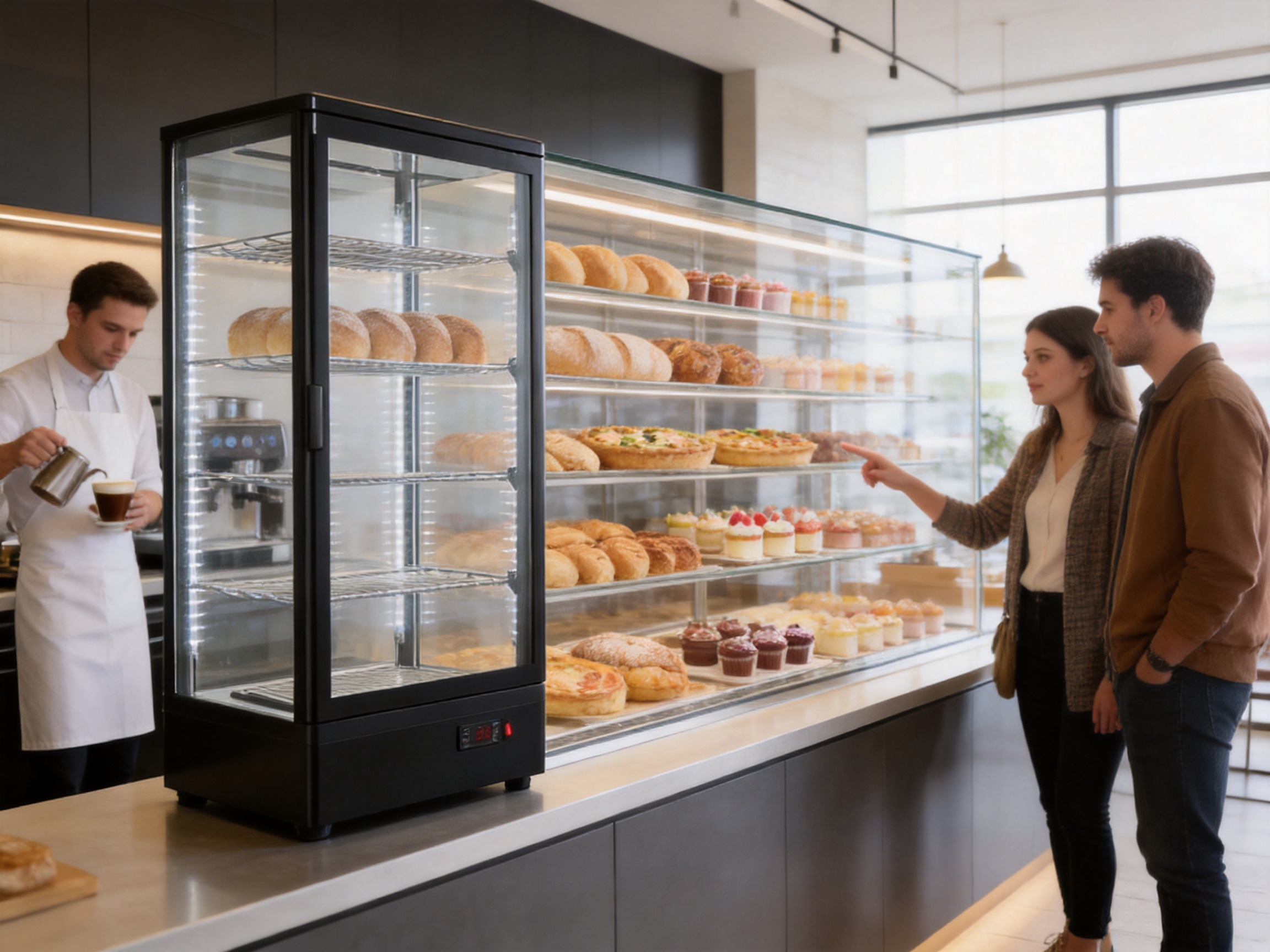
Advanced testing facilities are also identified as part of the company’s manufacturing capability. Testing is essential because commercial display equipment must operate reliably under repeated use. A suitable testing program may include electrical safety checks, temperature performance assessment, component inspection, insulation testing, functional operation, and visual quality review. Specific test procedures and results should be confirmed with the manufacturer for each product order.
The company states that it has obtained CE, GS, CCC, CB, RoHS, ETL, and other major certifications. These certifications are relevant to different markets and product requirements. Buyers should verify the exact certification scope, applicable model, issuing body, validity, and destination-market requirements before placing an order.
10. Advanced Manufacturing Processes and Quality Management
The manufacture of a glass display warmer involves several coordinated processes. These may include product design, material preparation, metal forming, surface treatment, glass processing, electrical assembly, heating-system installation, inspection, performance testing, packaging, and shipment preparation.
Product development and engineering
The process begins with a design that must balance internal capacity, external dimensions, glass visibility, heating performance, accessibility, energy use, appearance, and manufacturability. A design that looks attractive but is difficult to assemble or clean may not perform well in a commercial environment. A professional engineering team can identify these conflicts during development and create a more practical product.
Engineering review also helps establish repeatable dimensions. Consistent dimensions are important for glass fitting, door or panel alignment, shelf placement, wiring routes, and final cabinet appearance. Standardized production documentation can reduce variation between batches.
Metalwork and structural assembly
Metal components form the supporting structure of many display cabinets. Accurate cutting, bending, joining, and finishing help produce a stable and visually consistent enclosure. The surface treatment must provide an attractive appearance while resisting the effects of routine cleaning and commercial handling.
Structural assembly should be performed according to defined procedures. Workers need to position components accurately, protect visible surfaces from damage, and confirm that openings, supports, and access points are properly aligned before the glass is installed.
Glass preparation and installation
Glass is one of the most visible parts of a showcase and one of the most sensitive components during production. It must be inspected for correct size, edge condition, clarity, and surface quality. Installation requires careful handling to reduce the risk of damage and to ensure that the panels sit securely within the frame.
Proper glass assembly contributes to both appearance and safety. Misalignment may create gaps, visual distortion, or stress points. A controlled assembly process can improve consistency and reduce the likelihood of problems during transportation and use.
Electrical and heating-system assembly
The warming function depends on the correct integration of heating elements, controls, wiring, insulation, and protective components. Electrical assembly should follow documented procedures, with attention to connection security, wire routing, grounding, and insulation.
Functional testing can identify problems before shipment. A test program may verify that the unit starts correctly, reaches the intended operating condition, responds to controls, and operates without abnormal noise, odor, or electrical behavior. Buyers should request product-specific technical information when evaluating equipment for a particular market.
Inspection and testing
Quality control should occur throughout production rather than only at the final stage. Incoming materials can be checked before assembly. In-process inspections can verify dimensions, surface quality, glass fit, and component placement. Final inspections can assess overall appearance, operation, packaging, and documentation.
Testing facilities allow manufacturers to evaluate products under controlled conditions. This is particularly valuable for equipment that combines electrical systems, heating functions, glass structures, and commercial-use requirements.
11. Product Quality Compared with Low-Cost Alternatives
When buyers compare a professional display warmer with a low-cost alternative, the purchase price is only one factor. Total value also includes operating reliability, ease of cleaning, visual quality, service support, product safety, availability of replacement parts, and expected working life.
Low-cost units may use less consistent materials, simplified electrical assemblies, weaker structural supports, or limited testing procedures. These differences may not be obvious during the first inspection, but they can become important during repeated commercial operation.
A manufacturer with dedicated R&D resources and established production facilities can offer greater confidence in repeatability. This does not mean that every product is identical in performance or that buyers should skip technical verification. It means that the supplier’s manufacturing infrastructure provides a stronger foundation for systematic quality management.
Certification capability is another distinction. Internationally recognized certifications can help buyers evaluate whether a product has been designed and tested for relevant safety requirements. The correct documents must still be reviewed for the specific model and destination.
12. Installation, Operation, and Maintenance Guidance
Before installation, the operator should confirm the available counter dimensions, load capacity, electrical supply, access route, and environmental conditions. The unit should be positioned where it can be viewed by customers but does not obstruct staff movement, emergency access, or cleaning operations.
The countertop should be level and stable. Uneven placement can affect the alignment of glass panels and access components. The equipment should be protected from direct water exposure and should not be placed next to equipment that produces excessive heat unless the installation instructions permit it.
Staff should become familiar with the controls before placing food inside. The unit may need to reach its intended operating condition before products are loaded. The correct procedure depends on the equipment design and should follow the manufacturer’s manual.
Products should be loaded in a way that allows air or heat circulation where applicable. Overloading can reduce presentation quality and may affect warming performance. Staff should avoid blocking vents, controls, sensors, or access points.
Routine maintenance should include cleaning, inspection of electrical cords and plugs, checking visible seals or supports, removing crumbs and spills, and reporting unusual operating behavior. Any repair involving electrical components should be performed by a qualified technician.
Cleaning routine
A practical cleaning routine can be divided into several stages. First, remove all food products and disconnect the equipment according to the operating instructions. Second, remove trays or shelves that are designed for cleaning. Third, wipe interior surfaces with an approved cleaning solution. Fourth, clean the glass carefully to remove grease and fingerprints. Finally, dry all surfaces thoroughly before restarting the unit.
Food debris should not be allowed to accumulate because it can create unpleasant odors, attract pests, and make later cleaning more difficult. The frequency of cleaning should reflect the type of food displayed, the operating hours, and local health requirements.
13. Purchasing Considerations for Distributors and Commercial Buyers
Distributors and importers should evaluate more than the product photograph when selecting a display warmer. They should request technical specifications, electrical parameters, packaging details, available colors or finishes, shelf configuration, operating instructions, certification documents, warranty terms, and spare-parts information.
It is also useful to confirm the intended market and voltage requirements before ordering. Electrical standards differ between countries, and the product configuration must be suitable for the destination. Buyers should clarify plug type, frequency, rated power, labeling, and documentation.
For project orders, buyers may need consistent appearance across multiple units. Questions about production lead time, quality inspection, carton protection, loading method, and replacement glass should be addressed in advance.
Private-label and wholesale customers may also want to discuss packaging, product identification, manuals, labels, and branding requirements. The manufacturer’s production scale and engineering resources can be valuable when a buyer needs repeat orders or product modifications.
Questions to ask before ordering
Buyers should ask what products are appropriate for warming, what operating conditions are recommended, how the unit should be cleaned, and what the normal service procedure is. They should also confirm the available replacement parts and the process for handling transport damage or warranty claims.
For international purchasing, it is important to clarify export packaging, inspection arrangements, shipping terms, documentation, and communication contacts. A clear technical and commercial agreement helps reduce misunderstandings after delivery.
14. Sustainability and Efficient Commercial Operation
Responsible equipment operation includes using the warmer only when needed, avoiding unnecessary preheating, loading it according to its intended capacity, and maintaining clean surfaces and functional components. Efficient operating habits can reduce wasted energy and support more consistent product quality.
Good stock control is also part of sustainability. Overproduction and extended holding can lead to food waste. Operators can use sales data to plan the number and type of products placed in the display. Smaller, more frequent replenishment may keep the showcase attractive while reducing unsold inventory.
Durable construction can contribute to a longer service life. When equipment remains functional for more years, the business may reduce the frequency of replacement and the associated material and transport requirements. Repairability and access to spare parts should therefore be included in the purchasing evaluation.
Manufacturers with established R&D and testing capabilities are better positioned to study material use, product efficiency, component reliability, and production improvements. Buyers should request specific energy and environmental information when those factors are important to their operation.
15. Why Professional Manufacturing Support Matters
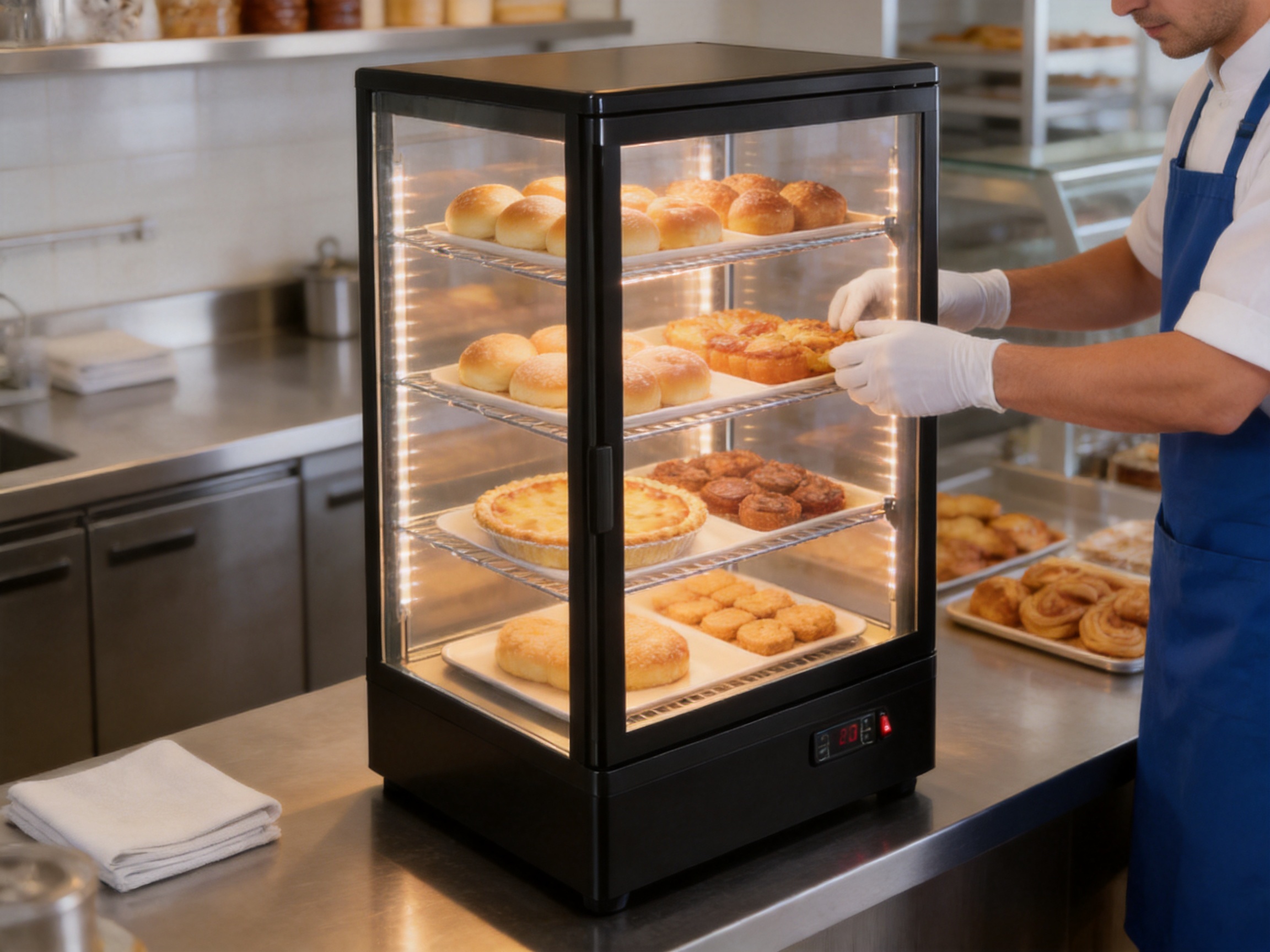
A display warmer is a visible part of a food business, but its value depends on the complete supply relationship. The manufacturer must deliver a product that matches the agreed specification, provide accurate documentation, protect the equipment during shipment, and respond effectively when questions arise.
Ningbo XiangChi Electrical Co., Ltd presents itself as a manufacturer with dedicated product experience, an R&D team, advanced testing facilities, a 40,000-square-meter factory, and a range of international certifications. These capabilities can be meaningful for wholesale buyers seeking a long-term supplier rather than a one-time source.
The company’s product range includes vertical display cabinets, countertop display coolers, cake showcases, display warmers, and related commercial display equipment. This broader product scope may help distributors build a more complete product offering for bakeries, cafés, hotels, restaurants, supermarkets, and catering companies.
A supplier that understands several related categories can also help buyers coordinate product styles and applications. For example, a retailer may need a refrigerated cake cabinet for cream-based desserts, an open display cooler for packaged products, and a heated showcase for savory pastries. A manufacturer with experience across these categories may be able to provide more consistent technical and commercial support.
16. Overall Competitive Advantages
The XCR-98L display warmer offers several practical advantages for commercial users. Its countertop format supports efficient use of limited space. Its glass showcase design improves product visibility. Its warming function is suitable for selected products that are intended to be served warm. Its enclosed construction creates a more controlled and professional display environment than an uncovered tray.
The four-sided visibility provides flexibility in store layout. The unit can be positioned on a service counter, island, buffet table, or catering station. This flexibility can help businesses adapt the display to different sales environments without committing to a large floor-standing cabinet.
The product also benefits from the manufacturing background of Ningbo XiangChi Electrical Co., Ltd. The company’s stated experience since 2007, professional R&D team, modern factory, testing facilities, and certification portfolio provide a strong foundation for commercial equipment production.
Compared with basic display methods, the warmer can improve presentation, product protection, and service organization. Compared with larger cabinets, it can offer a smaller footprint and simpler integration. Compared with unverified low-cost equipment, it may provide greater confidence in production control, documentation, and supplier support, subject to the buyer’s technical evaluation.
17. Q&A: Countertop Cake Showcase Display Warmer
Q1: What is the XCR-98L designed for?
The XCR-98L is a table-top display warmer designed to present suitable food products in a visible, enclosed showcase while helping maintain a warm serving condition. It is intended for commercial catering and foodservice environments.
Q2: Can it be used for every type of cake?
No. Cakes containing cream, custard, fresh fruit, or other temperature-sensitive ingredients may require refrigeration. Operators should determine whether a product is suitable for warming by consulting food safety guidance, product specifications, and the manufacturer’s operating instructions.
Q3: What is the benefit of four-sided glass?
Four-sided glass allows products to be viewed from several directions. This is useful when the cabinet is placed on an island counter, buffet table, or open service station rather than against a wall.
Q4: Is the warmer suitable for a small café?
Yes. Its countertop format is particularly useful for cafés and small food businesses with limited floor space. It can be placed near the point of sale to display warm pastries, snacks, or other suitable products.
Q5: Can it replace a commercial oven?
No. A display warmer is intended primarily for holding and presenting prepared products. It should not be treated as a substitute for an oven unless the manufacturer specifically states that the model has cooking capability.
Q6: How can the display remain attractive during busy service?
Staff should use organized product placement, regular replenishment, prompt removal of damaged or unsellable items, and frequent glass cleaning. Products should be arranged so that they remain visible without blocking the viewing panels.
Q7: What should buyers verify before importing the equipment?
Buyers should verify dimensions, electrical requirements, rated power, operating instructions, certification documents, packaging, warranty terms, spare parts, shipping conditions, and suitability for the destination market.
Q8: What manufacturing strengths does the supplier offer?
Ningbo XiangChi Electrical Co., Ltd states that it has operated since 2007, maintains a 40,000-square-meter factory, has an in-house R&D team and testing facilities, and holds CE, GS, CCC, CB, RoHS, ETL, and other certifications. Buyers should confirm the documentation applicable to the exact product and market.
Q9: How should the unit be cleaned?
The unit should be emptied and handled according to the operating instructions. Glass, shelves, trays, and interior surfaces should be cleaned with suitable materials, while electrical components should be protected from water and excessive moisture.
Q10: Why choose a countertop warmer instead of an open tray?
A countertop warmer provides a more structured, protected, and professional presentation. It can also support warm holding and make products more visible to customers while reducing direct exposure to the surrounding environment.
18. Conclusion
The XCR-98L table-top cake showcase display warmer is a practical solution for businesses that want to combine food presentation, countertop efficiency, and controlled warming in one commercial unit. Its glass-sided format supports visibility from multiple directions, while its compact footprint makes it easier to integrate into cafés, bakeries, hotels, restaurants, catering stations, and retail counters.
The product’s advantages are strongest when it is used for appropriate food products and supported by disciplined operating procedures. Correct temperature selection, stock rotation, cleaning, product arrangement, and maintenance are essential for achieving reliable commercial results.
From a supply perspective, Ningbo XiangChi Electrical Co., Ltd offers the background of an established manufacturer specializing in display cabinets, cake cabinets, warming cabinets, and related commercial equipment. Its stated factory scale, R&D resources, testing facilities, production experience, and certification portfolio can provide a useful basis for distributors and foodservice buyers evaluating long-term equipment partnerships.
For businesses seeking a professional alternative to open trays or oversized floor-standing cabinets, a four-sided glass countertop display warmer can improve the way warm products are presented and managed. When selected, installed, and operated correctly, it can support stronger merchandising, better counter utilization, and a more polished customer experience.
References
1. Ningbo XiangChi Electrical Co., Ltd. Product information for XCR-98L table-top cake showcase display warmer.
2. Ningbo XiangChi Electrical Co., Ltd. Corporate information concerning manufacturing experience, factory facilities, research and development, testing capability, and product certifications.
3. General commercial foodservice equipment guidance concerning heated display cabinets, food holding, cleaning, and maintenance.
4. General food safety principles for temperature control, product rotation, hygienic display, and prepared-food handling.
5. General retail merchandising principles for bakery, café, catering, buffet, and convenience-food presentation.
Product: Catering Equipment Table Top Cake Showcase Display Warmer Cake Showcase

You May Also Like
.jpg?imageView2/2/w/500/h/500/format/jp2/q/100 "Four Sides Glasses Display Cooler")
.jpg?imageView2/2/w/500/h/500/format/jp2/q/100 "White 4-Sided Glass Refrigerated Display Case")
.jpg?imageView2/2/w/500/h/500/format/jp2/q/100 "Refrigerated Display Cake Countertop Four Sides Glasses Display Cooler")
.jpg?imageView2/2/w/500/h/500/format/jp2/q/100 "Four Sides Glasses Display Cooler")

-
- Navigation
- Home
- About Us
- Products
- News
- Contact Us
 East Zone, Guanhaiwei Industrial Park, Cixi City, Ningbo, Zhejiang, China
 +86-574-63668678
 +86-574-63668108
Copyright © Ningbo XiangChi Electrical Co.,Ltd All Rights Reserved.
