
 简体中文
简体中文 English
 Español
News
Open Sliding Doors Refrigerated Showcase for High-Visibility Merchandising
In modern food retail, refrigeration is not only a matter of temperature control; it is a central part of presentation, customer flow, product protection, and store profitability. The Open Sliding Doors Refrigerated Showcase XCS-520L, XC-520Z, XC-720Z, XC-920Z, and XC-1120Z series is designed for commercial environments that need strong visual merchandising, stable cooling, practical access, and efficient daily operation. As an open display cooler category product with optional sliding doors, this refrigerated showcase is suitable for supermarkets, convenience stores, bakeries, beverage shops, delicatessens, sushi outlets, grab-and-go food areas, fresh produce corners, and other retail spaces where chilled products must be displayed attractively and kept within a safe temperature range.
The showcase focuses on three major commercial needs: visibility, temperature reliability, and operational convenience. Its vertical display structure allows customers to view products easily, while its ventilated cooling system helps maintain an even cabinet temperature. A light box for advertisement, digital temperature controller, stainless steel body, tempered glass, automatic defrost, and castors with front brakes all contribute to a professional refrigeration solution for demanding retail operations.
Compared with many conventional open coolers, this series offers a balanced combination of display performance and practical structure. It is not built merely as a cold storage unit; it is built as a selling tool. The cabinet helps products remain visible, organized, and accessible while supporting food safety and store efficiency. For operators who sell beverages, packaged meals, dairy products, chilled desserts, salads, sushi, and other ready-to-buy products, the showcase can help transform refrigerated space into an active merchandising zone.
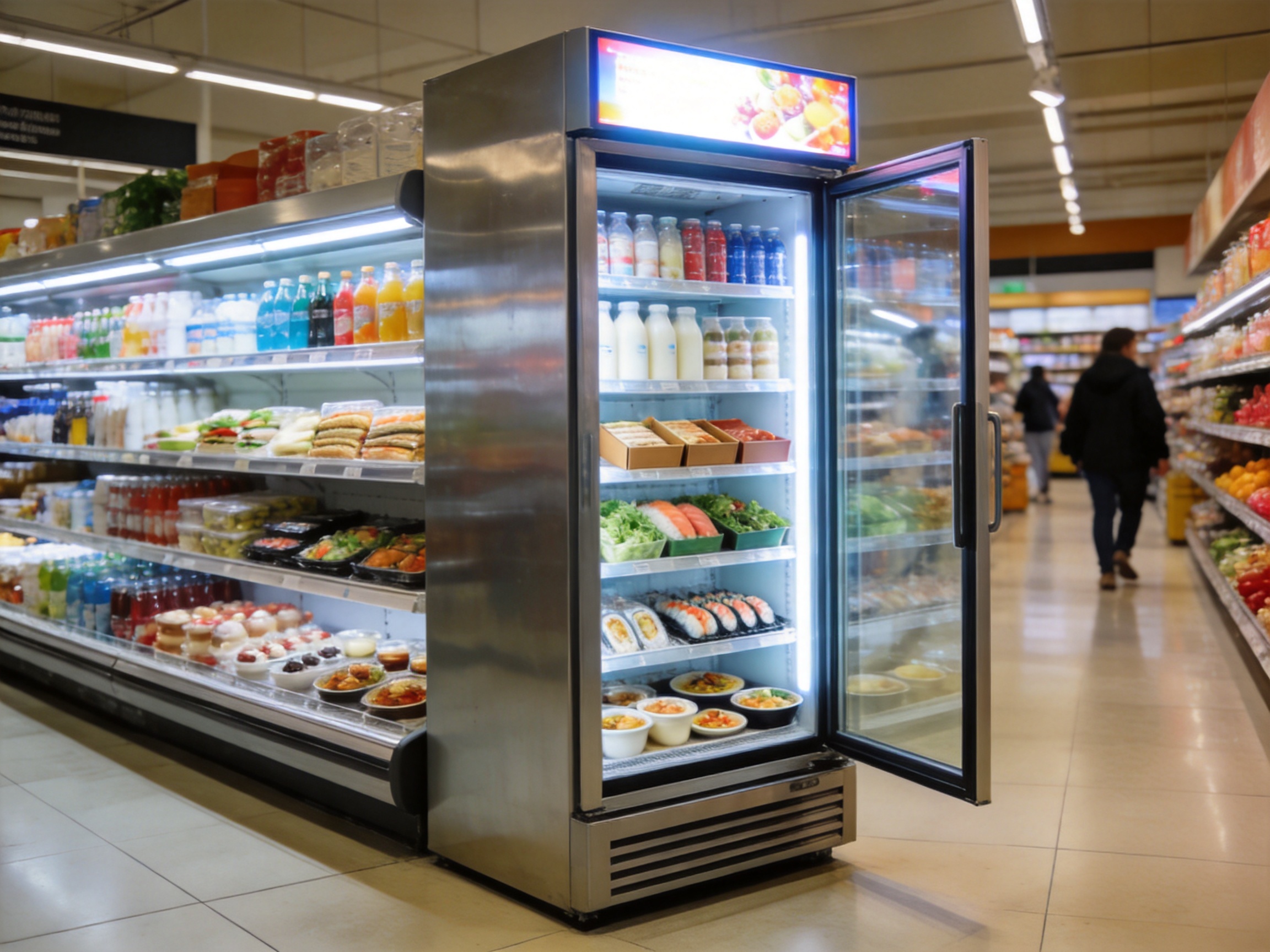
Product Positioning in Commercial Refrigeration
The Open Sliding Doors Refrigerated Showcase belongs to the open display cooler category, a product group widely used where fast selection and strong product exposure are required. Unlike enclosed storage refrigerators that are primarily designed for back-of-house inventory, an open display cooler is placed directly in front of customers. Its main function is to support commercial sales while maintaining chilled product conditions.
The addition of sliding doors as an option gives this series added flexibility. In some retail spaces, a fully open layout encourages quick access and impulse buying. In other spaces, sliding doors can help reduce temperature exchange with the surrounding environment, improve hygiene protection, and lower energy loss during non-peak hours. This adaptability makes the showcase suitable for different business models and store layouts.
The product series includes different capacity levels, beginning with 520 liters and extending into larger display formats. This allows retailers to choose a size that matches their floor area, product range, and expected customer traffic. A smaller convenience store may prefer a 520-liter model, while a larger supermarket aisle or food court area may benefit from wider models with higher display capacity.
The showcase is especially useful in commercial scenarios where customers make quick purchase decisions. Products placed in a well-lit, eye-level, organized refrigerated display are more likely to attract attention than products stored in a basic refrigerator. This is one of the major advantages of a professionally designed display cooler: it combines cold-chain protection with retail psychology.
Key Commercial Advantages
A refrigerated showcase must perform reliably, but performance alone is not enough in competitive food retail. It must also improve the customer experience, reduce labor pressure, and support store branding. This series provides several advantages that help it stand apart from ordinary commercial coolers.
Strong Product Visibility
The vertical display design provides a broad front viewing area, allowing customers to see products quickly. Tempered glass improves the sense of openness and gives the cabinet a clean, professional appearance. In retail settings, visibility often determines whether a customer stops, looks, and buys. A cabinet that presents products clearly can improve impulse sales and help operators maximize the value of each square meter of store space.
The light box for advertising further strengthens the merchandising function. Retailers can use the top advertising space to highlight product categories, promotions, seasonal offers, beverage brands, fresh food concepts, or store messages. Compared with plain coolers without advertisement space, this feature gives the showcase a stronger commercial identity and makes it easier to integrate into branded retail environments.
Reliable Chilled Temperature Range
The supplied models operate within a temperature range of 2 to 10 degrees Celsius, equal to 35.6 to 50 degrees Fahrenheit. This range is commonly suitable for many chilled products such as beverages, dairy items, packaged salads, desserts, sandwiches, sushi boxes, and ready-to-eat meals. Stable temperature control helps protect product freshness and supports compliance with chilled food handling expectations.
A digital temperature controller and display make operation more convenient. Store staff can monitor cabinet conditions easily, reducing guesswork and improving daily management. Compared with mechanical control systems, digital temperature display provides clearer information and helps operators respond more quickly if conditions change.
Ventilated Cooling System
The ventilated cooling system supports more even air distribution across the cabinet. In commercial display refrigeration, uniform cooling is critical because products are arranged across multiple shelves and zones. Without effective airflow, some products may become too warm while others may be too cold. The ventilated system helps reduce these inconsistencies and improves the overall reliability of the display environment.
This feature is particularly important in high-traffic stores, where customers frequently remove products and warm air enters the cabinet. Ventilated cooling helps the unit recover and stabilize the display area. For operators, this means better product protection and fewer concerns about temperature variation during busy periods.
Automatic Defrost
Automatic defrost reduces manual maintenance and helps the showcase operate consistently. Frost accumulation can restrict airflow, reduce cooling efficiency, and create unnecessary maintenance work. By using automatic defrost, the cabinet supports smoother daily operation and reduces the need for frequent staff intervention.
For retailers with multiple refrigeration units, reduced maintenance time is a direct operational advantage. Staff can focus on restocking, cleaning, customer service, and sales rather than managing frost buildup. This makes the product more suitable for professional commercial environments where uptime and labor efficiency matter.
Durable Stainless Steel Body
The stainless steel body provides strength, hygiene, and a clean visual appearance. Stainless steel is widely valued in commercial food environments because it is durable, easy to clean, and resistant to many types of daily wear. In a retail environment where cabinets are touched, stocked, moved, and cleaned frequently, material durability is an important long-term advantage.
Compared with cabinets using weaker materials or less durable finishes, a stainless steel structure offers better resistance to dents, stains, and general commercial use. It also supports a professional image, which is especially important in food service and premium retail settings.
Tempered Glass for Safety and Presentation
Tempered glass contributes both safety and appearance. It improves product visibility while offering higher strength than ordinary glass. In commercial settings, where equipment may face frequent impact from trolleys, staff movement, or customer interaction, stronger glass is an important design choice.
Clear glass also improves the perception of product freshness. Customers often associate clean, transparent displays with hygiene and quality. By combining tempered glass with internal lighting and organized shelving, the showcase helps products appear attractive and trustworthy.
Independent Power and Light Buttons
The separated power button and separated light button give operators more flexible control. Staff can manage lighting independently from the refrigeration system, which can be useful during cleaning, restocking, closing procedures, or energy-saving periods. This small detail can make daily operation more convenient and controlled.
Competitor products sometimes use simplified controls that limit operational flexibility. Separate controls provide clearer management and can help staff handle routine procedures without interfering with core refrigeration performance.
Mobility with Castors and Front Brakes
The showcase includes castors with front two brakes. This makes installation, store layout changes, cleaning, and maintenance access easier. Retail spaces often need to adjust equipment positions according to seasonal promotions, traffic patterns, or new product lines. A cabinet that can be moved more conveniently offers greater layout flexibility.
The front brakes provide stability once the unit is positioned. This combination of mobility and secure placement is valuable in stores that require both operational flexibility and safety.
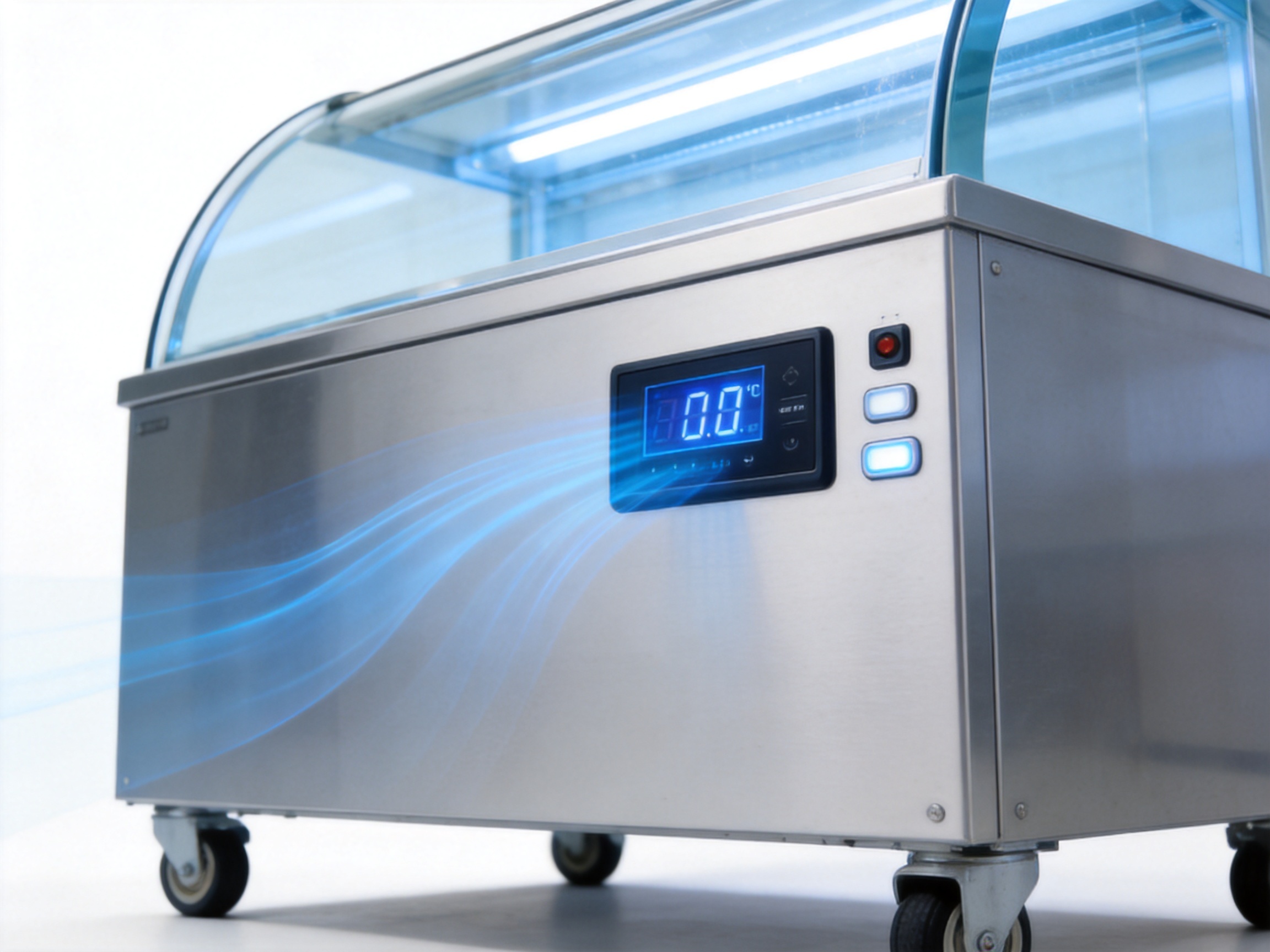
Technical Specification Overview
The following table summarizes the supplied specifications for the XCS-520L, XC-520Z, and XC-720Z models. The product family also includes larger format options such as XC-920Z and XC-1120Z, allowing buyers to select a configuration according to display capacity and store planning requirements.
Specification |
XCS-520L |
XC-520Z |
XC-720Z |
Gross Capacity |
520 L / 18.4 cu. ft. |
520 L / 18.4 cu. ft. |
720 L / 25.4 cu. ft. |
Temperature Range |
2 to 10 degrees Celsius / 35.6 to 50 degrees Fahrenheit |
2 to 10 degrees Celsius / 35.6 to 50 degrees Fahrenheit |
2 to 10 degrees Celsius / 35.6 to 50 degrees Fahrenheit |
Input Power |
1350 W |
690 W |
690 W |
Refrigerant |
R290 |
R290 |
R290 |
Climate Type |
3 |
4 |
4 |
Net Weight |
180 kg |
190 kg |
214 kg |
Gross Weight |
214 kg |
230 kg |
275 kg |
Product Size |
900 x 656 x 1900 mm / 35.4 x 25.8 x 74.8 in. |
900 x 656 x 1900 mm / 35.4 x 25.8 x 74.8 in. |
1200 x 656 x 1900 mm / 47.2 x 25.8 x 74.8 in. |
Package Size |
970 x 750 x 2060 mm / 38.2 x 29.5 x 81.1 in. |
970 x 750 x 2060 mm / 38.2 x 29.5 x 81.1 in. |
1270 x 750 x 2060 mm / 50.0 x 29.5 x 81.1 in. |
Loading Quantity |
17 pcs / 20GP, 36 pcs / 40HQ |
17 pcs / 20GP, 36 pcs / 40HQ |
12 pcs / 20GP, 27 pcs / 40HQ |
Understanding the Model Range
The XCS-520L and XC-520Z models share the same gross capacity of 520 liters and the same general product dimensions. They are suitable for smaller stores, narrow sales areas, checkout zones, beverage promotions, and limited-space chilled food displays. Their size makes them easier to place while still providing meaningful merchandising volume.
The XC-720Z increases the gross capacity to 720 liters and widens the display area. This model is appropriate for retailers that need a stronger product assortment or a larger front-facing display. The wider cabinet can support more product variety, larger promotional blocks, and better shelf segmentation by category.
The XC-920Z and XC-1120Z models, mentioned as part of the product title, represent larger options in the same family. For operators planning a complete chilled merchandising wall or a high-capacity grab-and-go section, these larger formats can provide more display area and stronger sales density. Buyers can evaluate model selection based on store width, product turnover, delivery frequency, and the desired visual impact.
A useful way to choose between models is to consider not only capacity, but also sales behavior. If the store has fast product turnover and high customer traffic, a larger model may reduce restocking frequency and support stronger category presentation. If the store has limited floor area or only needs a focused refrigerated offering, a 520-liter model may provide the right balance of visibility and footprint.
Refrigerant Choice and Environmental Considerations
The showcase uses R290 refrigerant. R290, also known as propane refrigerant, is commonly recognized for its low global warming potential compared with many traditional refrigerants. In commercial refrigeration, the selection of refrigerant is increasingly important because markets and regulations continue to move toward more environmentally responsible cooling solutions.
Using R290 can help retailers align with modern sustainability expectations while maintaining effective cooling performance. For buyers who distribute commercial refrigeration equipment internationally, R290 is also relevant because many regions are encouraging or requiring lower-impact refrigerant technologies. This makes the product more future-oriented than units designed around outdated refrigerants.
Environmental performance is not only about refrigerant. A refrigerated display cabinet must also support efficient operation through appropriate airflow, door options, insulation quality, temperature control, and maintenance design. The sliding door option can reduce exposure to ambient air, which may help improve thermal stability depending on usage conditions. Combined with automatic defrost and digital control, the system is designed to support practical and responsible operation in real stores.
Advantages Over Typical Competitor Products
Commercial buyers often compare display coolers based on price, size, appearance, and energy consumption. However, the true value of a refrigerated showcase is determined by a wider set of factors: cooling stability, cabinet durability, visual presentation, serviceability, ease of operation, and supplier reliability. This series offers advantages in several of these areas.
More Complete Retail Functionality
Some competitor products focus only on refrigeration and overlook display value. This showcase includes features that directly support retail sales, such as an advertisement light box, clear tempered glass, and a professional vertical layout. These features help products stand out in crowded retail environments. Instead of functioning as a simple cold cabinet, the unit works as part of the store’s merchandising strategy.
Practical Daily Operation
The separated power and light buttons, digital temperature controller, automatic defrost, and castors all support practical day-to-day use. In commercial environments, small operational details often have a large cumulative effect. A cabinet that is easier to clean, monitor, move, and adjust saves time and reduces staff frustration.
Competitor units with limited controls, fixed bases, or manual defrost requirements may appear acceptable at first, but they can create more work over time. The practical design of this showcase gives operators a more efficient experience throughout the product life cycle.
Better Material Confidence
The stainless steel body and tempered glass construction provide material advantages over lower-cost cabinets that rely heavily on weaker panels or ordinary glass. In high-use retail locations, durability affects the total cost of ownership. A stronger structure can help reduce damage, maintain appearance, and support longer service life.
Flexible Configuration with Sliding Doors
The option of sliding doors helps the product adapt to different operating preferences. In stores where customers need quick access, the open layout supports convenience. In environments where energy control, hygiene, or after-hours protection are priorities, sliding doors provide added value. This flexibility gives buyers more application possibilities than a single-purpose open cabinet.
Professional Manufacturing Support
Product quality is closely connected to manufacturing capability. A showcase is only as reliable as the processes behind it, including design verification, component selection, assembly standards, testing, and quality control. The manufacturer behind this product has long-term experience in vertical display cabinets, cake cabinets, and warming cabinets, supported by a modern production base and professional research and development capacity. This manufacturing background strengthens confidence in product consistency.
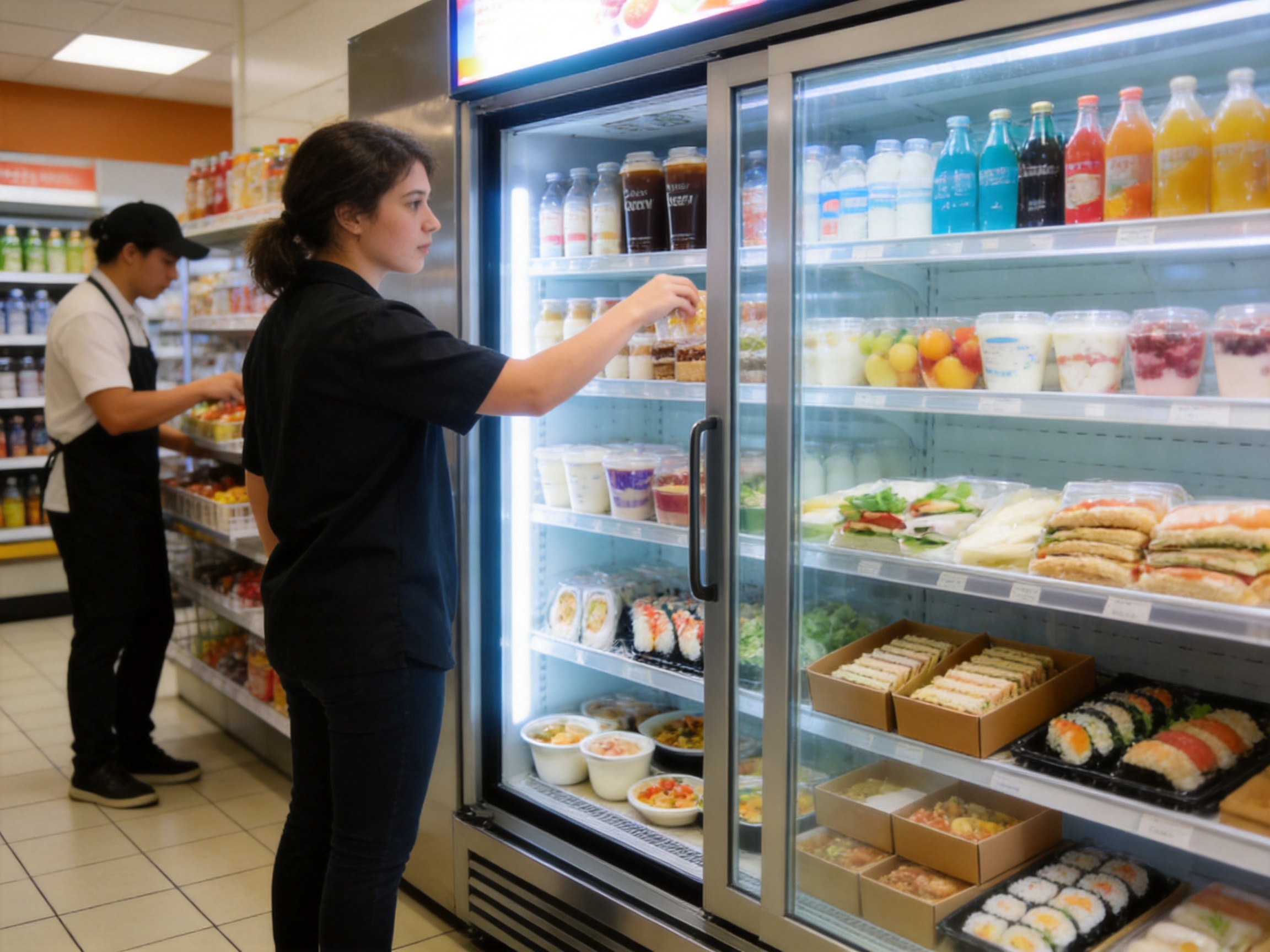
Manufacturing Strength and Quality Foundation
Ningbo XiangChi Electrical Co., Ltd. is a professional manufacturer of vertical display cabinets, cake cabinets, and warming cabinets. Established in 2007, the company has more than 10 years of industry experience and operates a modern garden-style factory covering 40,000 square meters. This production foundation supports the development and manufacture of commercial refrigeration and display equipment for global markets.
The company’s manufacturing strength is important because commercial refrigeration products must perform under demanding conditions. Retail equipment is expected to run for long hours, maintain stable temperatures, resist frequent use, and remain visually attractive. These requirements cannot be achieved by design alone; they require disciplined production processes, trained staff, quality inspection, and continuous improvement.
Research and Development Capability
A professional research and development team supports product innovation and improvement. For refrigerated showcases, research and development work may involve airflow design, cooling system optimization, cabinet structure, lighting arrangement, product ergonomics, control systems, and energy performance. Continuous improvement helps the product remain competitive as retail environments and regulatory requirements change.
The Open Sliding Doors Refrigerated Showcase benefits from this development background. Its combination of display design, ventilated cooling, automatic defrost, digital control, and structural durability reflects attention to both technical performance and user experience.
Advanced Testing Facilities
Advanced testing facilities help ensure that products meet performance expectations before reaching customers. In commercial refrigeration, testing may include temperature stability, electrical safety, refrigeration performance, defrost reliability, door operation, component durability, and packaging strength. A strong testing process is essential because equipment failure in the field can lead to product loss, service interruption, and customer dissatisfaction.
By investing in testing capability, the manufacturer can improve quality control and reduce risk for buyers. This is especially valuable for distributors and project customers who need consistent product batches and dependable after-sales performance.
Modern Production Lines
Advanced production lines support efficient manufacturing and product consistency. In cabinet production, accurate sheet metal processing, assembly, foaming, refrigeration system installation, electrical wiring, glass installation, and final inspection all affect the finished product. A modern production environment helps reduce variation and supports stable output for wholesale and project orders.
The company’s production base allows it to serve a broad range of commercial refrigeration categories, including vertical display coolers, countertop display coolers, cake showcases, sushi showcases, open display coolers, display warmers, four-sided glass display coolers, and four-sided glass freezers. This product diversity demonstrates manufacturing flexibility and knowledge of different commercial display requirements.
International Certifications
The company has obtained certifications including CE, GS, CCC, CB, ROHS, ETL, and other major world certifications. These certifications demonstrate attention to safety, quality, environmental compliance, and international market requirements. For buyers, certifications can simplify market entry, support distributor confidence, and help meet regional procurement standards.
In a competitive market where some low-cost suppliers may lack adequate certification coverage, this certification background is a strong advantage. It reflects a more mature approach to product development and export readiness.
Design for Retail Merchandising
The design of a refrigerated showcase affects how customers behave around it. Customers are more likely to purchase chilled products when they can quickly identify what is available, understand the product category, and access the item without difficulty. The Open Sliding Doors Refrigerated Showcase supports this process through its vertical display form, glass structure, lighting possibilities, and optional door configuration.
The cabinet height of 1900 mm provides a strong vertical presence without becoming impractical for most retail environments. Products can be arranged across multiple shelf levels, allowing operators to separate categories such as drinks, dairy, meals, desserts, and premium items. A well-organized display can guide customers naturally from top to bottom and encourage add-on purchases.
The advertising light box helps retailers create a focused message. For example, a convenience store may use it for chilled beverages; a bakery may use it for mousse cups and cream desserts; a sushi shop may highlight fresh sushi sets; a supermarket may promote ready-to-eat meals. The cabinet therefore becomes more than equipment; it becomes part of the store’s visual communication.
Applications Across Different Retail Environments
Convenience Stores
Convenience stores need compact, high-impact refrigeration equipment because floor space is limited and customer decisions are quick. The 520-liter models are particularly suitable for this environment. They can display bottled drinks, yogurt, sandwiches, boxed meals, salads, and desserts in a way that supports fast customer selection.
The castors allow easier adjustment when store layouts change. The light box can be used for promotions or category identification. The digital controller helps staff monitor temperature even during busy shifts.
Supermarkets
Supermarkets often require larger display capacity and strong category organization. The XC-720Z and larger family models can support broader chilled product selections. They may be used in fresh food areas, beverage aisles, dairy sections, meal solution zones, or promotional end-cap areas.
Because supermarkets frequently restock and face heavy customer traffic, ventilated cooling and durable materials are important. The stainless steel body and automatic defrost system support long operating hours and frequent use.
Bakeries and Dessert Shops
While cake showcases are often used for premium pastry display, open display coolers can also support packaged desserts, cream cups, puddings, chilled drinks, and takeaway bakery products. The clear display area helps customers notice attractive dessert packaging and make impulse purchases.
The temperature range is suitable for many chilled dessert products that require cool storage rather than freezing. The showcase can also complement dedicated cake cabinets by expanding the grab-and-go chilled product offering.
Sushi and Ready-to-Eat Food Stores
Sushi shops and ready-to-eat food stores require careful chilled presentation. Products must appear fresh, clean, and organized. The tempered glass and bright display structure help customers see package quality, while the cooling system supports appropriate temperature conditions.
Sliding doors can be especially useful in these environments because they help protect food from excessive exposure while still permitting customer access. Operators can arrange sushi boxes, salads, fruit cups, and meal sets according to freshness time, price, or meal type.
Cafes and Beverage Retail
Cafes and beverage shops can use the showcase to display bottled drinks, dairy beverages, cold brew coffee, desserts, and packaged snacks. The advertising light box can support brand messaging or seasonal campaigns. By placing the unit near the ordering queue, operators can encourage impulse purchases while customers wait.
Operational Efficiency and Total Cost Considerations
When evaluating commercial refrigeration, the purchase price is only one part of the cost. Operators should also consider energy use, maintenance requirements, product loss risk, labor time, cleaning effort, and equipment durability. A showcase that reduces staff workload and protects products reliably may provide better long-term value than a cheaper unit with limited features.
The automatic defrost system reduces maintenance intervention. Digital temperature display reduces monitoring uncertainty. Castors simplify movement for cleaning and service. Stainless steel construction supports long-term durability. Tempered glass improves safety and appearance. Together, these features contribute to total cost efficiency.
The use of R290 refrigerant may also support future compliance and sustainability goals. As refrigeration standards continue to evolve, equipment using more environmentally responsible refrigerants can be a more strategic investment.
Installation and Placement Considerations
Proper installation is essential for achieving stable performance. The showcase should be placed in an environment that matches its climate type and operating requirements. It should have adequate ventilation around the refrigeration system and should not be exposed to unnecessary heat sources such as direct sunlight, ovens, or strong air curtains. Good placement supports temperature stability and helps reduce unnecessary system load.
Retailers should also consider customer movement. The cabinet should be visible and accessible, but it should not block aisles or emergency routes. If the unit is used for impulse products, placement near entrances, checkout lines, or food service counters can be effective. If it is used for category shopping, placement within the relevant department may be better.
The front brakes should be locked after positioning to keep the unit stable. Staff should also follow recommended loading practices, avoiding blocked air outlets or overloaded shelves. Correct product arrangement supports airflow and helps maintain even temperature.
Maintenance and Cleaning
Commercial refrigeration equipment requires regular cleaning and basic maintenance to perform well. The stainless steel body supports easier cleaning and a professional appearance. Glass surfaces should be cleaned frequently to maintain visibility and customer trust. Shelves and interior surfaces should be wiped according to food safety procedures and store hygiene policies.
Automatic defrost reduces frost-related maintenance, but operators should still inspect drainage, airflow areas, and condenser cleanliness as part of routine care. Dust and debris around refrigeration components can reduce efficiency. Regular inspection helps identify small issues before they become service problems.
The digital temperature display should be checked daily. Staff can record temperatures as part of food safety management. If temperatures fall outside the expected range, products should be evaluated and the equipment should be inspected.
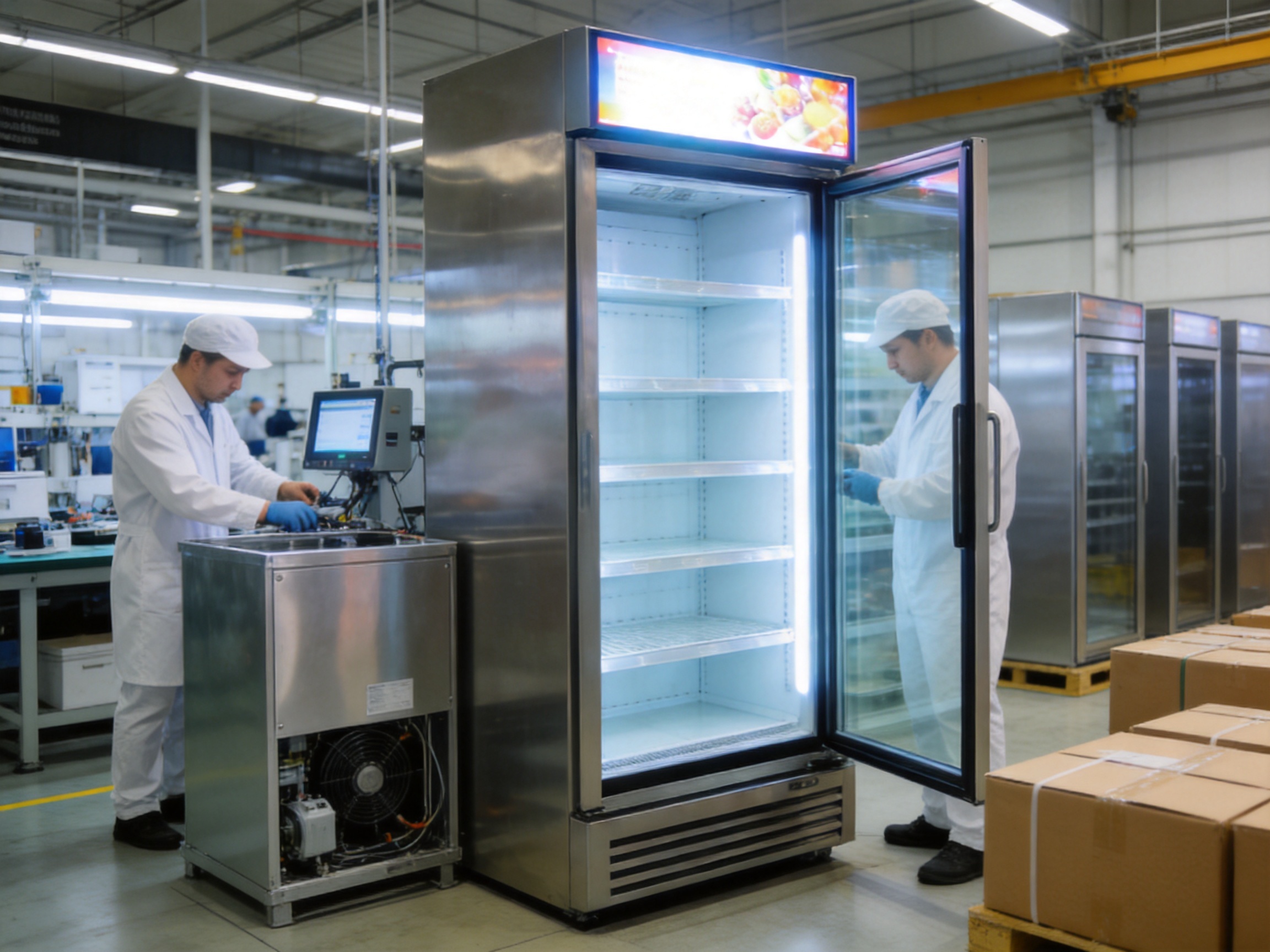
Why Supplier Capability Matters
For distributors, wholesalers, and project buyers, supplier capability is as important as the product itself. A refrigerated showcase must be available in consistent quality, packaged securely, documented properly, and supported by a manufacturer that understands international requirements. The company behind this product has a broad commercial refrigeration portfolio and experience with global market certifications, which helps buyers reduce sourcing risk.
A 40,000-square-meter modern factory provides the production space needed for organized manufacturing, quality control, and order fulfillment. A professional research and development team supports product customization and continuous improvement. Advanced testing facilities help validate performance. This combination makes the supplier stronger than many small-scale producers that may rely on limited equipment, inconsistent processes, or narrow product knowledge.
The company’s philosophy emphasizes innovation, quality, and service. In commercial refrigeration, these three ideas are closely connected. Innovation improves product function, quality reduces operational risk, and service supports long-term partnerships. For buyers looking for wholesale vertical display coolers, open display coolers, countertop display refrigerators, cake showcases, display warmers, or related equipment, this manufacturing foundation provides a meaningful advantage.
Buyer Selection Guide
Before selecting a model, buyers should define the intended product category. Beverages, packaged meals, dairy, sushi, desserts, and fresh convenience foods may require different shelf arrangements and sales strategies. The cabinet capacity should match product turnover and restocking frequency.
Buyers should also evaluate available floor space. A 900 mm wide model is easier to fit into compact stores, while a 1200 mm wide model provides more display capacity. Larger models in the product family may be suitable for supermarkets or high-volume food retail locations.
Energy and environmental considerations should be reviewed. R290 refrigerant is a positive feature for buyers who prioritize lower global warming potential refrigerants. Sliding doors may also be considered when energy control or product protection is important.
Finally, buyers should consider logistics. The supplied loading quantities help distributors plan container shipments. For example, the 520-liter models allow 17 units in a 20GP container and 36 units in a 40HQ container, while the 720-liter model allows 12 units in a 20GP container and 27 units in a 40HQ container. These details are useful for wholesale planning, project supply, and inventory management.
Q&A Section
What products can be displayed in this refrigerated showcase?
The showcase is suitable for many chilled retail products, including bottled drinks, dairy products, packaged salads, sandwiches, sushi boxes, desserts, ready-to-eat meals, fruit cups, and other products that require a 2 to 10 degrees Celsius temperature range.
What is the main advantage of the sliding door option?
The sliding door option increases flexibility. It can help reduce exposure to ambient air, support hygiene protection, and improve temperature stability in certain store environments, while still allowing customers to access products conveniently.
Why is R290 refrigerant important?
R290 is valued for its low global warming potential compared with many older refrigerants. It supports modern environmental expectations and can help buyers prepare for markets that emphasize sustainable refrigeration solutions.
How does the digital temperature controller help daily operation?
The digital controller and display allow staff to monitor cabinet temperature clearly. This supports food safety management, reduces uncertainty, and helps operators respond quickly if the temperature changes unexpectedly.
What makes this showcase different from a standard storage refrigerator?
A standard storage refrigerator is mainly designed for holding inventory. This showcase is designed for customer-facing merchandising. It combines cooling performance with product visibility, advertising space, tempered glass, lighting control, and a professional retail appearance.
Which model is suitable for a small convenience store?
The 520-liter models are often suitable for small convenience stores because they offer meaningful display capacity while maintaining a compact footprint. Final selection should depend on available space, product range, and expected sales volume.
Why is automatic defrost useful?
Automatic defrost helps reduce frost buildup, supports consistent airflow, and lowers maintenance workload. This is especially important in stores where refrigeration equipment operates for long hours every day.
What manufacturing strengths support product reliability?
The manufacturer has a modern 40,000-square-meter factory, professional research and development capability, advanced testing facilities, and international certifications including CE, GS, CCC, CB, ROHS, and ETL. These strengths support consistent product development and quality control.
Can the showcase be moved after installation?
Yes. The unit includes castors, and the front two castors include brakes. This helps with movement during placement, cleaning, or layout changes, while the brakes help keep the unit stable during normal operation.
What should operators remember when loading products?
Operators should avoid blocking airflow and should not overload shelves. Proper product arrangement helps maintain even cooling and ensures customers can see and access products easily.
Conclusion
The Open Sliding Doors Refrigerated Showcase XCS-520L, XC-520Z, XC-720Z, XC-920Z, and XC-1120Z series is a practical and attractive solution for commercial chilled merchandising. It combines display value, reliable cooling, durable construction, operational convenience, and flexible configuration. Its 2 to 10 degrees Celsius temperature range, R290 refrigerant, ventilated cooling system, automatic defrost, digital temperature controller, stainless steel body, tempered glass, advertisement light box, separated switches, and mobile castor design make it well suited for many modern retail environments.
Compared with ordinary competitor products, the series provides a stronger balance of merchandising performance and daily usability. It is not merely a refrigeration cabinet; it is a commercial display platform designed to help retailers protect products, improve presentation, and support sales. The optional sliding doors add further flexibility for stores that want better product protection and thermal control.
Behind the product is a manufacturer with established experience, a modern production base, research and development capability, advanced testing facilities, and international certifications. These strengths provide confidence for wholesalers, distributors, supermarkets, convenience stores, bakeries, sushi shops, beverage retailers, and food service operators seeking dependable display refrigeration equipment.
For businesses that need a refrigerated showcase capable of combining product freshness with visual impact, this series offers a well-rounded solution. It supports the essential goals of commercial refrigeration: maintaining safe chilled conditions, presenting products attractively, simplifying store operations, and creating long-term value through durable design and professional manufacturing.
References
Commercial Refrigeration Equipment Design Principles, Industry Technical Handbook.
Food Retail Merchandising and Display Refrigeration Practices, Retail Operations Guide.
Refrigerant Application and Environmental Performance in Commercial Cooling Systems, Technical Reference Manual.
Temperature Management for Chilled Food Display, Food Safety Operations Reference.
Commercial Display Cabinet Materials and Maintenance Standards, Equipment Management Guide.

You May Also Like
.jpg?imageView2/2/w/500/h/500/format/jp2/q/100 "Four Sides Glasses Display Cooler")
.jpg?imageView2/2/w/500/h/500/format/jp2/q/100 "White 4-Sided Glass Refrigerated Display Case")
.jpg?imageView2/2/w/500/h/500/format/jp2/q/100 "Refrigerated Display Cake Countertop Four Sides Glasses Display Cooler")
.jpg?imageView2/2/w/500/h/500/format/jp2/q/100 "Four Sides Glasses Display Cooler")

-
- Navigation
- Home
- About Us
- Products
- News
- Contact Us
 East Zone, Guanhaiwei Industrial Park, Cixi City, Ningbo, Zhejiang, China
 +86-574-63668678
 +86-574-63668108
Copyright © Ningbo XiangChi Electrical Co.,Ltd All Rights Reserved.
