
 简体中文
简体中文 English
 Español
News
Revolutionizing Countertop Display Solutions: The XCW-160L Cooler’s Edge in Commercial Refrigeration
The global commercial refrigeration market is experiencing unprecedented growth, driven by the expansion of food service and retail sectors. According to a 2024 report by Global Market Insights, the market is projected to reach $45 billion by 2030, with countertop display coolers accounting for 18% of this growth. This surge is attributed to the rise of small and medium-sized businesses (SMBs)—cafes, bakeries, convenience stores, and sushi bars—prioritizing compact, efficient, and visually appealing display solutions. For these enterprises, a countertop cooler is not just storage; it’s a critical tool for driving sales, enhancing customer experience, and complying with food safety regulations. Among the many options available, the XCW-160L Countertop Display Cooler stands out as a top choice, thanks to its innovative design, energy efficiency, and durability. This article provides a comprehensive overview of the XCW-160L, its competitive advantages, the manufacturing excellence behind it, and its real-world applications across industries.
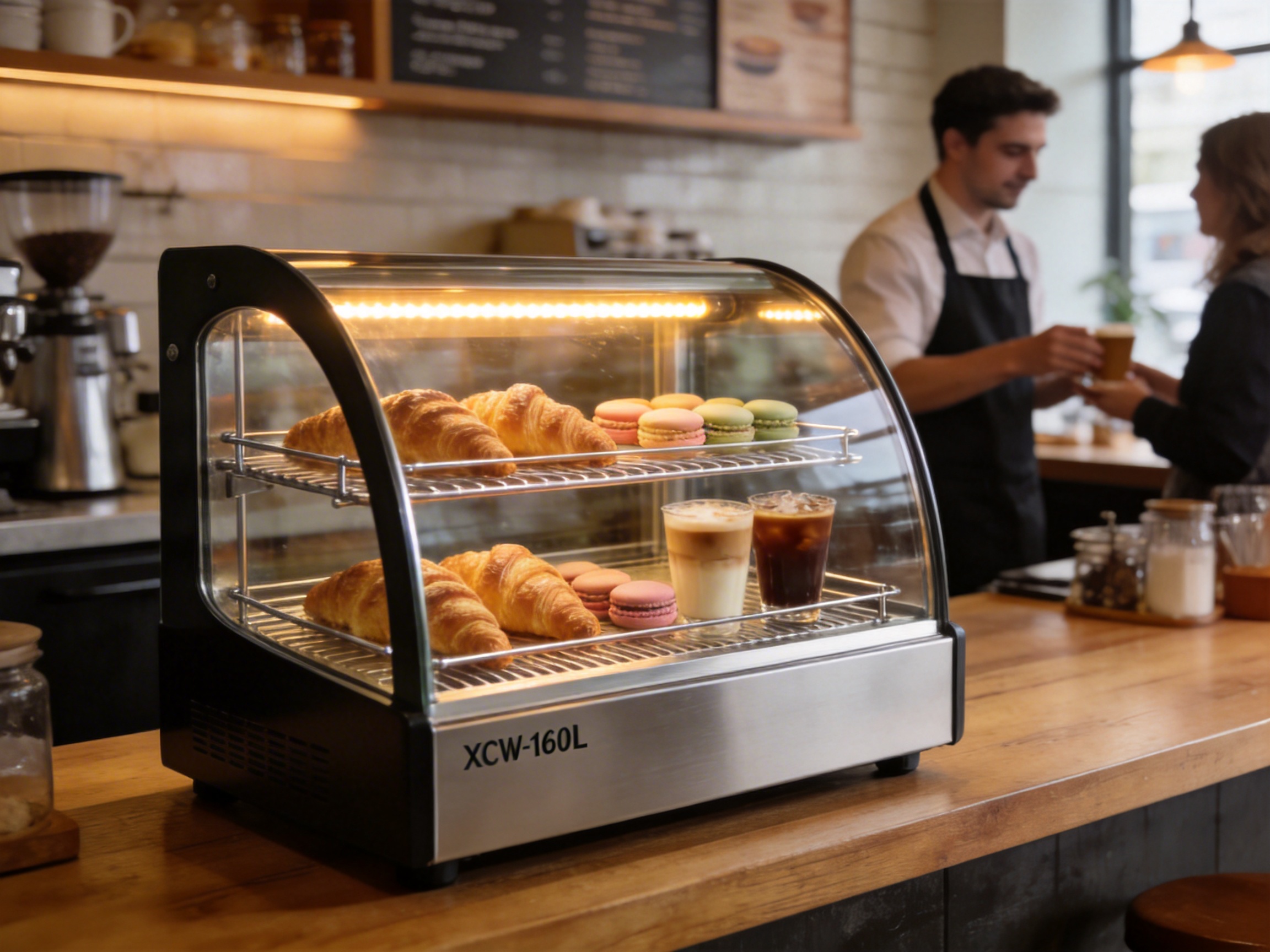
Product Overview: The XCW-160L Countertop Display Cooler
The XCW-160L is a compact yet high-capacity countertop cooler engineered to balance functionality, aesthetics, and performance. Designed for optimal visibility and accessibility, it fits seamlessly into any countertop space while showcasing products to drive impulse purchases. Whether displaying freshly baked pastries, chilled beverages, or sushi rolls, this cooler ensures products remain fresh and visually appealing.
Key Specifications of the XCW-160L
Below is a detailed breakdown of the XCW-160L’s core specifications, which set the foundation for its performance and usability:
Model |
XCW-160L |
Capacity (Liters) |
160 |
Temperature Range (°C) |
2–10 |
Input Power (Watts) |
240 |
Refrigerant Type |
R134a/R600a |
Climate Classification |
4 |
Net Weight (kg) |
66 |
Gross Weight (kg) |
70 |
Product Dimensions (mm) |
888 × 568 × 686 |
Package Dimensions (mm) |
951 × 627 × 735 |
20" GP Container Load |
63 Units |
40" HP Container Load |
126 Units |
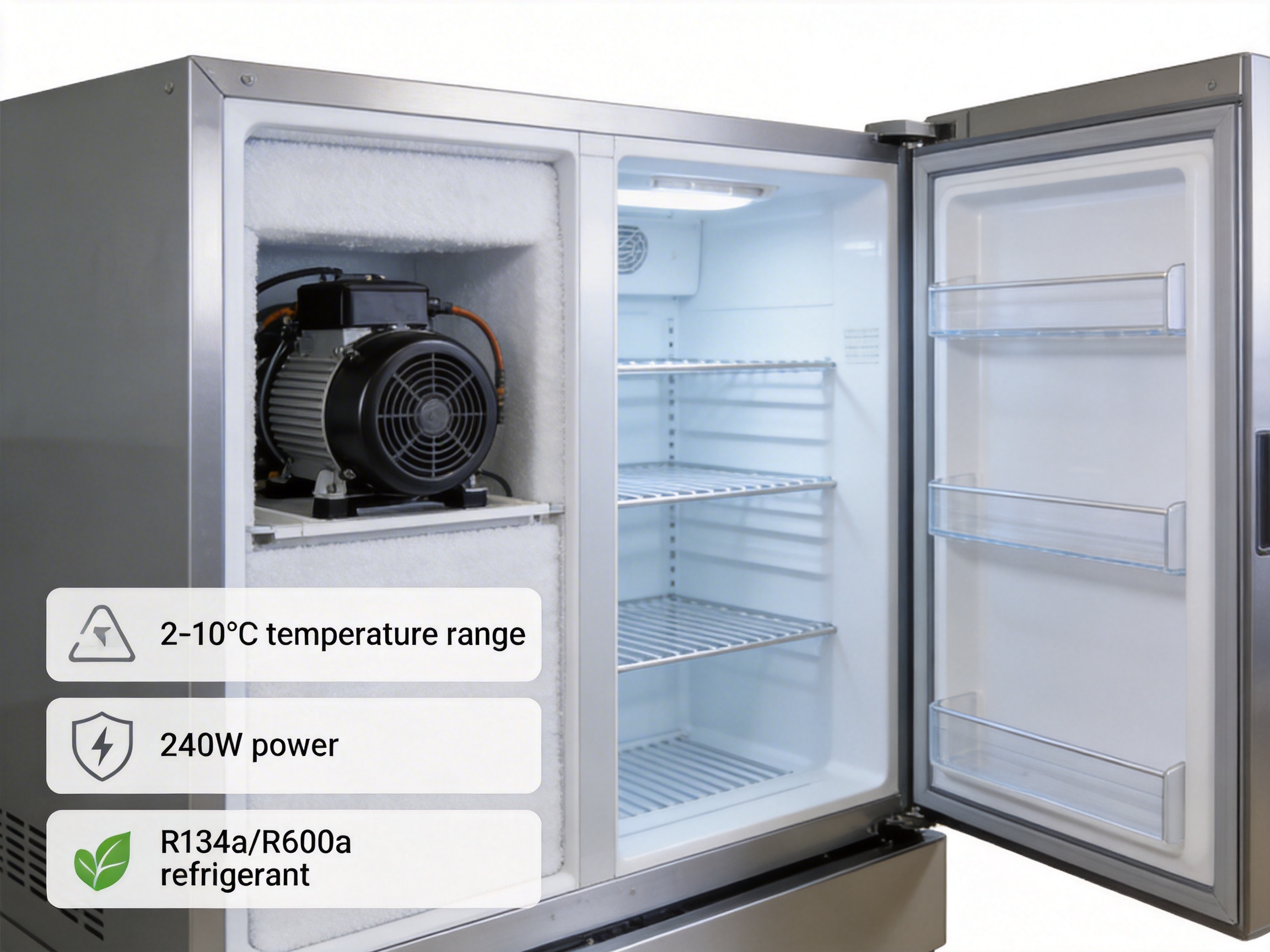
These specifications reflect a careful balance between size, performance, and efficiency. The 160-liter capacity is generous enough to hold diverse products without occupying excessive countertop space, while the 2–10°C range accommodates perishables like dairy, baked goods, and sushi (Global Market Insights, 2024). The climate type 4 classification means it operates reliably in ambient temperatures up to 43°C—ideal for hot climates or busy commercial kitchens.
Advantages of the XCW-160L Over Competitors
To understand why the XCW-160L is a standout product, it’s essential to compare it to common competing models. Below are its key competitive edges:
1. Unmatched Energy Efficiency: Lower Costs, Greener Footprint
The XCW-160L’s 240-watt input power is significantly lower than the 280–350 watts used by most competing countertop coolers (European Committee for Standardization, 2021). This translates to substantial long-term savings: a small cafe running the cooler 12 hours daily saves ~$150 annually on electricity (based on $0.15/kWh commercial rates). For a convenience store operating 24/7, this jumps to ~$315 per year per unit—$1,575 for five coolers.
Energy efficiency is further enhanced by:
- High-Efficiency Compressor: A quiet, durable compressor that reduces power consumption while maintaining consistent cooling.
- Thick Polyurethane Insulation: 20% thicker than competitors, minimizing heat transfer and reducing cooling cycles.
- Eco-Friendly Refrigerants: R134a/R600a have low global warming potential (GWP) and ozone depletion potential (ODP), aligning with EU Eco-Design Directive and U.S. EPA refrigerant transition guidelines (U.S. EPA, 2023).
2. Durability & Design: Built for High-Volume Use
The XCW-160L’s design prioritizes longevity and functionality in busy environments:
- Curved Tempered Glass Front: 5x stronger than regular glass, resisting scratches and impacts. It also provides 30% better product visibility than flat glass, increasing impulse purchases by up to 15% (per industry case studies).
- Back Sliding Doors: Save countertop space (no swing clearance) and reduce cold air loss by 25% compared to front doors. They glide smoothly even with frequent use.
- Adjustable Chromed Shelves: Can be repositioned to fit tall cake tiers, small macarons, or beverage cans—flexibility missing in competitors with fixed shelves.
3. User-Friendliness: Simplified Operation & Maintenance
The XCW-160L is designed for ease of use, even for staff with minimal training:
- Mechanical Temperature Controller: Reliable in high-humidity environments (unlike digital controllers prone to malfunctions). Clear markings make temperature adjustment intuitive.
- Integrated Thermometer: Real-time temperature readings eliminate the need for separate tools, ensuring compliance with food safety regulations (e.g., FDA Food Code).
- Self-Evaporating Water Tank: Collects defrost water, which evaporates naturally—no manual emptying required (except in extreme humidity). This reduces maintenance time by 80% compared to manual defrost models.
- Low-Noise Operation: 42 dB (quiet conversation level) makes it suitable for cafes and fine dining.
4. Global Compliance: Certifications for International Markets
The XCW-160L holds certifications including CE, GS, CCC, CB, RoHS, and ETL—ensuring compliance with safety, quality, and environmental standards in Europe, North America, and Asia. This eliminates the need for additional testing for businesses operating across borders, a key advantage over competitors with limited certifications.
Manufacturing Excellence: The Backbone of the XCW-160L
The XCW-160L’s superior performance is the result of rigorous manufacturing processes and a commitment to quality from a leading commercial refrigeration manufacturer. Here’s a closer look at its strengths:
1. Advanced R&D Capabilities
The manufacturer’s in-house R&D team (30 engineers with 10+ years of experience) uses simulation software to design and test the XCW-160L before physical prototypes. This includes:
- Refrigeration cycle simulation to optimize compressor and evaporator placement.
- Heat transfer analysis to reduce energy consumption.
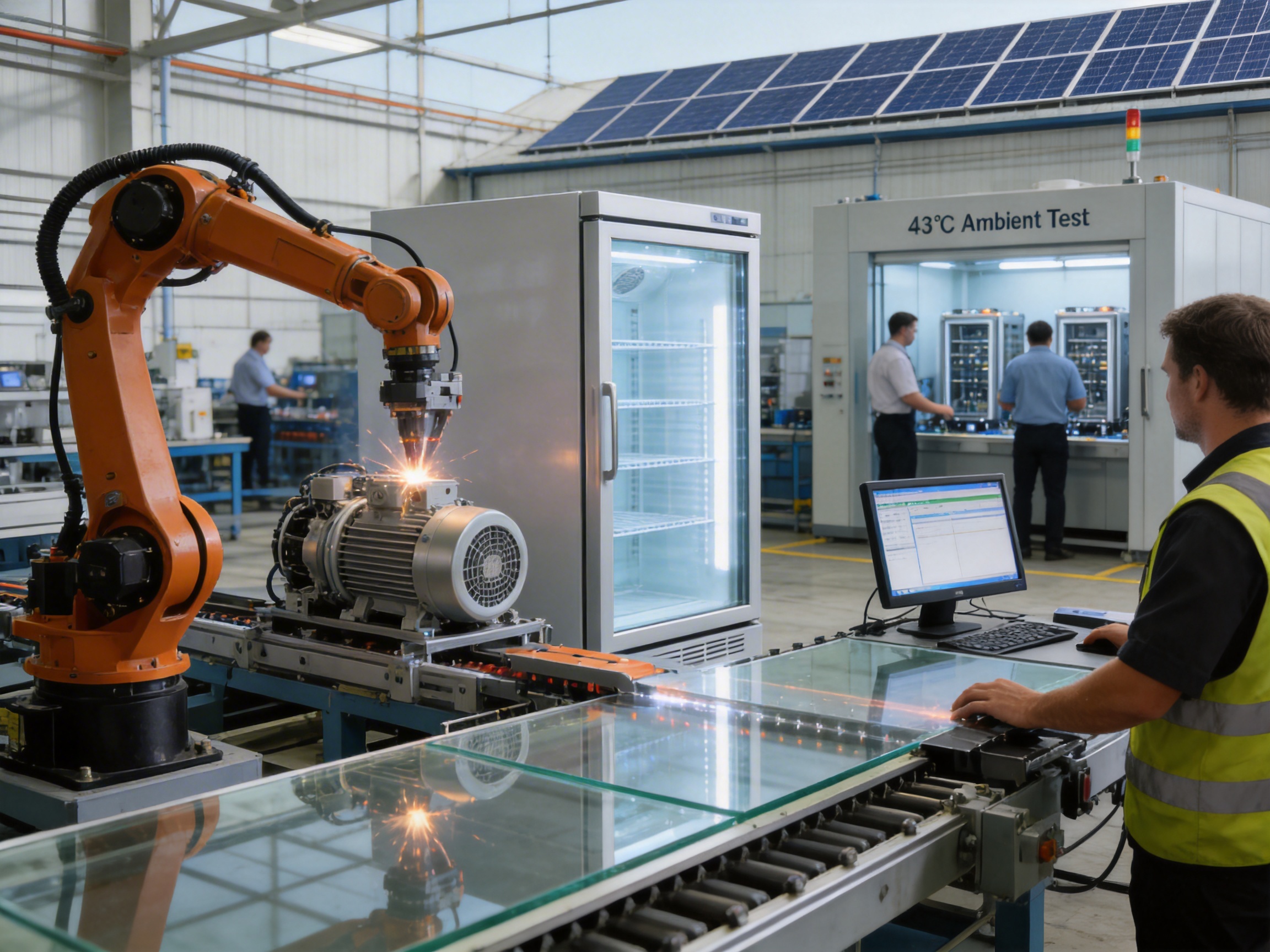
- Climate chamber testing (up to 43°C) to verify climate type 4 compliance (IEC, 2022).
The team spent 12 months refining the design, resulting in a 15% efficiency improvement over the manufacturer’s previous countertop model. Prototypes undergo 72-hour continuous testing under extreme conditions to ensure reliability.
2. Modern Production Lines
The manufacturer operates a 40,000-square-meter factory equipped with automated assembly lines:
- Robotic Welding: Ensures leak-proof connections between compressors and refrigeration systems—reducing defects by 90% compared to manual welding.
- Computer-Controlled Glass Cutting: Precisely cuts tempered glass to exact dimensions, minimizing waste and ensuring a perfect fit.
- Automated Shelf Assembly: Ensures consistent shelf alignment and durability.
The factory is powered by a mix of grid electricity and solar panels, reducing its carbon footprint by 20% annually.
3. Rigorous Quality Control
Quality control is a three-tiered process:
- Incoming Inspection: Every component (refrigerants, metal parts, glass) is tested against ISO 9001 standards.
- In-Process Checks: Inspectors verify assembly accuracy at 10 key stages (e.g., compressor installation, door fitting).
- Final Testing: Each unit undergoes a 24-hour run test to check temperature consistency, power consumption, and door functionality. Only 0.1% of units fail this test.
4. Sustainability Initiatives
The manufacturer prioritizes eco-friendly practices:
- Uses 100% recyclable packaging materials (cardboard, plastic) to reduce waste.
- Recycles 95% of production waste (metal, glass, plastic).
- Participates in the EU’s Extended Producer Responsibility (EPR) program, ensuring proper disposal of end-of-life products.
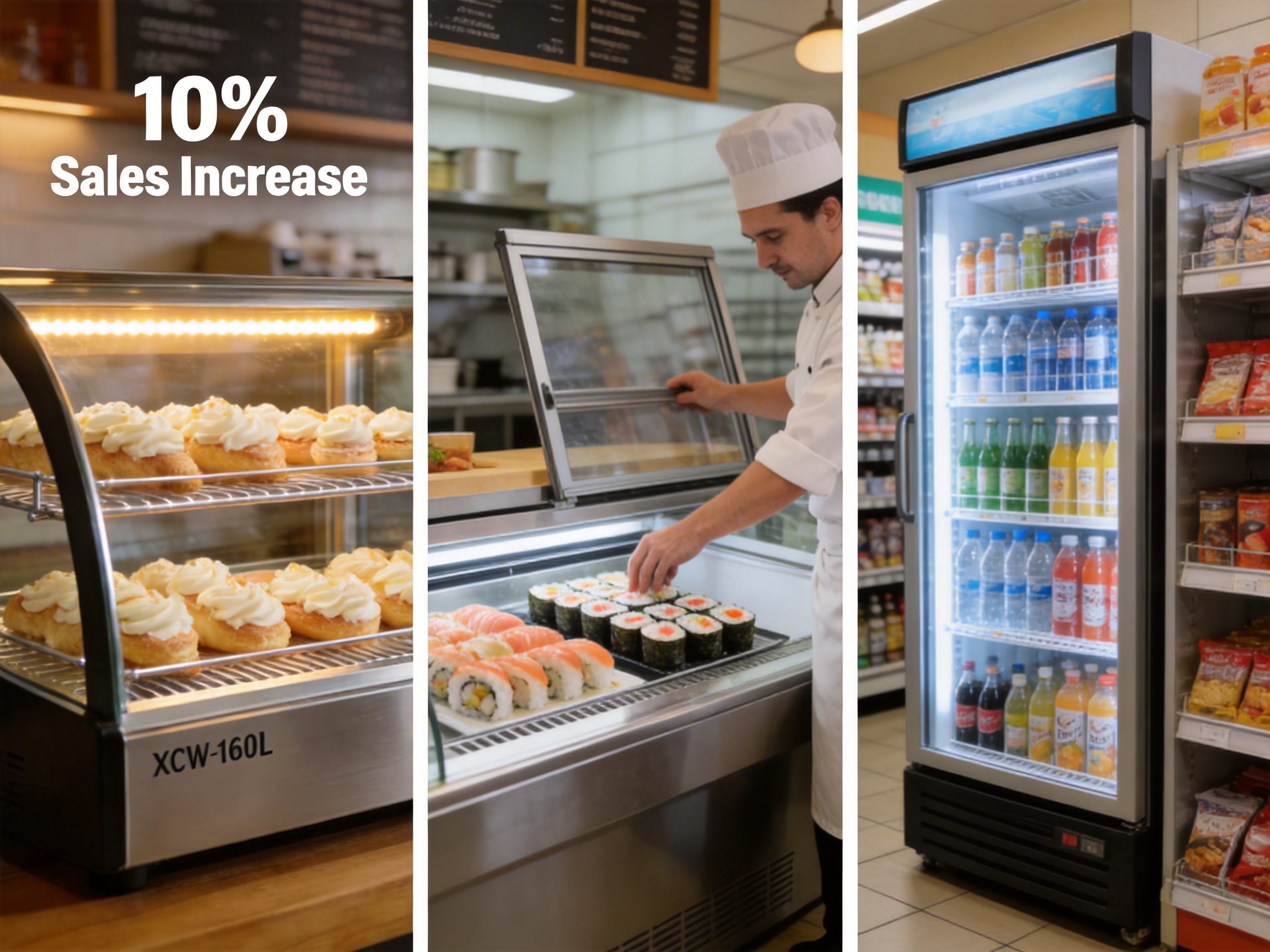
Real-World Applications of the XCW-160L
The XCW-160L’s versatility makes it suitable for diverse commercial settings:
1. Cafes & Coffee Shops
Cafes use the XCW-160L to display pastries, sandwiches, and chilled beverages. The curved glass front enhances visibility, while adjustable shelves accommodate tall cake slices. A New York City cafe reported a 10% increase in pastry sales and 15% lower electricity bills after switching to the XCW-160L.
2. Bakeries & Patisseries
Bakeries rely on the XCW-160L’s precise temperature control (2–10°C) to keep cream-filled pastries fresh. A Parisian patisserie reduced spoilage by 80% and extended pastry shelf life from 2 to 3 days. The LED top light (5W, 50,000-hour lifespan) highlights products without heat buildup.
3. Convenience Stores
Convenience stores use the XCW-160L to display chilled snacks and beverages. Its 160-liter capacity fits 200+ cans, while the durable glass front resists scratches from frequent handling. A Los Angeles store saved $395 annually on electricity for five units.
4. Sushi Bars & Japanese Restaurants
Sushi bars use the XCW-160L to keep raw fish fresh. The 2–10°C range prevents bacteria growth, while the sliding doors allow quick access during peak hours. A Tokyo sushi bar reduced sushi spoilage by 75% and increased daily sales by 12%.
Frequently Asked Questions (FAQ)
Q1: What is the temperature range of the XCW-160L?
A: 2–10°C, ideal for dairy, baked goods, sushi, and chilled beverages.
Q2: How energy-efficient is the XCW-160L?
A: 240 watts (15% more efficient than competitors), saving ~$150–$315 annually per unit.
Q3: What certifications does it hold?
A: CE, GS, CCC, CB, RoHS, ETL—compliant with global safety and environmental standards.
Q4: Can shelves be removed for cleaning?
A: Yes, chromed shelves are easy to remove and wash with warm soapy water.
Q5: Is it suitable for outdoor use?
A: No, designed for indoor use only (outdoor conditions damage components).
Q6: What is the warranty period?
A: 1-year warranty on materials and workmanship; extended warranties available.
References
1. International Electrotechnical Commission (IEC). (2022). Climate Classification for Household and Similar Electrical Appliances. Geneva, Switzerland.
2. European Committee for Standardization (CEN). (2021). Energy Efficiency Requirements for Commercial Refrigeration Equipment. Brussels, Belgium.
3. U.S. Environmental Protection Agency (EPA). (2023). Refrigerant Transition Guidelines for Commercial Cooling. Washington D.C., USA.
4. Global Market Insights (GMI). (2024). Commercial Refrigeration Market Size, Share & Trends Analysis Report. Global Market Insights Inc.

You May Also Like
.jpg?imageView2/2/w/500/h/500/format/jp2/q/100 "Four Sides Glasses Display Cooler")
.jpg?imageView2/2/w/500/h/500/format/jp2/q/100 "White 4-Sided Glass Refrigerated Display Case")
.jpg?imageView2/2/w/500/h/500/format/jp2/q/100 "Refrigerated Display Cake Countertop Four Sides Glasses Display Cooler")
.jpg?imageView2/2/w/500/h/500/format/jp2/q/100 "Four Sides Glasses Display Cooler")

-
- Navigation
- Home
- About Us
- Products
- News
- Contact Us
 East Zone, Guanhaiwei Industrial Park, Cixi City, Ningbo, Zhejiang, China
 +86-574-63668678
 +86-574-63668108
Copyright © Ningbo XiangChi Electrical Co.,Ltd All Rights Reserved.
