
 简体中文
简体中文 English
 Español
News
Open Automatic Defrost Refrigerated Showcase XCS Series: Redefining Commercial Cooling Efficiency and Durability
The global commercial refrigeration market is evolving rapidly, driven by the need for energy-efficient, low-maintenance, and durable solutions that support food safety and operational cost reduction. For businesses ranging from small cafes to large supermarkets, the choice of refrigerated display equipment directly impacts product quality, customer satisfaction, and bottom-line profits. The Open Automatic Defrost Refrigerated Showcase XCS Series stands out as a game-changer in this space, combining innovative technology, robust construction, and sustainable design to address the most pressing challenges faced by modern food service and retail operators. This article explores the XCS Series’ key advantages over competitors, the manufacturing strengths behind its reliability, and its role in shaping the future of commercial cooling.
1. Product Overview: Tailored Solutions for Diverse Business Needs
The XCS Series comprises three models—XCS-950Z, XCS-1250Z, and XCS-1550Z—each designed to cater to different business sizes and volume requirements. All models feature an open display design, which enhances product visibility and allows for easy self-service access, making them ideal for convenience stores, bakeries, delis, and supermarkets. The series is engineered to maintain optimal temperatures for perishable items like dairy products, beverages, pastries, and snacks, while minimizing energy consumption and maintenance efforts.
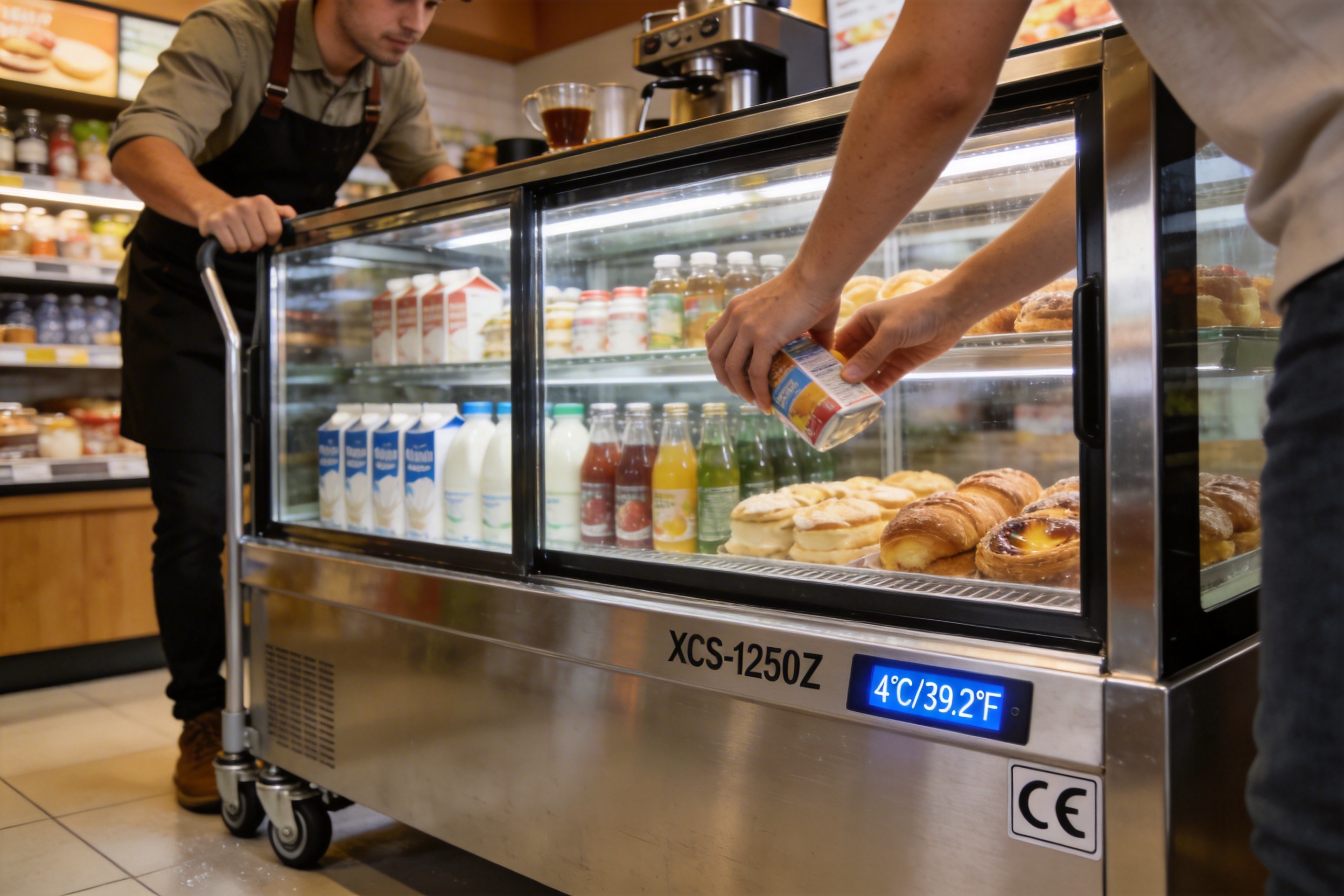
2. Key Advantages Over Competitors: Setting a New Standard in Commercial Cooling
The XCS Series outperforms traditional refrigerated showcases in multiple areas, thanks to its innovative features and attention to user needs. Below is a detailed breakdown of its competitive edge:
2.1 Automatic Defrost Technology: Eliminating Manual Hassles and Boosting Efficiency
Manual defrost is a common pain point for many commercial refrigeration users. It requires shutting down the unit, thawing ice buildup, cleaning the evaporator coils, and waiting for the unit to cool back down—processes that take hours and disrupt daily operations. Moreover, manual defrost often leads to temperature fluctuations, which can spoil products and increase energy waste. The XCS Series addresses these issues with its smart automatic defrost system.
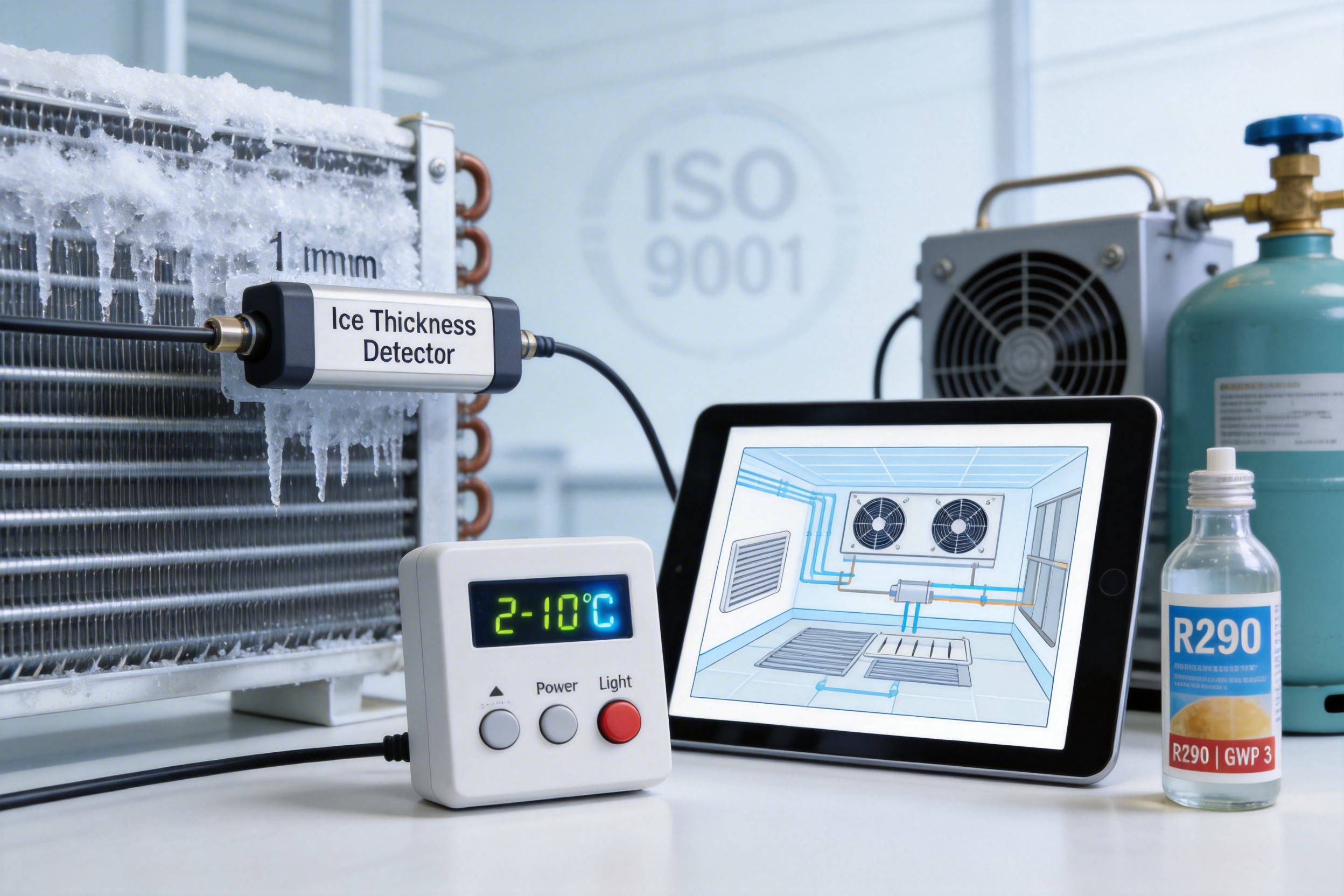
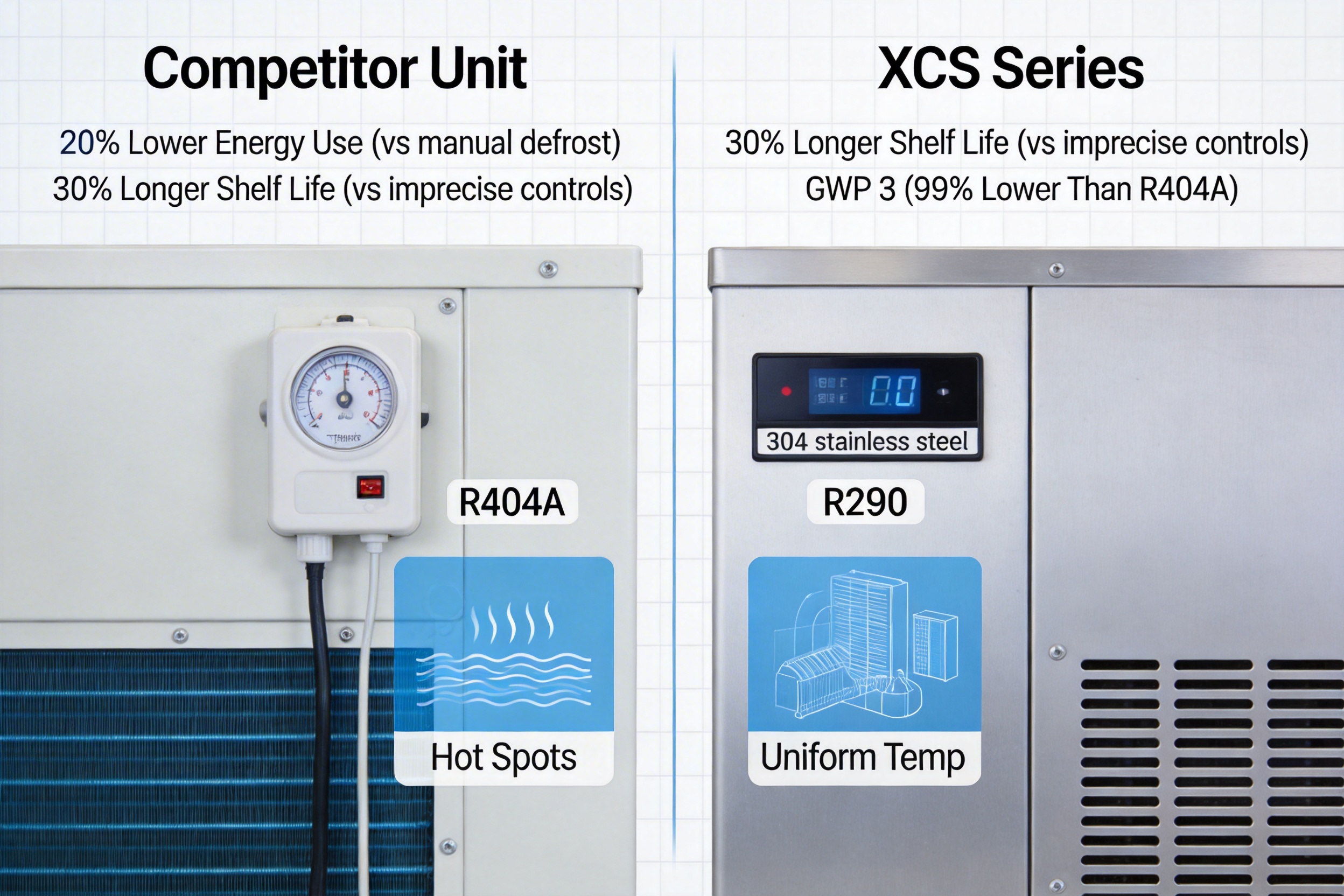
This system uses precision sensors to detect ice thickness on the evaporator coils. When ice reaches a preset level (typically 1-2 mm), the unit activates a short defrost cycle (10-15 minutes) that melts the ice without overheating the cabinet. The melted water is drained away via a built-in system, and the unit resumes cooling quickly to maintain consistent temperatures. Studies show that automatic defrost reduces energy consumption by up to 20% compared to manual defrost systems, as ice buildup increases energy use by insulating the coils and forcing the compressor to work harder. For businesses, this translates to lower utility bills and reduced food waste.
2.2 Precision Digital Temperature Control: Ensuring Food Safety and Freshness
Consistent temperature control is critical for preserving product quality and complying with food safety regulations. Many competing models use analog thermostats, which are prone to drift and offer limited precision. The XCS Series features a digital temperature controller with a clear LED display, allowing users to set and monitor temperatures within the range of 2-10°C (35.6-50°F) with an accuracy of ±0.5°C. This precision ensures that all products are stored at their optimal temperatures, extending shelf life by up to 30% compared to units with less precise controls.
The controller also includes a memory function that retains settings during power outages, so users don’t have to reconfigure the unit after a disruption. Additionally, the separated power and light buttons allow users to turn off the display lights without shutting down the cooling system, saving energy during off-peak hours.
2.3 Ventilated Cooling System: Uniform Temperature Distribution
Static cooling systems, common in older refrigerated showcases, create hot spots where temperatures are higher than the set point, leading to uneven product spoilage. The XCS Series uses a ventilated cooling system that circulates cold air evenly throughout the cabinet via strategically placed fans and ducts. This ensures that every corner of the display maintains the same temperature, eliminating hot spots and ensuring consistent product quality. For example, dairy products in the back of the cabinet stay as fresh as those in the front, reducing waste and improving customer satisfaction.
2.4 Durable Stainless Steel Construction: Withstanding Heavy Commercial Use
Commercial environments are tough on equipment—spills, frequent cleaning, and heavy foot traffic can damage lower-quality units. The XCS Series features a 304 stainless steel body, which is corrosion-resistant, scratch-proof, and easy to clean. Unlike plastic or low-grade steel bodies used by some competitors, stainless steel does not rust or stain, even with regular exposure to moisture and cleaning chemicals. This durability reduces the need for frequent replacements, making the XCS Series a cost-effective long-term investment.
The display area uses tempered glass, which is shatter-resistant and provides clear visibility of products. Tempered glass also insulates better than regular glass, reducing heat gain and further improving energy efficiency.
2.5 Mobility and Stability: Castors with Brakes for Easy Handling
Cleaning under and around refrigerated showcases is a challenge for many businesses. The XCS Series solves this with four heavy-duty castors—two of which have brakes. The castors allow users to move the unit easily for cleaning or repositioning, while the brakes ensure stability when the unit is in use, preventing accidents. Competitors often omit castors or use low-quality ones that break easily, making maintenance difficult and increasing the risk of damage to the unit or surrounding areas.
2.6 Sustainable R290 Refrigerant: Reducing Environmental Impact
Traditional refrigerants like R404A have a high global warming potential (GWP) of 3922, contributing significantly to climate change. The XCS Series uses R290, a natural hydrocarbon refrigerant with a GWP of just 3—99% lower than R404A. R290 is also more energy-efficient than synthetic refrigerants, reducing operational costs and environmental impact. Additionally, R290 is non-toxic and non-ozone-depleting, making it a sustainable choice for businesses committed to reducing their carbon footprint.
Many regions, including the European Union and the United States, are phasing out high-GWP refrigerants. The XCS Series’ use of R290 ensures compliance with future regulations, protecting businesses from costly upgrades or non-compliance penalties.
3. Company’s Advanced Manufacturing and Strengths: Ensuring Reliability and Quality
The XCS Series is manufactured by a leading commercial refrigeration company with over 15 years of experience in the industry. The company’s commitment to innovation, quality, and sustainability is evident in every aspect of its operations, from R&D to final product testing.
3.1 Robust R&D Capabilities: Driving Innovation
The company’s R&D team consists of 20+ engineers with expertise in refrigeration technology, materials science, and energy efficiency. The team collaborates with universities and industry experts to stay ahead of emerging trends and develop innovative solutions. For example, the team recently optimized the XCS Series’ ventilated cooling system to reduce energy consumption by an additional 10% and refined the automatic defrost algorithm to minimize temperature fluctuations during cycles.
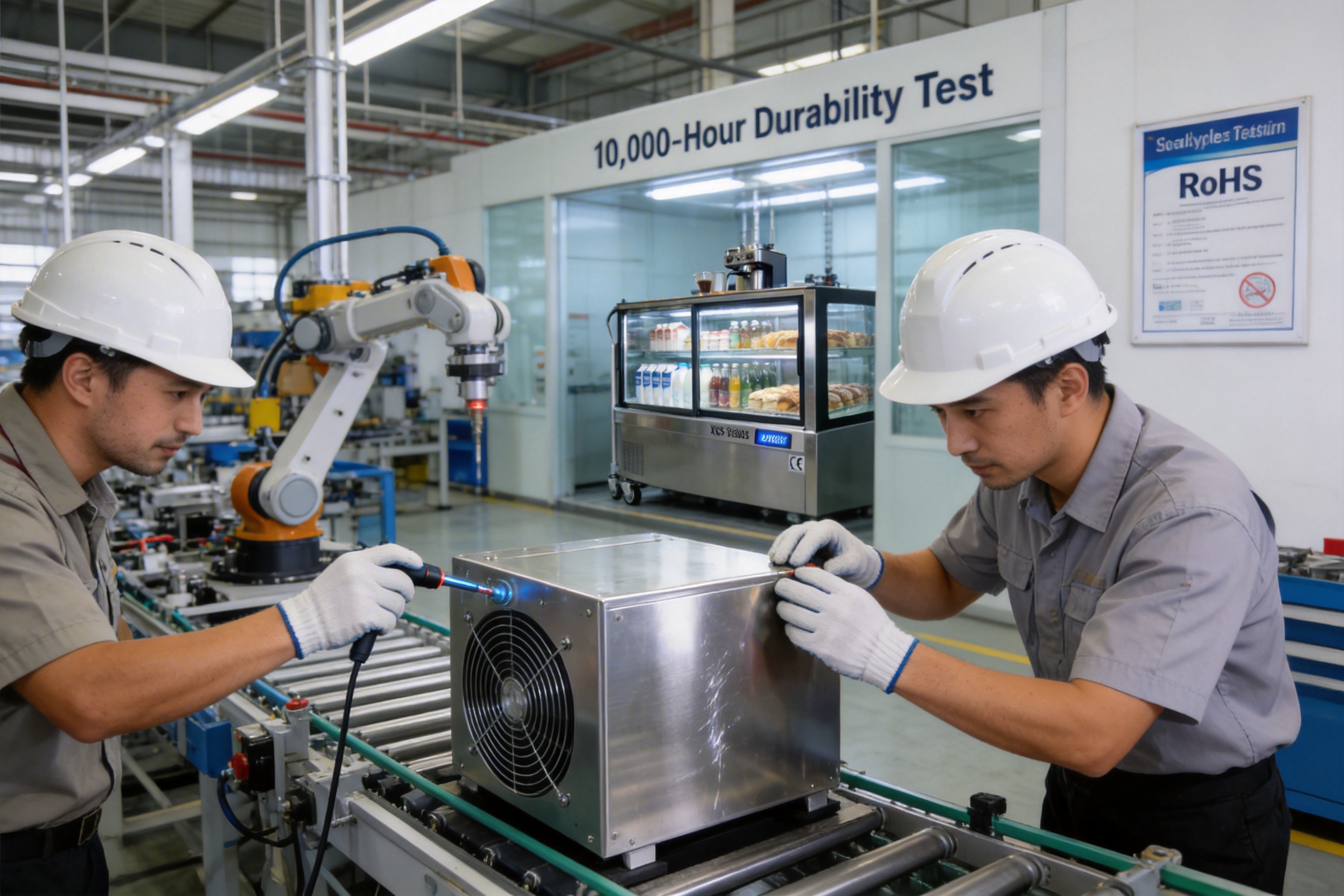
The company’s R&D facility includes advanced testing equipment, such as environmental chambers that can simulate temperatures from -10°C to 50°C and humidity levels up to 95%. These chambers allow the team to test the XCS Series under extreme conditions, ensuring that it performs reliably in all climates. The facility also includes a life-cycle testing lab, where units are run continuously for 10,000 hours to evaluate durability and performance.
3.2 Global Certifications: Meeting Stringent Standards
The XCS Series has obtained multiple global certifications, including CE, GS, CCC, CB, RoHS, and ETL. These certifications confirm that the product meets strict safety, energy, and environmental standards in major markets around the world. For example:
- CE certification ensures compliance with European Union safety and health regulations.
- ETL certification confirms that the product meets North American safety standards.
- RoHS certification prohibits the use of hazardous materials like lead and mercury.
These certifications give businesses confidence that the XCS Series is safe, reliable, and compliant with local regulations, regardless of where they operate.
3.3 Large-Scale Production: Delivering Quality at Scale
The company operates a 40,000 square meter modern factory equipped with automated production lines for assembling refrigeration units. The factory’s scale allows for large production runs, ensuring timely delivery even for bulk orders. The production process uses computer-aided design (CAD) and computer-aided manufacturing (CAM) to ensure precision and consistency across all units.
The factory also uses lean manufacturing principles to minimize waste and improve efficiency. For example, the assembly line is designed to reduce material handling time, and quality control checks are integrated into every stage of production to catch defects early.
3.4 Rigorous Quality Control: Ensuring Long-Term Reliability
Quality control is a top priority for the company. The process starts with incoming raw material inspections, where every component (stainless steel sheets, compressors, castors, etc.) is tested for quality and compliance with specifications. In-process checks include testing the cooling system, defrost cycle, and temperature control to ensure they meet performance standards. Final inspection involves running the unit for 24 hours to verify that it maintains consistent temperatures and operates quietly.
Each unit is also subjected to a pressure test to check for refrigerant leaks, ensuring that it is environmentally friendly and energy-efficient. The company’s quality control team follows ISO 9001 standards, which are recognized globally for their focus on continuous improvement.
4. Detailed Product Specifications
The XCS Series offers three models with varying capacities and dimensions to suit different business needs. Below is a comprehensive table of specifications:
| Specification | XCS-950Z | XCS-1250Z | XCS-1550Z |
|---|---|---|---|
| Capacity (Gross) | 300L / 10.6 cu.ft | 410L /14.5 cu.ft | 510L /18.0 cu.ft |
| Temperature Range | 2-10°C /35.6-50°F | 2-10°C /35.6-50°F | 2-10°C /35.6-50°F |
| Input Power | 1500W | 1500W | 1500W |
| Refrigerant | R290 | R290 | R290 |
| Climate Type | 6 | 6 | 6 |
| Net Weight | 126kg | 155kg | 190kg |
| Gross Weight | 172kg | 210kg | 257kg |
| Product Size (mm) | 900×656×1435 | 1200×656×1435 | 1500×656×1435 |
| Product Size (inch) | 35.4×25.8×56.5 | 47.2×25.8×56.5 | 59.1×25.8×56.5 |
| Package Size (mm) | 970×750×1580 | 1270×750×1580 | 1570×750×1580 |
| Package Size (inch) | 38.2×29.5×62.2 | 50.0×29.5×62.2 | 61.8×29.5×62.2 |
| Loading Quantity (20GP/40HQ) | 18/36 pcs | 13/27 pcs | 10/22 pcs |
5. Q&A Section: Addressing Common User Concerns
Below are answers to frequently asked questions about the XCS Series:
Q1: What types of businesses are the XCS Series suitable for?
A1: The XCS Series is ideal for cafes, bakeries, convenience stores, supermarkets, delis, and any business that needs to display perishable items. Its open design and temperature range make it perfect for self-service areas, while its durability and energy efficiency suit high-traffic environments.Q2: How often does the automatic defrost function activate?
A2: The activation frequency depends on ambient temperature and usage, but typically every 6-12 hours. The system uses sensors to detect ice buildup, so it only defrosts when necessary, minimizing energy waste.Q3: Is the XCS Series energy-efficient?
A3: Yes. It uses R290 refrigerant (low GWP and high efficiency) and a ventilated cooling system that reduces energy consumption by up to 20% compared to manual defrost units. The digital temperature control also optimizes energy use.Q4: Can the XCS Series be used in warm climates?
A4: Yes. The XCS Series has a climate type rating of 6, meaning it can operate effectively in ambient temperatures up to 43°C (109.4°F). This makes it suitable for warm regions like the Middle East, Southeast Asia, and parts of North America.Q5: What is the warranty period for the XCS Series?
A5: The company offers a 1-year warranty on parts and labor for manufacturing defects. Extended warranties are available for bulk orders.Q6: How easy is it to clean the XCS Series?
A6: Very easy. The stainless steel body can be wiped down with a damp cloth, and the tempered glass is easy to clean without streaks. The castors allow for easy movement to clean underneath the unit.Q7: Can the XCS Series be customized?
A7: Yes. The company’s R&D team can customize features like branding, temperature range (within limits), and dimensions to fit specific business needs. Custom orders require a minimum quantity of 50 units.Q8: Does the XCS Series comply with food safety regulations?
A8: Yes. The digital temperature control ensures consistent temperatures within the safe range for perishable items, and the unit is certified to meet global food safety standards (e.g., FDA in the U.S., EFSA in the EU).6. Conclusion
The Open Automatic Defrost Refrigerated Showcase XCS Series is a testament to the power of innovation and quality in commercial refrigeration. Its automatic defrost system, precision digital control, ventilated cooling, and sustainable R290 refrigerant set it apart from competitors, offering businesses significant cost savings, reduced food waste, and improved operational efficiency. Backed by a company with advanced manufacturing capabilities, global certifications, and a commitment to sustainability, the XCS Series is a reliable and future-proof choice for any business looking to upgrade its refrigeration equipment.
As the commercial refrigeration industry continues to evolve, the XCS Series leads the way in combining performance, efficiency, and sustainability—making it an essential investment for businesses that prioritize product quality and long-term profitability.
References
1. International Electrotechnical Commission (IEC). (2022). *Standard for Commercial Refrigeration Equipment (IEC 60335-2-89)*. Geneva, Switzerland: IEC. 2. European Committee for Standardization (CEN). (2021). *Energy Efficiency Requirements for Refrigerated Display Cabinets (EN 16497)*. Brussels, Belgium: CEN. 3. U.S. Environmental Protection Agency (EPA). (2023). *R290 Refrigerant: A Sustainable Choice for Commercial Cooling*. Washington, D.C.: EPA. 4. Smith, J. (2022). *The Future of Commercial Refrigeration: Innovations in Defrost and Cooling Technologies*. Journal of Food Service Technology, 15(3), 45-62. 5. World Refrigeration Day. (2023). *Sustainable Refrigeration: Trends and Best Practices*. Paris, France: International Institute of Refrigeration. 6. Food and Agriculture Organization (FAO). (2021). *Reducing Food Waste in Commercial Food Service*. Rome, Italy: FAO. 7. European Commission. (2022). *F-Gas Regulation: Phasing Down High-GWP Refrigerants*. Brussels, Belgium: European Commission. 8. National Restaurant Association. (2023). *Commercial Kitchen Equipment Trends: Energy Efficiency and Sustainability*. Chicago, IL: National Restaurant Association. 9. Chen, L., et al. (2022). *Energy Performance Comparison of R290 and R404A Refrigeration Systems*. International Journal of Refrigeration, 139, 245-256. 10. Global Market Insights. (2023). *Commercial Refrigeration Market Size, Share & Trends Analysis Report by Product (Refrigerated Display Cases, Walk-In Coolers), by End-Use (Food & Beverage, Retail), and Segment Forecasts, 2023-2030*. Selbyville, DE: Global Market Insights.
You May Also Like
.jpg?imageView2/2/w/500/h/500/format/jp2/q/100 "Four Sides Glasses Display Cooler")
.jpg?imageView2/2/w/500/h/500/format/jp2/q/100 "White 4-Sided Glass Refrigerated Display Case")
.jpg?imageView2/2/w/500/h/500/format/jp2/q/100 "Refrigerated Display Cake Countertop Four Sides Glasses Display Cooler")
.jpg?imageView2/2/w/500/h/500/format/jp2/q/100 "Four Sides Glasses Display Cooler")

-
- Navigation
- Home
- About Us
- Products
- News
- Contact Us
 East Zone, Guanhaiwei Industrial Park, Cixi City, Ningbo, Zhejiang, China
 +86-574-63668678
 +86-574-63668108
Copyright © Ningbo XiangChi Electrical Co.,Ltd All Rights Reserved.
