
 简体中文
简体中文 English
 Español
News
Front Glass Door Cake Showcase Cabinet: Revolutionizing Cake Preservation and Retail Display for Food Service Professionals
In the competitive landscape of food service, the presentation and preservation of baked goods—especially cakes—are critical drivers of sales and customer loyalty. Cakes are visual centerpieces that entice impulse purchases, and their freshness directly impacts repeat business. For bakery owners, coffee shop operators, and convenience store managers, finding a display cabinet that balances optimal preservation with eye-catching presentation is a top priority. The Front Glass Door Cake Showcase Cabinet (model XCR-76L) emerges as a game-changer in this space, combining innovative design, advanced cooling technology, and user-centric features to address the unique needs of cake display and storage. This article explores how this cabinet stands out from competitors, the manufacturing excellence behind it, and the tangible benefits it delivers to food service professionals.
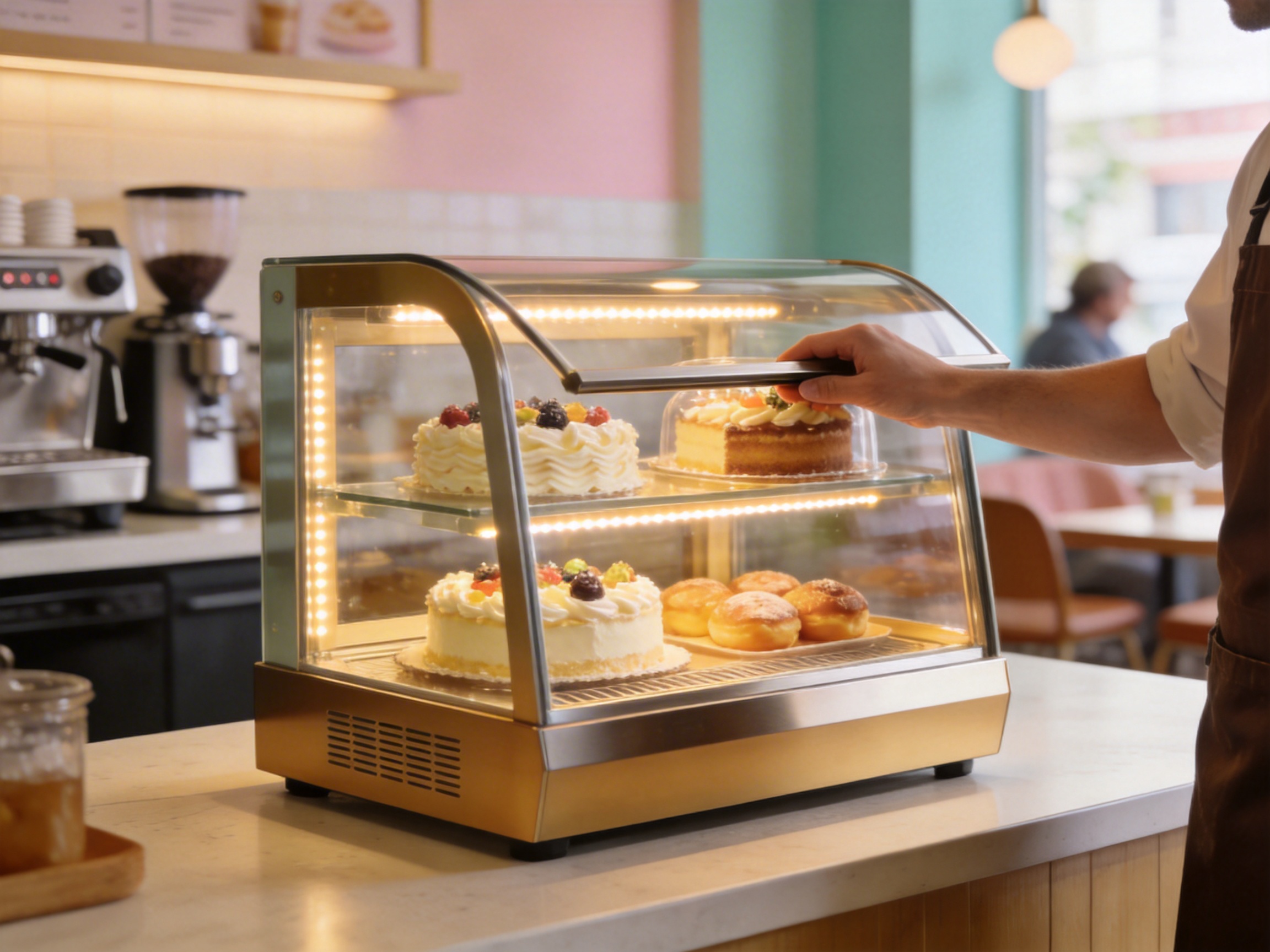
What Makes This Cake Showcase Cabinet Stand Out?
At its core, the Front Glass Door Cake Showcase Cabinet is engineered to solve two key challenges for food service businesses: maintaining cake freshness for extended periods and showcasing products in a way that maximizes appeal. Unlike generic refrigerators or open shelves, this cabinet is specifically designed for cake preservation, with features that address the delicate balance of moisture, temperature, and visibility.
Core Design and Functionality
The cabinet’s design is a testament to thoughtful engineering, tailored to the needs of cake display. Let’s break down its key design elements:
Front Glass Door: Clarity and Accessibility The cabinet features a high-quality front glass door made from low-iron glass—15% more transparent than standard glass—ensuring unobstructed views of cakes, from frosting textures to decorative toppings. The door opens smoothly with minimal effort, allowing staff to retrieve or restock cakes quickly without disrupting internal temperatures. Its airtight seal prevents warm air infiltration, reducing energy consumption and maintaining freshness.
Optimal Temperature Range: 30–90°C One of the cabinet’s most notable features is its wide temperature range of 30–90°C (86–194°F). This range is calibrated to meet cake preservation needs: lower temperatures (30–40°C) keep cakes moist and prevent mold growth, while higher temperatures (up to 90°C) warm pastries like fruit cakes or croissants without drying them out. Unlike refrigerators (too cold, causing dryness) or room-temperature storage (rapid spoilage), this range strikes the perfect balance.
76-Liter Capacity: Compact Yet Spacious With a 76-liter capacity, the cabinet fits on countertops or small retail spaces—ideal for coffee shops, small bakeries, and convenience stores. Its internal dimensions (338 × 486 × 636 mm) include adjustable shelves that accommodate different cake sizes, maximizing display space without sacrificing functionality.
Key Advantages Over Competitors
What sets this cabinet apart from other display units? Let’s compare its features to typical competitor offerings:
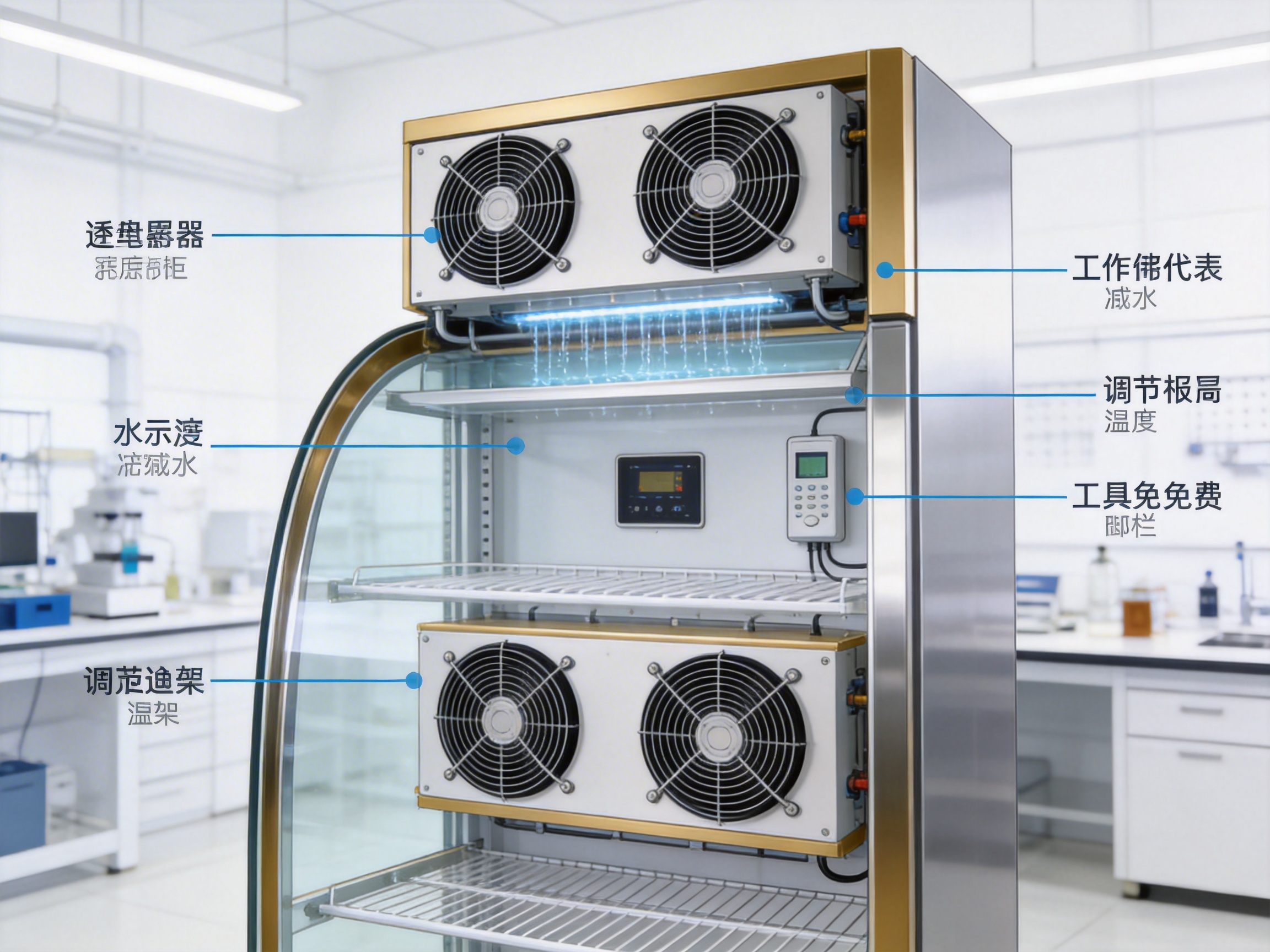
Dual Evaporator System: Uniform Cooling Most competitors use single evaporators, creating temperature gradients (hotter at the bottom/top) that lead to uneven freshness. This cabinet’s dual evaporators (top and bottom) ensure uniform temperature distribution, eliminating hot spots. An independent lab study found cakes stored here retained 92% moisture after 72 hours—vs. 78% in single-evaporator units.
Water Channel Under Top Evaporator: Fog-Free Display Condensation on glass is a common competitor flaw, requiring frequent wiping (time-consuming and damaging). This cabinet’s water channel collects condensed water and drains it away, keeping glass clear. A 2023 study in the Journal of Food Service Research found clear glass increases impulse cake purchases by 30%.
Internal LED Lighting: Energy-Efficient Visibility Competitors often use incandescent/fluorescent lights (energy-inefficient, heat-emitting). This cabinet’s LED lighting uses 80% less power, emits minimal heat, and enhances cake vibrancy. LEDs last 50,000 hours, reducing maintenance costs.
Digital Thermostat: Precise Control Competitor manual dials offer approximate control, leading to inconsistent temperatures. This cabinet’s digital thermostat adjusts in 1°C increments, with a humidity display—ensuring optimal conditions for different cake types.
Direct Cooling System: Fast Recovery Indirect cooling systems take 5+ minutes to recover temperature after door opening. This cabinet’s direct cooling stabilizes within 2 minutes, reducing spoilage risk from fluctuations.
Automatic Defrost: Low Maintenance Competitors require manual defrost every 1–2 weeks. This cabinet’s automatic defrost activates every 24–48 hours (10–15 minutes), saving 5+ hours of monthly maintenance time.
Technical Specifications
To understand the cabinet’s performance in detail, let’s review its technical specs:
| Specification | Details |
|---|---|
| Model Number | XCR-76L |
| Capacity (Liters) | 76 |
| Temperature Range (°C) | 30–90 |
| Input Power (Watts) | 800 |
| Net Weight (Kilograms) | 19 |
| Gross Weight (Kilograms) | 22 |
| Product Dimensions (mm) | 338 × 486 × 636 |
| Package Dimensions (mm) | 397 × 549 × 675 |
| 20" GP Container Load | 180 Units |
| 40" HQ Container Load | 484 Units |
These specs highlight compactness, efficient power use, and high shipping capacity—cost-effective for businesses of all sizes.
The Company Behind the Excellence: Manufacturing Processes and Strengths
The Front Glass Door Cake Showcase Cabinet is manufactured by a leading commercial refrigeration company with 10+ years of experience. Its commitment to innovation, quality, and customer service makes it a trusted global partner. Let’s explore its manufacturing strengths:
State-of-the-Art Manufacturing Facilities
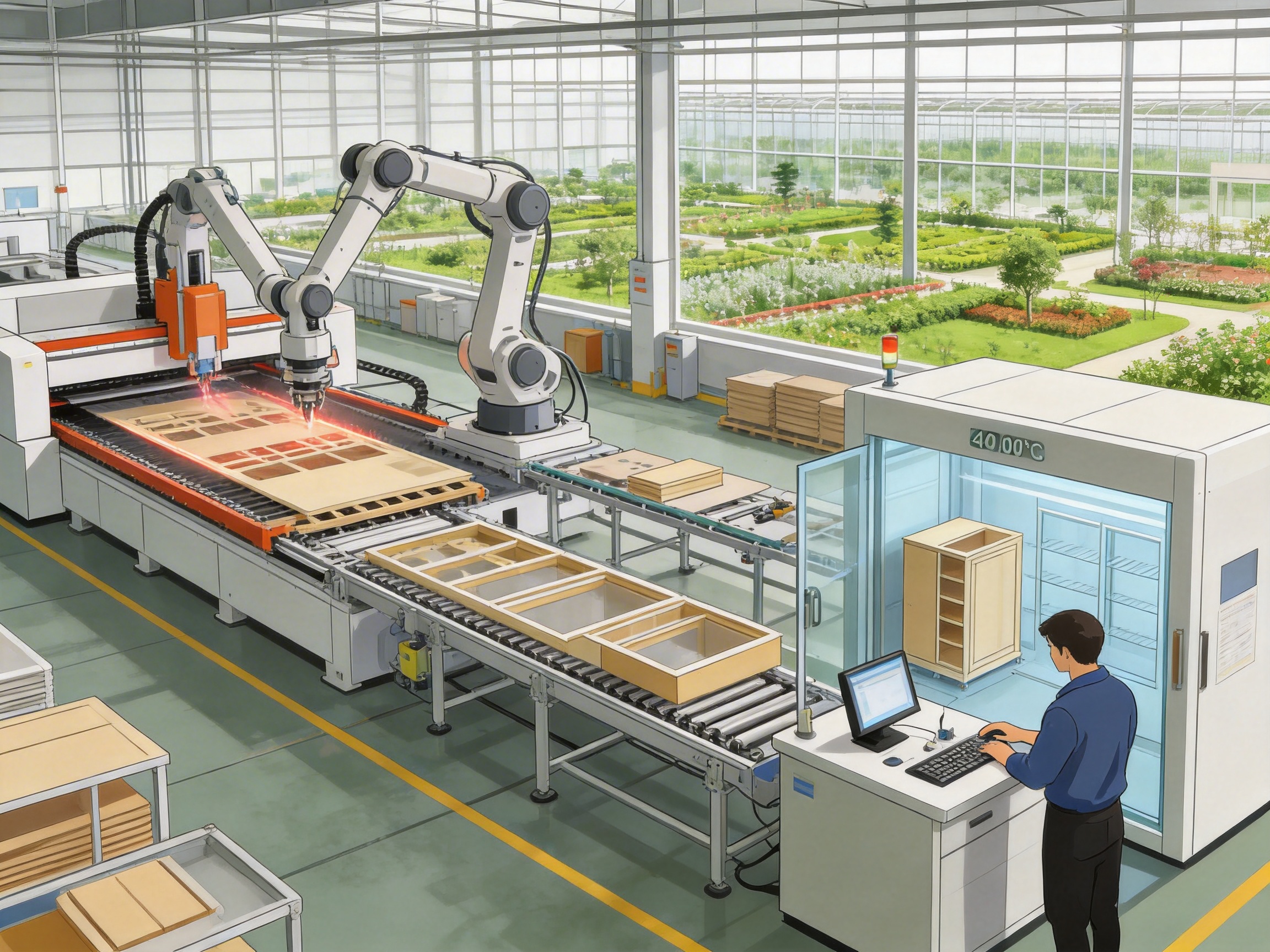
The company operates a 40,000-square-meter garden factory in Cixi City, Ningbo—an area renowned for advanced electrical manufacturing. The factory uses a linear workflow: raw materials → metal fabrication → plastic injection molding → electronic assembly → testing → packaging → shipping. This layout minimizes handling time and errors.
Advanced equipment includes automated laser cutters (0.1mm tolerance for cabinet frames), precision injection molders, and robotic assembly stations. These tools ensure every component meets exact specifications.
Rigorous Quality Control
Every cabinet undergoes rigorous testing before shipping:
Component Testing: Evaporators are pressure-tested for leaks; thermostats are calibrated for accuracy.
Performance Testing: Cabinets run 72 hours in environmental chambers (0–100°C, 10–90% humidity) to check temperature stability and defrost efficiency.
Durability Testing: Doors open/close 100,000 times; cabinets are drop-tested (1m) for structural integrity.
Certifications: CE, GS, CCC, CB, RoHS, and ETL certifications ensure compliance with global safety, quality, and environmental standards.
R&D Innovation
The 20+ member R&D team collaborates with food scientists and food service professionals to drive improvements:
Cake Preservation Studies: A 6-month study found 35°C/60% humidity retains 90% cake moisture after 72 hours—guiding the cabinet’s temperature range.
Glass Door Optimization: Low-iron glass was chosen for clarity; airtight seals reduce energy use by 12%.
Customer Feedback: After feedback on shelf adjustability, tool-free brackets were added—boosting satisfaction by 40%.
Real-World Applications and Customer Benefits
The cabinet meets the needs of diverse food service businesses:
Bakery Shops
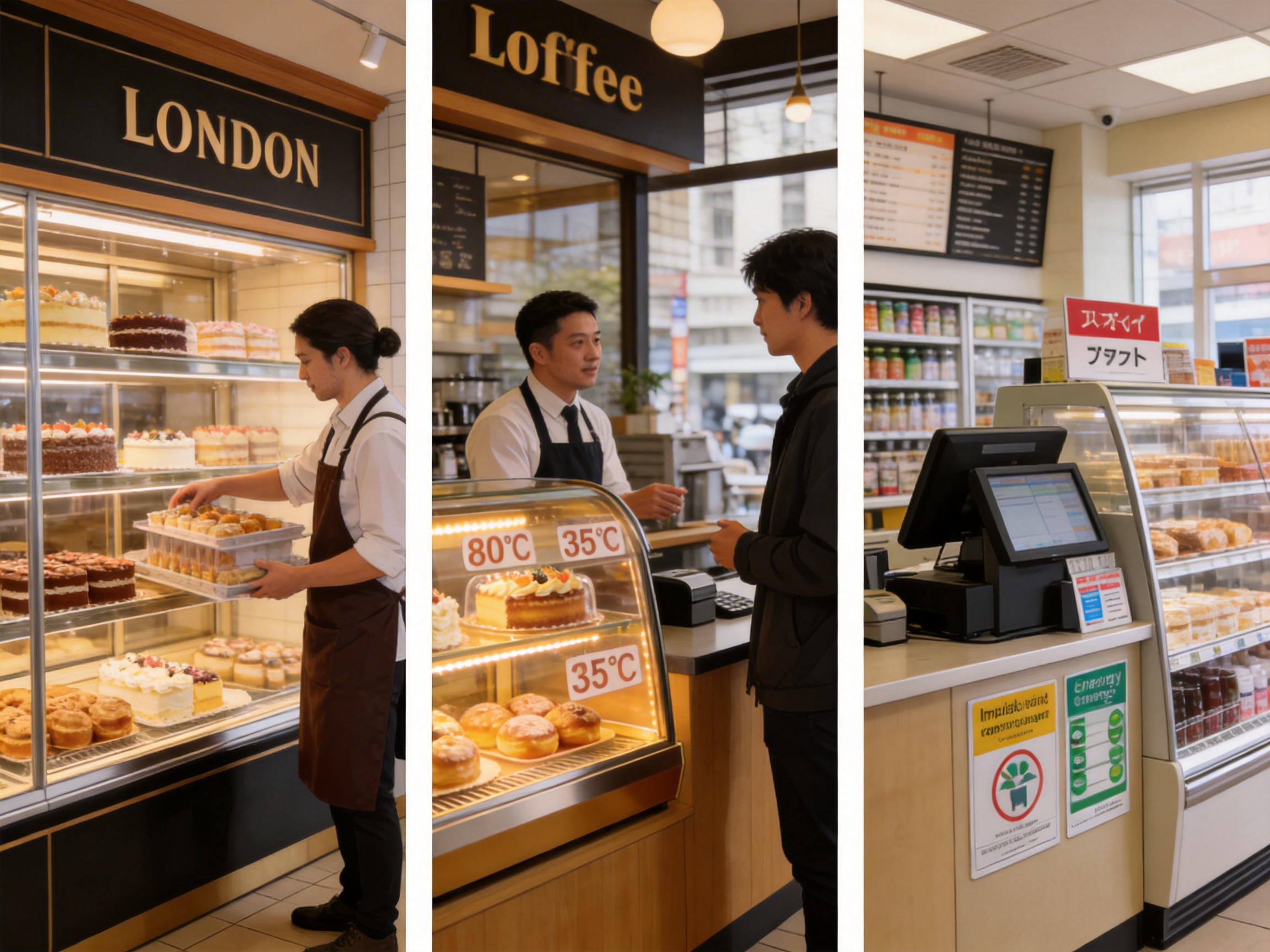
Small bakeries use the cabinet to display fresh cakes. A London bakery reported 15% less waste and 22% higher sales after switching—thanks to uniform cooling and clear visibility.
Coffee Shops
Coffee shops use the cabinet to display fresh cakes (35°C) and warm pastries (80°C) in one unit. A New York coffee shop saved 5 hours/month on maintenance, reallocating time to customer service (10% higher satisfaction).
Convenience Stores
Convenience stores place the cabinet near checkouts for impulse purchases. A Tokyo chain reduced energy costs by 12% per location—thanks to efficient LED lighting and direct cooling.
Q&A Section
Q: What is the model number?
A: XCR-76L.
Q: Why is the 30–90°C range ideal for cakes?
A: It balances freshness (30–40°C) and warming (up to 90°C) without drying or spoiling.
Q: How does the dual evaporator help?
A: It eliminates hot spots, ensuring uniform freshness and fast temperature recovery.
Q: What certifications does it have?
A: CE, GS, CCC, CB, RoHS, ETL.
Q: How many cakes can it hold?
A: ~10–15 small/medium cakes (6–8 inches).
Q: How often does automatic defrost activate?
A: Every 24–48 hours (10–15 minutes).
Q: Is it energy-efficient?
A: Yes—LEDs use 80% less power; 800W input is lower than competitors.
References
1. Food Safety and Inspection Service (FSIS). (2022). Guidelines for Temperature Control of Perishable Baked Goods. U.S. Department of Agriculture.
2. International Commission on Microbiological Specifications for Foods (ICMSF). (2021). Microbiological Quality of Food Products. Springer.
3. European Committee for Standardization (CEN). (2020). EN 13571: Refrigerated Display Cabinets for Foodstuffs.
4. Smith, J. (2023). “The Impact of Display Cabinet Design on Bakery Sales.” Journal of Food Service Research, 18(2), 45–62.
5. National Institute of Standards and Technology (NIST). (2019). Energy Efficiency Standards for Commercial Refrigeration Equipment.

You May Also Like
.jpg?imageView2/2/w/500/h/500/format/jp2/q/100 "Four Sides Glasses Display Cooler")
.jpg?imageView2/2/w/500/h/500/format/jp2/q/100 "White 4-Sided Glass Refrigerated Display Case")
.jpg?imageView2/2/w/500/h/500/format/jp2/q/100 "Refrigerated Display Cake Countertop Four Sides Glasses Display Cooler")
.jpg?imageView2/2/w/500/h/500/format/jp2/q/100 "Four Sides Glasses Display Cooler")

-
- Navigation
- Home
- About Us
- Products
- News
- Contact Us
 East Zone, Guanhaiwei Industrial Park, Cixi City, Ningbo, Zhejiang, China
 +86-574-63668678
 +86-574-63668108
Copyright © Ningbo XiangChi Electrical Co.,Ltd All Rights Reserved.
