
 简体中文
简体中文 English
 Español
News
Countertop Front Curved Glass Display Refrigerators for Professional Merchandising
Countertop front curved glass display refrigerators are essential equipment for cafés, bakeries, convenience stores, beverage shops, hotel lounges, dessert bars, sushi counters, and retail environments that need compact refrigerated presentation with strong visual appeal. The XCW-3, XCW-4, and XCW-5 series are designed to combine reliable cooling, elegant product visibility, convenient service access, and practical energy-conscious operation in a countertop footprint.
Unlike ordinary storage refrigerators that hide products behind solid doors, these display refrigerators are built for merchandising. Their purpose is not only to keep food and beverages at a safe and appealing temperature, but also to encourage customers to notice, compare, and purchase. The front curved glass design creates a premium showcase effect, while the sliding doors and compact depth make the units suitable for space-limited commercial counters.
The series includes three capacity options: XCW-3 with 113L gross capacity, XCW-4 with 148L gross capacity, and XCW-5 with 184L gross capacity. Each model operates within a 2–10°C temperature range, uses R290 refrigerant, and features 120W input power. This shared platform allows buyers to select the proper size for their countertop space and display volume while maintaining consistent refrigeration performance and operating characteristics.
For businesses that depend on chilled product presentation, a display refrigerator must do more than cool. It must protect product freshness, support attractive arrangement, operate dependably through long business hours, and be easy for staff to use. The XCW countertop curved glass series addresses these requirements through direct cooling, digital temperature control, separated power and light controls, front curved glass, and front and back sliding doors.
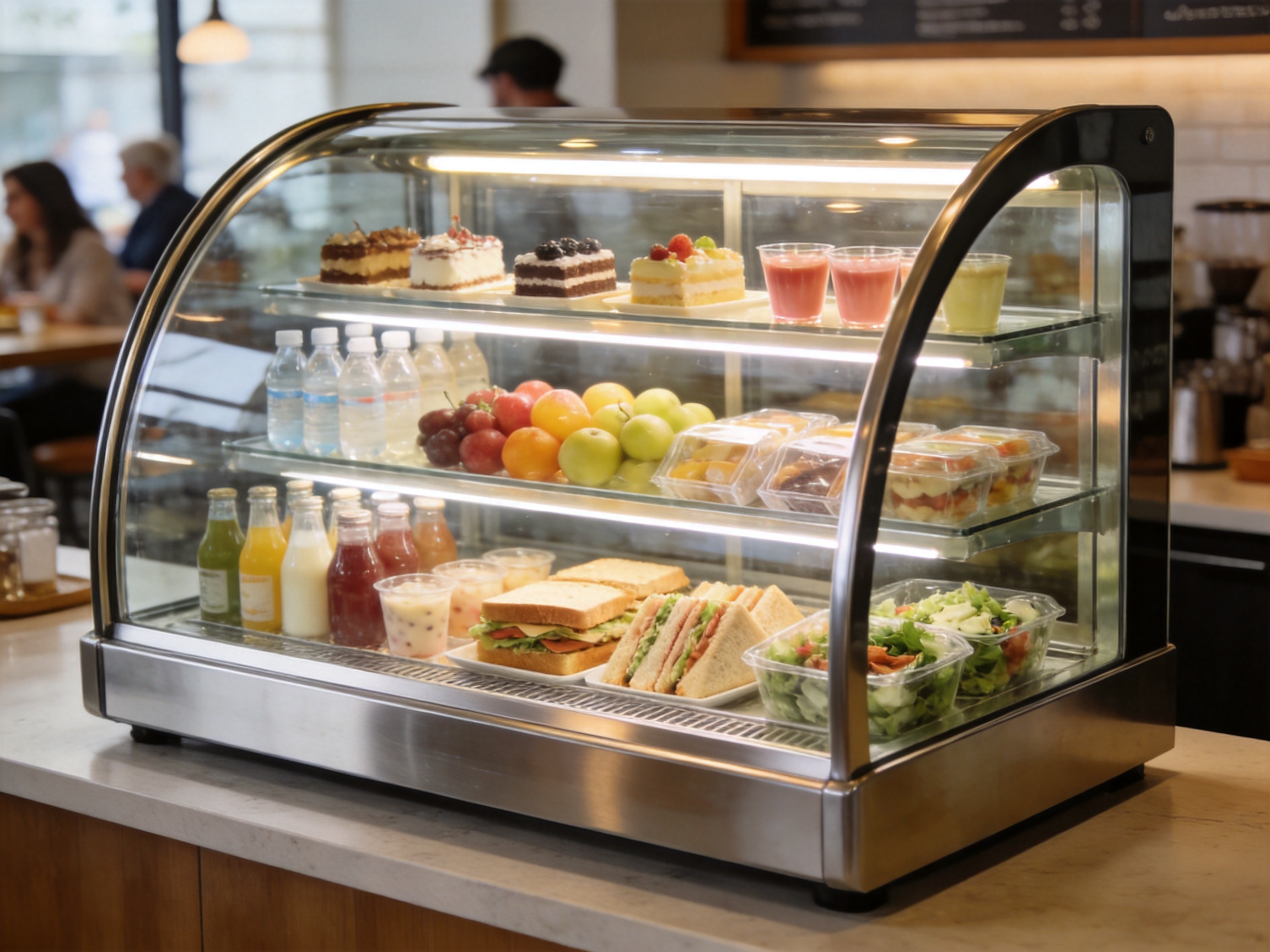
Product Positioning and Commercial Application
The XCW countertop display refrigerator series is positioned for commercial users who need a professional chilled display solution without occupying the floor area of a large upright cabinet. In foodservice and retail spaces, counter space is valuable. A well-designed countertop refrigerator turns that space into a selling area by keeping products visible, illuminated, and accessible.
Typical applications include bottled drinks, canned beverages, fruit cups, desserts, sandwiches, packaged salads, dairy products, chilled snacks, mousse cups, puddings, small cakes, and other prepared foods that require a refrigerated display range of 2–10°C. The series is especially suitable for businesses that need customers to see products clearly from the front while staff can access products from the back during service.
The curved glass front supports impulse selling. A flat commercial refrigerator may appear purely functional, but a curved front glass surface creates a softer, more refined display impression. This is important in environments such as bakeries, cafés, dessert shops, and boutique food counters, where the customer’s perception of freshness and quality affects purchasing decisions.
Because the models are compact in depth, they can be placed on service counters, checkout counters, bar counters, and promotional islands. The three length options allow businesses to scale the display according to their layout. A smaller shop may select XCW-3 for compact presentation, while a larger café or bakery may prefer XCW-4 or XCW-5 for greater capacity and broader product arrangement.
Model Range Overview
The XCW-3, XCW-4, and XCW-5 models share the same functional concept but differ in display capacity, weight, dimensions, and loading quantity. This modular approach is valuable for distributors and end users because it simplifies selection, training, maintenance, and product planning. A business can use the same design language across multiple locations while choosing different sizes for different sales volumes.
Specification |
XCW-3 |
XCW-4 |
XCW-5 |
Gross Capacity |
113L / 4.0 cu.ft |
148L / 5.2 cu.ft |
184L / 6.5 cu.ft |
Temperature Range |
2–10°C / 35.6–50°F |
2–10°C / 35.6–50°F |
2–10°C / 35.6–50°F |
Input Power |
120W |
120W |
120W |
Refrigerant |
R290 |
R290 |
R290 |
Climate Type |
6 |
6 |
6 |
Net Weight |
46 kg |
55 kg |
69 kg |
Gross Weight |
63 kg |
76.5 kg |
94 kg |
Product Size |
985 × 530 × 555 mm |
1285 × 530 × 555 mm |
1585 × 530 × 555 mm |
Product Size |
38.8 × 20.9 × 21.9 inch |
50.6 × 20.9 × 21.9 inch |
62.4 × 20.9 × 21.9 inch |
Package Size |
1070 × 635 × 720 mm |
1370 × 635 × 720 mm |
1670 × 635 × 720 mm |
Package Size |
42.1 × 25.0 × 28.3 inch |
53.9 × 25.0 × 28.3 inch |
65.7 × 25.0 × 28.3 inch |
Loading Quantity |
54 / 108 pcs for 20GP / 40HQ |
39 / 78 pcs for 20GP / 40HQ |
36 / 75 pcs for 20GP / 40HQ |
The table shows that the series provides meaningful capacity differences while maintaining a consistent height and depth. This is useful for store planning because the same counter depth can support all three models. The primary difference is width, giving operators a straightforward way to increase display space without changing the operating style of the refrigerator.
Front Curved Glass: A Display Advantage
The front curved glass is one of the most important advantages of this countertop refrigerator series. In commercial display, presentation directly influences sales. Customers often make quick decisions based on what they can see clearly. Curved glass minimizes the visual stiffness of a box-shaped cabinet and creates a showcase effect that makes food and beverage items look more premium.
Compared with many basic countertop coolers that use flat glass, the curved front design improves the customer-facing appearance. It allows products to be viewed with a smooth visual transition from top to front, which is especially effective for desserts, sandwiches, and neatly arranged packaged foods. The result is a refrigerator that works not only as cooling equipment but also as a sales display.
For bakeries and cafés, the curved glass also supports brand atmosphere. Even when the unit is not customized with logos, its shape conveys a clean, professional, and food-focused image. A small countertop refrigerator with a refined front profile can elevate the perceived value of products placed inside, which is particularly important for high-margin impulse products.
Competitor products may focus only on low initial cost, but a display refrigerator should be evaluated by its contribution to sales. If a unit improves product visibility and attracts customer attention, it can help generate revenue throughout its service life. The XCW series offers this commercial merchandising benefit while retaining practical refrigeration specifications.
Direct Cooling System for Practical Refrigeration
The XCW series uses a direct cooling system. Direct cooling is valued in compact commercial refrigerators because it provides straightforward refrigeration performance with fewer air movement complications than some forced-air systems. For packaged chilled foods and beverages, direct cooling can help maintain a stable internal environment when the cabinet is used properly.
Direct cooling can also contribute to quiet operation, which matters in cafés, dessert shops, and customer-facing counters. A refrigerator located near customers should not distract from the dining or shopping experience. A practical cooling system helps the unit blend into the business environment while still performing the required refrigeration function.
Another benefit of direct cooling is structural simplicity. In commercial settings, equipment that is easy to understand and maintain is often preferred. Simpler system architecture can help reduce operational complexity for shop owners, especially small and medium-sized businesses that need reliable equipment without excessive maintenance burden.
The 2–10°C range is suitable for many chilled display applications. It is important to note that this range is intended for refrigeration, not freezing. Businesses should use the unit for products that are compatible with this temperature range and follow applicable food safety regulations for storage, display duration, and product handling.
Digital Temperature Controller and Display
A digital temperature controller and display provide a key operational advantage over refrigerators that rely only on mechanical controls. In a commercial environment, staff need to confirm cabinet temperature quickly. The digital display allows operators to monitor performance at a glance, supporting better daily management and reducing uncertainty.
Temperature visibility is especially important for businesses that sell prepared foods. Staff can check the displayed temperature during opening, peak service, and closing. This supports routine quality control and helps ensure products are displayed under appropriate refrigerated conditions.
Digital control also helps standardize operation across multiple stores or departments. When several units are used in a chain café, bakery, convenience store, or hotel operation, a consistent controller interface makes training easier. Staff can understand the expected set range and observe any abnormal conditions more efficiently.
Compared with basic competitor models that may use less precise control interfaces, the digital controller improves confidence. It gives users a more professional tool for managing refrigerated display, which is important in businesses where product freshness and customer trust are closely connected.
Separated Power and Light Controls
The XCW series includes separated power and light buttons. This detail may appear small, but it provides practical operating flexibility. A separated power button allows the refrigerator system to be controlled independently, while a separated light button allows staff to manage illumination according to business hours and display needs.
For example, a store may need to keep the refrigerator running before opening while turning the light on only when products are ready for customer presentation. At closing, staff may turn off the display lighting while keeping the cooling system operating as required. This separation supports more convenient daily use and can help avoid unnecessary lighting operation.
Competitor products sometimes combine functions or place controls in less convenient positions. In contrast, separated controls reflect a user-centered approach. Commercial equipment is used repeatedly every day, so simple operational improvements can create meaningful long-term convenience for staff.
Good control design also reduces mistakes. When buttons are clear and separated, staff are less likely to accidentally turn off the wrong function. This is especially valuable in busy service environments where employees may need to work quickly during rush periods.
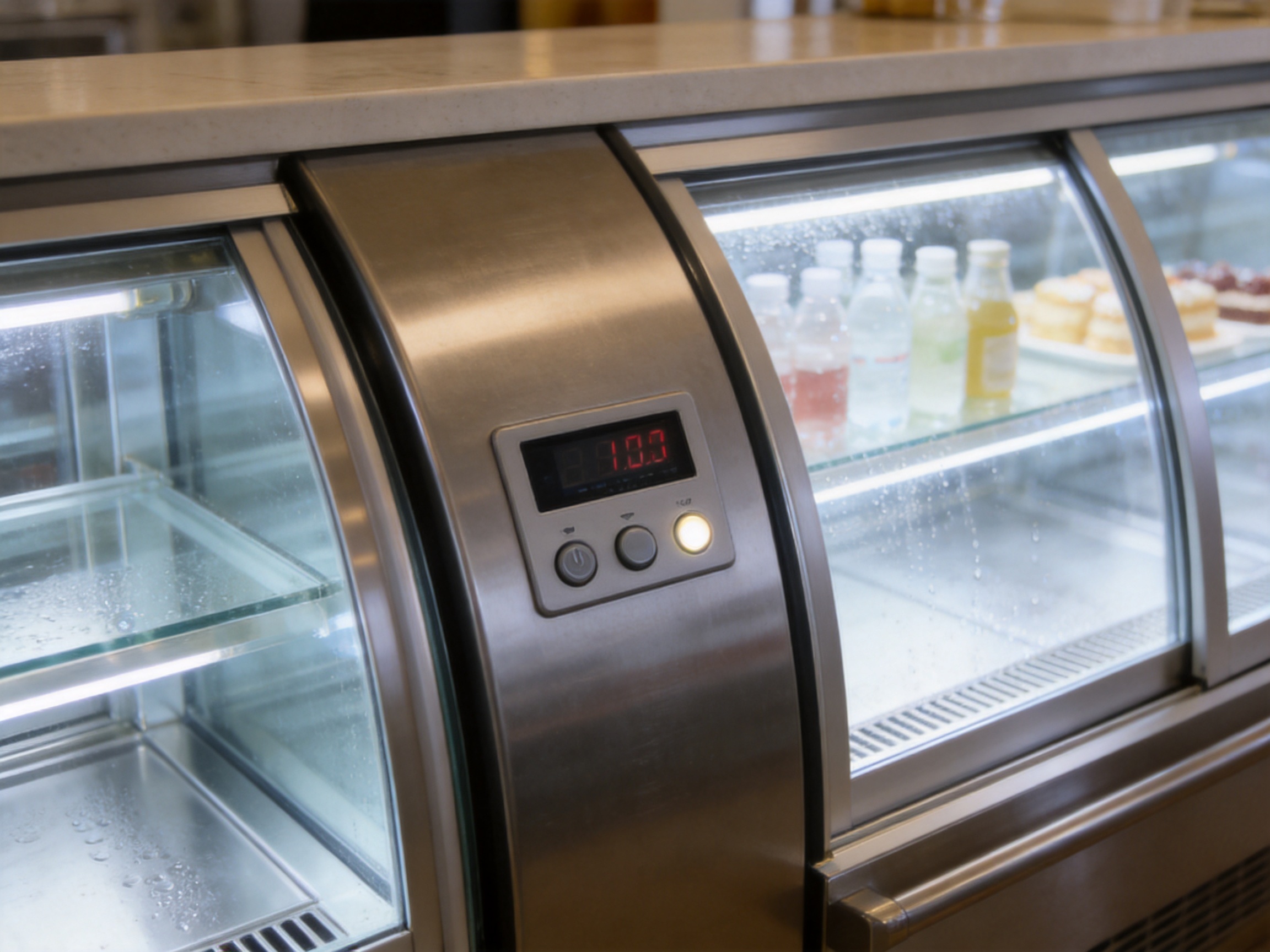
Front and Back Sliding Doors for Efficient Service
The front and back sliding door design is another important advantage. Sliding doors are practical for countertop installation because they do not require swing clearance. In narrow counters, service bars, or compact shop layouts, hinged doors can interfere with movement, nearby equipment, or customer space. Sliding doors help preserve usable workspace.
Access from both front and back can improve workflow. Customers or staff can view products from the front, while staff can load, arrange, or retrieve items from the back. This is particularly useful in service counters where employees stand behind the refrigerator and customers face the display.
Back access supports faster restocking. During peak periods, employees can slide open the rear door, add products, adjust arrangement, and continue service without moving around the counter. This helps maintain an attractive display and reduces interruptions in customer flow.
Front access can also be useful in self-service or semi-self-service settings, depending on the store’s operating model. The sliding mechanism makes access easier while keeping the unit compact. Compared with refrigerators that only provide single-side access, the XCW series offers greater flexibility for different layouts.
R290 Refrigerant and Environmental Considerations
The XCW series uses R290 refrigerant. R290, also known as propane refrigerant, is widely recognized in commercial refrigeration for its low global warming potential compared with many traditional refrigerants. As markets increasingly emphasize environmental responsibility, equipment using R290 can help businesses align with modern sustainability expectations.
R290 is also known for efficient thermodynamic performance when used in properly designed refrigeration systems. For buyers, this can be an important consideration because refrigeration equipment often runs for long hours. While real-world energy consumption depends on ambient conditions, loading habits, door opening frequency, and maintenance, the use of R290 reflects a modern refrigeration design direction.
Choosing equipment with R290 refrigerant can help distributors and end users prepare for regulatory trends that favor lower-impact refrigerants. Many international markets are moving away from high-global-warming-potential refrigerants, so R290-based commercial refrigeration products are increasingly relevant.
Safety and compliance are important when using any refrigerant. Professional manufacturing, proper system design, quality components, and correct operation all matter. The manufacturer’s experience in commercial refrigeration and certification background help support confidence in the safe and reliable application of R290 technology.
Compact Dimensions with Strong Display Capacity
Each model in the series is designed with a depth of 530 mm and a height of 555 mm, making the refrigerators suitable for countertop use. The widths increase from 985 mm for XCW-3 to 1285 mm for XCW-4 and 1585 mm for XCW-5. This size strategy gives buyers flexibility while preserving a consistent display style.
XCW-3 is suitable for small counters, boutique cafés, and compact beverage or dessert displays. Its 113L gross capacity provides enough room for selected chilled products without overwhelming limited counter space. For new businesses or locations with modest traffic, it offers a balanced entry point.
XCW-4 expands capacity to 148L, making it appropriate for medium-sized service counters. It provides more display width for product segmentation, such as separating drinks, desserts, and prepared foods. This model can be a strong choice for cafés, bakery counters, and convenience areas with steady customer volume.
XCW-5 offers 184L gross capacity and the widest display area in the range. It is suited to businesses that need maximum countertop merchandising space while still using a compact height and depth. Larger bakeries, busy beverage stations, hotel breakfast counters, and high-traffic retail food counters may benefit from this model.
Advantages Over Common Competitor Designs
The XCW countertop curved glass refrigerator series has several advantages compared with common competitor designs in the same category. First, the curved glass front gives the unit a more premium appearance than basic flat-front cabinets. This supports stronger product presentation and can help increase customer attention.
Second, the models provide a practical range of capacities while maintaining consistent depth and height. Some competitors offer only one size or use inconsistent dimensions that complicate store planning. The XCW series makes it easier for buyers to select a size according to sales volume without redesigning the counter layout.
Third, the separated power and light buttons improve usability. In many lower-cost display refrigerators, controls may be minimal or less convenient. Separate controls help staff operate the cabinet according to real business needs, supporting better workflow and reducing unnecessary operation.
Fourth, the use of R290 refrigerant positions the series in line with modern refrigeration trends. Buyers increasingly consider both performance and environmental responsibility. R290 can be a meaningful advantage for distributors serving markets where low-global-warming-potential refrigerants are preferred.
Fifth, the front and back sliding doors improve service efficiency. Competitor products with only rear access or swing doors may be less flexible in tight spaces. Sliding doors reduce clearance requirements and support easier loading and service in busy counters.
Finally, the manufacturer’s experience and certification background add value beyond the physical product. A display refrigerator is a long-term business asset. Buyers need confidence in design, production consistency, testing, and after-sales support. A capable manufacturer can provide more dependable product quality than suppliers focused only on short-term price competition.
Manufacturing Strength Behind the Product
Ningbo XiangChi Electrical Co.,Ltd is a professional manufacturer specializing in commercial refrigeration products such as vertical display cabinets, countertop display coolers, cake showcases, display warmers, and related display equipment. Established in 2007, the company has accumulated more than 10 years of experience in the refrigeration and display cabinet field.
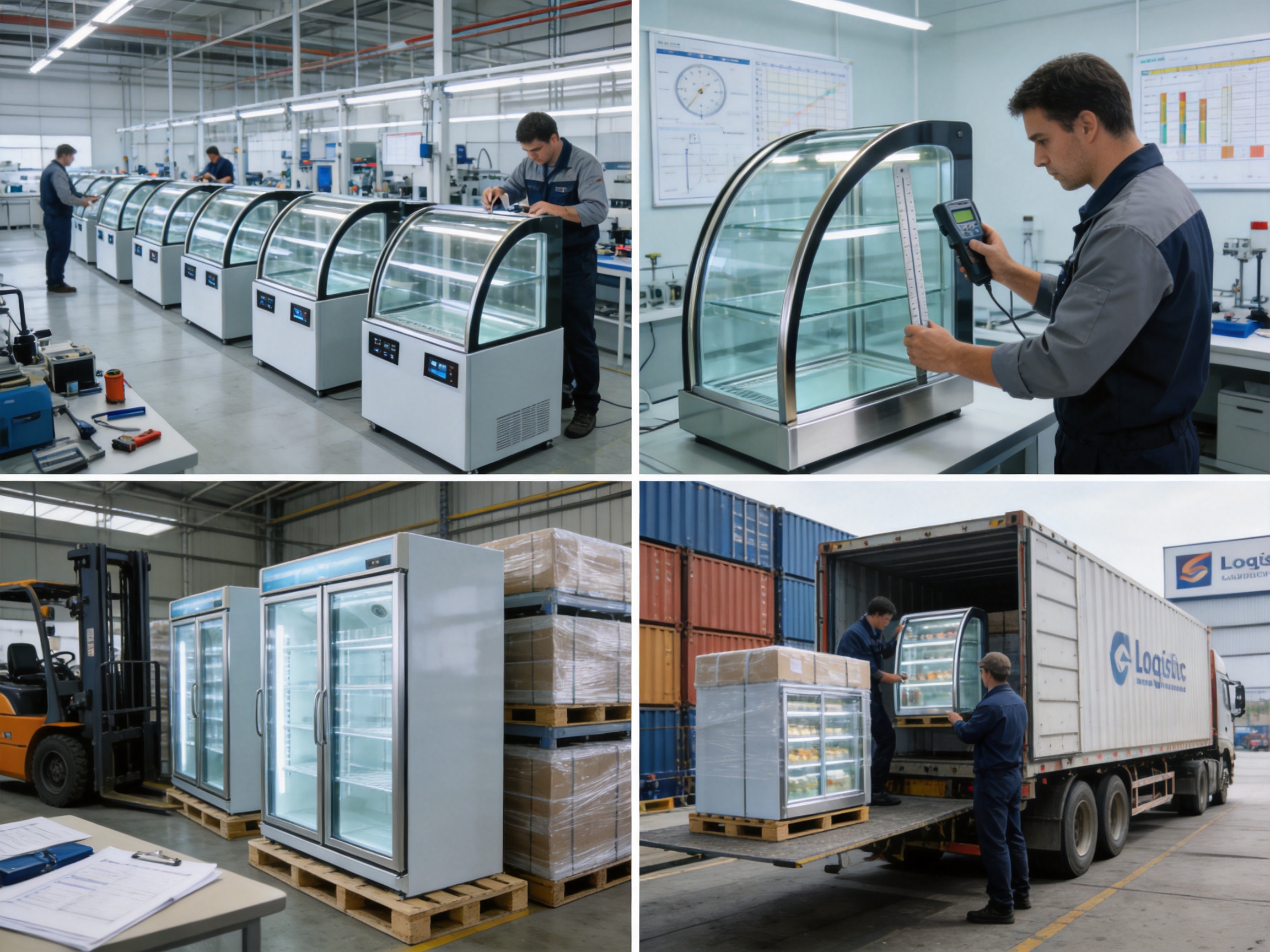
The company operates a modern garden-style factory covering approximately 40,000 square meters. This production scale supports organized manufacturing, stable output, and the ability to serve global wholesale and distribution customers. A strong factory foundation is important because commercial refrigeration products require consistent assembly quality, refrigeration system reliability, and careful quality control.
Advanced manufacturing is not only about equipment; it is also about management. Modern production organization helps ensure that components, assembly procedures, inspection processes, and packaging standards are controlled. For products like countertop display refrigerators, even small details such as door fit, glass alignment, cabinet sealing, and controller installation can affect user experience.
The company has developed professional research and development capabilities and advanced testing facilities. This supports product innovation, performance improvement, and adaptation to market requirements. In commercial refrigeration, product development must consider cooling performance, energy use, appearance, usability, safety, packaging, and logistics. An in-house R&D team provides the ability to refine these factors continuously.
Quality Control and Certification Capability
Quality control is a central requirement for commercial refrigeration. A display refrigerator may operate many hours per day, often in warm and busy environments. It must maintain temperature, resist frequent door operation, and present products attractively. These requirements demand more than basic assembly; they require controlled production and testing.
The manufacturer has obtained major certifications such as CE, GS, CCC, CB, ROHs, and ETL. These certifications demonstrate the company’s commitment to meeting different market requirements and supporting global distribution. For importers, wholesalers, and brand partners, certification capability can reduce market-entry uncertainty and increase buyer confidence.
Testing facilities help verify product performance before shipment. In refrigeration manufacturing, testing may involve temperature performance, electrical safety, refrigeration system operation, controller response, and general product inspection. Reliable testing reduces the likelihood of field problems and improves customer satisfaction.
Competitors without strong testing systems may compete on price but create hidden costs through inconsistent performance, warranty claims, and customer complaints. A manufacturer with established quality and certification systems offers a stronger value proposition for long-term business partners.
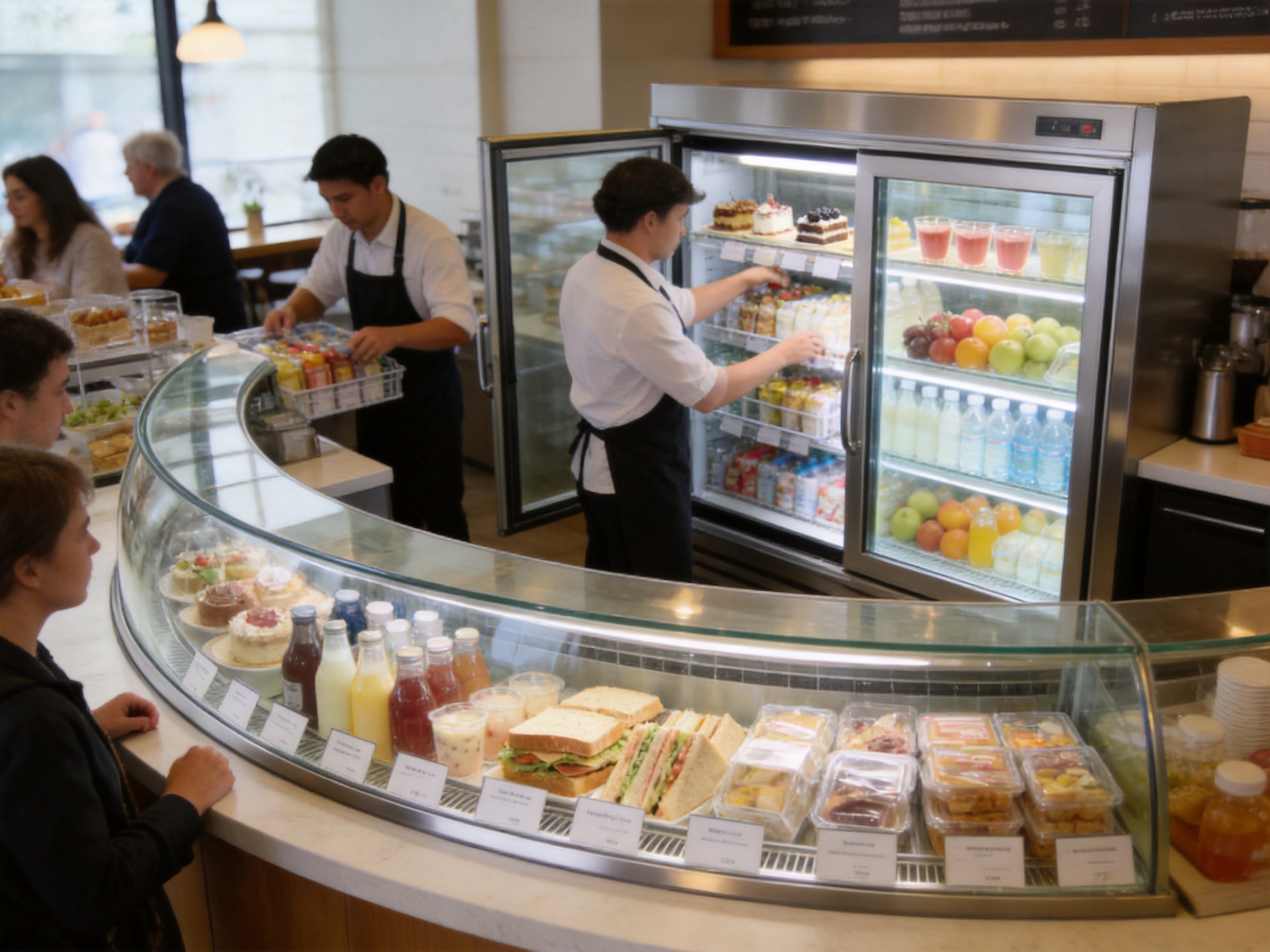
Design Details That Improve Daily Use
Commercial equipment succeeds when it fits naturally into daily work. The XCW series includes several design details that support this goal. The countertop format keeps products near the point of purchase. The curved glass front improves visibility. The sliding doors reduce clearance needs. The digital controller simplifies temperature monitoring. The separated controls support flexible operation.
The refrigerator’s height of 555 mm allows it to sit on many counters without blocking communication between staff and customers. This is important in cafés and bakeries, where face-to-face service is part of the customer experience. A display cabinet should attract attention to products without creating a barrier.
The consistent 530 mm depth makes planning easier. Many service counters have limited depth because they must also accommodate preparation space, payment equipment, menus, and other tools. A compact refrigerator depth helps preserve counter functionality while still providing meaningful display volume.
The product weights indicate a solid commercial structure. XCW-3 has a net weight of 46 kg, XCW-4 has 55 kg, and XCW-5 has 69 kg. These weights reflect cabinet size and structural material requirements. For installation, operators should ensure that the supporting counter is stable and capable of bearing the unit safely.
Merchandising Strategy with the XCW Series
A display refrigerator becomes more valuable when used with an effective merchandising strategy. Products should be arranged so that labels face forward, best-selling items are placed at eye-catching positions, and product categories are separated clearly. The curved glass front provides a strong viewing surface, but the final visual impact depends on how the operator arranges the contents.
For beverage shops, the refrigerator can display bottled teas, juices, sparkling drinks, dairy beverages, and chilled specialty products. For bakeries, it can hold mousse cakes, cream desserts, chilled pastries, and packaged slices. For cafés, it can display sandwiches, salads, yogurts, desserts, and takeaway snacks.
Operators should avoid overloading the cabinet. Overfilling can reduce visibility and may affect cooling circulation. A balanced arrangement helps products look fresh and premium. Empty spaces should be managed carefully; a display that looks too empty may reduce customer confidence, while an overcrowded display may appear messy.
Lighting should be used strategically. The separated light button allows the display to be illuminated during customer-facing hours. Proper lighting enhances color, texture, and freshness perception, particularly for desserts and beverages. When products look more appealing, customers are more likely to buy.
Operational Best Practices
To achieve the best performance from the XCW countertop display refrigerator, businesses should follow practical operating habits. The unit should be placed on a stable, level counter with adequate ventilation around it. Airflow around refrigeration equipment is important for heat dissipation and long-term performance.
Products should be pre-chilled before being placed inside the cabinet whenever possible. Display refrigerators are designed to maintain product temperature, not to rapidly cool large quantities of warm items. Loading warm products can increase system workload and may temporarily raise internal temperature.
Door openings should be minimized during busy periods. Sliding doors make access convenient, but frequent or prolonged opening can allow warm air to enter. Staff training can help maintain stable operation, especially in high-traffic service environments.
Regular cleaning is also important. Glass surfaces should be cleaned to preserve visibility. Door tracks should be kept free of debris to ensure smooth sliding. Interior surfaces should be cleaned according to foodservice hygiene practices. A clean display refrigerator supports both product safety and customer trust.
Logistics and Wholesale Advantages
The XCW series is designed not only for end users but also for distributors and wholesale buyers. The package sizes and loading quantities support planning for international shipment. For 20GP and 40HQ containers, the loading quantities are 54 and 108 pieces for XCW-3, 39 and 78 pieces for XCW-4, and 36 and 75 pieces for XCW-5.
These loading quantities help importers calculate cost per unit, warehouse planning, and market supply. Consistent packaging dimensions also support safer transport and easier distribution. For commercial refrigeration products, proper packaging is important because glass, cabinet structure, and refrigeration components must be protected during shipping.
The company’s manufacturing scale supports wholesale supply. Distributors often need stable lead times, consistent quality, and product documentation. A manufacturer with a large factory, experienced teams, and certification capability is better positioned to support long-term market development than small suppliers with limited capacity.
For private-label partners and regional distributors, the XCW series can serve as a strong countertop display refrigerator line. The three size options allow distributors to cover small, medium, and larger countertop needs with one coordinated product family.
How the Series Supports Different Business Types
In cafés, the XCW series can be placed near the ordering counter to display chilled desserts and ready-to-eat items. Customers waiting to order can see the products and make impulse purchases. The curved glass helps desserts look attractive, while the compact height keeps the counter open and approachable.
In bakeries, the unit can display cream-based pastries, cake slices, and chilled specialty desserts. The front curved glass creates a showcase effect that matches the visual standards expected in bakery retail. Staff can restock from the back, keeping the display tidy throughout the day.
In convenience stores, the refrigerator can be used for premium chilled products near checkout. Small packaged foods and drinks placed close to the payment area can increase basket value. The sliding door design is helpful in narrow aisles or compact counter areas.
In hotels, the unit can support breakfast buffets, lobby cafés, and executive lounge service. The professional appearance fits hospitality environments, and the digital temperature display helps staff monitor operation during service hours.
In sushi or prepared food counters, the 2–10°C refrigerated range can support packaged chilled selections that are suitable for this temperature category. Operators should always match product type with food safety requirements and local regulations.
Why Manufacturing Experience Matters
Commercial refrigeration is a technical category where experience directly affects product reliability. Cabinet insulation, glass installation, refrigeration circuit design, electrical control, door structure, and packaging all influence performance. A manufacturer established in 2007 has had the opportunity to refine product designs, production processes, and quality systems over many years.
Ningbo XiangChi Electrical Co.,Ltd has grown rapidly in the field of vertical display cabinets, countertop display coolers, cake showcases, and display warmers. This product range indicates broad experience across refrigerated and heated display categories. Such experience helps the company understand the practical needs of restaurants, cafés, supermarkets, hotels, and food retailers.
The company’s professional R&D team supports continuous improvement. In today’s market, buyers expect more than basic refrigeration. They look for better visibility, easier operation, modern refrigerants, attractive design, and compliance with international requirements. R&D capability allows the manufacturer to respond to these expectations.
Advanced production lines help convert design into stable output. A good prototype is not enough; every batch must be manufactured consistently. Strong production management supports repeatability, which is critical for distributors and chain customers who need multiple units to perform the same way.
Purchasing Considerations for Buyers
When selecting a countertop display refrigerator, buyers should evaluate capacity, dimensions, cooling range, refrigerant, control system, access design, appearance, certification, and supplier reliability. The XCW series performs well across these purchasing factors.
Capacity selection should be based on daily product volume and display strategy. A smaller cabinet may be sufficient for limited premium products, while a wider model supports broader assortment. Choosing the right size helps avoid under-display and over-display problems.
Temperature range should match the intended products. The XCW series is designed for refrigerated display at 2–10°C. It should not be used as a freezer. Businesses selling temperature-sensitive foods should follow local food safety standards and use proper monitoring procedures.
Appearance should also be considered. In customer-facing environments, equipment becomes part of the store image. The front curved glass design gives the XCW series an advantage over plain box-style units. For businesses that value presentation, this can be an important reason to choose the series.
Supplier reliability is equally important. A low-priced refrigerator from an unknown supplier may appear attractive at first, but poor quality can lead to downtime, service costs, and customer dissatisfaction. A manufacturer with a substantial factory, R&D capability, testing facilities, and certifications provides stronger long-term value.
Q&A Section
What is the main purpose of the XCW countertop curved glass display refrigerator?
The main purpose is to keep chilled products visible, attractive, and properly refrigerated in commercial countertop environments. It is designed for merchandising as well as cooling, making it suitable for cafés, bakeries, convenience stores, beverage counters, dessert shops, hotels, and prepared food displays.
What temperature range does the refrigerator support?
The XCW-3, XCW-4, and XCW-5 models all operate within a 2–10°C range, equal to 35.6–50°F. This range is suitable for many refrigerated display applications, but operators should confirm that their specific products are appropriate for this temperature range.
What are the differences between XCW-3, XCW-4, and XCW-5?
The main differences are capacity, width, weight, package size, and loading quantity. XCW-3 has 113L gross capacity, XCW-4 has 148L, and XCW-5 has 184L. All three models share the same temperature range, 120W input power, R290 refrigerant, direct cooling concept, and general countertop design.
Why is front curved glass beneficial?
Front curved glass improves product presentation by creating a more premium showcase appearance. It helps customers see products clearly and can make chilled foods and beverages look more attractive than they would in a basic flat-front cabinet.
Does the refrigerator use an environmentally responsible refrigerant?
Yes. The series uses R290 refrigerant, which is known for low global warming potential compared with many older refrigerants. This supports modern refrigeration trends and helps buyers align with environmental expectations in many markets.
Why are separated power and light buttons useful?
Separated controls allow operators to manage refrigeration and display lighting independently. Staff can turn the light on during selling hours and control the refrigeration system according to operating needs. This improves convenience and reduces unnecessary lighting operation.
What type of businesses can benefit most from this product?
Cafés, bakeries, dessert shops, convenience stores, hotels, beverage shops, prepared food counters, and small retail food businesses can benefit from the product. Any business that needs attractive refrigerated countertop presentation may find the series useful.
How does the manufacturer support product reliability?
The manufacturer has a modern 40,000-square-meter factory, professional R&D capability, advanced testing facilities, and multiple certifications including CE, GS, CCC, CB, ROHs, and ETL. These strengths support consistent production and global market readiness.
Conclusion
The XCW-3, XCW-4, and XCW-5 countertop front curved glass display refrigerators offer a strong combination of attractive presentation, practical refrigeration, compact dimensions, and commercial usability. Their front curved glass design supports premium merchandising, while the direct cooling system, digital temperature controller, separated power and light controls, and sliding doors make daily operation efficient.
With three capacity options, the series can serve businesses ranging from small boutique cafés to larger bakery and hotel counters. The shared 2–10°C temperature range, R290 refrigerant, and 120W input power create a consistent product platform. Buyers can select the best model based on counter width, display volume, and sales strategy.
Compared with many ordinary countertop refrigerators, the XCW series provides advantages in appearance, workflow, control convenience, refrigerant selection, and manufacturer support. It is not simply a cold storage box; it is a customer-facing merchandising tool designed to help businesses present chilled products professionally.
Behind the product is Ningbo XiangChi Electrical Co.,Ltd, a manufacturer with long-term experience, a large modern factory, R&D capability, testing facilities, and international certifications. These strengths help ensure that the product is suitable for wholesale buyers, distributors, and commercial end users seeking dependable refrigeration display equipment.
For businesses that want to transform countertop space into a profitable refrigerated display area, the XCW countertop front curved glass display refrigerator series is a practical and visually appealing solution. It supports freshness, presentation, service efficiency, and long-term commercial value.
References
Commercial Refrigeration Equipment Design and Application Guidelines.
Foodservice Equipment Standards for Refrigerated Display Cabinets.
Hydrocarbon Refrigerants in Commercial Refrigeration Systems: Technical Overview.
Retail Merchandising Principles for Chilled Food and Beverage Displays.
International Electrical Safety and Product Certification Practices for Commercial Refrigeration.

You May Also Like
.jpg?imageView2/2/w/500/h/500/format/jp2/q/100 "Four Sides Glasses Display Cooler")
.jpg?imageView2/2/w/500/h/500/format/jp2/q/100 "White 4-Sided Glass Refrigerated Display Case")
.jpg?imageView2/2/w/500/h/500/format/jp2/q/100 "Refrigerated Display Cake Countertop Four Sides Glasses Display Cooler")
.jpg?imageView2/2/w/500/h/500/format/jp2/q/100 "Four Sides Glasses Display Cooler")

-
- Navigation
- Home
- About Us
- Products
- News
- Contact Us
 East Zone, Guanhaiwei Industrial Park, Cixi City, Ningbo, Zhejiang, China
 +86-574-63668678
 +86-574-63668108
Copyright © Ningbo XiangChi Electrical Co.,Ltd All Rights Reserved.
